Include a clear explanation of the special procedure, the risks associated with it and the
contra-indications (where a procedure should not be undertaken on a client because it may be
harmful).
Confirm that the client listens, reads, and understands the information provided
Ensure the client signs and dates the pre-consultation form
Record medical conditions, prescribed and over the counter medications reported by the
client.
Remember to ask about alcohol consumption and drugs
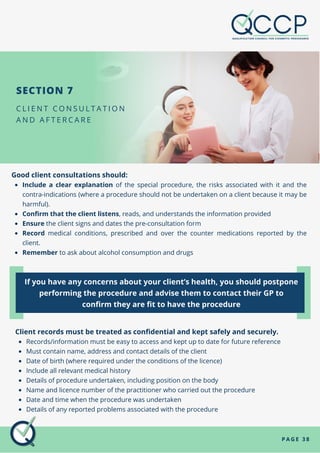
Good client consultations should:
If you have any concerns about your client’s health, you should postpone
performing the procedure and advise them to contact their GP to
confirm they are fit to have the procedure
C L I E N T C O N S U L T A T I O N
A N D A F T E R C A R E
P A G E 3 8
SECTION 7
Records/information must be easy to access and kept up to date for future reference
Must contain name, address and contact details of the client
Date of birth (where required under the conditions of the licence)
Include all relevant medical history
Details of procedure undertaken, including position on the body
Name and licence number of the practitioner who carried out the procedure
Date and time when the procedure was undertaken
Details of any reported problems associated with the procedure
Client records must be treated as confidential and kept safely and securely.
P A G E 3 9
Provide clear and simple advice that promotes good healing and reduces the risk of infection.
Explain the difference between the natural process of wound healing AND signs and
symptoms of allergy or infection.
Must be in an easy-to-understand format.
Advice should be given face-to-face and in written form (include the practitioner’s contact
details).
Good communication - practitioners must satisfy themselves that the client has understood
the aftercare advice.
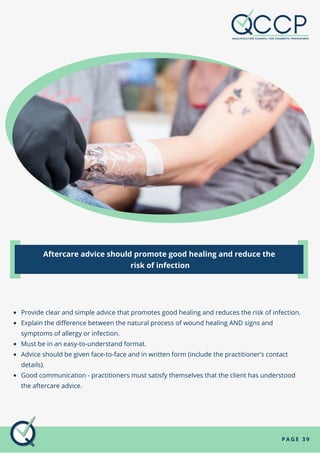
Aftercare advice should promote good healing and reduce the
risk of infection
P A G E 4 0
NOTES
P A G E 4 1
NOTES

Section 7: Client Consultation and Aftercare.pdf

  • 1.
    Include a clearexplanation of the special procedure, the risks associated with it and the contra-indications (where a procedure should not be undertaken on a client because it may be harmful). Confirm that the client listens, reads, and understands the information provided Ensure the client signs and dates the pre-consultation form Record medical conditions, prescribed and over the counter medications reported by the client. Remember to ask about alcohol consumption and drugs Good client consultations should: If you have any concerns about your client’s health, you should postpone performing the procedure and advise them to contact their GP to confirm they are fit to have the procedure C L I E N T C O N S U L T A T I O N A N D A F T E R C A R E P A G E 3 8 SECTION 7 Records/information must be easy to access and kept up to date for future reference Must contain name, address and contact details of the client Date of birth (where required under the conditions of the licence) Include all relevant medical history Details of procedure undertaken, including position on the body Name and licence number of the practitioner who carried out the procedure Date and time when the procedure was undertaken Details of any reported problems associated with the procedure Client records must be treated as confidential and kept safely and securely.
  • 2.
    P A GE 3 9 Provide clear and simple advice that promotes good healing and reduces the risk of infection. Explain the difference between the natural process of wound healing AND signs and symptoms of allergy or infection. Must be in an easy-to-understand format. Advice should be given face-to-face and in written form (include the practitioner’s contact details). Good communication - practitioners must satisfy themselves that the client has understood the aftercare advice. Aftercare advice should promote good healing and reduce the risk of infection
  • 3.
    P A GE 4 0 NOTES
  • 4.
    P A GE 4 1 NOTES