Occupational exposure to blood and body fluids, which may lead to infection (primarily BBVs)
Physical injuries (e.g. needle stick)
Potential allergens
Chemicals which may be harmful
Individuals working in a special procedures environment may be exposed to a number of
occupational hazards
O C C U P A T I O N A L E X P O S U R E M A N A G E M E N T A N D
P E R S O N A L P R O T E C T I V E E Q U I P M E N T ( P P E )
P A G E 5 0
SECTION 9
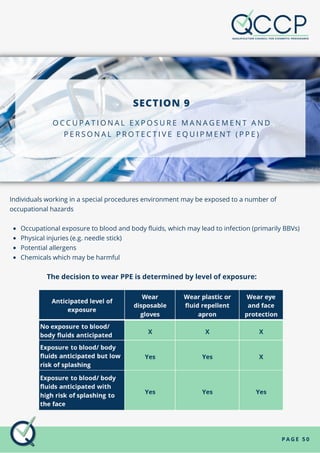
The decision to wear PPE is determined by level of exposure:
In special procedures a single use disposable apron and gloves provide an extra barrier of
protection against BBVs and reduce the risk of infection from splashes from body fluids.
Face and eye protection should be worn when there is a risk of spray/splash from body fluids
to the eyes and mucous membranes.
P A G E 5 1
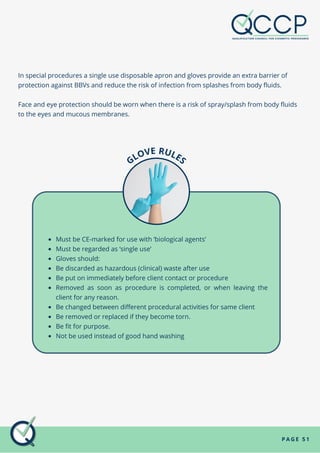
GLOVE RULES
Must be CE-marked for use with ‘biological agents’
Must be regarded as ‘single use’
Gloves should:
Be discarded as hazardous (clinical) waste after use
Be put on immediately before client contact or procedure
Removed as soon as procedure is completed, or when leaving the
client for any reason.
Be changed between different procedural activities for same client
Be removed or replaced if they become torn.
Be fit for purpose.
Not be used instead of good hand washing
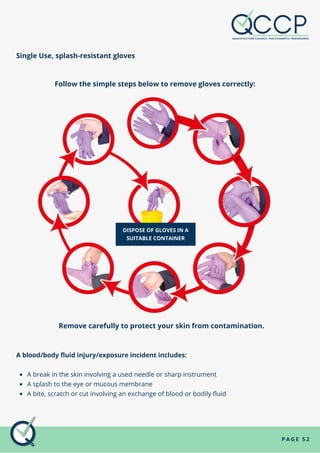
DISPOSE OF GLOVES IN A
SUITABLE CONTAINER
Follow the simple steps below to remove gloves correctly:
P A G E 5 2
Single Use, splash-resistant gloves
Remove carefully to protect your skin from contamination.
A break in the skin involving a used needle or sharp instrument
A splash to the eye or mucous membrane
A bite, scratch or cut involving an exchange of blood or bodily fluid
A blood/body fluid injury/exposure incident includes:
Encourage bleeding of the injury under clean running water
Wash gently with mild soap
Cover the wound with a clean dressing
Seek medical advice/attention immediately at A&E ideally within 1 hour of the incident
occurring and no later than 72 hours
Take the object and the name of the client.
First aid response: needle stick injury
1.
2.
3.
4.
5.
DON’T: suck wound, scrub wound
Prompt response is critical
P A G E 5 3
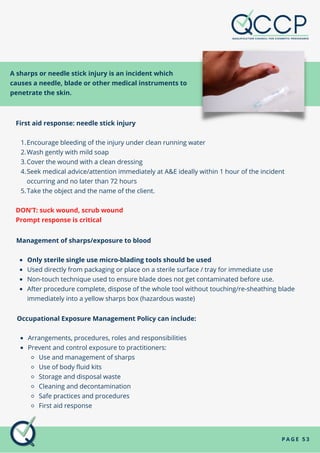
A sharps or needle stick injury is an incident which
causes a needle, blade or other medical instruments to
penetrate the skin.
Only sterile single use micro-blading tools should be used
Used directly from packaging or place on a sterile surface / tray for immediate use
Non-touch technique used to ensure blade does not get contaminated before use.
After procedure complete, dispose of the whole tool without touching/re-sheathing blade
immediately into a yellow sharps box (hazardous waste)
Management of sharps/exposure to blood
Arrangements, procedures, roles and responsibilities
Prevent and control exposure to practitioners:
Use and management of sharps
Use of body fluid kits
Storage and disposal waste
Cleaning and decontamination
Safe practices and procedures
First aid response
Occupational Exposure Management Policy can include:

Section 9 Occupational Exposure Management and PPE.pdf

  • 1.
    Occupational exposure toblood and body fluids, which may lead to infection (primarily BBVs) Physical injuries (e.g. needle stick) Potential allergens Chemicals which may be harmful Individuals working in a special procedures environment may be exposed to a number of occupational hazards O C C U P A T I O N A L E X P O S U R E M A N A G E M E N T A N D P E R S O N A L P R O T E C T I V E E Q U I P M E N T ( P P E ) P A G E 5 0 SECTION 9 The decision to wear PPE is determined by level of exposure:
  • 2.
    In special proceduresa single use disposable apron and gloves provide an extra barrier of protection against BBVs and reduce the risk of infection from splashes from body fluids. Face and eye protection should be worn when there is a risk of spray/splash from body fluids to the eyes and mucous membranes. P A G E 5 1 GLOVE RULES Must be CE-marked for use with ‘biological agents’ Must be regarded as ‘single use’ Gloves should: Be discarded as hazardous (clinical) waste after use Be put on immediately before client contact or procedure Removed as soon as procedure is completed, or when leaving the client for any reason. Be changed between different procedural activities for same client Be removed or replaced if they become torn. Be fit for purpose. Not be used instead of good hand washing
  • 3.
    DISPOSE OF GLOVESIN A SUITABLE CONTAINER Follow the simple steps below to remove gloves correctly: P A G E 5 2 Single Use, splash-resistant gloves Remove carefully to protect your skin from contamination. A break in the skin involving a used needle or sharp instrument A splash to the eye or mucous membrane A bite, scratch or cut involving an exchange of blood or bodily fluid A blood/body fluid injury/exposure incident includes:
  • 4.
    Encourage bleeding ofthe injury under clean running water Wash gently with mild soap Cover the wound with a clean dressing Seek medical advice/attention immediately at A&E ideally within 1 hour of the incident occurring and no later than 72 hours Take the object and the name of the client. First aid response: needle stick injury 1. 2. 3. 4. 5. DON’T: suck wound, scrub wound Prompt response is critical P A G E 5 3 A sharps or needle stick injury is an incident which causes a needle, blade or other medical instruments to penetrate the skin. Only sterile single use micro-blading tools should be used Used directly from packaging or place on a sterile surface / tray for immediate use Non-touch technique used to ensure blade does not get contaminated before use. After procedure complete, dispose of the whole tool without touching/re-sheathing blade immediately into a yellow sharps box (hazardous waste) Management of sharps/exposure to blood Arrangements, procedures, roles and responsibilities Prevent and control exposure to practitioners: Use and management of sharps Use of body fluid kits Storage and disposal waste Cleaning and decontamination Safe practices and procedures First aid response Occupational Exposure Management Policy can include: