Searching beyond datasets in
the Social Sciences
Philipp Mayr
International Workshop on Data Search
SIGIR 2018
July 12th, 2018
https://datasearch-ws.github.io/2018/
State of the art @GESIS
• Curated datasets (surveys, longitudinal
data, …)
– Metadata/documentation, keywords
– Additional materials (questionnaires,
codebooks, …)
– Raw data
• Harvested datasets
• Linking infrastructure (links between
items)
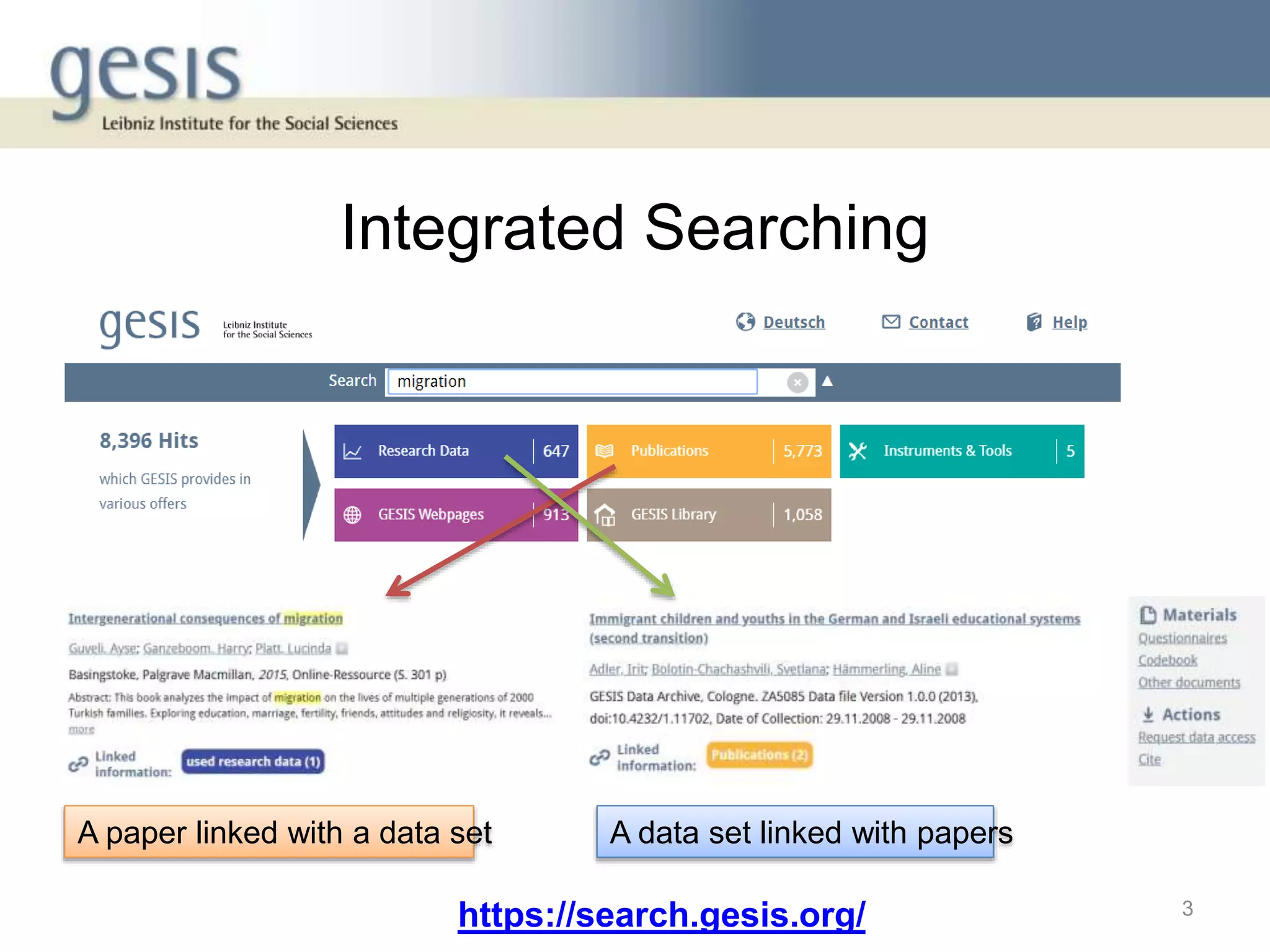
Integrated Searching
3
A paper linked with a data set A data set linked with papers
https://search.gesis.org/
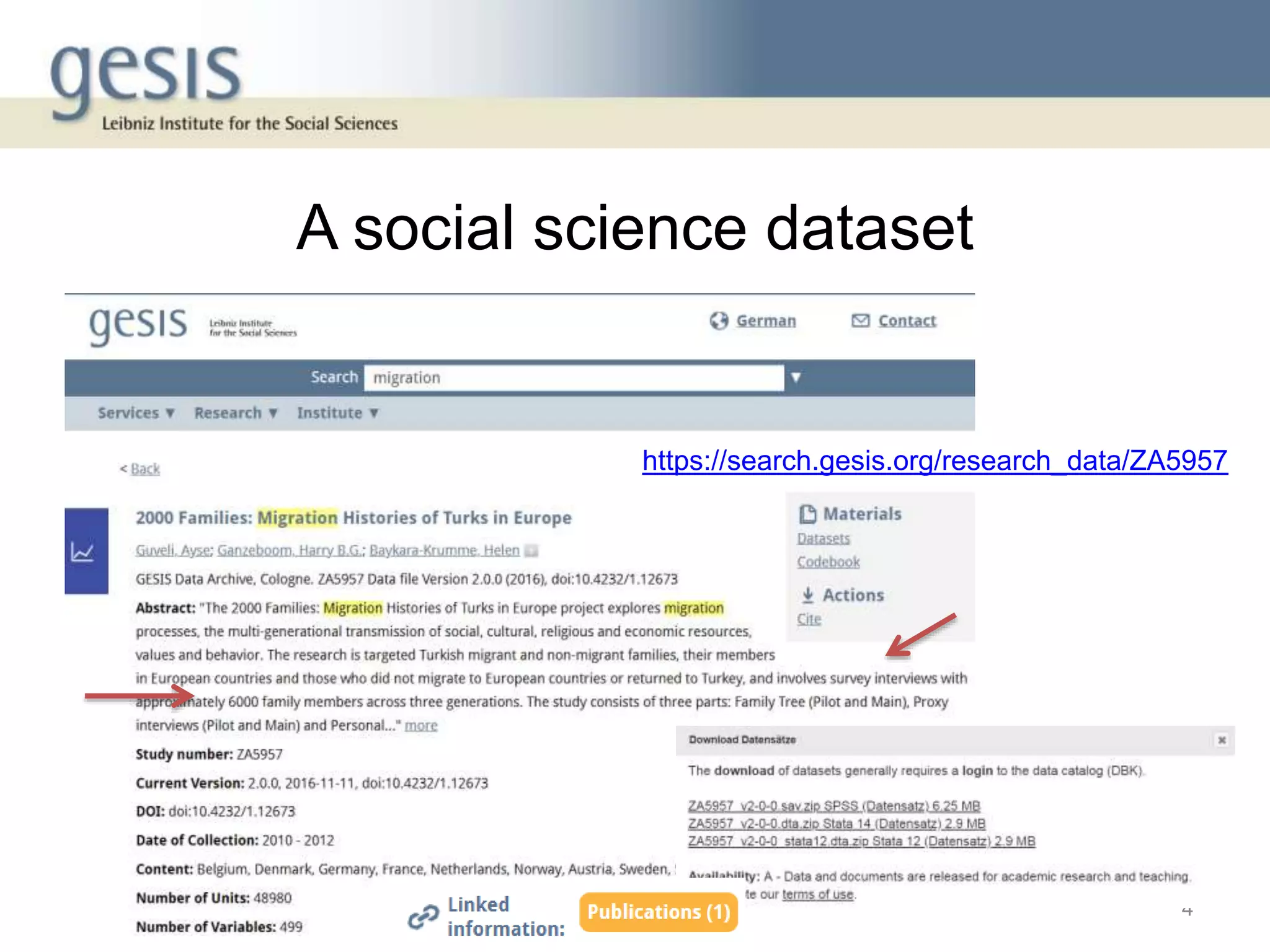
A social science dataset
4
https://search.gesis.org/research_data/ZA5957
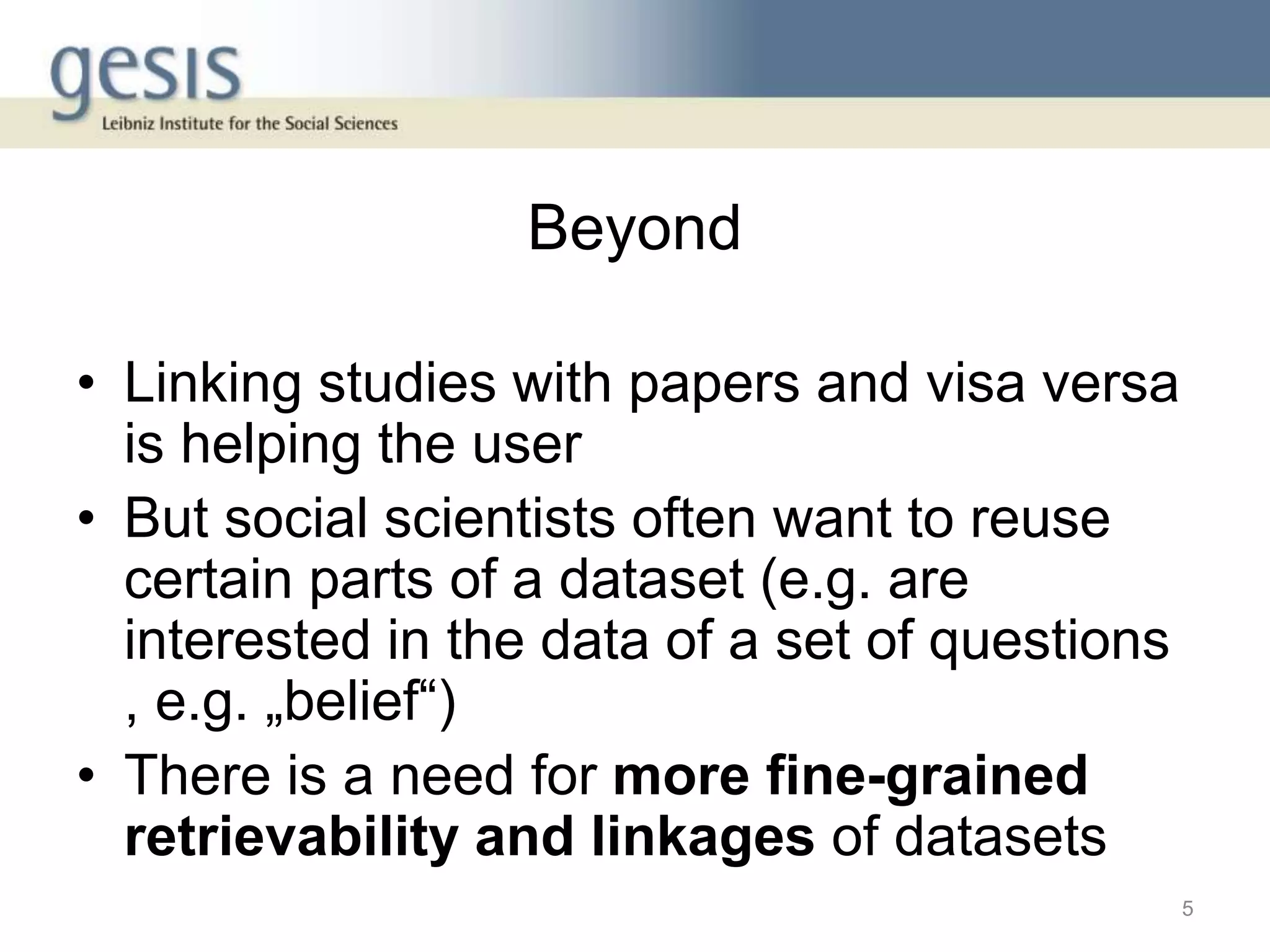
Beyond
• Linking studies with papers and visa versa
is helping the user
• But social scientists often want to reuse
certain parts of a dataset (e.g. are
interested in the data of a set of questions
, e.g. „belief“)
• There is a need for more fine-grained
retrievability and linkages of datasets
5
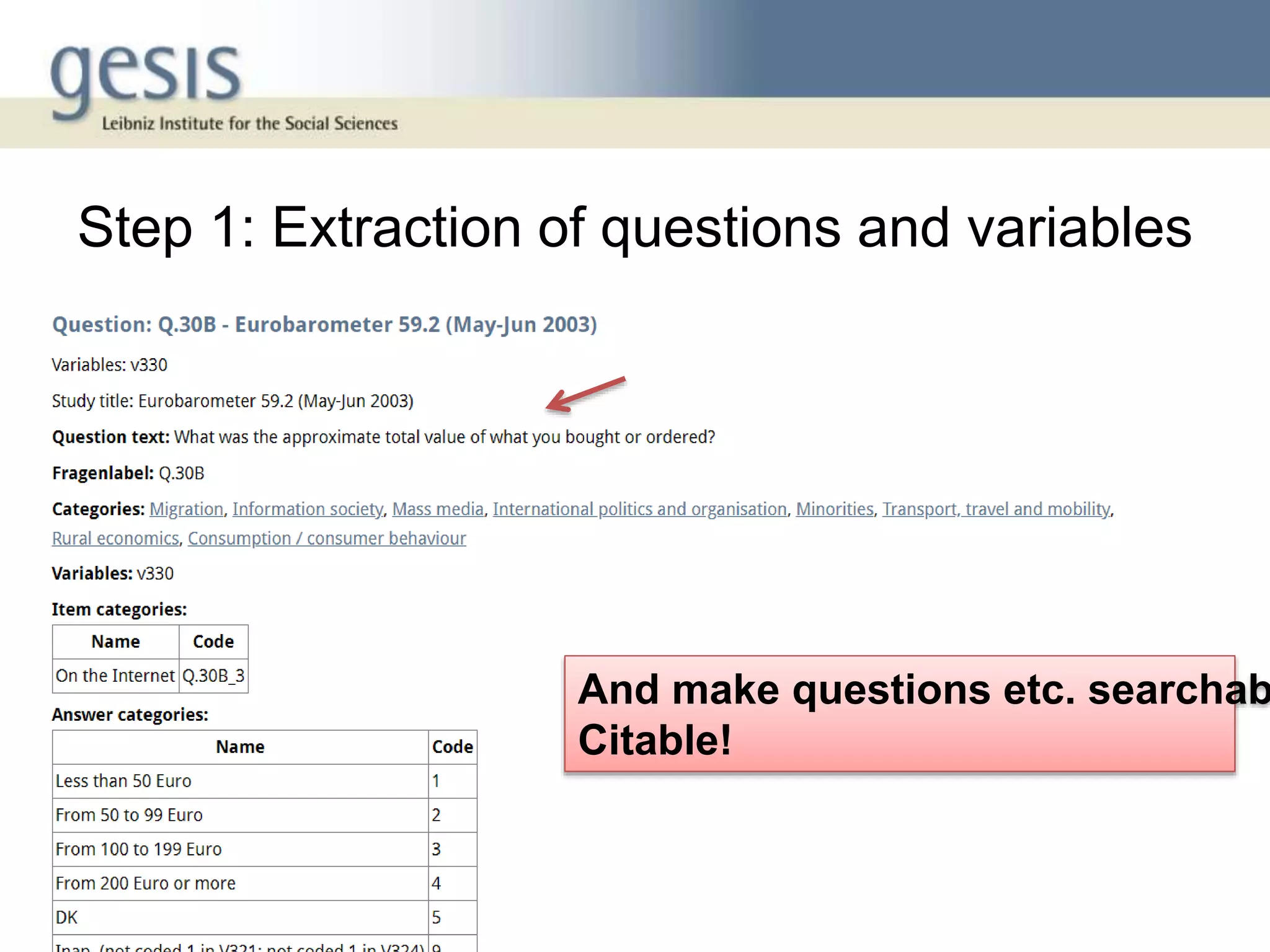
Step 1: Extraction of questions and variables
And make questions etc. searchab
Citable!
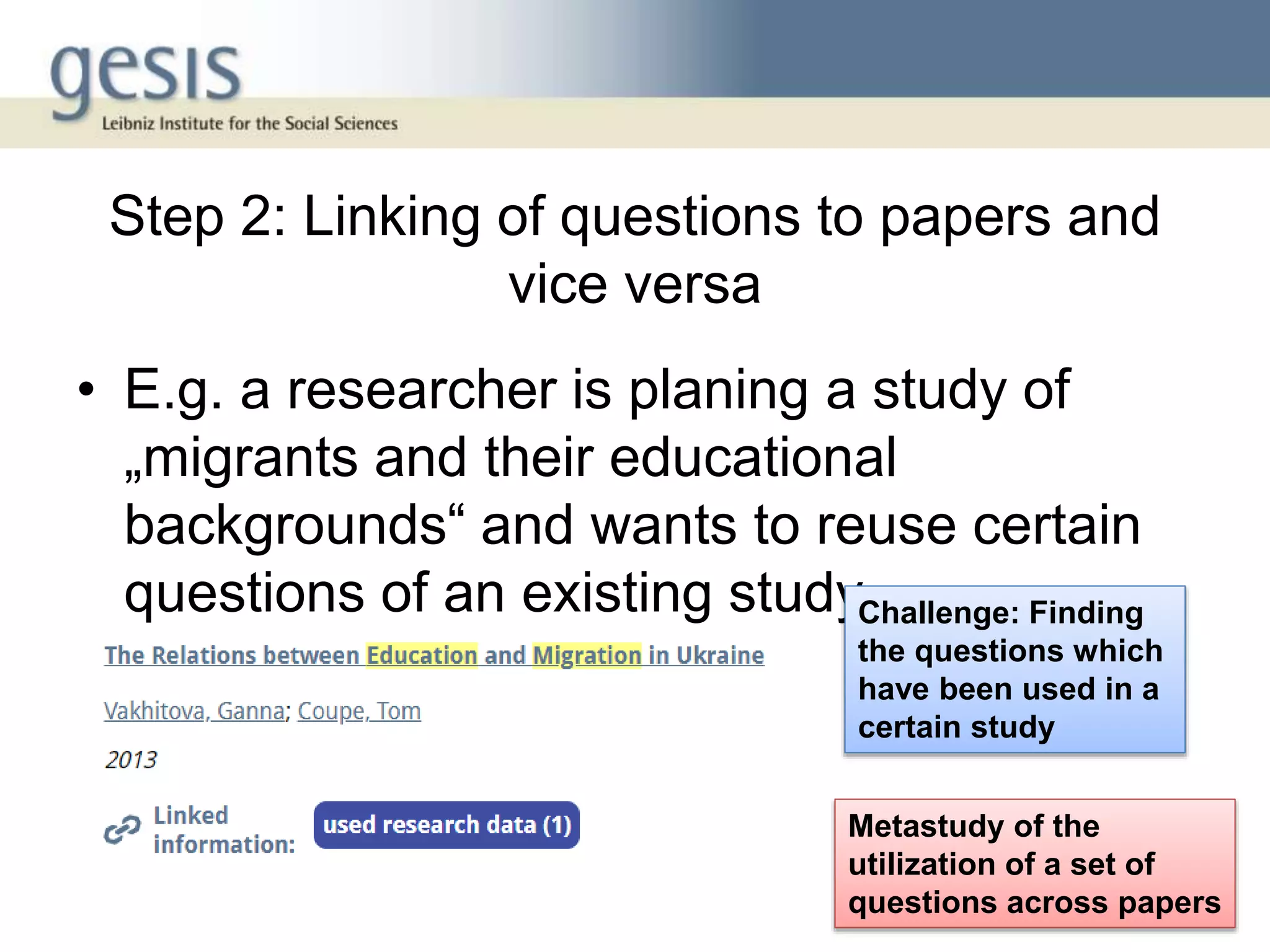
Step 2: Linking of questions to papers and
vice versa
• E.g. a researcher is planing a study of
„migrants and their educational
backgrounds“ and wants to reuse certain
questions of an existing study
7
Challenge: Finding
the questions which
have been used in a
certain study
Metastudy of the
utilization of a set of
questions across papers
Step 3: Providing more advanced search
facilities
• An advanced search interface is helping to
find right datasets
8
Discussion
• There might be dozens of such specific
use cases in DATA SEARCH
• A Google for data can help finding dataset
but more advanced applications are
requested
9
Thank you
Contact:
Dr Philipp Mayr
GESIS - Leibniz Institute for the Social Sciences, Germany
Email: philipp.mayr@gesis.org
Twitter: @philipp_mayr
10

Searching beyond datasets in the Social Sciences

  • 1.
    Searching beyond datasetsin the Social Sciences Philipp Mayr International Workshop on Data Search SIGIR 2018 July 12th, 2018 https://datasearch-ws.github.io/2018/
  • 2.
    State of theart @GESIS • Curated datasets (surveys, longitudinal data, …) – Metadata/documentation, keywords – Additional materials (questionnaires, codebooks, …) – Raw data • Harvested datasets • Linking infrastructure (links between items)
  • 3.
    Integrated Searching 3 A paperlinked with a data set A data set linked with papers https://search.gesis.org/
  • 4.
    A social sciencedataset 4 https://search.gesis.org/research_data/ZA5957
  • 5.
    Beyond • Linking studieswith papers and visa versa is helping the user • But social scientists often want to reuse certain parts of a dataset (e.g. are interested in the data of a set of questions , e.g. „belief“) • There is a need for more fine-grained retrievability and linkages of datasets 5
  • 6.
    Step 1: Extractionof questions and variables And make questions etc. searchab Citable!
  • 7.
    Step 2: Linkingof questions to papers and vice versa • E.g. a researcher is planing a study of „migrants and their educational backgrounds“ and wants to reuse certain questions of an existing study 7 Challenge: Finding the questions which have been used in a certain study Metastudy of the utilization of a set of questions across papers
  • 8.
    Step 3: Providingmore advanced search facilities • An advanced search interface is helping to find right datasets 8
  • 9.
    Discussion • There mightbe dozens of such specific use cases in DATA SEARCH • A Google for data can help finding dataset but more advanced applications are requested 9
  • 10.
    Thank you Contact: Dr PhilippMayr GESIS - Leibniz Institute for the Social Sciences, Germany Email: philipp.mayr@gesis.org Twitter: @philipp_mayr 10