LESSON 02
I CAN USE ENGLISH
LANGUAGE
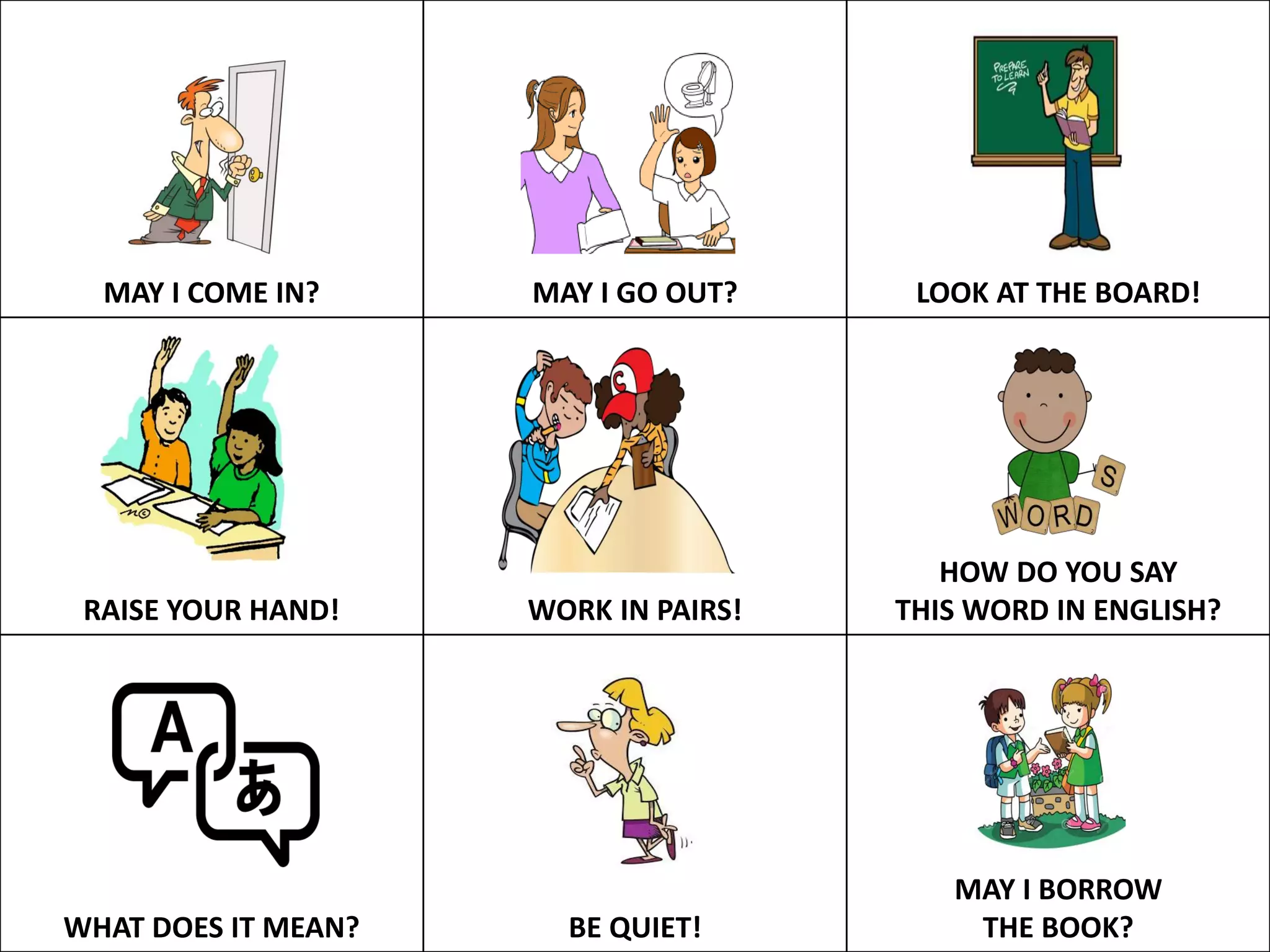
MAY I COME IN? MAY I GO OUT? LOOK AT THE BOARD!
RAISE YOUR HAND! WORK IN PAIRS!
HOW DO YOU SAY
THIS WORD IN ENGLISH?
WHAT DOES IT MEAN? BE QUIET!
MAY I BORROW
THE BOOK?
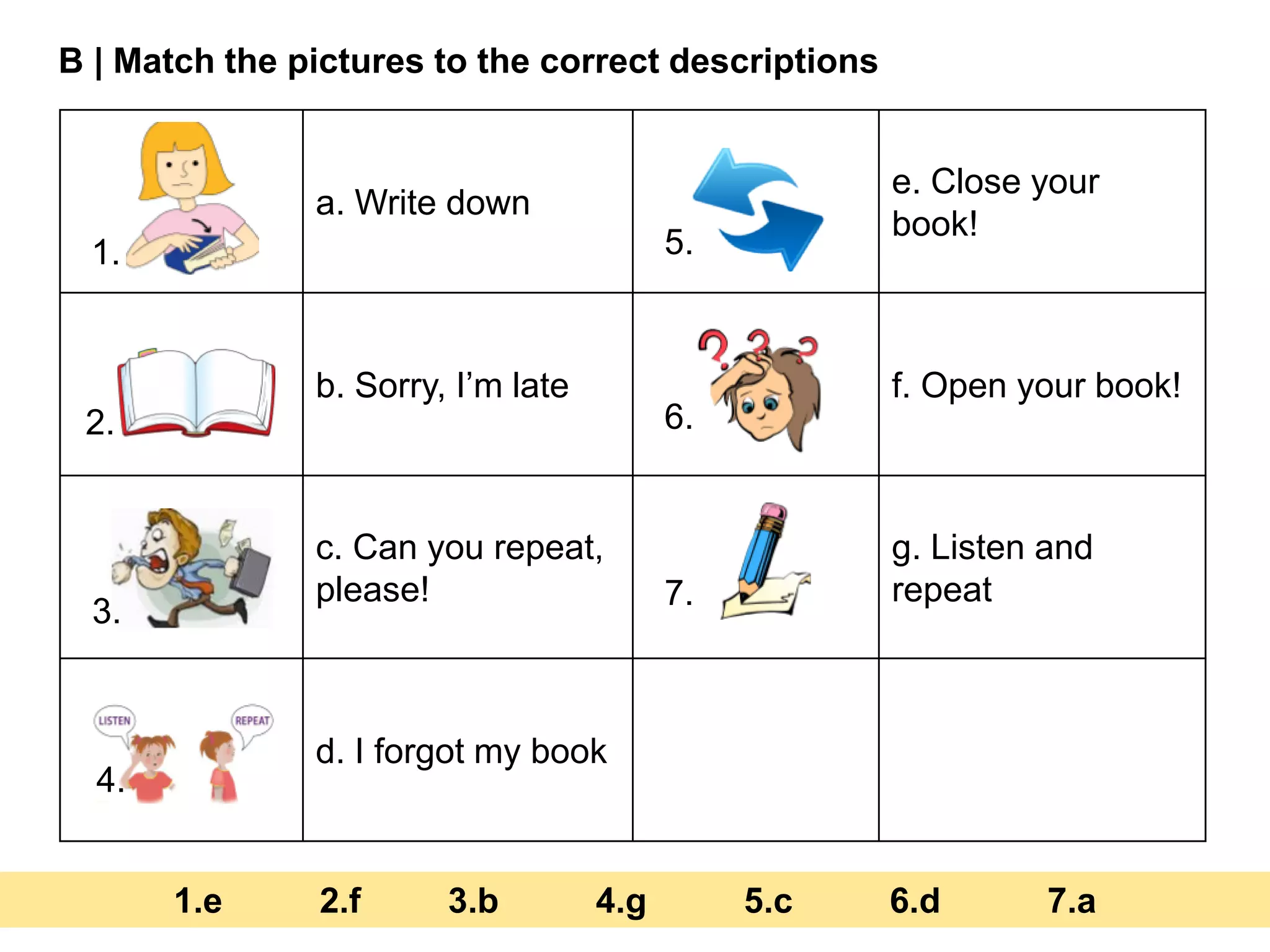
a. Write down
e. Close your
book!
b. Sorry, I’m late f. Open your book!
c. Can you repeat,
please!
g. Listen and
repeat
d. I forgot my book
1.
2.
3.
4.
5.
6.
7.
1.e 2.f 3.b 4.g 5.c 6.d 7.a
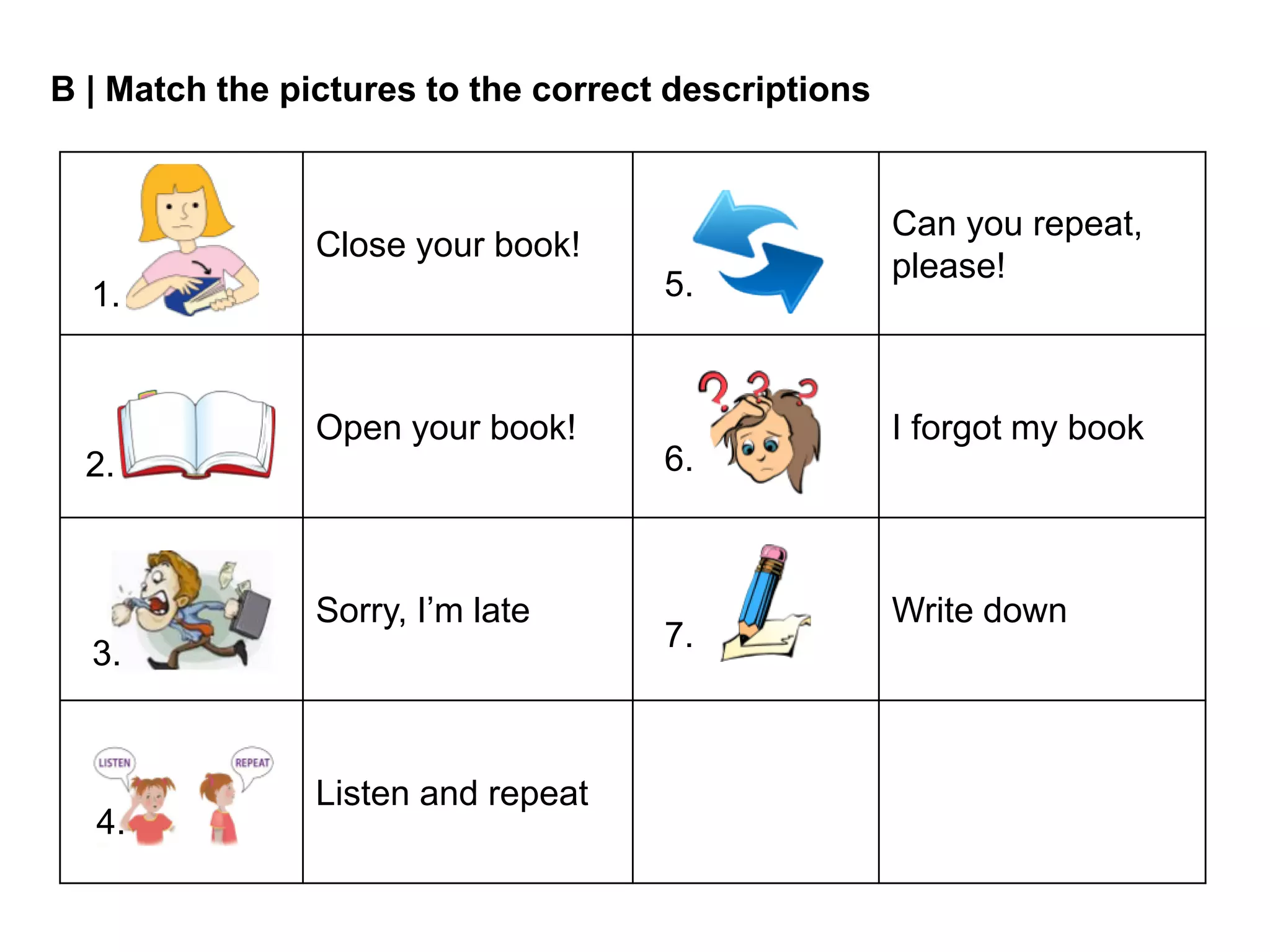
B | Match the pictures to the correct descriptions
Close your book!
Can you repeat,
please!
Open your book! I forgot my book
Sorry, I’m late Write down
Listen and repeat
1.
2.
3.
4.
5.
6.
7.
B | Match the pictures to the correct descriptions
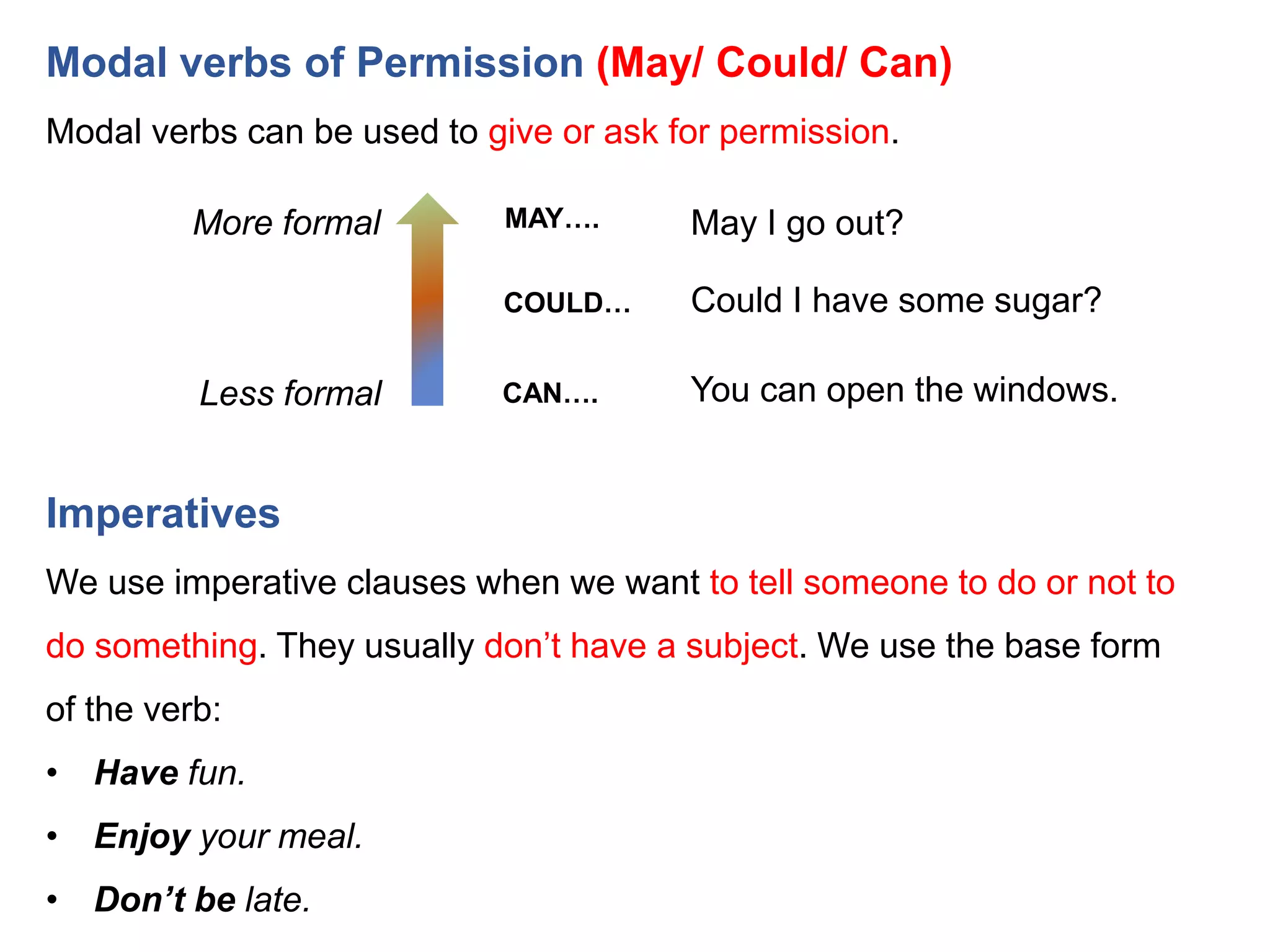
Modal verbs of Permission (May/ Could/ Can)
Modal verbs can be used to give or ask for permission.
More formal
Less formal
MAY….
COULD…
CAN….
May I go out?
Could I have some sugar?
You can open the windows.
Imperatives
We use imperative clauses when we want to tell someone to do or not to
do something. They usually don’t have a subject. We use the base form
of the verb:
• Have fun.
• Enjoy your meal.
• Don’t be late.
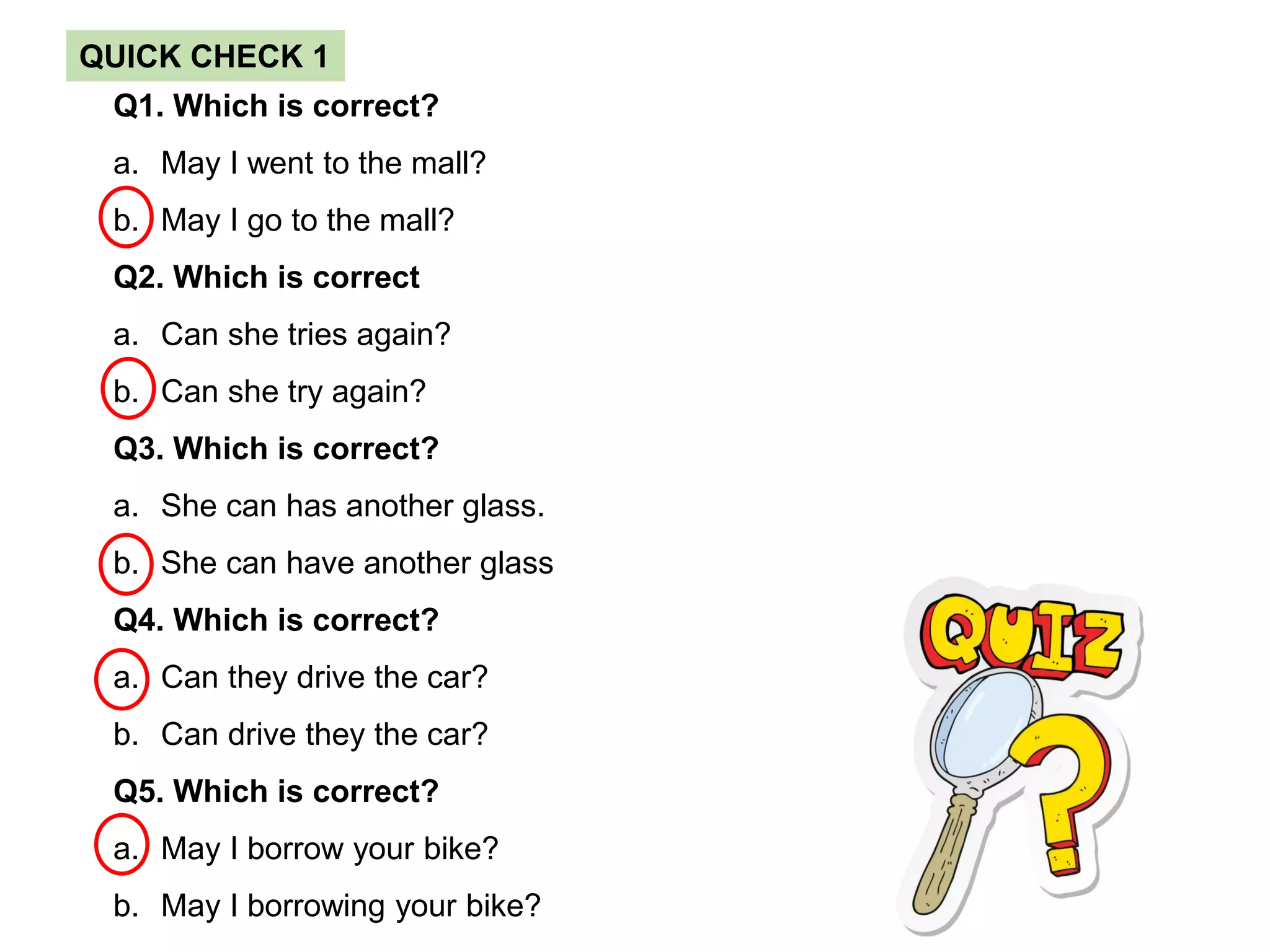
Q1. Which is correct?
a. May I went to the mall?
b. May I go to the mall?
Q2. Which is correct
a. Can she tries again?
b. Can she try again?
Q3. Which is correct?
a. She can has another glass.
b. She can have another glass
Q4. Which is correct?
a. Can they drive the car?
b. Can drive they the car?
Q5. Which is correct?
a. May I borrow your bike?
b. May I borrowing your bike?
QUICK CHECK 1
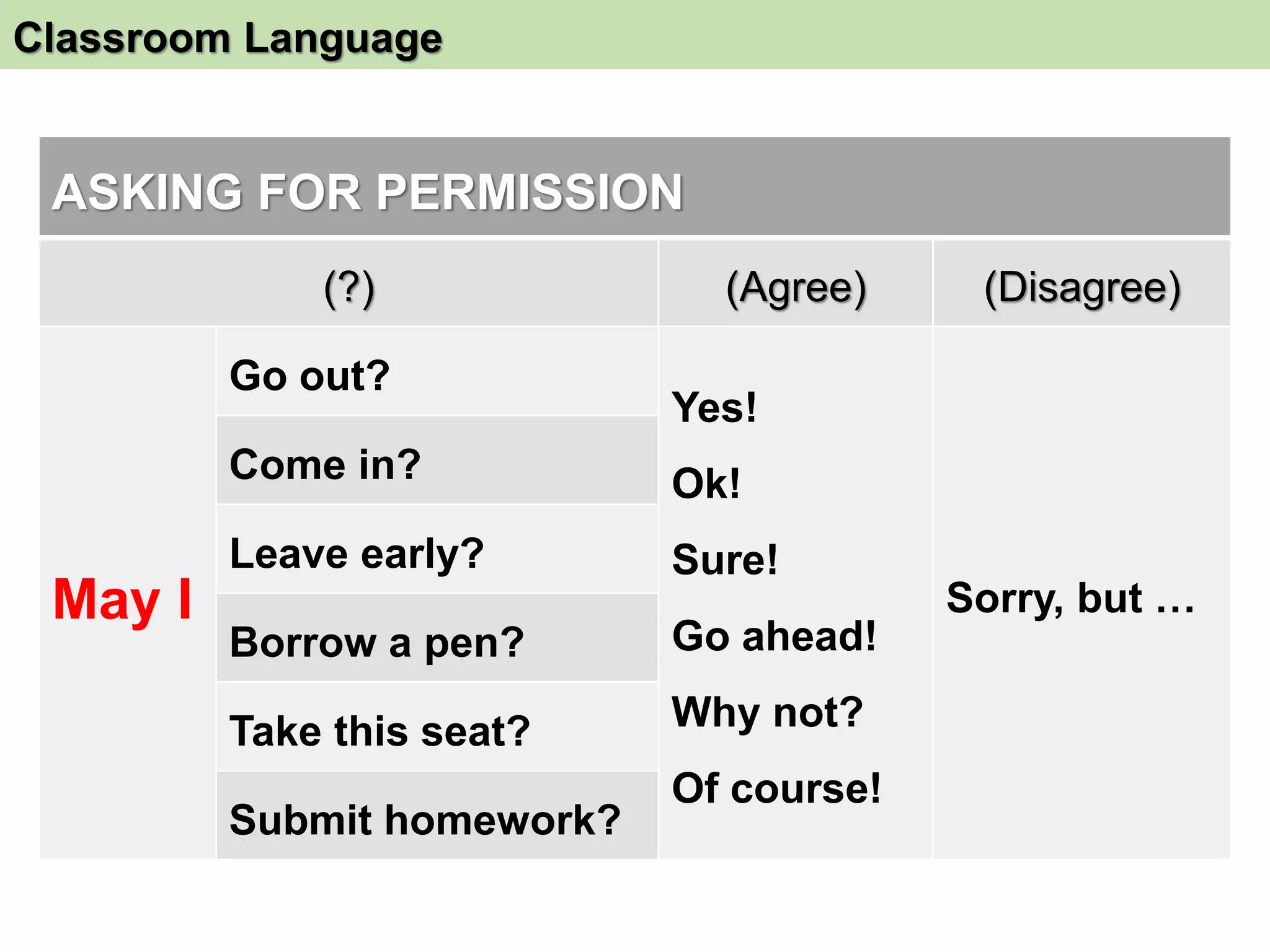
Classroom Language
ASKING FOR PERMISSION
(?) (Agree) (Disagree)
May I
Go out?
Yes!
Ok!
Sure!
Go ahead!
Why not?
Of course!
Sorry, but …
Come in?
Leave early?
Borrow a pen?
Take this seat?
Submit homework?
Classroom Language
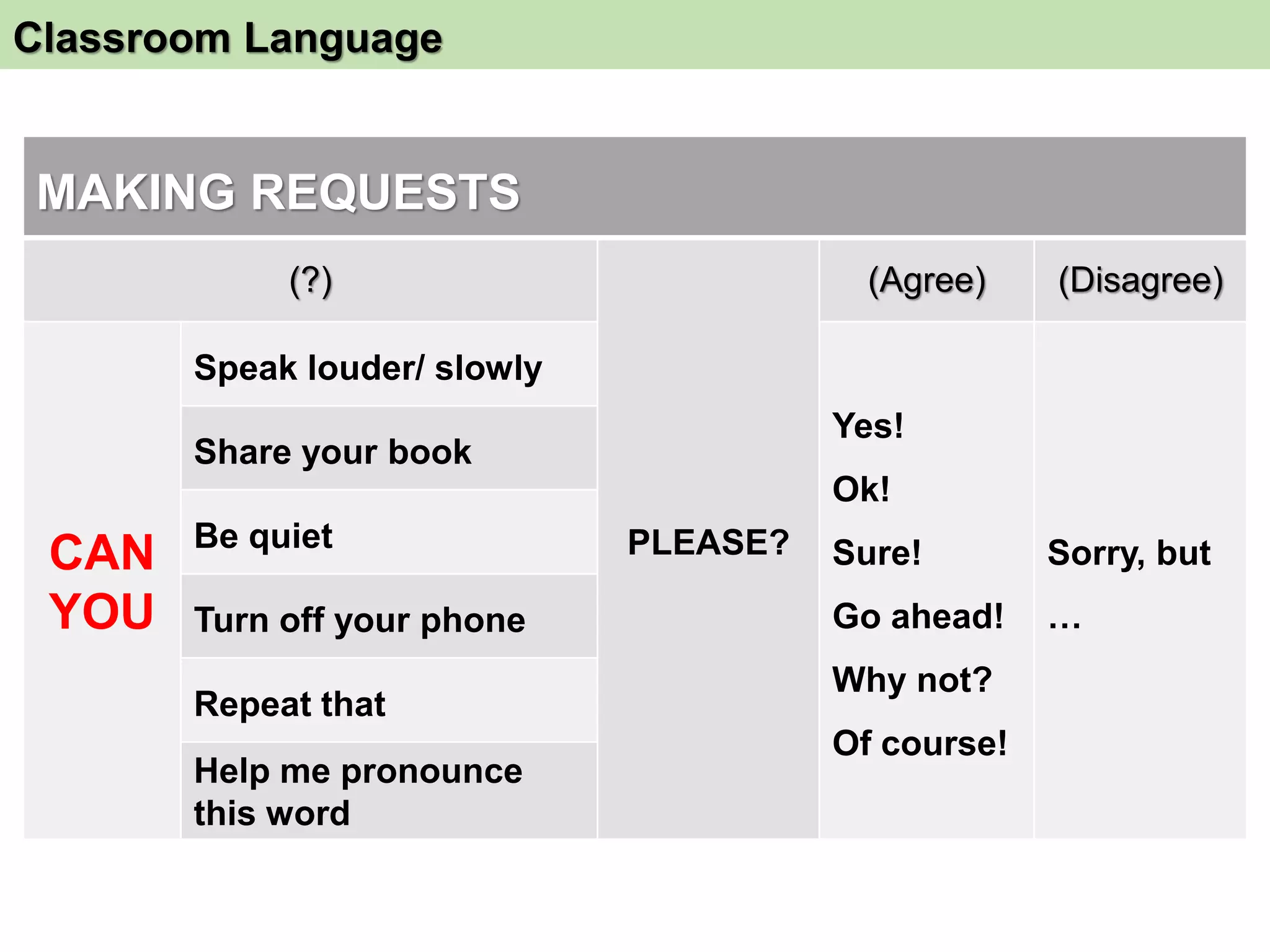
MAKING REQUESTS
(?)
PLEASE?
(Agree) (Disagree)
CAN
YOU
Speak louder/ slowly
Yes!
Ok!
Sure!
Go ahead!
Why not?
Of course!
Sorry, but
…
Share your book
Be quiet
Turn off your phone
Repeat that
Help me pronounce
this word
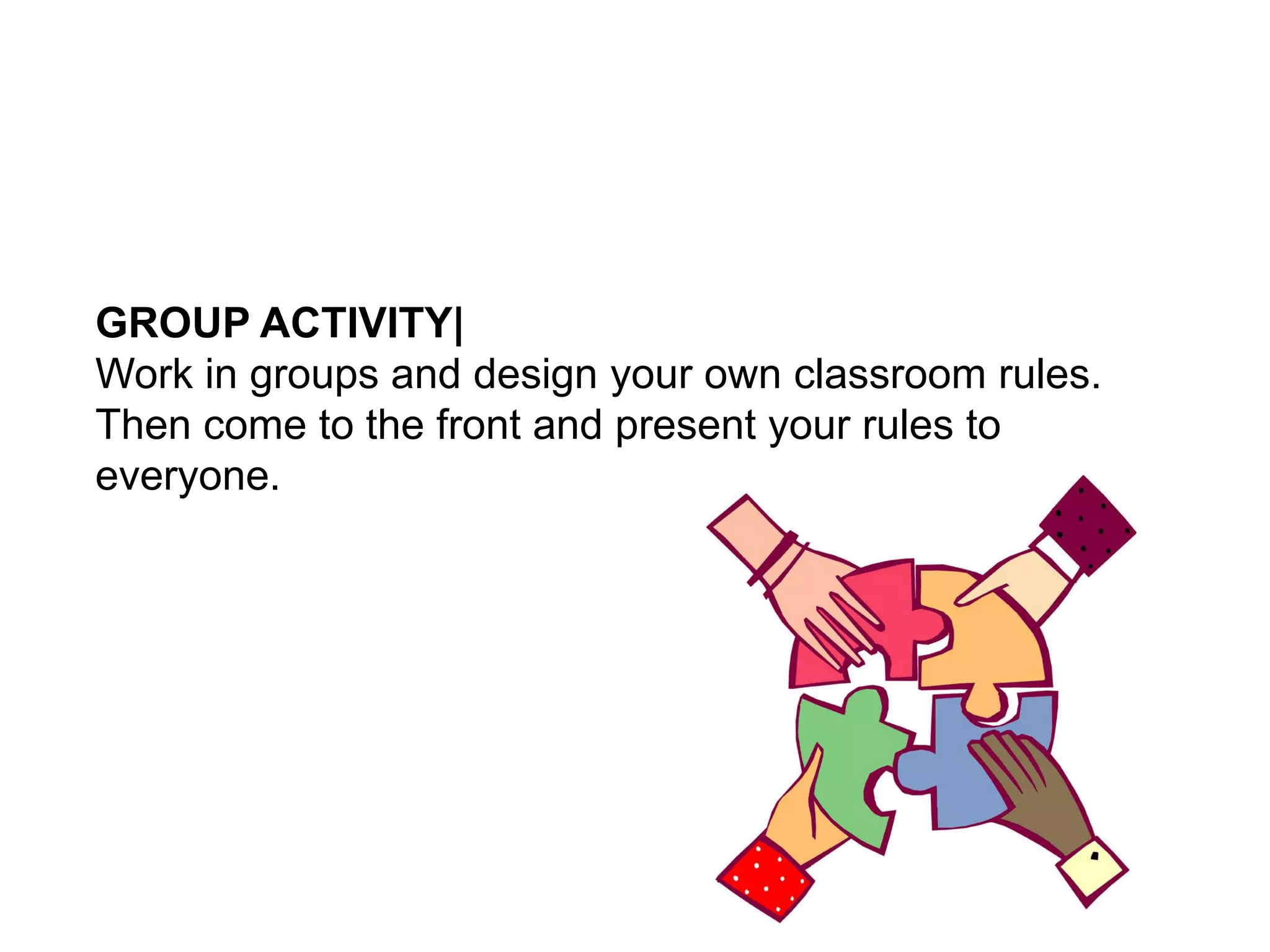
GROUP ACTIVITY|
Work in groups and design your own classroom rules.
Then come to the front and present your rules to
everyone.

Se4 lesson 2-i can use english language

  • 1.
    LESSON 02 I CANUSE ENGLISH LANGUAGE
  • 2.
    MAY I COMEIN? MAY I GO OUT? LOOK AT THE BOARD! RAISE YOUR HAND! WORK IN PAIRS! HOW DO YOU SAY THIS WORD IN ENGLISH? WHAT DOES IT MEAN? BE QUIET! MAY I BORROW THE BOOK?
  • 4.
    a. Write down e.Close your book! b. Sorry, I’m late f. Open your book! c. Can you repeat, please! g. Listen and repeat d. I forgot my book 1. 2. 3. 4. 5. 6. 7. 1.e 2.f 3.b 4.g 5.c 6.d 7.a B | Match the pictures to the correct descriptions
  • 5.
    Close your book! Canyou repeat, please! Open your book! I forgot my book Sorry, I’m late Write down Listen and repeat 1. 2. 3. 4. 5. 6. 7. B | Match the pictures to the correct descriptions
  • 6.
    Modal verbs ofPermission (May/ Could/ Can) Modal verbs can be used to give or ask for permission. More formal Less formal MAY…. COULD… CAN…. May I go out? Could I have some sugar? You can open the windows. Imperatives We use imperative clauses when we want to tell someone to do or not to do something. They usually don’t have a subject. We use the base form of the verb: • Have fun. • Enjoy your meal. • Don’t be late.
  • 7.
    Q1. Which iscorrect? a. May I went to the mall? b. May I go to the mall? Q2. Which is correct a. Can she tries again? b. Can she try again? Q3. Which is correct? a. She can has another glass. b. She can have another glass Q4. Which is correct? a. Can they drive the car? b. Can drive they the car? Q5. Which is correct? a. May I borrow your bike? b. May I borrowing your bike? QUICK CHECK 1
  • 8.
    Classroom Language ASKING FORPERMISSION (?) (Agree) (Disagree) May I Go out? Yes! Ok! Sure! Go ahead! Why not? Of course! Sorry, but … Come in? Leave early? Borrow a pen? Take this seat? Submit homework?
  • 9.
    Classroom Language MAKING REQUESTS (?) PLEASE? (Agree)(Disagree) CAN YOU Speak louder/ slowly Yes! Ok! Sure! Go ahead! Why not? Of course! Sorry, but … Share your book Be quiet Turn off your phone Repeat that Help me pronounce this word
  • 10.
    GROUP ACTIVITY| Work ingroups and design your own classroom rules. Then come to the front and present your rules to everyone.