1
Synergy Distributed Meeting
Scheduler (SDMS)
Students: Arnena Sheihk-Houssein
Hui Chen
Yiying Lee
CS6361 Requirement Engineering
Prof. Lawrence Chung
Computer Science Department
University of Texas at Dallas
Fall 2005
Project Presentation
2
• Project Overview
• Requirement Description
• Use Case Diagrams
• System Level Class Diagram
• Activity Class Diagram
• Entity Class Diagram
• Prototype
Contents
3
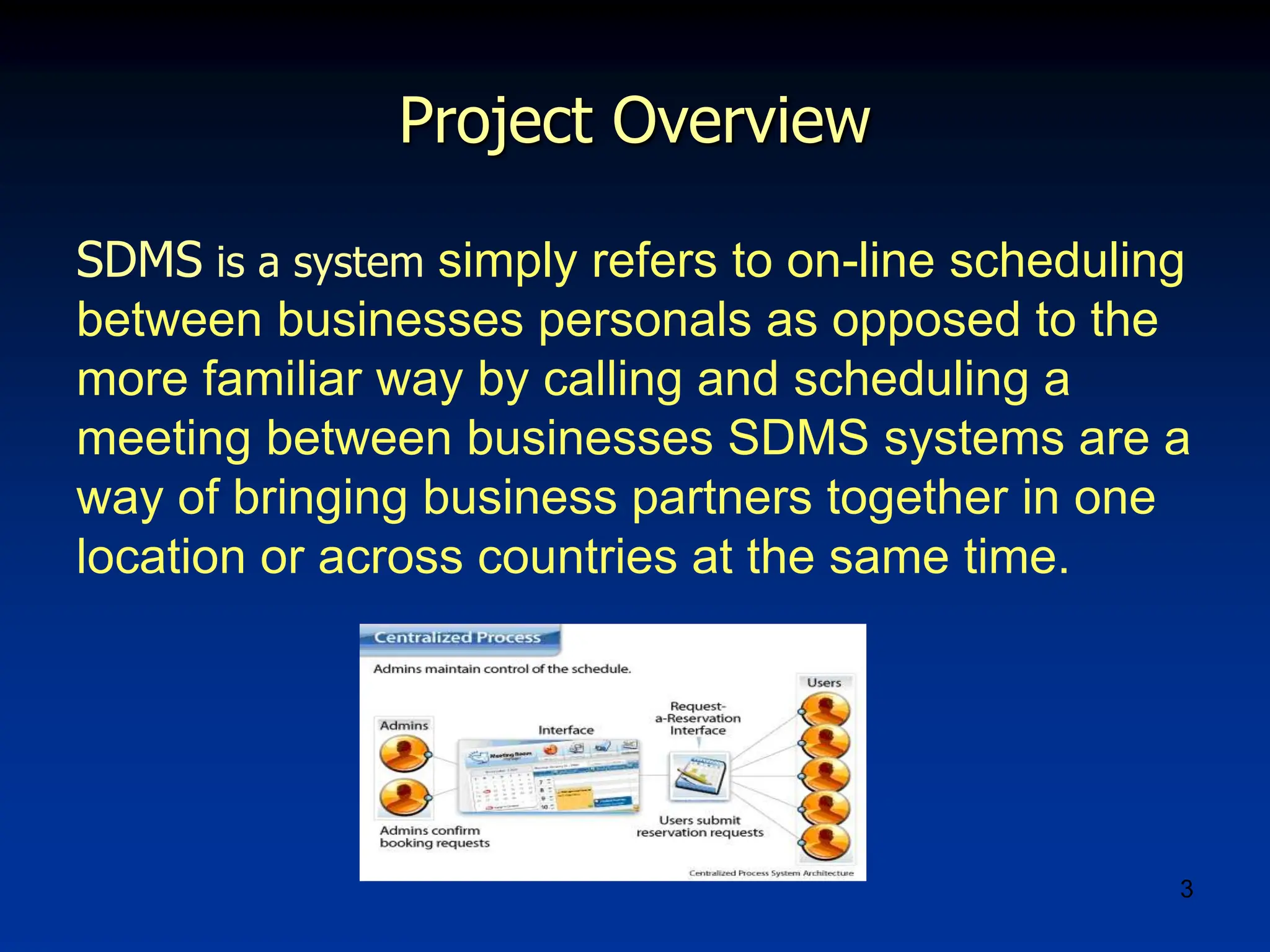
Project Overview
SDMS is a system simply refers to on-line scheduling
between businesses personals as opposed to the
more familiar way by calling and scheduling a
meeting between businesses SDMS systems are a
way of bringing business partners together in one
location or across countries at the same time.
4
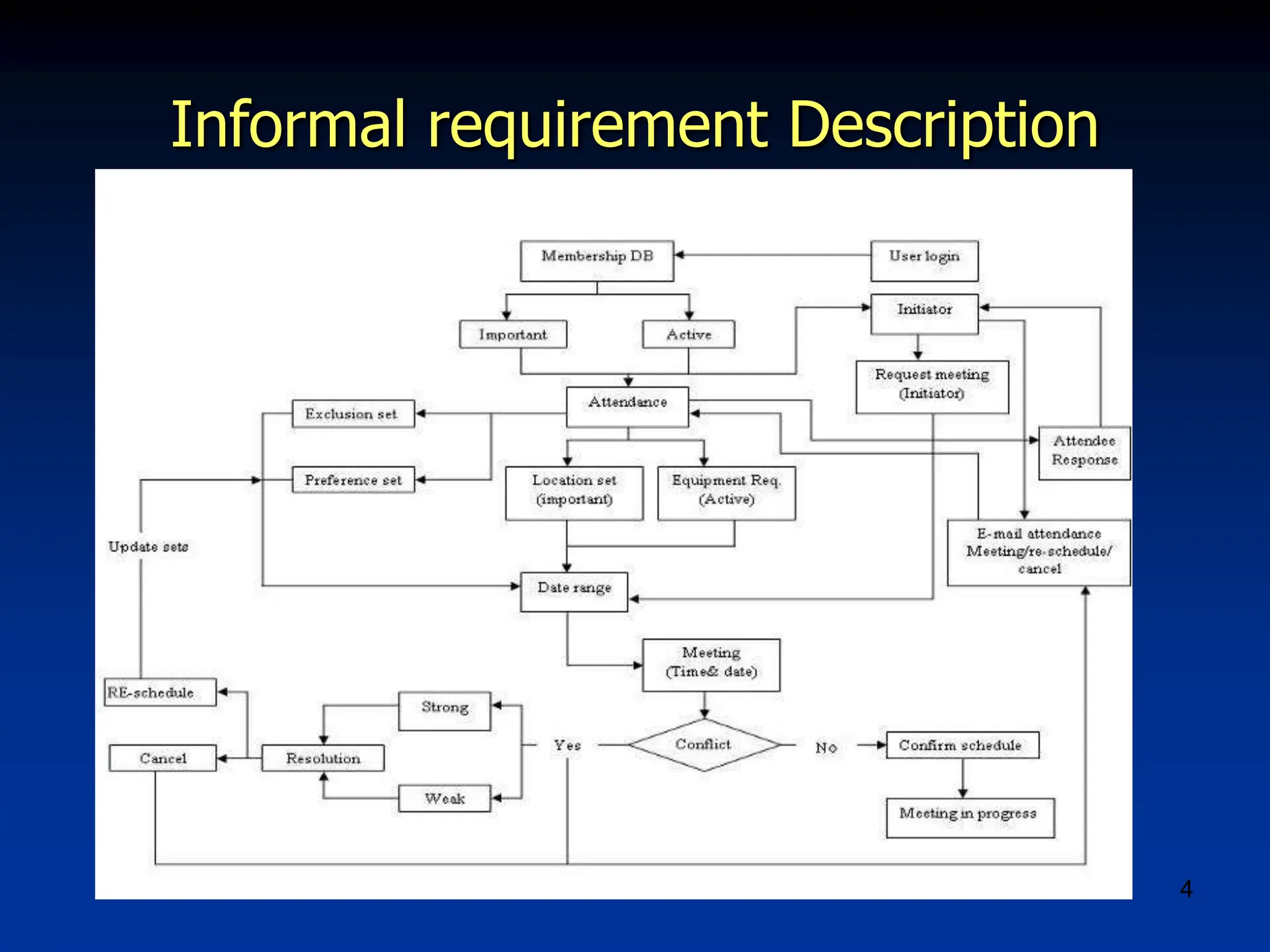
Informal requirement Description
5
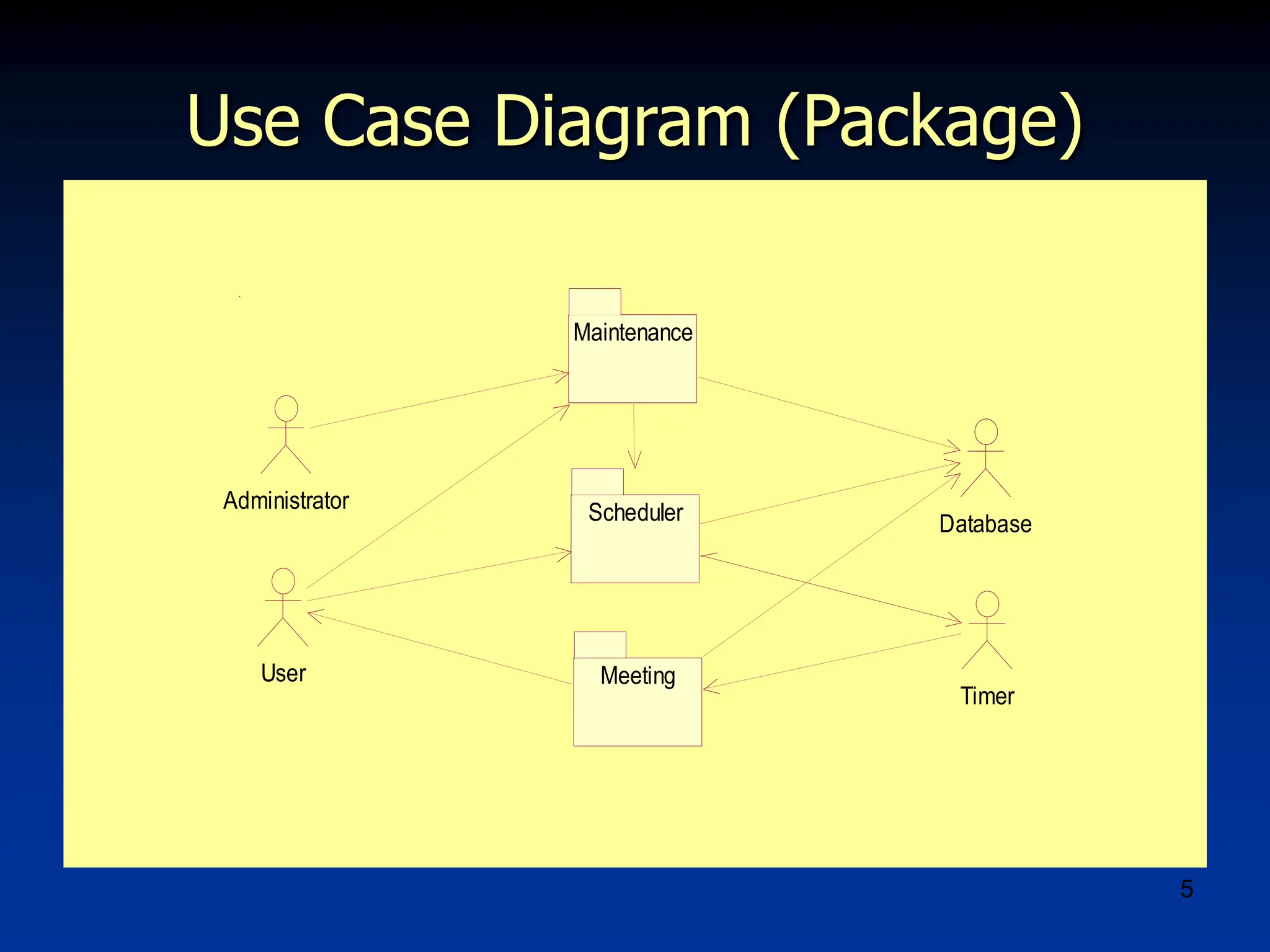
Use Case Diagram (Package)
Maintenance
Scheduler
Meeting
Database
Administrator
User
Timer
6
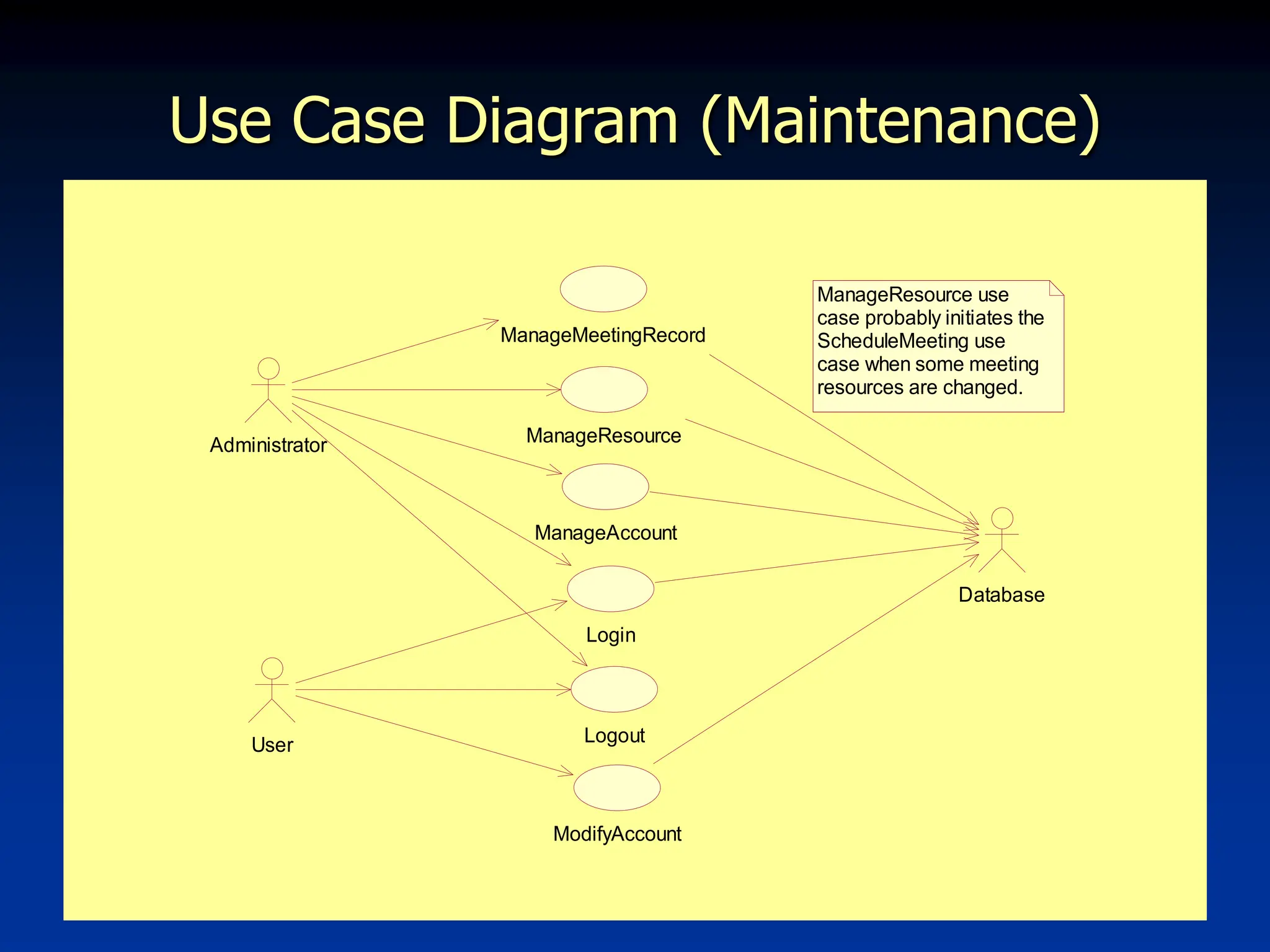
Use Case Diagram (Maintenance)
User Logout
ManageMeetingRecord
ManageAccount
Login
ModifyAccount
Administrator
Database
ManageResource
ManageResource use
case probably initiates the
ScheduleMeeting use
case when some meeting
resources are changed.
7
as
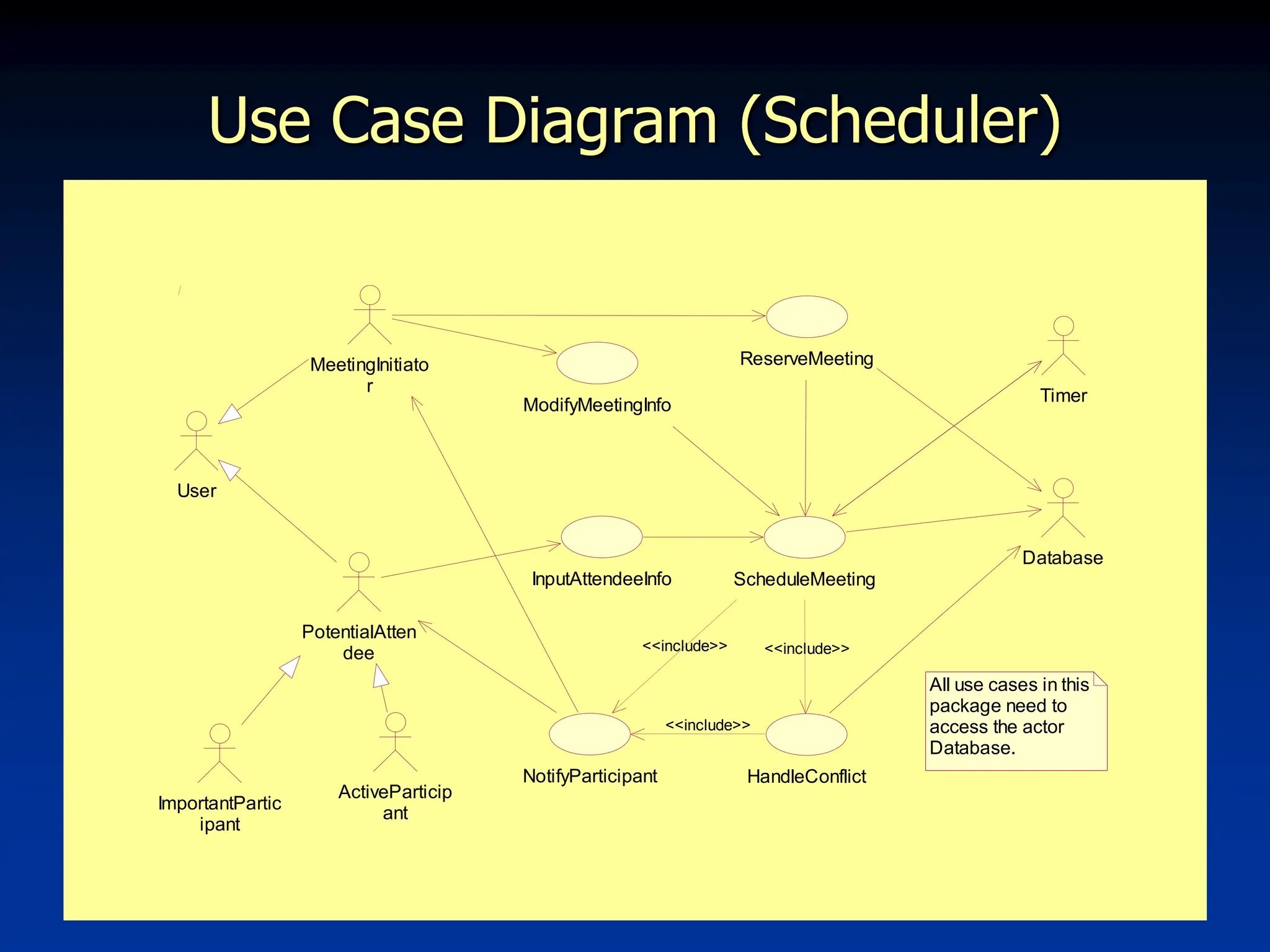
Use Case Diagram (Scheduler)
ActiveParticip
ant
ImportantPartic
ipant
User
Timer
PotentialAtten
dee
MeetingInitiato
r
ScheduleMeeting
HandleConflict
<<include>>
ModifyMeetingInfo
NotifyParticipant
<<include>>
<<include>>
InputAttendeeInfo
ReserveMeeting
Database
All use cases in this
package need to
access the actor
Database.
8
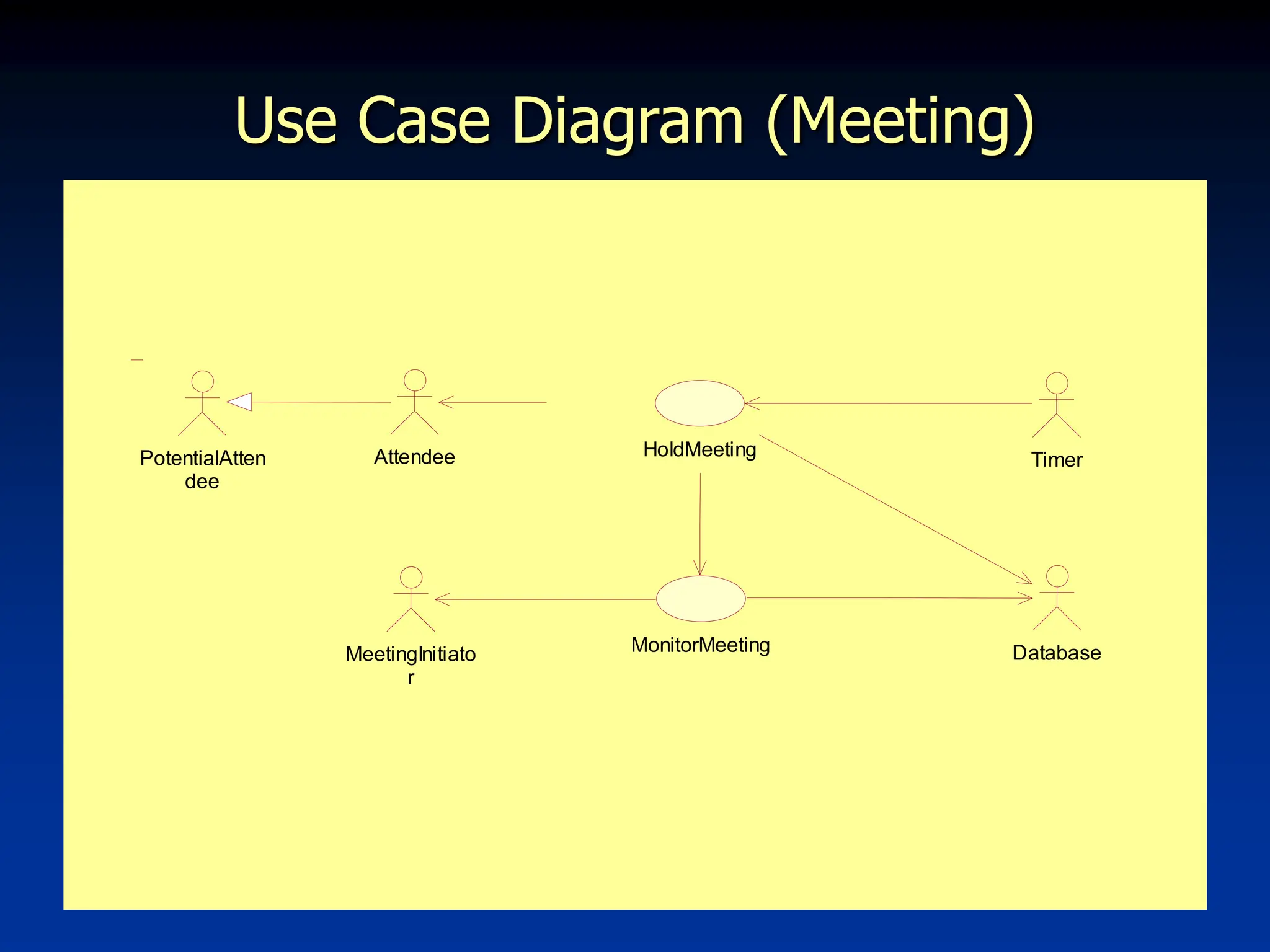
Use Case Diagram (Meeting)
PotentialAtten
dee
MeetingInitiato
r
Timer
MonitorMeeting Database
Attendee HoldMeeting
9
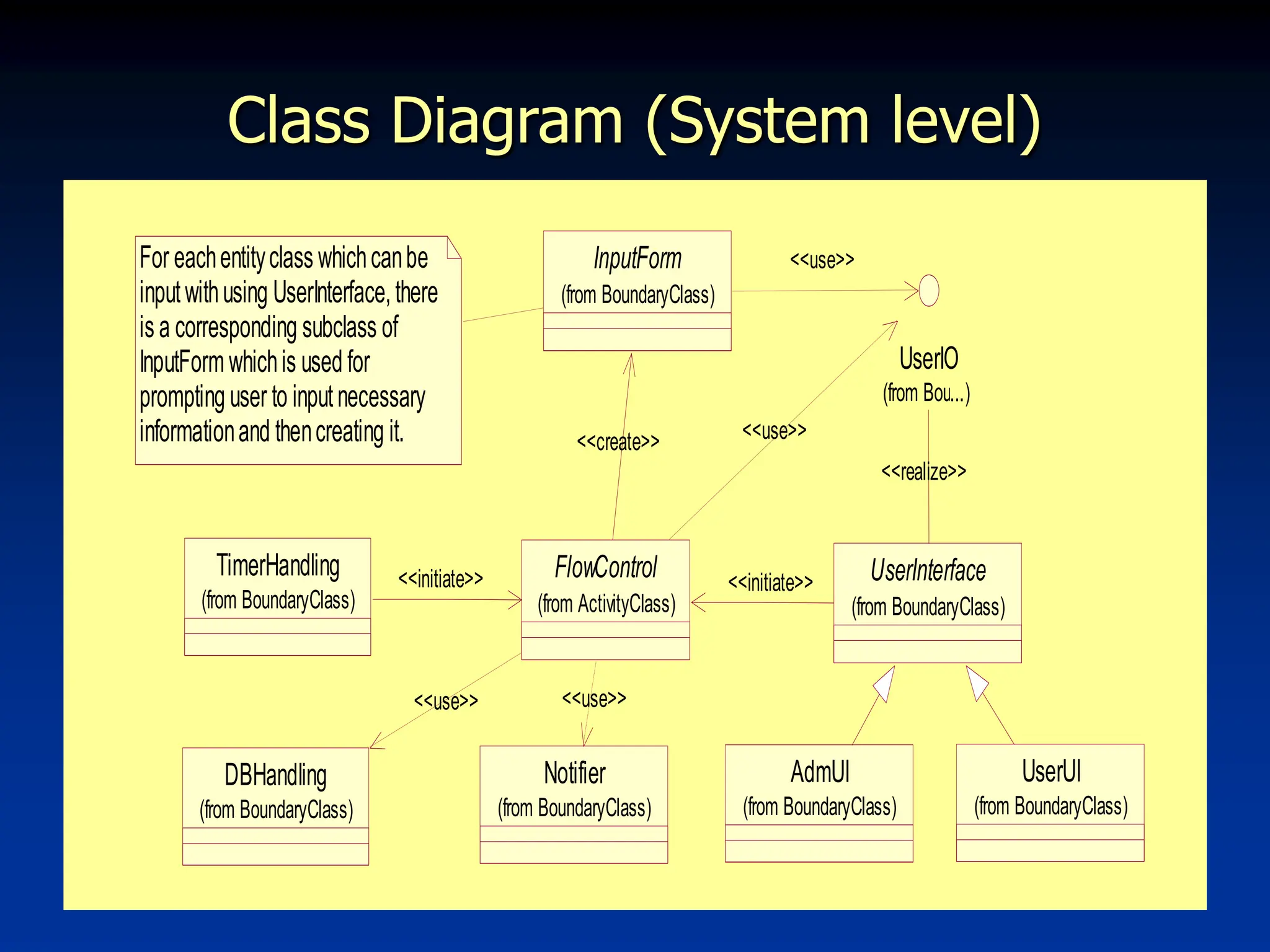
Class Diagram (System level)
AdmUI
(from BoundaryClass)
UserUI
(from BoundaryClass)
DBHandling
(from BoundaryClass)
UserIO
(from BoundaryClass)
...)
UserInterface
(from BoundaryClass)
TimerHandling
(from BoundaryClass)
InputForm
(from BoundaryClass)
For eachentityclasswhichcanbe
inputwithusing UserInterface,there
is a corresponding subclass of
InputFormwhichis used for
prompting user to inputnecessary
informationand thencreating it.
<<realize>>
<<use>>
Notifier
(from BoundaryClass)
FlowControl
(from ActivityClass)
<<use>>
<<use>>
<<initiate>>
<<initiate>>
<<create>>
<<use>>
10
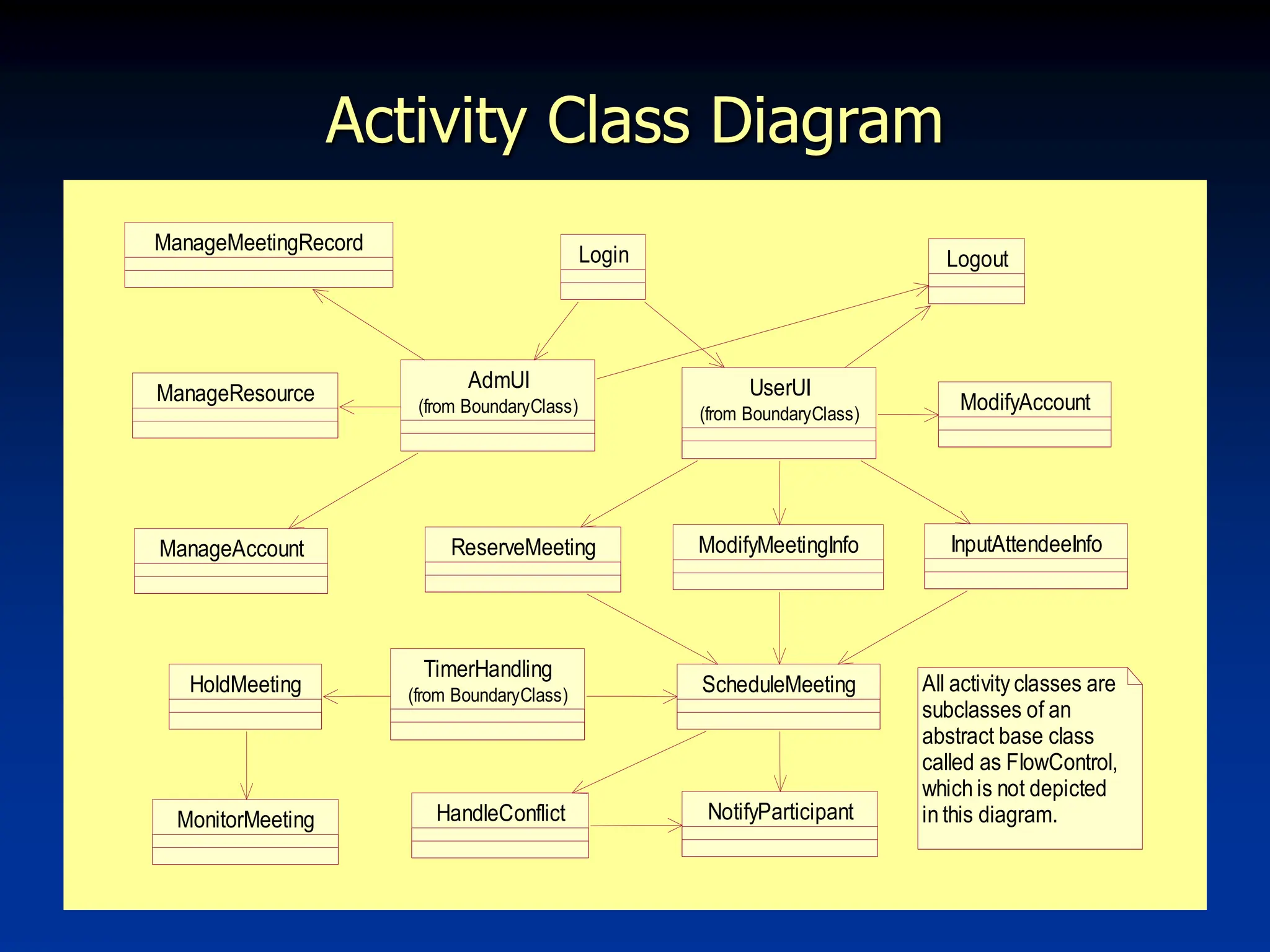
Activity Class Diagram
ManageMeetingRecord
ManageResource
ManageAccount
AdmUI
(from BoundaryClass)
Login Logout
ModifyAccount
UserUI
(from BoundaryClass)
MonitorMeeting
HoldMeeting
ReserveMeeting InputAttendeeInfo
HandleConflict NotifyParticipant
ModifyMeetingInfo
ScheduleMeeting
TimerHandling
(from BoundaryClass)
All activity classes are
subclasses of an
abstract base class
called as FlowControl,
which is not depicted
in this diagram.
11
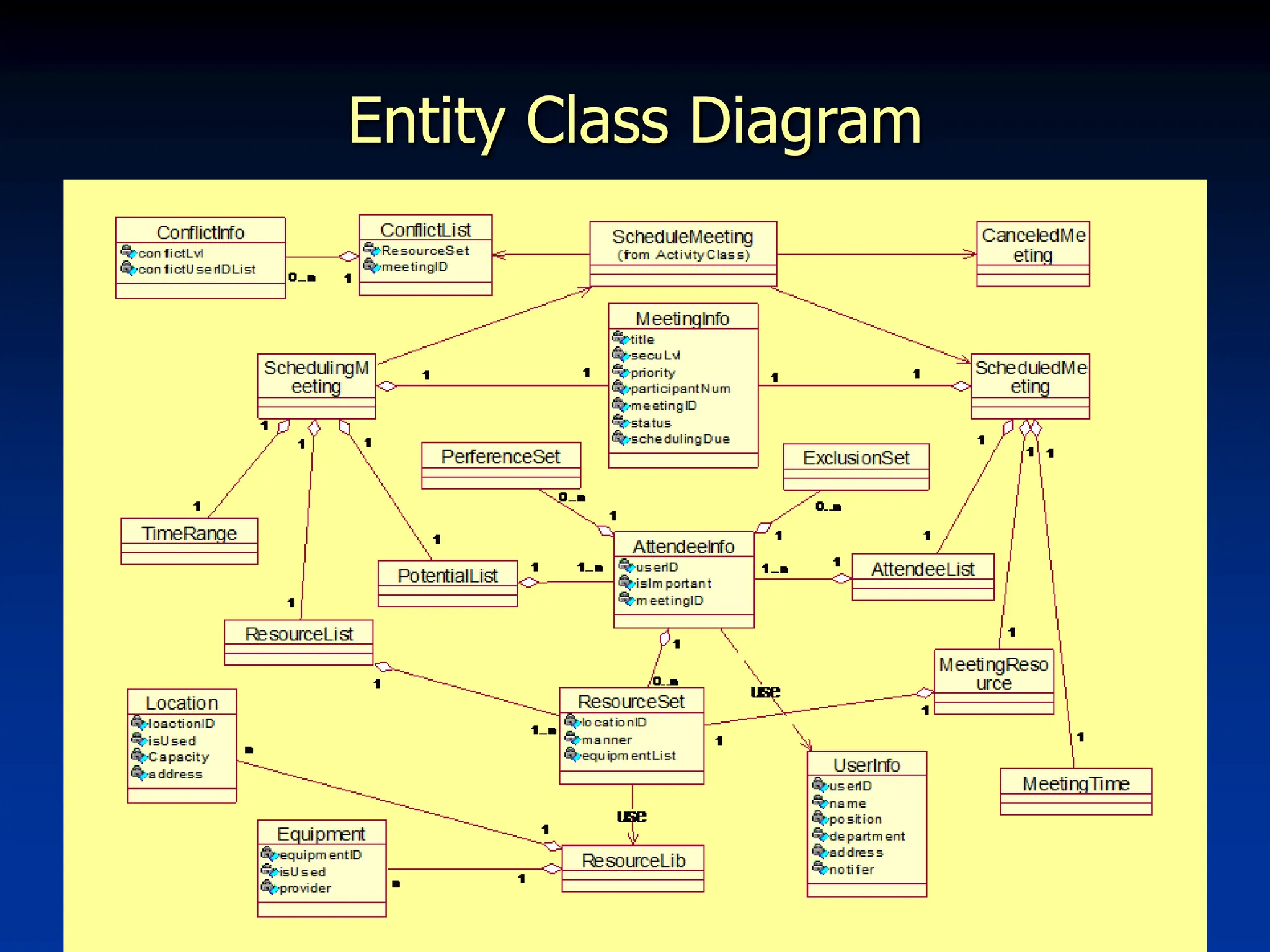
Entity Class Diagram
12
Statechart
Diagram
Initiate System
Wait Input
Event
Terminate System
Ready
Maintain Database
do/ Show adm menu
Hold Meeting
do/ HoldMeeting
do/ MonitorMeeting
Main User Interface
do/ Show user menu
ManageMeet
ingRecord
ManageRe
source
Manage
Account
ModifyAc
count
Initiator User Interface
do/ Show initiator menu
Attendee User Interface
do/ Show attendee menu
Reserve
Meeting
Schedule Meeting
Notify Participant
Handle
Conflict
Schedule
Meeting
Cancel
Meeting
Schedule
Complete
Save Meetinf
Record Upper Menu
Input Attendee
Information
[Using-Resource changed]
[ Select Reserve ]
Modify Meeting
Information
[ Select Modify ]
Notify Participant
Handle
Conflict
Schedule
Meeting
[Conflict occurs]
Need New Info
[ Need Info ]
Cancel
Meeting
[Time out]
Schedule
Complete
[Success]
Save Meetinf
Record
[ Select Modify ]
[ Select Initiator ]
[ Select Attendee ]
Logout
Show
Result
[Others]
Meeting ends
[ Select Record ]
[ Select Resource ]
[ Select Account ]
Logout
Upper Menu
[ Logined ]
[ Unlogined ]
Shut down
[ Timer event for starting meeting ]
[ Administrator Login ]
[ User Login ]
[ Timer event for scheduling meeting ]
13
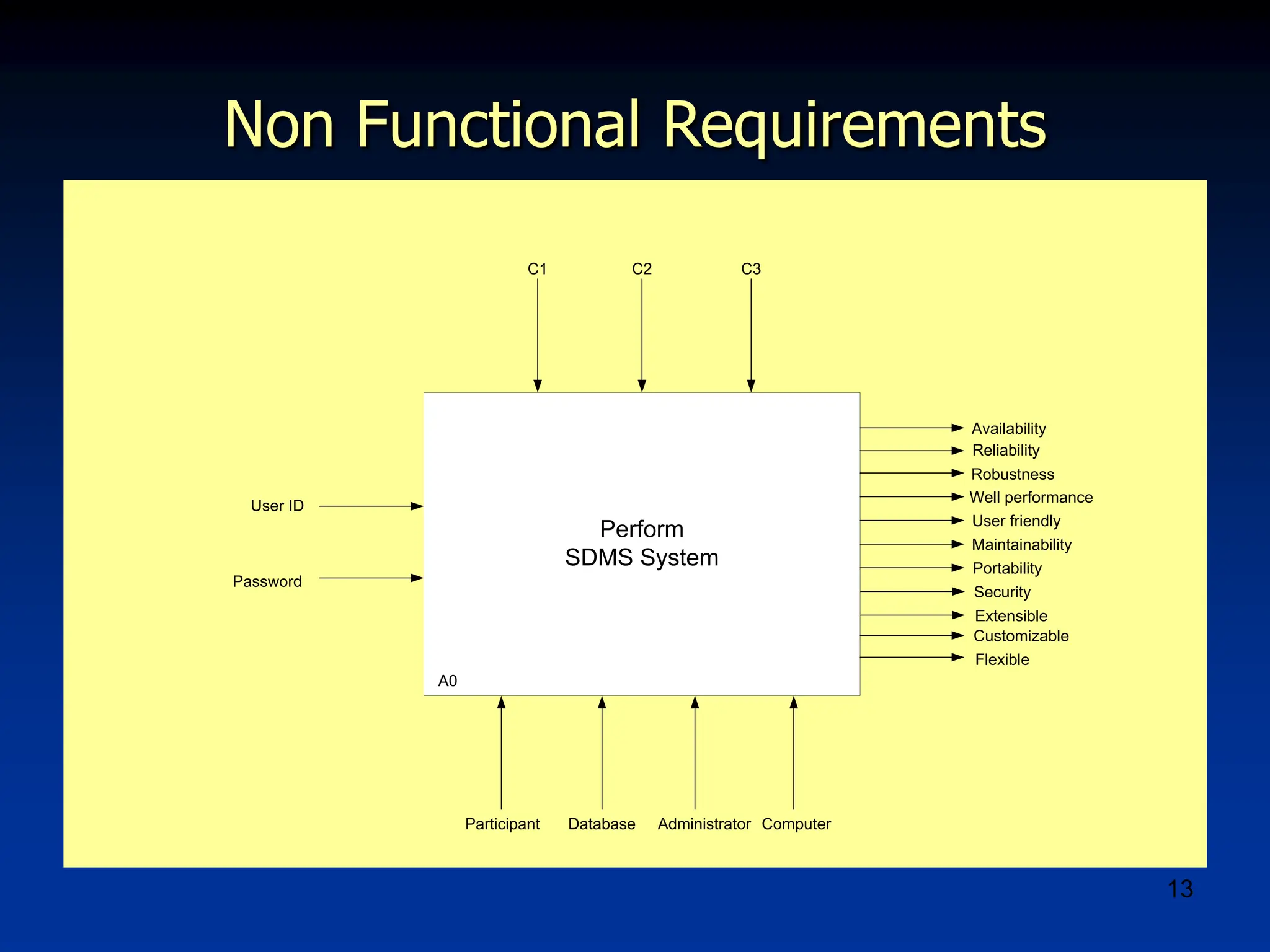
Non Functional Requirements
Perform
SDMS System
Availability
Reliability
Robustness
Well performance
User friendly
Maintainability
Portability
Security
Extensible
Customizable
Flexible
User ID
Password
Participant Database
A0
Computer
Administrator
C1 C2 C3
14
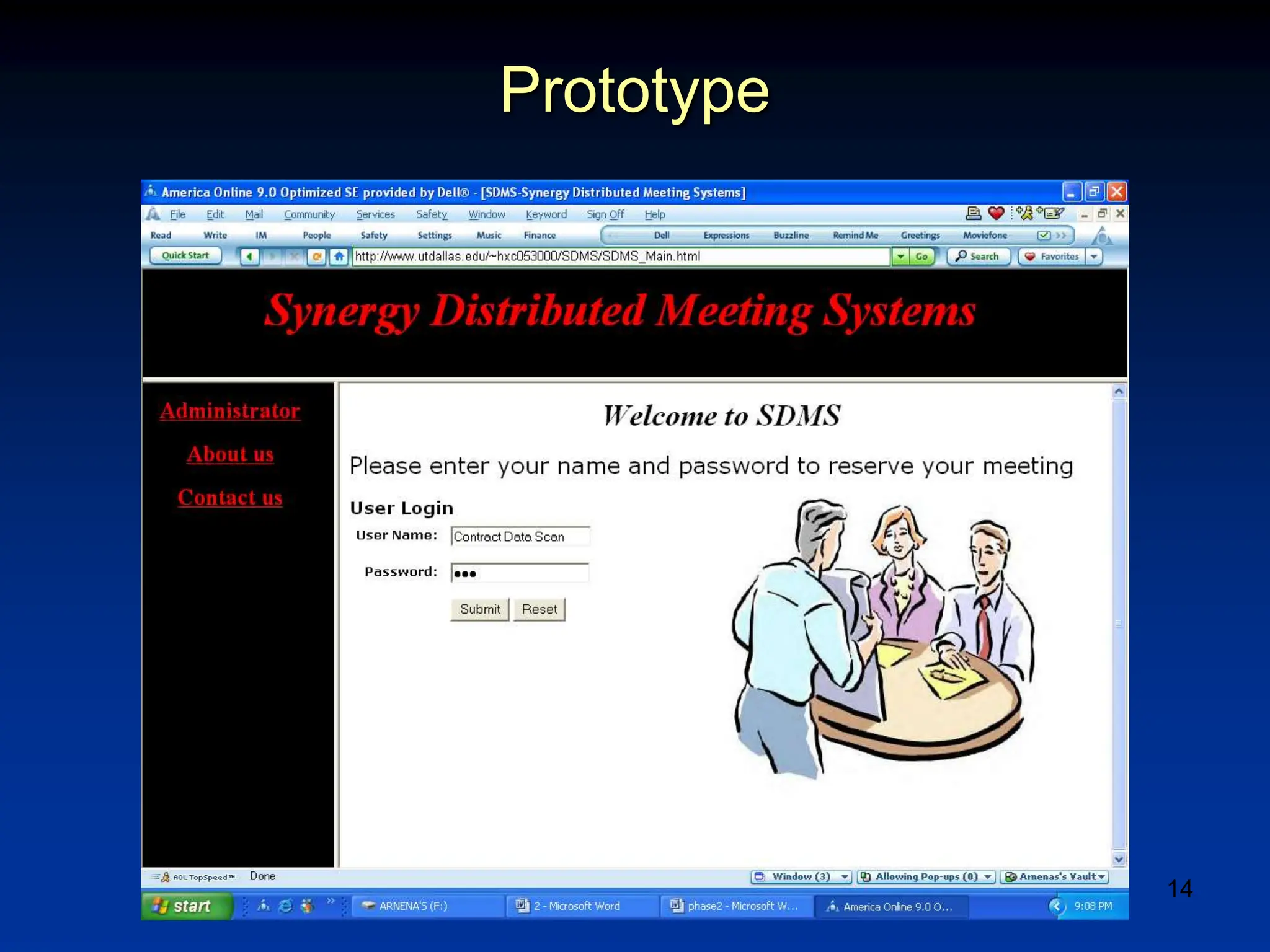
Prototype
15
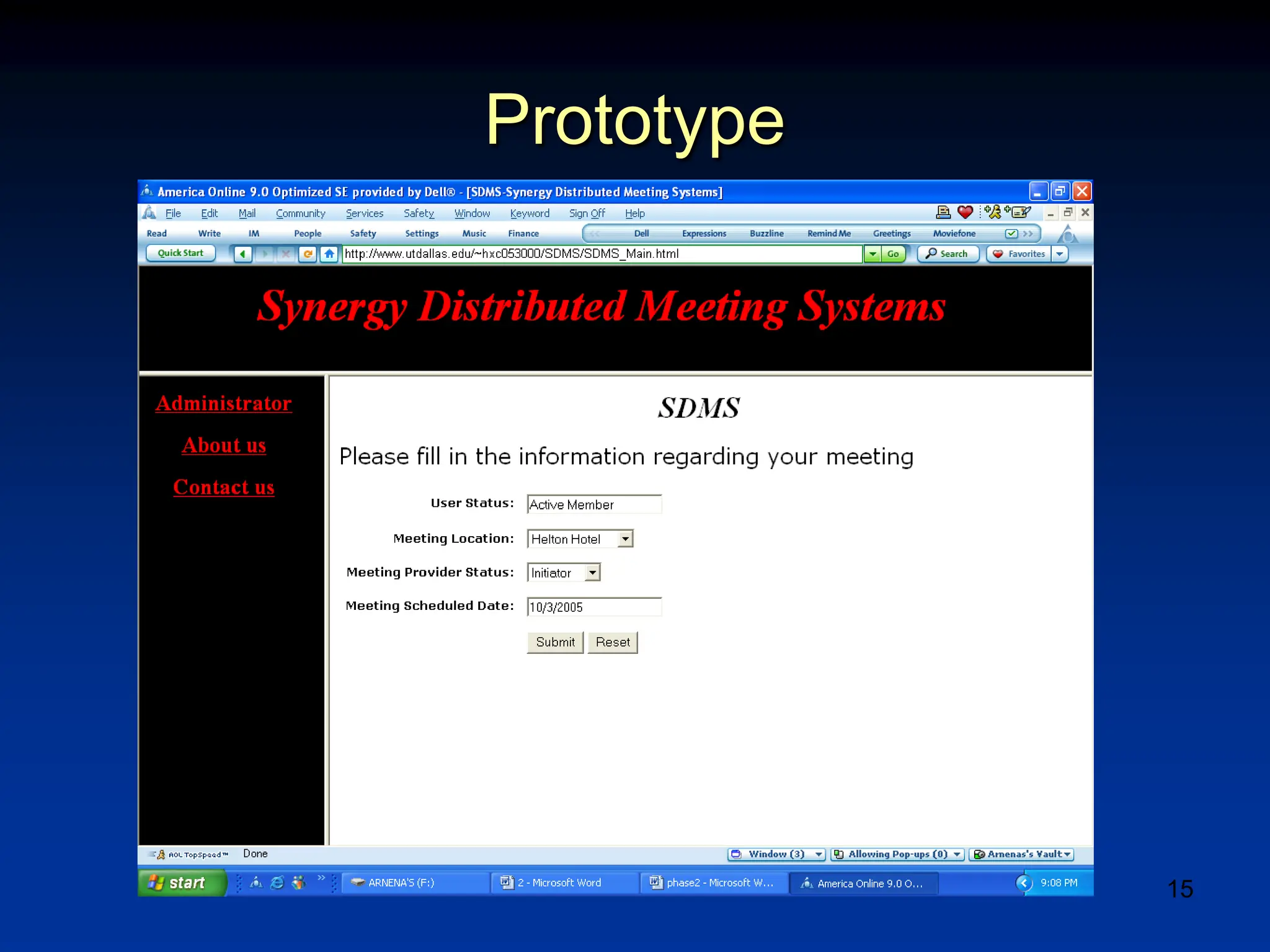
Prototype
16
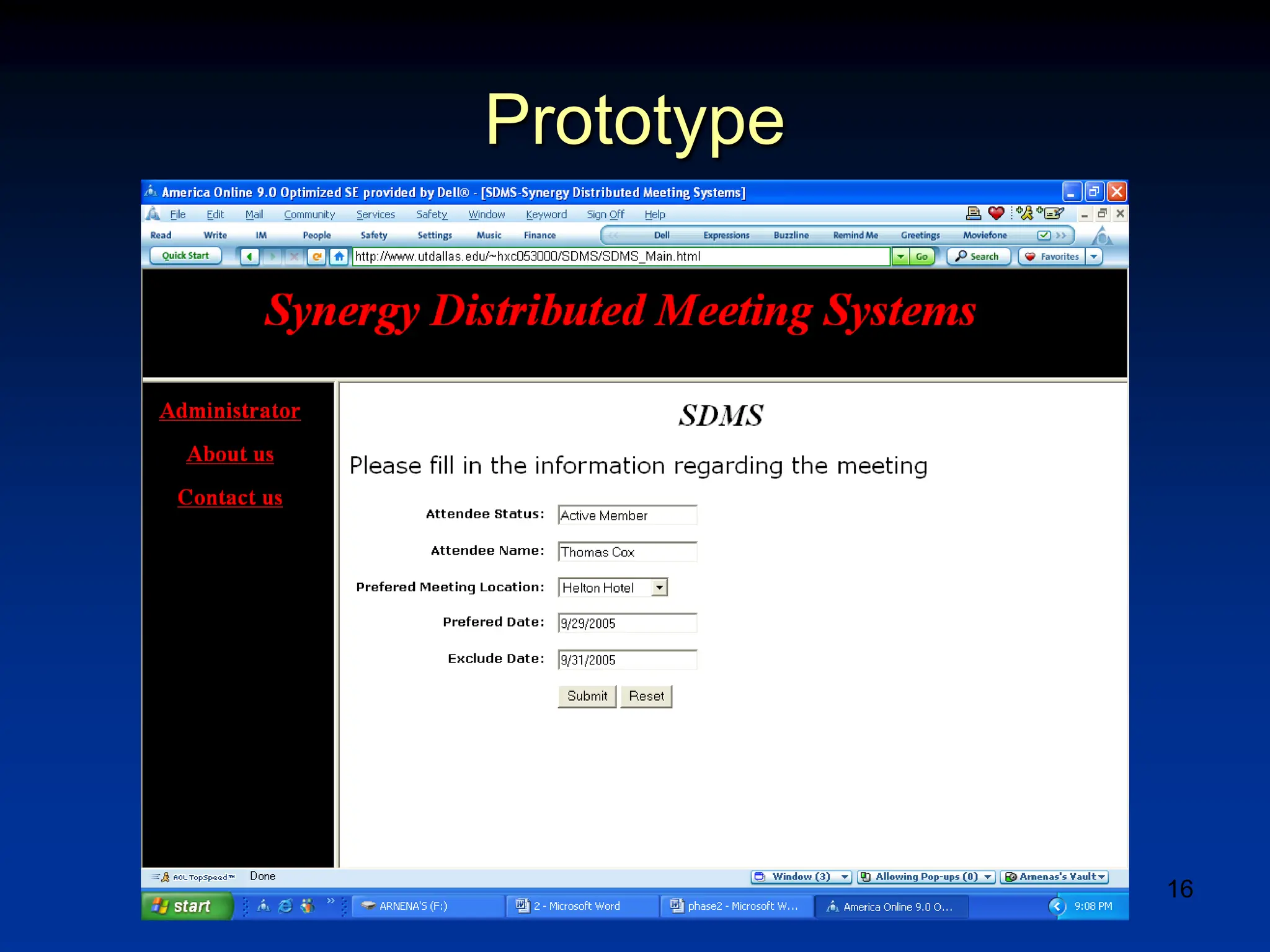
Prototype
17
Thanks !

sdms electric power generation system report on engg

  • 1.
    1 Synergy Distributed Meeting Scheduler(SDMS) Students: Arnena Sheihk-Houssein Hui Chen Yiying Lee CS6361 Requirement Engineering Prof. Lawrence Chung Computer Science Department University of Texas at Dallas Fall 2005 Project Presentation
  • 2.
    2 • Project Overview •Requirement Description • Use Case Diagrams • System Level Class Diagram • Activity Class Diagram • Entity Class Diagram • Prototype Contents
  • 3.
    3 Project Overview SDMS isa system simply refers to on-line scheduling between businesses personals as opposed to the more familiar way by calling and scheduling a meeting between businesses SDMS systems are a way of bringing business partners together in one location or across countries at the same time.
  • 4.
  • 5.
    5 Use Case Diagram(Package) Maintenance Scheduler Meeting Database Administrator User Timer
  • 6.
    6 Use Case Diagram(Maintenance) User Logout ManageMeetingRecord ManageAccount Login ModifyAccount Administrator Database ManageResource ManageResource use case probably initiates the ScheduleMeeting use case when some meeting resources are changed.
  • 7.
    7 as Use Case Diagram(Scheduler) ActiveParticip ant ImportantPartic ipant User Timer PotentialAtten dee MeetingInitiato r ScheduleMeeting HandleConflict <<include>> ModifyMeetingInfo NotifyParticipant <<include>> <<include>> InputAttendeeInfo ReserveMeeting Database All use cases in this package need to access the actor Database.
  • 8.
    8 Use Case Diagram(Meeting) PotentialAtten dee MeetingInitiato r Timer MonitorMeeting Database Attendee HoldMeeting
  • 9.
    9 Class Diagram (Systemlevel) AdmUI (from BoundaryClass) UserUI (from BoundaryClass) DBHandling (from BoundaryClass) UserIO (from BoundaryClass) ...) UserInterface (from BoundaryClass) TimerHandling (from BoundaryClass) InputForm (from BoundaryClass) For eachentityclasswhichcanbe inputwithusing UserInterface,there is a corresponding subclass of InputFormwhichis used for prompting user to inputnecessary informationand thencreating it. <<realize>> <<use>> Notifier (from BoundaryClass) FlowControl (from ActivityClass) <<use>> <<use>> <<initiate>> <<initiate>> <<create>> <<use>>
  • 10.
    10 Activity Class Diagram ManageMeetingRecord ManageResource ManageAccount AdmUI (fromBoundaryClass) Login Logout ModifyAccount UserUI (from BoundaryClass) MonitorMeeting HoldMeeting ReserveMeeting InputAttendeeInfo HandleConflict NotifyParticipant ModifyMeetingInfo ScheduleMeeting TimerHandling (from BoundaryClass) All activity classes are subclasses of an abstract base class called as FlowControl, which is not depicted in this diagram.
  • 11.
  • 12.
    12 Statechart Diagram Initiate System Wait Input Event TerminateSystem Ready Maintain Database do/ Show adm menu Hold Meeting do/ HoldMeeting do/ MonitorMeeting Main User Interface do/ Show user menu ManageMeet ingRecord ManageRe source Manage Account ModifyAc count Initiator User Interface do/ Show initiator menu Attendee User Interface do/ Show attendee menu Reserve Meeting Schedule Meeting Notify Participant Handle Conflict Schedule Meeting Cancel Meeting Schedule Complete Save Meetinf Record Upper Menu Input Attendee Information [Using-Resource changed] [ Select Reserve ] Modify Meeting Information [ Select Modify ] Notify Participant Handle Conflict Schedule Meeting [Conflict occurs] Need New Info [ Need Info ] Cancel Meeting [Time out] Schedule Complete [Success] Save Meetinf Record [ Select Modify ] [ Select Initiator ] [ Select Attendee ] Logout Show Result [Others] Meeting ends [ Select Record ] [ Select Resource ] [ Select Account ] Logout Upper Menu [ Logined ] [ Unlogined ] Shut down [ Timer event for starting meeting ] [ Administrator Login ] [ User Login ] [ Timer event for scheduling meeting ]
  • 13.
    13 Non Functional Requirements Perform SDMSSystem Availability Reliability Robustness Well performance User friendly Maintainability Portability Security Extensible Customizable Flexible User ID Password Participant Database A0 Computer Administrator C1 C2 C3
  • 14.
  • 15.
  • 16.
  • 17.