SDLC MODEL
Md. MosharofHosen
Software Engineering
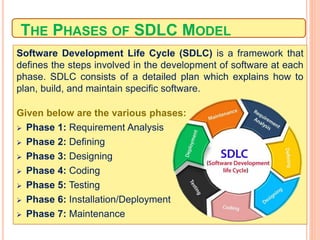
THE PHASES OF SDLC MODEL
Software Development Life Cycle (SDLC) is a framework that
defines the steps involved in the development of software at each
phase. SDLC consists of a detailed plan which explains how to
plan, build, and maintain specific software.
Given below are the various phases:
 Phase 1: Requirement Analysis
 Phase 2: Defining
 Phase 3: Designing
 Phase 4: Coding
 Phase 5: Testing
 Phase 6: Installation/Deployment
 Phase 7: Maintenance
PROPERLY SELECTION OF SDLC MODEL
Selecting a Software Development Life Cycle (SDLC) methodology is
a challenging task for many organizations and software engineers. A
software development paradigm has its own set of tools, methods
and procedures, which are expressed clearly and defines software
development life cycle.
The most used, popular and important SDLC models are given
below:
 Waterfall Model
 V-shaped Model
 Spiral Model
 Agile Model
 RAD Model
 Incremental Model
THE MOST APPROPRIATE SDLC MODEL & WHY?
Agile model is the most appropriate SDLC model. Agile has
become the go to framework for helping app startups and
development agencies maintain a focus on delivering a quality
app.
The Agile model is a combination of an incremental and iterative
approach and is focused on quickly and efficiently and fitting in
well with flexible requirements.
Agile maximizes value throughout the development process and
significantly reduces the overall risk of any given project.
SDLC MODEL STRENGTHS & DEFICIENCY
SDLC model Strength:
 Easy to be explained
 Each phase has specific deliverables
 Easy to explain to the users
 Programs can be detected earlier
 Milestones are well understood
 Removing unnecessary activities that waste time and effort.
SDLC model Deficiency:
 Inflexible, like waterfall model
 Costly and required more time
 Requirements of a system can be frozen
 Very difficult to go back to any stage after it finished
 Needs very proper and detailed planning
CUSTOMIZE AN EXISTING SYSTEM
Software customization, it is not about only development. It's about
diving deep into the business requirements, understand it and then give
it a final shape. There is a misconception about the development cost
and time. Custom software development is neither expensive nor time
consuming. The most important is that the underlying technology
changes and advances.
All such business and environmental constraints bring risk in software.
The image right side shows triple constraints for software projects. It is
an essential part of software organization to deliver
quality product, keeping the cost within client’s budget
constrain and deliver the project as per scheduled.
SOFTWARE PROJECT MANAGER EXPERIENCE
A software project manager is a person who undertakes the
responsibility of executing the software project. Software project
manager is thoroughly aware of all the phases of SDLC that the
software would go through.
Also maintains communication among all team members in order
to address issues of cost, budget, resources, time, quality and
customer satisfaction.
Software project management is essential to incorporate user
requirements along with budget and time constraints.
 Managing Project
 Project Planning
 Project Estimation
 Project Estimation Techniques
SDLC Model by MHM

SDLC Model by MHM

  • 1.
  • 2.
    THE PHASES OFSDLC MODEL Software Development Life Cycle (SDLC) is a framework that defines the steps involved in the development of software at each phase. SDLC consists of a detailed plan which explains how to plan, build, and maintain specific software. Given below are the various phases:  Phase 1: Requirement Analysis  Phase 2: Defining  Phase 3: Designing  Phase 4: Coding  Phase 5: Testing  Phase 6: Installation/Deployment  Phase 7: Maintenance
  • 3.
    PROPERLY SELECTION OFSDLC MODEL Selecting a Software Development Life Cycle (SDLC) methodology is a challenging task for many organizations and software engineers. A software development paradigm has its own set of tools, methods and procedures, which are expressed clearly and defines software development life cycle. The most used, popular and important SDLC models are given below:  Waterfall Model  V-shaped Model  Spiral Model  Agile Model  RAD Model  Incremental Model
  • 4.
    THE MOST APPROPRIATESDLC MODEL & WHY? Agile model is the most appropriate SDLC model. Agile has become the go to framework for helping app startups and development agencies maintain a focus on delivering a quality app. The Agile model is a combination of an incremental and iterative approach and is focused on quickly and efficiently and fitting in well with flexible requirements. Agile maximizes value throughout the development process and significantly reduces the overall risk of any given project.
  • 5.
    SDLC MODEL STRENGTHS& DEFICIENCY SDLC model Strength:  Easy to be explained  Each phase has specific deliverables  Easy to explain to the users  Programs can be detected earlier  Milestones are well understood  Removing unnecessary activities that waste time and effort. SDLC model Deficiency:  Inflexible, like waterfall model  Costly and required more time  Requirements of a system can be frozen  Very difficult to go back to any stage after it finished  Needs very proper and detailed planning
  • 6.
    CUSTOMIZE AN EXISTINGSYSTEM Software customization, it is not about only development. It's about diving deep into the business requirements, understand it and then give it a final shape. There is a misconception about the development cost and time. Custom software development is neither expensive nor time consuming. The most important is that the underlying technology changes and advances. All such business and environmental constraints bring risk in software. The image right side shows triple constraints for software projects. It is an essential part of software organization to deliver quality product, keeping the cost within client’s budget constrain and deliver the project as per scheduled.
  • 7.
    SOFTWARE PROJECT MANAGEREXPERIENCE A software project manager is a person who undertakes the responsibility of executing the software project. Software project manager is thoroughly aware of all the phases of SDLC that the software would go through. Also maintains communication among all team members in order to address issues of cost, budget, resources, time, quality and customer satisfaction. Software project management is essential to incorporate user requirements along with budget and time constraints.  Managing Project  Project Planning  Project Estimation  Project Estimation Techniques