-Sunny Poswal
3
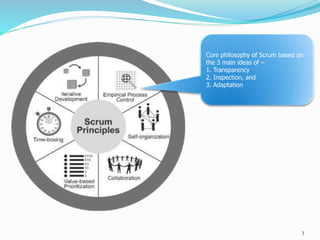
Core philosophy of Scrum based on
the 3 main ideas of –
1. Transparency
2. Inspection, and
3. Adaptation
4
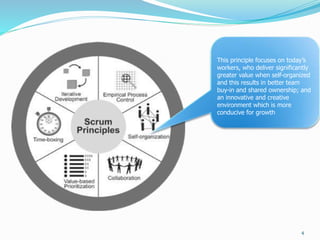
This principle focuses on today’s
workers, who deliver significantly
greater value when self-organized
and this results in better team
buy-in and shared ownership; and
an innovative and creative
environment which is more
conducive for growth
5
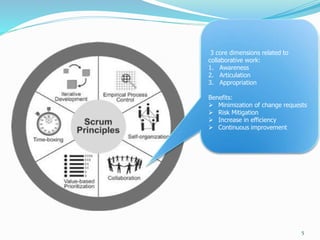
3 core dimensions related to
collaborative work:
1. Awareness
2. Articulation
3. Appropriation
Benefits:
 Minimization of change requests
 Risk Mitigation
 Increase in efficiency
 Continuous improvement
6
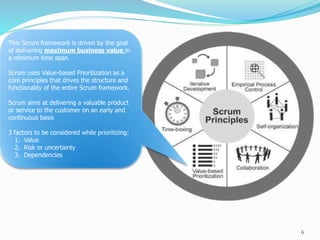
This Scrum framework is driven by the goal
of delivering maximum business value in
a minimum time span.
Scrum uses Value-based Prioritization as a
core principles that drives the structure and
functionality of the entire Scrum framework.
Scrum aims at delivering a valuable product
or service to the customer on an early and
continuous basis
3 factors to be considered while prioritizing:
1. Value
2. Risk or uncertainty
3. Dependencies
7
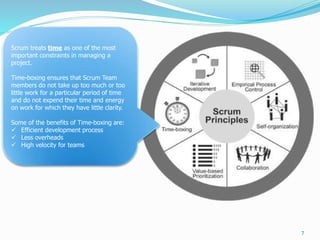
Scrum treats time as one of the most
important constraints in managing a
project.
Time-boxing ensures that Scrum Team
members do not take up too much or too
little work for a particular period of time
and do not expend their time and energy
on work for which they have little clarity.
Some of the benefits of Time-boxing are:
 Efficient development process
 Less overheads
 High velocity for teams
8
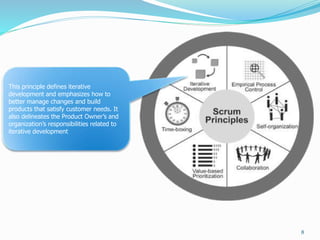
This principle defines iterative
development and emphasizes how to
better manage changes and build
products that satisfy customer needs. It
also delineates the Product Owner’s and
organization’s responsibilities related to
iterative development
Reference
- SBOK Guide

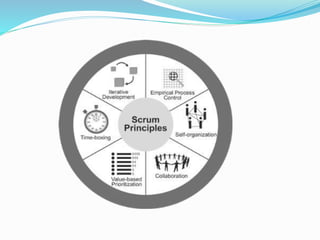
Scrum principles

  • 1.
  • 3.
    3 Core philosophy ofScrum based on the 3 main ideas of – 1. Transparency 2. Inspection, and 3. Adaptation
  • 4.
    4 This principle focuseson today’s workers, who deliver significantly greater value when self-organized and this results in better team buy-in and shared ownership; and an innovative and creative environment which is more conducive for growth
  • 5.
    5 3 core dimensionsrelated to collaborative work: 1. Awareness 2. Articulation 3. Appropriation Benefits:  Minimization of change requests  Risk Mitigation  Increase in efficiency  Continuous improvement
  • 6.
    6 This Scrum frameworkis driven by the goal of delivering maximum business value in a minimum time span. Scrum uses Value-based Prioritization as a core principles that drives the structure and functionality of the entire Scrum framework. Scrum aims at delivering a valuable product or service to the customer on an early and continuous basis 3 factors to be considered while prioritizing: 1. Value 2. Risk or uncertainty 3. Dependencies
  • 7.
    7 Scrum treats timeas one of the most important constraints in managing a project. Time-boxing ensures that Scrum Team members do not take up too much or too little work for a particular period of time and do not expend their time and energy on work for which they have little clarity. Some of the benefits of Time-boxing are:  Efficient development process  Less overheads  High velocity for teams
  • 8.
    8 This principle definesiterative development and emphasizes how to better manage changes and build products that satisfy customer needs. It also delineates the Product Owner’s and organization’s responsibilities related to iterative development
  • 9.