SeminarOn
Screening Methods For Inflammatory Drugs
By: underguidance of:
SHAIKH ZOHRAMEENA MRs.ANURADHA
M.PHARMA (Pharmacology)
1st year
 Inflammation is a universal host defensive
process involving a complex network of cell-
cell, cell-mediator and tissue interaction.
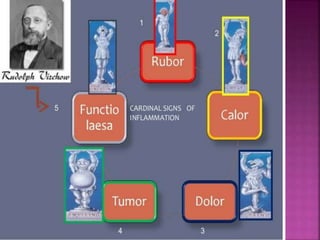
 Inflammation is response to variety of harmful
stimuli physical, chemical, traumatic antigen
challenge, infectious agents and ionizing
radiations.
Factors
Exogenous: Physical, chemical, mechanical, nutritional and biological
etc.
Endogenous: immunological reactions, neurological and genetical
disorders.
Types of inflammation
Acute inflammation- short lasting.
Chronic inflammation- may persists for week, months and year.
Principle components of inflammatory response
Increased blood flow.
Increase capillary permeability.
Increased migration of leucocytes into effected area.
 Inflammation disease cover a broad spectrum of
conditions including auto immune diseases.
Examples- Rheumatoid Arthritis, Osteoarthritis, Inflammatory
bowel disease, Multiple sclerosis, Asthma, Chronic obstructive
pulmonary disease, Allergic Rhinitis, Infectious disease, various
types of Cancers and Cardiovascular diseases.
 Inflammation is regulated by a large number of pro and anti
inflammatory Medication such as histamine, PG (PGT2 and
Prostacyclin), leukotriene (LTB4), serotonin, bradykinin,
cytokines (IL-1, IL-6, IL-8, IL-n, TNF-a), Reactive oxygen
species, growth factors, lysosomes, contents of neutrophils,
Adipokines (leptin, adiponectins, resistin).
 COX assay.
 Mast cell degranulation.
 Inhibition of NO production induced by TNF-
a in mouse macrophages.
 Measurement of NO production in mouse
macrophages.
 Adhesion assays.
 Platelet- neutrophils adhesion.
 Cell based reporter gene assay.
 FMLP- induced O2 generation by
polymorphonuclear cells (PMNs).
 FMLP- induced adhesion of PMN of HUVEC.
 UV- B induced erythema in guinea pigs.
 Carrageen induced paw edema model.
 Plural exudation method.
 Cotton pellet induced granuloma.
 Adjuvant arthritis.
 Papaya latex induced arthritis.
 Candida albicans induced arthritis in mice.
 Air pouch model.
 Croton oil induced ear edema in mice.
 Arachidonic acid induced ear edema in mice.
 Dextran sulphate sodium induced colitis in
mice.
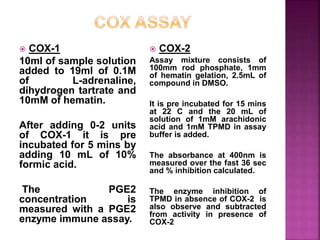
 COX-1
10ml of sample solution
added to 19ml of 0.1M
of L-adrenaline,
dihydrogen tartrate and
10mM of hematin.
After adding 0-2 units
of COX-1 it is pre
incubated for 5 mins by
adding 10 mL of 10%
formic acid.
The PGE2
concentration is
measured with a PGE2
enzyme immune assay.
 COX-2
Assay mixture consists of
100mm rod phosphate, 1mm
of hematin gelation, 2.5mL of
compound in DMSO.
It is pre incubated for 15 mins
at 22 C and the 20 mL of
solution of 1mM arachidonic
acid and 1mM TPMD in assay
buffer is added.
The absorbance at 400nm is
measured over the fast 36 sec
and % inhibition calculated.
The enzyme inhibition of
TPMD in absence of COX-2 is
also observe and subtracted
from activity in presence of
COX-2
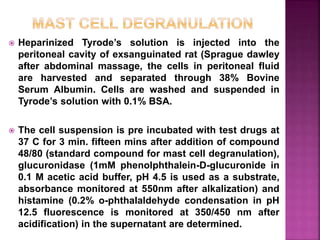
 Heparinized Tyrode’s solution is injected into the
peritoneal cavity of exsanguinated rat (Sprague dawley
after abdominal massage, the cells in peritoneal fluid
are harvested and separated through 38% Bovine
Serum Albumin. Cells are washed and suspended in
Tyrode’s solution with 0.1% BSA.
 The cell suspension is pre incubated with test drugs at
37 C for 3 min. fifteen mins after addition of compound
48/80 (standard compound for mast cell degranulation),
glucuronidase (1mM phenolphthalein-D-glucuronide in
0.1 M acetic acid buffer, pH 4.5 is used as a substrate,
absorbance monitored at 550nm after alkalization) and
histamine (0.2% o-phthalaldehyde condensation in pH
12.5 fluorescence is monitored at 350/450 nm after
acidification) in the supernatant are determined.
o The total content is measured after treatment of the
cell suspension with Triton X-100.
o The percentage release determined is the index of anti-
inflammatory activity.
 Thrombin activated human platelets are
incubated with drug at 20 C for 10 mins,
and mixed with neutrophils at a ratio of
10:1.
 Neutrophil with two or more (number
positives) and one or no adherent
platelets (number negatives) are counted
as index of activity.
 The test drug block the adhesion with
respect to controls.
 Animal used- Albino guinea pigs
 Test drug is administered 30 mins
before exposure.
 Duration of exposure to UV- B: 20 sec.
 Area of exposure: Depilated skin.
 Degree of erythema estimated after 2
hours visually on scale of 0-4.
 Model can be use as a pure measure of
the vasodilatory phase in the
inflammation reaction.
 Rat paw edema (acute and subacute phases)
 Drugs: carageenan (1%, 0.1 ml SC),
indomethacin 2 mg/kg IP.
 Site: subplantar region of left hind paw.
 Biphasic
o 1- release of histamines, 5 HT and kinins.
o 2- release of prostaglandins.
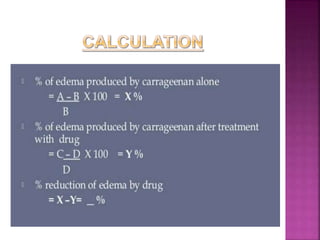
Parameter : paw volume upto the ankle joint is
measured in treated and untreated groups before
and after carrageenan.
 For measurements of activity of anti-
inflammatory drugs on proliferative
components of subacute and chronic
inflammatory processes
 Procedure : Sterile cotton pellets (wt-
5mg-50mg).
• SC sites of back, axilla and groin.
duration: 1-14 days
• Pellet along with granuloma removed
and weighed.
Weight of granulomatous tissue =
Dry weight of granuloma cotton – initial
weight of cotton pellet.
Drugs effective: corticosteroids.
Screening models for inflammatory drugs

Screening models for inflammatory drugs

  • 1.
    SeminarOn Screening Methods ForInflammatory Drugs By: underguidance of: SHAIKH ZOHRAMEENA MRs.ANURADHA M.PHARMA (Pharmacology) 1st year
  • 2.
     Inflammation isa universal host defensive process involving a complex network of cell- cell, cell-mediator and tissue interaction.  Inflammation is response to variety of harmful stimuli physical, chemical, traumatic antigen challenge, infectious agents and ionizing radiations.
  • 3.
    Factors Exogenous: Physical, chemical,mechanical, nutritional and biological etc. Endogenous: immunological reactions, neurological and genetical disorders. Types of inflammation Acute inflammation- short lasting. Chronic inflammation- may persists for week, months and year. Principle components of inflammatory response Increased blood flow. Increase capillary permeability. Increased migration of leucocytes into effected area.
  • 5.
     Inflammation diseasecover a broad spectrum of conditions including auto immune diseases. Examples- Rheumatoid Arthritis, Osteoarthritis, Inflammatory bowel disease, Multiple sclerosis, Asthma, Chronic obstructive pulmonary disease, Allergic Rhinitis, Infectious disease, various types of Cancers and Cardiovascular diseases.  Inflammation is regulated by a large number of pro and anti inflammatory Medication such as histamine, PG (PGT2 and Prostacyclin), leukotriene (LTB4), serotonin, bradykinin, cytokines (IL-1, IL-6, IL-8, IL-n, TNF-a), Reactive oxygen species, growth factors, lysosomes, contents of neutrophils, Adipokines (leptin, adiponectins, resistin).
  • 6.
     COX assay. Mast cell degranulation.  Inhibition of NO production induced by TNF- a in mouse macrophages.  Measurement of NO production in mouse macrophages.  Adhesion assays.  Platelet- neutrophils adhesion.  Cell based reporter gene assay.  FMLP- induced O2 generation by polymorphonuclear cells (PMNs).  FMLP- induced adhesion of PMN of HUVEC.
  • 7.
     UV- Binduced erythema in guinea pigs.  Carrageen induced paw edema model.  Plural exudation method.  Cotton pellet induced granuloma.  Adjuvant arthritis.  Papaya latex induced arthritis.  Candida albicans induced arthritis in mice.  Air pouch model.  Croton oil induced ear edema in mice.  Arachidonic acid induced ear edema in mice.  Dextran sulphate sodium induced colitis in mice.
  • 9.
     COX-1 10ml ofsample solution added to 19ml of 0.1M of L-adrenaline, dihydrogen tartrate and 10mM of hematin. After adding 0-2 units of COX-1 it is pre incubated for 5 mins by adding 10 mL of 10% formic acid. The PGE2 concentration is measured with a PGE2 enzyme immune assay.  COX-2 Assay mixture consists of 100mm rod phosphate, 1mm of hematin gelation, 2.5mL of compound in DMSO. It is pre incubated for 15 mins at 22 C and the 20 mL of solution of 1mM arachidonic acid and 1mM TPMD in assay buffer is added. The absorbance at 400nm is measured over the fast 36 sec and % inhibition calculated. The enzyme inhibition of TPMD in absence of COX-2 is also observe and subtracted from activity in presence of COX-2
  • 10.
     Heparinized Tyrode’ssolution is injected into the peritoneal cavity of exsanguinated rat (Sprague dawley after abdominal massage, the cells in peritoneal fluid are harvested and separated through 38% Bovine Serum Albumin. Cells are washed and suspended in Tyrode’s solution with 0.1% BSA.  The cell suspension is pre incubated with test drugs at 37 C for 3 min. fifteen mins after addition of compound 48/80 (standard compound for mast cell degranulation), glucuronidase (1mM phenolphthalein-D-glucuronide in 0.1 M acetic acid buffer, pH 4.5 is used as a substrate, absorbance monitored at 550nm after alkalization) and histamine (0.2% o-phthalaldehyde condensation in pH 12.5 fluorescence is monitored at 350/450 nm after acidification) in the supernatant are determined.
  • 11.
    o The totalcontent is measured after treatment of the cell suspension with Triton X-100. o The percentage release determined is the index of anti- inflammatory activity.
  • 12.
     Thrombin activatedhuman platelets are incubated with drug at 20 C for 10 mins, and mixed with neutrophils at a ratio of 10:1.  Neutrophil with two or more (number positives) and one or no adherent platelets (number negatives) are counted as index of activity.  The test drug block the adhesion with respect to controls.
  • 14.
     Animal used-Albino guinea pigs  Test drug is administered 30 mins before exposure.  Duration of exposure to UV- B: 20 sec.  Area of exposure: Depilated skin.  Degree of erythema estimated after 2 hours visually on scale of 0-4.  Model can be use as a pure measure of the vasodilatory phase in the inflammation reaction.
  • 15.
     Rat pawedema (acute and subacute phases)  Drugs: carageenan (1%, 0.1 ml SC), indomethacin 2 mg/kg IP.  Site: subplantar region of left hind paw.  Biphasic o 1- release of histamines, 5 HT and kinins. o 2- release of prostaglandins. Parameter : paw volume upto the ankle joint is measured in treated and untreated groups before and after carrageenan.
  • 17.
     For measurementsof activity of anti- inflammatory drugs on proliferative components of subacute and chronic inflammatory processes  Procedure : Sterile cotton pellets (wt- 5mg-50mg). • SC sites of back, axilla and groin. duration: 1-14 days • Pellet along with granuloma removed and weighed.
  • 18.
    Weight of granulomatoustissue = Dry weight of granuloma cotton – initial weight of cotton pellet. Drugs effective: corticosteroids.