Discuss the commonly used disinfectants
and their relative efficiency against the
bacteria
MADE BY :-
SUNIL KUMAR
AJEET KUMAR
MANISH KUMAR
MANOJ KUMAR
VIKESH KUMAR
PURPOSE
l
The purpose of this project
l
what is disinfection.
l
Level of disinfection
l
how many types of disinfection.
l
which disinfectant would most effectively kill
bacteria.
WHAT IS DISINFECTANT
Disinfectants are liquid substances that kill germs or
bacteria on non-living objects.
They are usually chemicals used to clean clothes,
rooms, dishes, and utensils. They are also used to help
hospitals and care units stay clean and free of germs.
The common disinfectants used in households aren’t as
effective as the ones used in hospitals or care units to
stop diseases.
WHAT IS ANTISEPTICS
Chemical disinfectants which
can safely applied to living tissues and are
used to prevent infection by inhibiting the
growth of microorganisms.
ANTISEPTICS V/S DISINFECTION
ANTISEPTICS:-
Use on skin and mocous membranes to kill microorganisms.
Not for use on inanimate objects.
DISINFECTION:-
Use to kill microorganisms on inanimate objects.
Not for use on skin or mucous membranes.
Chemicals agents
A variety of chemicals agents are used as
antiseptics and disinfectants.
Factors influencing the potency of a
disinfectant:
 Time of action
 Temperature
 Nature of organism
l
l
LEVEL OF DISINFECTION
LOW LEVEL DISINFECTION
l
Many organisms can survive on
exposure to these disinfectants.
–Used for items which come in contact
with the patients but they do not
penetrate into tissues.
INTERMEDIATE LEVEL DISINFECTION
• May not effective against spores
• Includes alcohols, iodophores and phenols
• Used for:
–Laryngoscopes
–Fiber optic endoscopes
HIGH LEVEL DISINFECTION
• Glutaraldehyde, Hydrogen peroxide, peracitic
acid and chlorine compounds.
• Effectiveness may be equal to that of
sterilisation.
• Used for:
l Endoscopes
l Cystoscopies
l Surgical instruments with plastic
components
EXAMPLE OF DISINFECTION
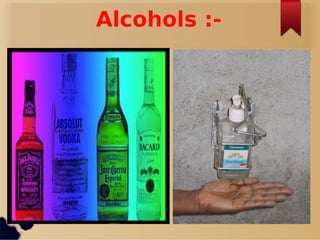
Alcohols :-
–Ethyl alcohol and Isopropyl alcohol
are commonly used.
–Act by denaturing of bacterial
proteins.
–No sporicidal and virucidal activity.
–Used as skin antiseptics.
–Isopropyl alcohol is preferred to Ethyl
alcohol as it is better fat solvent,
more bactericidal and less volatile.
Alcohols :-
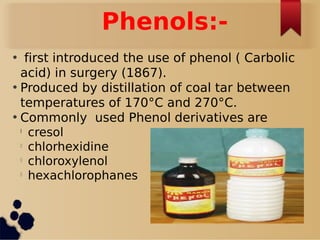
Phenols:-
• first introduced the use of phenol ( Carbolic
acid) in surgery (1867).
• Produced by distillation of coal tar between
temperatures of 170°C and 270°C.
• Commonly used Phenol derivatives are
l
cresol
l
chlorhexidine
l
chloroxylenol
l
hexachlorophanes
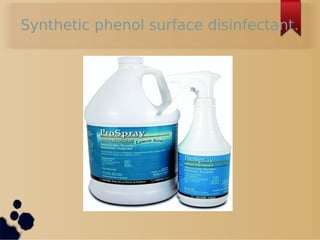
Synthetic phenol surface disinfectant.
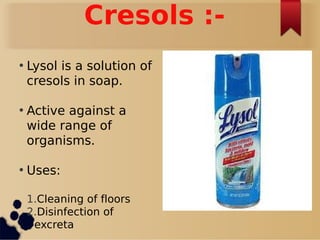
Cresols :-
• Lysol is a solution of
cresols in soap.
• Active against a
wide range of
organisms.
• Uses:
1.Cleaning of floors
2.Disinfection of
excreta
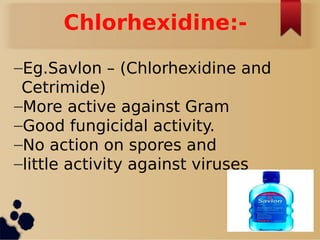
Chlorhexidine:-
–Eg.Savlon – (Chlorhexidine and
Cetrimide)
–More active against Gram
–Good fungicidal activity.
–No action on spores and
–little activity against viruses
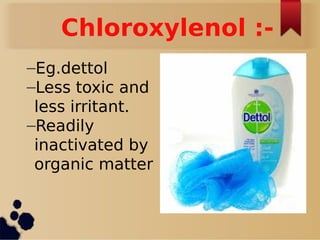
Chloroxylenol :-
–Eg.dettol
–Less toxic and
less irritant.
–Readily
inactivated by
organic matter
Hexachlorophane:-
• More active against Grems
• Bacteriostatic at high dilutions.
• Potentially toxic and should be used
with care.
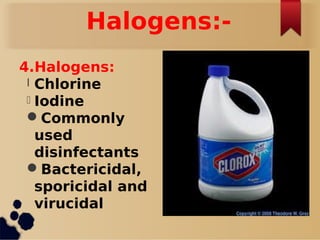
Halogens:-
4.Halogens:
l Chlorine
l Iodine
Commonly
used
disinfectants
Bactericidal,
sporicidal and
virucidal
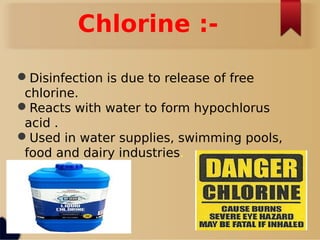
Chlorine :-
Disinfection is due to release of free
chlorine.
Reacts with water to form hypochlorus
acid .
Used in water supplies, swimming pools,
food and dairy industries.
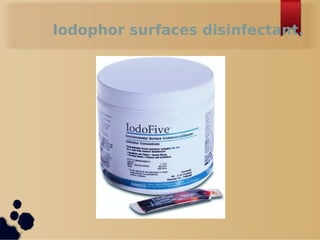
Iodophors:-
Iodophors are disinfectants that include
iodine. They are used to clean hospital
surfaces like tables and beds,and also to
disinfect food preparation
equipment.
Iodophor surfaces disinfectant.
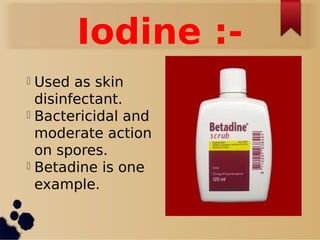
Iodine :-
l Used as skin
disinfectant.
l Bactericidal and
moderate action
on spores.
l Betadine is one
example.
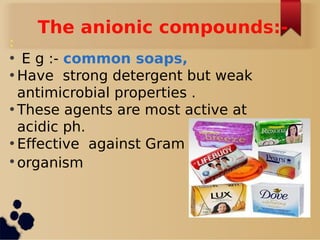
The anionic compounds:-
:
• E g :- common soaps,
• Have strong detergent but weak
antimicrobial properties .
• These agents are most active at
acidic ph.
• Effective against Gram
• organism
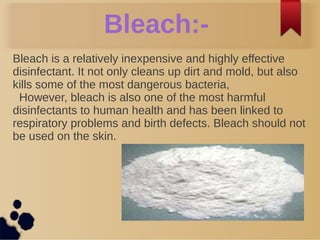
Bleach:-
Bleach is a relatively inexpensive and highly effective
disinfectant. It not only cleans up dirt and mold, but also
kills some of the most dangerous bacteria,
However, bleach is also one of the most harmful
disinfectants to human health and has been linked to
respiratory problems and birth defects. Bleach should not
be used on the skin.
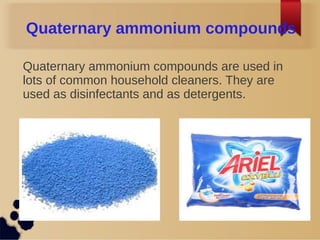
Quaternary ammonium compounds
Quaternary ammonium compounds are used in
lots of common household cleaners. They are
used as disinfectants and as detergents.
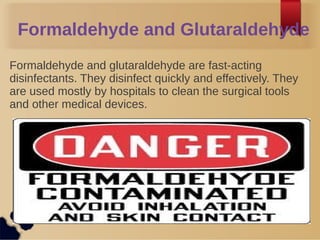
Formaldehyde and Glutaraldehyde
Formaldehyde and glutaraldehyde are fast-acting
disinfectants. They disinfect quickly and effectively. They
are used mostly by hospitals to clean the surgical tools
and other medical devices.
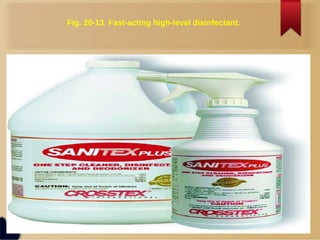
Fig. 20-13 Fast-acting high-level disinfectant.
l
Wash your hands!!!
l
(When???)
l
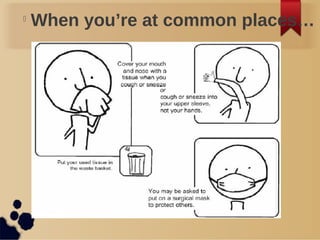
When you’re at common places…
Conclusion
Health is very important. Getting a sickness from
bacteria can happen in an unhealthy environment.
Using a disinfectant to kill harmful bacteria is an
important way to stay healthy.
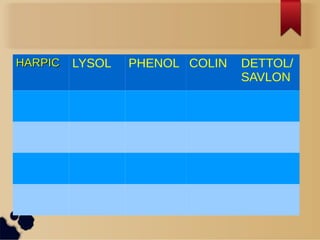
HARPICHARPIC LYSOL PHENOL COLIN DETTOL/
SAVLON
THANK YOU

Scince and life

  • 1.
    Discuss the commonlyused disinfectants and their relative efficiency against the bacteria MADE BY :- SUNIL KUMAR AJEET KUMAR MANISH KUMAR MANOJ KUMAR VIKESH KUMAR
  • 2.
    PURPOSE l The purpose ofthis project l what is disinfection. l Level of disinfection l how many types of disinfection. l which disinfectant would most effectively kill bacteria.
  • 3.
    WHAT IS DISINFECTANT Disinfectantsare liquid substances that kill germs or bacteria on non-living objects. They are usually chemicals used to clean clothes, rooms, dishes, and utensils. They are also used to help hospitals and care units stay clean and free of germs. The common disinfectants used in households aren’t as effective as the ones used in hospitals or care units to stop diseases.
  • 4.
    WHAT IS ANTISEPTICS Chemicaldisinfectants which can safely applied to living tissues and are used to prevent infection by inhibiting the growth of microorganisms.
  • 5.
    ANTISEPTICS V/S DISINFECTION ANTISEPTICS:- Useon skin and mocous membranes to kill microorganisms. Not for use on inanimate objects. DISINFECTION:- Use to kill microorganisms on inanimate objects. Not for use on skin or mucous membranes.
  • 6.
    Chemicals agents A varietyof chemicals agents are used as antiseptics and disinfectants. Factors influencing the potency of a disinfectant:  Time of action  Temperature  Nature of organism
  • 7.
  • 8.
    LOW LEVEL DISINFECTION l Manyorganisms can survive on exposure to these disinfectants. –Used for items which come in contact with the patients but they do not penetrate into tissues.
  • 9.
    INTERMEDIATE LEVEL DISINFECTION •May not effective against spores • Includes alcohols, iodophores and phenols • Used for: –Laryngoscopes –Fiber optic endoscopes
  • 10.
    HIGH LEVEL DISINFECTION •Glutaraldehyde, Hydrogen peroxide, peracitic acid and chlorine compounds. • Effectiveness may be equal to that of sterilisation. • Used for: l Endoscopes l Cystoscopies l Surgical instruments with plastic components
  • 11.
  • 12.
    Alcohols :- –Ethyl alcoholand Isopropyl alcohol are commonly used. –Act by denaturing of bacterial proteins. –No sporicidal and virucidal activity. –Used as skin antiseptics. –Isopropyl alcohol is preferred to Ethyl alcohol as it is better fat solvent, more bactericidal and less volatile.
  • 13.
  • 14.
    Phenols:- • first introducedthe use of phenol ( Carbolic acid) in surgery (1867). • Produced by distillation of coal tar between temperatures of 170°C and 270°C. • Commonly used Phenol derivatives are l cresol l chlorhexidine l chloroxylenol l hexachlorophanes
  • 15.
  • 16.
    Cresols :- • Lysolis a solution of cresols in soap. • Active against a wide range of organisms. • Uses: 1.Cleaning of floors 2.Disinfection of excreta
  • 17.
    Chlorhexidine:- –Eg.Savlon – (Chlorhexidineand Cetrimide) –More active against Gram –Good fungicidal activity. –No action on spores and –little activity against viruses
  • 18.
    Chloroxylenol :- –Eg.dettol –Less toxicand less irritant. –Readily inactivated by organic matter
  • 19.
    Hexachlorophane:- • More activeagainst Grems • Bacteriostatic at high dilutions. • Potentially toxic and should be used with care.
  • 20.
  • 21.
    Chlorine :- Disinfection isdue to release of free chlorine. Reacts with water to form hypochlorus acid . Used in water supplies, swimming pools, food and dairy industries.
  • 22.
    Iodophors:- Iodophors are disinfectantsthat include iodine. They are used to clean hospital surfaces like tables and beds,and also to disinfect food preparation equipment.
  • 23.
  • 24.
    Iodine :- l Usedas skin disinfectant. l Bactericidal and moderate action on spores. l Betadine is one example.
  • 25.
    The anionic compounds:- : •E g :- common soaps, • Have strong detergent but weak antimicrobial properties . • These agents are most active at acidic ph. • Effective against Gram • organism
  • 26.
    Bleach:- Bleach is arelatively inexpensive and highly effective disinfectant. It not only cleans up dirt and mold, but also kills some of the most dangerous bacteria, However, bleach is also one of the most harmful disinfectants to human health and has been linked to respiratory problems and birth defects. Bleach should not be used on the skin.
  • 27.
    Quaternary ammonium compounds Quaternaryammonium compounds are used in lots of common household cleaners. They are used as disinfectants and as detergents.
  • 28.
    Formaldehyde and Glutaraldehyde Formaldehydeand glutaraldehyde are fast-acting disinfectants. They disinfect quickly and effectively. They are used mostly by hospitals to clean the surgical tools and other medical devices.
  • 29.
    Fig. 20-13 Fast-actinghigh-level disinfectant.
  • 30.
  • 31.
    l When you’re atcommon places…
  • 32.
    Conclusion Health is veryimportant. Getting a sickness from bacteria can happen in an unhealthy environment. Using a disinfectant to kill harmful bacteria is an important way to stay healthy.
  • 33.
    HARPICHARPIC LYSOL PHENOLCOLIN DETTOL/ SAVLON
  • 34.