SCIENTIFIC
PROCESSES
To learn science is to do science. A scientist
possesses and demonstrates science process
skills that allow him/her to decide critically,
solve logically, and provide solutions creatively.
You might have encountered or learned some
of these process skills in your lower grades.
Here are some of these process skills:
• OBSERVING
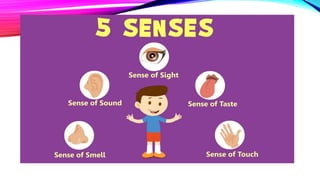
Observing is a basic process
that involves the use of the five
senses, like reading, listening to
a lecture, and examining
pictures and other materials.
Scientists observe things.
and events so that their studies
become reliable. When you are
equipped with this skill, it is quite
easy for you to get the information
correctly.
•Observations may be qualitative or
quantitative. An observation that
describes something through
descriptive words alone is called
qualitative observation.
•When making a qualitative observation of a
dog, for example, you may use the words such
as small or big and playful or tame to describe
the dog.
•The other type of observation
uses numbers in measuring
and describing objects. This is
called quantitative
observation.
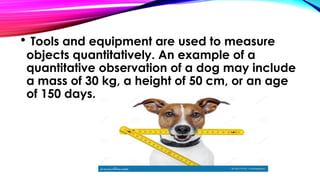
• Tools and equipment are used to measure
objects quantitatively. An example of a
quantitative observation of a dog may include
a mass of 30 kg, a height of 50 cm, or an age
of 150 days.
ACTIVITY
• Direction: Create a quantitative and qualitative
description on the picture below.

Scientific Processes Science grade 5.pptx

  • 1.
  • 2.
    To learn scienceis to do science. A scientist possesses and demonstrates science process skills that allow him/her to decide critically, solve logically, and provide solutions creatively. You might have encountered or learned some of these process skills in your lower grades. Here are some of these process skills:
  • 3.
    • OBSERVING Observing isa basic process that involves the use of the five senses, like reading, listening to a lecture, and examining pictures and other materials. Scientists observe things.
  • 4.
    and events sothat their studies become reliable. When you are equipped with this skill, it is quite easy for you to get the information correctly.
  • 6.
    •Observations may bequalitative or quantitative. An observation that describes something through descriptive words alone is called qualitative observation.
  • 7.
    •When making aqualitative observation of a dog, for example, you may use the words such as small or big and playful or tame to describe the dog.
  • 8.
    •The other typeof observation uses numbers in measuring and describing objects. This is called quantitative observation.
  • 9.
    • Tools andequipment are used to measure objects quantitatively. An example of a quantitative observation of a dog may include a mass of 30 kg, a height of 50 cm, or an age of 150 days.
  • 10.
    ACTIVITY • Direction: Createa quantitative and qualitative description on the picture below.