SCHOOL SITE DEVELOPMENT
Sherla B. Pereña
DISCUSSANT
Dr. Vernie Borsoto
Professor
SCHOOL SITE DEVELOPMENT
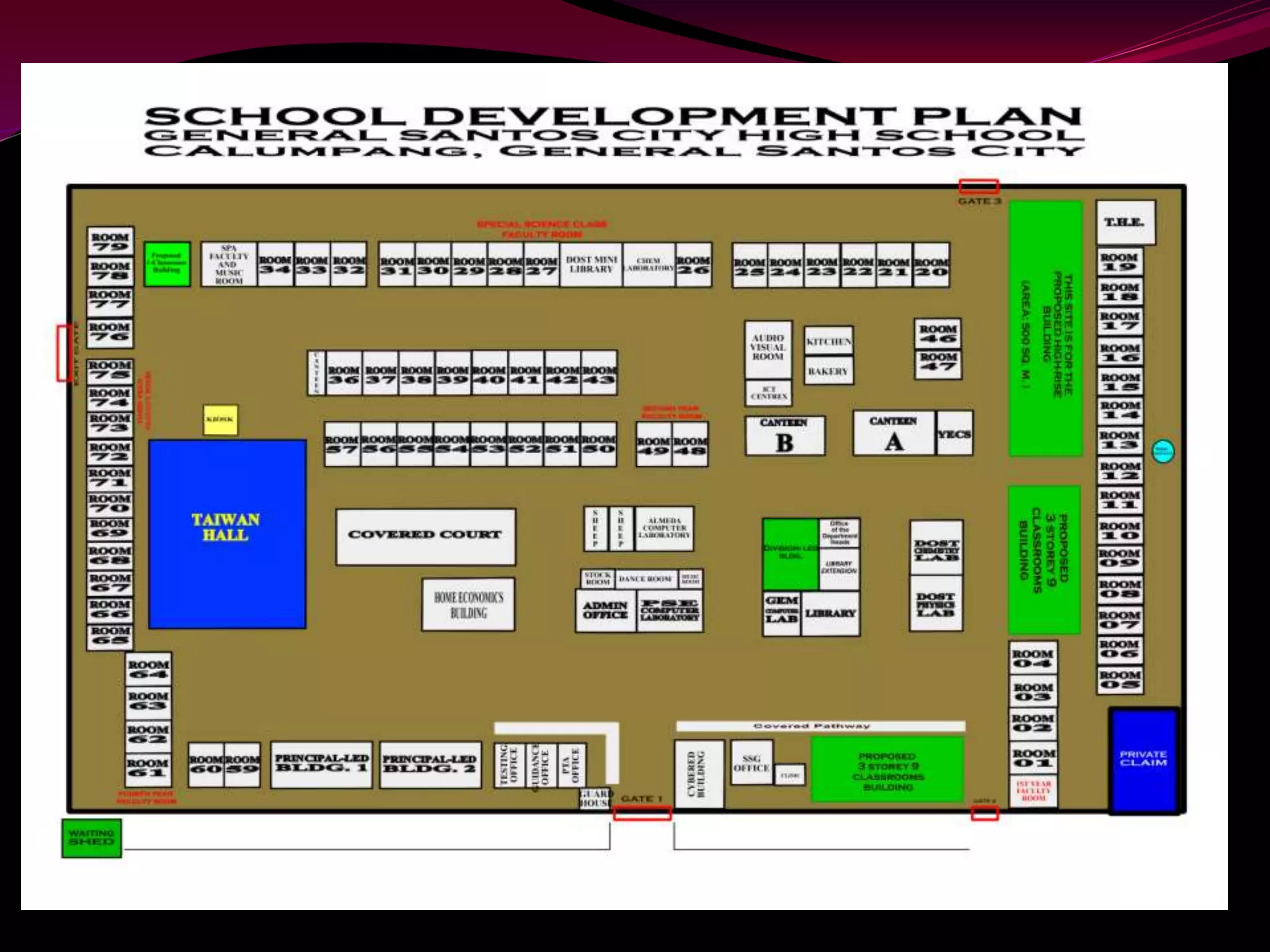
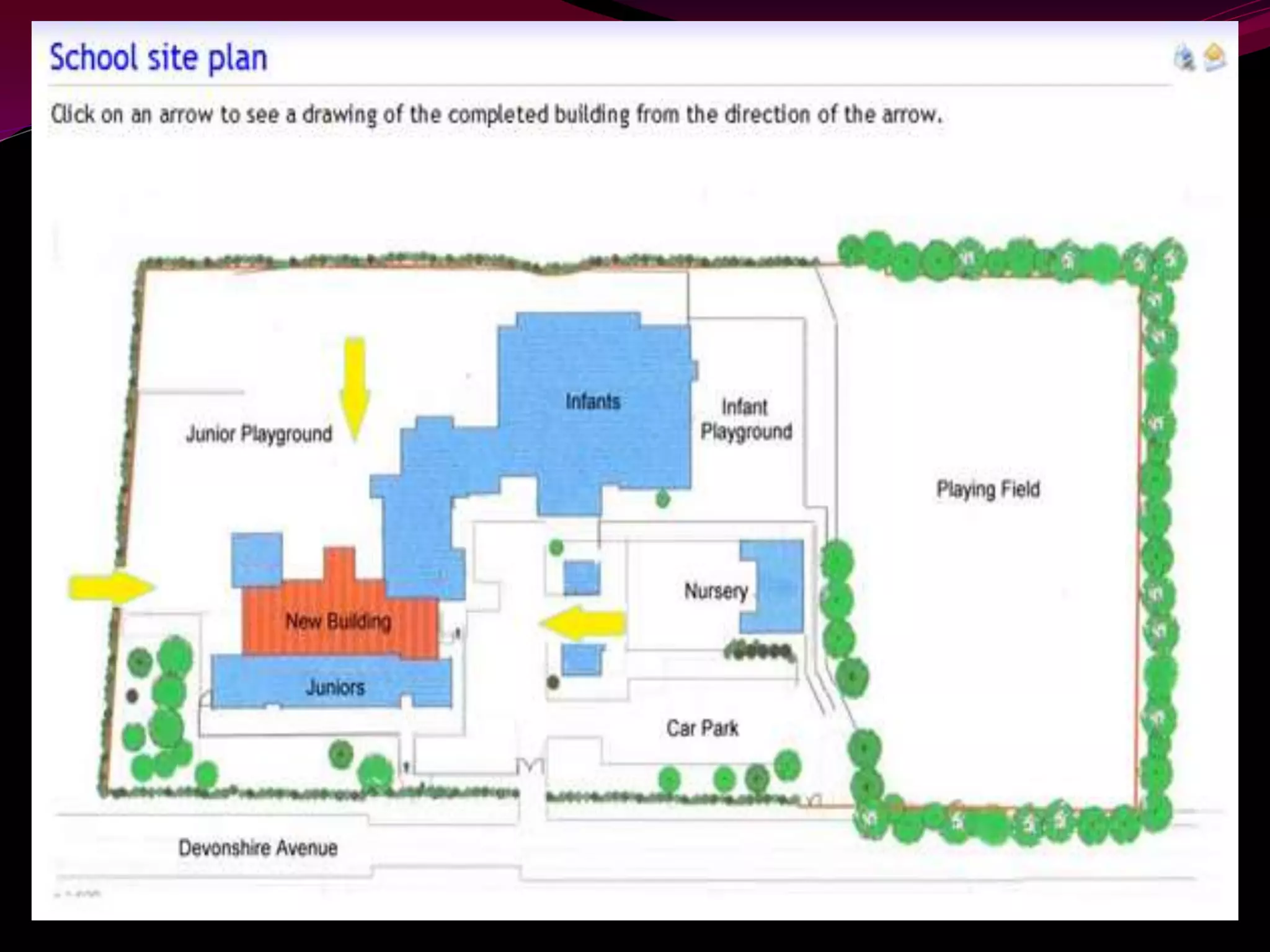
 A graphic presentation of the Site Development Program
is referred to as Site Development Plan
SCHOOL SITE DEVELOPMENT
 Principles in the Preparation of the Site Development
Plan.
 Layout of Buildings and Other Structures.
 Arrangement of Buildings.
 Site Limitations.
 Acoustic Barriers.
 Sun Path.
 Local Wind Patterns.
 Sun screens, Vertical Louvers and Green Walls (vertical
gardens)
 The distances between buildings
 The recommended setback
 There should be provision for open space
SCHOOL SITE DEVELOPMENT
SITE DEVELOPMENT PLANNING
 Site development planning is viewed essentially as an
exercise in the layout of infrastructure.
 The purpose of site development planning is to anticipate
the future needs and development of a school in terms of
physical facilities and to contribute towards conducive
teaching-learning environment.
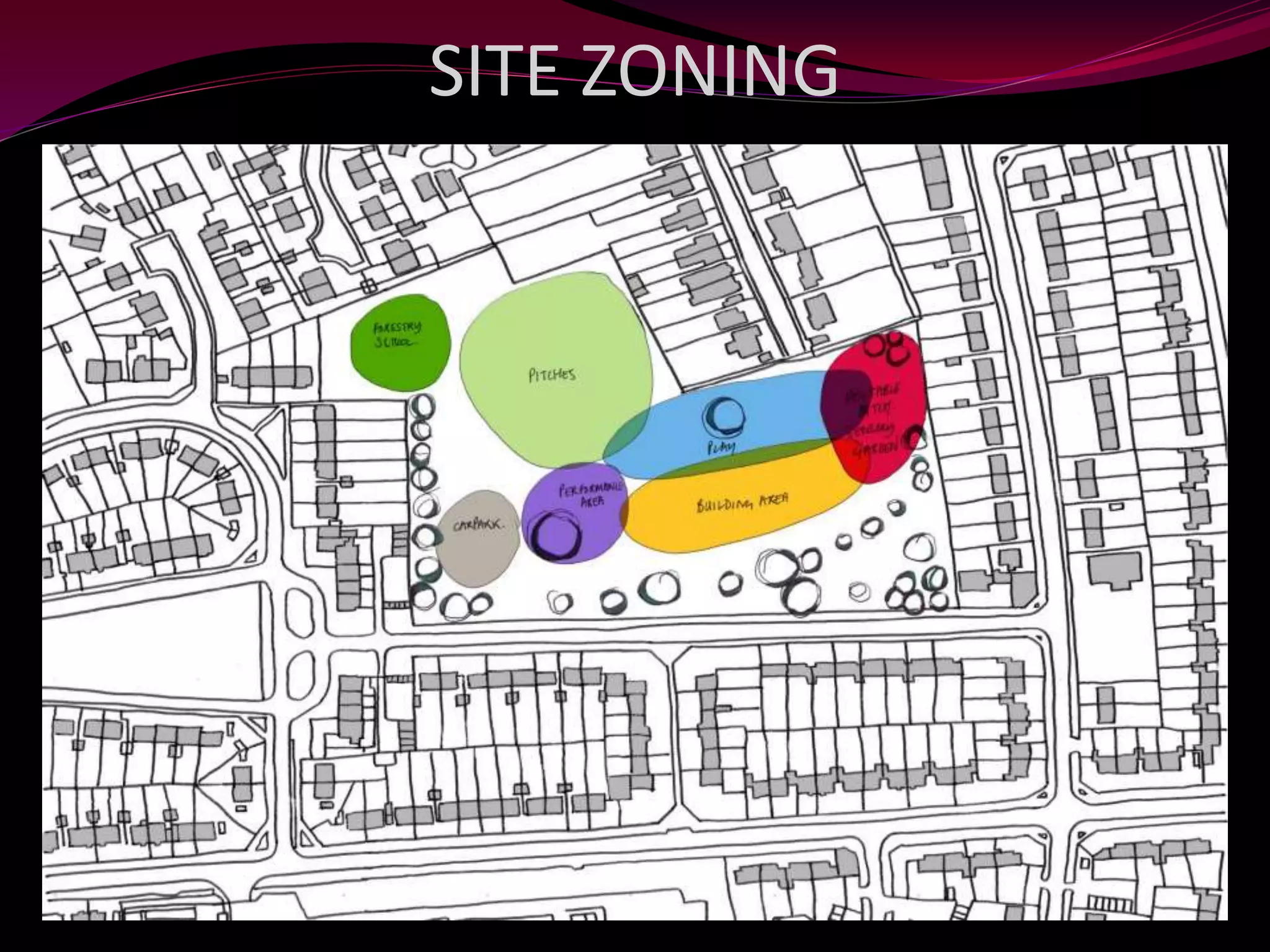
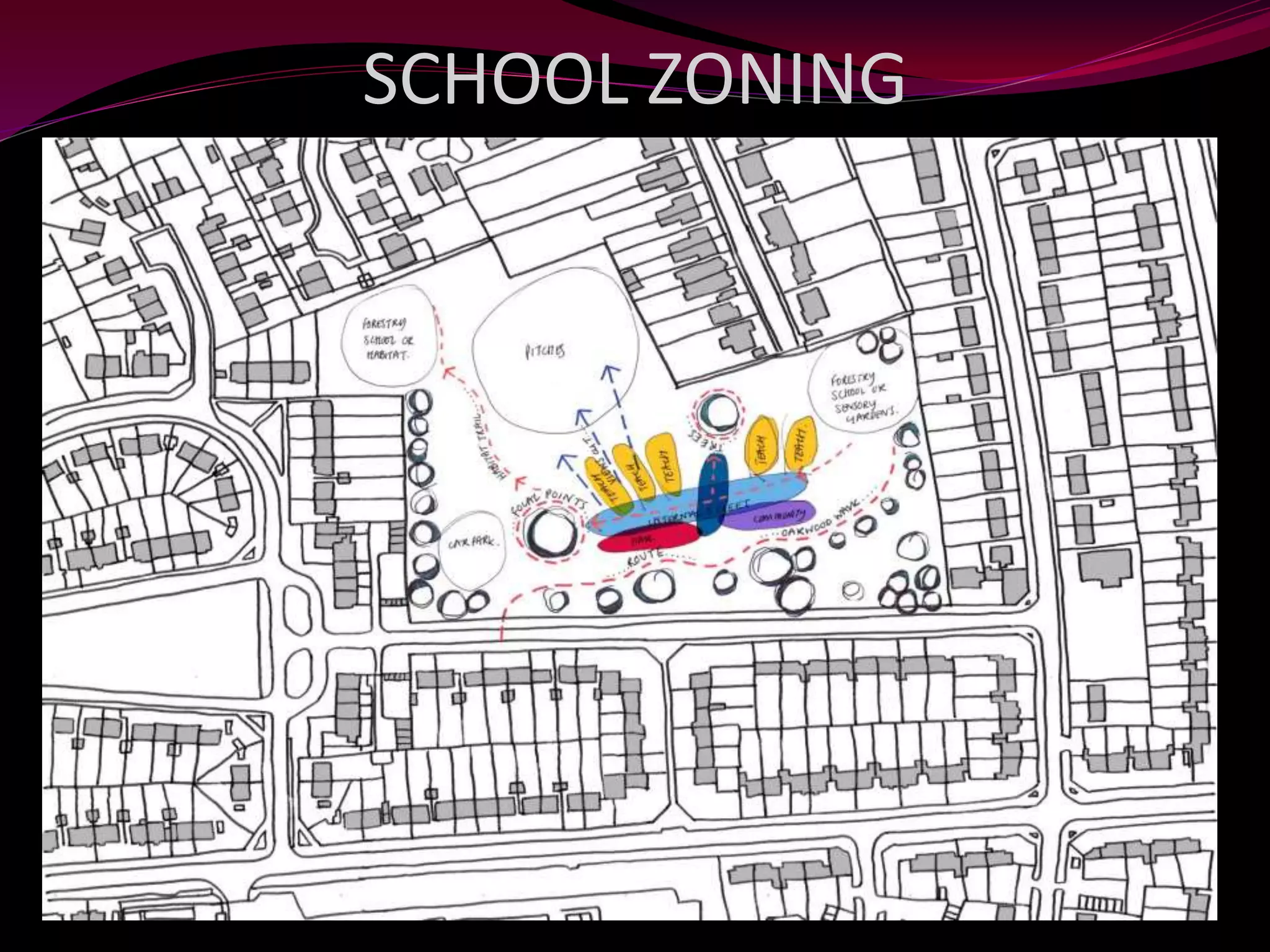
School Site Zoning
 A basic step in school site development is to apportion its
external spaces into different areas or zones each of
which is designed for a specific purpose or utilization, in
accordance with the educational needs of the school
 Visual zone
(1) Lawns
(2) Flower gardens
(3) Flowerbeds
(4) Assembly area
(5) Rain Gardens or Bio-Wales.
(6) Physical zone
(7) Functional zone
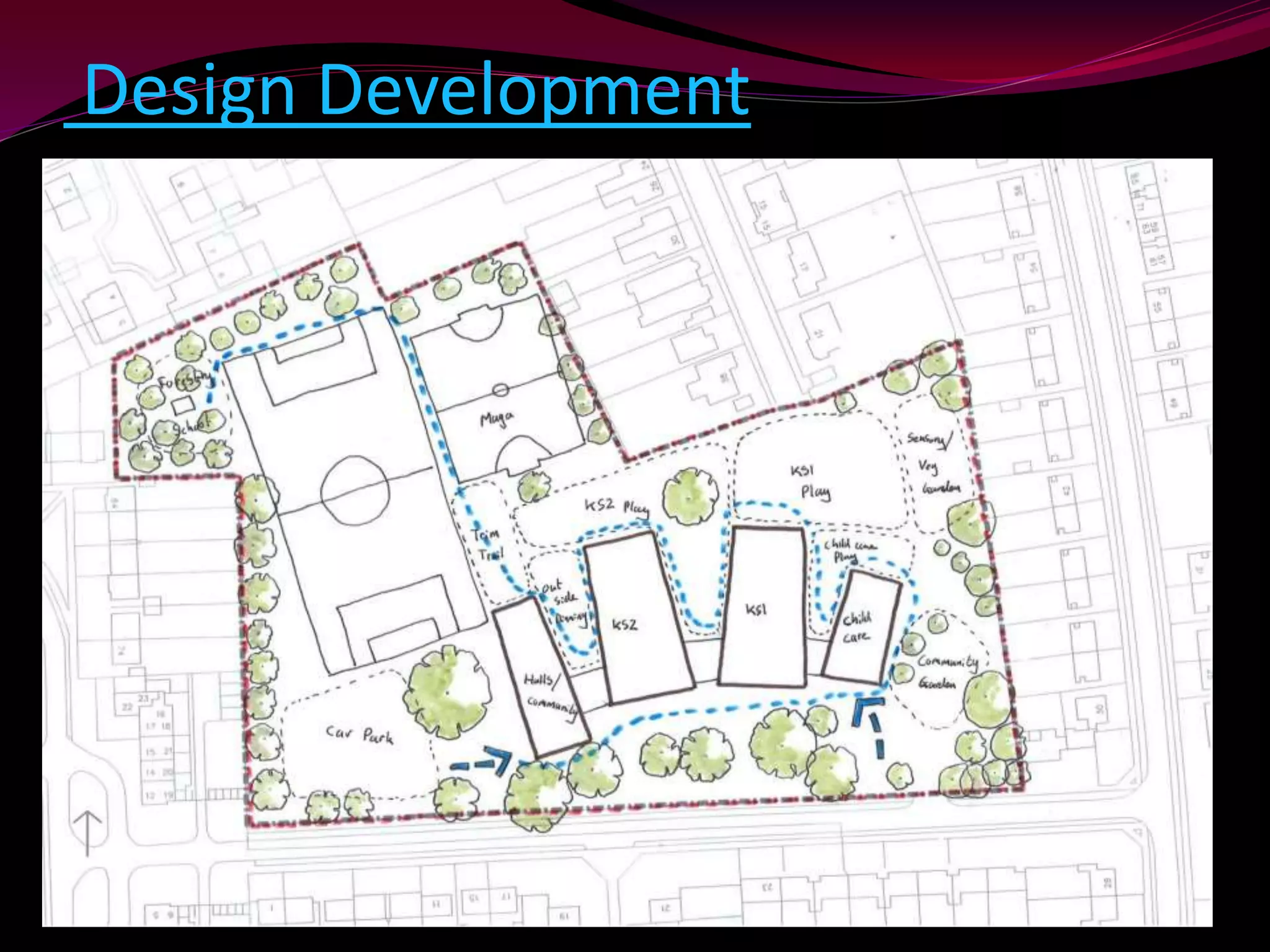
Design Development
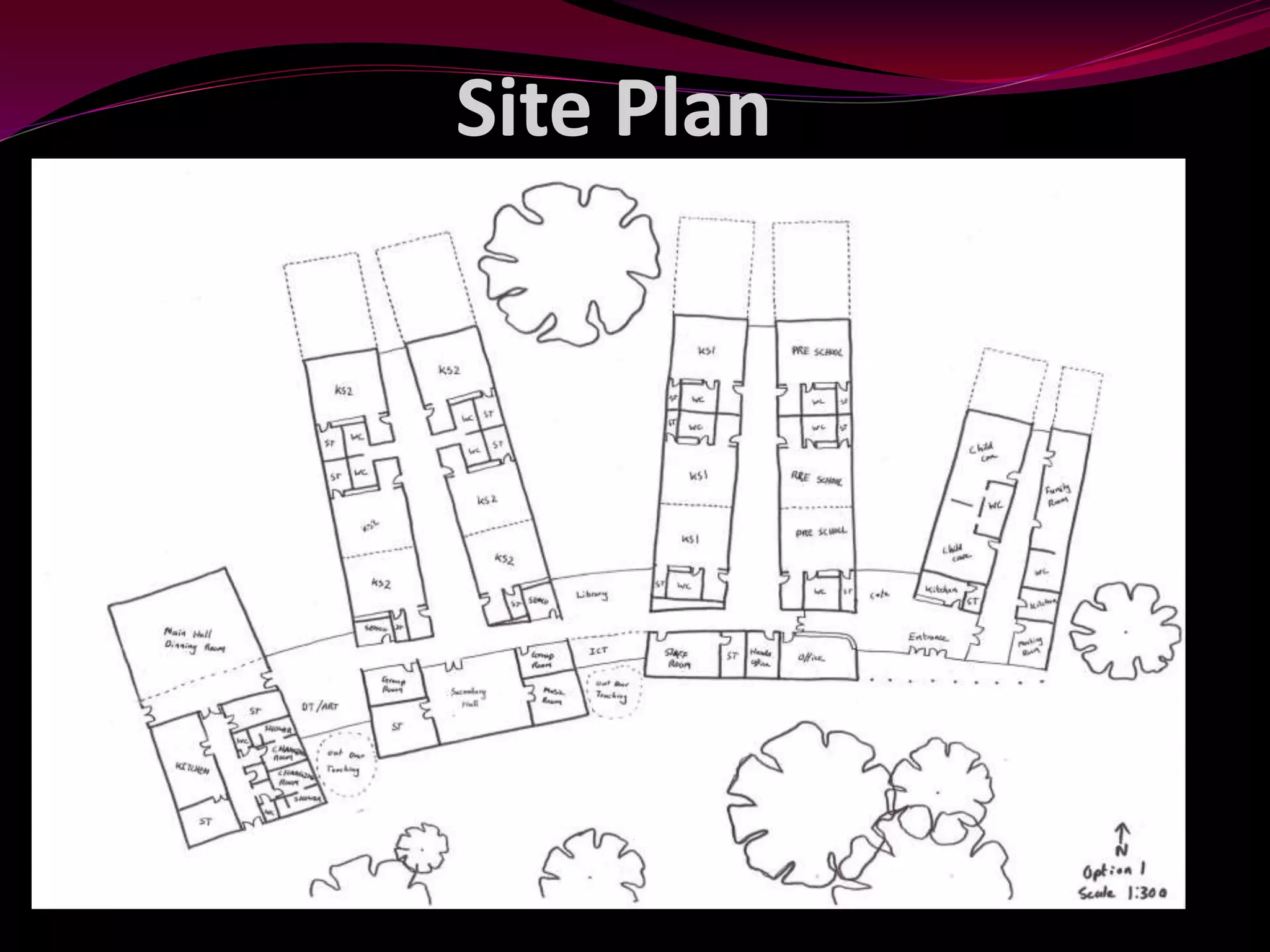
Site Plan
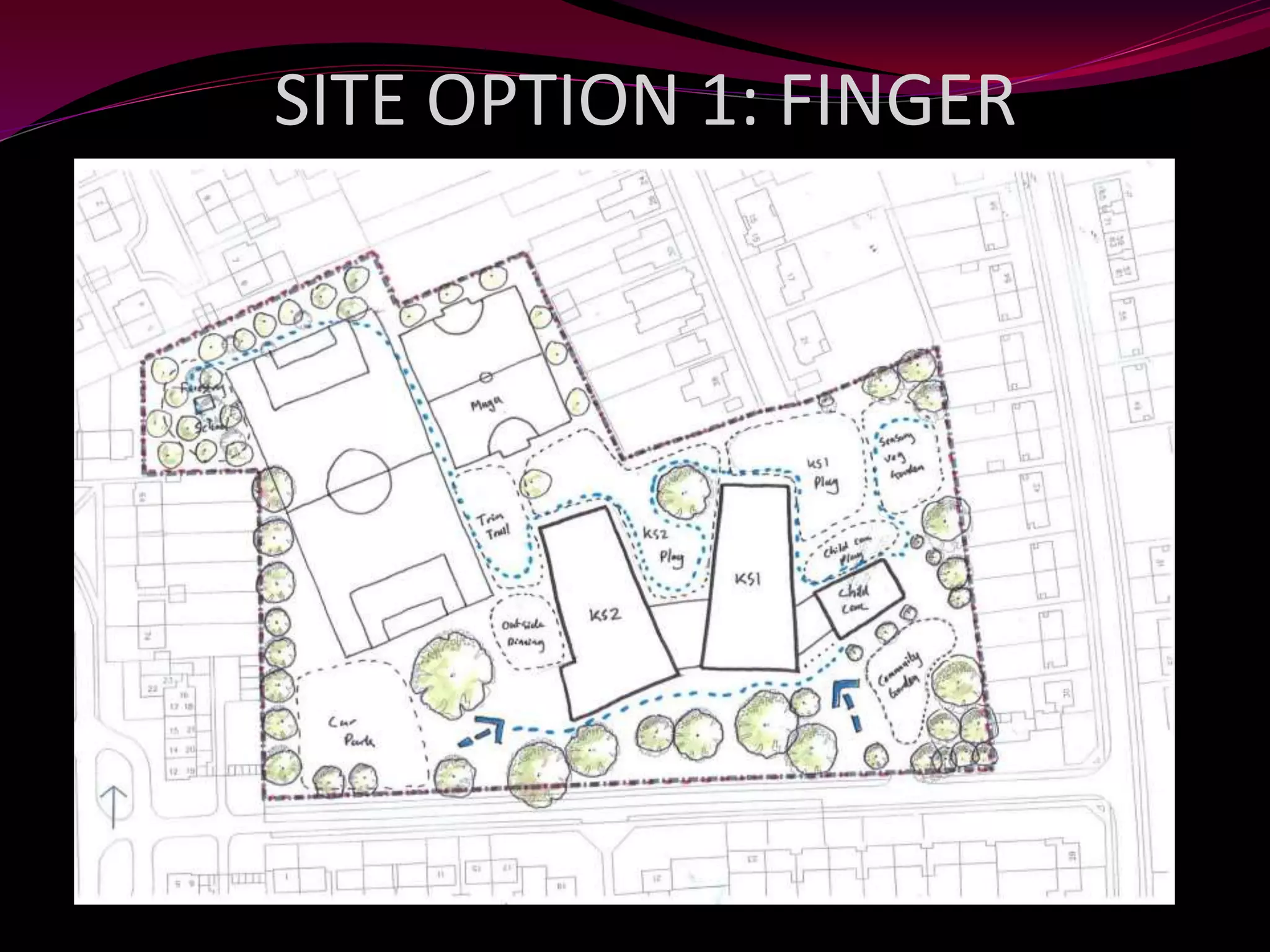
SITE OPTION 1: FINGER
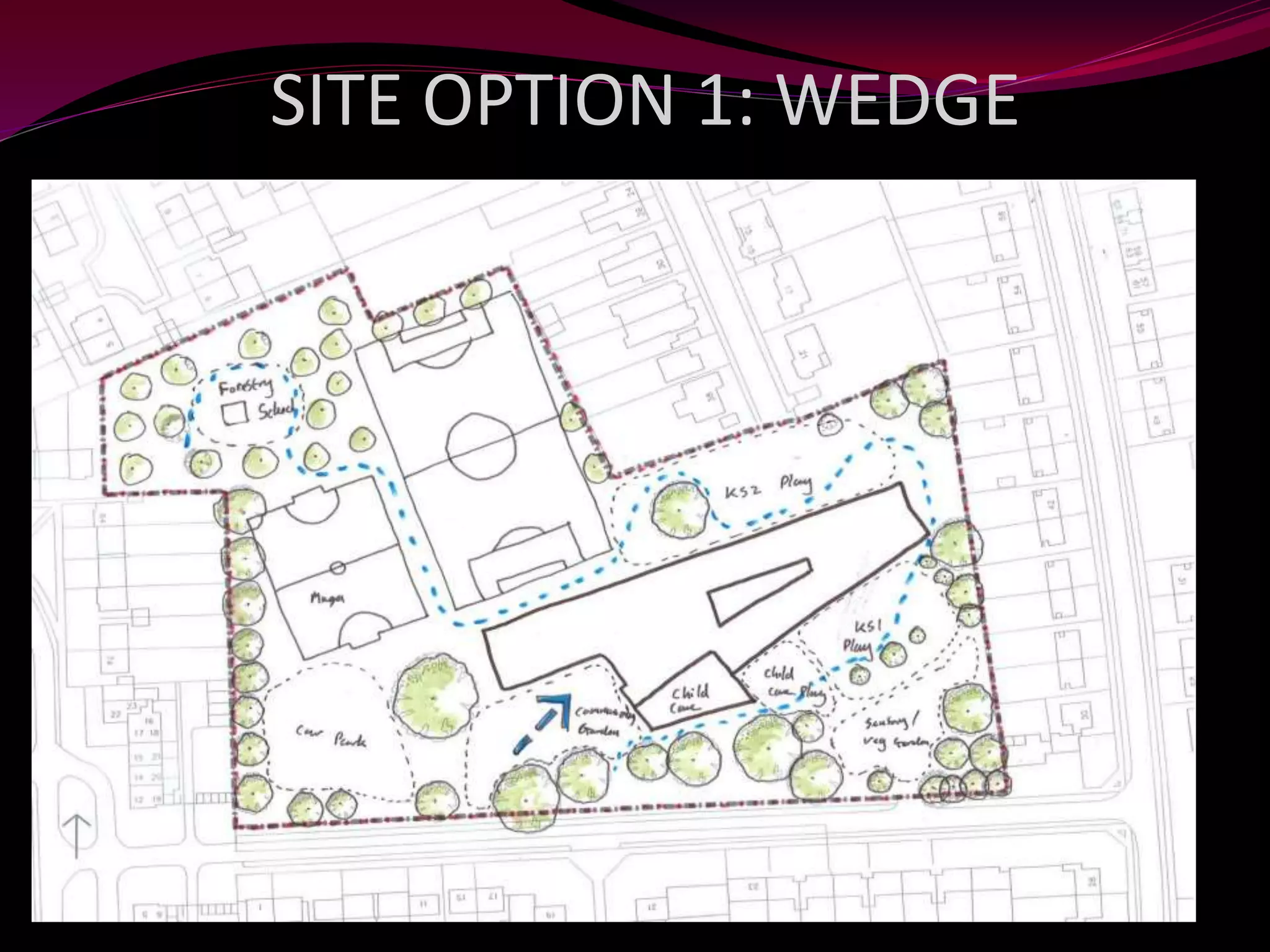
SITE OPTION 1: WEDGE
SITE ZONING
SCHOOL ZONING
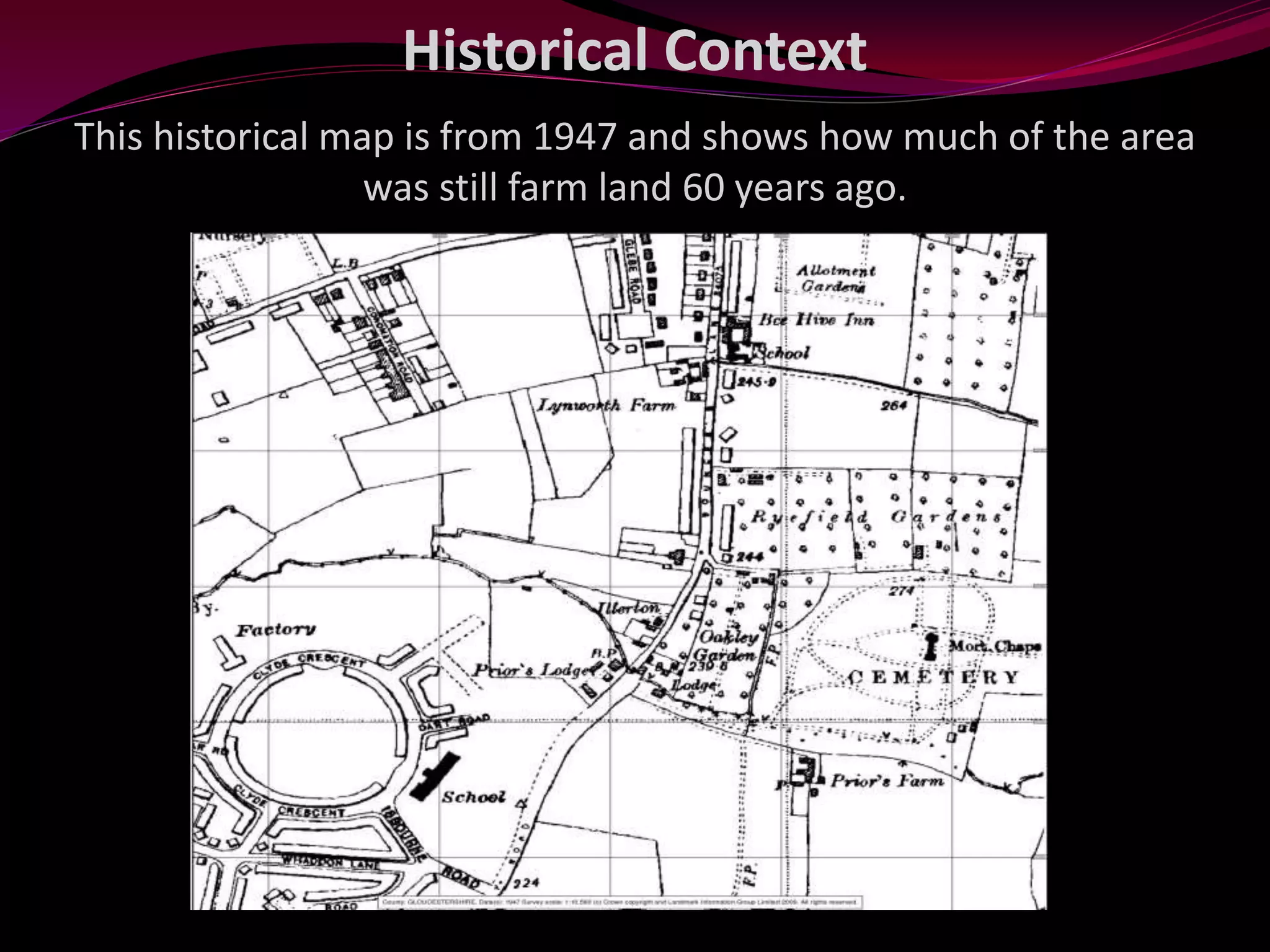
Historical Context
This historical map is from 1947 and shows how much of the area
was still farm land 60 years ago.
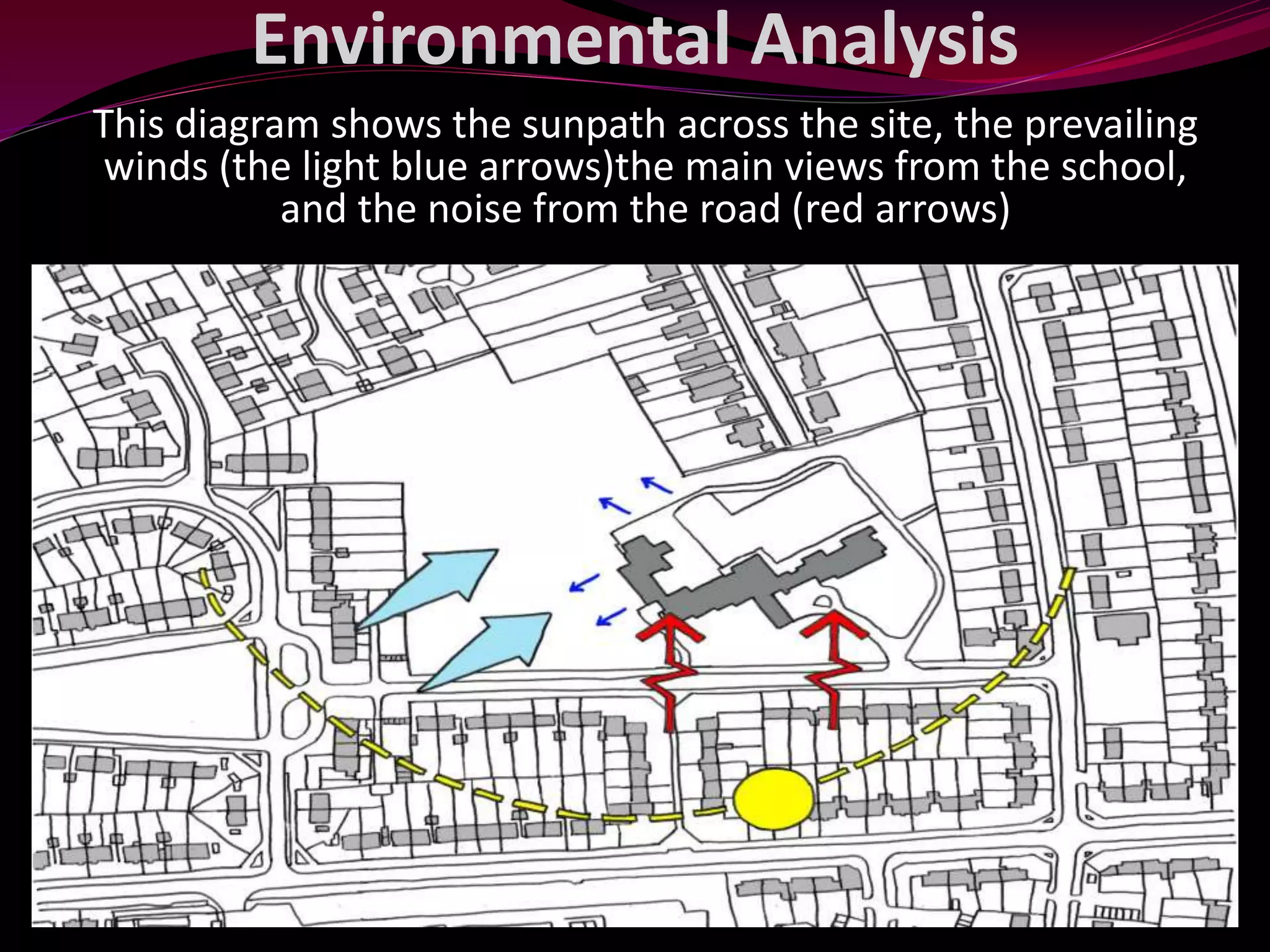
Environmental Analysis
This diagram shows the sunpath across the site, the prevailing
winds (the light blue arrows)the main views from the school,
and the noise from the road (red arrows)
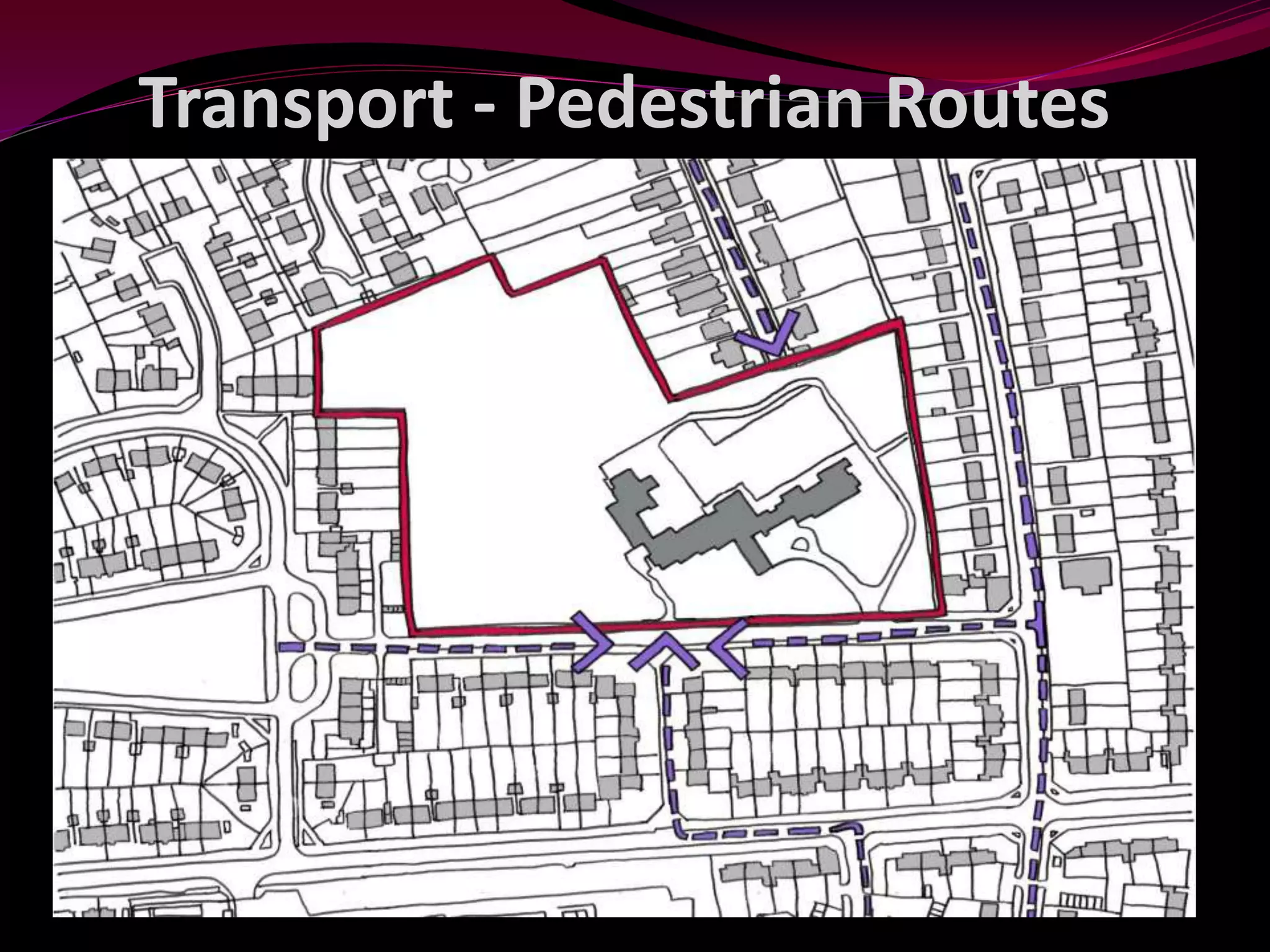
Transport - Pedestrian Routes
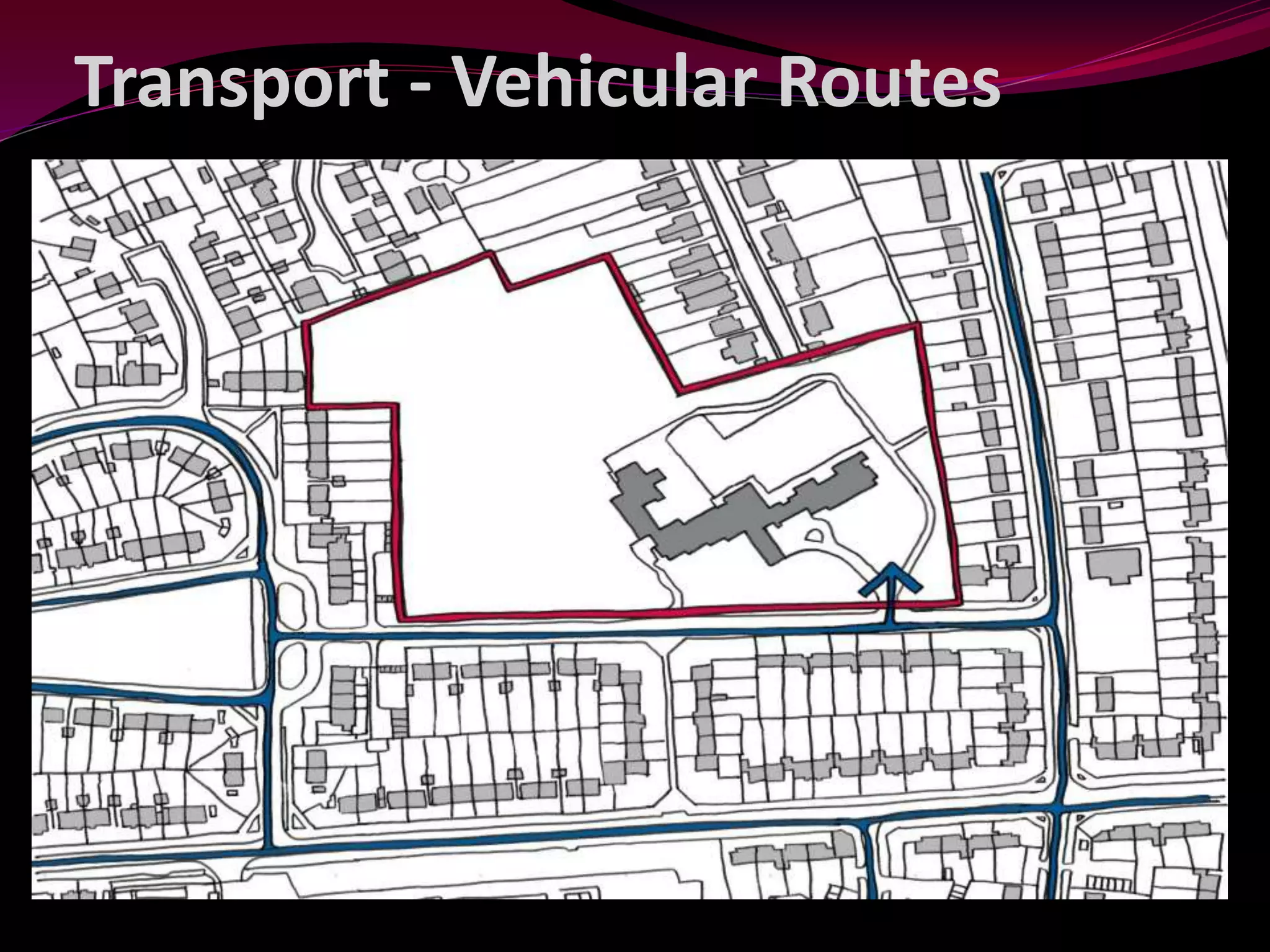
Transport - Vehicular Routes
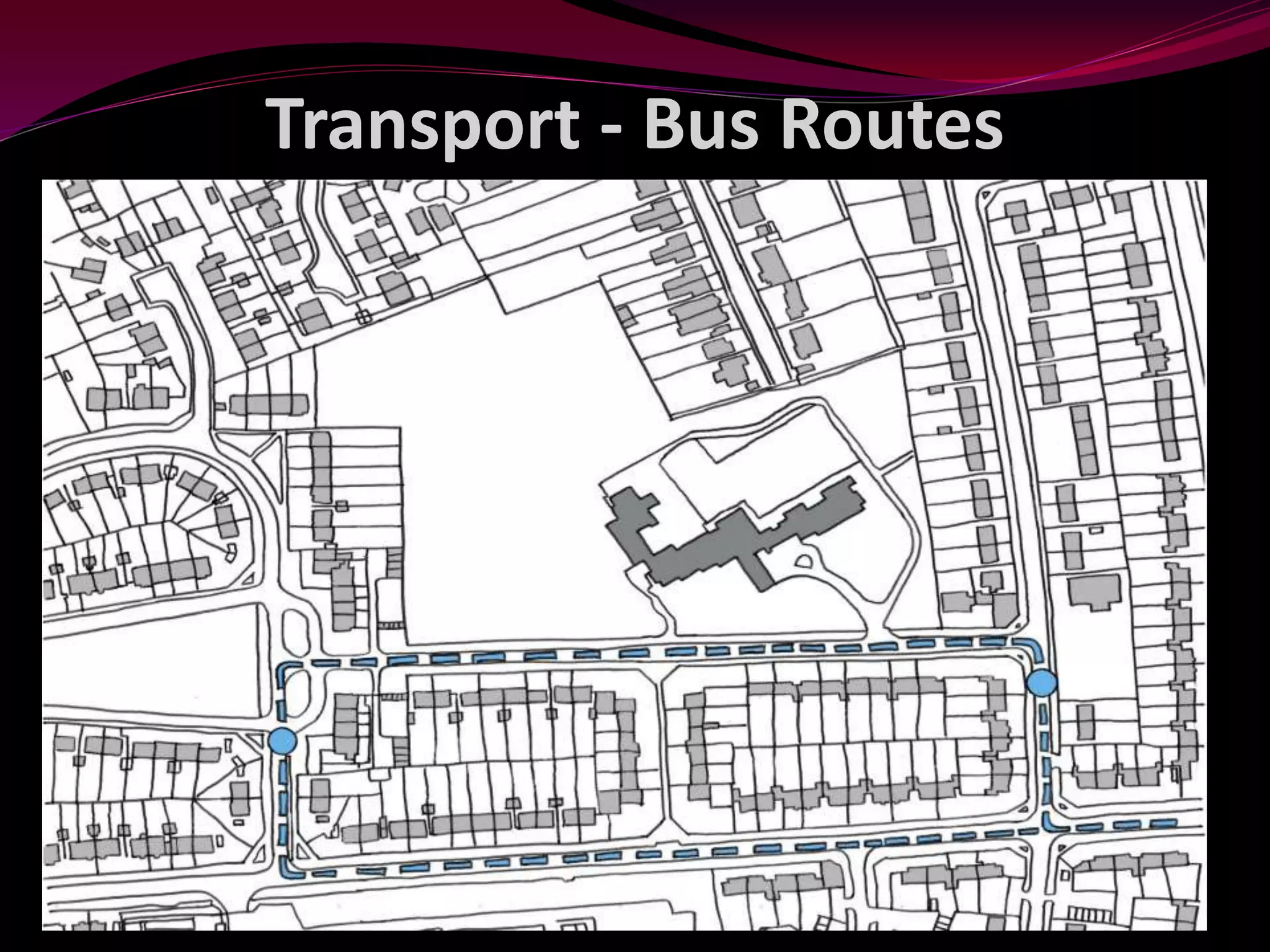
Transport - Bus Routes
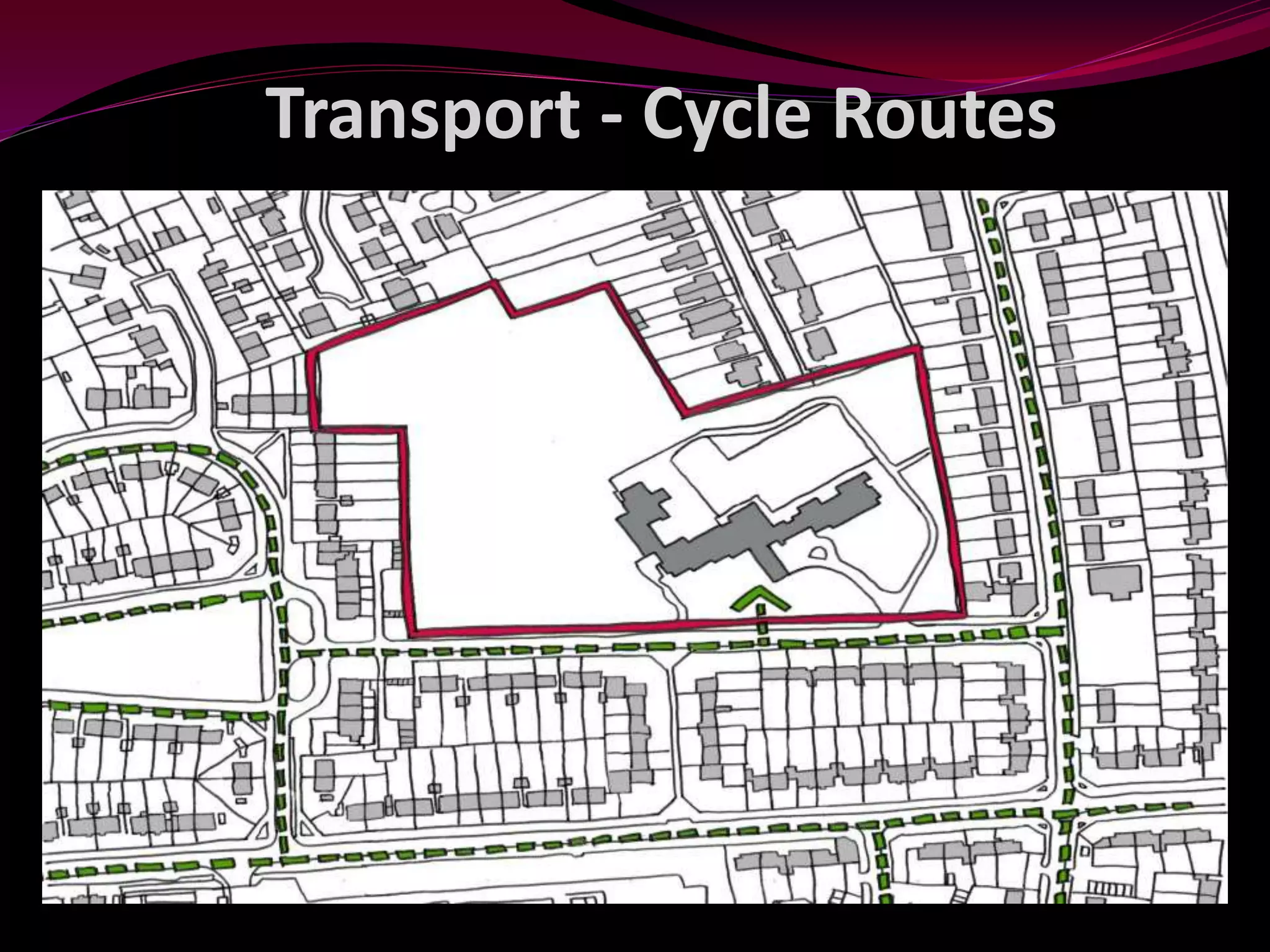
Transport - Cycle Routes
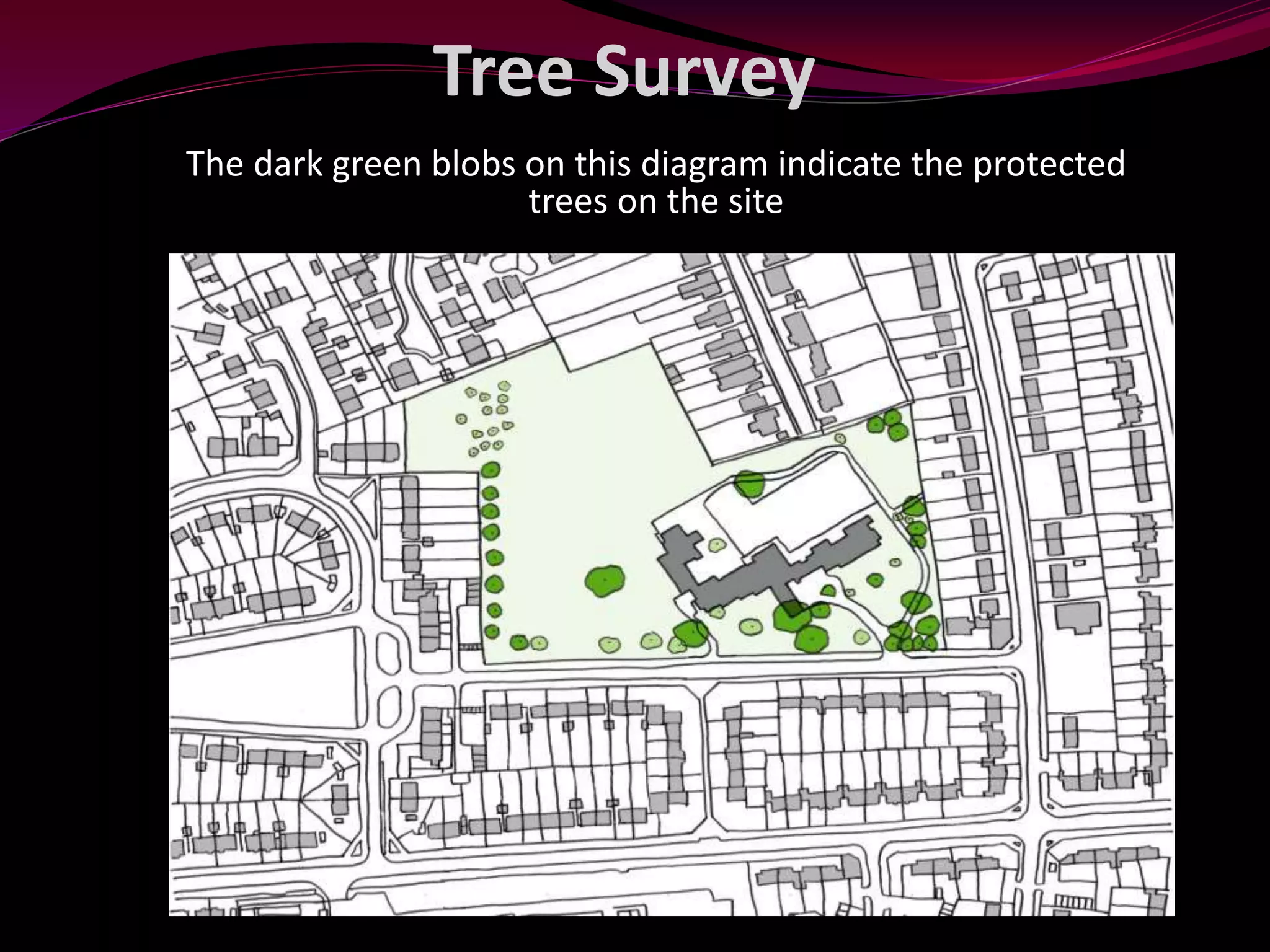
Tree Survey
The dark green blobs on this diagram indicate the protected
trees on the site
 1. Agriculture Area
 2. Playground Area
 3. Circulation Areas
 4. Athletic Field.
EXTERNAL AREAS IN THE SCHOOL
SCHOOL SITE BEAUTIFICATION
1. School Gate
2. School Fence
3. Flagpole
4. Signboard
5. Planting Plan
EVACUATION AREAS
 The school should have provision for open space big
enough to accommodate the total population of the
school. The open space can be used as short-term (hours
in duration) temporary evacuation area of students,
teachers and school staff in case of emergencies such as
after a strong earthquake and occurrence of fire.
Thank you so much !

School Site Development

  • 1.
    SCHOOL SITE DEVELOPMENT SherlaB. Pereña DISCUSSANT Dr. Vernie Borsoto Professor
  • 2.
    SCHOOL SITE DEVELOPMENT A graphic presentation of the Site Development Program is referred to as Site Development Plan
  • 3.
    SCHOOL SITE DEVELOPMENT Principles in the Preparation of the Site Development Plan.  Layout of Buildings and Other Structures.  Arrangement of Buildings.  Site Limitations.  Acoustic Barriers.  Sun Path.
  • 4.
     Local WindPatterns.  Sun screens, Vertical Louvers and Green Walls (vertical gardens)  The distances between buildings  The recommended setback  There should be provision for open space SCHOOL SITE DEVELOPMENT
  • 5.
    SITE DEVELOPMENT PLANNING Site development planning is viewed essentially as an exercise in the layout of infrastructure.  The purpose of site development planning is to anticipate the future needs and development of a school in terms of physical facilities and to contribute towards conducive teaching-learning environment.
  • 8.
    School Site Zoning A basic step in school site development is to apportion its external spaces into different areas or zones each of which is designed for a specific purpose or utilization, in accordance with the educational needs of the school  Visual zone (1) Lawns (2) Flower gardens (3) Flowerbeds (4) Assembly area (5) Rain Gardens or Bio-Wales. (6) Physical zone (7) Functional zone
  • 9.
  • 10.
  • 11.
  • 12.
  • 13.
  • 14.
  • 15.
    Historical Context This historicalmap is from 1947 and shows how much of the area was still farm land 60 years ago.
  • 16.
    Environmental Analysis This diagramshows the sunpath across the site, the prevailing winds (the light blue arrows)the main views from the school, and the noise from the road (red arrows)
  • 17.
  • 18.
  • 19.
  • 20.
  • 21.
    Tree Survey The darkgreen blobs on this diagram indicate the protected trees on the site
  • 22.
     1. AgricultureArea  2. Playground Area  3. Circulation Areas  4. Athletic Field. EXTERNAL AREAS IN THE SCHOOL
  • 23.
    SCHOOL SITE BEAUTIFICATION 1.School Gate 2. School Fence 3. Flagpole 4. Signboard 5. Planting Plan
  • 24.
    EVACUATION AREAS  Theschool should have provision for open space big enough to accommodate the total population of the school. The open space can be used as short-term (hours in duration) temporary evacuation area of students, teachers and school staff in case of emergencies such as after a strong earthquake and occurrence of fire.
  • 25.