A little piece of history:
 Negotiation, arbitration and mediation are as old as
  human being.

 Despite what the movies show us, many ancient cultures all
  over the world settled arguments by peaceful persuasion rather
  than by sword.

 Ancient villages had at least one leader who was skilled at
  helping people solve problems (wise men, elders, intercessors,
  conciliators …)
 It has been and it still is a traditional form of conflict resolution
  in some parts of Asia and Africa

 Mediation really came into play with the advent of international
  treaties. History of mediation was the history of diplomacy.
 First school mediation programmes were born in the USA
 in the 60’ linked to peace and justice education . (The
 Teaching Students to be Peacemakers initiative was the
 first Peer Mediation program. )

 This conflict-solving philosophy moved to Canada, New
 Zealand and UK in the 70’ and 80’.

 The first school peer mediation programmes began to
 develop in the 90’ in Europe (1992 in UK, 1993 in Spain).
 In the Balearic Islands, the ICEE started
  to work on school mediation in 2007
  based on Carmen Boqué programmes.

 Schools staff training programmes started in 2008:
   2008-2009: 6 secondary schools
   2009-2010: 9 secondary schools
   2010-2011: 10 secondary schools + 1 primary school
   2011-2012: 6 secondary schools + 3 primary schools


 Social Services have been using different informal
 mediation practices for a long time. They started using
 formal mediation in 2007 with family and community
 conflicts.
What is the difference between
       mediation and arbitration?
•  Arbitration involves decision    Mediation is a process of
making by a person who hears         communication in which
both sides and makes a decision      persons with a dispute,
about    the     disposition  or     assisted by a mediator, reach
resolution of the dispute.           an agreement, understanding,
                                     or reconciliation.
                                    The mediator is a neutral
•The arbitrator is a decision-
                                     facilitator
maker.
                                    Disputants will make their
•Disputants  may or may not          own decision so they feel
agree/be bound by that decision.     compelled to honour their
                                     commitments.
What do Mediation and Circles
     have in common?
 Identical aims:
    Solve conflicts
    Build community (dialogue culture)

 Allow participants to solve their conflicts
  by their own.

 Allow participants to express their thoughts, feelings
  and needs

 Invite parties to formulate their own solutions and take
  responsibilities for their actions
 Can prevent conflicts and misunderstandings from
  becoming protracted and destructive disputes.

 Improve basic competences such as:
    communication skills
    social and emotional learning
    critical thinking
    empathy


 But also:
   self-esteem
   self-responsibility
   sense of belonging
 Encourage future co-operation


                      Voluntary, positive and fair process


                      Confidentiality


 Structured, goal directed process that follows clear steps

 Can be applied across school community
 Ideal process to integrate into whole school
  community policies and procedures

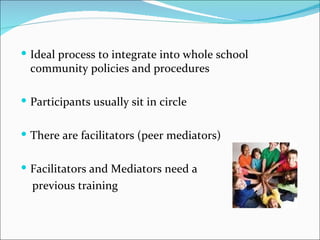
 Participants usually sit in circle


 There are facilitators (peer mediators)


 Facilitators and Mediators need a
  previous training
Differences:
 Persons in conflict are disputants:
    no wrongdoers
    no victims

 Only disputants and mediators
  participate in the process
 No shame, no guilt
 Win/win solutions.

 Mediation may not be useful for all conflicts-solving.
 Things that can be mediated at school:

   Relationship difficulties, arguments, disputes,
   Rumour and gossip,
   Being left out,
   Name calling,
   Friends falling out,
   Feeling something isn’t fair,
   People feel others are picking or teasing on them.
   Racial or cultural confrontation
 It is commonly accepted that school peer
 mediators should not deal with:

   Family matters,
   Breaking the law, school rules or property,
   Violent actions,
   Theft,
   Drugs,
   Abuse
   Bullying
   “anything to do with teeth, skin and hair”–Tyrell, 2002-
Take-home messages
The goal is to have winners instead of losers.

  Remember, we’re not looking for who’s
           right or wrong...

 WE’RE LOOKING FOR AN AGREEMENT!

School peer mediation

  • 2.
    A little pieceof history:  Negotiation, arbitration and mediation are as old as human being.  Despite what the movies show us, many ancient cultures all over the world settled arguments by peaceful persuasion rather than by sword.  Ancient villages had at least one leader who was skilled at helping people solve problems (wise men, elders, intercessors, conciliators …)  It has been and it still is a traditional form of conflict resolution in some parts of Asia and Africa  Mediation really came into play with the advent of international treaties. History of mediation was the history of diplomacy.
  • 3.
     First schoolmediation programmes were born in the USA in the 60’ linked to peace and justice education . (The Teaching Students to be Peacemakers initiative was the first Peer Mediation program. )  This conflict-solving philosophy moved to Canada, New Zealand and UK in the 70’ and 80’.  The first school peer mediation programmes began to develop in the 90’ in Europe (1992 in UK, 1993 in Spain).
  • 4.
     In theBalearic Islands, the ICEE started to work on school mediation in 2007 based on Carmen Boqué programmes.  Schools staff training programmes started in 2008:  2008-2009: 6 secondary schools  2009-2010: 9 secondary schools  2010-2011: 10 secondary schools + 1 primary school  2011-2012: 6 secondary schools + 3 primary schools  Social Services have been using different informal mediation practices for a long time. They started using formal mediation in 2007 with family and community conflicts.
  • 5.
    What is thedifference between mediation and arbitration? • Arbitration involves decision  Mediation is a process of making by a person who hears communication in which both sides and makes a decision persons with a dispute, about the disposition or assisted by a mediator, reach resolution of the dispute. an agreement, understanding, or reconciliation.  The mediator is a neutral •The arbitrator is a decision- facilitator maker.  Disputants will make their •Disputants may or may not own decision so they feel agree/be bound by that decision. compelled to honour their commitments.
  • 6.
    What do Mediationand Circles have in common?  Identical aims:  Solve conflicts  Build community (dialogue culture)  Allow participants to solve their conflicts by their own.  Allow participants to express their thoughts, feelings and needs  Invite parties to formulate their own solutions and take responsibilities for their actions
  • 7.
     Can preventconflicts and misunderstandings from becoming protracted and destructive disputes.  Improve basic competences such as:  communication skills  social and emotional learning  critical thinking  empathy  But also:  self-esteem  self-responsibility  sense of belonging
  • 8.
     Encourage futureco-operation  Voluntary, positive and fair process  Confidentiality  Structured, goal directed process that follows clear steps  Can be applied across school community
  • 9.
     Ideal processto integrate into whole school community policies and procedures  Participants usually sit in circle  There are facilitators (peer mediators)  Facilitators and Mediators need a previous training
  • 10.
    Differences:  Persons inconflict are disputants:  no wrongdoers  no victims  Only disputants and mediators participate in the process  No shame, no guilt  Win/win solutions.  Mediation may not be useful for all conflicts-solving.
  • 11.
     Things thatcan be mediated at school:  Relationship difficulties, arguments, disputes,  Rumour and gossip,  Being left out,  Name calling,  Friends falling out,  Feeling something isn’t fair,  People feel others are picking or teasing on them.  Racial or cultural confrontation
  • 12.
     It iscommonly accepted that school peer mediators should not deal with:  Family matters,  Breaking the law, school rules or property,  Violent actions,  Theft,  Drugs,  Abuse  Bullying  “anything to do with teeth, skin and hair”–Tyrell, 2002-
  • 13.
    Take-home messages The goalis to have winners instead of losers. Remember, we’re not looking for who’s right or wrong... WE’RE LOOKING FOR AN AGREEMENT!