
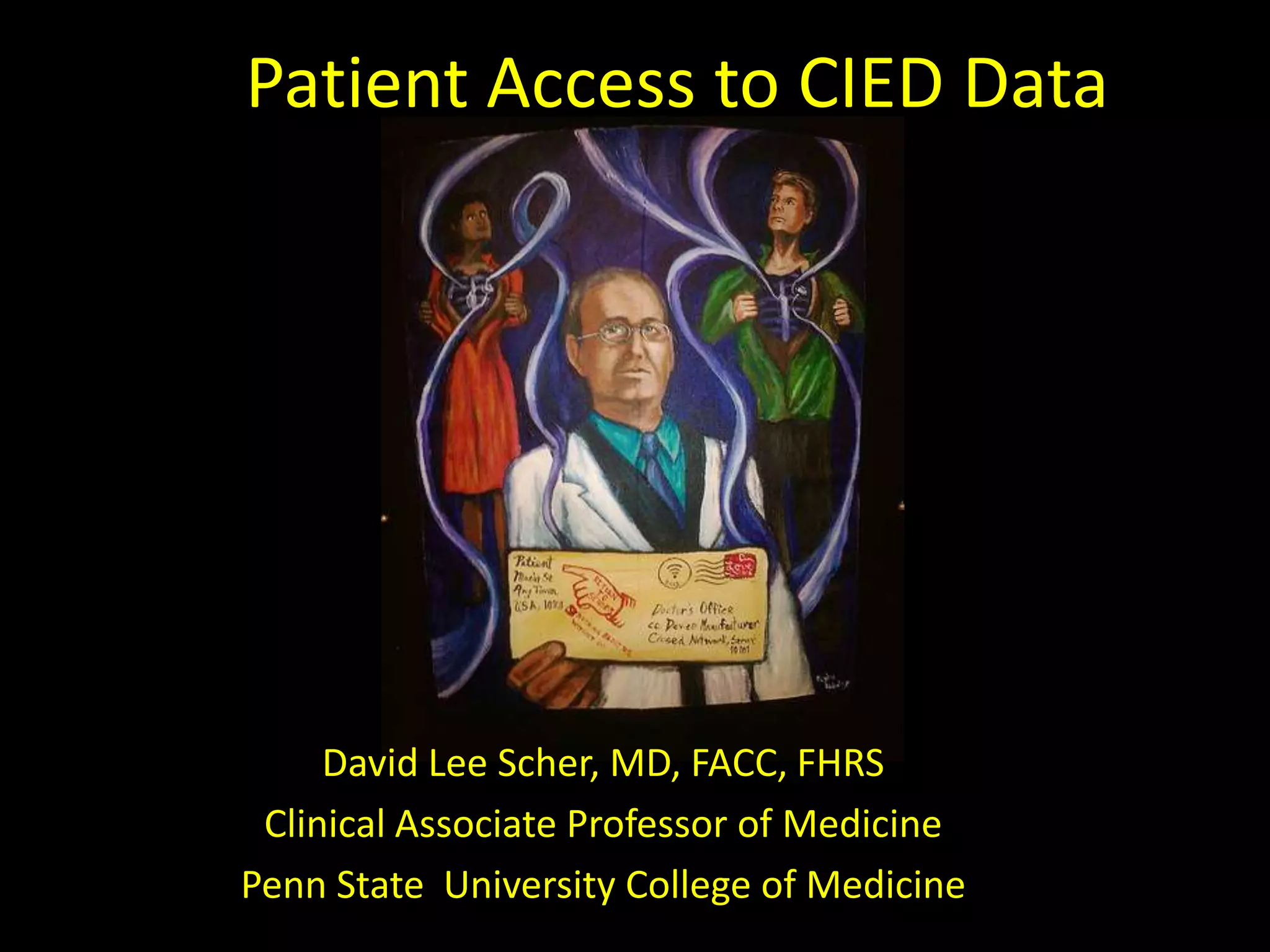


Patient Access to CIED Data
David Lee Scher, MD, FACC, FHRS
Clinical Associate Professor of Medicine
Penn State University College of Medicine
DISCLOSURES
• Consultant: Medtronic
• Member: HRS IT Subcommittee
Background
• Meaningful Use of HITECH Act mandates
patient access to electronic health data.
• RPM is established as best practice for CIED
follow-up.
• Many patients do not know what data their
devices furnish or what it means.
• Many patients do not get printouts or results.
• “All looks good” or “We would like to see you
in the office.”
Background: Historical Barriers to
Interoperability of RPM with EMR
• Previous lack of industry standards of
terminology.
• Lack of incentives.
• Lack of regulatory mandate.
• Lack of ‘customer’ (physician) demand.
5
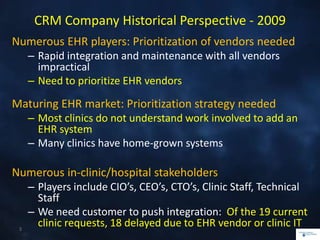
CRM Company Historical Perspective - 2009
Numerous EHR players: Prioritization of vendors needed
– Rapid integration and maintenance with all vendors
impractical
– Need to prioritize EHR vendors
Maturing EHR market: Prioritization strategy needed
– Most clinics do not understand work involved to add an
EHR system
– Many clinics have home-grown systems
Numerous in-clinic/hospital stakeholders
– Players include CIO’s, CEO’s, CTO’s, Clinic Staff, Technical
Staff
– We need customer to push integration: Of the 19 current
clinic requests, 18 delayed due to EHR vendor or clinic IT
Clinical Reasons for Patients to Have Their
Data Via Portals
• ? Promotes patient engagement
• Decrease anxiety
• Share data with caregiver
• Visual feedback for medication
adherence
• Knowing basic settings -> decrease
inappropriate shocks
• Diary correlation with events
• ? Crowdsourced research
“Nothing About Us Without Us”
“Heart Gadgets Test Privacy-Law Limits”
By AMY DOCKSER MARCUS and CHRISTOPHER WEAVER
Wednesday, November 28, 2012 As of 10:31 PM EST
So…How do we Get Meaningful CIED
Data to Patients?
• Establish standards for terminology.
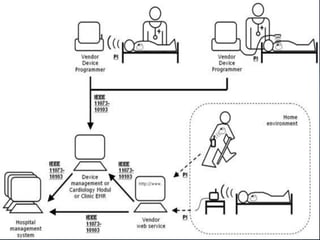
– IDCO/IEEE nomenclature project 2006-2012
• Push data to EHRs seamlessly utilizing
standards established.
• ‘Translate’ data into customized patient
notification.
• Data and letter pushed to patient portal for
patient access.
Why is IDCO Compliance Important?
• Allows device data to be captured in EHR systems
automatically, reducing workflow complexity.
• Ensures quality of care by conforming data to
standard data format and terminology.
• Less confusion to patients, non-EP providers.
• Semantics
– A nomenclature or set of terminology that defines
the information being shared
• Syntax
– The structural arrangement of the information
• Profiles
– The specifications for how an integration will be
accomplished for a specific use case
IDCO Encompasses Three Standards
Pilot: Implantable Cardiac Device
Patient Engagement Project
Hypothesis
Messaging patients on remote ICD monitoring
with pertinent information through their PHR
will add value to patient's experience with
regard to their ICD / cardiac management by
increasing their engagement in healthcare.
Primary Objectives
Demonstrate the value of electronically
messaging patients a standardized patient
summary of remote ICD data capture via:
– Quantitative and qualitative assessment of data
transfer.
– Quantitative and qualitative evaluation of patient
experience.
– Evaluate patient-provider communications.
•
Secondary Objectives
Provide essential information for future ICD to
PHR implementation efforts by document
"lessons learned" in three key areas:
– Technological Development
– Patient Interaction with data
– Clinician Interaction with data
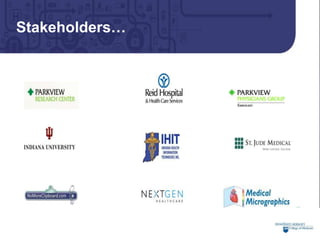
Stakeholders…
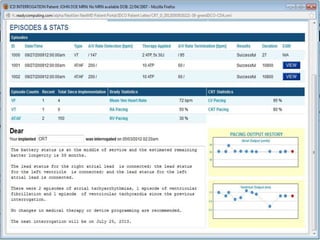
Workflow
• Patient’s device data sent to Electronic
Health Record’s (EHR) data management
system.
• Physician reviews data.
• Physician adds Comments and/or Plan of
Care Data to implanted device
observation.
• EHR data management system sends
updated implanted device observation to
patient’s Personal Health Record (PHR) as
Patient Notification.
• Patient views Patient Notification of
implanted device observation in PHR
portal user interface.
Related Issues
• Non-CIED RPM being rapidly adopted.
• Emergence of EHR and patient portal apps.
• Patient rights focus of Congress re: privacy and
security of health/medical apps.
• Commercialization of de-identified data for
research and marketing.
SUMMARY
• Patients are requesting data from their CIEDs.
• Standardization of terms and IT processes and
portals are necessary foundations for
execution and now a reality.
• Semi-automated notification of customizable
data with explanation is possible and
presently in beta testing in ONC sponsored
pilot program.
• Stay tuned!!
“If you ask me a question I don’t
know, I’m not going to answer”
------Yogi Berra

Patient Access to Implantable Cardiac Rhythm Device Data

  • 1.
    Patient Access toCIED Data David Lee Scher, MD, FACC, FHRS Clinical Associate Professor of Medicine Penn State University College of Medicine
  • 2.
    DISCLOSURES • Consultant: Medtronic •Member: HRS IT Subcommittee
  • 3.
    Background • Meaningful Useof HITECH Act mandates patient access to electronic health data. • RPM is established as best practice for CIED follow-up. • Many patients do not know what data their devices furnish or what it means. • Many patients do not get printouts or results. • “All looks good” or “We would like to see you in the office.”
  • 4.
    Background: Historical Barriersto Interoperability of RPM with EMR • Previous lack of industry standards of terminology. • Lack of incentives. • Lack of regulatory mandate. • Lack of ‘customer’ (physician) demand.
  • 5.
    5 CRM Company HistoricalPerspective - 2009 Numerous EHR players: Prioritization of vendors needed – Rapid integration and maintenance with all vendors impractical – Need to prioritize EHR vendors Maturing EHR market: Prioritization strategy needed – Most clinics do not understand work involved to add an EHR system – Many clinics have home-grown systems Numerous in-clinic/hospital stakeholders – Players include CIO’s, CEO’s, CTO’s, Clinic Staff, Technical Staff – We need customer to push integration: Of the 19 current clinic requests, 18 delayed due to EHR vendor or clinic IT
  • 6.
    Clinical Reasons forPatients to Have Their Data Via Portals • ? Promotes patient engagement • Decrease anxiety • Share data with caregiver • Visual feedback for medication adherence • Knowing basic settings -> decrease inappropriate shocks • Diary correlation with events • ? Crowdsourced research
  • 7.
    “Nothing About UsWithout Us”
  • 8.
    “Heart Gadgets TestPrivacy-Law Limits” By AMY DOCKSER MARCUS and CHRISTOPHER WEAVER Wednesday, November 28, 2012 As of 10:31 PM EST
  • 9.
    So…How do weGet Meaningful CIED Data to Patients? • Establish standards for terminology. – IDCO/IEEE nomenclature project 2006-2012 • Push data to EHRs seamlessly utilizing standards established. • ‘Translate’ data into customized patient notification. • Data and letter pushed to patient portal for patient access.
  • 10.
    Why is IDCOCompliance Important? • Allows device data to be captured in EHR systems automatically, reducing workflow complexity. • Ensures quality of care by conforming data to standard data format and terminology. • Less confusion to patients, non-EP providers.
  • 11.
    • Semantics – Anomenclature or set of terminology that defines the information being shared • Syntax – The structural arrangement of the information • Profiles – The specifications for how an integration will be accomplished for a specific use case IDCO Encompasses Three Standards
  • 13.
    Pilot: Implantable CardiacDevice Patient Engagement Project
  • 14.
    Hypothesis Messaging patients onremote ICD monitoring with pertinent information through their PHR will add value to patient's experience with regard to their ICD / cardiac management by increasing their engagement in healthcare.
  • 15.
    Primary Objectives Demonstrate thevalue of electronically messaging patients a standardized patient summary of remote ICD data capture via: – Quantitative and qualitative assessment of data transfer. – Quantitative and qualitative evaluation of patient experience. – Evaluate patient-provider communications. •
  • 16.
    Secondary Objectives Provide essentialinformation for future ICD to PHR implementation efforts by document "lessons learned" in three key areas: – Technological Development – Patient Interaction with data – Clinician Interaction with data
  • 17.
  • 18.
    Workflow • Patient’s devicedata sent to Electronic Health Record’s (EHR) data management system. • Physician reviews data. • Physician adds Comments and/or Plan of Care Data to implanted device observation. • EHR data management system sends updated implanted device observation to patient’s Personal Health Record (PHR) as Patient Notification. • Patient views Patient Notification of implanted device observation in PHR portal user interface.
  • 20.
    Related Issues • Non-CIEDRPM being rapidly adopted. • Emergence of EHR and patient portal apps. • Patient rights focus of Congress re: privacy and security of health/medical apps. • Commercialization of de-identified data for research and marketing.
  • 21.
    SUMMARY • Patients arerequesting data from their CIEDs. • Standardization of terms and IT processes and portals are necessary foundations for execution and now a reality. • Semi-automated notification of customizable data with explanation is possible and presently in beta testing in ONC sponsored pilot program. • Stay tuned!!
  • 22.
    “If you askme a question I don’t know, I’m not going to answer” ------Yogi Berra