Scala in Hulu’s Data
Platform
Prasan Samtani
prasan.samtani@hulu.com
Wednesday, November 20, 13
Disclaimer
Wednesday, November 20, 13
• Streaming video service
• Next-day same-season TV
• ~4.5 million subscribers
• ~25 million unique visitors
per month
• > 1 billion ads/month
Wednesday, November 20, 13
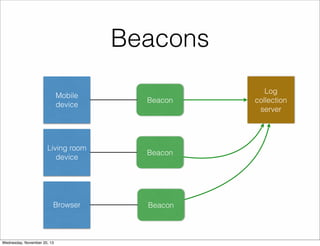
Beacons
Mobile
device
Living room
device
Browser
Beacon
Beacon
Beacon
Log
collection
server
Wednesday, November 20, 13
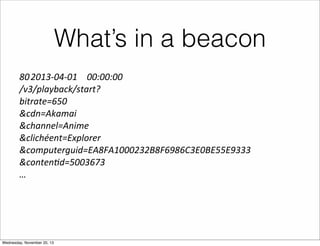
What’s in a beacon
80	
  2013-­‐04-­‐01	
   00:00:00	
  
/v3/playback/start?
bitrate=650
&cdn=Akamai
&channel=Anime
&clichéent=Explorer
&computerguid=EA8FA1000232B8F6986C3E0BE55E9333
&contenLd=5003673
…
Wednesday, November 20, 13
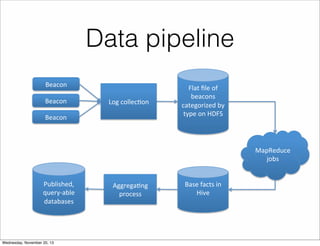
Data pipeline
Beacon'
Log'collec+on'Beacon'
Beacon'
MapReduce'
jobs'
Flat'file'of'
beacons'
categorized'by'
type'on'HDFS'
'
Base'facts'in'
Hive'
'
Aggrega+ng'
process'
Published,'
queryEable'
databases'
Wednesday, November 20, 13
Base-facts
computerguid 00-755925-925755-925
userid    5238518
video_id    289696
content_partner_id     398
distribution_partner_id    602
distro_platform_id    14
is_on_hulu    0
onhulu_offhulu_plus_id    2
package_id    1000
…
hourid 383149
watched 76426
Wednesday, November 20, 13
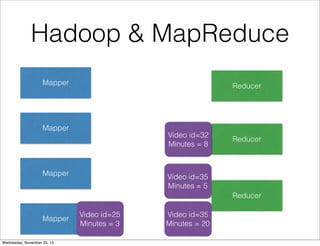
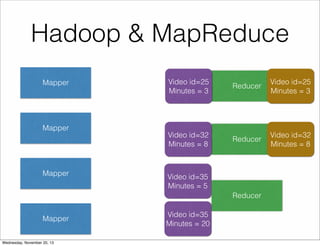
Hadoop & MapReduce
Mapper
Mapper
Mapper
Reducer
Reducer
Reducer
Mapper
Video id=35
Minutes = 5
Video id=32
Minutes = 8
Video id=35
Minutes = 20
Video id=25
Minutes = 3
Wednesday, November 20, 13
Hadoop & MapReduce
Mapper
Mapper
Mapper
Reducer
Reducer
Reducer
Mapper
Video id=35
Minutes = 5
Video id=32
Minutes = 8
Video id=35
Minutes = 20
Video id=25
Minutes = 3
Wednesday, November 20, 13
Hadoop & MapReduce
Mapper
Mapper
Mapper
Reducer
Reducer
Reducer
Mapper
Video id=35
Minutes = 5
Video id=32
Minutes = 8
Video id=35
Minutes = 20
Video id=25
Minutes = 3
Wednesday, November 20, 13
Hadoop & MapReduce
Mapper
Mapper
Mapper
Reducer
Reducer
Reducer
Mapper
Video id=35
Minutes = 5
Video id=32
Minutes = 8
Video id=35
Minutes = 20
Video id=25
Minutes = 3
Wednesday, November 20, 13
Hadoop & MapReduce
Mapper
Mapper
Mapper
Reducer
Reducer
Reducer
Mapper
Video id=35
Minutes = 5
Video id=32
Minutes = 8
Video id=35
Minutes = 20
Video id=25
Minutes = 3
Wednesday, November 20, 13
Hadoop & MapReduce
Mapper
Mapper
Mapper
Reducer
Reducer
Reducer
Mapper
Video id=35
Minutes = 5
Video id=32
Minutes = 8
Video id=35
Minutes = 20
Video id=25
Minutes = 3
Video id=25
Minutes = 3
Wednesday, November 20, 13
Hadoop & MapReduce
Mapper
Mapper
Mapper
Reducer
Reducer
Reducer
Mapper
Video id=35
Minutes = 5
Video id=32
Minutes = 8
Video id=35
Minutes = 20
Video id=25
Minutes = 3
Video id=25
Minutes = 3
Video id=32
Minutes = 8
Wednesday, November 20, 13
Hadoop & MapReduce
Mapper
Mapper
Mapper
Reducer
Reducer
Reducer
Mapper
Video id=35
Minutes = 5
Video id=32
Minutes = 8
Video id=35
Minutes = 20
Video id=25
Minutes = 3
Video id=25
Minutes = 3
Video id=32
Minutes = 8
Video id=35
Minutes = 25
Wednesday, November 20, 13
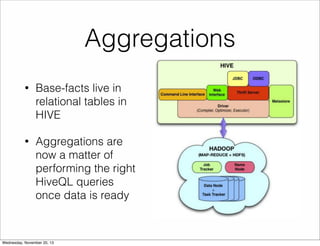
Aggregations
• Base-facts live in
relational tables in
HIVE
• Aggregations are
now a matter of
performing the right
HiveQL queries
once data is ready
Wednesday, November 20, 13
Dispatching jobs to the
cluster
• The job scheduler has a single function: To
dispatch jobs to the cluster when they are ready,
according to some notion of priority
• Written in Scala
• Lots of database interaction
Wednesday, November 20, 13
Why Scala?
• Good concurrency support
• More importantly, easy to construct new ideas and
think in terms of higher level abstractions
• “Programs are for people to read, and only
incidentally for computers to execute” - Harold
Abelson
Wednesday, November 20, 13
object Job extends Table[(Int, String, Option[Int], Option[Int], Int, Int)]("job") {
def part1 = allowPickup ~ maxDate ~ regionId ~ ignoreTrailingData ~ jobId ~ jobType ~ fileBatch ~ ignoreLeadingData ~ minDateRang
def part2 = harpyOutputBasePath ~ enabled ~ dependsOn <>(JobData2, JobData2.unapply _)
def all = (part1, part2)
def * = jobId ~ name ~ dependsOn ~ jobType ~ runPriority ~ isKPI
def allowPickup = column[Int]("allowpickup")
def maxDate = column[Option[Date]]("maxdate")
def regionId = column[Int]("regionid")
def ignoreTrailingData = column[Int]("ignoretrailingdata")
def jobId = column[Int]("jobid")
def jobType = column[Option[Int]]("jobtype")
def fileBatch = column[Int]("filebatch")
def ignoreLeadingData = column[Int]("ignoreleadingdata")
def minDateRangeStart = column[Long]("mindaterangestart")
def inputFileType = column[String]("inputfiletype")
def customJar = column[Option[String]]("custom_jar")
def priority = column[Option[Int]]("priority")
def runPriority = column[Int]("runpriority")
def isKPI = column[Int]("isKPI")
def hoursBeforeDay = column[Option[Int]]("hoursbeforeday")
def errorThreshold = column[Option[Int]]("error_threshold")
def hoursAfterDay = column[Option[Int]]("hoursafterday")
def minDate = column[Option[Date]]("mindate")
def hardStopAction = column[Int]("hardstop_action")
def name = column[String]("name")
def harpyOutputBasePath = column[Option[String]]("harpy_output_basepath")
def enabled = column[Int]("enabled")
def dependsOn = column[Option[Int]]("dependson")
}
case class JobData1(allowPickup: Int, maxDate: Option[Date], regionId: Int, ignoreTrailingData: Int, jobId: Int, jobType: Option[In
case class JobData2(harpyOutputBasePath: Option[String], enabled: Int, dependsOn: Option[Int])
case class JobData(data1: JobData1, data2: JobData2) {
def allowPickup = data1.allowPickup
def maxDate = data1.maxDate
def regionId = data1.regionId
def ignoreTrailingData = data1.ignoreTrailingData
def jobId = data1.jobId
def jobType = data1.jobType
def fileBatch = data1.fileBatch
def ignoreLeadingData = data1.ignoreLeadingData
def minDateRangeStart = data1.minDateRangeStart
def inputFileType = data1.inputFileType
Wednesday, November 20, 13
Introducing slickint
package org.zenbowman.slickdemo
import scala.slick.driver.MySQLDriver.simple._
import java.sql.Date
table=Job, primaryKey=jobId, dbname=job, *=jobId ~ name ~ dependsOn ~ jobType ~ runPriority ~ isKPI
jobId : Int : jobid
name : String : name
enabled : Int : enabled
minDateRangeStart : Long : mindaterangestart
fileBatch : Int : filebatch
dependsOn : Int? : dependson
allowPickup : Int : allowpickup
jobType : Int? : jobtype
minDate : Date? : mindate
maxDate : Date? : maxdate
hoursBeforeDay : Int? : hoursbeforeday
hoursAfterDay : Int? : hoursafterday
hardStopAction : Int : hardstop_action
inputFileType : String : inputfiletype
ignoreTrailingData : Int : ignoretrailingdata
ignoreLeadingData : Int : ignoreleadingdata
priority : Int? : priority
errorThreshold : Int? : error_threshold
runPriority : Int : runpriority
regionId : Int : regionid
harpyOutputBasePath : String? : harpy_output_basepath
customJar : String? : custom_jar
isKPI : Int : isKPI
Wednesday, November 20, 13
Generating the Slick code
• To generate the Scala code:
• python slickint.py [input-filename].slickint > [output-filename].scala
• Outstanding issues (wouldn’t mind some help)
• Insertion into tables with > 22 columns
• Automatic schema detection from the database (at
least for MySQL/Postgres)
• github.com/zenbowman/slickint
Wednesday, November 20, 13
Handling external
dependencies
• Jobs can be dependent on whether an external
process has run
• We want a generic method for determining whether
a job has run based on the status of one or more
databases
Wednesday, November 20, 13
Gate-keeper: simple case
result = "SELECT 1 FROM hbaseingest.ingeststatus
WHERE lastfullupdate > ‘$currentHour'
AND hbasetable='dma'"
with “jdbc:mysql://****:3306/hbaseingest?
zeroDateTimeBehavior=convertToNull”
user “****” password "****";
Wednesday, November 20, 13
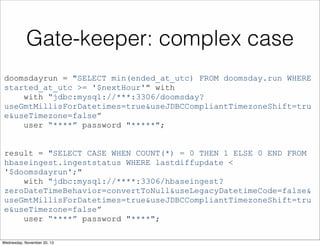
Gate-keeper: complex case
doomsdayrun = "SELECT min(ended_at_utc) FROM doomsday.run WHERE
started_at_utc >= '$nextHour'" with
with “jdbc:mysql://***:3306/doomsday?
useGmtMillisForDatetimes=true&useJDBCCompliantTimezoneShift=tru
e&useTimezone=false”
user “****” password "*****";
result = "SELECT CASE WHEN COUNT(*) = 0 THEN 1 ELSE 0 END FROM
hbaseingest.ingeststatus WHERE lastdiffupdate <
'$doomsdayrun';"
with “jdbc:mysql://****:3306/hbaseingest?
zeroDateTimeBehavior=convertToNull&useLegacyDatetimeCode=false&
useGmtMillisForDatetimes=true&useJDBCCompliantTimezoneShift=tru
e&useTimezone=false”
user “****” password "****";
Wednesday, November 20, 13
What kind of your system does
your language encourage?
Wednesday, November 20, 13
Parser combinators
object GateKeeperConcepts {
case class GateKeeperVariable(name: String)
trait GateKeeperEvaluator {
def getSql: String
def getResult(rs: ResultSet): Option[String]
}
case class SimpleSqlEvaluator(sqlString: String) extends GateKeeperEvaluator {
def getSql: String = sqlString
def getResult(rs: ResultSet) = { ... }
}
case class ConnectionParameters(connectionString: String, userName: String, password:
String)
case class GateKeepingExpression(leftHandSide: GateKeeperVariable, rightHandSide:
GateKeeperEvaluator, connection: ConnectionParameters)
case class GateKeepingSpec(expressions: Seq[GateKeepingExpression])
}
Wednesday, November 20, 13
The parser
object GateKeeperDSL extends StandardTokenParsers {
import GateKeeperConcepts._
lexical.reserved +=(
"with", "user", "password"
)
lazy val gateKeepingSpec: Parser[GateKeepingSpec] =
rep(gateKeepingExpression) ^^ GateKeepingSpec
lazy val gateKeepingExpression: Parser[GateKeepingExpression] =
ident ~ "=" ~ gateKeeperEvaluator ~ "with" ~ stringLit ~ "user" ~ stringLit ~ "password" ~
stringLit ~ ";" ^^ {
case name ~ _ ~ rhs ~ _ ~ conn ~ _ ~ username ~ _ ~ pwd ~ _ =>
GateKeepingExpression(GateKeeperVariable(name), rhs, ConnectionParameters(conn, username,
pwd))
}
lazy val gateKeeperEvaluator: Parser[GateKeeperEvaluator] =
simpleSqlEvaluator
lazy val simpleSqlEvaluator: Parser[SimpleSqlEvaluator] =
stringLit ^^ {
case sqlString => SimpleSqlEvaluator(sqlString)
}
}
Wednesday, November 20, 13
- Rob Pike and Brian Kernighan, The Practice of Programming
If you find yourself writing too much code to do
a mundane job, or if you have trouble
expressing the process comfortably, maybe you
are using the wrong language
Wednesday, November 20, 13
- Alan Perlis
Syntactic sugar causes cancer of the semicolon
Wednesday, November 20, 13

Scala in hulu's data platform

  • 1.
    Scala in Hulu’sData Platform Prasan Samtani prasan.samtani@hulu.com Wednesday, November 20, 13
  • 2.
  • 3.
    • Streaming videoservice • Next-day same-season TV • ~4.5 million subscribers • ~25 million unique visitors per month • > 1 billion ads/month Wednesday, November 20, 13
  • 4.
  • 5.
    What’s in abeacon 80  2013-­‐04-­‐01   00:00:00   /v3/playback/start? bitrate=650 &cdn=Akamai &channel=Anime &clichéent=Explorer &computerguid=EA8FA1000232B8F6986C3E0BE55E9333 &contenLd=5003673 … Wednesday, November 20, 13
  • 6.
  • 7.
    Base-facts computerguid 00-755925-925755-925 userid   5238518 video_id    289696 content_partner_id     398 distribution_partner_id    602 distro_platform_id    14 is_on_hulu    0 onhulu_offhulu_plus_id    2 package_id    1000 … hourid 383149 watched 76426 Wednesday, November 20, 13
  • 8.
    Hadoop & MapReduce Mapper Mapper Mapper Reducer Reducer Reducer Mapper Videoid=35 Minutes = 5 Video id=32 Minutes = 8 Video id=35 Minutes = 20 Video id=25 Minutes = 3 Wednesday, November 20, 13
  • 9.
    Hadoop & MapReduce Mapper Mapper Mapper Reducer Reducer Reducer Mapper Videoid=35 Minutes = 5 Video id=32 Minutes = 8 Video id=35 Minutes = 20 Video id=25 Minutes = 3 Wednesday, November 20, 13
  • 10.
    Hadoop & MapReduce Mapper Mapper Mapper Reducer Reducer Reducer Mapper Videoid=35 Minutes = 5 Video id=32 Minutes = 8 Video id=35 Minutes = 20 Video id=25 Minutes = 3 Wednesday, November 20, 13
  • 11.
    Hadoop & MapReduce Mapper Mapper Mapper Reducer Reducer Reducer Mapper Videoid=35 Minutes = 5 Video id=32 Minutes = 8 Video id=35 Minutes = 20 Video id=25 Minutes = 3 Wednesday, November 20, 13
  • 12.
    Hadoop & MapReduce Mapper Mapper Mapper Reducer Reducer Reducer Mapper Videoid=35 Minutes = 5 Video id=32 Minutes = 8 Video id=35 Minutes = 20 Video id=25 Minutes = 3 Wednesday, November 20, 13
  • 13.
    Hadoop & MapReduce Mapper Mapper Mapper Reducer Reducer Reducer Mapper Videoid=35 Minutes = 5 Video id=32 Minutes = 8 Video id=35 Minutes = 20 Video id=25 Minutes = 3 Video id=25 Minutes = 3 Wednesday, November 20, 13
  • 14.
    Hadoop & MapReduce Mapper Mapper Mapper Reducer Reducer Reducer Mapper Videoid=35 Minutes = 5 Video id=32 Minutes = 8 Video id=35 Minutes = 20 Video id=25 Minutes = 3 Video id=25 Minutes = 3 Video id=32 Minutes = 8 Wednesday, November 20, 13
  • 15.
    Hadoop & MapReduce Mapper Mapper Mapper Reducer Reducer Reducer Mapper Videoid=35 Minutes = 5 Video id=32 Minutes = 8 Video id=35 Minutes = 20 Video id=25 Minutes = 3 Video id=25 Minutes = 3 Video id=32 Minutes = 8 Video id=35 Minutes = 25 Wednesday, November 20, 13
  • 16.
    Aggregations • Base-facts livein relational tables in HIVE • Aggregations are now a matter of performing the right HiveQL queries once data is ready Wednesday, November 20, 13
  • 17.
    Dispatching jobs tothe cluster • The job scheduler has a single function: To dispatch jobs to the cluster when they are ready, according to some notion of priority • Written in Scala • Lots of database interaction Wednesday, November 20, 13
  • 18.
    Why Scala? • Goodconcurrency support • More importantly, easy to construct new ideas and think in terms of higher level abstractions • “Programs are for people to read, and only incidentally for computers to execute” - Harold Abelson Wednesday, November 20, 13
  • 19.
    object Job extendsTable[(Int, String, Option[Int], Option[Int], Int, Int)]("job") { def part1 = allowPickup ~ maxDate ~ regionId ~ ignoreTrailingData ~ jobId ~ jobType ~ fileBatch ~ ignoreLeadingData ~ minDateRang def part2 = harpyOutputBasePath ~ enabled ~ dependsOn <>(JobData2, JobData2.unapply _) def all = (part1, part2) def * = jobId ~ name ~ dependsOn ~ jobType ~ runPriority ~ isKPI def allowPickup = column[Int]("allowpickup") def maxDate = column[Option[Date]]("maxdate") def regionId = column[Int]("regionid") def ignoreTrailingData = column[Int]("ignoretrailingdata") def jobId = column[Int]("jobid") def jobType = column[Option[Int]]("jobtype") def fileBatch = column[Int]("filebatch") def ignoreLeadingData = column[Int]("ignoreleadingdata") def minDateRangeStart = column[Long]("mindaterangestart") def inputFileType = column[String]("inputfiletype") def customJar = column[Option[String]]("custom_jar") def priority = column[Option[Int]]("priority") def runPriority = column[Int]("runpriority") def isKPI = column[Int]("isKPI") def hoursBeforeDay = column[Option[Int]]("hoursbeforeday") def errorThreshold = column[Option[Int]]("error_threshold") def hoursAfterDay = column[Option[Int]]("hoursafterday") def minDate = column[Option[Date]]("mindate") def hardStopAction = column[Int]("hardstop_action") def name = column[String]("name") def harpyOutputBasePath = column[Option[String]]("harpy_output_basepath") def enabled = column[Int]("enabled") def dependsOn = column[Option[Int]]("dependson") } case class JobData1(allowPickup: Int, maxDate: Option[Date], regionId: Int, ignoreTrailingData: Int, jobId: Int, jobType: Option[In case class JobData2(harpyOutputBasePath: Option[String], enabled: Int, dependsOn: Option[Int]) case class JobData(data1: JobData1, data2: JobData2) { def allowPickup = data1.allowPickup def maxDate = data1.maxDate def regionId = data1.regionId def ignoreTrailingData = data1.ignoreTrailingData def jobId = data1.jobId def jobType = data1.jobType def fileBatch = data1.fileBatch def ignoreLeadingData = data1.ignoreLeadingData def minDateRangeStart = data1.minDateRangeStart def inputFileType = data1.inputFileType Wednesday, November 20, 13
  • 20.
    Introducing slickint package org.zenbowman.slickdemo importscala.slick.driver.MySQLDriver.simple._ import java.sql.Date table=Job, primaryKey=jobId, dbname=job, *=jobId ~ name ~ dependsOn ~ jobType ~ runPriority ~ isKPI jobId : Int : jobid name : String : name enabled : Int : enabled minDateRangeStart : Long : mindaterangestart fileBatch : Int : filebatch dependsOn : Int? : dependson allowPickup : Int : allowpickup jobType : Int? : jobtype minDate : Date? : mindate maxDate : Date? : maxdate hoursBeforeDay : Int? : hoursbeforeday hoursAfterDay : Int? : hoursafterday hardStopAction : Int : hardstop_action inputFileType : String : inputfiletype ignoreTrailingData : Int : ignoretrailingdata ignoreLeadingData : Int : ignoreleadingdata priority : Int? : priority errorThreshold : Int? : error_threshold runPriority : Int : runpriority regionId : Int : regionid harpyOutputBasePath : String? : harpy_output_basepath customJar : String? : custom_jar isKPI : Int : isKPI Wednesday, November 20, 13
  • 21.
    Generating the Slickcode • To generate the Scala code: • python slickint.py [input-filename].slickint > [output-filename].scala • Outstanding issues (wouldn’t mind some help) • Insertion into tables with > 22 columns • Automatic schema detection from the database (at least for MySQL/Postgres) • github.com/zenbowman/slickint Wednesday, November 20, 13
  • 22.
    Handling external dependencies • Jobscan be dependent on whether an external process has run • We want a generic method for determining whether a job has run based on the status of one or more databases Wednesday, November 20, 13
  • 23.
    Gate-keeper: simple case result= "SELECT 1 FROM hbaseingest.ingeststatus WHERE lastfullupdate > ‘$currentHour' AND hbasetable='dma'" with “jdbc:mysql://****:3306/hbaseingest? zeroDateTimeBehavior=convertToNull” user “****” password "****"; Wednesday, November 20, 13
  • 24.
    Gate-keeper: complex case doomsdayrun= "SELECT min(ended_at_utc) FROM doomsday.run WHERE started_at_utc >= '$nextHour'" with with “jdbc:mysql://***:3306/doomsday? useGmtMillisForDatetimes=true&useJDBCCompliantTimezoneShift=tru e&useTimezone=false” user “****” password "*****"; result = "SELECT CASE WHEN COUNT(*) = 0 THEN 1 ELSE 0 END FROM hbaseingest.ingeststatus WHERE lastdiffupdate < '$doomsdayrun';" with “jdbc:mysql://****:3306/hbaseingest? zeroDateTimeBehavior=convertToNull&useLegacyDatetimeCode=false& useGmtMillisForDatetimes=true&useJDBCCompliantTimezoneShift=tru e&useTimezone=false” user “****” password "****"; Wednesday, November 20, 13
  • 25.
    What kind ofyour system does your language encourage? Wednesday, November 20, 13
  • 26.
    Parser combinators object GateKeeperConcepts{ case class GateKeeperVariable(name: String) trait GateKeeperEvaluator { def getSql: String def getResult(rs: ResultSet): Option[String] } case class SimpleSqlEvaluator(sqlString: String) extends GateKeeperEvaluator { def getSql: String = sqlString def getResult(rs: ResultSet) = { ... } } case class ConnectionParameters(connectionString: String, userName: String, password: String) case class GateKeepingExpression(leftHandSide: GateKeeperVariable, rightHandSide: GateKeeperEvaluator, connection: ConnectionParameters) case class GateKeepingSpec(expressions: Seq[GateKeepingExpression]) } Wednesday, November 20, 13
  • 27.
    The parser object GateKeeperDSLextends StandardTokenParsers { import GateKeeperConcepts._ lexical.reserved +=( "with", "user", "password" ) lazy val gateKeepingSpec: Parser[GateKeepingSpec] = rep(gateKeepingExpression) ^^ GateKeepingSpec lazy val gateKeepingExpression: Parser[GateKeepingExpression] = ident ~ "=" ~ gateKeeperEvaluator ~ "with" ~ stringLit ~ "user" ~ stringLit ~ "password" ~ stringLit ~ ";" ^^ { case name ~ _ ~ rhs ~ _ ~ conn ~ _ ~ username ~ _ ~ pwd ~ _ => GateKeepingExpression(GateKeeperVariable(name), rhs, ConnectionParameters(conn, username, pwd)) } lazy val gateKeeperEvaluator: Parser[GateKeeperEvaluator] = simpleSqlEvaluator lazy val simpleSqlEvaluator: Parser[SimpleSqlEvaluator] = stringLit ^^ { case sqlString => SimpleSqlEvaluator(sqlString) } } Wednesday, November 20, 13
  • 28.
    - Rob Pikeand Brian Kernighan, The Practice of Programming If you find yourself writing too much code to do a mundane job, or if you have trouble expressing the process comfortably, maybe you are using the wrong language Wednesday, November 20, 13
  • 29.
    - Alan Perlis Syntacticsugar causes cancer of the semicolon Wednesday, November 20, 13