Endangered Species Act of 1973 Mark Ostendorf
History Interaction between people and nature Commerce in the United States Wildlife exploitation—Hunting and Trading Agriculture—Removing and disturbing vital habitat Community growth—Infringing upon habitat Non-Native species—Habitat disruption Kudzu Zebra Mussel What are the implications of human interaction with the environment?
Extinction The eradication of species Passenger Pigeon The Near-Extinction of Prominent or Charismatic Species American Bison Bald Eagle North American Wolf Whooping Crane Ecological Imbalance
The Environmental Movement Early Contributors John Muir, Gifford Pinchot, Henry David Thoreau, Aldo Leopold Silent   Spring —Rachel Carson (1962) The Population   Bomb —Paul Ehrlich (1968) Limits to   Growth —Club of Rome (1972) By the 1970’s, the public had become increasingly aware of its affect on the environment
Relevant Previous Legislation National Environmental Policy Act of 1969 Clean Water Act of 1972 Clean Air Act of 1970 Bald Eagle Act of 1940 Endangered Species Preservation Act of 1966 Endangered Species Conservation Act of 1969
Endangered Species Act of 1973 The Endangered Species Act (ESA) provides a program for the conservation of threatened and endangered  plants  and  animals  and the  habitats  in which they are found.  Protection and Recovery An updatable list of “Endangered” and “Threatened” species was created.
Endangered vs. Threatened “ Endangered” means a species is in danger of extinction throughout all or a significant portion of its range. “ Threatened” means a species is likely to become endangered within the foreseeable future.
Endangered Species Act of 1973 Federal agencies, in consultation with the Fish and Wildlife Service (FWS) and/or the National Oceanic and Atmospheric Administration (NOAA) Fisheries Service, must ensure that their actions are not likely to jeopardize listed species or their habitats
Endangered Species Act of 1973 The FWS of the Department of the Interior maintains  the worldwide list of endangered and threatened organisms.  Species include birds, insects, fish, reptiles, mammals, crustaceans, flowers, grasses, and trees.  Anyone can petition FWS to include a new species on this list.
“ Taking” Listed Animals The ESA makes it unlawful for a person to “take” a listed animal without a permit. Defined as “to harass, harm, pursue, hunt, shoot, wound, kill, trap, capture, or collect or attempt to engage in any such conduct.”
International Species Protection The ESA also implements U.S. participation in the Convention on International Trade in Endangered Species of Wild Fauna and Flora (CITES) 175-nation agreement designed to prevent species from becoming endangered or extinct due to international trade.  Export/Import by permit only A species may require a permit under the ESA, CITES, or  both .
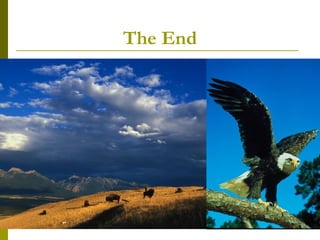
The End
References EPA. Summary of the Endangered Species Act:  16 U.S.C. §1531 et seq. (1973).  http://www.epa.gov/lawsregs/laws/esa.html U.S. Fish & Wildlife Service.  ESA Basics: More Than 30 Years of Conserving Endangered Species. http://www.fws.gov/Endangered/factsheets/ESA_basics.pdf Bald Eagle. Don Pfizer Bison Out on the Range.  Ryan Hagerty

Introduction to the Endangered Species Act

  • 1.
    Endangered Species Actof 1973 Mark Ostendorf
  • 2.
    History Interaction betweenpeople and nature Commerce in the United States Wildlife exploitation—Hunting and Trading Agriculture—Removing and disturbing vital habitat Community growth—Infringing upon habitat Non-Native species—Habitat disruption Kudzu Zebra Mussel What are the implications of human interaction with the environment?
  • 3.
    Extinction The eradicationof species Passenger Pigeon The Near-Extinction of Prominent or Charismatic Species American Bison Bald Eagle North American Wolf Whooping Crane Ecological Imbalance
  • 4.
    The Environmental MovementEarly Contributors John Muir, Gifford Pinchot, Henry David Thoreau, Aldo Leopold Silent Spring —Rachel Carson (1962) The Population Bomb —Paul Ehrlich (1968) Limits to Growth —Club of Rome (1972) By the 1970’s, the public had become increasingly aware of its affect on the environment
  • 5.
    Relevant Previous LegislationNational Environmental Policy Act of 1969 Clean Water Act of 1972 Clean Air Act of 1970 Bald Eagle Act of 1940 Endangered Species Preservation Act of 1966 Endangered Species Conservation Act of 1969
  • 6.
    Endangered Species Actof 1973 The Endangered Species Act (ESA) provides a program for the conservation of threatened and endangered plants and animals and the habitats in which they are found. Protection and Recovery An updatable list of “Endangered” and “Threatened” species was created.
  • 7.
    Endangered vs. Threatened“ Endangered” means a species is in danger of extinction throughout all or a significant portion of its range. “ Threatened” means a species is likely to become endangered within the foreseeable future.
  • 8.
    Endangered Species Actof 1973 Federal agencies, in consultation with the Fish and Wildlife Service (FWS) and/or the National Oceanic and Atmospheric Administration (NOAA) Fisheries Service, must ensure that their actions are not likely to jeopardize listed species or their habitats
  • 9.
    Endangered Species Actof 1973 The FWS of the Department of the Interior maintains the worldwide list of endangered and threatened organisms. Species include birds, insects, fish, reptiles, mammals, crustaceans, flowers, grasses, and trees. Anyone can petition FWS to include a new species on this list.
  • 10.
    “ Taking” ListedAnimals The ESA makes it unlawful for a person to “take” a listed animal without a permit. Defined as “to harass, harm, pursue, hunt, shoot, wound, kill, trap, capture, or collect or attempt to engage in any such conduct.”
  • 11.
    International Species ProtectionThe ESA also implements U.S. participation in the Convention on International Trade in Endangered Species of Wild Fauna and Flora (CITES) 175-nation agreement designed to prevent species from becoming endangered or extinct due to international trade. Export/Import by permit only A species may require a permit under the ESA, CITES, or both .
  • 12.
  • 13.
    References EPA. Summaryof the Endangered Species Act: 16 U.S.C. §1531 et seq. (1973). http://www.epa.gov/lawsregs/laws/esa.html U.S. Fish & Wildlife Service. ESA Basics: More Than 30 Years of Conserving Endangered Species. http://www.fws.gov/Endangered/factsheets/ESA_basics.pdf Bald Eagle. Don Pfizer Bison Out on the Range. Ryan Hagerty