Improving
communications
Through Storytelling
10 November 2016
A presentation to the senior
management committee of
Saskatchewan Environment.
• We’re here until 4:45
• Let me know when you want a break.
• Exercises and me talking
Trigger warnings
• I come from a different culture.
• interactivity;
• vocabulary.
You don’t have to take
notes.
Learning objectives
Increase your appreciation for storytelling in the
context of strategic planning documents.
Learning Objectives
• Explain why it pays to make that extra effort.
Give you permission to stop writing like
a 1950’s bureaucrat.
Evaluate your Ministry’s current writing
and compare it to other ministries.
Set goals for future writing.
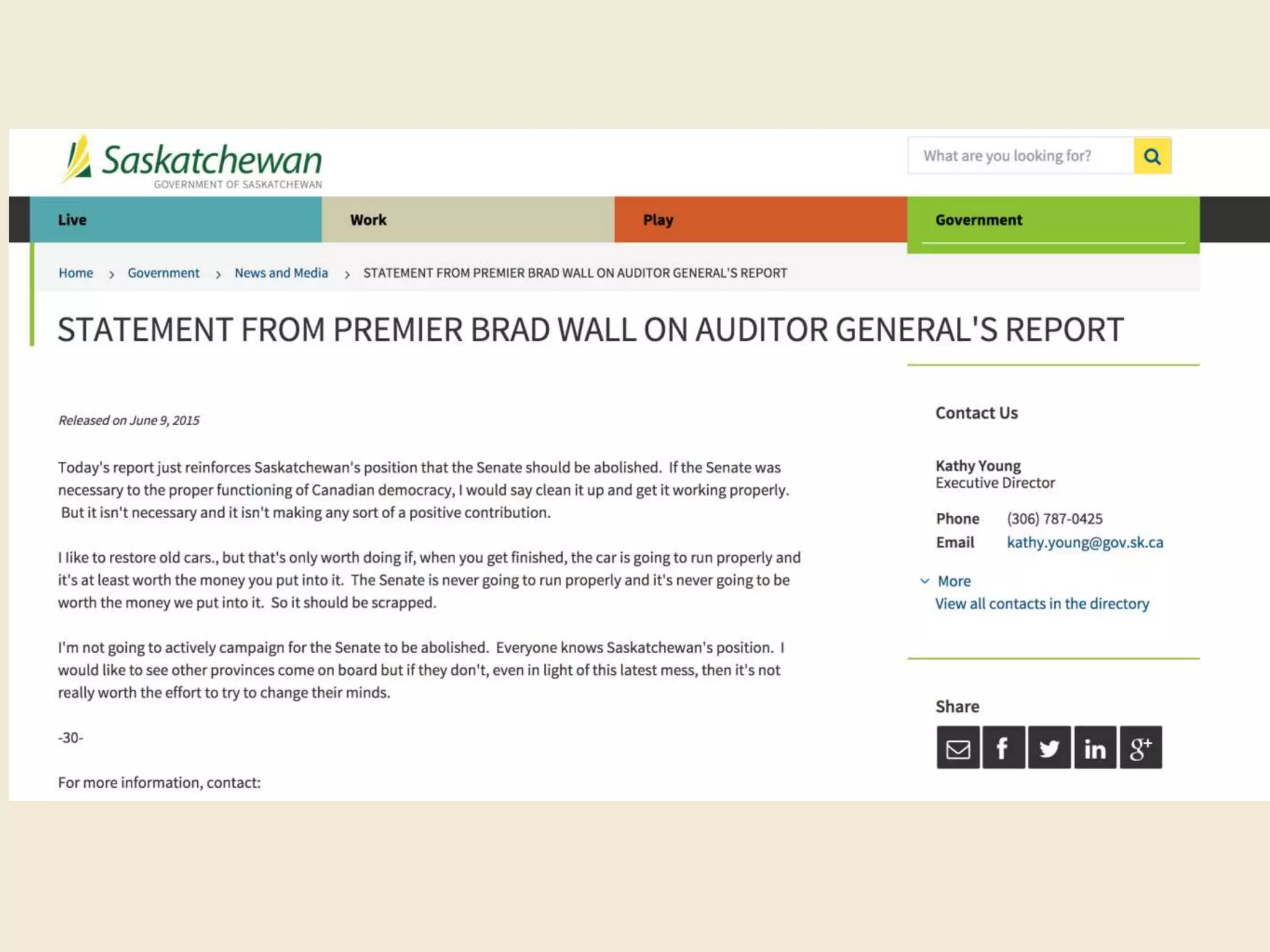
Thesis
• Storytelling is the key to getting a message across;
• You need a narrative structure.
My hidden agenda
• If you’re not telling a story, you’re doing anything.
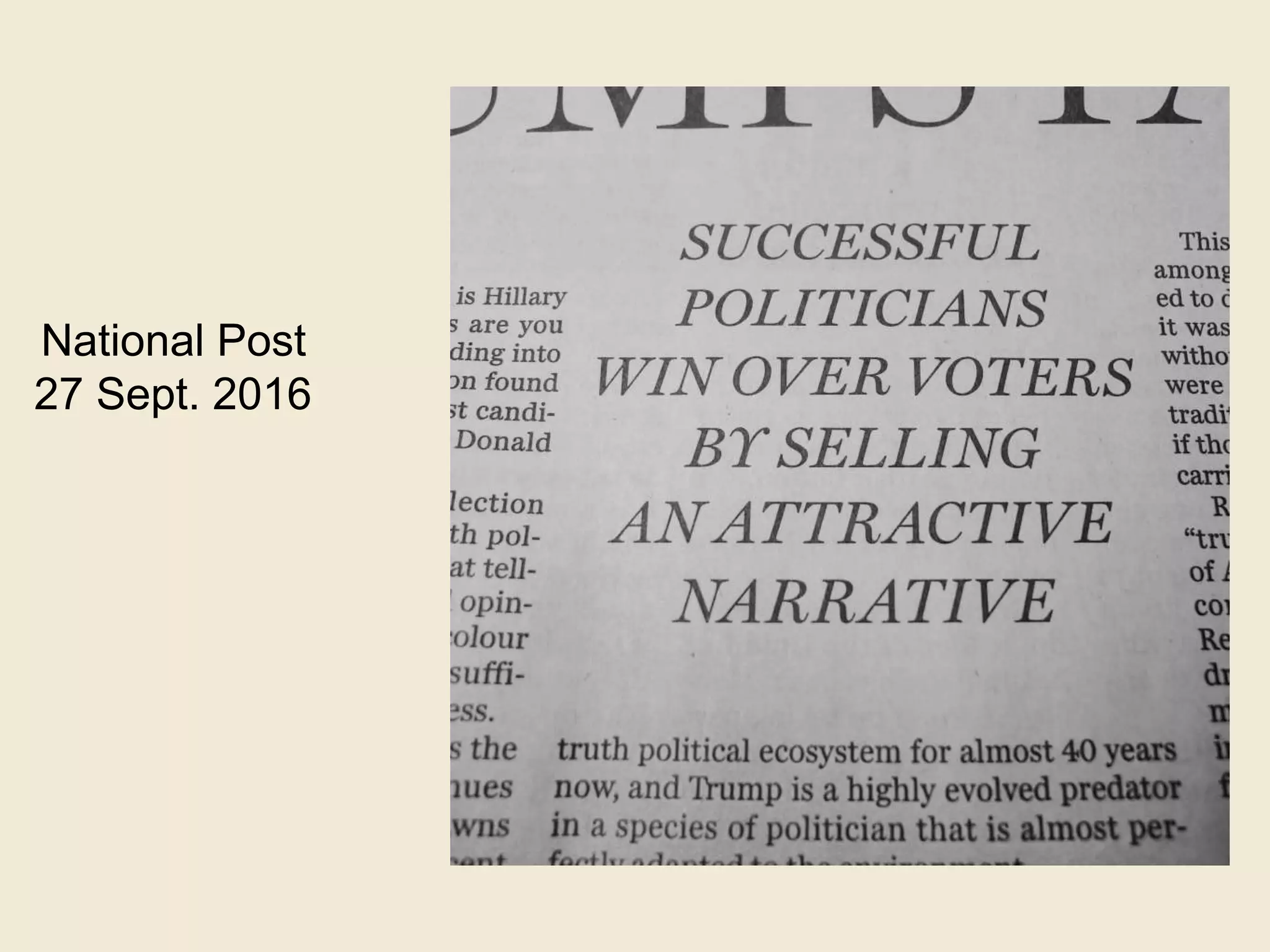
Successful politicians
understand this.
National Post
27 Sept. 2016
National Post
27 Sept. 2016
We spend a lot of time in
government….
• speaking to people who aren’t listening;
• writing reports that are never read;
• …..because we haven't engaged people.
“Stories are the most powerful delivery tool
for information”.
The best way to unite an idea with an emotion is
by telling a story”.
It’s time to play…
Just A Minute !
• Divide into groups of 4 or 5 ;
• Figure out who has the best story ?
Pick a storyteller
• Help them craft their story;
• Must speak for one minute;
• No hesitation, deviation or repetition.
When you’re done
• Come to the front of the room.
Divide into
groups now.
A story about….
• You, a member of your family;
• A famous, unusual experience or person you met;
• An interesting event—
• Illegalities or police investigations.
Have you picked
a storyteller ?
Come to the front
of the room.
Your stories…
One minute.
How did you pick
a storyteller ?
How did you
craft the story ?
Ian, what the hell does
this have to do with my
job ?
The information editing
skills you need…
• allow you to get a point across;
• should be highly valued in complex organizations;
• Without a narrative, no one will hear you.
Stories need…
• Characters
• A plot
• A point of view
• Action (someone doing something because)
You have to
explain why.
The big story development
question…
• What to keep;
• What to pitch.
stories organized
information…
• to make a point
Nancy Duarte—Resonate.
• Every story needs a big idea;
• A unique point of view, rather than generalizations;
• Convey what’s at stake;
• Make people care about your perspective.
pg. 78
Point of view versus topic
• Governments write about topics;
• People write with a point-of-view;
• One builds a story, one doesn’t
The fate of the oceans is
a topic.
Climate change is killing
sea otters expresses a
point of view.
–Nancy Duarte, Resonate, pg. 16
“Stories link one person’s heart to
another. Values, beliefs and
norms become intertwined.”
“You can have piles of facts and
still fail to resonate. It’s not the
information itself that’s important,
but the emotional impact of that
information.”
–Nancy Duarte: Resonate, pg. 14
“Use plenty of facts, but
accompany them with emotional
appeal.”
The structure of
a good story.
“We begin with a pleasant
information dump.”
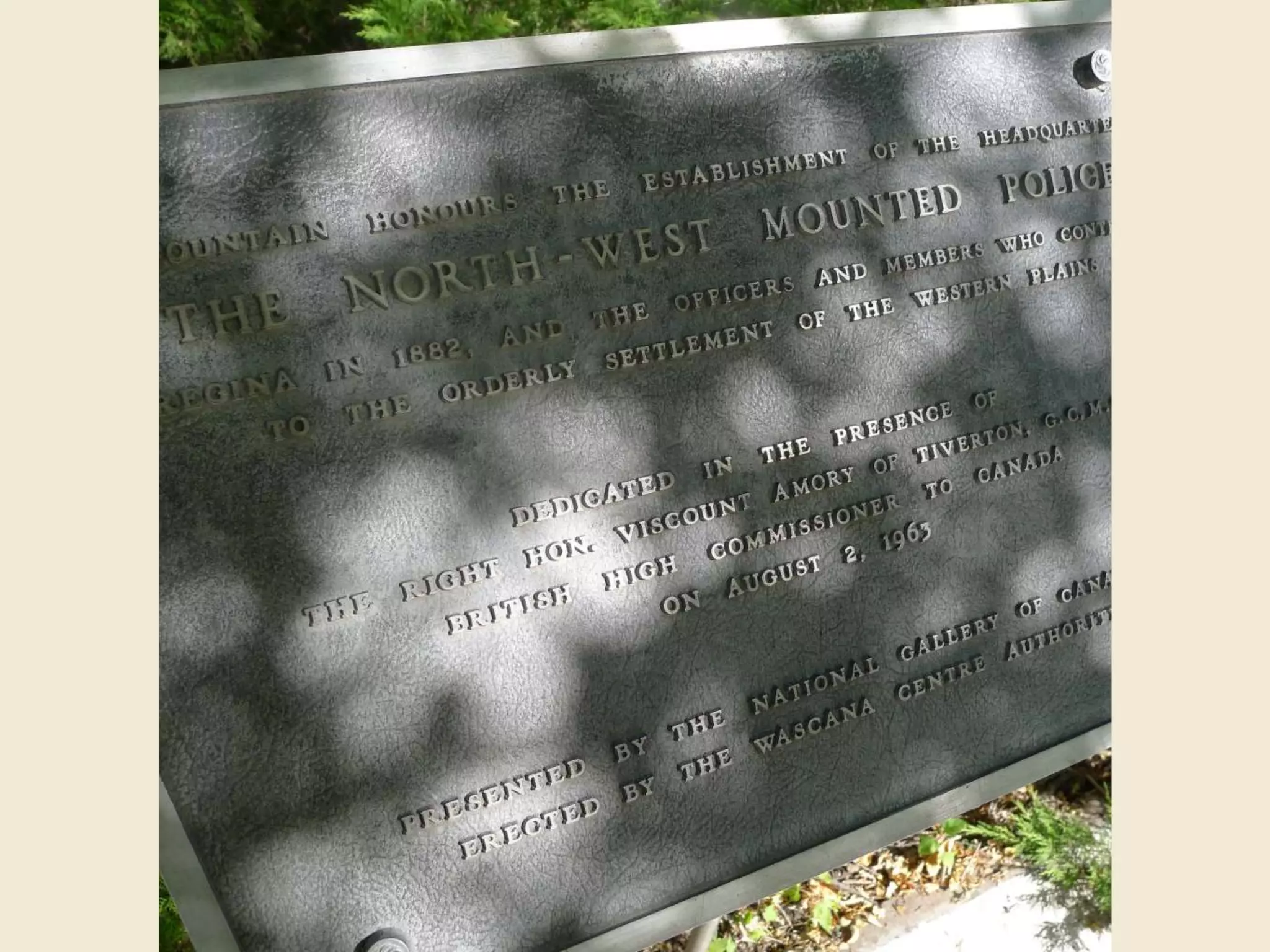
Derick Heathcoat-Amory
• Britain’s Chancellor the Exchequer, 1958 - 1960
• 1st Viscount Amory KG, GCMG
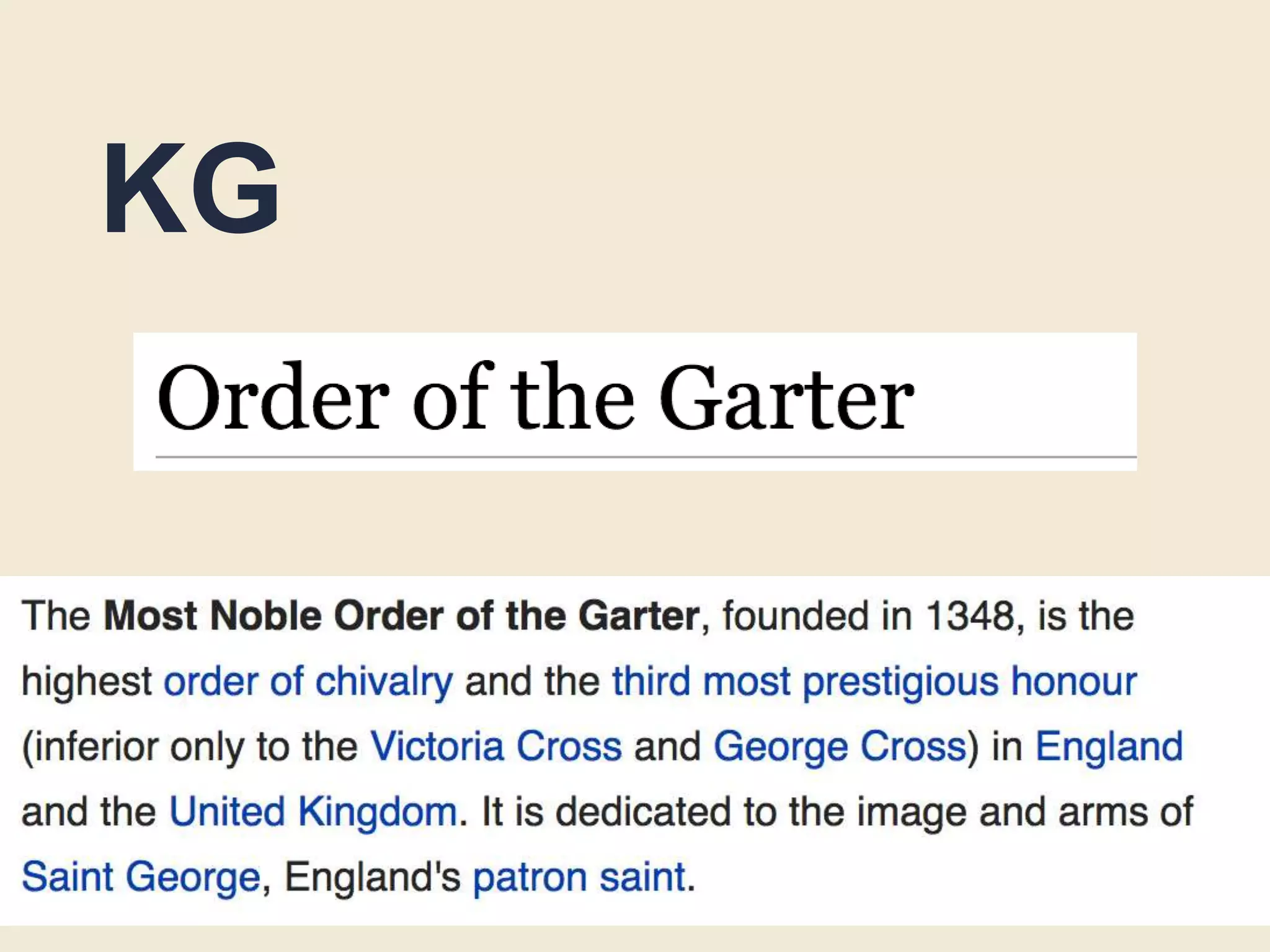
KG
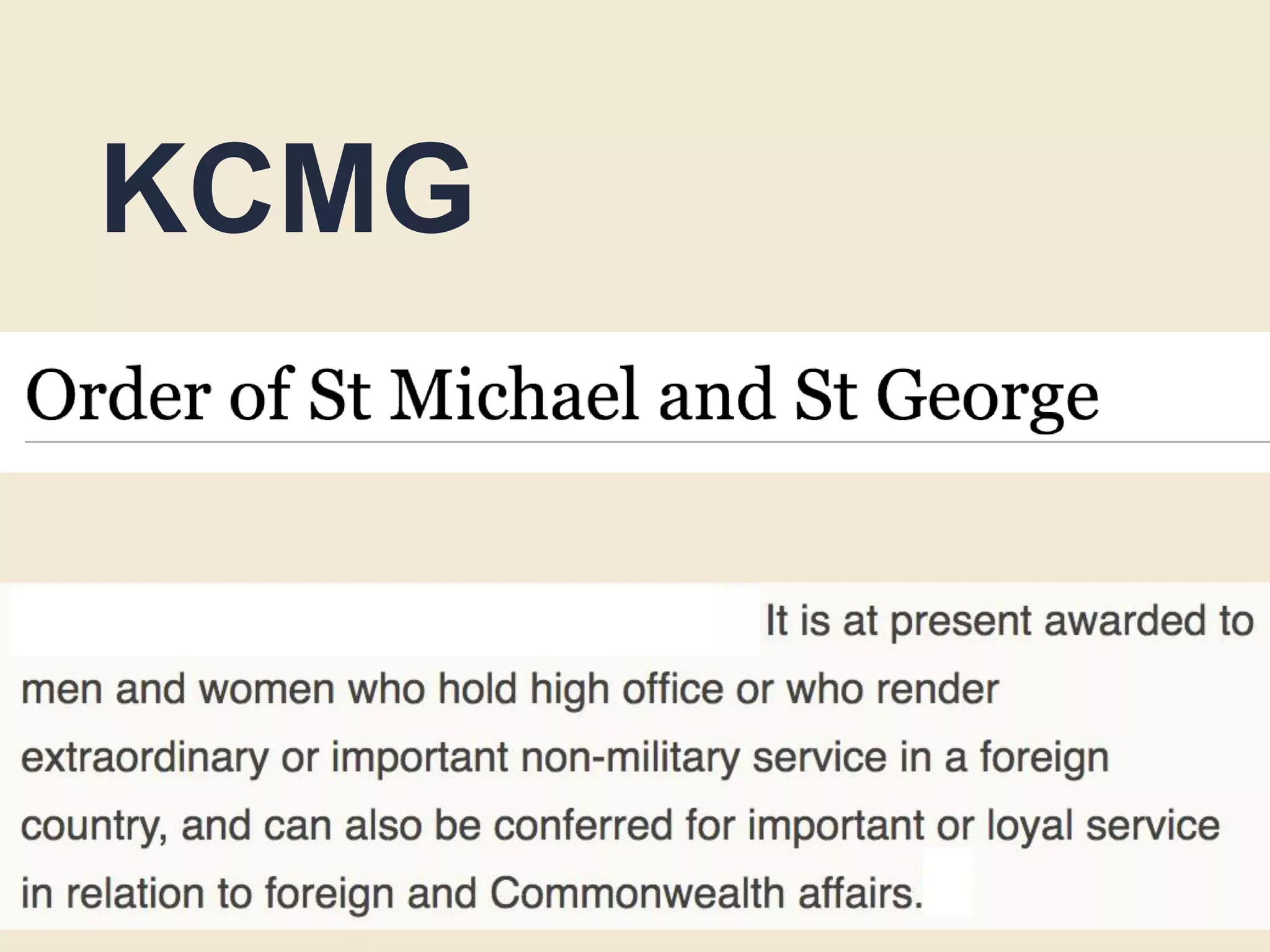
KCMG
Operation Market Garden.
• Amory was wounded and captured in the battle
• September 1944
• Largest airborne military operation to that point.
39,620 troops delivered by
air
• 21,074 via parachute
• 18,546 by glider
What am I doing when
I’m telling you a story ?
I’m thinking about the
audience….
• think about what they need;
• What’s most relevant to the audience ?
• What context is needed to order choices ?
Hypothetically, the
fountain is falling apart:
• What story do we tell ?
• This symbol of our heritage must be saved !
• This symbol of colonial oppression must go !
Is it worth…
• Saving ?
• Reinvest in a different monument ?
• What info do you need to make a decision ?
Try to anticipate
responses.
• “I’d like to thank the province for getting rid of it.”
• “Thanks for dumping our heritage.”
Language and power are
inextricably linked.
• Information drives action;
• Action has to be explained;
• End result, inevitably, is a story we have to tell.
Structuring information;
tossing things overboard;
highlighting the important.
Using some kind of
logic
to structure a narrative.
Attempting to
evoke a response.
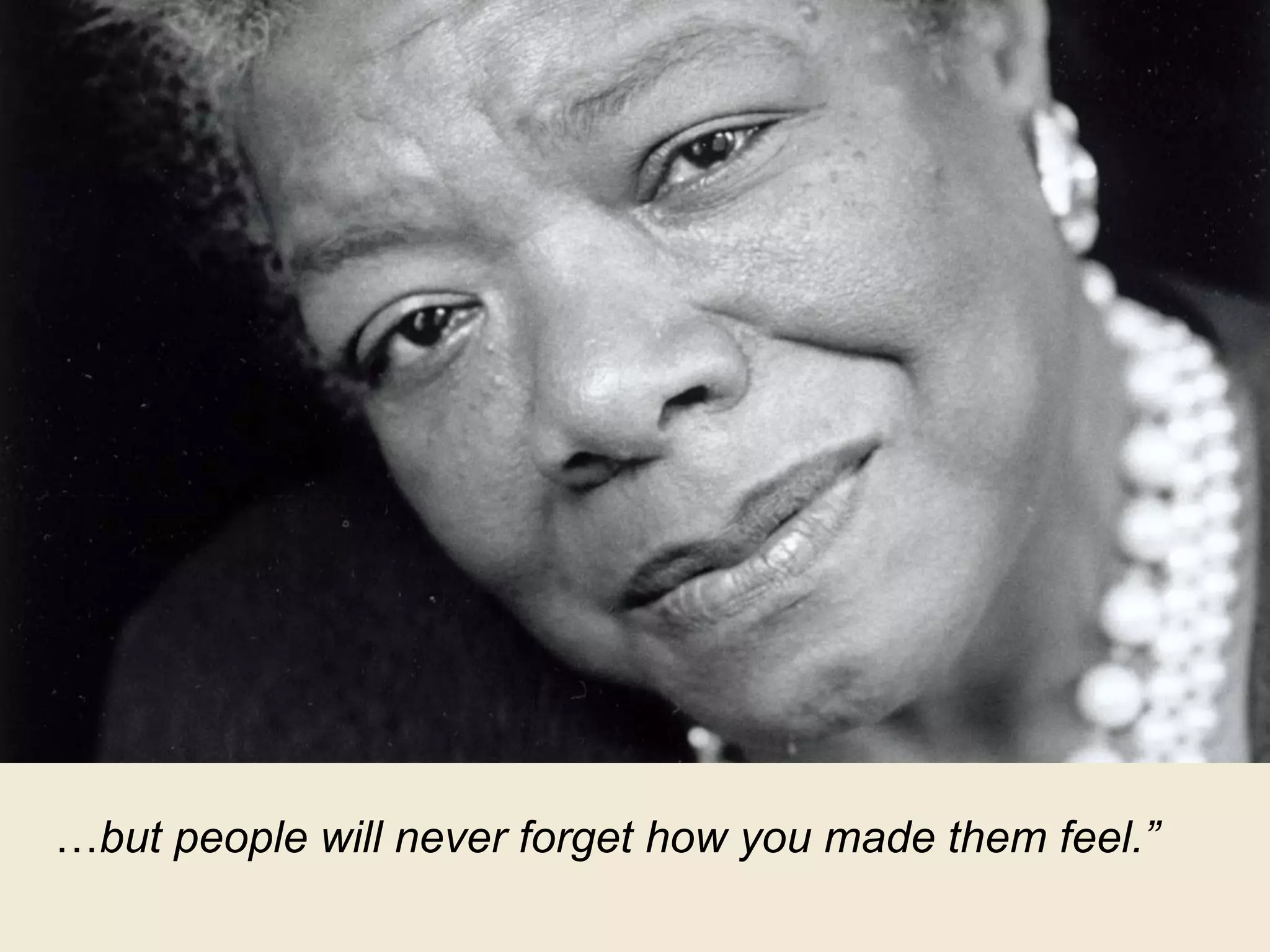
“I’ve learned that people will forget
what you said…
…people will forget what you did.
…but people will never forget how you made them feel.”
How do you feel after
reading most government
documents ?
How do we structure
information ?
Subordinating style
• Components in a narrative are linked by relationship
• causality
• temporality
• precedence
causal relationship
• One thing causes another
temporal relationship
• One thing comes before or after another
Precedence
• one thing is more important than another
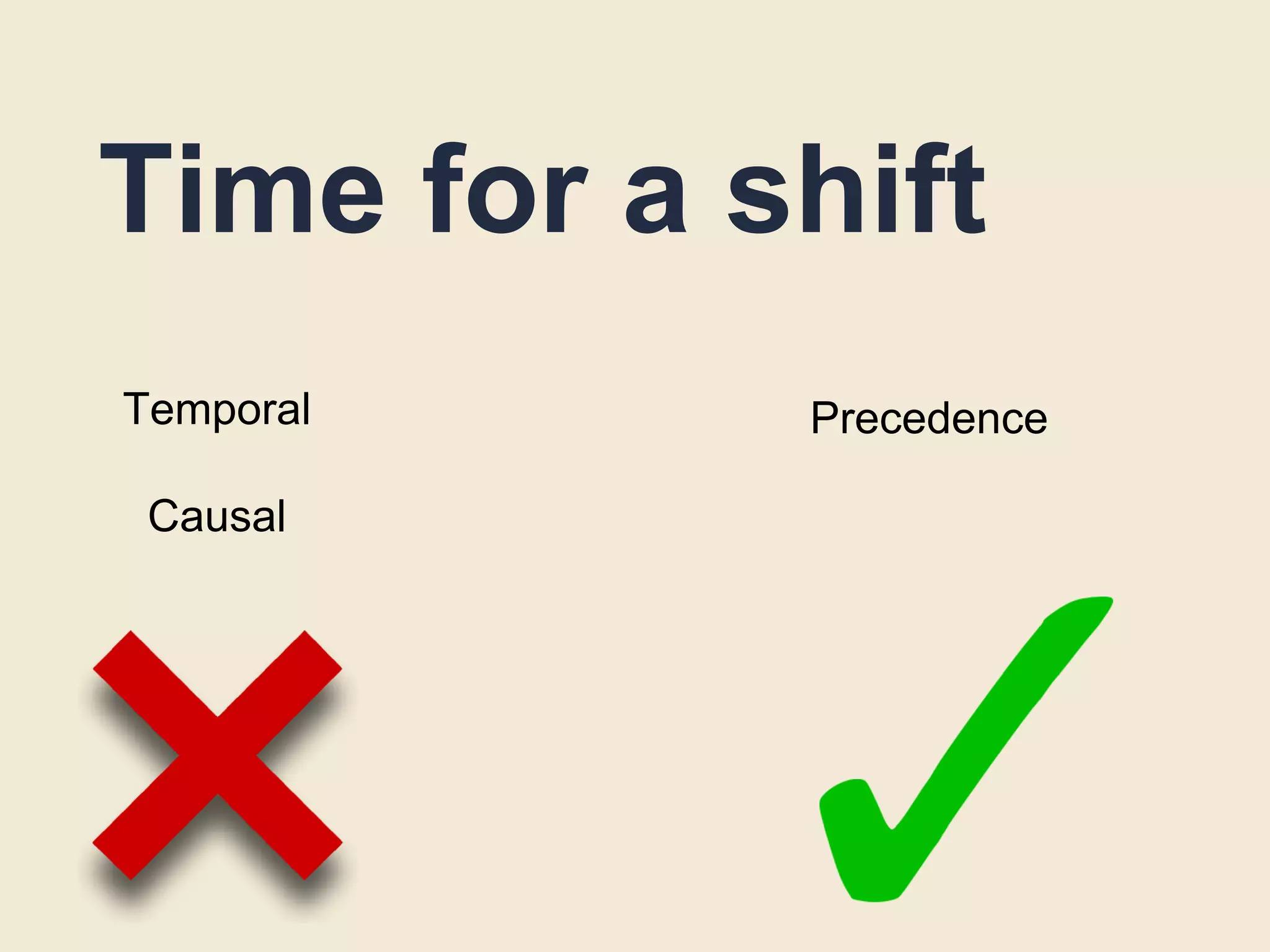
Time for a shift
Temporal
Causal
Precedence
A tool to help you
structure information.
The positioning statement
• Emotional statement;
• Key Message;
• Two Facts;
• Action Statement (demand)
Positioning
statement exercise.
Positioning statement
exercise
• Go back into your groups;
• Use positioning statement to review release;
• Can it help you make things better?
Report back in
15 minutes.
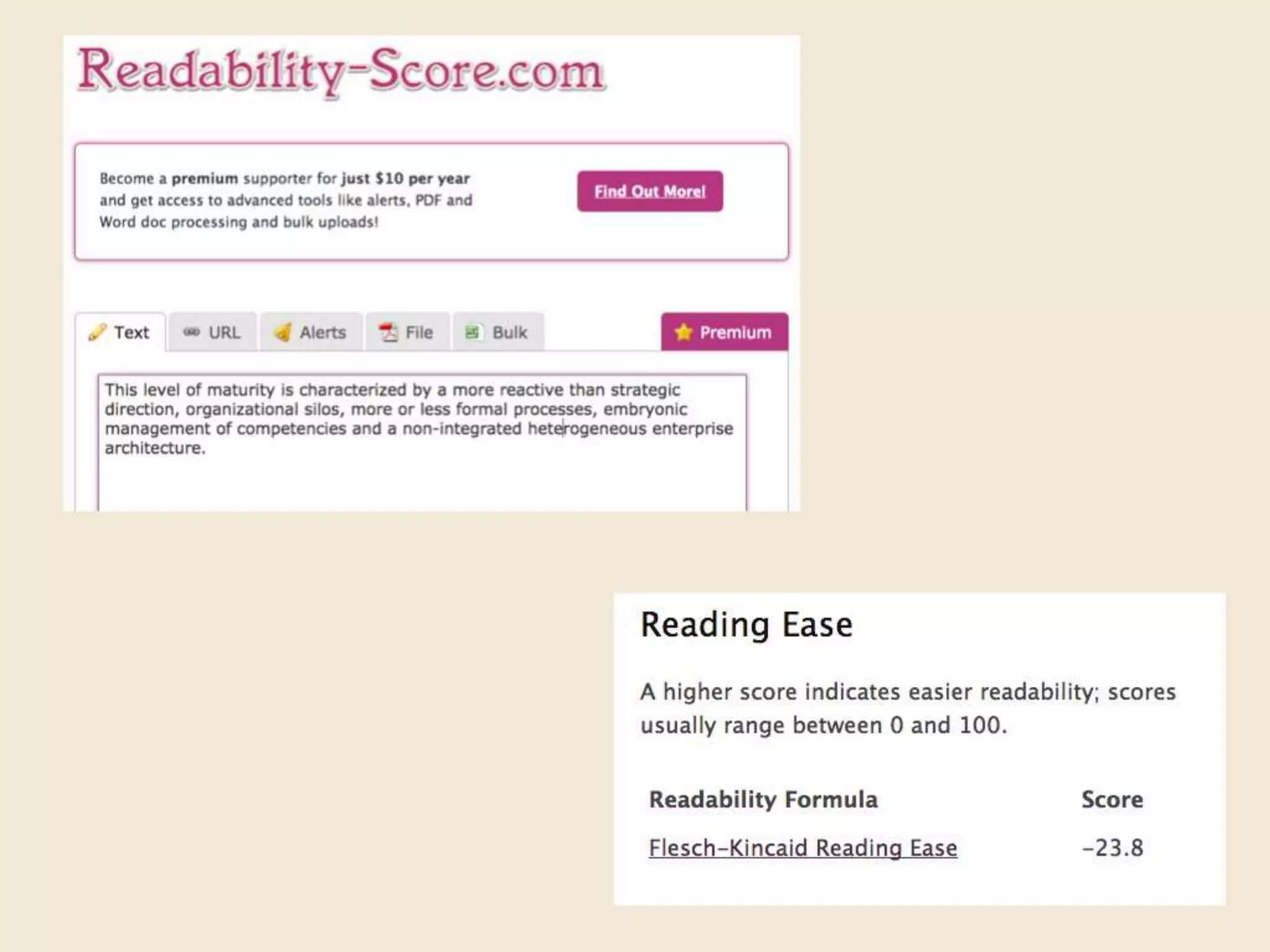
Text analysis
• Why some stories are better than others.
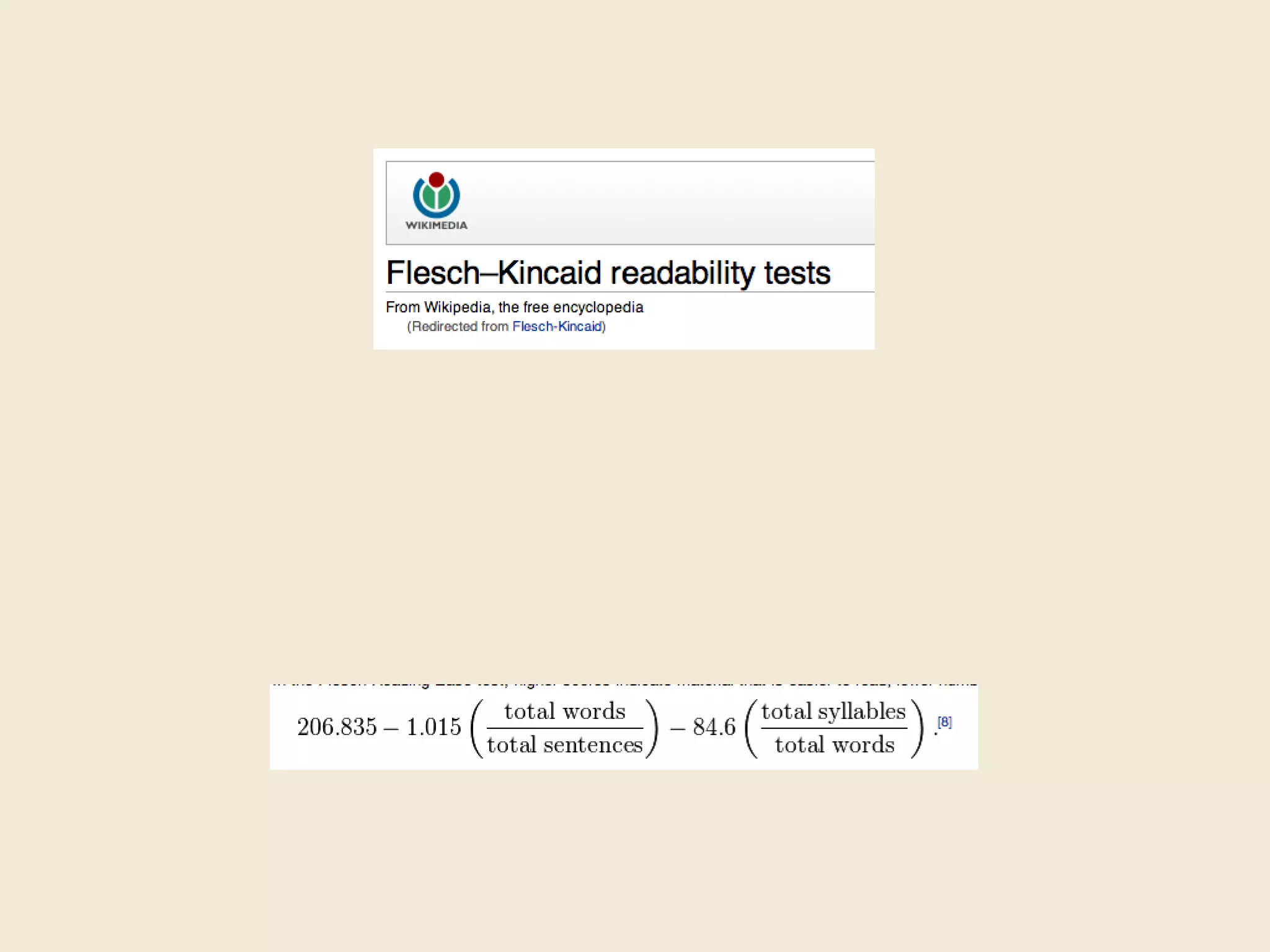
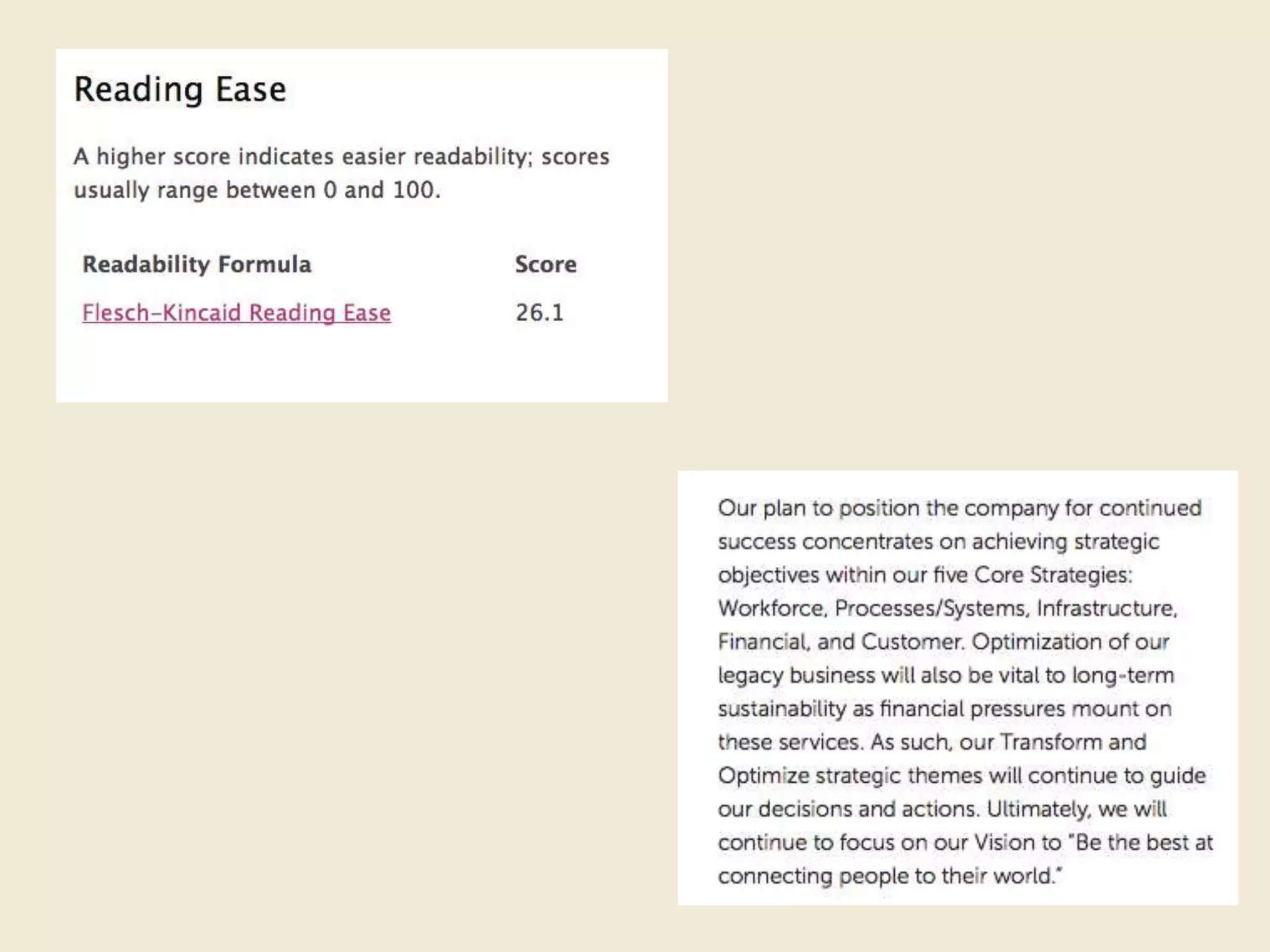
two scores
• Flesch-Kincaid Read Ease score (1 - 100)
• North American Grade Level
Reading Ease score
Govt. of Sask. briefing note.
Average Score = 30-36
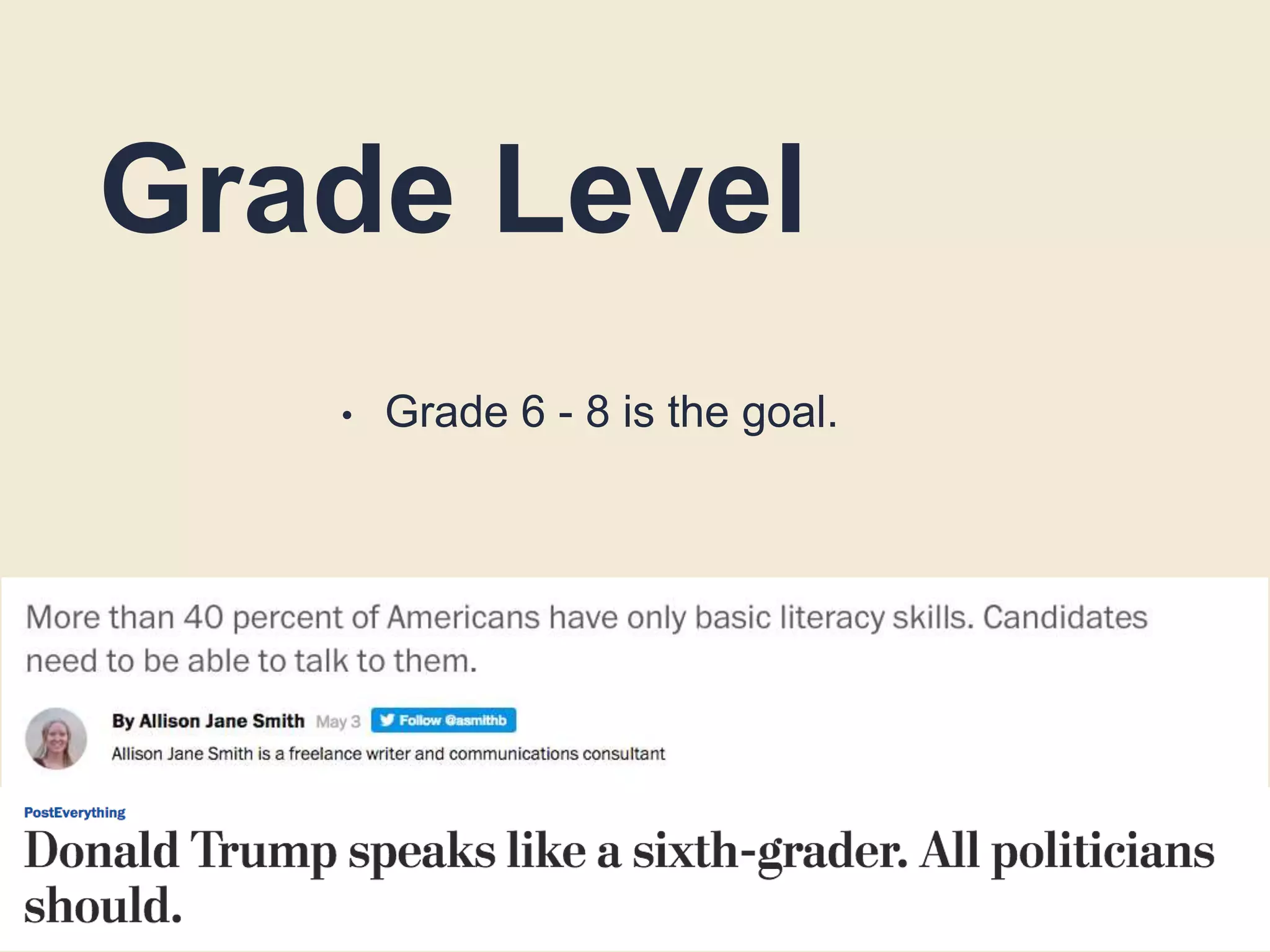
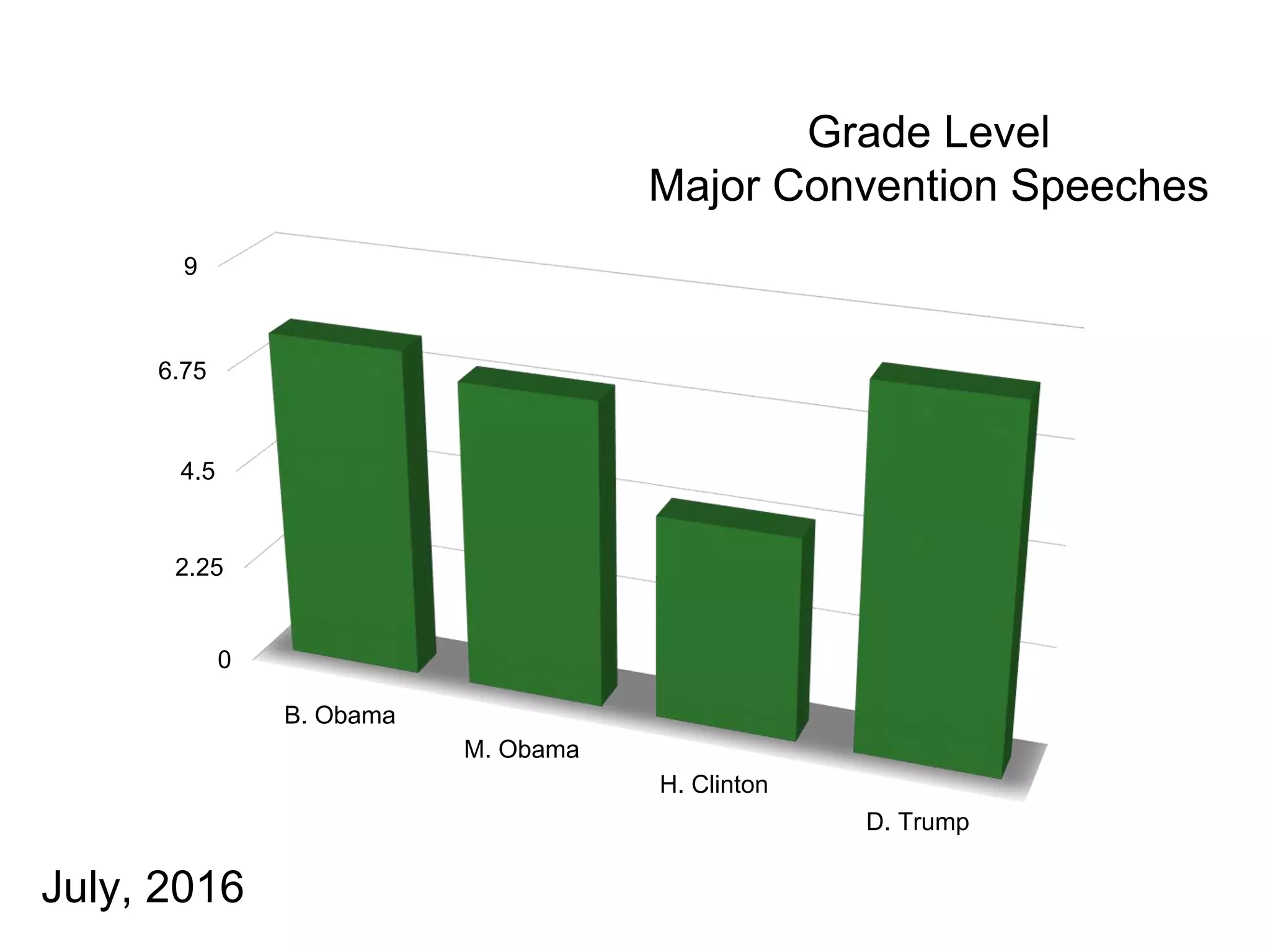
Grade Level
• Grade 6 - 8 is the goal.
Grade Six readability is hard to
achieve, but it’s not “dumbing
down”.
0
22.5
45
67.5
90
B. Obama
M. Obama
H. Clinton
D. Trump
Readability Scores
Major Convention Speeches
July, 2016
0
2.25
4.5
6.75
9
B. Obama
M. Obama
H. Clinton
D. Trump
Grade Level
Major Convention Speeches
July, 2016
Text Analysis of
Environment
Ministry.
12 -15
words per sentence
Reading Ease score:
50 or better.
Readability grade level
6 to 8
Using readability score
to improve writing.
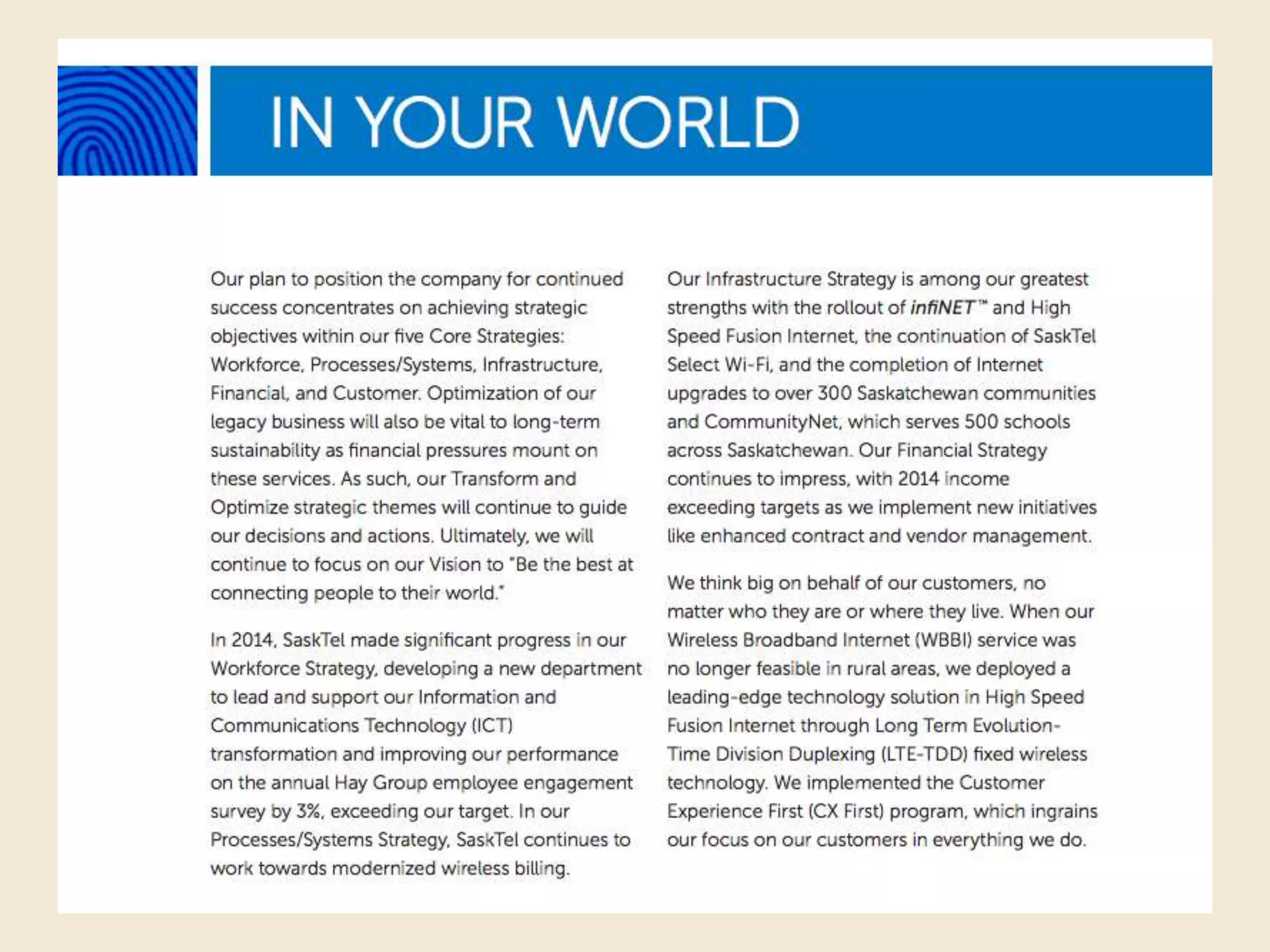
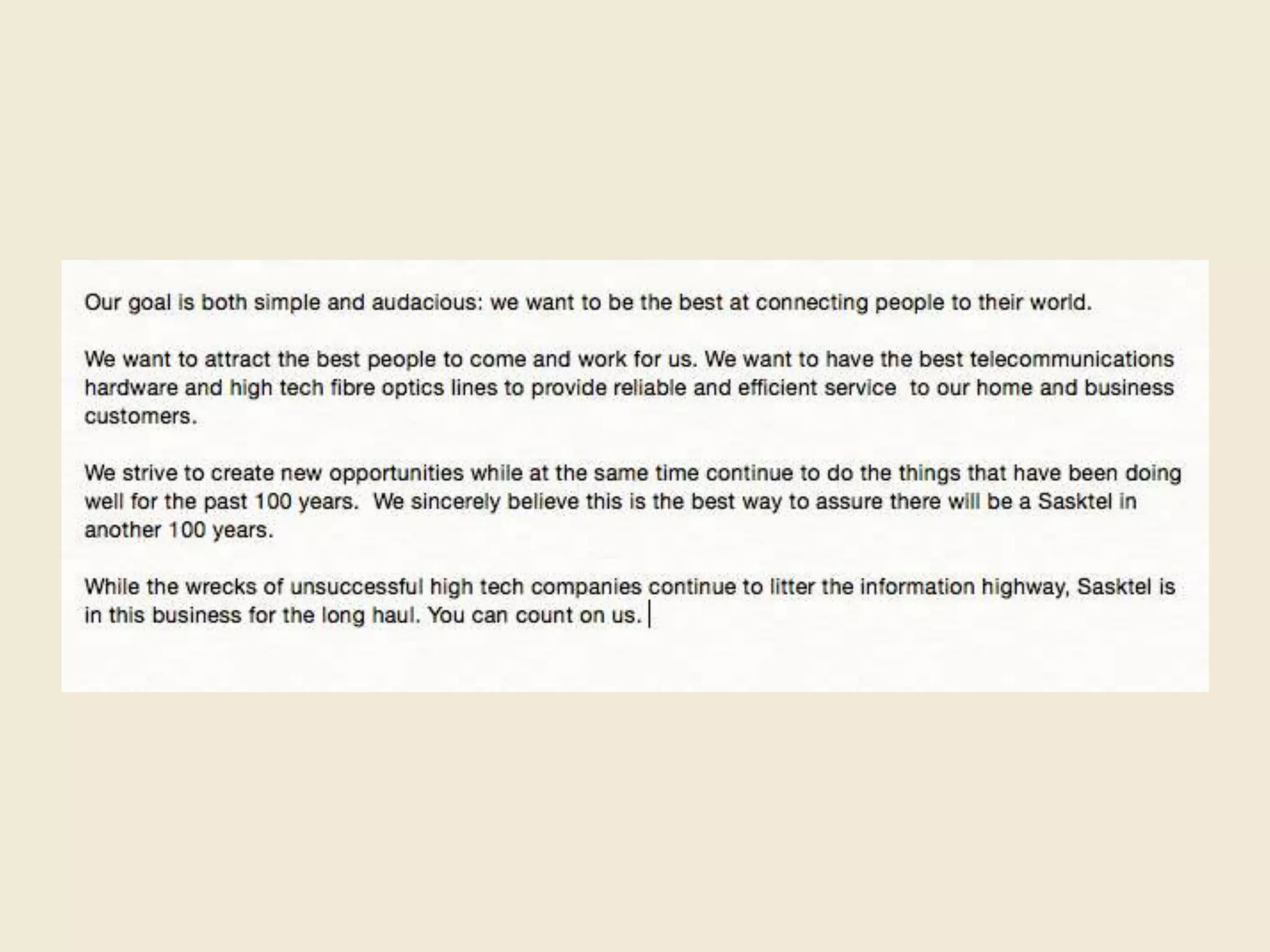
Sasktel 2014 Annual
Report.
• Pg. 6
• Let’s re-write it.
20 minutes
• Can you do better ?
Let’s see how you did
My attempt
Using numbers
in stories
–Nate Silver
“The numbers have no way of
speaking for themselves; we
speak for them.”
–Silver: The Signal and the Noise
pg. 9
“Before we demand more of our
data, we need to demand more of
ourselves.”
Numbers need context
• Always
• Be
• Comparing
This is a number
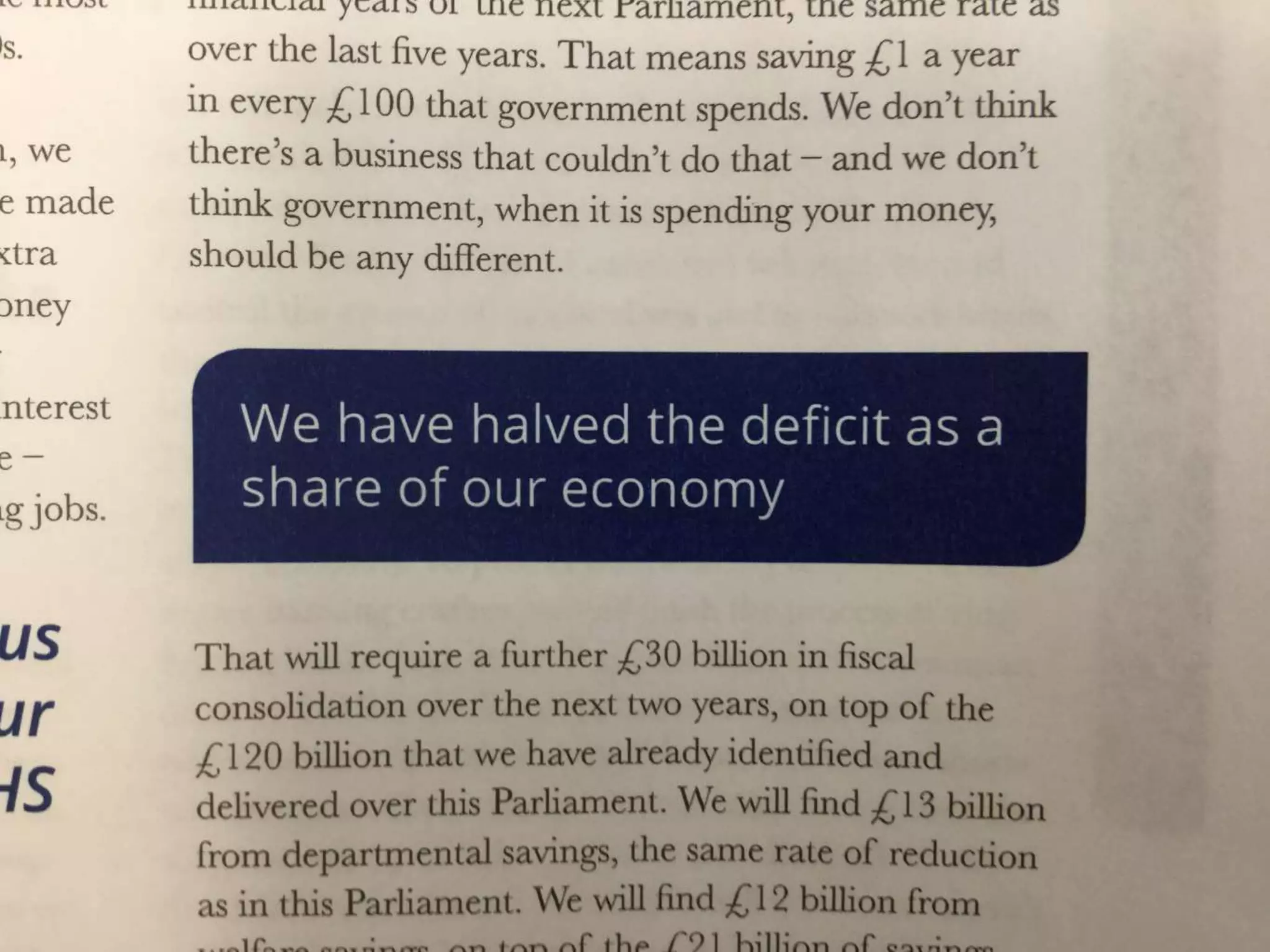
• Saskatchewan posts a 2015 -16 deficit of $675 m.
This is a narrative
Another narrative
The US Federal Air Marshal Service spend $800 million annually.
That $800 million
represents
• 40% of what the US Secret Service spends;
• 10% of what the FBI spends annually.
Know the difference
between numbers and
stories.
Here’s some other
stories…
• Only 5% of US flights have an Air Marshal;
• Since 9/11, there have been no hijackings;
• There have been more arrests of Air Marshals
• than by Air Marshals since 9/11.
abstract to
concrete
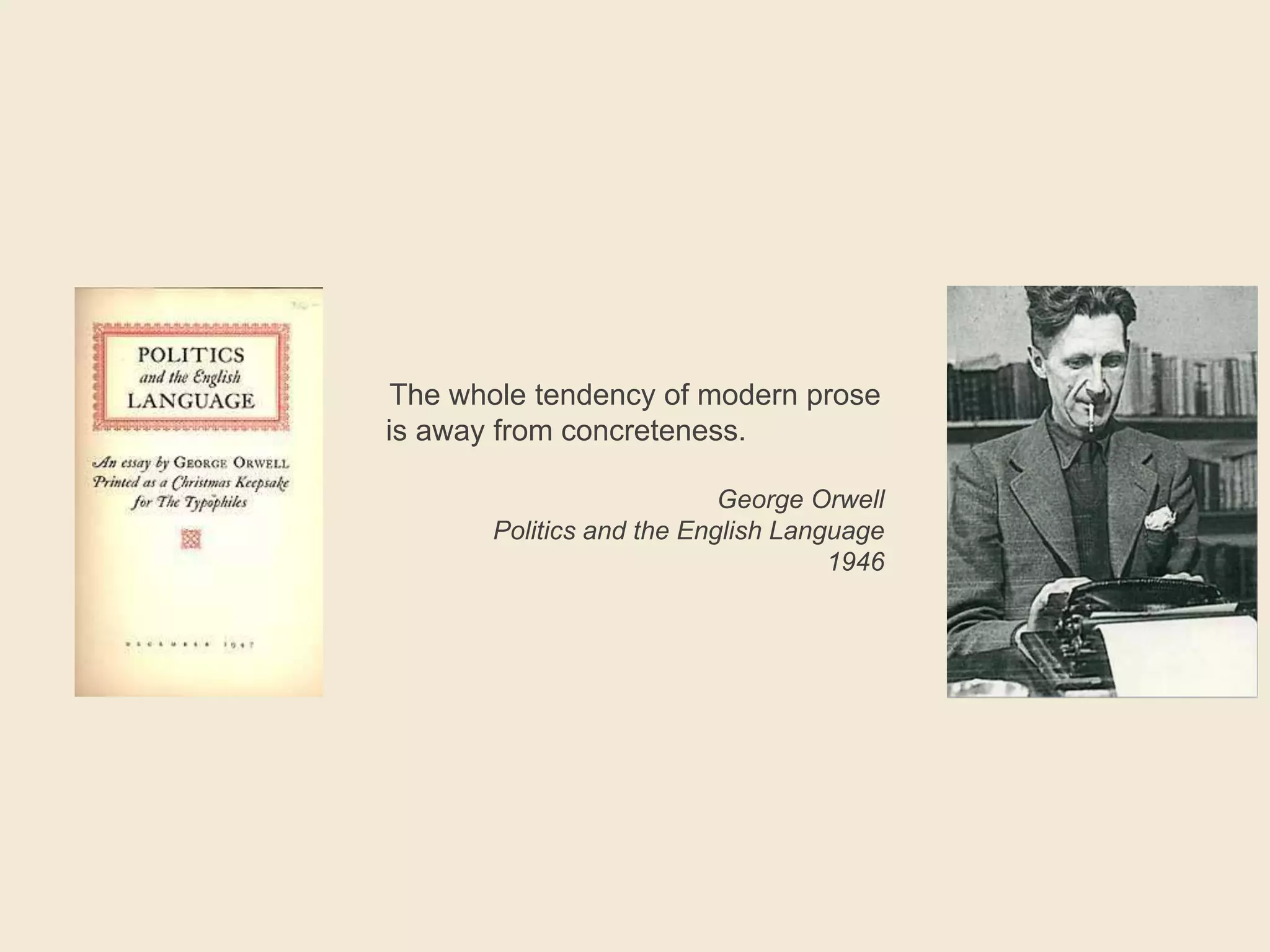
The whole tendency of modern prose
is away from concreteness.
George Orwell
Politics and the English Language
1946
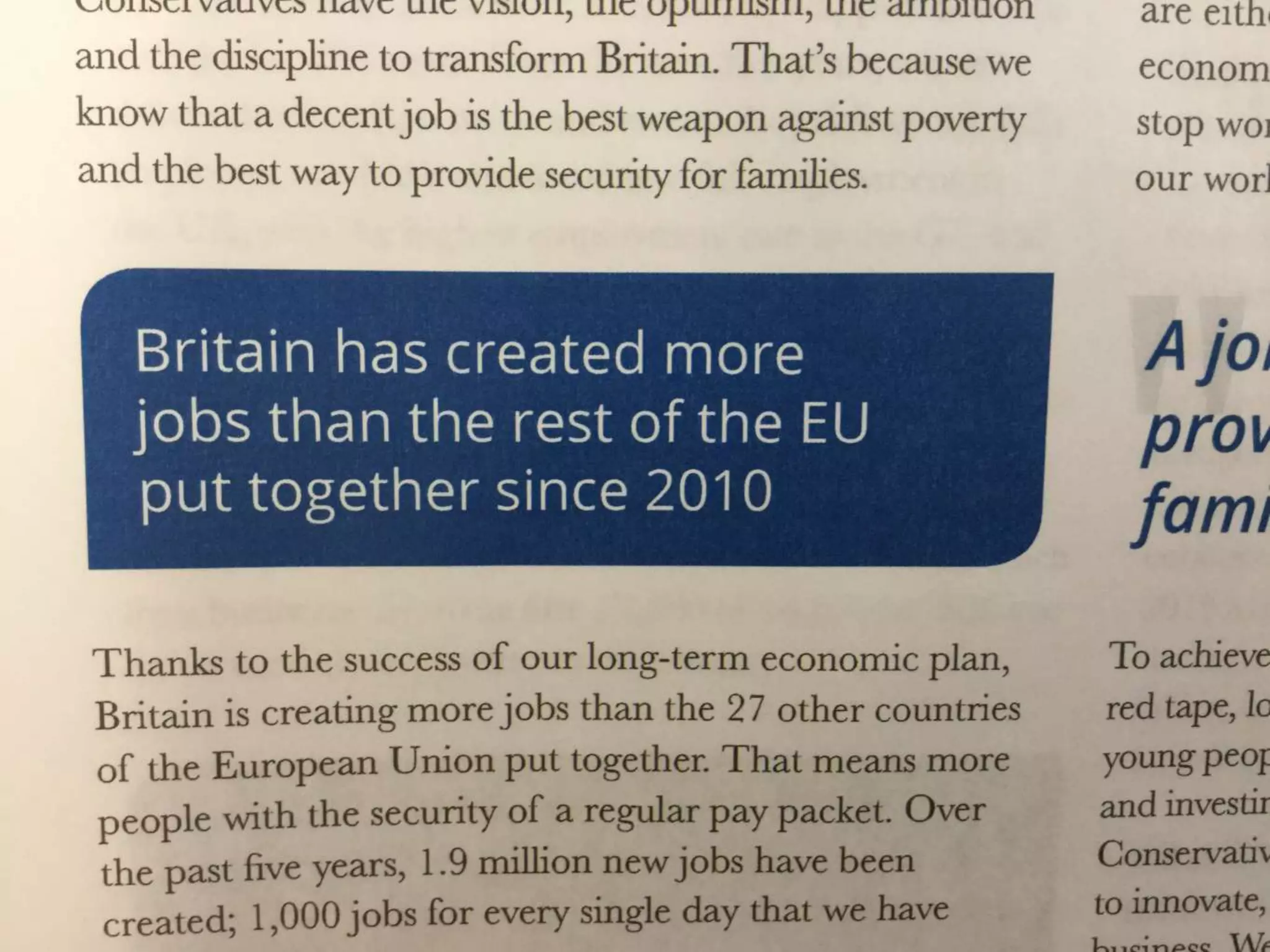
Concrete narratives use
superlatives to move
the story along.
fastest, newest, oldest,
strongest,
first-ever.
use of metaphor
make writing concrete
Why this worked..
• Clearly written, concrete language;
• Well organized;
• Articulates a point of view, with consequences;
• A simple, defining metaphor (car).
vernacular
eloquence
“If we read every sentence aloud carefully…and
if we then fiddle and adjust our words until they
feel right in the mouth and sound right in the
ear, the resulting sentence will be strong and
clear.”
–Prof. Peter Elbow
Questions
• Do you write multiple drafts ?
• Do you read them out loud to someone else ?
Parting thoughts
In your
documents/presentations
….
• convey a big idea;
• covey what’s at stake;
• Convince me I should care.
Exhibit a clarity of intent
• What problem am I trying to solve;
• What does ‘good’ look like;
• How will I know when I get there ?
Rejected opportunity cost
• What happens if I do nothing ?
An audience transformed
• The highest goal;
• Now that I’ve read this, I know this;
• Now, I have to do something.
A presentation
template
We had a big idea
• It’s important because—
• This idea came from—
• We talked to these people, and they said—
Here’s how our big idea
changed
• We were surprised to discover—
• New information created these new insights—
• Here’s why these insights are valuable—
The value proposition
• Our big idea will improve a process/save money/
• make life better for people in the following ways—
Rejected opportunity cost
• If we do nothing, here are the consequences—
• Here’s what they are doing on other jurisdictions—
Now that you now all this
• You must—
questions

Saskatchewan Environment-Storytelling