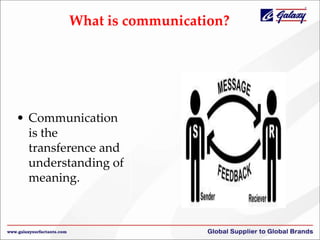
What is communication?
• Communication
is the
transference and
understanding of
meaning.
Communication process
feedback
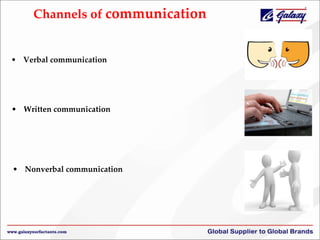
Channels of communication
• Verbal communication
• Written communication
• Nonverbal communication
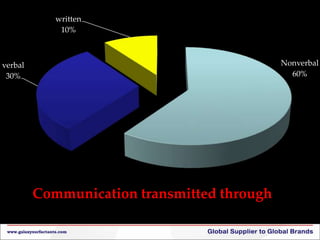
Nonverbal
60%
verbal
30%
written
10%
Communication transmitted through
Why don’t I take you to dinner tonight ?
It’s not what you
say it’s what you
do.
Action do speak
louder than words
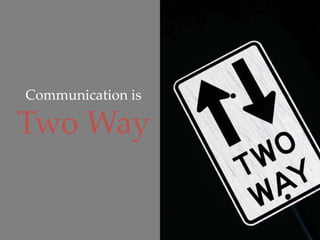
Communication is
Two Way
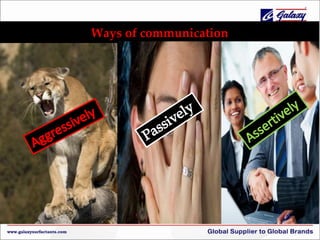
Ways of communication
How Assertive way in communication will affect
safety in workplace?
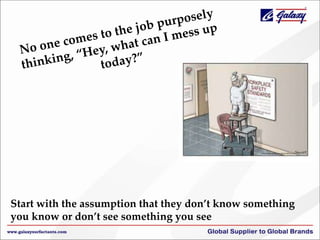
Start with the assumption that they don’t know something
you know or don’t see something you see
Communicate unsafe action
• Set the stage for the conversation
• Avoid offensive and accusatory statements.
– Apologize if needed
• Ensure you listen
– Agree where you can
• Maintain a non threatening approach
• Focus on one core message.
• Use comparisons
• Share Stories
• Encourage individuals to hold to standards
• End with Action
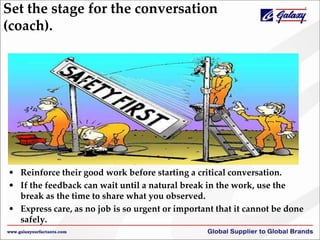
Set the stage for the conversation
(coach).
• call a timeout and make the job safe.
• Reinforce their good work before starting a critical conversation.
• If the feedback can wait until a natural break in the work, use the
break as the time to share what you observed.
• Express care, as no job is so urgent or important that it cannot be done
safely.
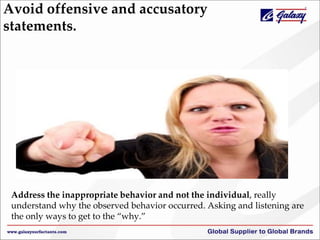
Avoid offensive and accusatory
statements.
Address the inappropriate behavior and not the individual, really
understand why the observed behavior occurred. Asking and listening are
the only ways to get to the “why.”
Apologize if needed
If for a safety reason you lose your cool, acknowledge it.
apologize immediately, get it out in the open and explain why
you’re emotional. Many times it comes because we care, so tell
the others that.
Ensure you listen
• Lead with questions, not answers.
• Engage in dialogue.
• Seek to understand, without blame.
• Understand others’ perspective.
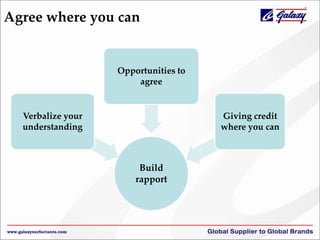
Agree where you can
Build
rapport
Verbalize your
understanding
Opportunities to
agree
Giving credit
where you can
Maintain a nonthreatening approach
More than 60% of communication is non verbal, body
posture, tone of voice, facial expressions and emotional tone
convey the meaning behind the words .
Focus on one core message.
The more we whittle down information into a single
great idea, the stickier it will be.
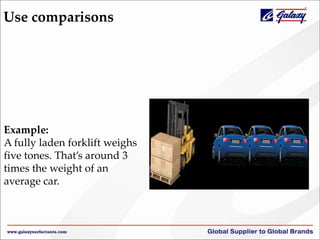
Use comparisons
Example:
A fully laden forklift weighs
five tones. That’s around 3
times the weight of an
average car.
Share Stories
They make information easy to understand and create
emotional connections. Specially real stories in the same
work place.
Encourage individuals to hold to
standards
• Why standards are existed (individual point of view).
• Explain the reason behind a standard.
End with Action
• List issue and concerns.
• List individuals suggestions
• Start resolve it.
• Keep individuals informed of
progress.
• Advocate for the team success.
Great safety communication is all about getting
people to make changes to their behavior.

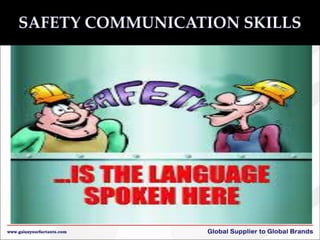
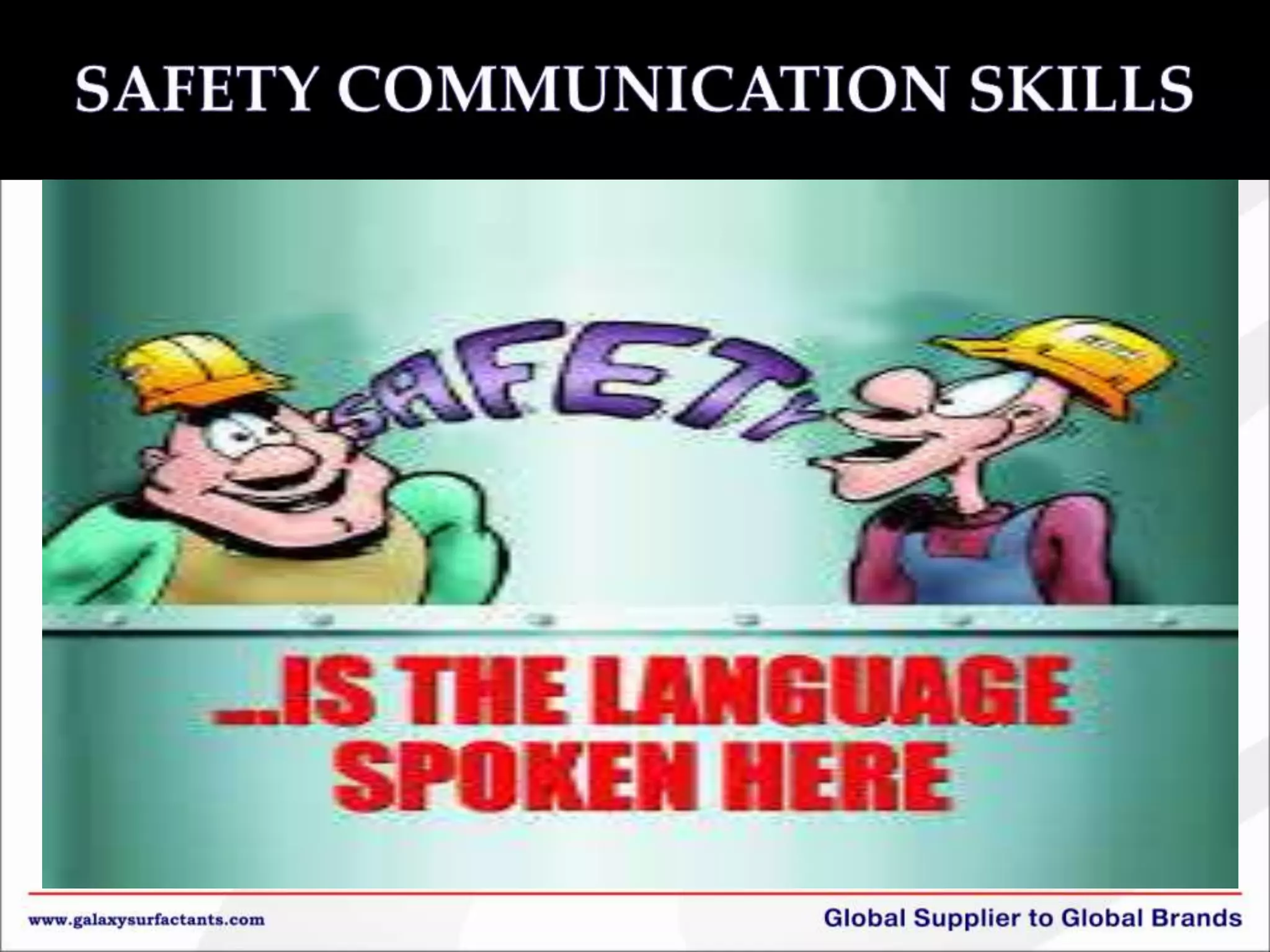
Safety's communication skills

  • 2.
    What is communication? •Communication is the transference and understanding of meaning.
  • 3.
  • 4.
    Channels of communication •Verbal communication • Written communication • Nonverbal communication
  • 5.
  • 6.
    Why don’t Itake you to dinner tonight ? Why don’t I take you to dinner tonight ? Why don’t I take you to dinner tonight ? It’s not what you say it’s what you do. Action do speak louder than words
  • 7.
  • 8.
  • 9.
    How Assertive wayin communication will affect safety in workplace?
  • 10.
    Start with theassumption that they don’t know something you know or don’t see something you see
  • 11.
    Communicate unsafe action •Set the stage for the conversation • Avoid offensive and accusatory statements. – Apologize if needed • Ensure you listen – Agree where you can • Maintain a non threatening approach • Focus on one core message. • Use comparisons • Share Stories • Encourage individuals to hold to standards • End with Action
  • 12.
    Set the stagefor the conversation (coach). • call a timeout and make the job safe. • Reinforce their good work before starting a critical conversation. • If the feedback can wait until a natural break in the work, use the break as the time to share what you observed. • Express care, as no job is so urgent or important that it cannot be done safely.
  • 13.
    Avoid offensive andaccusatory statements. Address the inappropriate behavior and not the individual, really understand why the observed behavior occurred. Asking and listening are the only ways to get to the “why.”
  • 14.
    Apologize if needed Iffor a safety reason you lose your cool, acknowledge it. apologize immediately, get it out in the open and explain why you’re emotional. Many times it comes because we care, so tell the others that.
  • 15.
    Ensure you listen •Lead with questions, not answers. • Engage in dialogue. • Seek to understand, without blame. • Understand others’ perspective.
  • 16.
    Agree where youcan Build rapport Verbalize your understanding Opportunities to agree Giving credit where you can
  • 17.
    Maintain a nonthreateningapproach More than 60% of communication is non verbal, body posture, tone of voice, facial expressions and emotional tone convey the meaning behind the words .
  • 18.
    Focus on onecore message. The more we whittle down information into a single great idea, the stickier it will be.
  • 19.
    Use comparisons Example: A fullyladen forklift weighs five tones. That’s around 3 times the weight of an average car.
  • 20.
    Share Stories They makeinformation easy to understand and create emotional connections. Specially real stories in the same work place.
  • 21.
    Encourage individuals tohold to standards • Why standards are existed (individual point of view). • Explain the reason behind a standard.
  • 22.
    End with Action •List issue and concerns. • List individuals suggestions • Start resolve it. • Keep individuals informed of progress. • Advocate for the team success.
  • 23.
    Great safety communicationis all about getting people to make changes to their behavior.

Editor's Notes

  • #5 Verbal: Advantages: Speed and feedback.Disadvantage: Distortion of the message.Written: Advantages: Tangible and verifiable. Disadvantages: Time-consuming and lacks feedback.Nonverbal: Advantages: Supports other communications and provides observable expression of emotions and feelings.Disadvantage: Misperception of body language or gestures can influence receiver’s interpretation of message.
  • #7 Paraverbal
  • #8 Communication is a two-way street. If a person says something to you, you are expected to give a response in kind. If any dialogue stops becoming or never becomes two way then it is not communication and it is highly unlikely to be effective.
  • #9 Aggressively: inducing guilt and using control tactics, you are likely to perceive the words of others as attacking and be on the defensePassively: interested in hearing and understanding the other person’s point of view. We are attentive and passively listen. We assume that we heard and understand correctly. but stay passive and do not verify itAssertively:Is a form of communication in which you speak up for your rights and take into account the rights of other.
  • #10 You can have the best safety system in the world, but if you’re not communicating it correctly, your company is at risk.
  • #11 Start with the assumption that they don’t know something you know or don’t see something you see
  • #14 your intent is to create a two-lane highway of communication, one lane for giving information and one lane for receiving information. but some people need privacy for difficult conversations.
  • #20 Where possible, compare difficult concepts and numbers to something familiar.
  • #21 Ask for story
  • #24 “Would you do what you ask your workers to do?”