
Optimao
            In control since 1995


   Safety control systems:
Some essential considerations
Safety matters

According to the latest HSE reports, each year 1 in 100 000 workers dies in a workplace
accident. Another more serious figure – 1 in 125 workers will suffer a major injury that
will keep him away from work for a week or longer. With almost 3 million people
employed in the UK manufacturing sector alone, the impact of unreliable safety systems
is obvious.

Industrial automation has raised production rates to a whole new level – machines are
now bigger and faster than ever before. Subsequently, the health and safety risks
associated with any automated manufacturing process have risen too.

Increasing integrity and reliability of safety systems have been promoted in European
law with the migration from EN954-1 to the latest SIL and Pl standards: ENISO13849
and IEC/EN62061.
Safety control systems – requirements and types

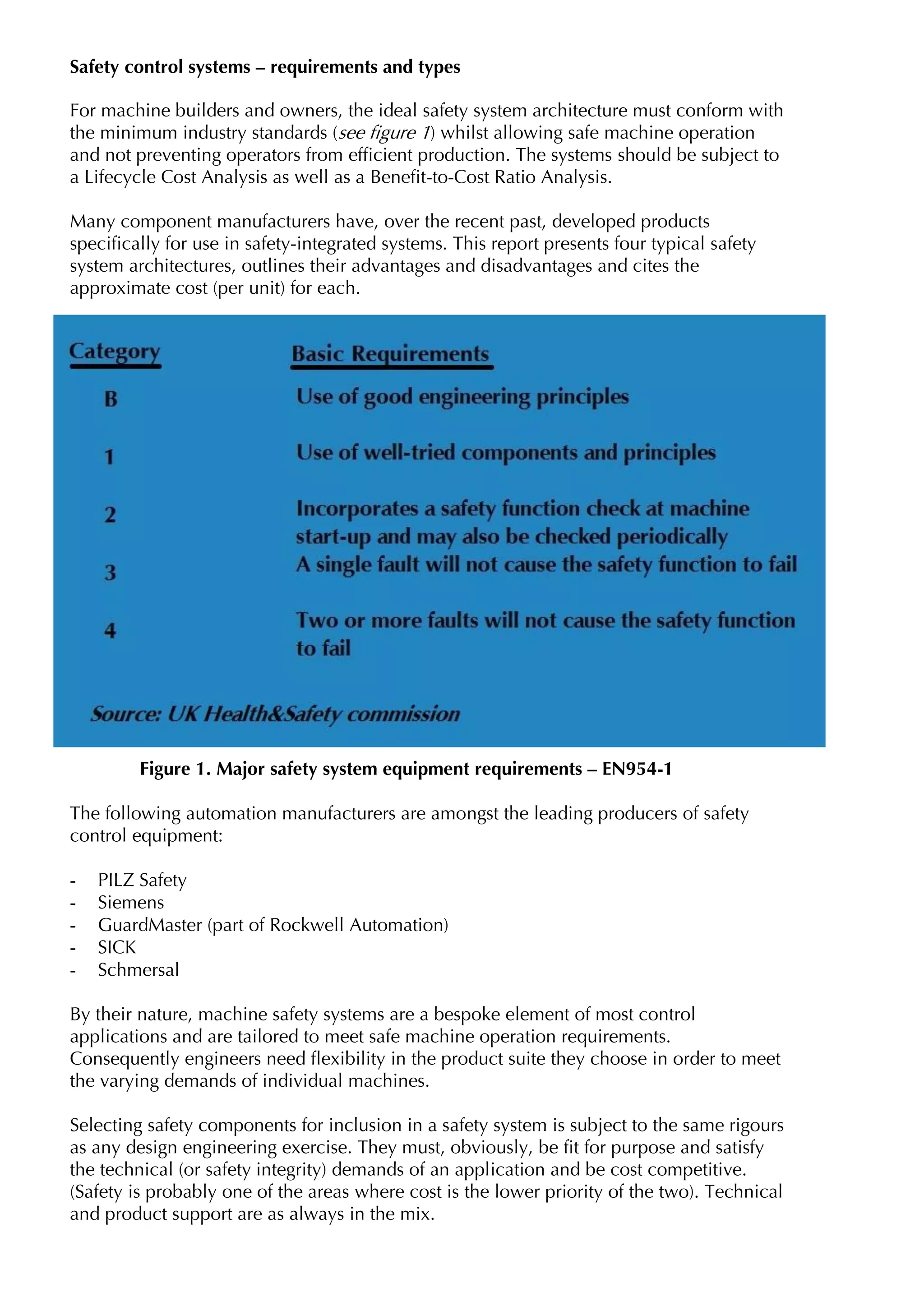
For machine builders and owners, the ideal safety system architecture must conform with
the minimum industry standards (see figure 1) whilst allowing safe machine operation
and not preventing operators from efficient production. The systems should be subject to
a Lifecycle Cost Analysis as well as a Benefit-to-Cost Ratio Analysis.

Many component manufacturers have, over the recent past, developed products
specifically for use in safety-integrated systems. This report presents four typical safety
system architectures, outlines their advantages and disadvantages and cites the
approximate cost (per unit) for each.


         Figure 1. Major safety system equipment requirements – EN954-1

The following automation manufacturers are amongst the leading producers of safety
control equipment:

-   PILZ Safety
-   Siemens
-   GuardMaster (part of Rockwell Automation)
-   SICK
-   Schmersal

By their nature, machine safety systems are a bespoke element of most control
applications and are tailored to meet safe machine operation requirements.
Consequently engineers need flexibility in the product suite they choose in order to meet
the varying demands of individual machines.

Selecting safety components for inclusion in a safety system is subject to the same rigours
as any design engineering exercise. They must, obviously, be fit for purpose and satisfy
the technical (or safety integrity) demands of an application and be cost competitive.
(Safety is probably one of the areas where cost is the lower priority of the two). Technical
and product support are as always in the mix.
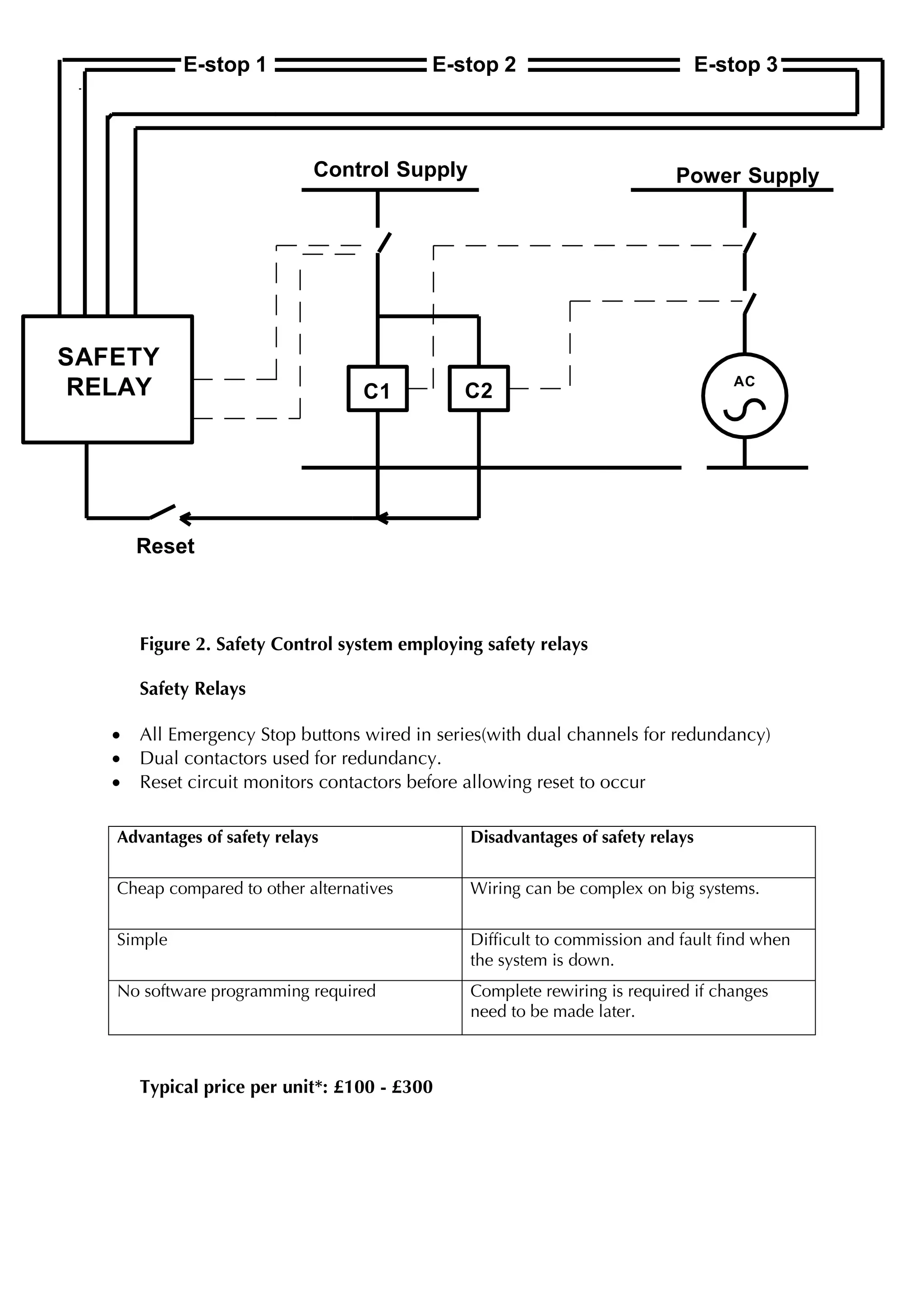
E-stop 1                      E-stop 2                              E-stop 3


                             Control Supply                               Power Supply


SAFETY
                                                                                   AC
 RELAY                             C1         C2


       Reset


       Figure 2. Safety Control system employing safety relays

       Safety Relays

      All Emergency Stop buttons wired in series(with dual channels for redundancy)
      Dual contactors used for redundancy.
      Reset circuit monitors contactors before allowing reset to occur

   Advantages of safety relays                 Disadvantages of safety relays

   Cheap compared to other alternatives        Wiring can be complex on big systems.

   Simple                                      Difficult to commission and fault find when
                                               the system is down.
   No software programming required            Complete rewiring is required if changes
                                               need to be made later.


       Typical price per unit*: £100 - £300
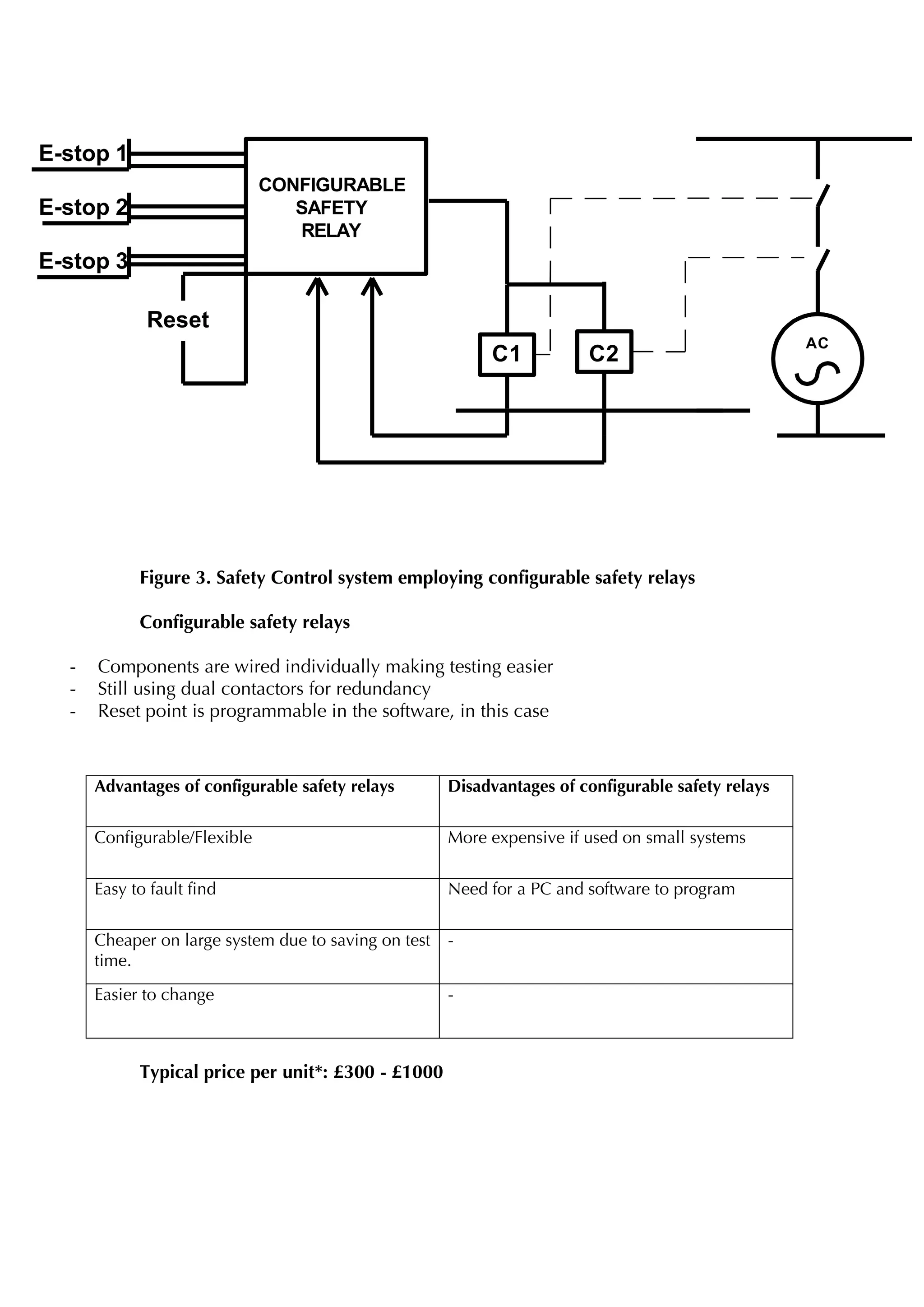
E-stop 1
                              CONFIGURABLE
E-stop 2                         SAFETY
                                 RELAY
E-stop 3

             Reset
                                                                                                    AC
                                                           C1           C2


            Figure 3. Safety Control system employing configurable safety relays

            Configurable safety relays

  -   Components are wired individually making testing easier
  -   Still using dual contactors for redundancy
  -   Reset point is programmable in the software, in this case


      Advantages of configurable safety relays        Disadvantages of configurable safety relays

      Configurable/Flexible                           More expensive if used on small systems


      Easy to fault find                              Need for a PC and software to program

      Cheaper on large system due to saving on test   -
      time.
      Easier to change                                -


            Typical price per unit*: £300 - £1000
A typical arrangement for PLC
                                                              controllers used in critical applications
    PLC1                                    PLC2              is to configure a redundant pair, often
                                                              with "hot-swap" functionality. The
                                                              redundant controller is used to support
                                                              a safe and orderly shutdown in the
                                                              event the primary controller fails.

                                                              Arranging multiple controllers and
                                                              meeting the demand of a safety/critical
Software 1                                Software 2          application using standard PLCs
                                                              involves cross coupling additional,
                                                              dedicated I/O from each PLC to
                                                              monitor their individual conditions and
                                                              initiate the “hot swap” routine in the
                                                              event of a unit failure. In a nutshell this
                                                              often proves to be a complex and time-
                                                              consuming arrangement to design and
Engineer 1                               Engineer 2           implement.

                                                              Hence, designing safety systems with
                                                              standard controllers at the core requires
                                                              extended engineering time, hardware,
                                                              and build time to implement the safety
                                                              section of an application.
System 1                                 System 2
                                                              Rockwell, Siemens and other major
                                                              PLC manufacturers offer equipment
                                                              specifically designed for these critical
                                                              applications which, whilst carrying
                                                              higher hardware costs, reduce the costs
                                                              of design, hardware and build activities
                                                              and provide a certified solution to the
                         Safety                               application engineer.


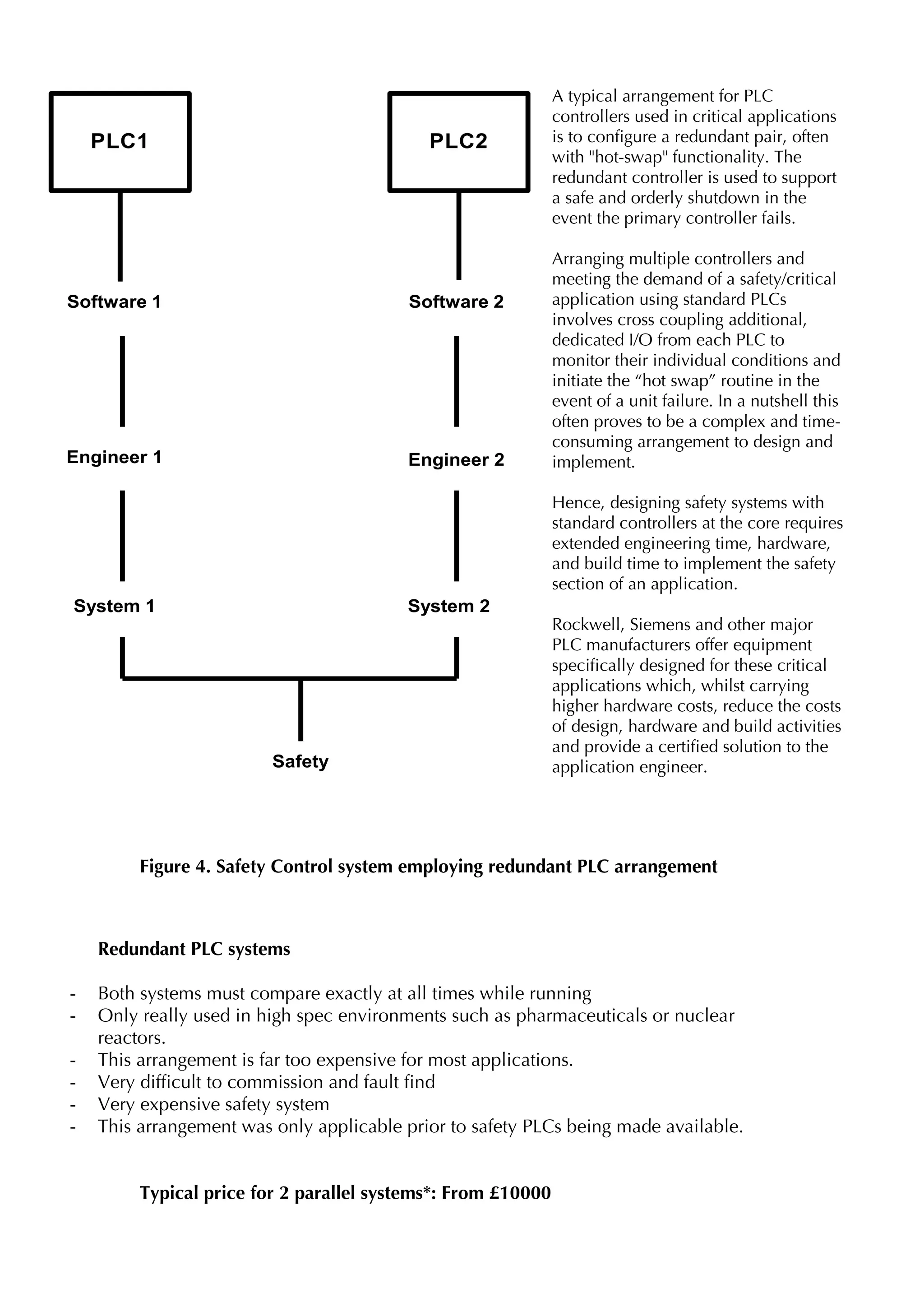
         Figure 4. Safety Control system employing redundant PLC arrangement


    Redundant PLC systems

-   Both systems must compare exactly at all times while running
-   Only really used in high spec environments such as pharmaceuticals or nuclear
    reactors.
-   This arrangement is far too expensive for most applications.
-   Very difficult to commission and fault find
-   Very expensive safety system
-   This arrangement was only applicable prior to safety PLCs being made available.


         Typical price for 2 parallel systems*: From £10000
SAFETY
               PLC1

                                                                               Comms


               Safe Out
                                   Safe In         Safe In          Safe In


                                     E-stop 1        E-stop 2           E-stop 3


                    C1               C1
                                                          AC


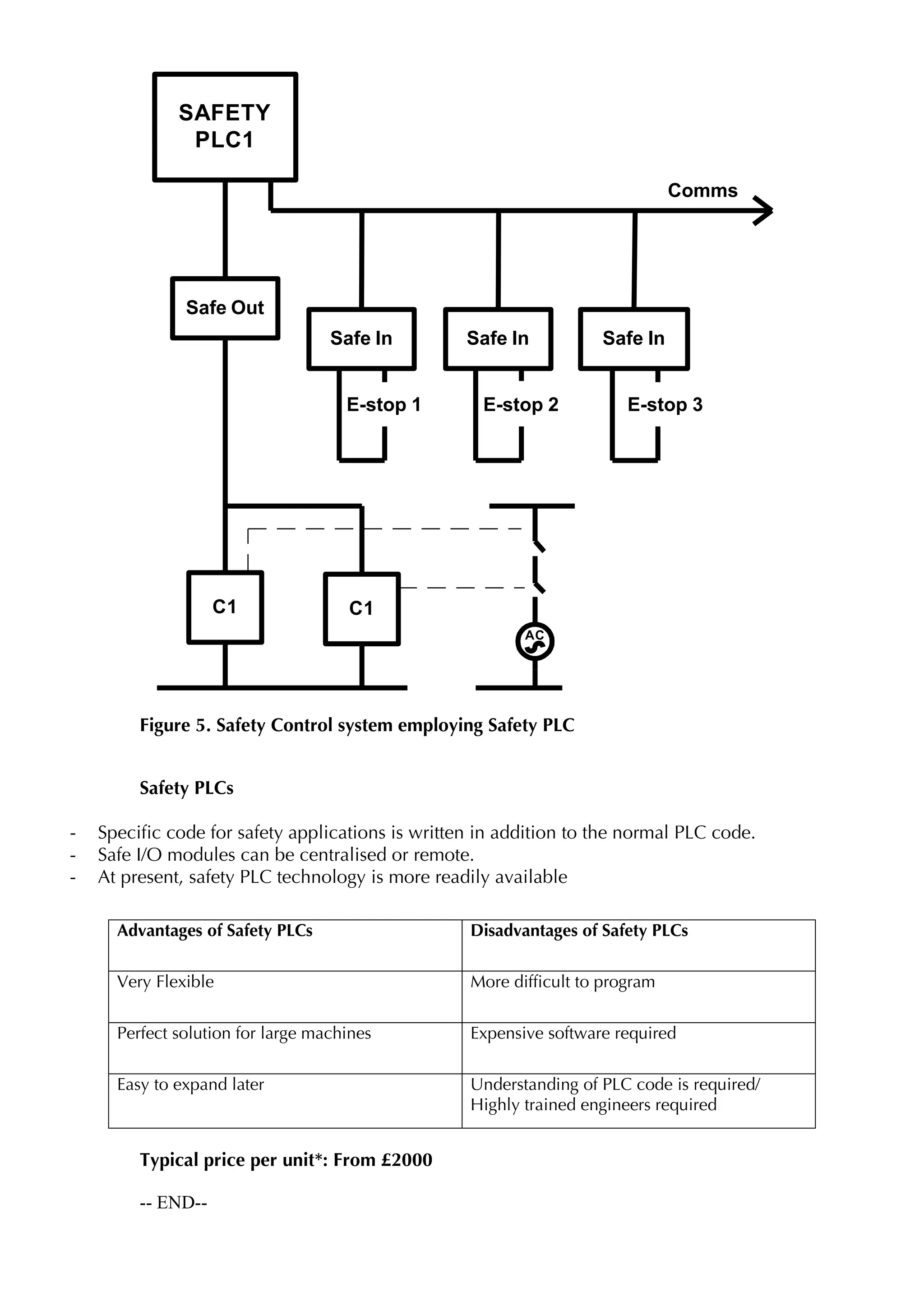
         Figure 5. Safety Control system employing Safety PLC


         Safety PLCs

-   Specific code for safety applications is written in addition to the normal PLC code.
-   Safe I/O modules can be centralised or remote.
-   At present, safety PLC technology is more readily available

      Advantages of Safety PLCs                    Disadvantages of Safety PLCs

      Very Flexible                                More difficult to program


      Perfect solution for large machines          Expensive software required

      Easy to expand later                         Understanding of PLC code is required/
                                                   Highly trained engineers required


         Typical price per unit*: From £2000

         -- END--
* Please, note that all prices cited do not include software design costs and/or
engineering costs.

Disclaimer: All data provided in this report is for informational purposes only.
Opinions expressed in this report are those of the relevant contributors.
Reproduction and citations are allowed after appropriate referencing of the full
report. Optima Control Solutions Ltd. reserves the right to prohibit the use of this
report by third-party websites and third-party publications.

Images sourced from:
Optima™ gallery – all copyrights reserved.

Design:
Gimp, Visio

Written by:
Hristina Stefanova

Revised by:
Michael Hill

Safety control systems: Some essential considerations

  • 1.
    Optimao In control since 1995 Safety control systems: Some essential considerations
  • 2.
    Safety matters According tothe latest HSE reports, each year 1 in 100 000 workers dies in a workplace accident. Another more serious figure – 1 in 125 workers will suffer a major injury that will keep him away from work for a week or longer. With almost 3 million people employed in the UK manufacturing sector alone, the impact of unreliable safety systems is obvious. Industrial automation has raised production rates to a whole new level – machines are now bigger and faster than ever before. Subsequently, the health and safety risks associated with any automated manufacturing process have risen too. Increasing integrity and reliability of safety systems have been promoted in European law with the migration from EN954-1 to the latest SIL and Pl standards: ENISO13849 and IEC/EN62061.
  • 3.
    Safety control systems– requirements and types For machine builders and owners, the ideal safety system architecture must conform with the minimum industry standards (see figure 1) whilst allowing safe machine operation and not preventing operators from efficient production. The systems should be subject to a Lifecycle Cost Analysis as well as a Benefit-to-Cost Ratio Analysis. Many component manufacturers have, over the recent past, developed products specifically for use in safety-integrated systems. This report presents four typical safety system architectures, outlines their advantages and disadvantages and cites the approximate cost (per unit) for each. Figure 1. Major safety system equipment requirements – EN954-1 The following automation manufacturers are amongst the leading producers of safety control equipment: - PILZ Safety - Siemens - GuardMaster (part of Rockwell Automation) - SICK - Schmersal By their nature, machine safety systems are a bespoke element of most control applications and are tailored to meet safe machine operation requirements. Consequently engineers need flexibility in the product suite they choose in order to meet the varying demands of individual machines. Selecting safety components for inclusion in a safety system is subject to the same rigours as any design engineering exercise. They must, obviously, be fit for purpose and satisfy the technical (or safety integrity) demands of an application and be cost competitive. (Safety is probably one of the areas where cost is the lower priority of the two). Technical and product support are as always in the mix.
  • 4.
    E-stop 1 E-stop 2 E-stop 3 Control Supply Power Supply SAFETY AC RELAY C1 C2 Reset Figure 2. Safety Control system employing safety relays Safety Relays  All Emergency Stop buttons wired in series(with dual channels for redundancy)  Dual contactors used for redundancy.  Reset circuit monitors contactors before allowing reset to occur Advantages of safety relays Disadvantages of safety relays Cheap compared to other alternatives Wiring can be complex on big systems. Simple Difficult to commission and fault find when the system is down. No software programming required Complete rewiring is required if changes need to be made later. Typical price per unit*: £100 - £300
  • 5.
    E-stop 1 CONFIGURABLE E-stop 2 SAFETY RELAY E-stop 3 Reset AC C1 C2 Figure 3. Safety Control system employing configurable safety relays Configurable safety relays - Components are wired individually making testing easier - Still using dual contactors for redundancy - Reset point is programmable in the software, in this case Advantages of configurable safety relays Disadvantages of configurable safety relays Configurable/Flexible More expensive if used on small systems Easy to fault find Need for a PC and software to program Cheaper on large system due to saving on test - time. Easier to change - Typical price per unit*: £300 - £1000
  • 6.
    A typical arrangementfor PLC controllers used in critical applications PLC1 PLC2 is to configure a redundant pair, often with "hot-swap" functionality. The redundant controller is used to support a safe and orderly shutdown in the event the primary controller fails. Arranging multiple controllers and meeting the demand of a safety/critical Software 1 Software 2 application using standard PLCs involves cross coupling additional, dedicated I/O from each PLC to monitor their individual conditions and initiate the “hot swap” routine in the event of a unit failure. In a nutshell this often proves to be a complex and time- consuming arrangement to design and Engineer 1 Engineer 2 implement. Hence, designing safety systems with standard controllers at the core requires extended engineering time, hardware, and build time to implement the safety section of an application. System 1 System 2 Rockwell, Siemens and other major PLC manufacturers offer equipment specifically designed for these critical applications which, whilst carrying higher hardware costs, reduce the costs of design, hardware and build activities and provide a certified solution to the Safety application engineer. Figure 4. Safety Control system employing redundant PLC arrangement Redundant PLC systems - Both systems must compare exactly at all times while running - Only really used in high spec environments such as pharmaceuticals or nuclear reactors. - This arrangement is far too expensive for most applications. - Very difficult to commission and fault find - Very expensive safety system - This arrangement was only applicable prior to safety PLCs being made available. Typical price for 2 parallel systems*: From £10000
  • 7.
    SAFETY PLC1 Comms Safe Out Safe In Safe In Safe In E-stop 1 E-stop 2 E-stop 3 C1 C1 AC Figure 5. Safety Control system employing Safety PLC Safety PLCs - Specific code for safety applications is written in addition to the normal PLC code. - Safe I/O modules can be centralised or remote. - At present, safety PLC technology is more readily available Advantages of Safety PLCs Disadvantages of Safety PLCs Very Flexible More difficult to program Perfect solution for large machines Expensive software required Easy to expand later Understanding of PLC code is required/ Highly trained engineers required Typical price per unit*: From £2000 -- END--
  • 8.
    * Please, notethat all prices cited do not include software design costs and/or engineering costs. Disclaimer: All data provided in this report is for informational purposes only. Opinions expressed in this report are those of the relevant contributors. Reproduction and citations are allowed after appropriate referencing of the full report. Optima Control Solutions Ltd. reserves the right to prohibit the use of this report by third-party websites and third-party publications. Images sourced from: Optima™ gallery – all copyrights reserved. Design: Gimp, Visio Written by: Hristina Stefanova Revised by: Michael Hill