SaaS startups
Software Engineering Challenges
Dr. Malinda Kapuruge
Deakin University - 16/12/16
Who am I ?
● Malinda Kapuruge (Kau)
● A Senior Software Engineer
● An avid reader about SaaS delivery model
● Currently work at a SaaS Startup
● Previous: Zendesk, DiUS, Swinburne, WSO2
kaushalye kaushalye kaushalye kaushalye
You are here because,
● Have an idea for a SaaS application, possibly a startup
● Potentially working for a SaaS startup once graduated
● Curious to know the challenges in the field
● Have no clue how I ended up here
This talk is about...
The engineering challenges faced by a business in its infancy (startup) that
delivers Software as a Service.
“As a Software Engineer
how do I better prepare
myself to find solutions to
such challenges?“
This talk is NOT about...
● How to evaluate the business
opportunity?
● How to get funding $$$
(self-funded / crowdsourcing /
venture capital)?
● Any good mentors?
● How to promote my business?
● Why startups fail?
● How to find a suitable place for
my startup in Melbourne (ask
me later)?
Engineering point of view
(Obviously, challenged by the business)
SaaS
● A software delivery method
● Multi-tenancy
● On-demand Self service
● Centrally managed
● Network-based access
● Pay per use (time, #users, #features)
SaaS (for software users)
PaaS (for developers)
IaaS (for SysAdmins) SaaS layer
Shared resources
tenants
users
Cloudstack
Startups
● Early stage of business
● Innovative product
● Success is not guaranteed
○ 37% for Information Technology*
● Usually a small team
● Limited
○ funding
○ resources
● Shared workplace
● Have to be ready for exponential growth
* http://www.statisticbrain.com/startup-failure-by-industry
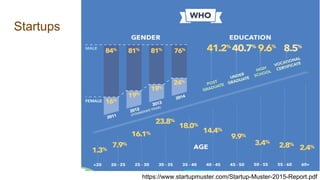
Startups
https://www.startupmuster.com/Startup-Muster-2015-Report.pdf
Reasons
https://www.startupmuster.com/Startup-Muster-2015-Report.pdf
SaaS startups
● A startup that delivers Software as a Service
● Melbourne - one of the best startup hubs in world
● A good probability to start / work for a startup
Sources of challenges
Your own success...
Environment changes
Limited budget
Time
Some of the challenges
● Scalability
● Isolation
● Security
● Limited resources
● Software Provisioning
● Compliance requirements
Scalability
● Vertical and horizontal scalability
○ Vertical: Increasing resources for an instance
○ Horizontal: Increasing the number of instances
● Using a PaaS vs IaaS
○ E.g., Deploying app Heroku or Architecting the app on AWS.
● Time to scale
● Stateless applications
● Public APIs
Scalability > Stateless applications
● Stateless by design
● Application does not hold / remember state
● Start, stop, clone
● Requests could be routed to different processors
● Scalability, Elasticity, Performance and Reliability
● Complements Containerised architecture and virtualization
Scalability > Public APIs
● Go RESTful
○ Easy to understand
○ Kinda norm these days
● Why?
○ Do not have resources to develop extra features that the tenant
needs
○ Slightly varying tenant specific requirements
● Provide better flexibility for tenants
● Use via UI or via API (or use both)
UI
API
UI
SaaS
Public API design concerns, e.g., URIs
● Tenant independent URIs [api.myapp.com/v1/resource]
○ Clean URI, Common documentation
○ Need some way to identify tenant, e.g., oAuth, headers
○ Issues with caching in proxy
● Tenant specific subdomain [tenant1.myapp.com/v1/resource]
○ Possible to have service level as well as tenant level cookies
○ DNS provisioning overhead (if manual)
○ Wildcard SSL certificates
● Tenant specific URI [api.myapp.com/v1/tenant1/resource]
○ More RESTful
○ Simple to implement
Resource isolation
● Multi-tenancy is a key characteristic in SaaS
● Sharing underlying resources
● Economies of scale
● Noisy neighbours
● Privacy
● Application isolation
● Data isolation
❏ CPU
❏ Memory
❏ Disk
❏ Network
Resource isolation > Application level
● Eating my resources
● More like a IaaS layer concern than SaaS
○ Choice of Cloud technology
○ Configurabile strategies
● Isolation strategy?
○ Physical machine
○ VM
○ Container
● Design the application to avoid errors
○ Tenant accounts
○ Users of tenants
○ Threads
○ Queues
Resource isolation > Data level
● Different schema for different tenants?
○ Varying requirements of tenants
○ Impact on other tenants
● Sharding
○ Horizontal partitioning of tables
○ Each shard in a separate instance
○ Improved performance and scalability
● Co-locating data
○ Data of the same tenant in the same physical hardware
○ Avoids network traffic
○ Faster join operations
● No-SQL
○ Data structure vary between tenants
○ Partial updates
Resource isolation > Data - Example strategies
(#1)
Separate DB
instances for each
tenant
● Suitable for small number of tenants with
large number of users/transactions
● Because Contract / SLA
● Better data isolation
● High resource consumption
(#2)
Shared instance
and schema but
use tenant specific
identifier
● Very easy to implement
● Suitable for large number of small
tenants
● Poor data isolation
● Better resource consumption
(#3)
Same database
but different
schemas for each
tenant
● A mid-way approach compared to #1 and
#3
● Better isolation than #2
● Better resource consumption than #1
Security
● SaaS is essentially a web application
● Common threats e.g.,
○ Cross-site scripting (XSS), Untrusted data
○ Broken Authentication, Compromised session tokens
○ Cross-Site Request Forgery (CSRF), use browser to perform an unintended operation on
another website
● Security breaches are costly to the business
● Strict web application security practices
○ Tokenization
○ SSL
○ Session timeouts
● Seek help from third party security assessors
○ Penetration testing
○ Vulnerability assessment
Limited resources > Dev effort
● Focus on what you do
○ E.g., my primary business is invoicing.
○ Should I use an existing email notification service?
○ OR Write my own?
● Available options?
○ Do your research to compare the pros and cons
○ Time well-spent
● Look for
○ Flexible pricing models
○ Vendor-lockin issues
○ Scalability (Peak loads)
○ Quality of API, SDK (Reduce development effort and errors)
○ Security vulnerabilities
○ Customer service
SaaS layer
Limited resources > Quality assurance
● Lack of QA staff (may be zero)
○ Lack of quality in Software
○ Competitors
○ Customer satisfaction
● Outsourcing solutions
○ BugWolf
○ 99Tests
● Automated Testing tools
○ TestingBot
○ SauceLabs
○ BrowserStack
Software provisioning > Understanding agile
● Thinking MVP (minimum viable product)
○ The role of Software Engineer
○ To measure the complexity of delivering different features.
● Feature dependency analysis (technical perspective)
○ Feature X depends on Feature Y
○ Feature X can be better implemented if Feature Y is present
○ Feature X can be better designed based on the feedback of Feature
○ Co-existence of Feature X and Feature Y can cause issues
● Customizability
○ Quick customization to try out market segment
○ Quick demo to show to a potential investors
○ Sandbox environments
Software provisioning > Build pipeline
● Time to release a feature
● Plan -> Design -> Develop -> QA -> Deploy
● Software in the hand of users
● Feedback loop
● Slower the time to deliver -> slower the feedback
● Identifying bottlenecks
● Repeatable and reliable
Software Provisioning > Platform / Infrastructure
● PaaS or IaaS ?
● PaaS: e.g., Heroku, Openshift, Engine yard
● IaaS: e.g., AWS, Azure, Digital Ocean
● Do not try to reinvent the wheel, unless absolute necessity
● Go cheap. Spend money as you grow. E.g., Heroku dynos
Need a Demo Free dyno 512 MB RAM. $0/month. Sleeps after 30 mins inactivity
Have to Deploy MVP Hobby dyno 512 MB RAM. $7/month.
After 1 year - High traffic Performance-L dyno 2.5-14 GB RAM. $500/month.
Pricing solutions
● Pay as you go
● Subscriptions
● Separate pricing model from application logic
● Flexibility to change, self-service.
● Additional features, such as coupons, email notifications
● Merchant accounts
● Payment gateways vs 3rd party processors
○ 3rd party processors are less expensive in short term but could be expensive in long term
○ http://www.paymentgatewayaustralia.com/
Compliance requirements
● Customers of tenants
● Privacy issues
● Data locality issues
● Terms and Conditions
○ Legal issues
○ Professional advice
● Strong encryption mechanisms from the start
● PCI compliance
○ www.pcisecuritystandards.org
Compliance requirements > E.g., PCI - DSS
● Pay per use is an inherent SaaS characteristic
○ Collecting and storing credit card information
● PCI - DSS (Payment Card Industry - Data Security Standard)
○ A Self-assessment Questionnaire*, e.g., SAQ A-EP
● Levels of merchants
○ Level 1: more than 6 million tx / annum
○ Level 2: 1 to 6 million tx / annum
○ Level 3: 20k to 1 million tx / annum
○ Level 4: upto 20k tx / annum
● Perhaps too late when assessed
○ Penalties ($5,000 to $500,000)
○ Loss of business ($$$$)
● Pay attention when choosing deployment platforms
* www.pcisecuritystandards.org
● Need to be introduced very early stages of app / MVP
● Drive design solutions
○ Only 20% of tenants have more than 500 users
○ Only 1% of the users clicked on the feedback survey link
● Understanding usage patterns
○ Tenants
○ Users
● Collected Data -> Another business?
● Use Tools
○ Google analytics
○ MixPanel
○ AWS CloudWatch
Analytics
Other
● Do not unnecessarily restrict the system
○ Currently support only Australian phone numbers
○ Are we unnecessarily restricting ourselves to specific market segment / geographical area?
● Identifying performance bottlenecks
○ Overprovisioning resources
○ Optimizations
○ Saved money could be used elsewhere
● Study competitors
○ Myth: Not my task as a Software Engineer
● Do not hesitate to question the business
○ Myth: Not my task as a Software Engineer
Conclusions
● Be aware of these challenges
● Research solutions
● Learn new technologies
● Startups -> Limited resources -> Develop strategies
● Compromise. You have to.
● Managing tech debt vs feature push
● Complement business goals: 3 months -> 6 months -> 1 year
Thanks
Any Questions
?
References
● http://www.cloudcomputingpatterns.org/software_as_a_service/
● https://www.owasp.org
● https://startupaus.org/
● https://www.pcisecuritystandards.org/
● https://startupvictoria.com.au/
● https://www.startupmuster.com/

SaaS startups - Software Engineering Challenges

  • 1.
    SaaS startups Software EngineeringChallenges Dr. Malinda Kapuruge Deakin University - 16/12/16
  • 2.
    Who am I? ● Malinda Kapuruge (Kau) ● A Senior Software Engineer ● An avid reader about SaaS delivery model ● Currently work at a SaaS Startup ● Previous: Zendesk, DiUS, Swinburne, WSO2 kaushalye kaushalye kaushalye kaushalye
  • 3.
    You are herebecause, ● Have an idea for a SaaS application, possibly a startup ● Potentially working for a SaaS startup once graduated ● Curious to know the challenges in the field ● Have no clue how I ended up here
  • 4.
    This talk isabout... The engineering challenges faced by a business in its infancy (startup) that delivers Software as a Service. “As a Software Engineer how do I better prepare myself to find solutions to such challenges?“
  • 5.
    This talk isNOT about... ● How to evaluate the business opportunity? ● How to get funding $$$ (self-funded / crowdsourcing / venture capital)? ● Any good mentors? ● How to promote my business? ● Why startups fail? ● How to find a suitable place for my startup in Melbourne (ask me later)?
  • 6.
    Engineering point ofview (Obviously, challenged by the business)
  • 7.
    SaaS ● A softwaredelivery method ● Multi-tenancy ● On-demand Self service ● Centrally managed ● Network-based access ● Pay per use (time, #users, #features) SaaS (for software users) PaaS (for developers) IaaS (for SysAdmins) SaaS layer Shared resources tenants users Cloudstack
  • 8.
    Startups ● Early stageof business ● Innovative product ● Success is not guaranteed ○ 37% for Information Technology* ● Usually a small team ● Limited ○ funding ○ resources ● Shared workplace ● Have to be ready for exponential growth * http://www.statisticbrain.com/startup-failure-by-industry
  • 9.
  • 10.
  • 11.
    SaaS startups ● Astartup that delivers Software as a Service ● Melbourne - one of the best startup hubs in world ● A good probability to start / work for a startup
  • 12.
  • 13.
  • 15.
  • 16.
  • 17.
  • 18.
    Some of thechallenges ● Scalability ● Isolation ● Security ● Limited resources ● Software Provisioning ● Compliance requirements
  • 19.
    Scalability ● Vertical andhorizontal scalability ○ Vertical: Increasing resources for an instance ○ Horizontal: Increasing the number of instances ● Using a PaaS vs IaaS ○ E.g., Deploying app Heroku or Architecting the app on AWS. ● Time to scale ● Stateless applications ● Public APIs
  • 20.
    Scalability > Statelessapplications ● Stateless by design ● Application does not hold / remember state ● Start, stop, clone ● Requests could be routed to different processors ● Scalability, Elasticity, Performance and Reliability ● Complements Containerised architecture and virtualization
  • 21.
    Scalability > PublicAPIs ● Go RESTful ○ Easy to understand ○ Kinda norm these days ● Why? ○ Do not have resources to develop extra features that the tenant needs ○ Slightly varying tenant specific requirements ● Provide better flexibility for tenants ● Use via UI or via API (or use both) UI API UI SaaS
  • 22.
    Public API designconcerns, e.g., URIs ● Tenant independent URIs [api.myapp.com/v1/resource] ○ Clean URI, Common documentation ○ Need some way to identify tenant, e.g., oAuth, headers ○ Issues with caching in proxy ● Tenant specific subdomain [tenant1.myapp.com/v1/resource] ○ Possible to have service level as well as tenant level cookies ○ DNS provisioning overhead (if manual) ○ Wildcard SSL certificates ● Tenant specific URI [api.myapp.com/v1/tenant1/resource] ○ More RESTful ○ Simple to implement
  • 23.
    Resource isolation ● Multi-tenancyis a key characteristic in SaaS ● Sharing underlying resources ● Economies of scale ● Noisy neighbours ● Privacy ● Application isolation ● Data isolation ❏ CPU ❏ Memory ❏ Disk ❏ Network
  • 24.
    Resource isolation >Application level ● Eating my resources ● More like a IaaS layer concern than SaaS ○ Choice of Cloud technology ○ Configurabile strategies ● Isolation strategy? ○ Physical machine ○ VM ○ Container ● Design the application to avoid errors ○ Tenant accounts ○ Users of tenants ○ Threads ○ Queues
  • 25.
    Resource isolation >Data level ● Different schema for different tenants? ○ Varying requirements of tenants ○ Impact on other tenants ● Sharding ○ Horizontal partitioning of tables ○ Each shard in a separate instance ○ Improved performance and scalability ● Co-locating data ○ Data of the same tenant in the same physical hardware ○ Avoids network traffic ○ Faster join operations ● No-SQL ○ Data structure vary between tenants ○ Partial updates
  • 26.
    Resource isolation >Data - Example strategies (#1) Separate DB instances for each tenant ● Suitable for small number of tenants with large number of users/transactions ● Because Contract / SLA ● Better data isolation ● High resource consumption (#2) Shared instance and schema but use tenant specific identifier ● Very easy to implement ● Suitable for large number of small tenants ● Poor data isolation ● Better resource consumption (#3) Same database but different schemas for each tenant ● A mid-way approach compared to #1 and #3 ● Better isolation than #2 ● Better resource consumption than #1
  • 27.
    Security ● SaaS isessentially a web application ● Common threats e.g., ○ Cross-site scripting (XSS), Untrusted data ○ Broken Authentication, Compromised session tokens ○ Cross-Site Request Forgery (CSRF), use browser to perform an unintended operation on another website ● Security breaches are costly to the business ● Strict web application security practices ○ Tokenization ○ SSL ○ Session timeouts ● Seek help from third party security assessors ○ Penetration testing ○ Vulnerability assessment
  • 28.
    Limited resources >Dev effort ● Focus on what you do ○ E.g., my primary business is invoicing. ○ Should I use an existing email notification service? ○ OR Write my own? ● Available options? ○ Do your research to compare the pros and cons ○ Time well-spent ● Look for ○ Flexible pricing models ○ Vendor-lockin issues ○ Scalability (Peak loads) ○ Quality of API, SDK (Reduce development effort and errors) ○ Security vulnerabilities ○ Customer service SaaS layer
  • 29.
    Limited resources >Quality assurance ● Lack of QA staff (may be zero) ○ Lack of quality in Software ○ Competitors ○ Customer satisfaction ● Outsourcing solutions ○ BugWolf ○ 99Tests ● Automated Testing tools ○ TestingBot ○ SauceLabs ○ BrowserStack
  • 30.
    Software provisioning >Understanding agile ● Thinking MVP (minimum viable product) ○ The role of Software Engineer ○ To measure the complexity of delivering different features. ● Feature dependency analysis (technical perspective) ○ Feature X depends on Feature Y ○ Feature X can be better implemented if Feature Y is present ○ Feature X can be better designed based on the feedback of Feature ○ Co-existence of Feature X and Feature Y can cause issues ● Customizability ○ Quick customization to try out market segment ○ Quick demo to show to a potential investors ○ Sandbox environments
  • 31.
    Software provisioning >Build pipeline ● Time to release a feature ● Plan -> Design -> Develop -> QA -> Deploy ● Software in the hand of users ● Feedback loop ● Slower the time to deliver -> slower the feedback ● Identifying bottlenecks ● Repeatable and reliable
  • 32.
    Software Provisioning >Platform / Infrastructure ● PaaS or IaaS ? ● PaaS: e.g., Heroku, Openshift, Engine yard ● IaaS: e.g., AWS, Azure, Digital Ocean ● Do not try to reinvent the wheel, unless absolute necessity ● Go cheap. Spend money as you grow. E.g., Heroku dynos Need a Demo Free dyno 512 MB RAM. $0/month. Sleeps after 30 mins inactivity Have to Deploy MVP Hobby dyno 512 MB RAM. $7/month. After 1 year - High traffic Performance-L dyno 2.5-14 GB RAM. $500/month.
  • 33.
    Pricing solutions ● Payas you go ● Subscriptions ● Separate pricing model from application logic ● Flexibility to change, self-service. ● Additional features, such as coupons, email notifications ● Merchant accounts ● Payment gateways vs 3rd party processors ○ 3rd party processors are less expensive in short term but could be expensive in long term ○ http://www.paymentgatewayaustralia.com/
  • 34.
    Compliance requirements ● Customersof tenants ● Privacy issues ● Data locality issues ● Terms and Conditions ○ Legal issues ○ Professional advice ● Strong encryption mechanisms from the start ● PCI compliance ○ www.pcisecuritystandards.org
  • 35.
    Compliance requirements >E.g., PCI - DSS ● Pay per use is an inherent SaaS characteristic ○ Collecting and storing credit card information ● PCI - DSS (Payment Card Industry - Data Security Standard) ○ A Self-assessment Questionnaire*, e.g., SAQ A-EP ● Levels of merchants ○ Level 1: more than 6 million tx / annum ○ Level 2: 1 to 6 million tx / annum ○ Level 3: 20k to 1 million tx / annum ○ Level 4: upto 20k tx / annum ● Perhaps too late when assessed ○ Penalties ($5,000 to $500,000) ○ Loss of business ($$$$) ● Pay attention when choosing deployment platforms * www.pcisecuritystandards.org
  • 36.
    ● Need tobe introduced very early stages of app / MVP ● Drive design solutions ○ Only 20% of tenants have more than 500 users ○ Only 1% of the users clicked on the feedback survey link ● Understanding usage patterns ○ Tenants ○ Users ● Collected Data -> Another business? ● Use Tools ○ Google analytics ○ MixPanel ○ AWS CloudWatch Analytics
  • 37.
    Other ● Do notunnecessarily restrict the system ○ Currently support only Australian phone numbers ○ Are we unnecessarily restricting ourselves to specific market segment / geographical area? ● Identifying performance bottlenecks ○ Overprovisioning resources ○ Optimizations ○ Saved money could be used elsewhere ● Study competitors ○ Myth: Not my task as a Software Engineer ● Do not hesitate to question the business ○ Myth: Not my task as a Software Engineer
  • 38.
    Conclusions ● Be awareof these challenges ● Research solutions ● Learn new technologies ● Startups -> Limited resources -> Develop strategies ● Compromise. You have to. ● Managing tech debt vs feature push ● Complement business goals: 3 months -> 6 months -> 1 year
  • 39.
  • 40.
    References ● http://www.cloudcomputingpatterns.org/software_as_a_service/ ● https://www.owasp.org ●https://startupaus.org/ ● https://www.pcisecuritystandards.org/ ● https://startupvictoria.com.au/ ● https://www.startupmuster.com/