INNOVATING FASTER
Supporting microservices w/ SBT, Continuous Delivery & LXC
Kevin Scaldeferri
Gilt Groupe
June 18, 2013
CULTURE
• Rapid feature development
• Rapid experimentation
• Find what works, discard what doesn’t
INTHE BEGINNING
ONE (REALLY) BIG RAILS APP
• ~1000 models and controllers
• ~ 200k lines of Ruby
• ~ 50k lines of PostgreSQL stored procedures
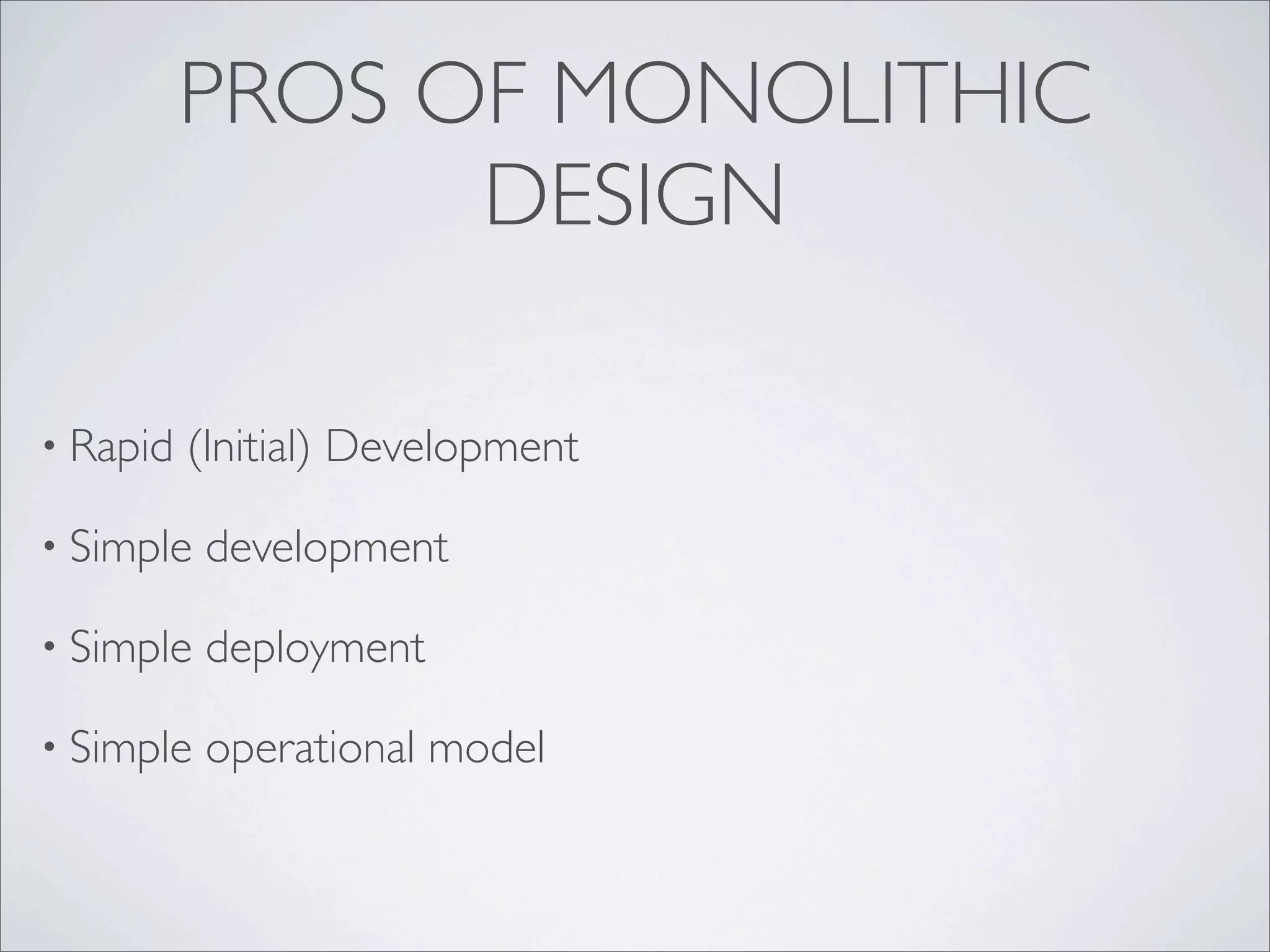
PROS OF MONOLITHIC
DESIGN
• Rapid (Initial) Development
• Simple development
• Simple deployment
• Simple operational model
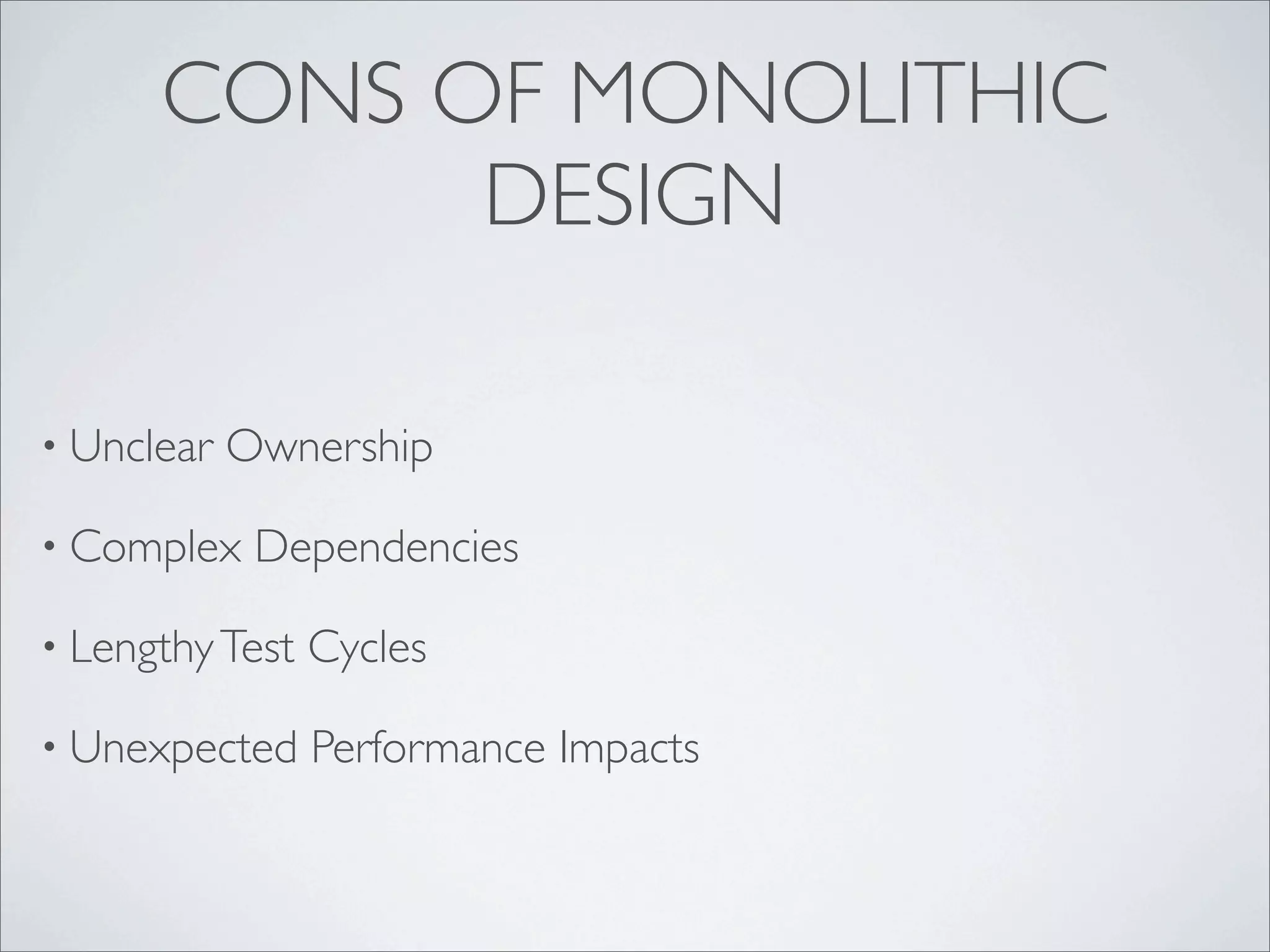
CONS OF MONOLITHIC
DESIGN
• Unclear Ownership
• Complex Dependencies
• LengthyTest Cycles
• Unexpected Performance Impacts
DAY OF RECKONING
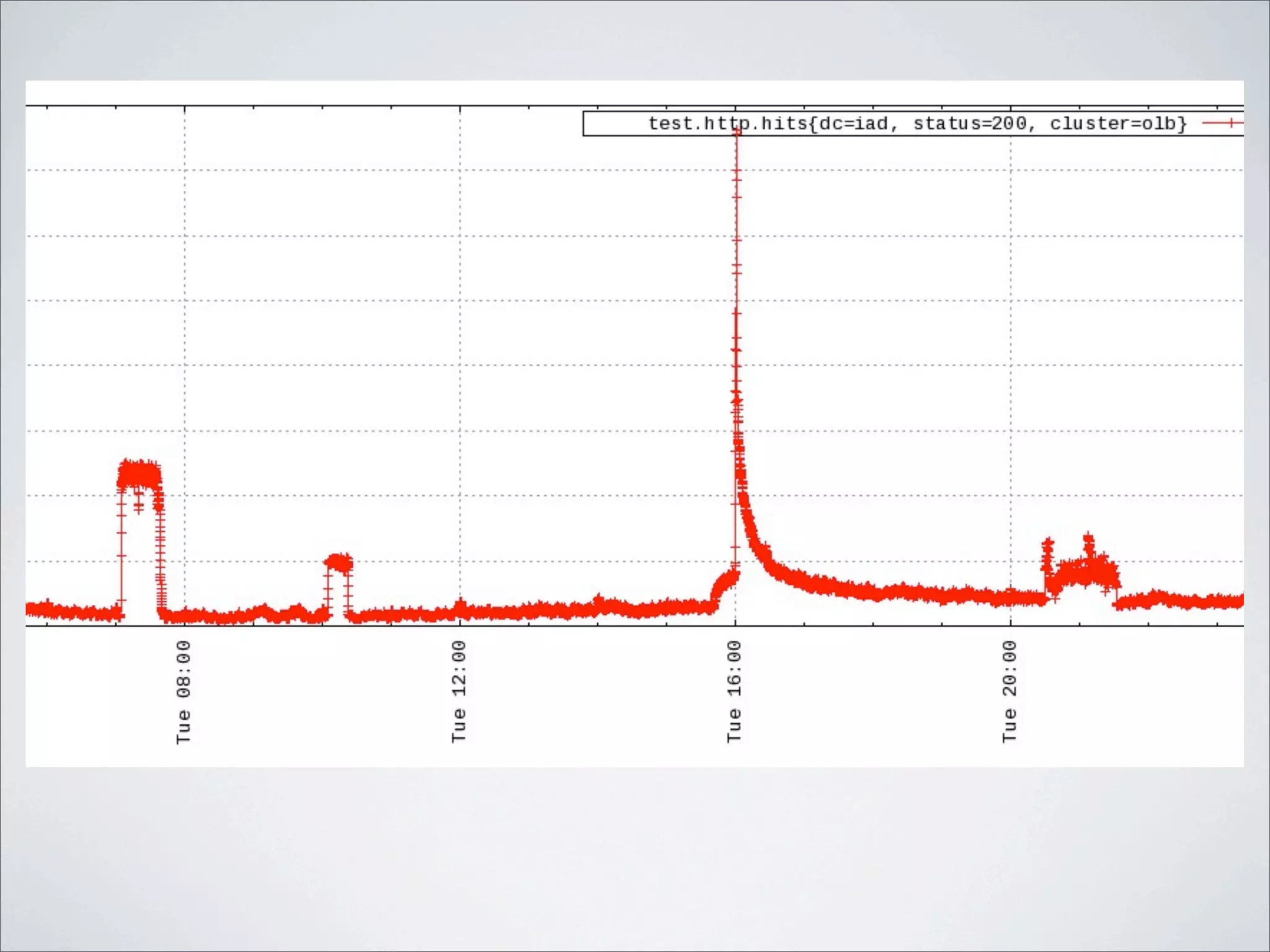
THE LOUBOUTIN INCIDENT
GETTING
(THE MICROSERVICES)
RELIGION
EARLY DAYS
• Pure Java
• Moving fast, lots of C&P
• Lots of snowflakes and competing approaches
• Ant-based build installed via git submodule
• Capistrano for deployment
DIGRESSION ON GIT
SUBMODULES
DOWNSIDES OF ANT
• Build scripts in a different language
• Hard to integrate many tools
• Impedance mismatch w/ Scala
SBT
WHAT’S COOL ABOUT SBT
• Fast incremental builds of Scala & Java
• ~compile, ~test
• Interactive shell & console
• Configuration is “just” Scala code
BUT...
• Very sophisticated use of Scala
• Subtle mental model
• Can be hard to debug
• Lots of historical baggage in our build & deployment processes
GILT-SBT-BUILD
• One big SBT plugin pulling in all other plugins and
configuration
• Plugin is versioned just like any other software
• (Actually builds itself!)
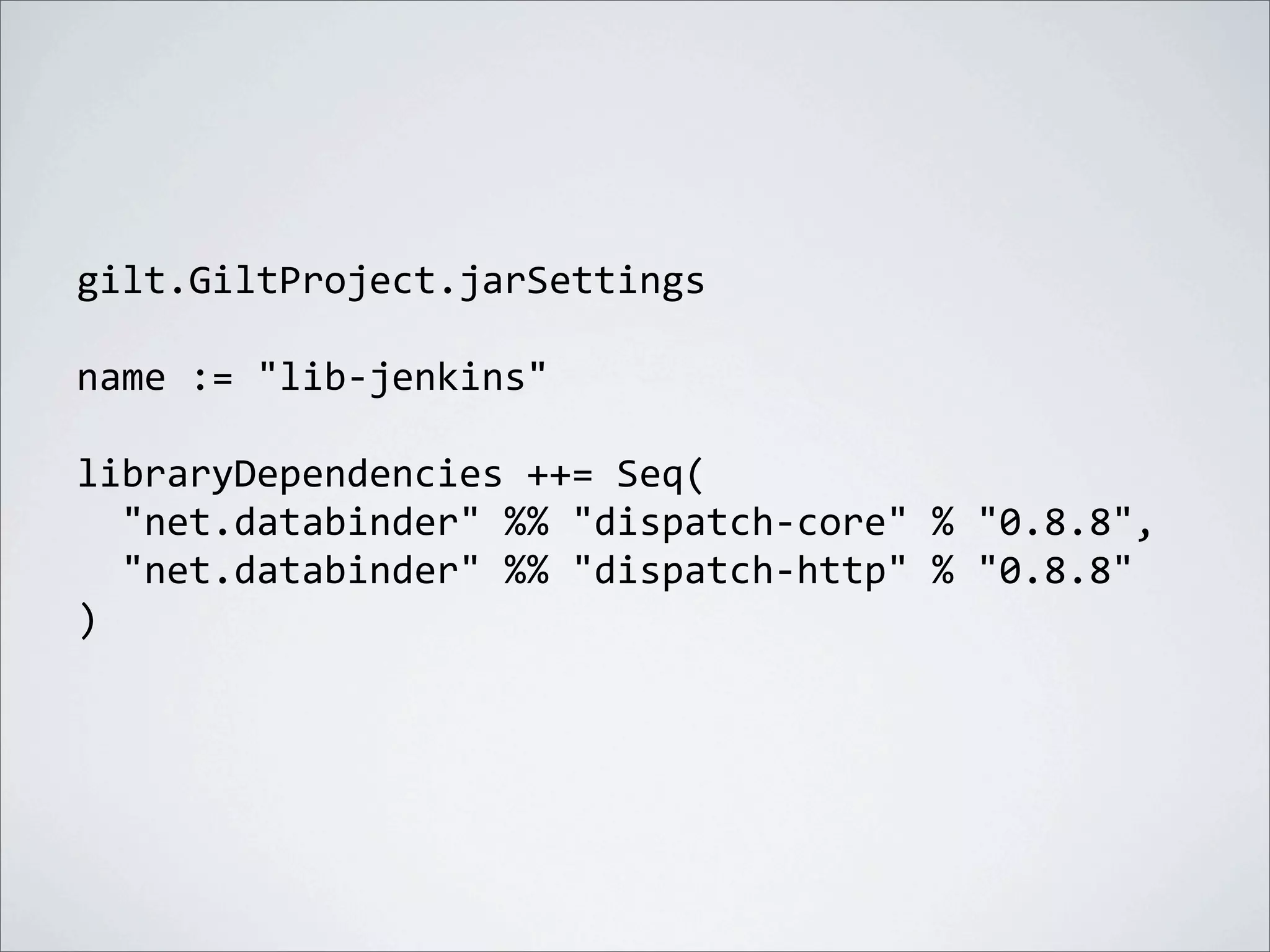
• Super simple config for individual services
gilt.GiltProject.jarSettings
name	
  :=	
  "lib-­‐jenkins"
libraryDependencies	
  ++=	
  Seq(
	
  	
  "net.databinder"	
  %%	
  "dispatch-­‐core"	
  %	
  "0.8.8",
	
  	
  "net.databinder"	
  %%	
  "dispatch-­‐http"	
  %	
  "0.8.8"
)
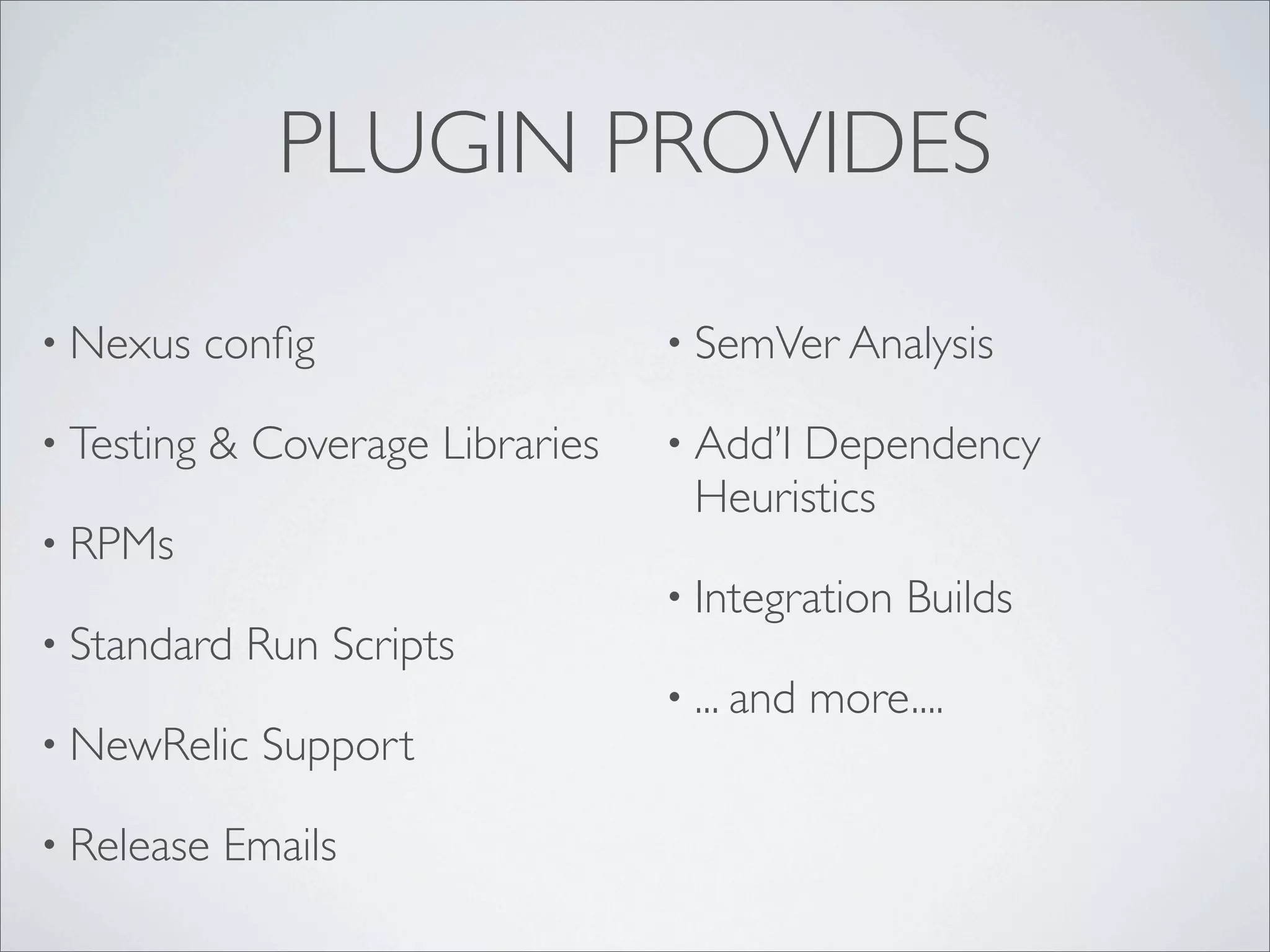
PLUGIN PROVIDES
• Nexus config
• Testing & Coverage Libraries
• RPMs
• Standard Run Scripts
• NewRelic Support
• Release Emails
• SemVer Analysis
• Add’l Dependency
Heuristics
• Integration Builds
• ... and more....
WHAT ABOUT MULTI-
PROJECT BUILDS?
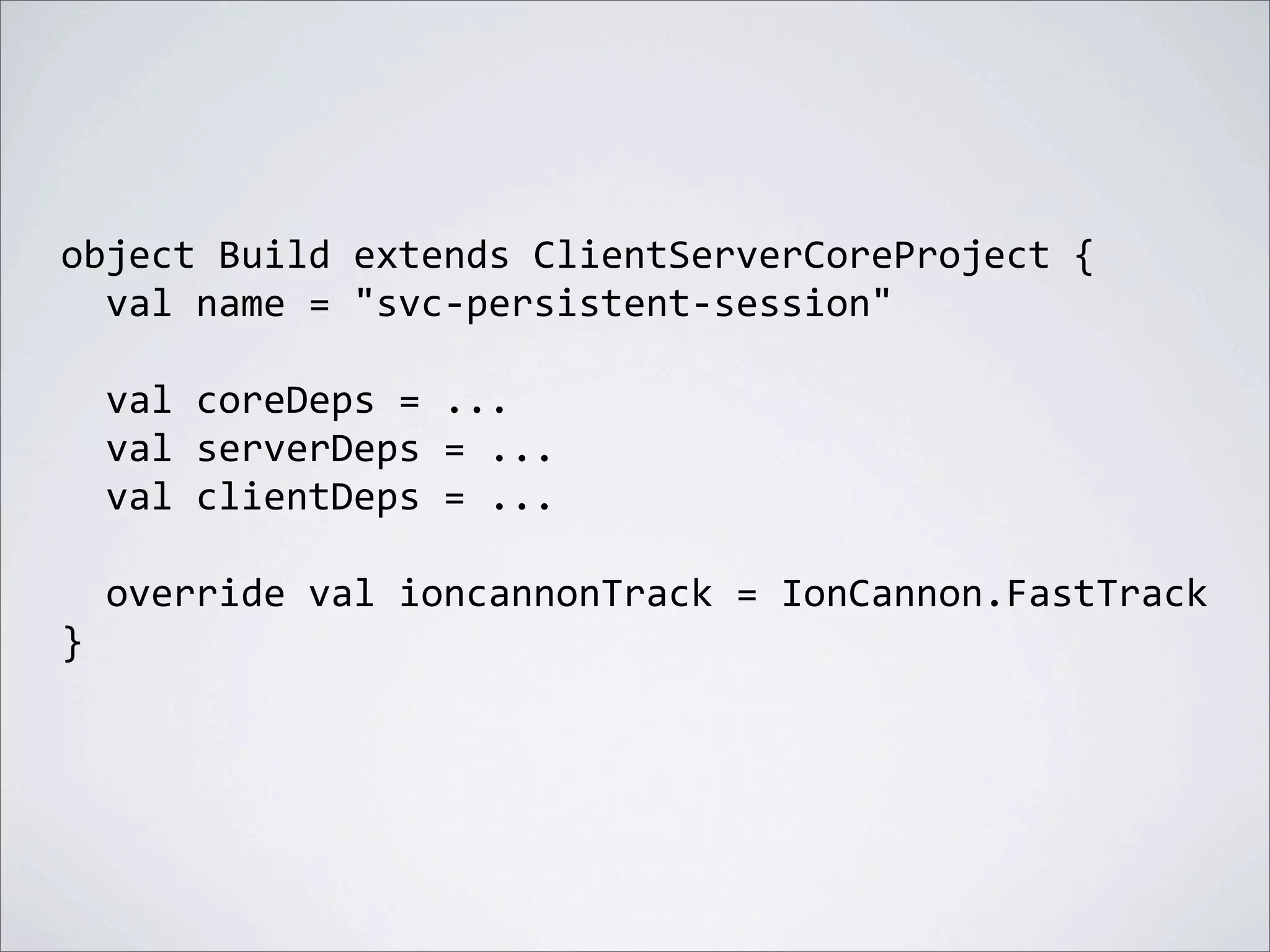
object	
  Build	
  extends	
  ClientServerCoreProject	
  {
	
  	
  val	
  name	
  =	
  "svc-­‐persistent-­‐session"
	
  	
  val	
  coreDeps	
  =	
  ...
	
  	
  val	
  serverDeps	
  =	
  ...
	
  	
  val	
  clientDeps	
  =	
  ...
	
  	
  override	
  val	
  ioncannonTrack	
  =	
  IonCannon.FastTrack
}
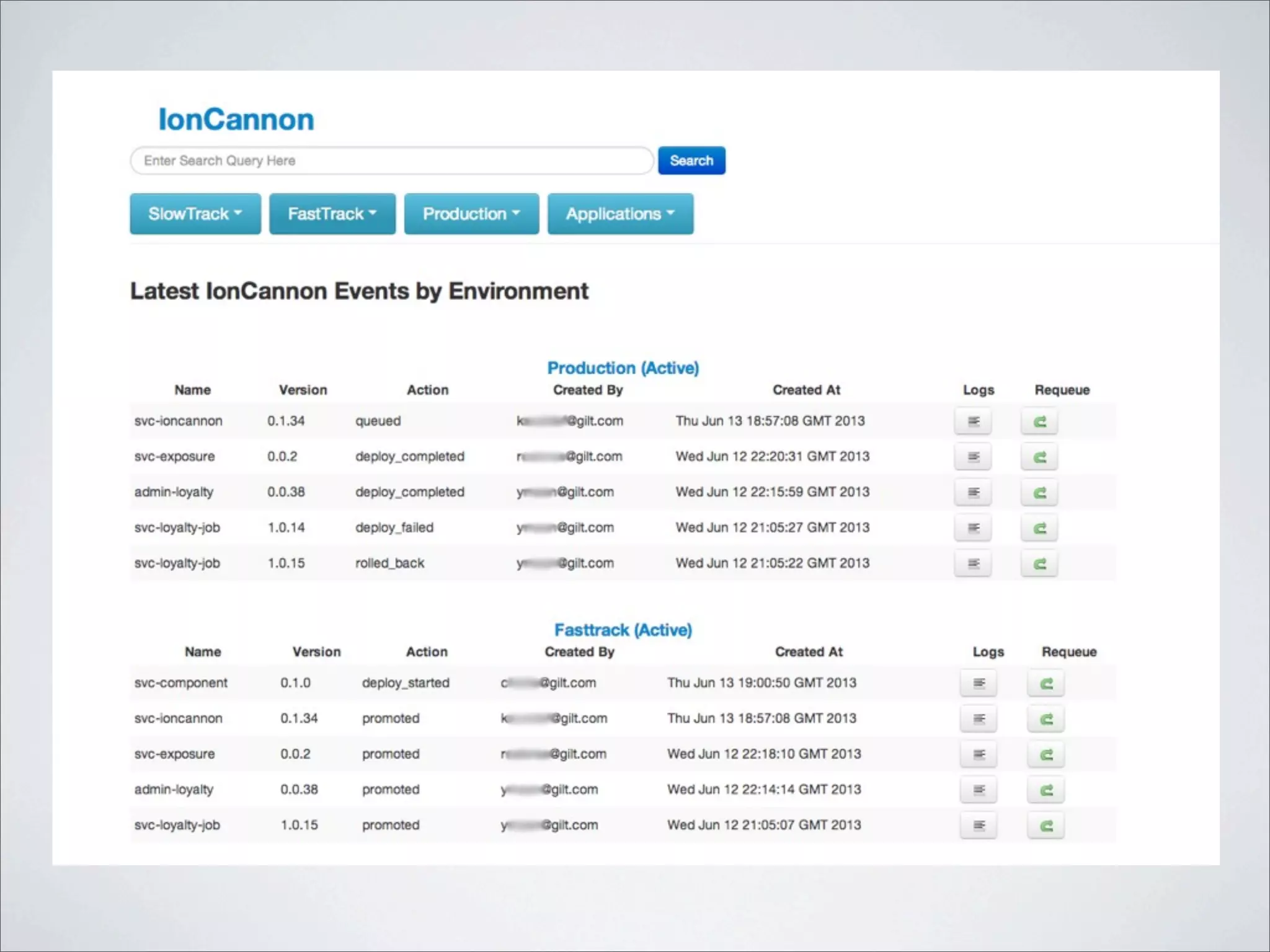
IONCANNON?
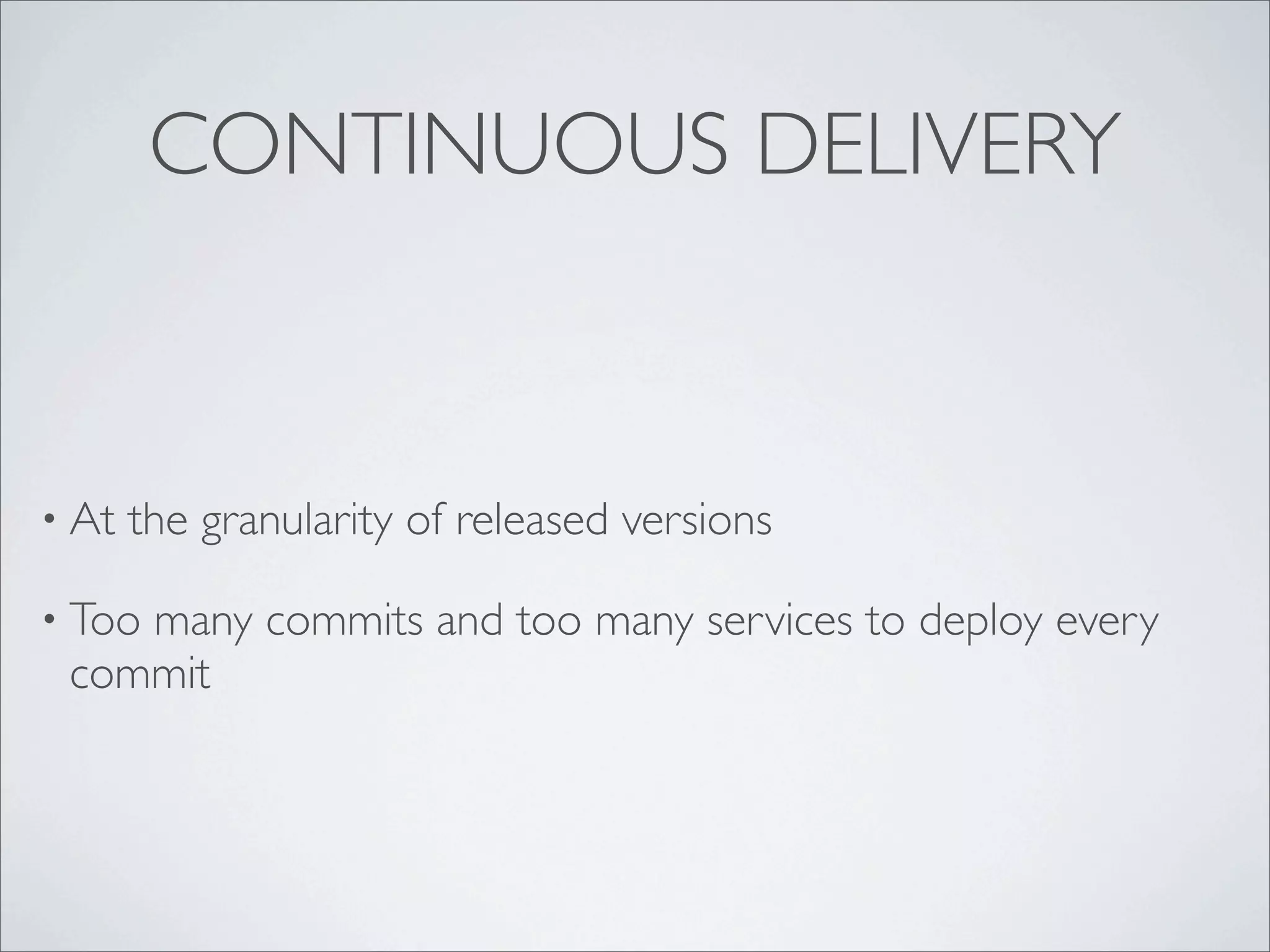
CONTINUOUS DELIVERY
• At the granularity of released versions
• Too many commits and too many services to deploy every
commit
DEVELOPMENT
• Teams have a shared dev / test environment
• Develop locally w/ tunnels to services
• Submit to Gerrit for peer review
• Deploy & test on team environment
• ‘sbt release’ when ready
FAST-TRACK
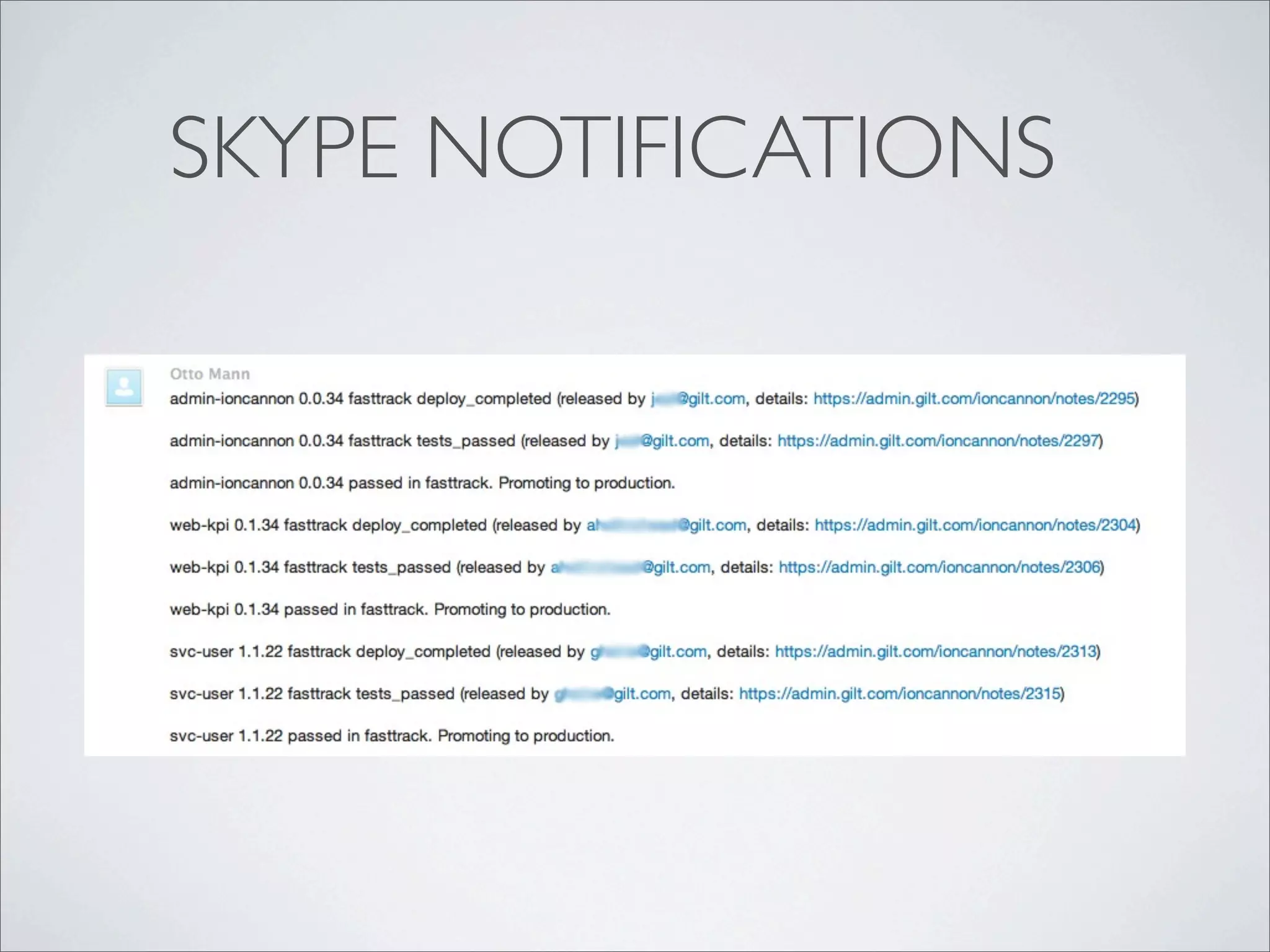
• Fully automated testing & deployment
• ‘sbt release’ triggers deployment to a staging environment
mirroring production
• Automated tests run
• Promote to production or rollback
SKYPE NOTIFICATIONS
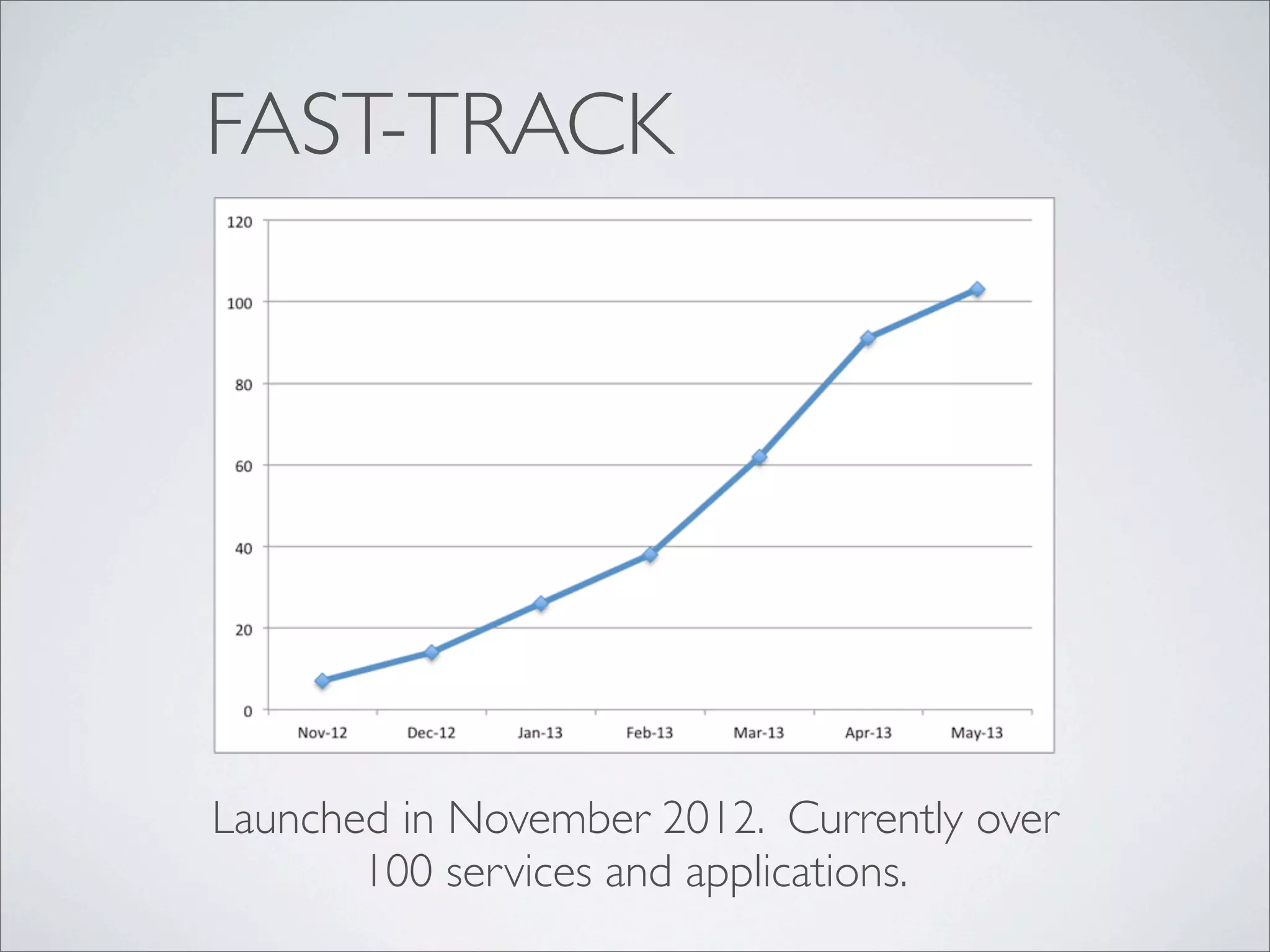
FAST-TRACK
Launched in November 2012. Currently over
100 services and applications.
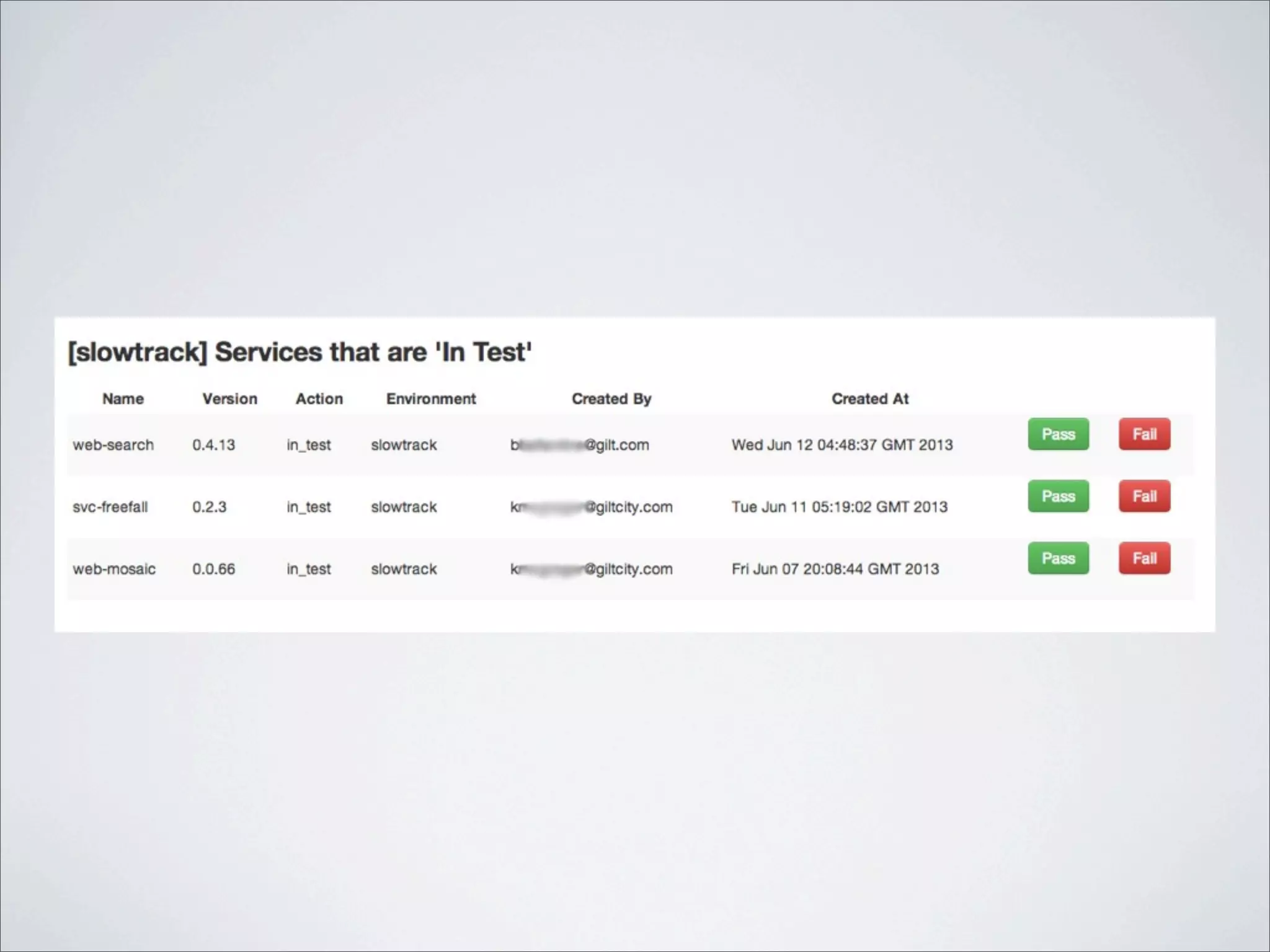
SLOW-TRACK
• Automated Deployment
• ManualTesting / Approval
SLOW-TRACK IN PRACTICE
• Dramatically less adoption than fast-track
• Systems without good automated tests tend to be older
systems which also haven’t upgraded to the current build &
deploy toolchain
• Teams do manual testing on test environments already
• Better tools for UI testing tend to eliminate the need for this
SELENIUM:TEST
• ‘sbt selenium:test’
• Built on ScalaTest 2.0 Selenium DSL
• Automated browser testing with reusable components
• All tests written in Scala
• Tests can be run in any environment
• Selenium grid available
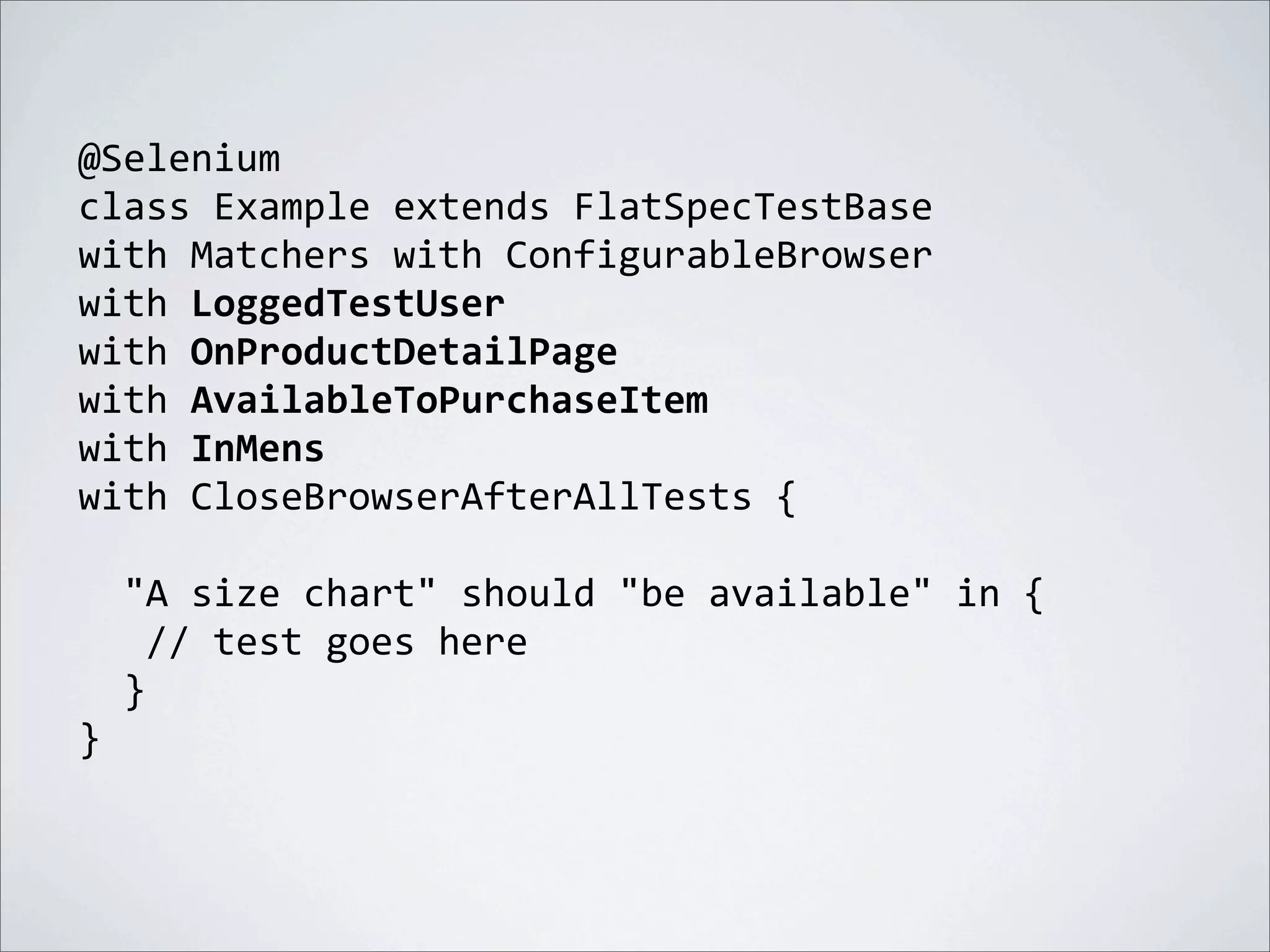
@Selenium
class	
  Example	
  extends	
  FlatSpecTestBase
with	
  Matchers	
  with	
  ConfigurableBrowser	
  
with	
  LoggedTestUser
with	
  OnProductDetailPage
with	
  AvailableToPurchaseItem
with	
  InMens
with	
  CloseBrowserAfterAllTests	
  {
	
  	
  "A	
  size	
  chart"	
  should	
  "be	
  available"	
  in	
  {


  //	
  test	
  goes	
  here
	
  	
  }
}
DEPLOYMENT
AN APOLOGY
CURRENT DEPLOYMENT
• Bare metal machines
• Multiple services per machine
• Highly manual process to balance resource requirements
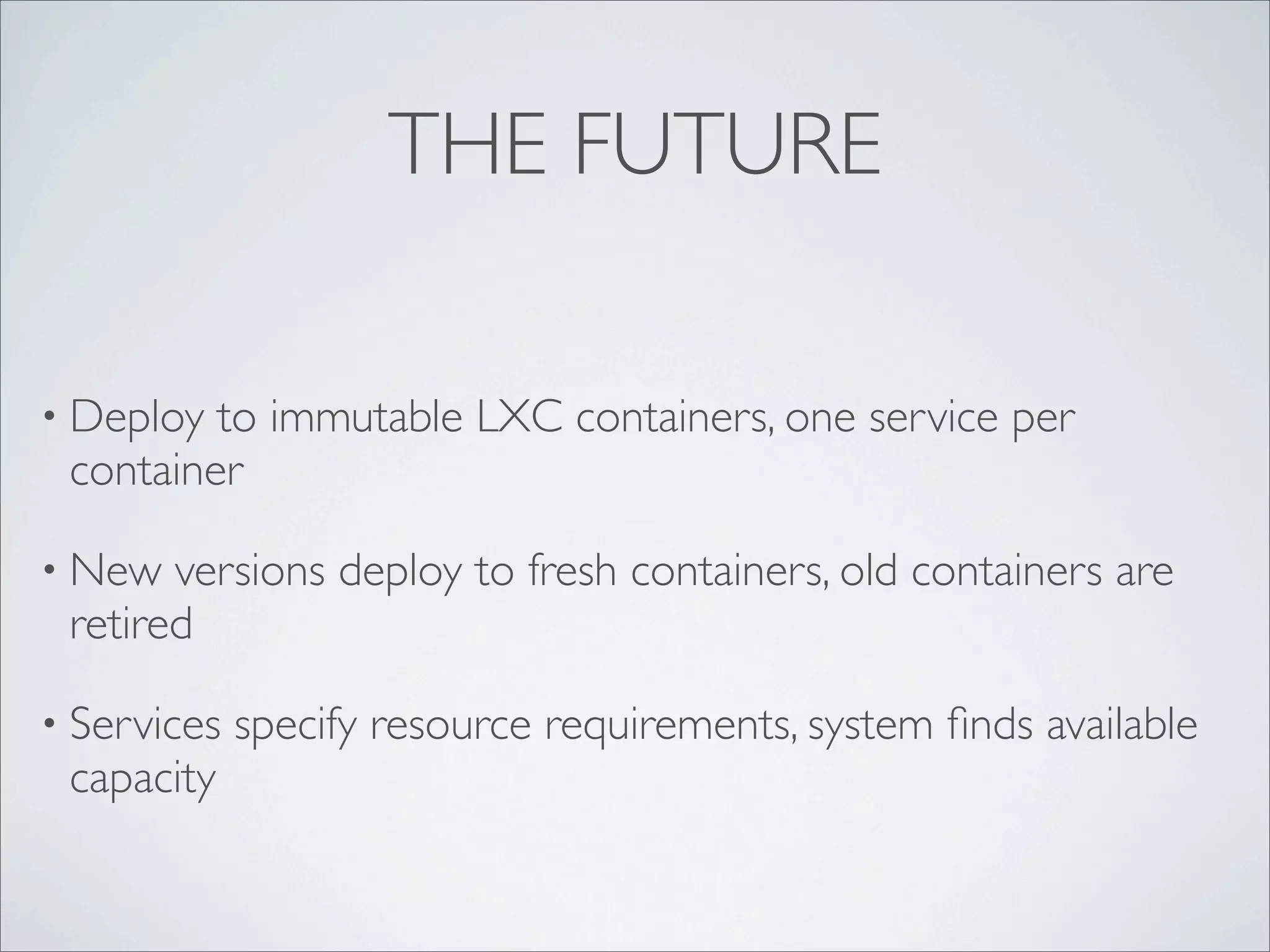
THE FUTURE
• Deploy to immutable LXC containers, one service per
container
• New versions deploy to fresh containers, old containers are
retired
• Services specify resource requirements, system finds available
capacity
CLOUDSTACK
• Private cloud management
• Also evaluated OpenStack & Ganeti
• CloudStack’s APIs seemed best suited to our design
• Added LXC support to CloudStack 4.2
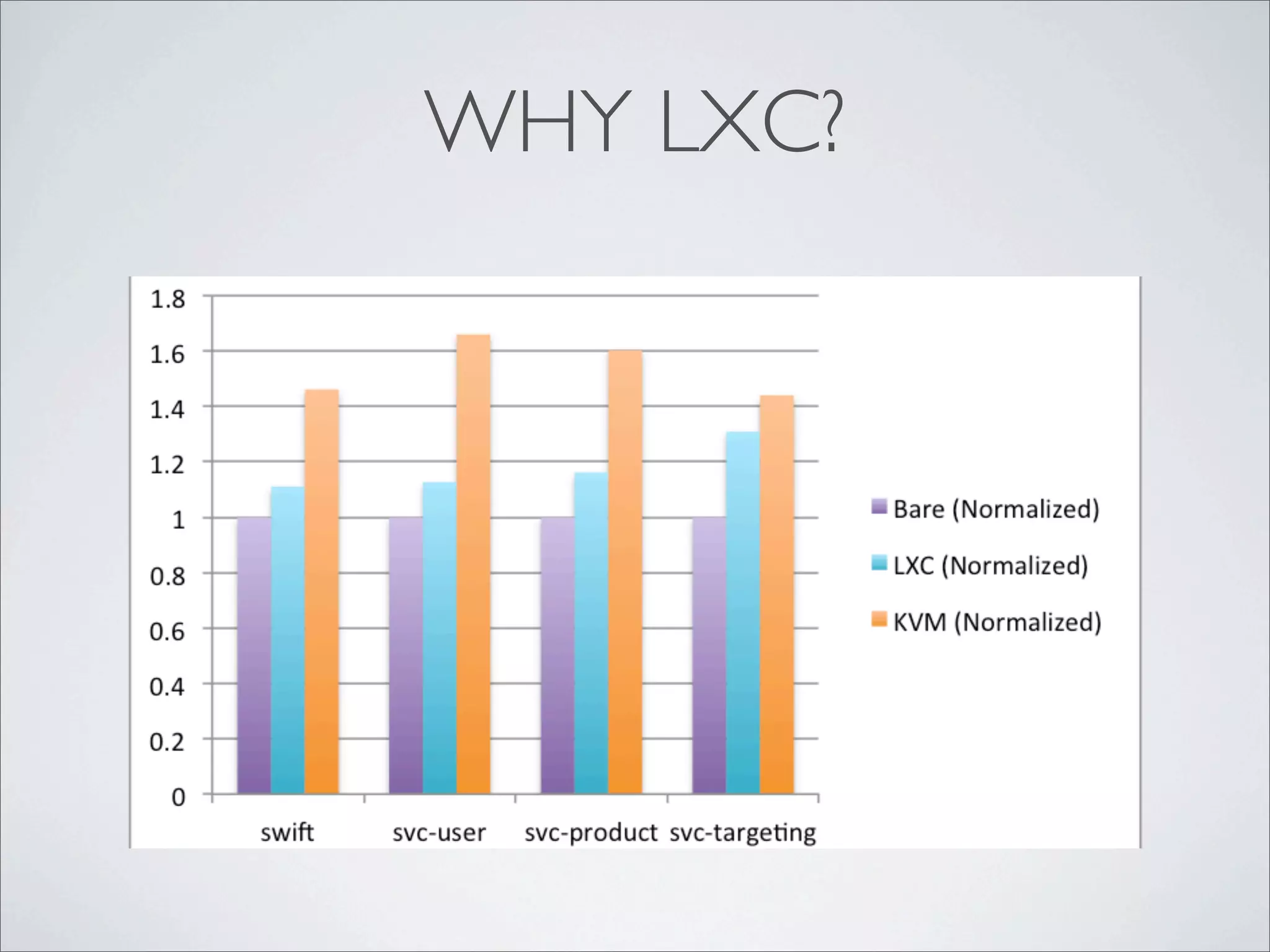
WHY LXC?
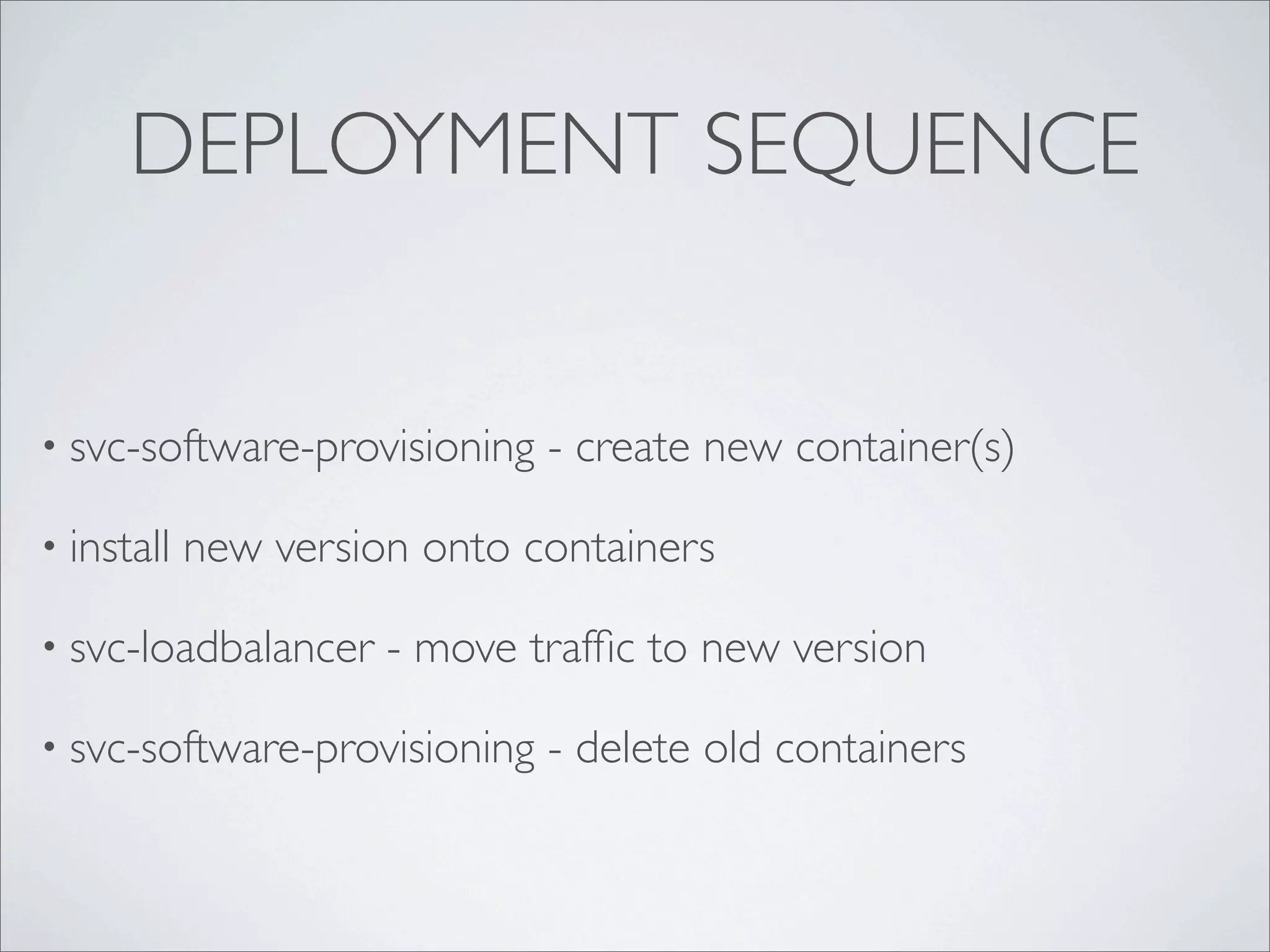
DEPLOYMENT SEQUENCE
• svc-software-provisioning - create new container(s)
• install new version onto containers
• svc-loadbalancer - move traffic to new version
• svc-software-provisioning - delete old containers
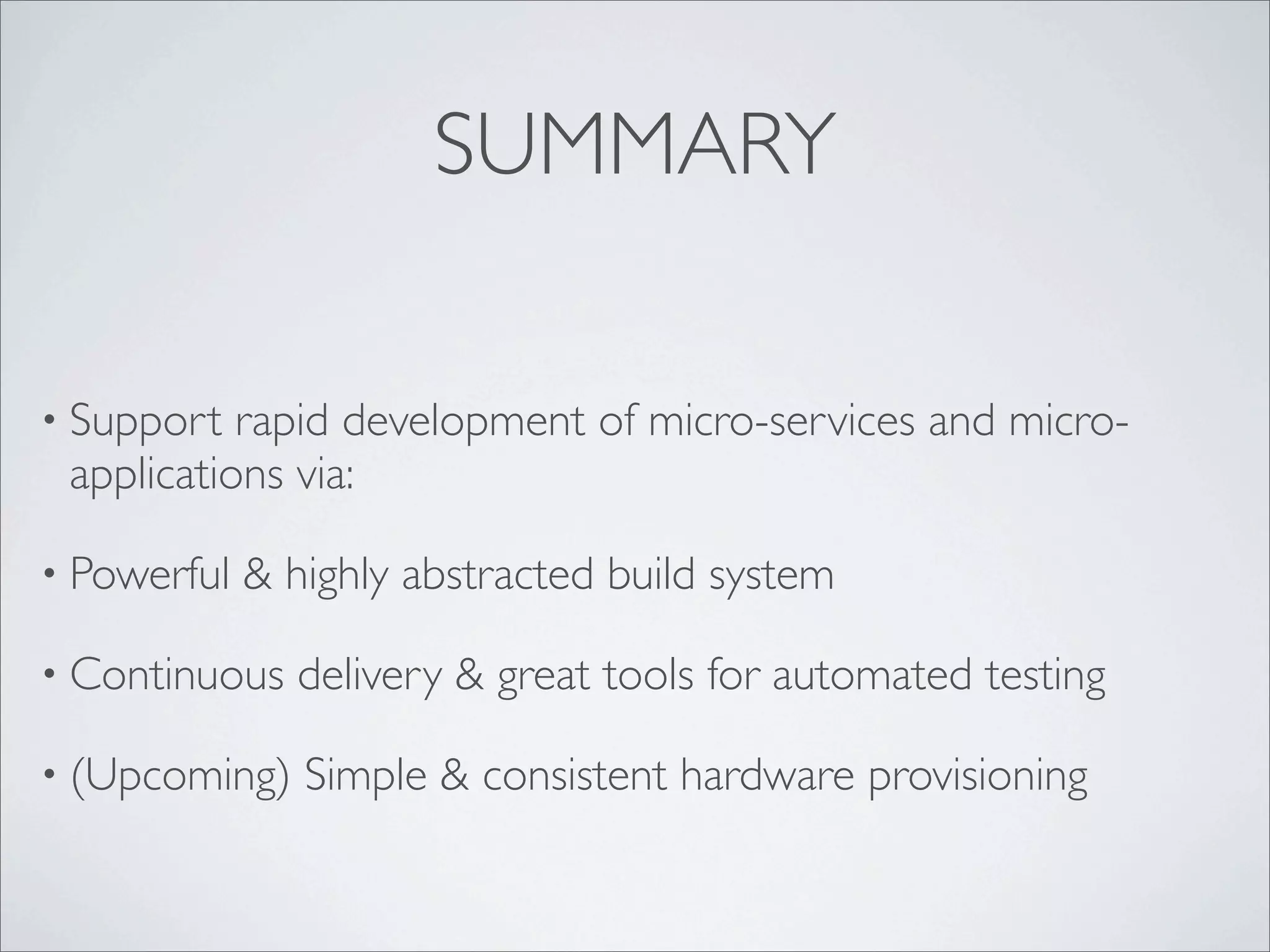
SUMMARY
• Support rapid development of micro-services and micro-
applications via:
• Powerful & highly abstracted build system
• Continuous delivery & great tools for automated testing
• (Upcoming) Simple & consistent hardware provisioning
THANKYOU
QUESTIONS?

Innovating faster with SBT, Continuous Delivery, and LXC

  • 1.
    INNOVATING FASTER Supporting microservicesw/ SBT, Continuous Delivery & LXC Kevin Scaldeferri Gilt Groupe June 18, 2013
  • 4.
    CULTURE • Rapid featuredevelopment • Rapid experimentation • Find what works, discard what doesn’t
  • 5.
  • 6.
    ONE (REALLY) BIGRAILS APP • ~1000 models and controllers • ~ 200k lines of Ruby • ~ 50k lines of PostgreSQL stored procedures
  • 7.
    PROS OF MONOLITHIC DESIGN •Rapid (Initial) Development • Simple development • Simple deployment • Simple operational model
  • 8.
    CONS OF MONOLITHIC DESIGN •Unclear Ownership • Complex Dependencies • LengthyTest Cycles • Unexpected Performance Impacts
  • 9.
  • 10.
  • 11.
  • 12.
    EARLY DAYS • PureJava • Moving fast, lots of C&P • Lots of snowflakes and competing approaches • Ant-based build installed via git submodule • Capistrano for deployment
  • 13.
  • 14.
    DOWNSIDES OF ANT •Build scripts in a different language • Hard to integrate many tools • Impedance mismatch w/ Scala
  • 15.
  • 16.
    WHAT’S COOL ABOUTSBT • Fast incremental builds of Scala & Java • ~compile, ~test • Interactive shell & console • Configuration is “just” Scala code
  • 17.
    BUT... • Very sophisticateduse of Scala • Subtle mental model • Can be hard to debug • Lots of historical baggage in our build & deployment processes
  • 18.
    GILT-SBT-BUILD • One bigSBT plugin pulling in all other plugins and configuration • Plugin is versioned just like any other software • (Actually builds itself!) • Super simple config for individual services
  • 19.
    gilt.GiltProject.jarSettings name  :=  "lib-­‐jenkins" libraryDependencies  ++=  Seq(    "net.databinder"  %%  "dispatch-­‐core"  %  "0.8.8",    "net.databinder"  %%  "dispatch-­‐http"  %  "0.8.8" )
  • 20.
    PLUGIN PROVIDES • Nexusconfig • Testing & Coverage Libraries • RPMs • Standard Run Scripts • NewRelic Support • Release Emails • SemVer Analysis • Add’l Dependency Heuristics • Integration Builds • ... and more....
  • 21.
  • 22.
    object  Build  extends  ClientServerCoreProject  {    val  name  =  "svc-­‐persistent-­‐session"    val  coreDeps  =  ...    val  serverDeps  =  ...    val  clientDeps  =  ...    override  val  ioncannonTrack  =  IonCannon.FastTrack }
  • 23.
  • 24.
    CONTINUOUS DELIVERY • Atthe granularity of released versions • Too many commits and too many services to deploy every commit
  • 25.
    DEVELOPMENT • Teams havea shared dev / test environment • Develop locally w/ tunnels to services • Submit to Gerrit for peer review • Deploy & test on team environment • ‘sbt release’ when ready
  • 26.
    FAST-TRACK • Fully automatedtesting & deployment • ‘sbt release’ triggers deployment to a staging environment mirroring production • Automated tests run • Promote to production or rollback
  • 28.
  • 29.
    FAST-TRACK Launched in November2012. Currently over 100 services and applications.
  • 30.
  • 32.
    SLOW-TRACK IN PRACTICE •Dramatically less adoption than fast-track • Systems without good automated tests tend to be older systems which also haven’t upgraded to the current build & deploy toolchain • Teams do manual testing on test environments already • Better tools for UI testing tend to eliminate the need for this
  • 33.
    SELENIUM:TEST • ‘sbt selenium:test’ •Built on ScalaTest 2.0 Selenium DSL • Automated browser testing with reusable components • All tests written in Scala • Tests can be run in any environment • Selenium grid available
  • 34.
    @Selenium class  Example  extends  FlatSpecTestBase with  Matchers  with  ConfigurableBrowser   with  LoggedTestUser with  OnProductDetailPage with  AvailableToPurchaseItem with  InMens with  CloseBrowserAfterAllTests  {    "A  size  chart"  should  "be  available"  in  {      //  test  goes  here    } }
  • 35.
  • 36.
  • 37.
    CURRENT DEPLOYMENT • Baremetal machines • Multiple services per machine • Highly manual process to balance resource requirements
  • 38.
    THE FUTURE • Deployto immutable LXC containers, one service per container • New versions deploy to fresh containers, old containers are retired • Services specify resource requirements, system finds available capacity
  • 39.
    CLOUDSTACK • Private cloudmanagement • Also evaluated OpenStack & Ganeti • CloudStack’s APIs seemed best suited to our design • Added LXC support to CloudStack 4.2
  • 40.
  • 41.
    DEPLOYMENT SEQUENCE • svc-software-provisioning- create new container(s) • install new version onto containers • svc-loadbalancer - move traffic to new version • svc-software-provisioning - delete old containers
  • 42.
    SUMMARY • Support rapiddevelopment of micro-services and micro- applications via: • Powerful & highly abstracted build system • Continuous delivery & great tools for automated testing • (Upcoming) Simple & consistent hardware provisioning
  • 43.
  • 44.