Urban Circulator Roundtable: Shaping Cities One Challenge at a Time 
Project Connect Central Corridor – Clarifying the “Problem” in Austin, Texas 
Derek Benedict, PE 
URS Transit & Railroads 
Austin, Texas
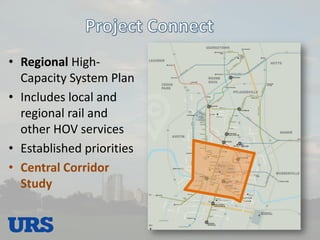
•Regional High- Capacity System Plan 
•Includes local and regional rail and other HOV services 
•Established priorities 
•Central Corridor Study
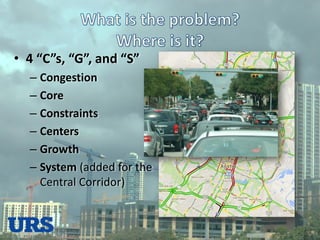
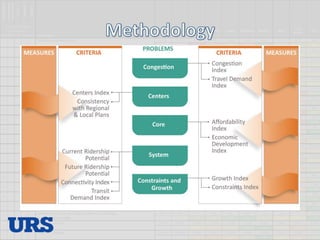
•4 “C”s, “G”, and “S” 
–Congestion 
–Core 
–Constraints 
–Centers 
–Growth 
–System (added for the Central Corridor)
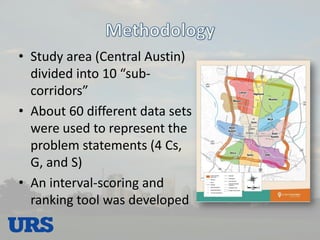
•Study area (Central Austin) divided into 10 “sub- corridors” 
•About 60 different data sets were used to represent the problem statements (4 Cs, G, and S) 
•An interval-scoring and ranking tool was developed
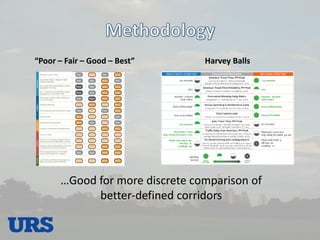
“Poor – Fair – Good – Best” 
Harvey Balls 
…Good for more discrete comparison of better-defined corridors
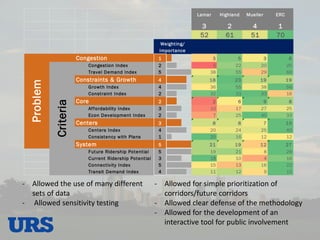
Lamar Highland Mueller ERC 
3 2 4 1 
52 61 51 70 
Congestion 1 3 5 3 6 
Congest ion Index 2 5 22 20 25 
Travel Demand Index 5 38 55 29 60 
Constraints & Growth 4 18 23 19 19 
Growth Index 4 36 55 38 56 
Const raint Index 2 32 33 33 16 
Core 2 2 6 9 8 
Af fordability Index 3 10 17 27 25 
Econ Development Index 2 7 25 40 33 
Centers 3 8 8 7 10 
Centers Index 4 20 24 25 40 
Consistency with Plans 1 20 16 12 12 
System 5 21 19 12 27 
Future Ridership Potent ial 5 19 21 8 29 
Current Ridership Potent ial 3 18 10 4 16 
Connect ivity Index 5 15 13 16 22 
Transit Demand Index 4 11 12 9 15 
Weight ing/ 
Importance 
Problem 
Criteria 
- Allowed the use of many different 
sets of data 
- Allowed sensitivity testing 
- Allowed for simple prioritization of 
corridors/future corridors 
- Allowed clear defense of the methodology 
- Allowed for the development of an 
interactive tool for public involvement
–There were some surprises, but the results elegantly reflected the Project Connect problem statements and the priorities of advisory group stakeholders 
–Sensitivity & scenario testing 
–Some critics felt the method was a “black box” or too complicated in general 
–On the other hand, the tool was flexible, efficient, and a good platform for interactive public involvement
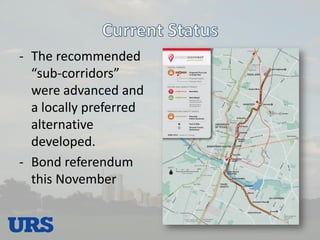
-The recommended “sub-corridors” were advanced and a locally preferred alternative developed. 
-Bond referendum this November

RV 2014: Urban Circulator Roundtable: Shaping Cities one Challenge at a Time

  • 1.
    Urban Circulator Roundtable:Shaping Cities One Challenge at a Time Project Connect Central Corridor – Clarifying the “Problem” in Austin, Texas Derek Benedict, PE URS Transit & Railroads Austin, Texas
  • 2.
    •Regional High- CapacitySystem Plan •Includes local and regional rail and other HOV services •Established priorities •Central Corridor Study
  • 3.
    •4 “C”s, “G”,and “S” –Congestion –Core –Constraints –Centers –Growth –System (added for the Central Corridor)
  • 4.
    •Study area (CentralAustin) divided into 10 “sub- corridors” •About 60 different data sets were used to represent the problem statements (4 Cs, G, and S) •An interval-scoring and ranking tool was developed
  • 5.
    “Poor – Fair– Good – Best” Harvey Balls …Good for more discrete comparison of better-defined corridors
  • 7.
    Lamar Highland MuellerERC 3 2 4 1 52 61 51 70 Congestion 1 3 5 3 6 Congest ion Index 2 5 22 20 25 Travel Demand Index 5 38 55 29 60 Constraints & Growth 4 18 23 19 19 Growth Index 4 36 55 38 56 Const raint Index 2 32 33 33 16 Core 2 2 6 9 8 Af fordability Index 3 10 17 27 25 Econ Development Index 2 7 25 40 33 Centers 3 8 8 7 10 Centers Index 4 20 24 25 40 Consistency with Plans 1 20 16 12 12 System 5 21 19 12 27 Future Ridership Potent ial 5 19 21 8 29 Current Ridership Potent ial 3 18 10 4 16 Connect ivity Index 5 15 13 16 22 Transit Demand Index 4 11 12 9 15 Weight ing/ Importance Problem Criteria - Allowed the use of many different sets of data - Allowed sensitivity testing - Allowed for simple prioritization of corridors/future corridors - Allowed clear defense of the methodology - Allowed for the development of an interactive tool for public involvement
  • 8.
    –There were somesurprises, but the results elegantly reflected the Project Connect problem statements and the priorities of advisory group stakeholders –Sensitivity & scenario testing –Some critics felt the method was a “black box” or too complicated in general –On the other hand, the tool was flexible, efficient, and a good platform for interactive public involvement
  • 9.
    -The recommended “sub-corridors”were advanced and a locally preferred alternative developed. -Bond referendum this November