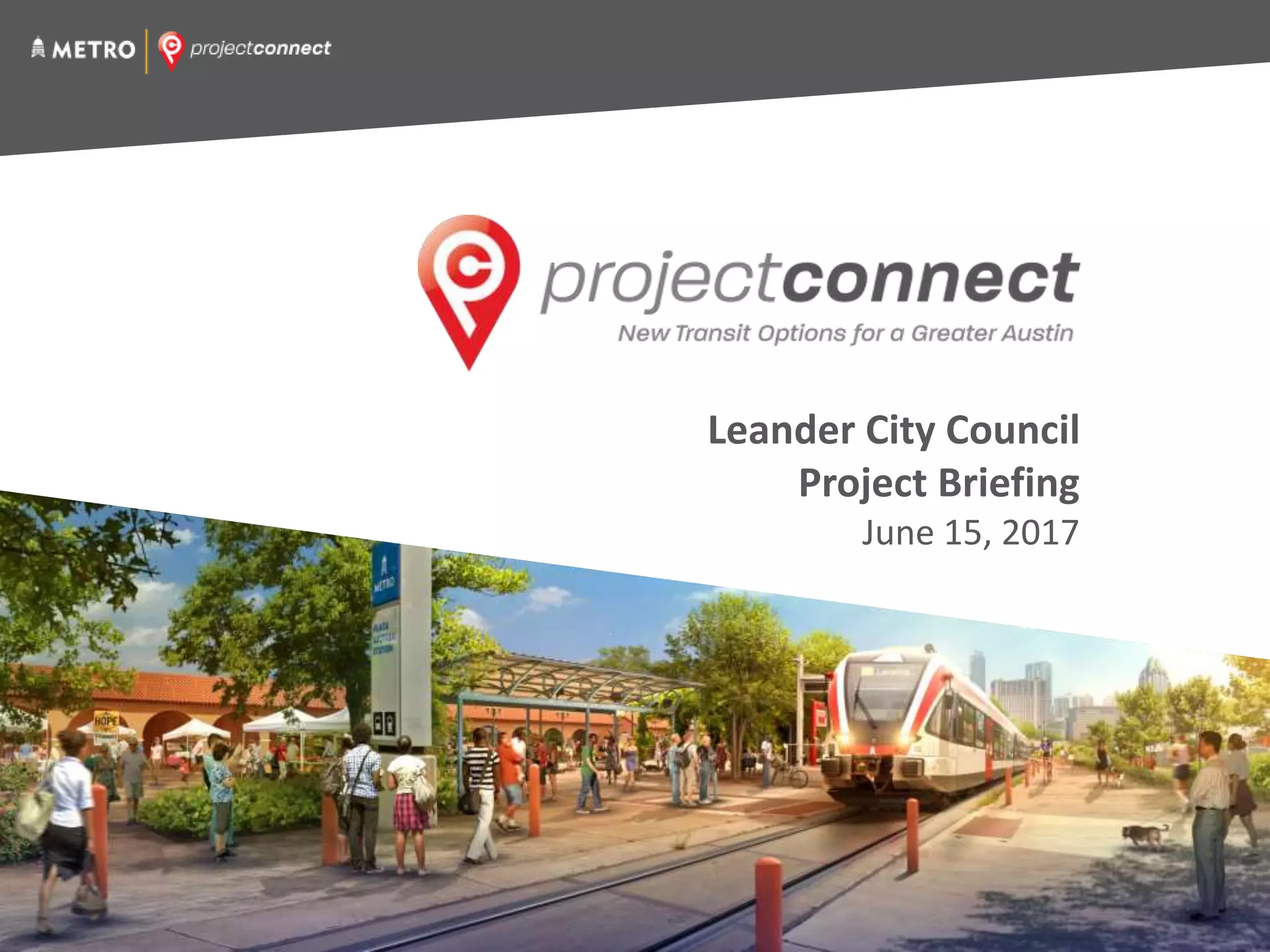
Leander City Council
Project Briefing
June 15, 2017
PROJECT CONNECT
OVERVIEW
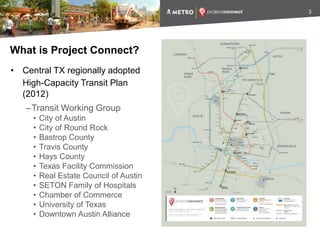
• Central TX regionally adopted
High-Capacity Transit Plan
(2012)
What is Project Connect?
–Transit Working Group
• City of Austin
• City of Round Rock
• Bastrop County
• Travis County
• Hays County
• Texas Facility Commission
• Real Estate Council of Austin
• SETON Family of Hospitals
• Chamber of Commerce
• University of Texas
• Downtown Austin Alliance
3
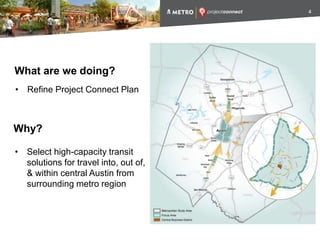
What are we doing?
• Refine Project Connect Plan
• Select high-capacity transit
solutions for travel into, out of,
& within central Austin from
surrounding metro region
Why?
4
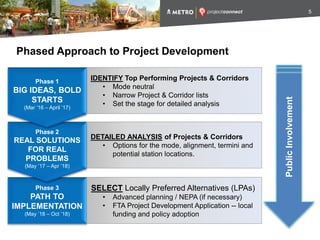
Phased Approach to Project Development
5
IDENTIFY Top Performing Projects & Corridors
• Mode neutral
• Narrow Project & Corridor lists
• Set the stage for detailed analysis
PublicInvolvement
DETAILED ANALYSIS of Projects & Corridors
• Options for the mode, alignment, termini and
potential station locations.
Phase 3
PATH TO
IMPLEMENTATION
(May ’18 – Oct ’18)
SELECT Locally Preferred Alternatives (LPAs)
• Advanced planning / NEPA (if necessary)
• FTA Project Development Application -- local
funding and policy adoption
Phase 2
REAL SOLUTIONS
FOR REAL
PROBLEMS
(May ’17 – Apr ’18)
Phase 1
BIG IDEAS, BOLD
STARTS
(Mar ’16 – April ’17)
PHASE 1 PROCESS
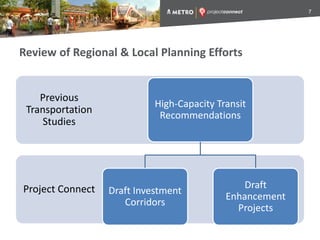
Review of Regional & Local Planning Efforts
7
Project Connect
Previous
Transportation
Studies
High-Capacity Transit
Recommendations
Draft Investment
Corridors
Draft
Enhancement
Projects
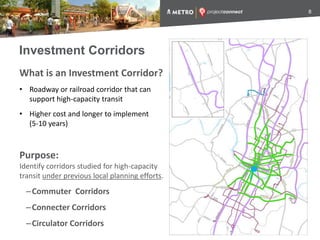
Investment Corridors
What is an Investment Corridor?
• Roadway or railroad corridor that can
support high-capacity transit
• Higher cost and longer to implement
(5-10 years)
Purpose:
Identify corridors studied for high-capacity
transit under previous local planning efforts.
–Commuter Corridors
–Connecter Corridors
–Circulator Corridors
8
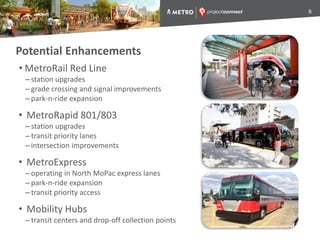
Potential Enhancements
• MetroRail Red Line
– station upgrades
– grade crossing and signal improvements
– park-n-ride expansion
• MetroRapid 801/803
– station upgrades
– transit priority lanes
– intersection improvements
• MetroExpress
– operating in North MoPac express lanes
– park-n-ride expansion
– transit priority access
• Mobility Hubs
– transit centers and drop-off collection points
9
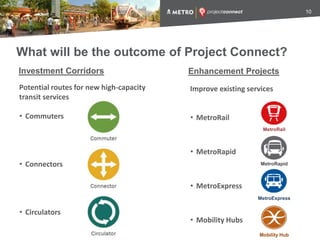
Investment Corridors
Potential routes for new high-capacity
transit services
• Commuters
• Connectors
• Circulators
Enhancement Projects
Improve existing services
• MetroRail
• MetroRapid
• MetroExpress
• Mobility Hubs
MetroExpress
MetroRail
MetroRapid
Mobility Hub
What will be the outcome of Project Connect?
10
PRELIMINARY PHASE 1 RESULTS
11
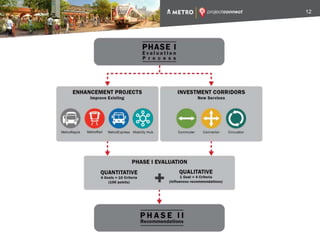
12
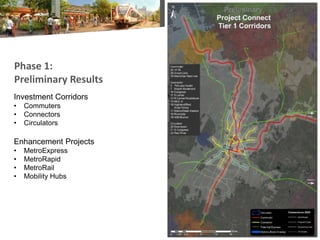
Phase 1:
Preliminary Results
13
Investment Corridors
• Commuters
• Connectors
• Circulators
Enhancement Projects
• MetroExpress
• MetroRapid
• MetroRail
• Mobility Hubs
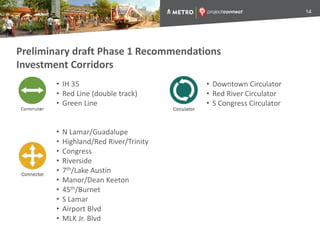
Preliminary draft Phase 1 Recommendations
Investment Corridors
• IH 35
• Red Line (double track)
• Green Line
• N Lamar/Guadalupe
• Highland/Red River/Trinity
• Congress
• Riverside
• 7th/Lake Austin
• Manor/Dean Keeton
• 45th/Burnet
• S Lamar
• Airport Blvd
• MLK Jr. Blvd
14
• Downtown Circulator
• Red River Circulator
• S Congress Circulator
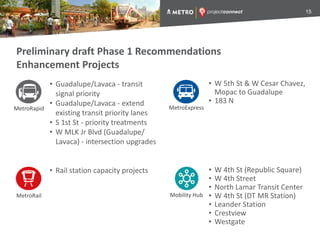
Preliminary draft Phase 1 Recommendations
Enhancement Projects
• Guadalupe/Lavaca - transit
signal priority
• Guadalupe/Lavaca - extend
existing transit priority lanes
• S 1st St - priority treatments
• W MLK Jr Blvd (Guadalupe/
Lavaca) - intersection upgrades
• Rail station capacity projects
15
• W 5th St & W Cesar Chavez,
Mopac to Guadalupe
• 183 N
• W 4th St (Republic Square)
• W 4th Street
• North Lamar Transit Center
• W 4th St (DT MR Station)
• Leander Station
• Crestview
• Westgate
MetroExpressMetroRapid
MetroRail Mobility Hub
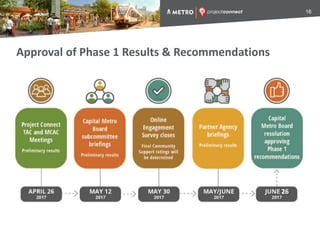
Approval of Phase 1 Results & Recommendations
16
26
POTENTIAL LEANDER SERVICES
17
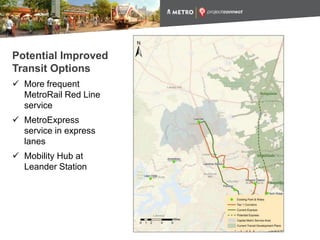
Potential Improved
Transit Options
 More frequent
MetroRail Red Line
service
 MetroExpress
service in express
lanes
 Mobility Hub at
Leander Station
MetroRideShare
 Group of 5-12 commuters who share
the ride to and from work.
 Month-to-month vanpool lease
that includes vehicle, insurance and
maintenance.
 Vanpool costs vary & are based on
vehicle type, commute distance,
group size, fuel prices & tolls.
 Out-of-service area groups receive a
$450 monthly subsidy for commutes
beginning or ending inside Capital
Metro service area.
6/16/2017

CAP Metro Update 6/15/17

  • 1.
    Leander City Council ProjectBriefing June 15, 2017
  • 2.
  • 3.
    • Central TXregionally adopted High-Capacity Transit Plan (2012) What is Project Connect? –Transit Working Group • City of Austin • City of Round Rock • Bastrop County • Travis County • Hays County • Texas Facility Commission • Real Estate Council of Austin • SETON Family of Hospitals • Chamber of Commerce • University of Texas • Downtown Austin Alliance 3
  • 4.
    What are wedoing? • Refine Project Connect Plan • Select high-capacity transit solutions for travel into, out of, & within central Austin from surrounding metro region Why? 4
  • 5.
    Phased Approach toProject Development 5 IDENTIFY Top Performing Projects & Corridors • Mode neutral • Narrow Project & Corridor lists • Set the stage for detailed analysis PublicInvolvement DETAILED ANALYSIS of Projects & Corridors • Options for the mode, alignment, termini and potential station locations. Phase 3 PATH TO IMPLEMENTATION (May ’18 – Oct ’18) SELECT Locally Preferred Alternatives (LPAs) • Advanced planning / NEPA (if necessary) • FTA Project Development Application -- local funding and policy adoption Phase 2 REAL SOLUTIONS FOR REAL PROBLEMS (May ’17 – Apr ’18) Phase 1 BIG IDEAS, BOLD STARTS (Mar ’16 – April ’17)
  • 6.
  • 7.
    Review of Regional& Local Planning Efforts 7 Project Connect Previous Transportation Studies High-Capacity Transit Recommendations Draft Investment Corridors Draft Enhancement Projects
  • 8.
    Investment Corridors What isan Investment Corridor? • Roadway or railroad corridor that can support high-capacity transit • Higher cost and longer to implement (5-10 years) Purpose: Identify corridors studied for high-capacity transit under previous local planning efforts. –Commuter Corridors –Connecter Corridors –Circulator Corridors 8
  • 9.
    Potential Enhancements • MetroRailRed Line – station upgrades – grade crossing and signal improvements – park-n-ride expansion • MetroRapid 801/803 – station upgrades – transit priority lanes – intersection improvements • MetroExpress – operating in North MoPac express lanes – park-n-ride expansion – transit priority access • Mobility Hubs – transit centers and drop-off collection points 9
  • 10.
    Investment Corridors Potential routesfor new high-capacity transit services • Commuters • Connectors • Circulators Enhancement Projects Improve existing services • MetroRail • MetroRapid • MetroExpress • Mobility Hubs MetroExpress MetroRail MetroRapid Mobility Hub What will be the outcome of Project Connect? 10
  • 11.
  • 12.
  • 13.
    Phase 1: Preliminary Results 13 InvestmentCorridors • Commuters • Connectors • Circulators Enhancement Projects • MetroExpress • MetroRapid • MetroRail • Mobility Hubs
  • 14.
    Preliminary draft Phase1 Recommendations Investment Corridors • IH 35 • Red Line (double track) • Green Line • N Lamar/Guadalupe • Highland/Red River/Trinity • Congress • Riverside • 7th/Lake Austin • Manor/Dean Keeton • 45th/Burnet • S Lamar • Airport Blvd • MLK Jr. Blvd 14 • Downtown Circulator • Red River Circulator • S Congress Circulator
  • 15.
    Preliminary draft Phase1 Recommendations Enhancement Projects • Guadalupe/Lavaca - transit signal priority • Guadalupe/Lavaca - extend existing transit priority lanes • S 1st St - priority treatments • W MLK Jr Blvd (Guadalupe/ Lavaca) - intersection upgrades • Rail station capacity projects 15 • W 5th St & W Cesar Chavez, Mopac to Guadalupe • 183 N • W 4th St (Republic Square) • W 4th Street • North Lamar Transit Center • W 4th St (DT MR Station) • Leander Station • Crestview • Westgate MetroExpressMetroRapid MetroRail Mobility Hub
  • 16.
    Approval of Phase1 Results & Recommendations 16 26
  • 17.
  • 18.
    Potential Improved Transit Options More frequent MetroRail Red Line service  MetroExpress service in express lanes  Mobility Hub at Leander Station
  • 19.
    MetroRideShare  Group of5-12 commuters who share the ride to and from work.  Month-to-month vanpool lease that includes vehicle, insurance and maintenance.  Vanpool costs vary & are based on vehicle type, commute distance, group size, fuel prices & tolls.  Out-of-service area groups receive a $450 monthly subsidy for commutes beginning or ending inside Capital Metro service area.
  • 20.

Editor's Notes

  • #9 These are larger, bolder initiatives that require capital and operational funding, and longer lead times for design and construction.
  • #13 Ph.1 is going above and beyond FTA criteria We want to build infrastructure supported by the community Including local factors in decision making (imagine Austin indicators, etc..) Completely different approach from Urban Rail Ph.2 Will use FTA funding criteria to select mode, alignment alternatives