GLONASS
GLONASS

 The Soviet union began development of

Glonass in 1976.
 In 1982 a constellation of 24 satellites started
working properly.
 After the collapse of Russia's economy ,
Glonass development was put on hold.
 In 2001 the full satellite constellation was
finally restored on 2nd October by Russian
president VALDIMIR PUTIN.
GLONASS
constellation
How does GLONASS work?
 System have 24 satellite constellations that orbit the
Earth at an altitude of 10,900 nautical miles.
 These satellites broadcast their position and the
exact time that they are in that position on a
continuous basis. A glonass receiver compares the
signals from at least three or four satellites and sent
information towards the control segment.


Accuracy verification
• Russian system compares values, altitude, and
altitude rate estimates to US estimates for verification
and fault detection.
GLONASS SATELLITE


The Russian GLONASS consists of a constellation of 24 (21
active and 3 spares) satellites and their ground based
stations.
The satellites orbit the Earth once every 11hours and 15
minutes on three orbital planes separated by 120°.
Life expectancy of these satellites is 3-5 years. Next
generation satellites are being developed with an expected
service life of 10 years.
All ground based stations are located within former Soviet
Union territory.

In December 2010,three satellites crushed during launch.
GLONASS satellite
Three segments of Glonass
Space segment
Ground/Cotrol segment
User segment
The main functions of the space segment are to transmit
radio navigation signal ,to store and transmits the
navigation message sent by the control segment.
The mechanism of high atomic clock.
The GLONASS space segment consist mainly of 24
operating satellite distributed over three orbital plane.
Each orbit consist of 8 satellites.
GLONASS Ground segment
The glonass ground segment or control segment is

responsible for the proper operation of glonass.
The glonass ground segment consist of:
_A system control centre located at KRASNOZNAMENSK.
_The central clock situated in SCHELKOVE near
MASCOW.
_Two laser ranging stations, a network of four monitoring
and measuring stations(Schelkove)
GLONASS user segment
The Glonass user segment consist on

receiver/processor and antennas which receive
glonass signals, determine pseudoranges and solve
the navigation in order to obtain their co-ordinates
and provide accurate time.
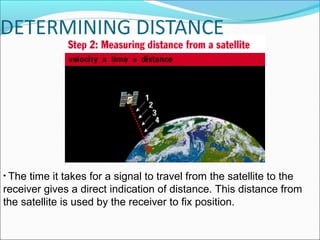
• The

time it takes for a signal to travel from the satellite to the
receiver gives a direct indication of distance. This distance from
the satellite is used by the receiver to fix position.
ERRORS
There are few other variables that the

receiver needs to take into account to
ensure accuracy:
Atmospheric error
Multipath error
Satellite geometry
GLONASS & GPS(NAVSTAR)
Both the system have their stregnths and

weaknesses while GPS is generally considered the
better option on most parts of the globe. Glonass is
believed to have a superior accuracy in the north
latitudes of the planet as the system was developed to
provide the best service to Russia which extends to
the highest latitudes.
Who can use GLONASS
As GPS Glonass was originally only for military.

The system was made available for public and
commercial use in 2007 although GPS has been
available for civilian use since 1990.

Russian satelites(glonass)

  • 1.
  • 3.
    GLONASS  The Sovietunion began development of Glonass in 1976.  In 1982 a constellation of 24 satellites started working properly.  After the collapse of Russia's economy , Glonass development was put on hold.  In 2001 the full satellite constellation was finally restored on 2nd October by Russian president VALDIMIR PUTIN.
  • 4.
  • 5.
    How does GLONASSwork?  System have 24 satellite constellations that orbit the Earth at an altitude of 10,900 nautical miles.  These satellites broadcast their position and the exact time that they are in that position on a continuous basis. A glonass receiver compares the signals from at least three or four satellites and sent information towards the control segment.  Accuracy verification • Russian system compares values, altitude, and altitude rate estimates to US estimates for verification and fault detection.
  • 6.
    GLONASS SATELLITE  The RussianGLONASS consists of a constellation of 24 (21 active and 3 spares) satellites and their ground based stations. The satellites orbit the Earth once every 11hours and 15 minutes on three orbital planes separated by 120°. Life expectancy of these satellites is 3-5 years. Next generation satellites are being developed with an expected service life of 10 years. All ground based stations are located within former Soviet Union territory. In December 2010,three satellites crushed during launch.
  • 7.
  • 8.
    Three segments ofGlonass Space segment Ground/Cotrol segment User segment
  • 9.
    The main functionsof the space segment are to transmit radio navigation signal ,to store and transmits the navigation message sent by the control segment. The mechanism of high atomic clock. The GLONASS space segment consist mainly of 24 operating satellite distributed over three orbital plane. Each orbit consist of 8 satellites.
  • 10.
    GLONASS Ground segment Theglonass ground segment or control segment is responsible for the proper operation of glonass. The glonass ground segment consist of: _A system control centre located at KRASNOZNAMENSK. _The central clock situated in SCHELKOVE near MASCOW. _Two laser ranging stations, a network of four monitoring and measuring stations(Schelkove)
  • 11.
    GLONASS user segment TheGlonass user segment consist on receiver/processor and antennas which receive glonass signals, determine pseudoranges and solve the navigation in order to obtain their co-ordinates and provide accurate time.
  • 12.
    • The time ittakes for a signal to travel from the satellite to the receiver gives a direct indication of distance. This distance from the satellite is used by the receiver to fix position.
  • 13.
    ERRORS There are fewother variables that the receiver needs to take into account to ensure accuracy: Atmospheric error Multipath error Satellite geometry
  • 14.
    GLONASS & GPS(NAVSTAR) Boththe system have their stregnths and weaknesses while GPS is generally considered the better option on most parts of the globe. Glonass is believed to have a superior accuracy in the north latitudes of the planet as the system was developed to provide the best service to Russia which extends to the highest latitudes.
  • 15.
    Who can useGLONASS As GPS Glonass was originally only for military. The system was made available for public and commercial use in 2007 although GPS has been available for civilian use since 1990.