

MODULE 3
CLASSIFICATION OF RURAL CONSUMERS
 The Affluent Group
 The Middle Class
 The Poor
WHY COMPANIES GO RURAL ???
 Penetration levels of consumer durables in
the rural sector
 Emergence of women customers
SELECTING AND ATTRACTING MARKETS
 Involves three key decisions, viz., segmenting,
targeting and positioning (STP).
 Segmenting is the process of dividing or
categorizing market into different groups based on
one or more variables.
 Targeting is selecting the market segments, which
can be served efficiently and profitability. It is,
deciding on market coverage strategies.
 Positioning is a market attraction strategy, which
involves placing the brand in the minds of the
customers in the target market.
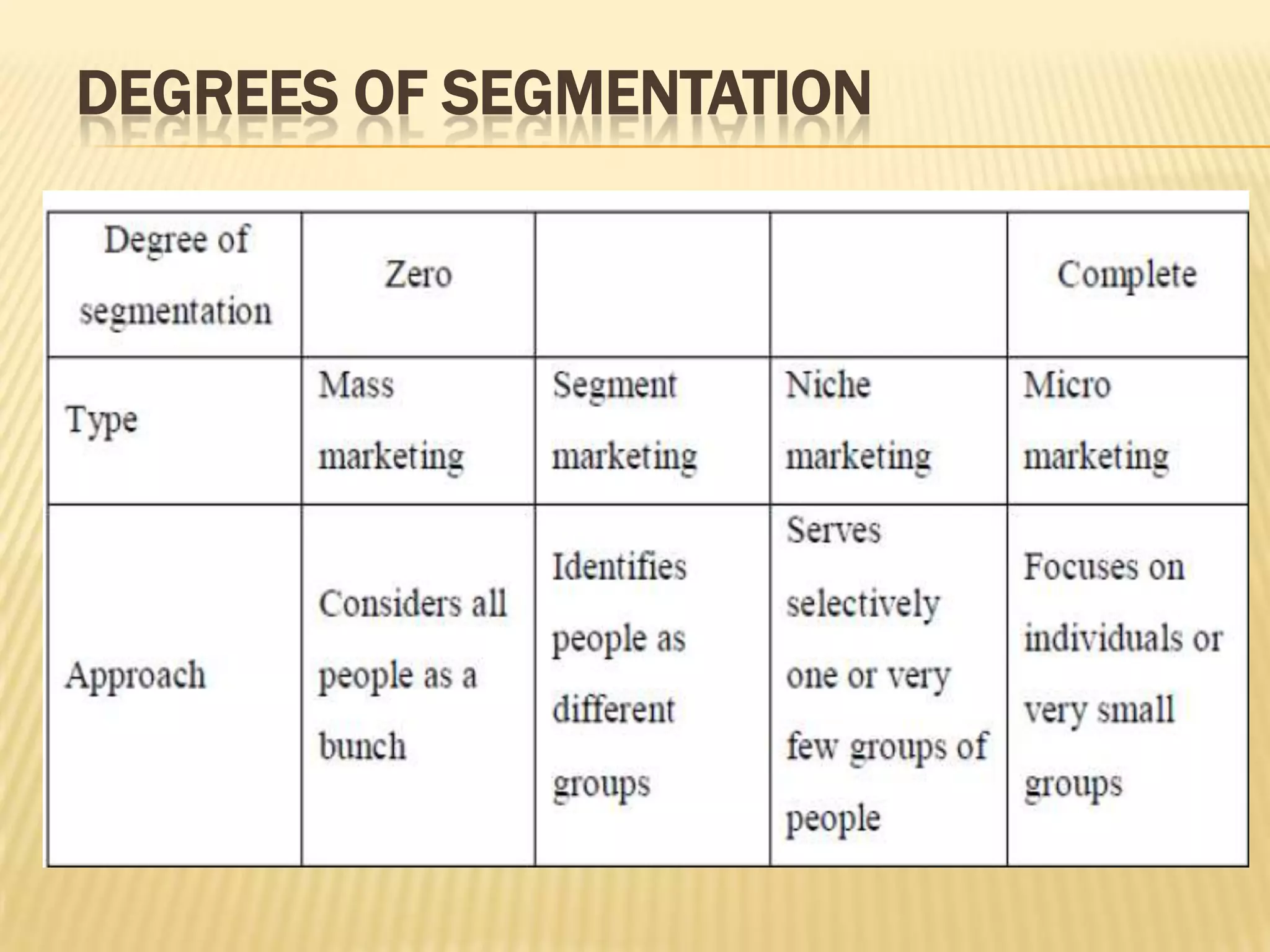
DEGREES OF SEGMENTATION
MASS MARKETING
 Entire market treated as homogenous
 mass production and mass distribution
SEGMENT MARKETING
 buyers differ in their needs, wants, demands
and behaviors
 need for segment marketing arises when:
Consumers have become more diverse,
sophisticated and choosy.
Competition has become tough
NICHE MARKETING
 Niche is a very small group with a distinctive
set of traits, who seek a special combination
of benefits.
 Niche marketing identifies special sub-
groups within larger segments and offers
different products and services.
MICRO MARKETING
 Micro Marketing involves tailoring products
and programs to suit the tastes of specific
locations and individuals.
 Includes local marketing and individual
marketing.
 Local marketing: It involves and programs to
suit the tastes of specific locations and wants of
local customer groups on a geographical basis.
 Individual marketing: Individual marketing is
customized marketing or one-to-one marketing.
Tailoring units, hotels, tourist operators and
doctors provide individualized services. Building
contractors build houses or flats to the specific
requirements of customers.
BASES OF SEGMENTATION
Geographic
Demographic
Psychographic
Behavior
GEOGRAPHIC
 Zone
 Density
 Climate
 Culture
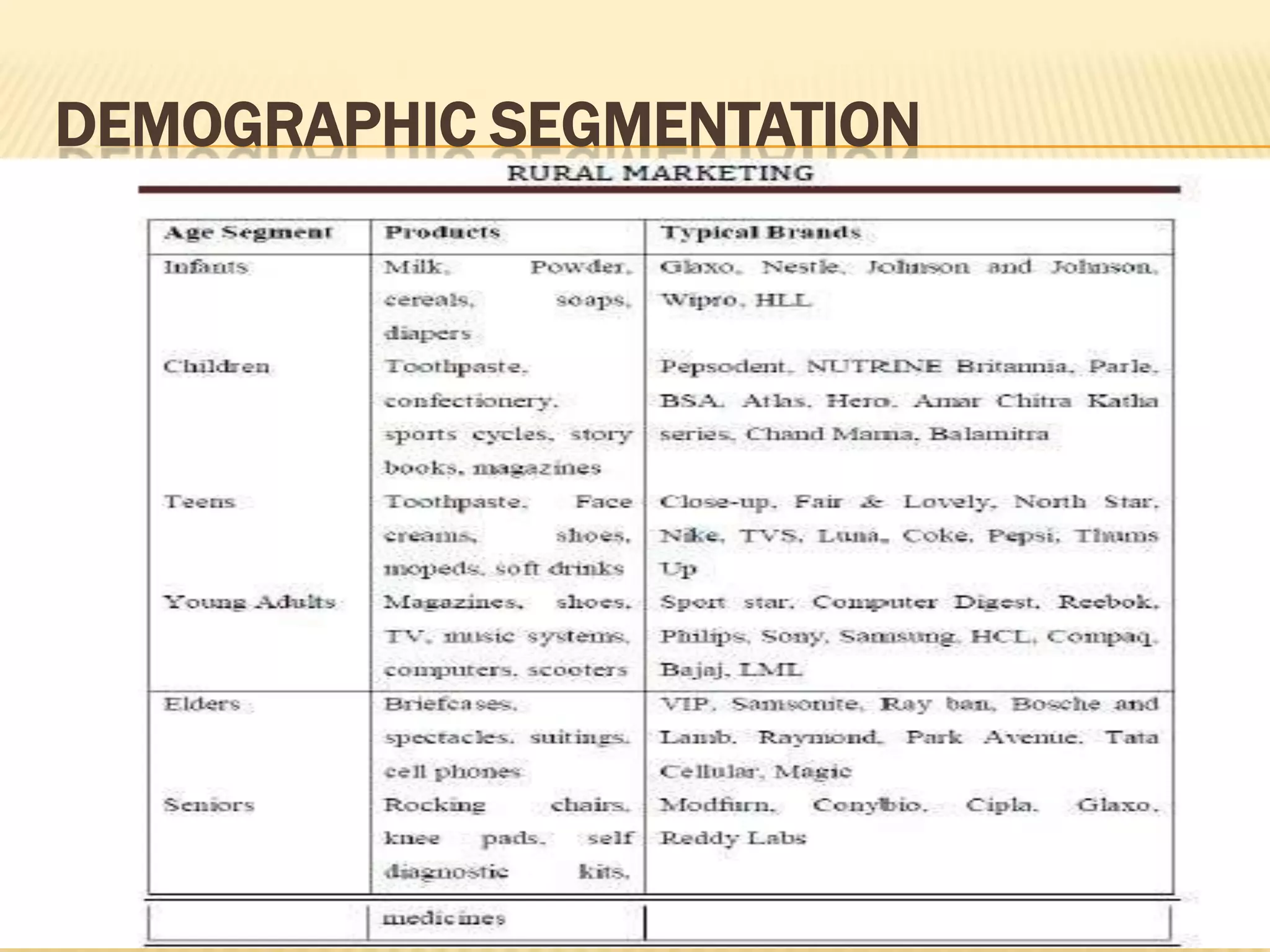
DEMOGRAPHIC SEGMENTATION
 Age and Life-cycle
 Gender
 Marital Status
 Family Size
 Income
 Religion
DEMOGRAPHIC SEGMENTATION
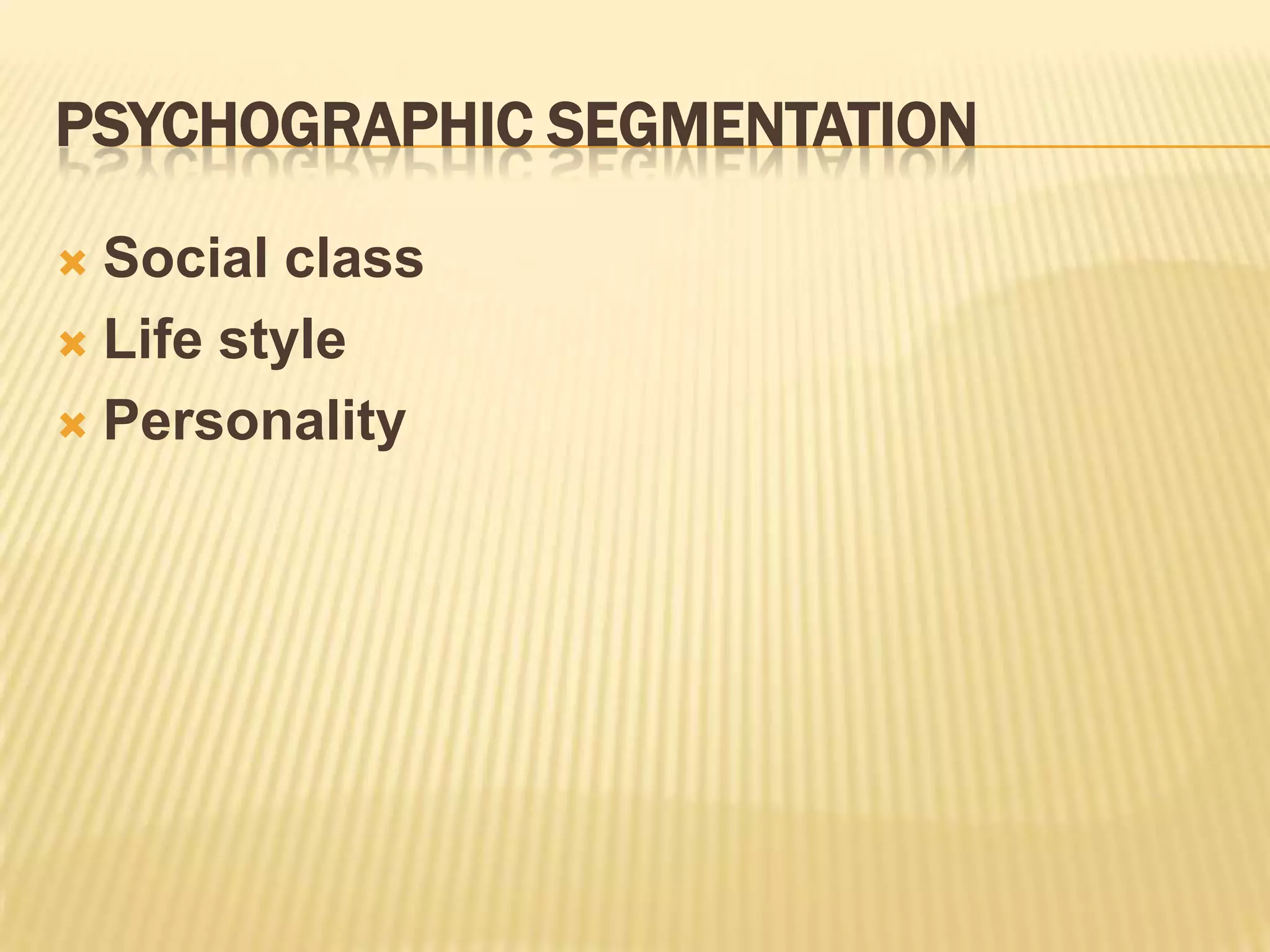
PSYCHOGRAPHIC SEGMENTATION
 Social class
 Life style
 Personality
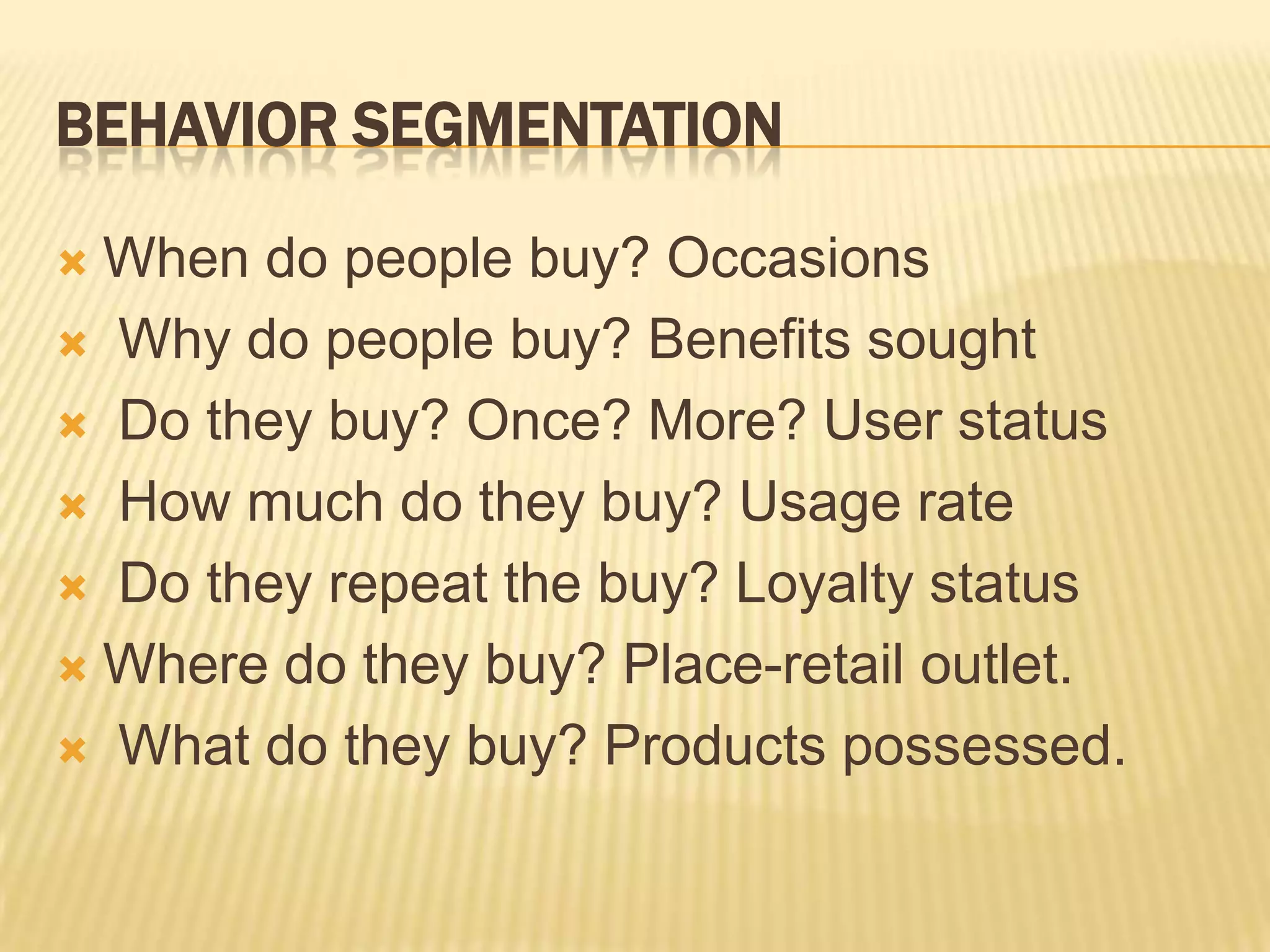
BEHAVIOR SEGMENTATION
 When do people buy? Occasions
 Why do people buy? Benefits sought
 Do they buy? Once? More? User status
 How much do they buy? Usage rate
 Do they repeat the buy? Loyalty status
 Where do they buy? Place-retail outlet.
 What do they buy? Products possessed.
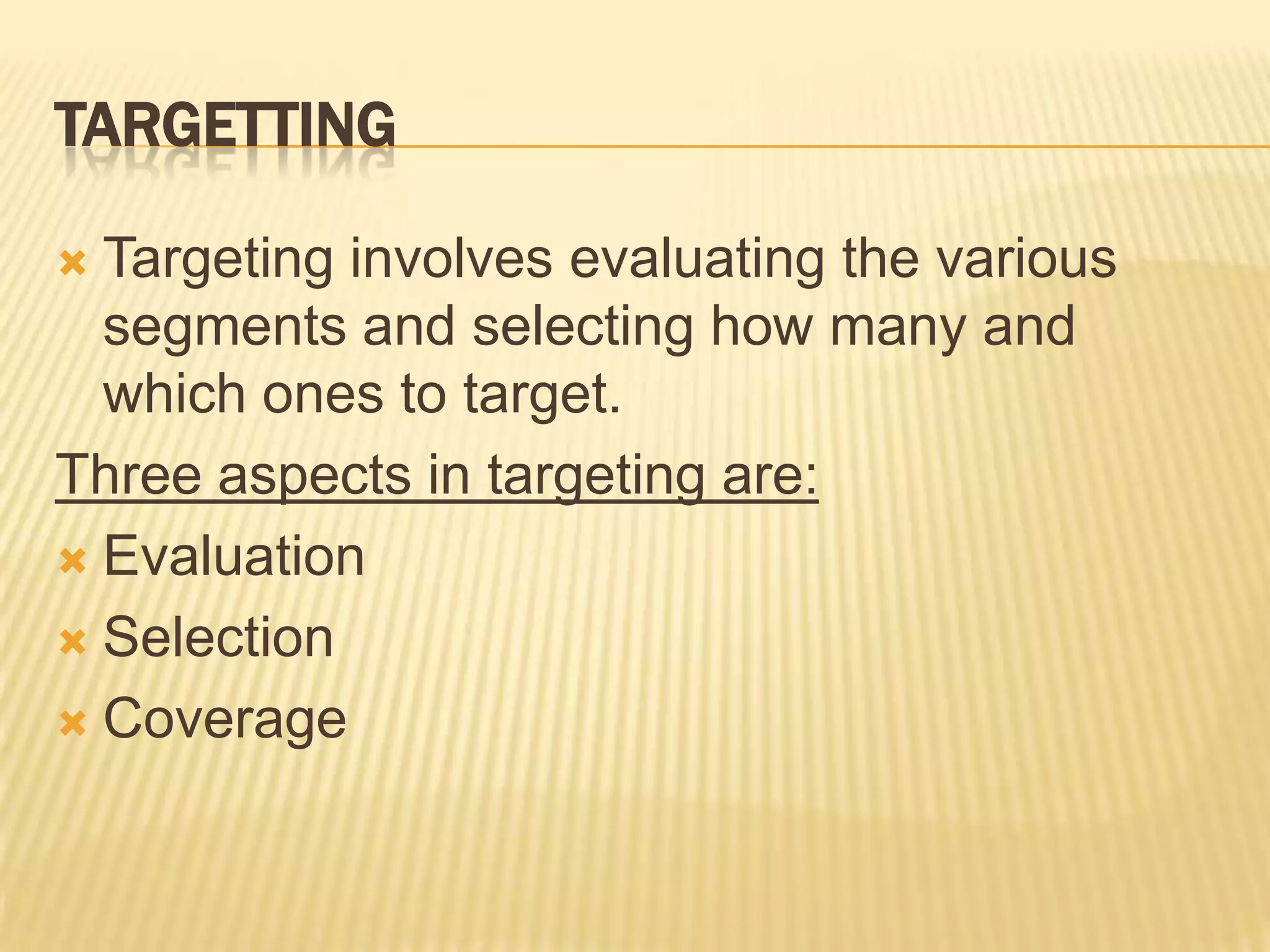
TARGETTING
 Targeting involves evaluating the various
segments and selecting how many and
which ones to target.
Three aspects in targeting are:
 Evaluation
 Selection
 Coverage
EVALUATION OF SEGMENTS
(a) Profitability
 Sales volumes
 Distribution costs
 Promotion costs
 Sales revenues
 Profit margins
 (b) Attractiveness
 (c) Growth rate
 (d) Company objectives
 (e) Limitations
 (ii) Selection of Segments
 (iii) Coverage of Segments
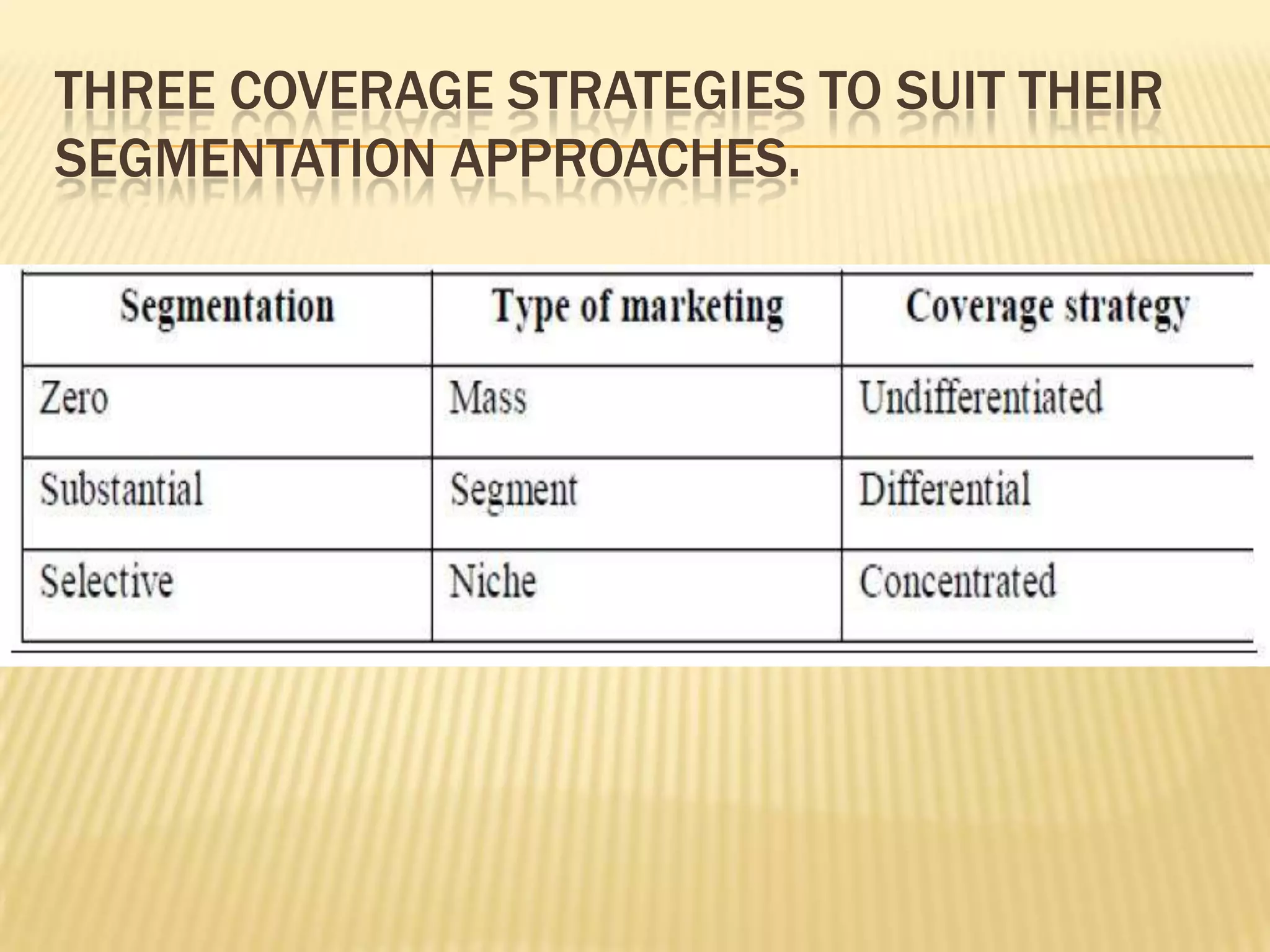
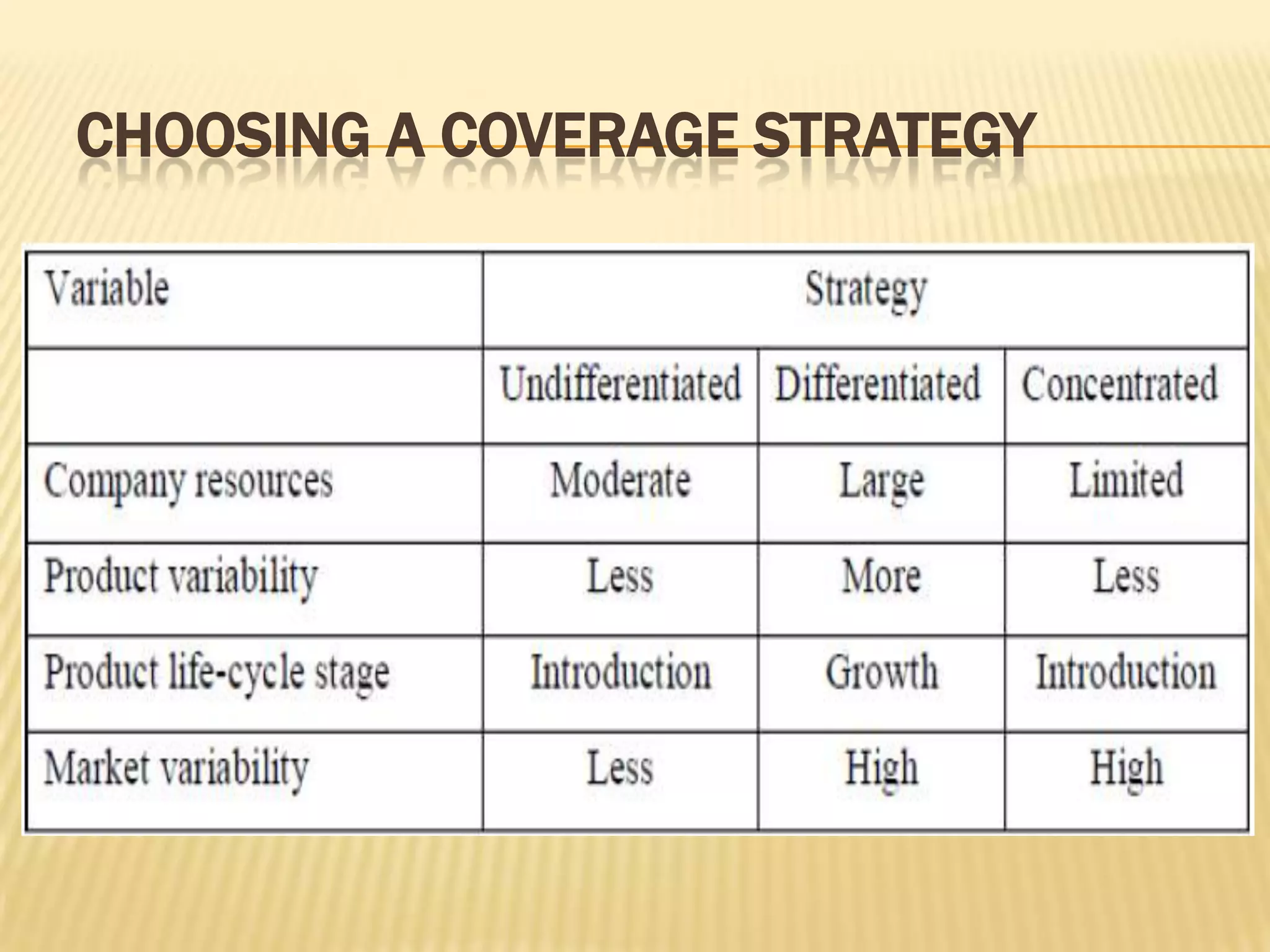
THREE COVERAGE STRATEGIES TO SUIT THEIR
SEGMENTATION APPROACHES.
 (a) Undifferentiated strategy
 (b) Differentiated strategy
 (c) Concentrated strategy
CHOOSING A COVERAGE STRATEGY
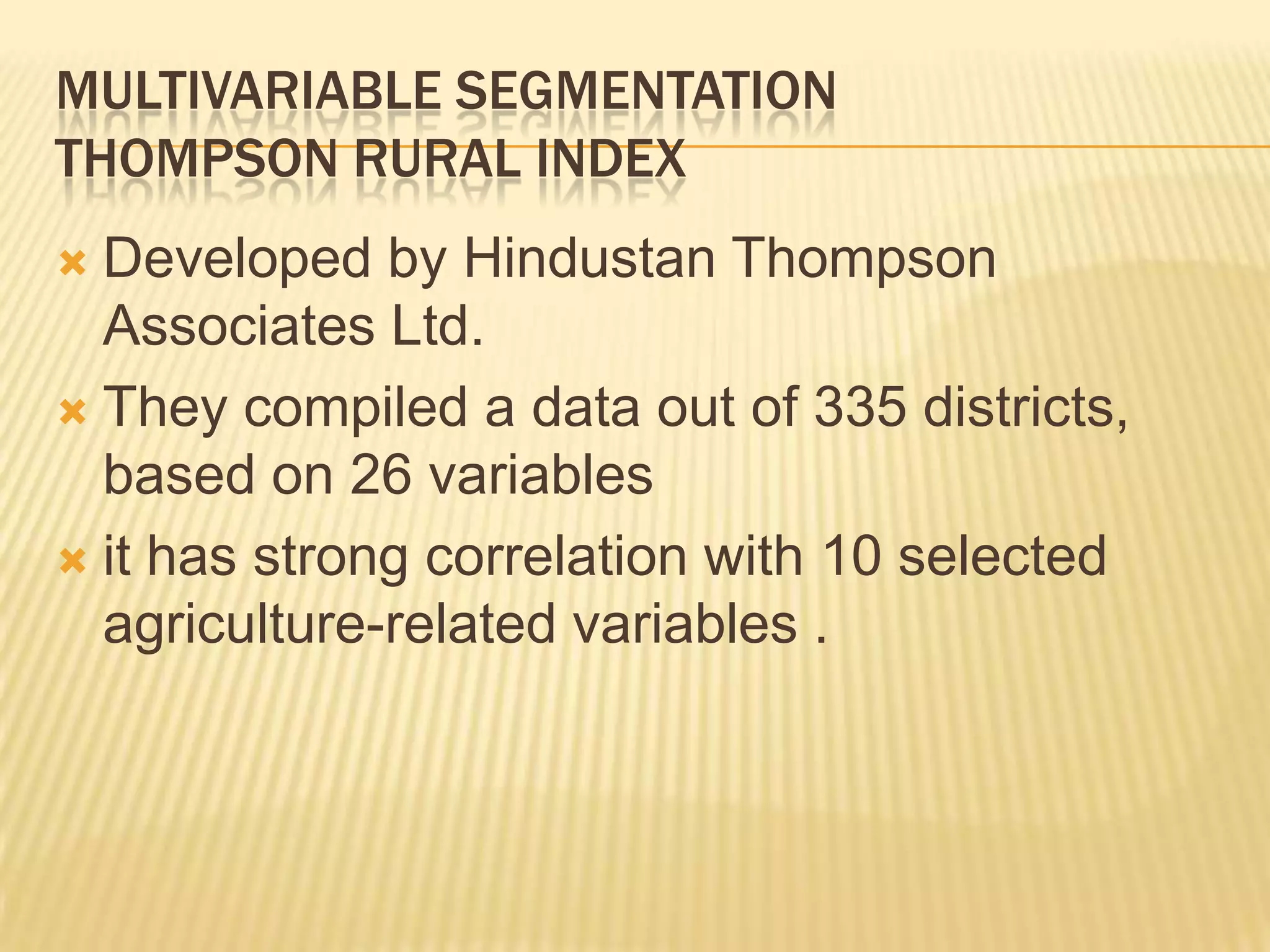
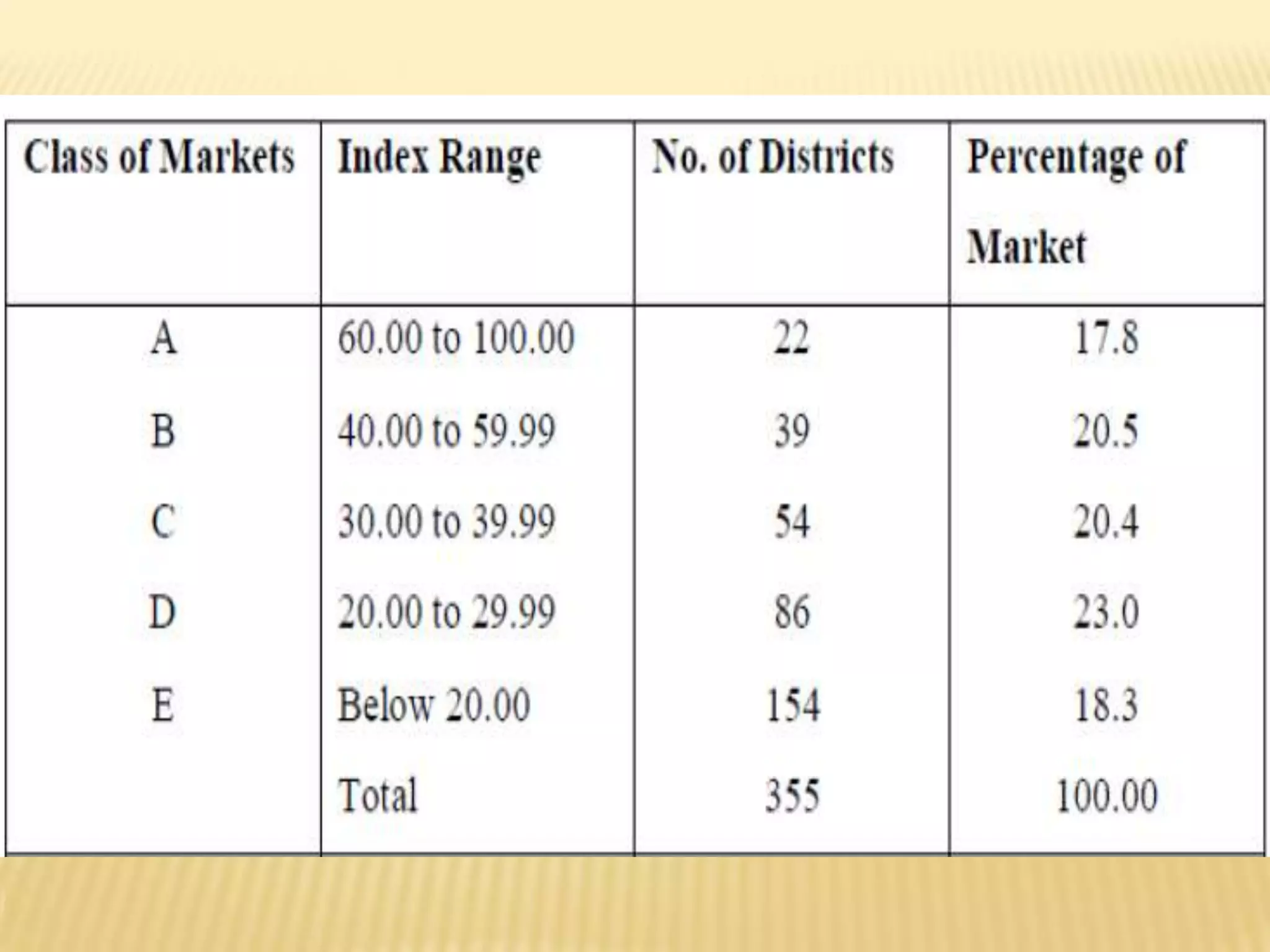
MULTIVARIABLE SEGMENTATION
THOMPSON RURAL INDEX
 Developed by Hindustan Thompson
Associates Ltd.
 They compiled a data out of 335 districts,
based on 26 variables
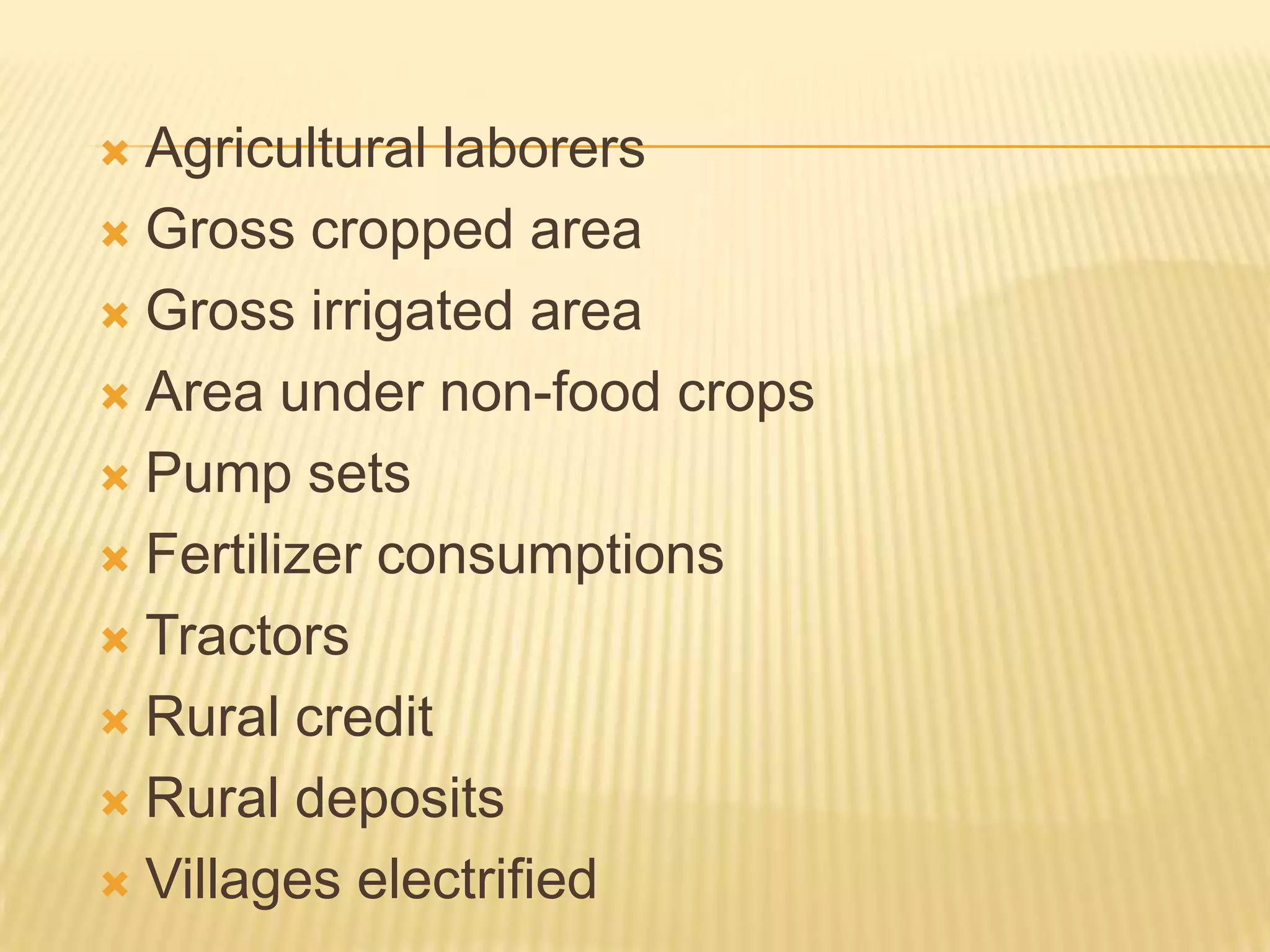
 it has strong correlation with 10 selected
agriculture-related variables .
 Agricultural laborers
 Gross cropped area
 Gross irrigated area
 Area under non-food crops
 Pump sets
 Fertilizer consumptions
 Tractors
 Rural credit
 Rural deposits
 Villages electrified
POSITIONING
 The act of finding a place in the minds of
consumers and locating the brand therein.
 Involves three tasks—
1. Identifying the differences of the offer vis-a-vis
competitors offers.
2. Selecting the differences that have greater
competitive advantage.
3. Communicating such advantages effectively to
the target audience.
IDENTIFY DIFFERENCES
 (a) Product differentiation
 (b) Services differentiation
 (C) People
 (d) Image
SELECTING THE RIGHT DIFFERENCES
 Attractive — Does it provide value to the
customer?
 Distinctive — Is it different from that of its
competitors?
 Preemptive — Is it very difficult for
competitors to copy it‟?
 Affordable — Can buyers pay for it?

Rural marketing module 3

  • 1.
  • 2.
    CLASSIFICATION OF RURALCONSUMERS  The Affluent Group  The Middle Class  The Poor
  • 3.
    WHY COMPANIES GORURAL ???  Penetration levels of consumer durables in the rural sector  Emergence of women customers
  • 5.
    SELECTING AND ATTRACTINGMARKETS  Involves three key decisions, viz., segmenting, targeting and positioning (STP).  Segmenting is the process of dividing or categorizing market into different groups based on one or more variables.  Targeting is selecting the market segments, which can be served efficiently and profitability. It is, deciding on market coverage strategies.  Positioning is a market attraction strategy, which involves placing the brand in the minds of the customers in the target market.
  • 6.
  • 7.
    MASS MARKETING  Entiremarket treated as homogenous  mass production and mass distribution
  • 8.
    SEGMENT MARKETING  buyersdiffer in their needs, wants, demands and behaviors  need for segment marketing arises when: Consumers have become more diverse, sophisticated and choosy. Competition has become tough
  • 9.
    NICHE MARKETING  Nicheis a very small group with a distinctive set of traits, who seek a special combination of benefits.  Niche marketing identifies special sub- groups within larger segments and offers different products and services.
  • 10.
    MICRO MARKETING  MicroMarketing involves tailoring products and programs to suit the tastes of specific locations and individuals.  Includes local marketing and individual marketing.
  • 11.
     Local marketing:It involves and programs to suit the tastes of specific locations and wants of local customer groups on a geographical basis.  Individual marketing: Individual marketing is customized marketing or one-to-one marketing. Tailoring units, hotels, tourist operators and doctors provide individualized services. Building contractors build houses or flats to the specific requirements of customers.
  • 12.
  • 13.
  • 14.
    DEMOGRAPHIC SEGMENTATION  Ageand Life-cycle  Gender  Marital Status  Family Size  Income  Religion
  • 15.
  • 16.
    PSYCHOGRAPHIC SEGMENTATION  Socialclass  Life style  Personality
  • 17.
    BEHAVIOR SEGMENTATION  Whendo people buy? Occasions  Why do people buy? Benefits sought  Do they buy? Once? More? User status  How much do they buy? Usage rate  Do they repeat the buy? Loyalty status  Where do they buy? Place-retail outlet.  What do they buy? Products possessed.
  • 18.
    TARGETTING  Targeting involvesevaluating the various segments and selecting how many and which ones to target. Three aspects in targeting are:  Evaluation  Selection  Coverage
  • 19.
    EVALUATION OF SEGMENTS (a)Profitability  Sales volumes  Distribution costs  Promotion costs  Sales revenues  Profit margins
  • 20.
     (b) Attractiveness (c) Growth rate  (d) Company objectives  (e) Limitations  (ii) Selection of Segments  (iii) Coverage of Segments
  • 21.
    THREE COVERAGE STRATEGIESTO SUIT THEIR SEGMENTATION APPROACHES.
  • 22.
     (a) Undifferentiatedstrategy  (b) Differentiated strategy  (c) Concentrated strategy
  • 23.
  • 24.
    MULTIVARIABLE SEGMENTATION THOMPSON RURALINDEX  Developed by Hindustan Thompson Associates Ltd.  They compiled a data out of 335 districts, based on 26 variables  it has strong correlation with 10 selected agriculture-related variables .
  • 25.
     Agricultural laborers Gross cropped area  Gross irrigated area  Area under non-food crops  Pump sets  Fertilizer consumptions  Tractors  Rural credit  Rural deposits  Villages electrified
  • 27.
    POSITIONING  The actof finding a place in the minds of consumers and locating the brand therein.  Involves three tasks— 1. Identifying the differences of the offer vis-a-vis competitors offers. 2. Selecting the differences that have greater competitive advantage. 3. Communicating such advantages effectively to the target audience.
  • 28.
    IDENTIFY DIFFERENCES  (a)Product differentiation  (b) Services differentiation  (C) People  (d) Image
  • 29.
    SELECTING THE RIGHTDIFFERENCES  Attractive — Does it provide value to the customer?  Distinctive — Is it different from that of its competitors?  Preemptive — Is it very difficult for competitors to copy it‟?  Affordable — Can buyers pay for it?