Robin Daniels
Sr. Manager, Product Marketing
Running Your Business in the Cloud
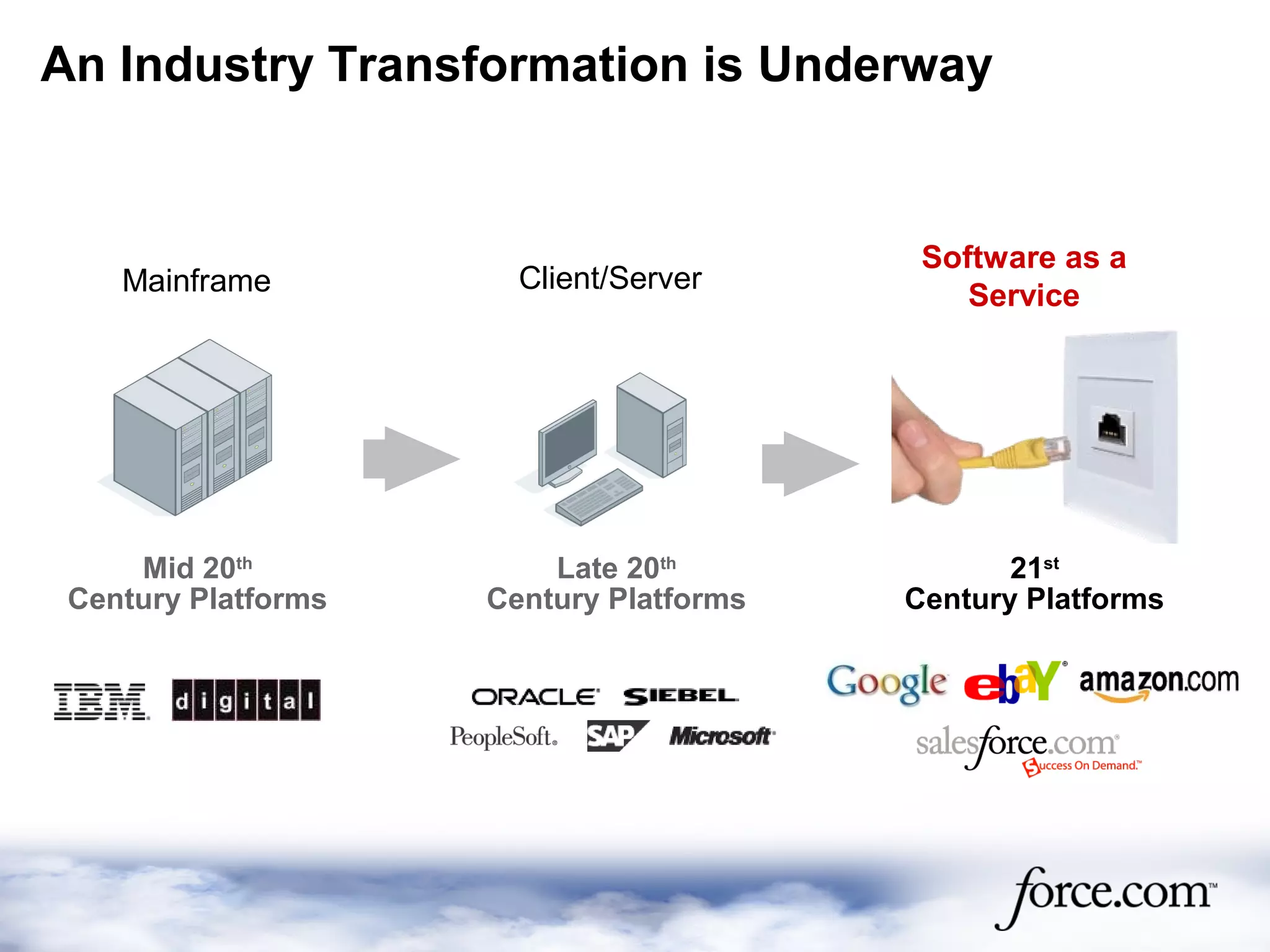
Software as a
Service
21st
Century Platforms
Client/Server
Late 20th
Century Platforms
Mainframe
Mid 20th
Century Platforms
An Industry Transformation is Underway
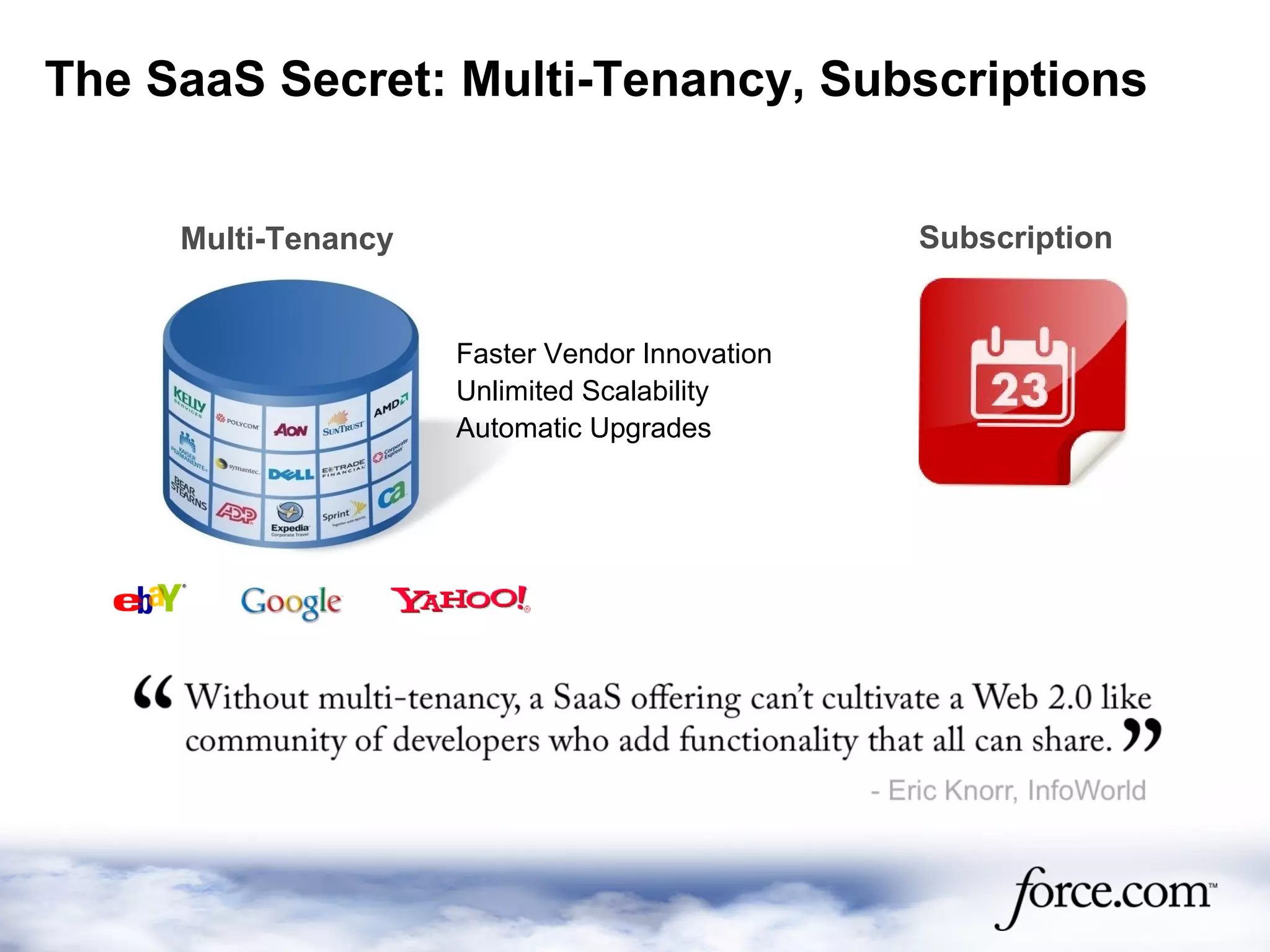
Subscription
Faster Vendor Innovation
Unlimited Scalability
Automatic Upgrades
Multi-Tenancy
The SaaS Secret: Multi-Tenancy, Subscriptions
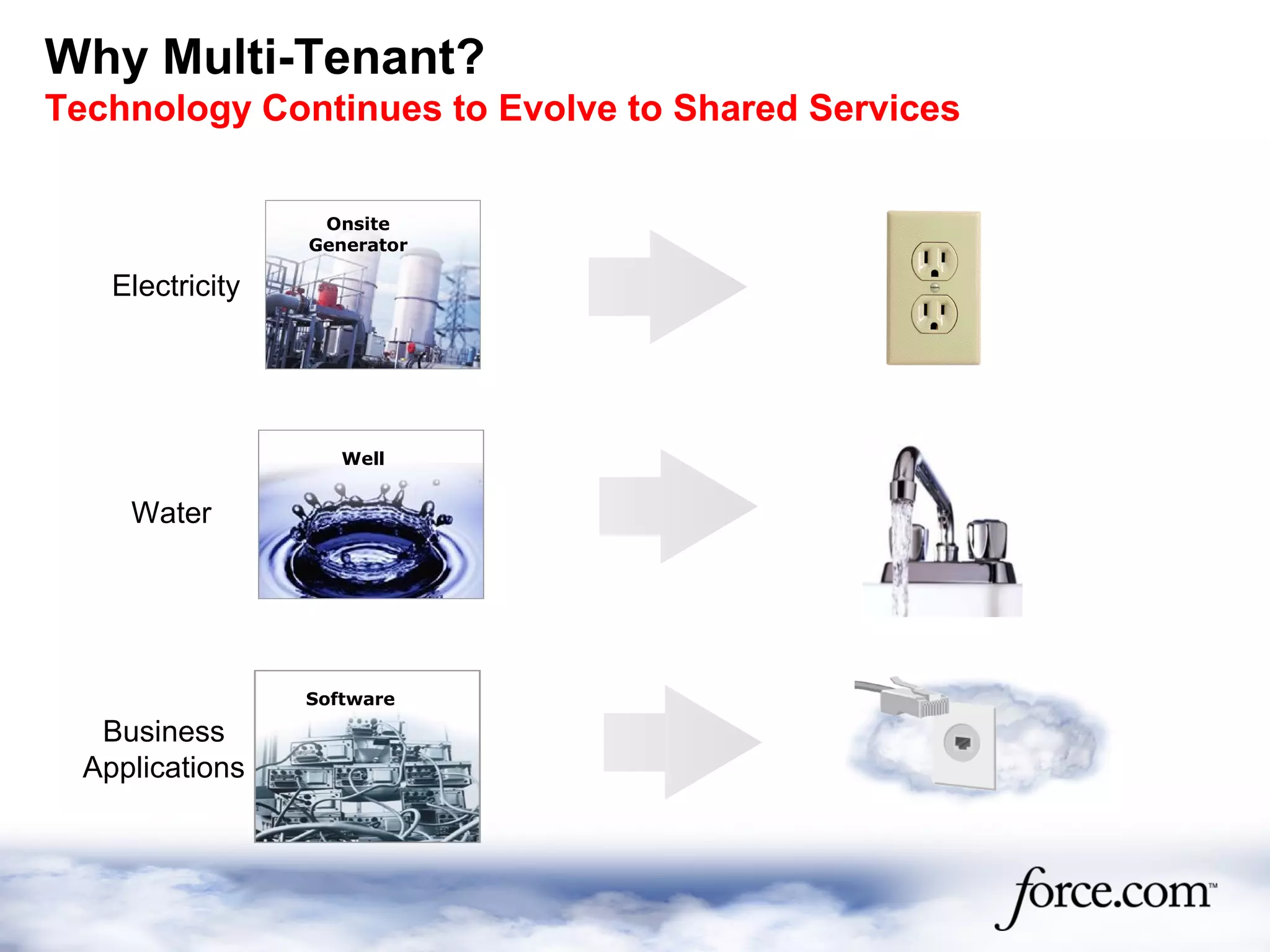
Why Multi-Tenant?
Technology Continues to Evolve to Shared Services
Electricity
Business
Applications
Water
Onsite
Generator
Well
Software
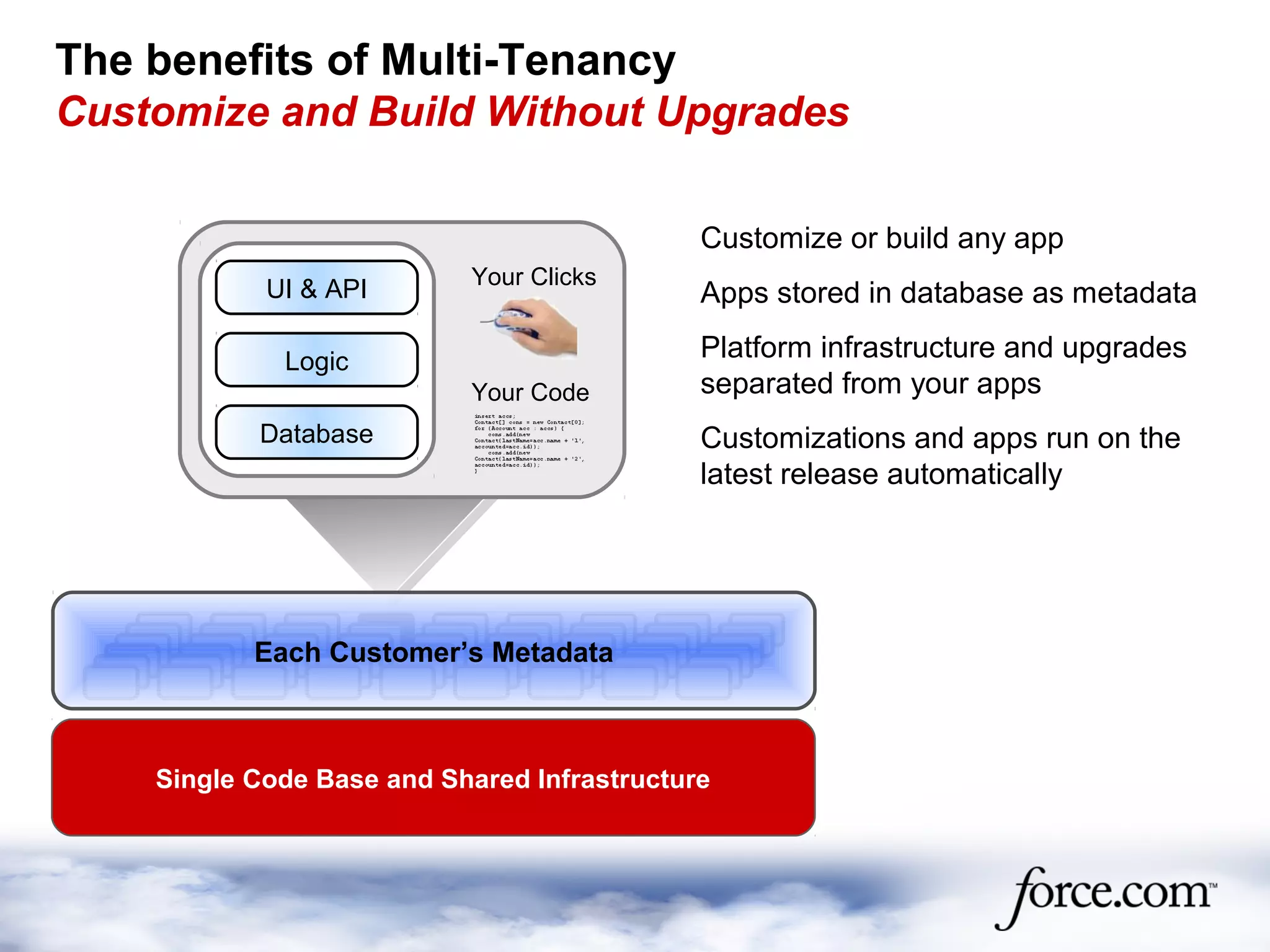
Your Clicks
Your Code
UI & API
Logic
Database
Customize or build any app
Apps stored in database as metadata
Platform infrastructure and upgrades
separated from your apps
Customizations and apps run on the
latest release automatically
Single Code Base and Shared Infrastructure
Each Customer’s Metadata
The benefits of Multi-Tenancy
Customize and Build Without Upgrades
The Enterprise Embraces SaaS
Number of Subscribers
~14,500~14,500~14,500~14,500~21,000~21,000~21,000~21,000
~40,000~40,000~40,000~40,000 ~30,000~30,000~30,000~30,000 ~25,000~25,000~25,000~25,00065,00065,00065,00065,000
~5,000~5,000~5,000~5,000
~55,000~55,000~55,000~55,000
~3,000~3,000~3,000~3,000 ~2,000~2,000~2,000~2,000~4,300~4,300~4,300~4,300
~6,300~6,300~6,300~6,300 ~5,500~5,500~5,500~5,500
~1,675~1,675~1,675~1,675 ~1,300~1,300~1,300~1,300
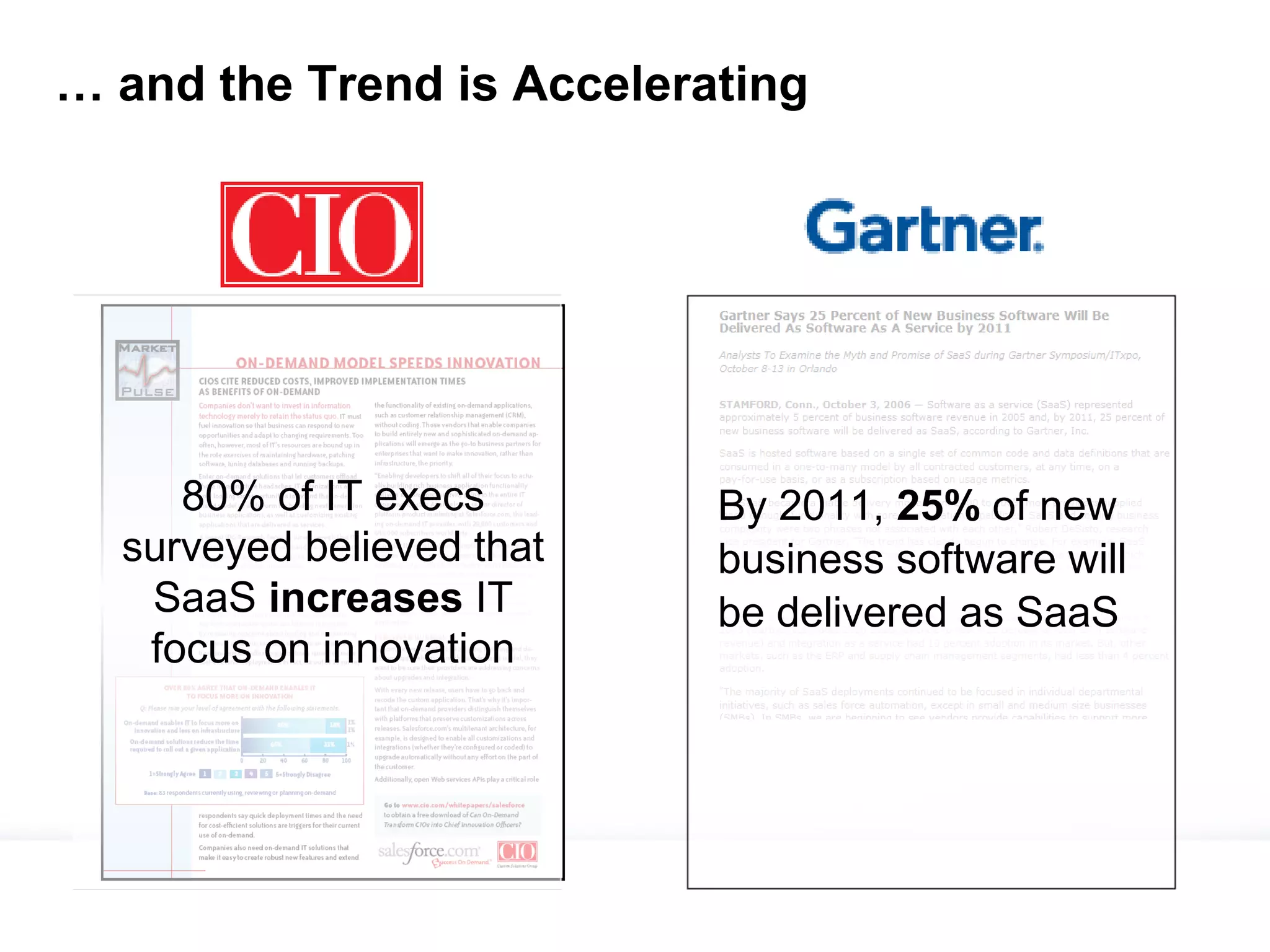
… and the Trend is Accelerating
80% of IT execs
surveyed believed that
SaaS increases IT
focus on innovation
By 2011, 25% of new
business software will
be delivered as SaaS
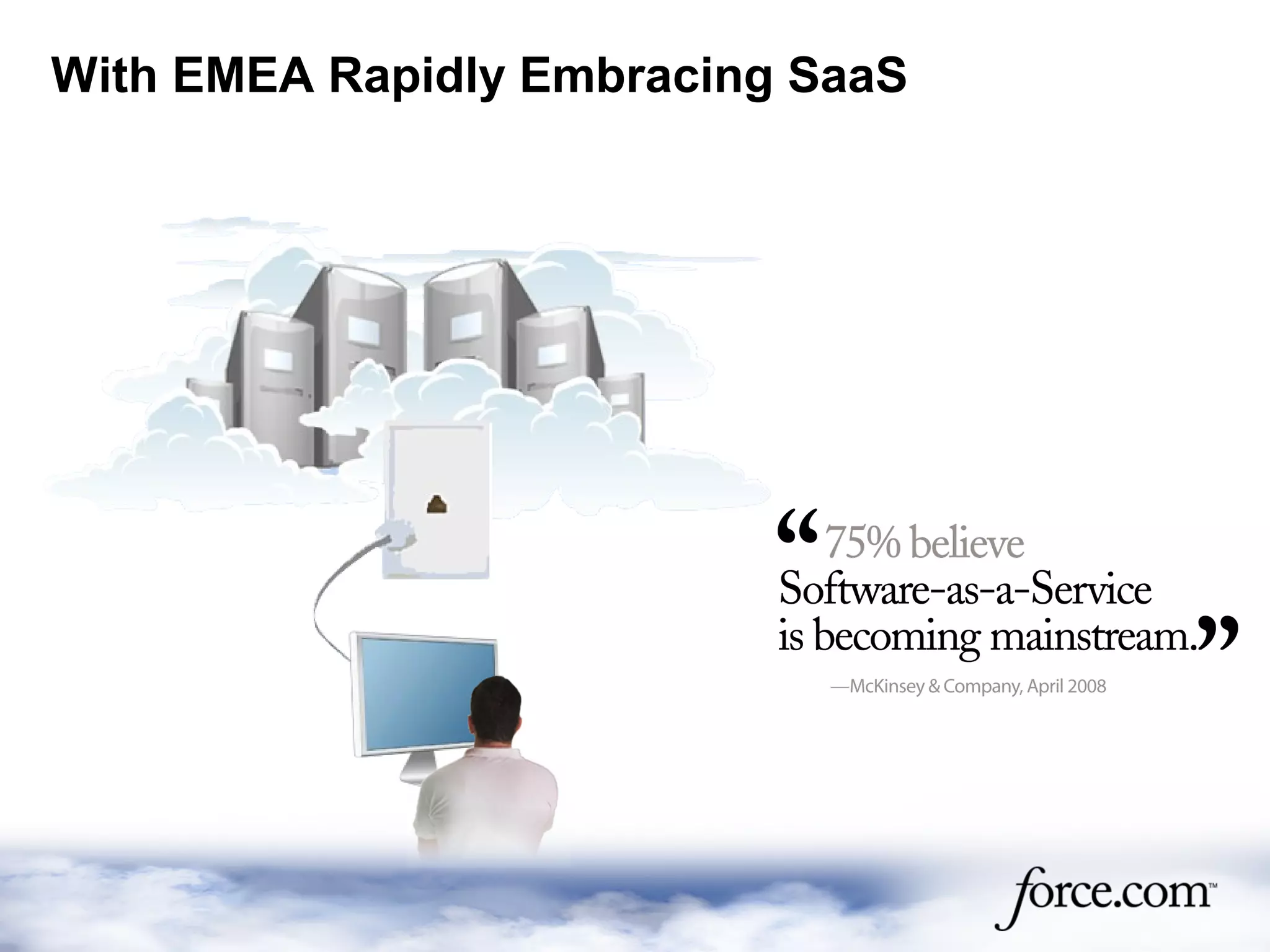
With EMEA Rapidly Embracing SaaS
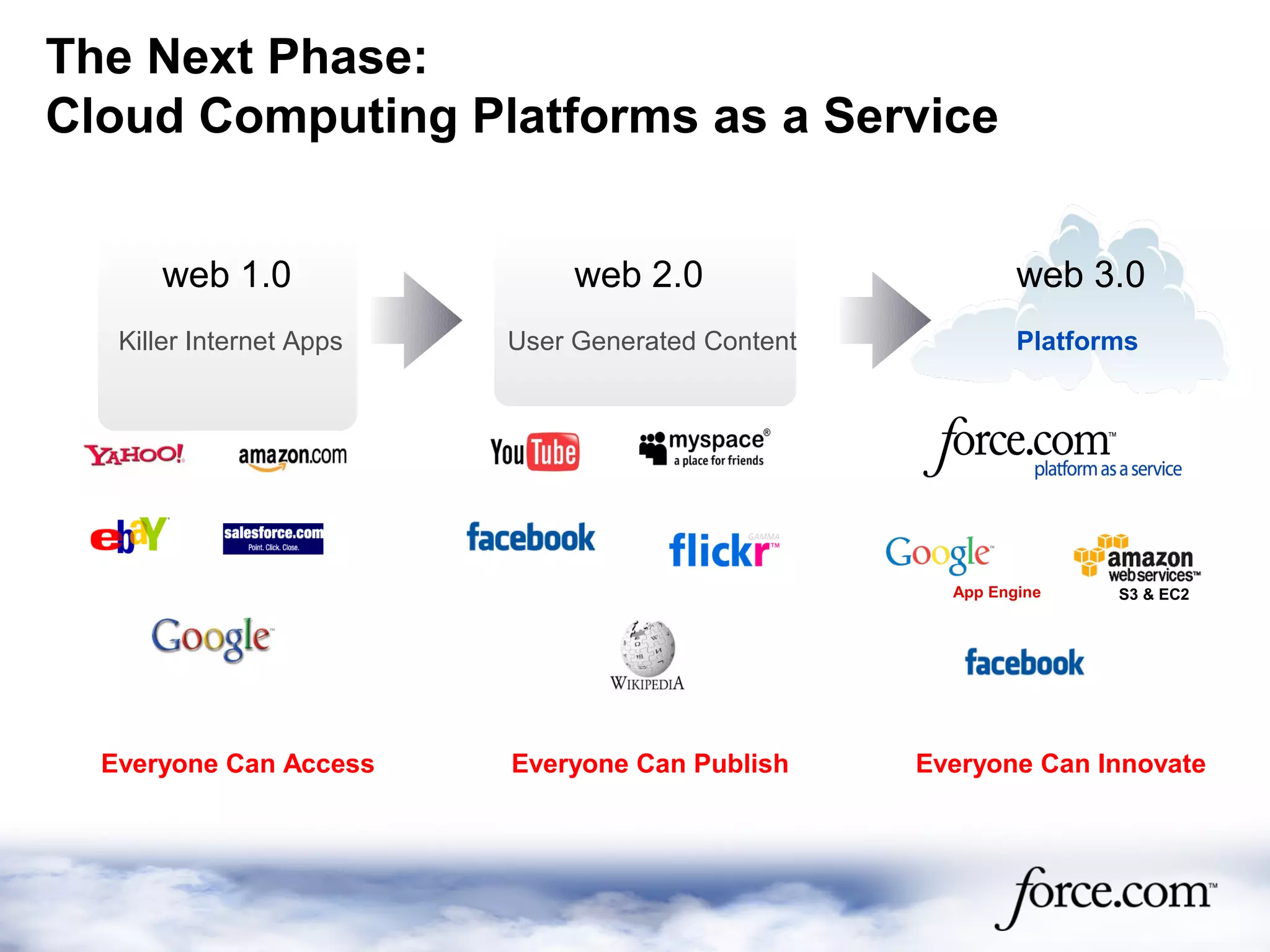
The Next Phase:
Cloud Computing Platforms as a Service
web 1.0 web 2.0 web 3.0
User Generated ContentKiller Internet Apps Platforms
Everyone Can Publish Everyone Can InnovateEveryone Can Access
App Engine S3 & EC2
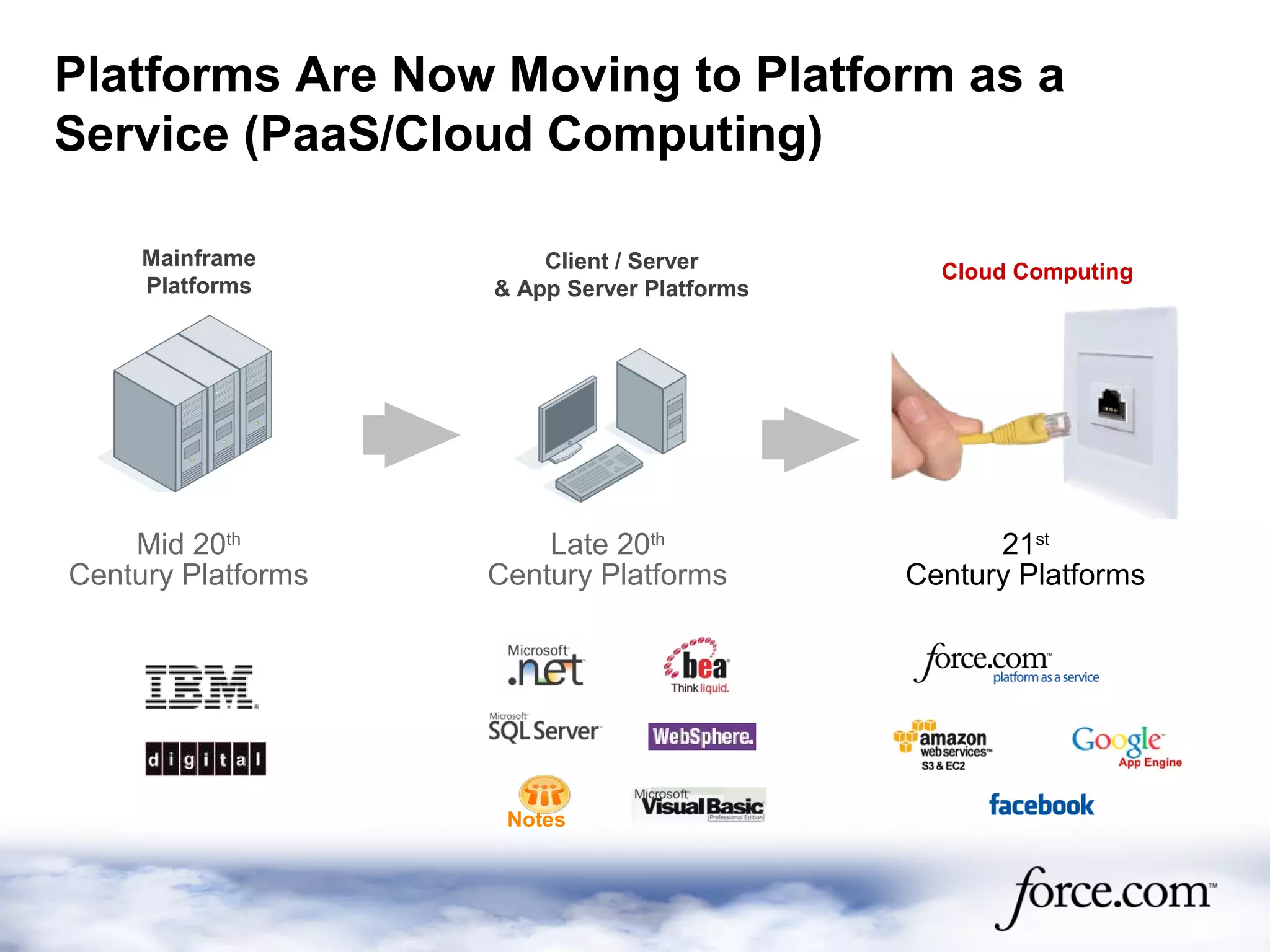
Cloud ComputingClient / Server
& App Server Platforms
Mainframe
Platforms
Platforms Are Now Moving to Platform as a
Service (PaaS/Cloud Computing)
Notes
21st
Century Platforms
Late 20th
Century Platforms
Mid 20th
Century Platforms
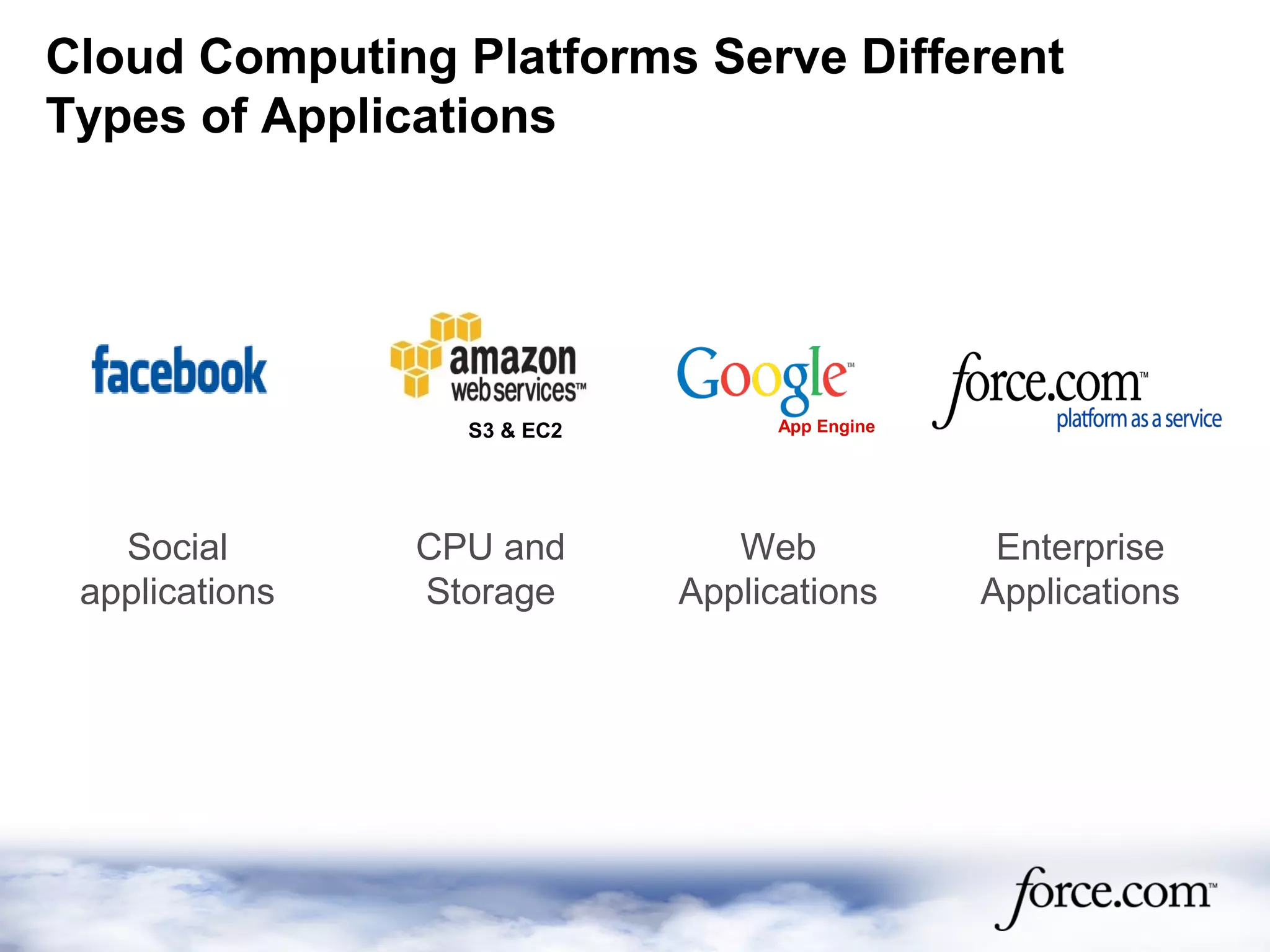
Cloud Computing Platforms Serve Different
Types of Applications
Social
applications
Web
Applications
Enterprise
Applications
CPU and
Storage
S3 & EC2 App Engine
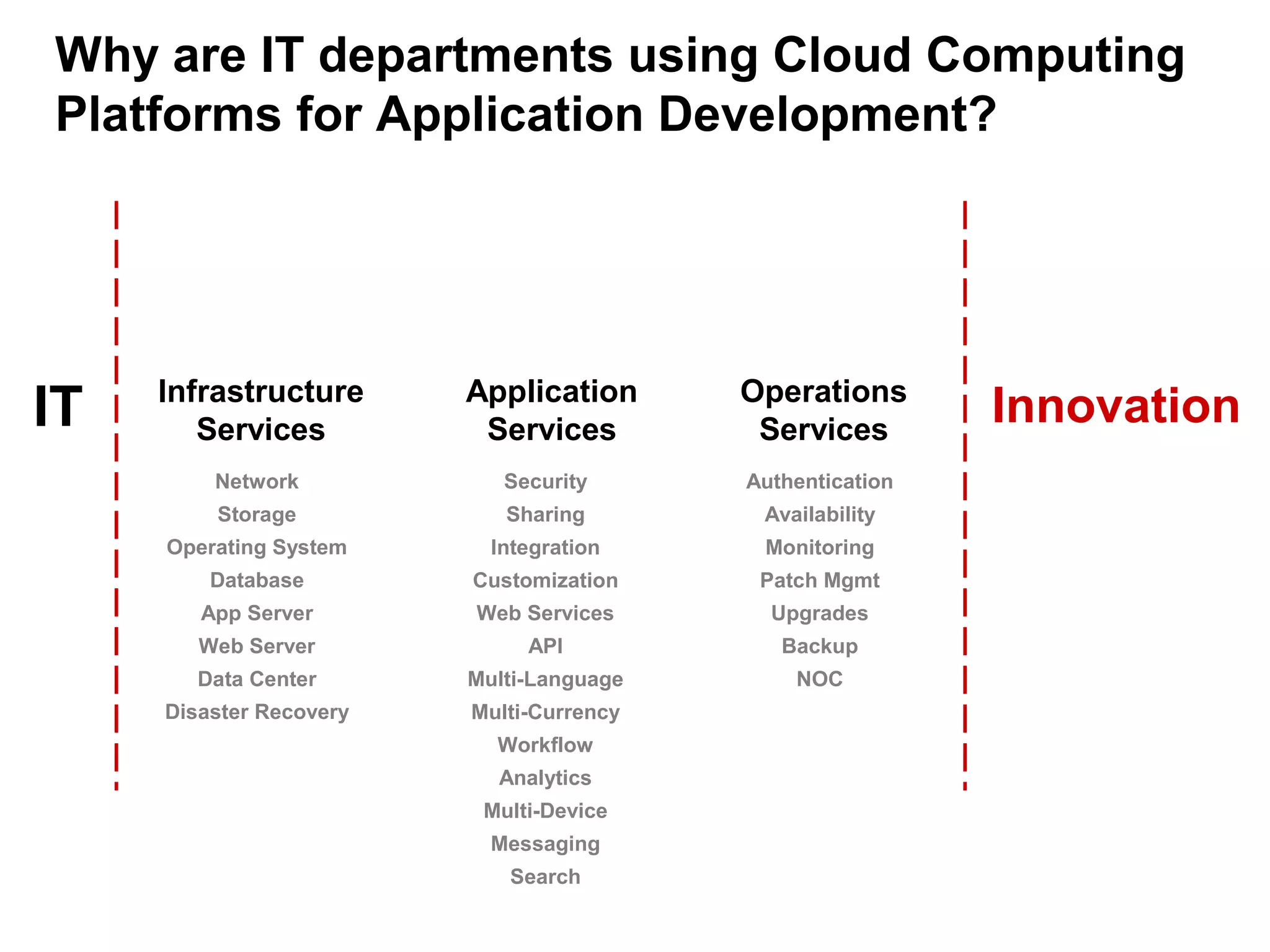
InnovationInfrastructure
Services
Network
Storage
Operating System
Database
App Server
Web Server
Data Center
Disaster Recovery
Application
Services
Security
Sharing
Integration
Customization
Web Services
API
Multi-Language
Multi-Currency
Workflow
Analytics
Multi-Device
Messaging
Search
Operations
Services
Authentication
Availability
Monitoring
Patch Mgmt
Upgrades
Backup
NOC
IT
Why are IT departments using Cloud Computing
Platforms for Application Development?
“Wealth in the new regime flows directly
from innovation, not optimization”
-- Kevin Kelly, Wired Magazine
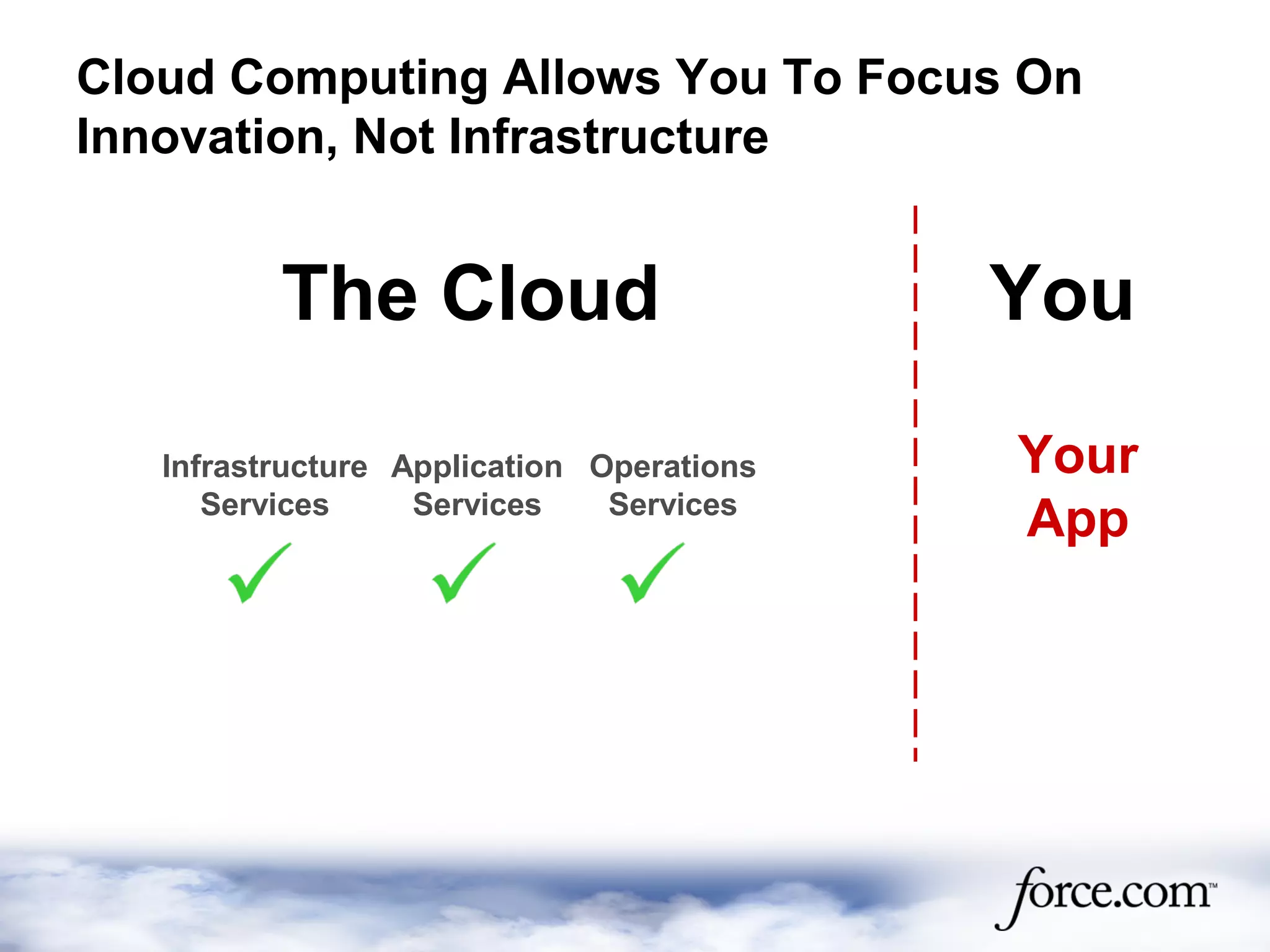
Your
App
Us
Infrastructure
Services
Application
Services
Operations
Services
YouThe Cloud
Cloud Computing Allows You To Focus On
Innovation, Not Infrastructure
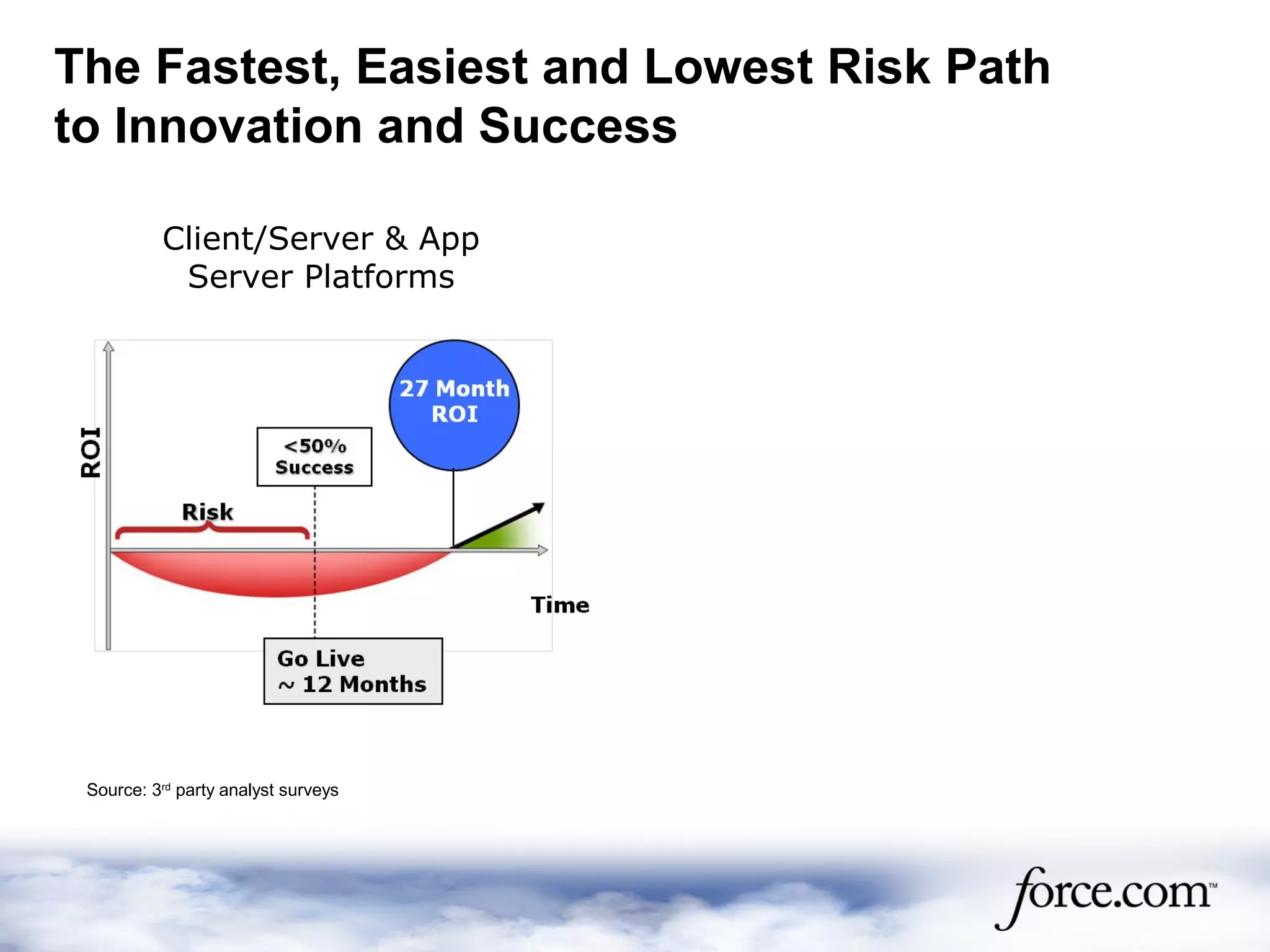
The Fastest, Easiest and Lowest Risk Path
to Innovation and Success
Client/Server & App
Server Platforms
Platform as a Service
Source: 3rd
party analyst surveys Source Salesforce.com Customer Relationship Survey conducted in
Feb. 2008, by an independent third-party CustomerSat Inc.
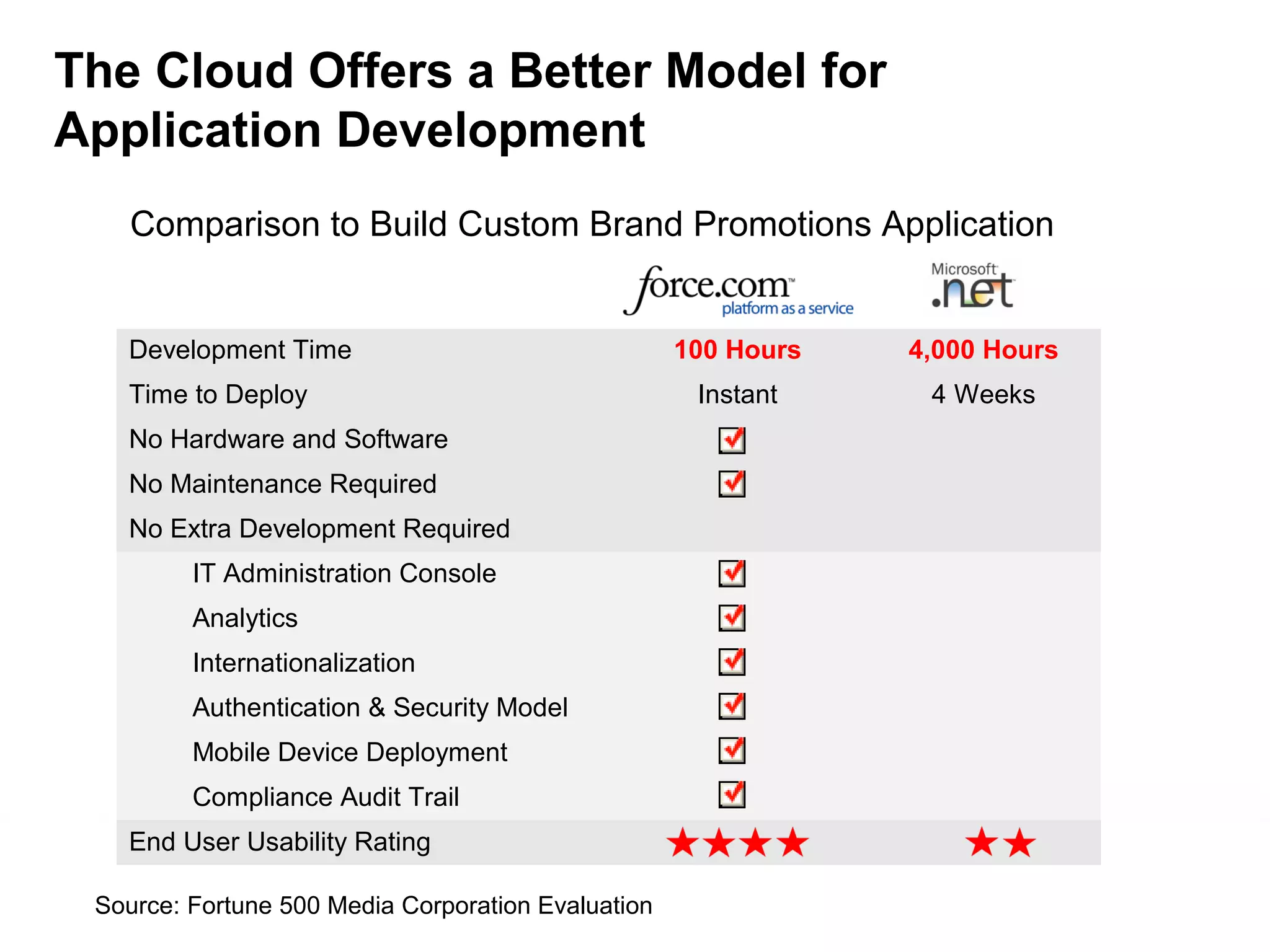
The Cloud Offers a Better Model for
Application Development
Development Time 100 Hours 4,000 Hours
Time to Deploy Instant 4 Weeks
No Hardware and Software
No Maintenance Required
No Extra Development Required
IT Administration Console
Analytics
Internationalization
Authentication & Security Model
Mobile Device Deployment
Compliance Audit Trail
End User Usability Rating
Comparison to Build Custom Brand Promotions Application
Source: Fortune 500 Media Corporation Evaluation
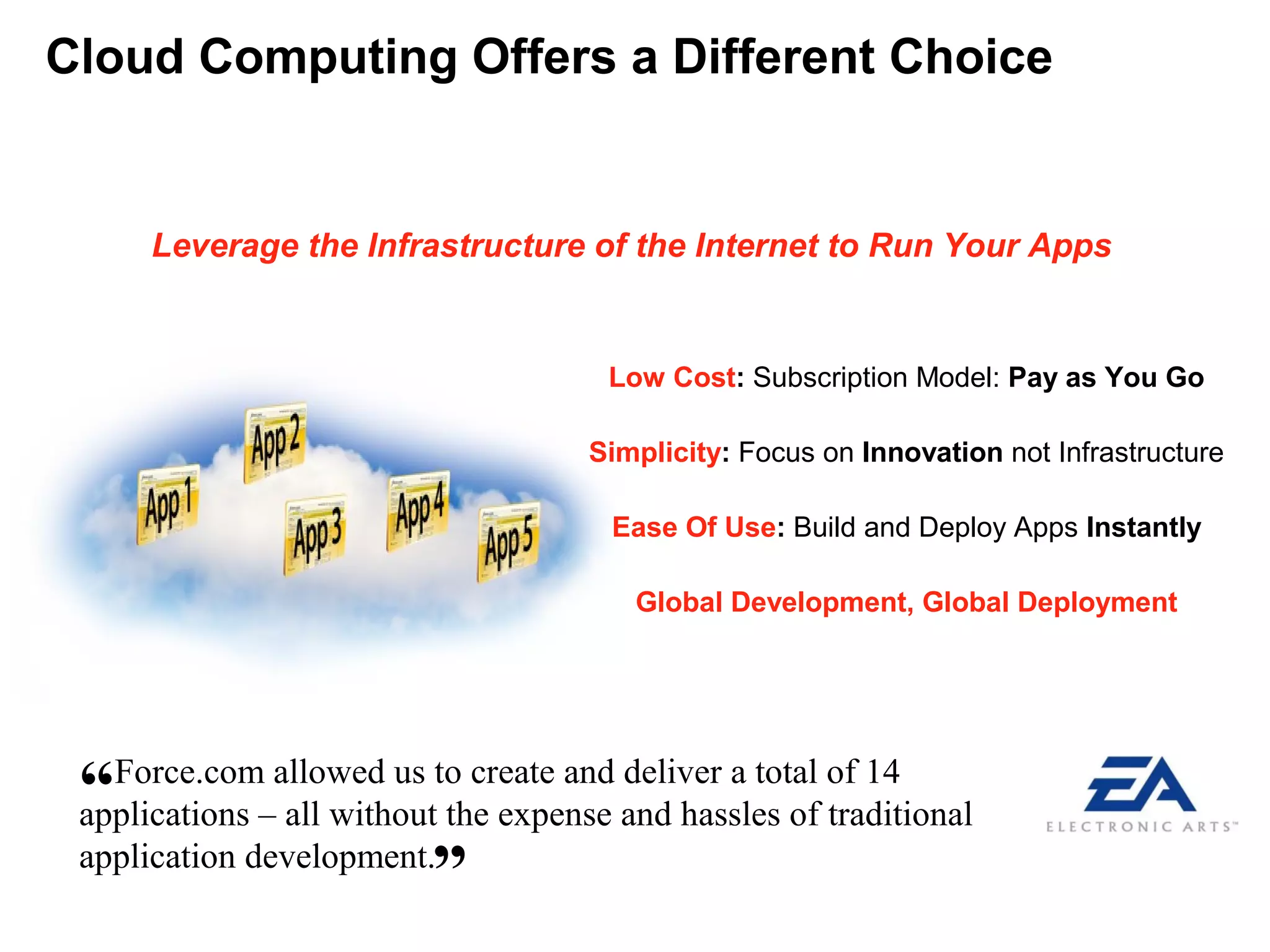
Cloud Computing Offers a Different Choice
Low Cost: Subscription Model: Pay as You Go
Simplicity: Focus on Innovation not Infrastructure
Ease Of Use: Build and Deploy Apps Instantly
Global Development, Global Deployment
Leverage the Infrastructure of the Internet to Run Your Apps
Force.com allowed us to create and deliver a total of 14
applications – all without the expense and hassles of traditional
application development.
“
”
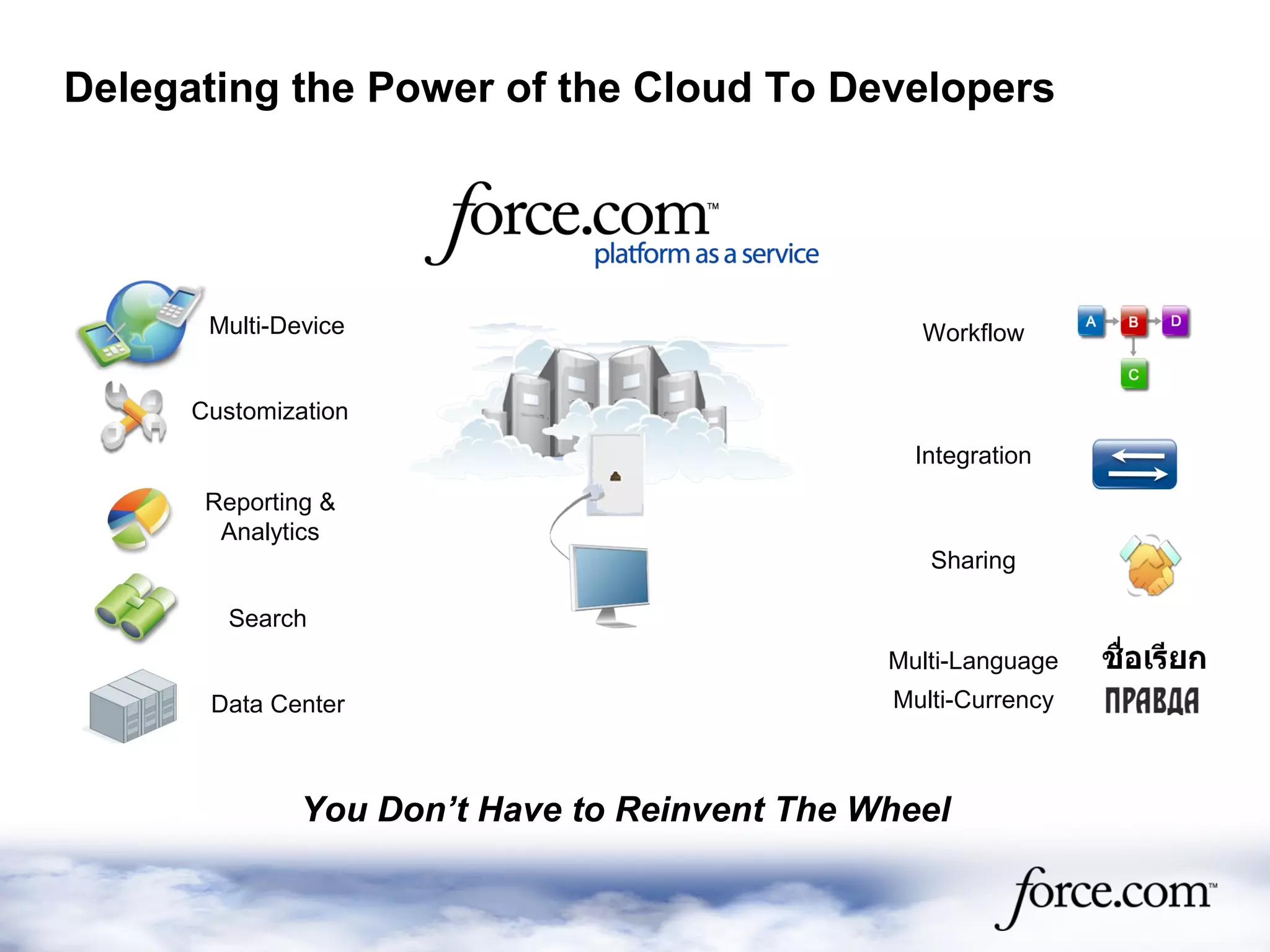
Delegating the Power of the Cloud To Developers
Multi-Device
Customization
Sharing
Data Center
Multi-Language
Multi-Currency
Integration
Reporting &
Analytics
You Don’t Have to Reinvent The Wheel
Workflow
Search
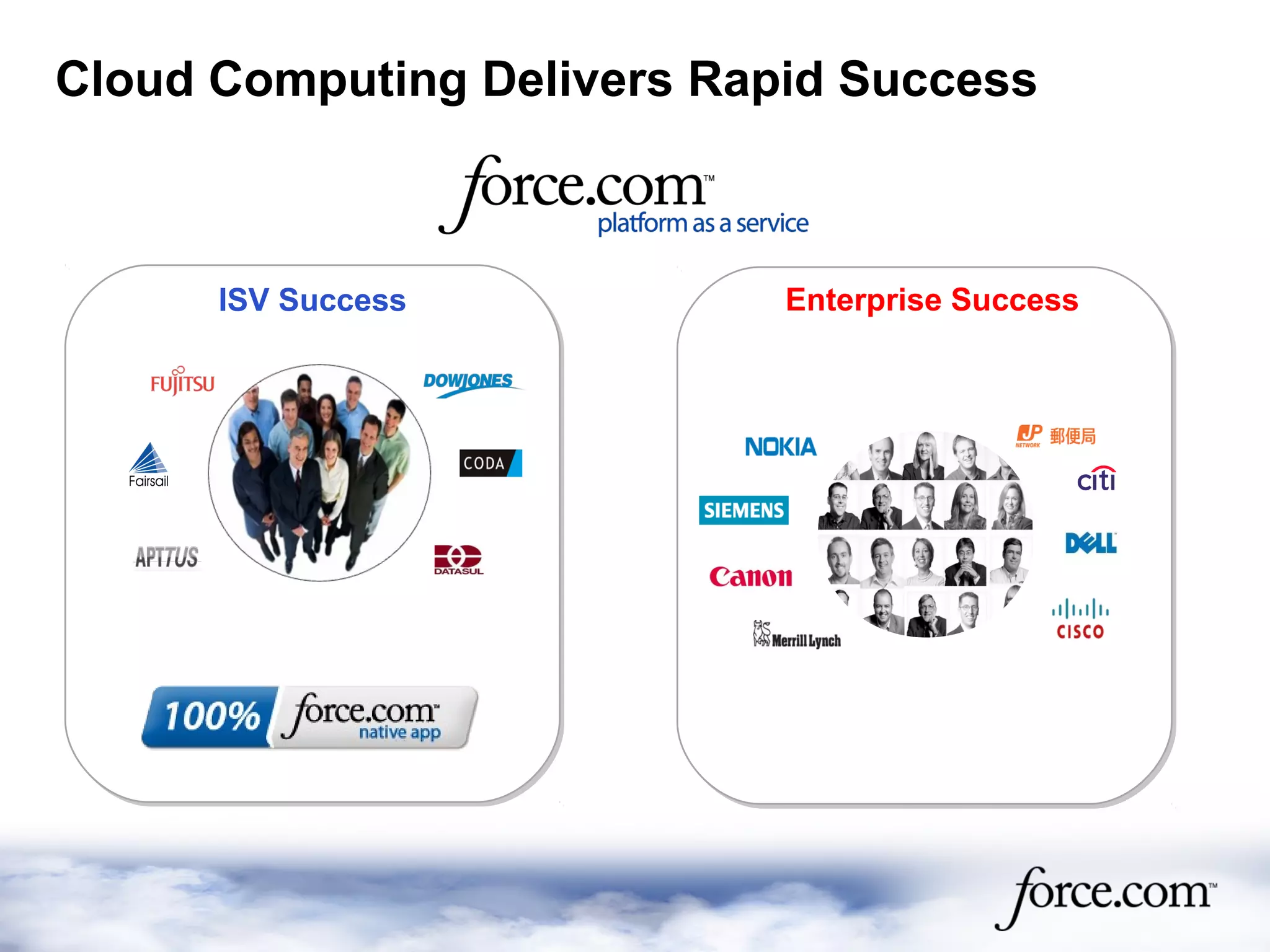
Cloud Computing Delivers Rapid Success
ISV Success Enterprise Success
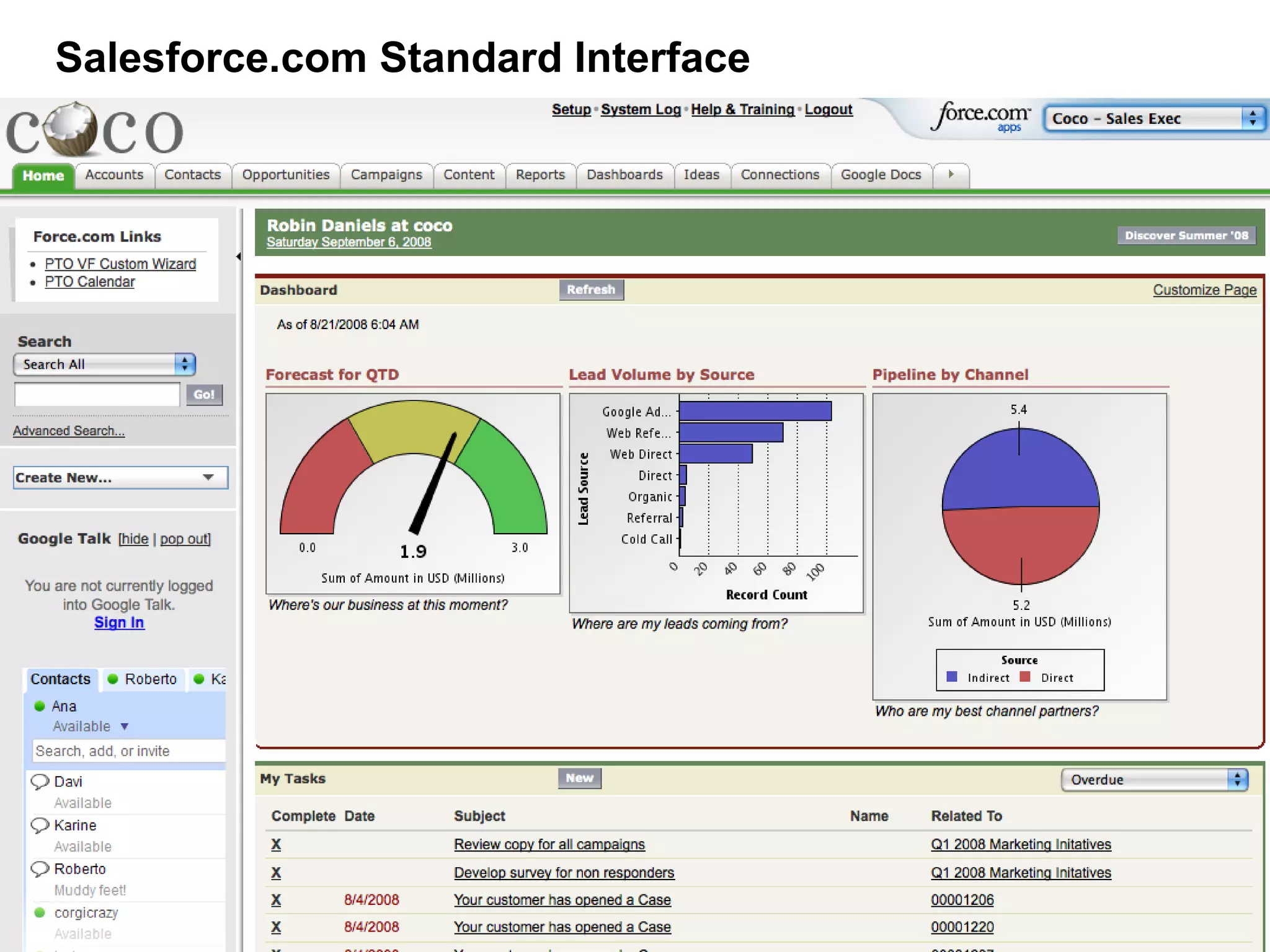
Salesforce.com Standard Interface
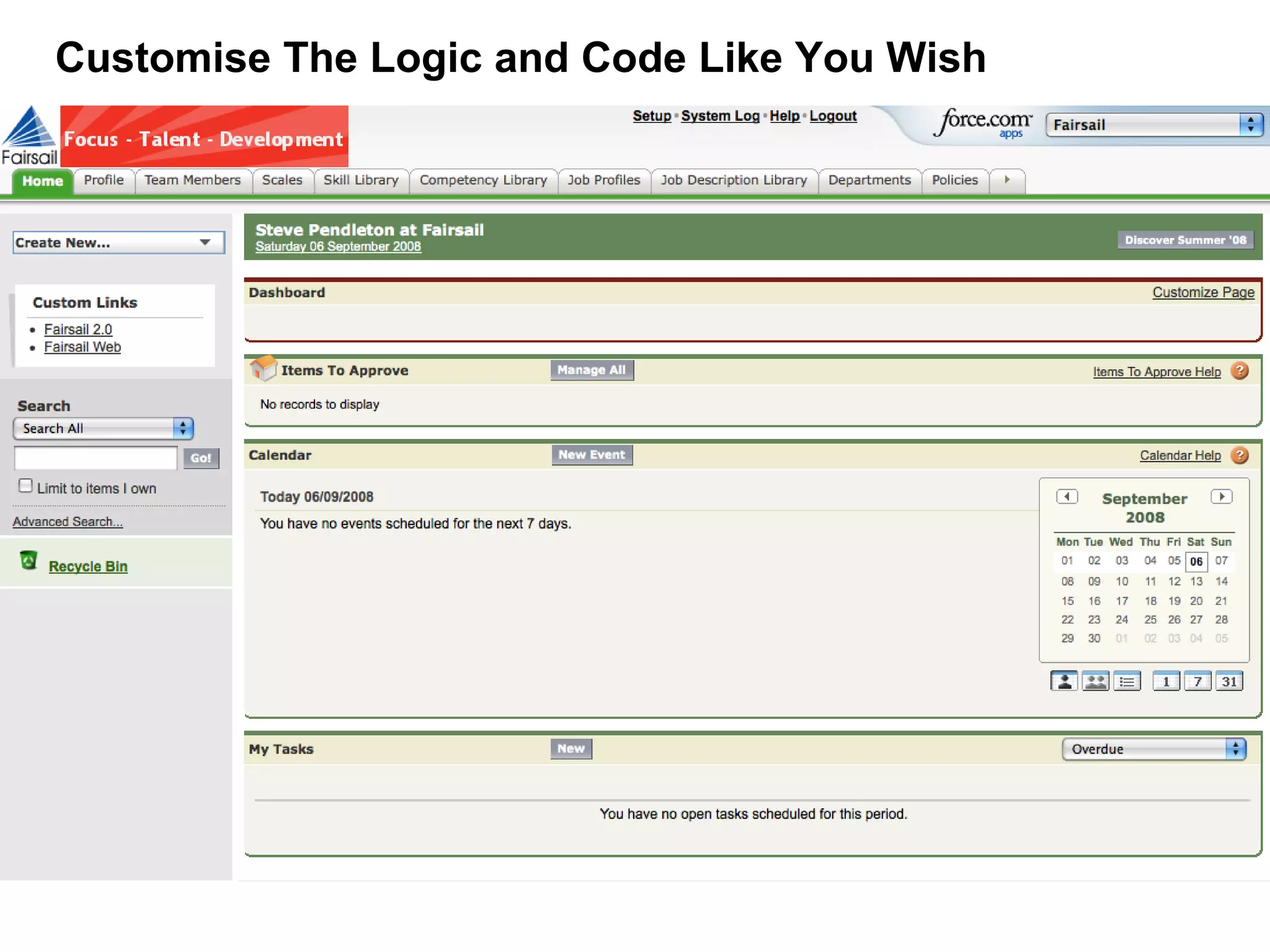
Customise The Logic and Code Like You Wish
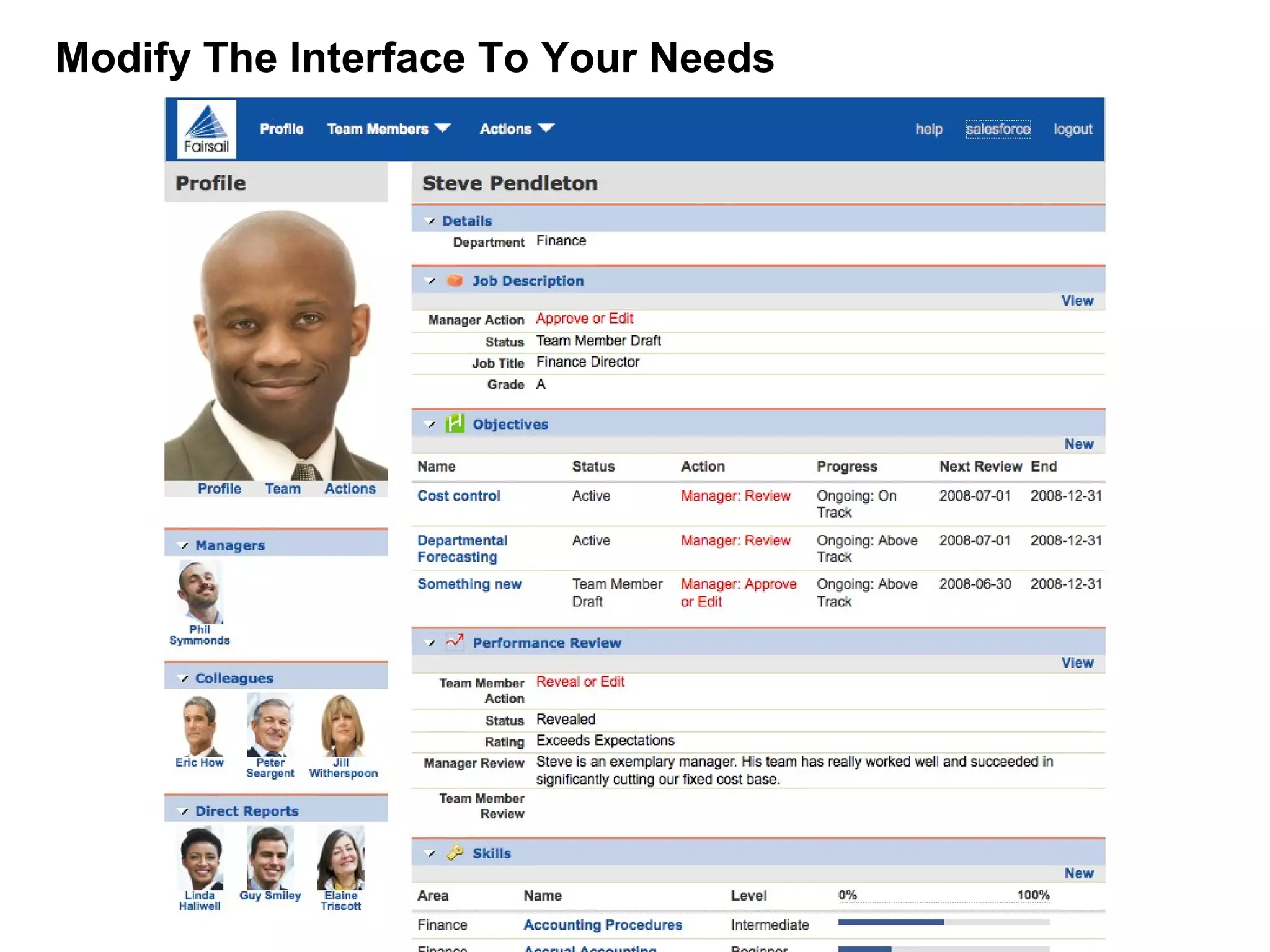
Modify The Interface To Your Needs
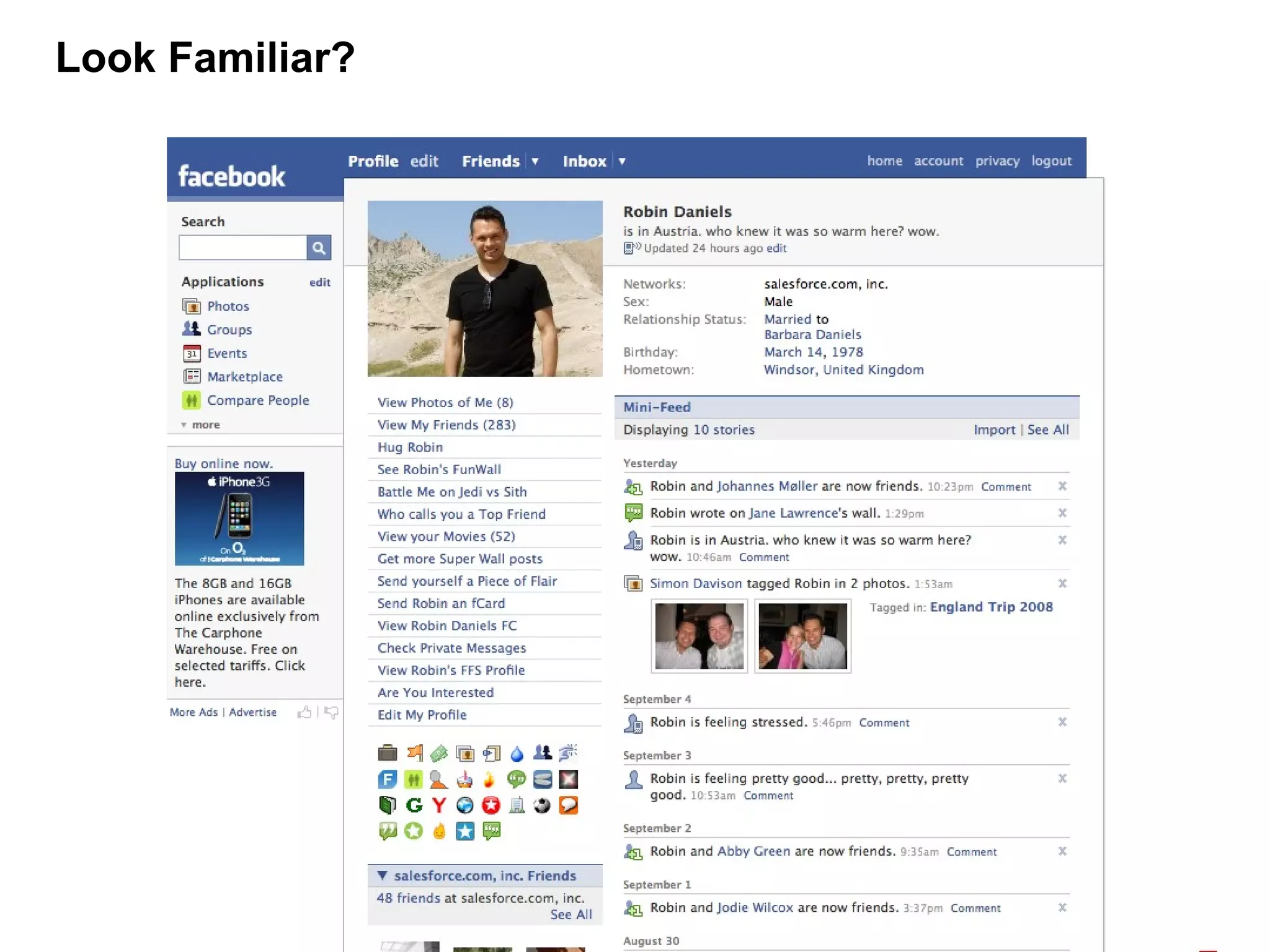
Look Familiar?
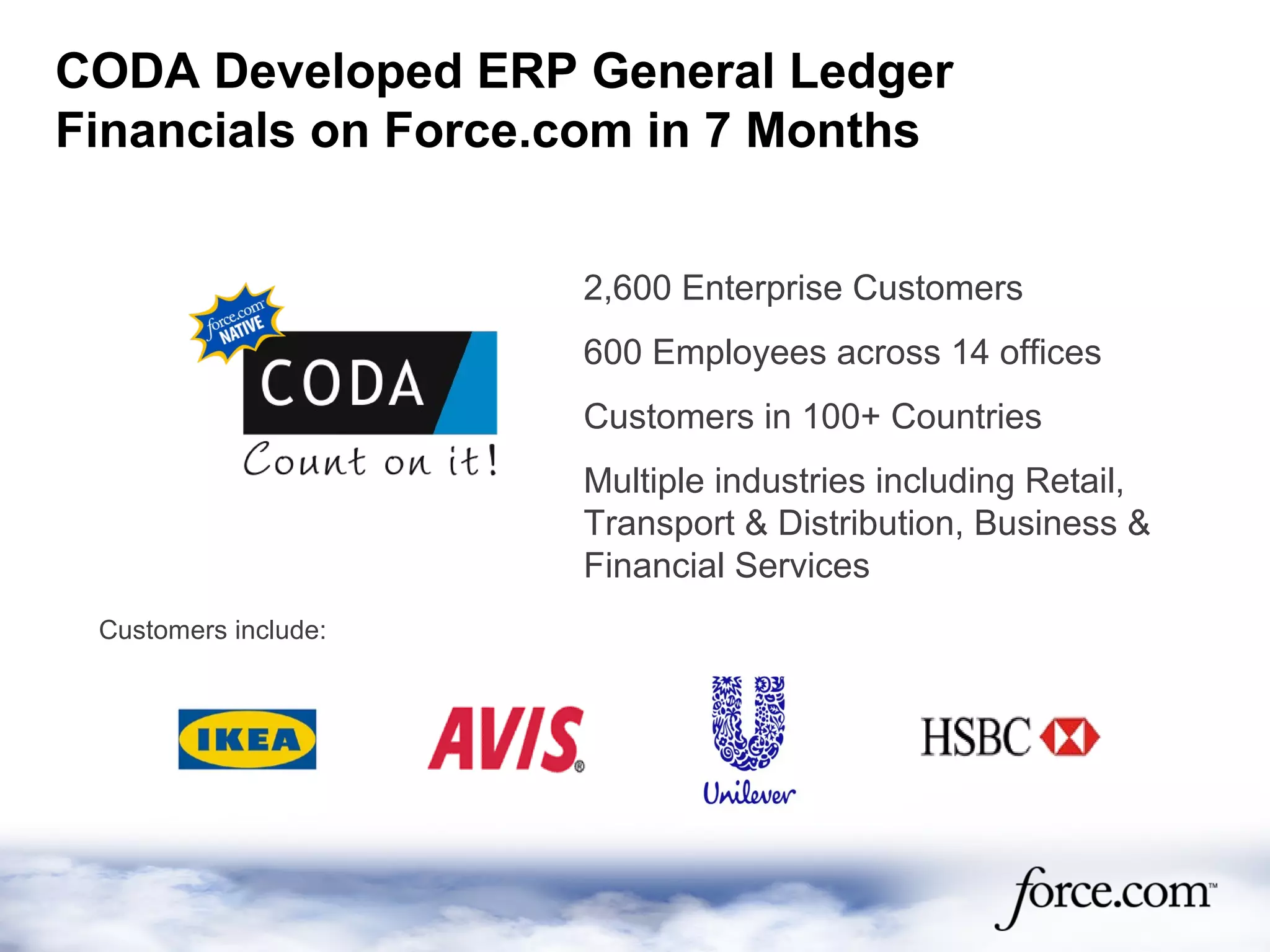
CODA Developed ERP General Ledger
Financials on Force.com in 7 Months
2,600 Enterprise Customers
600 Employees across 14 offices
Customers in 100+ Countries
Multiple industries including Retail,
Transport & Distribution, Business &
Financial Services
Customers include:
Cloud Computing is Lower Risk
Eliminating the burden of infrastructure for IT
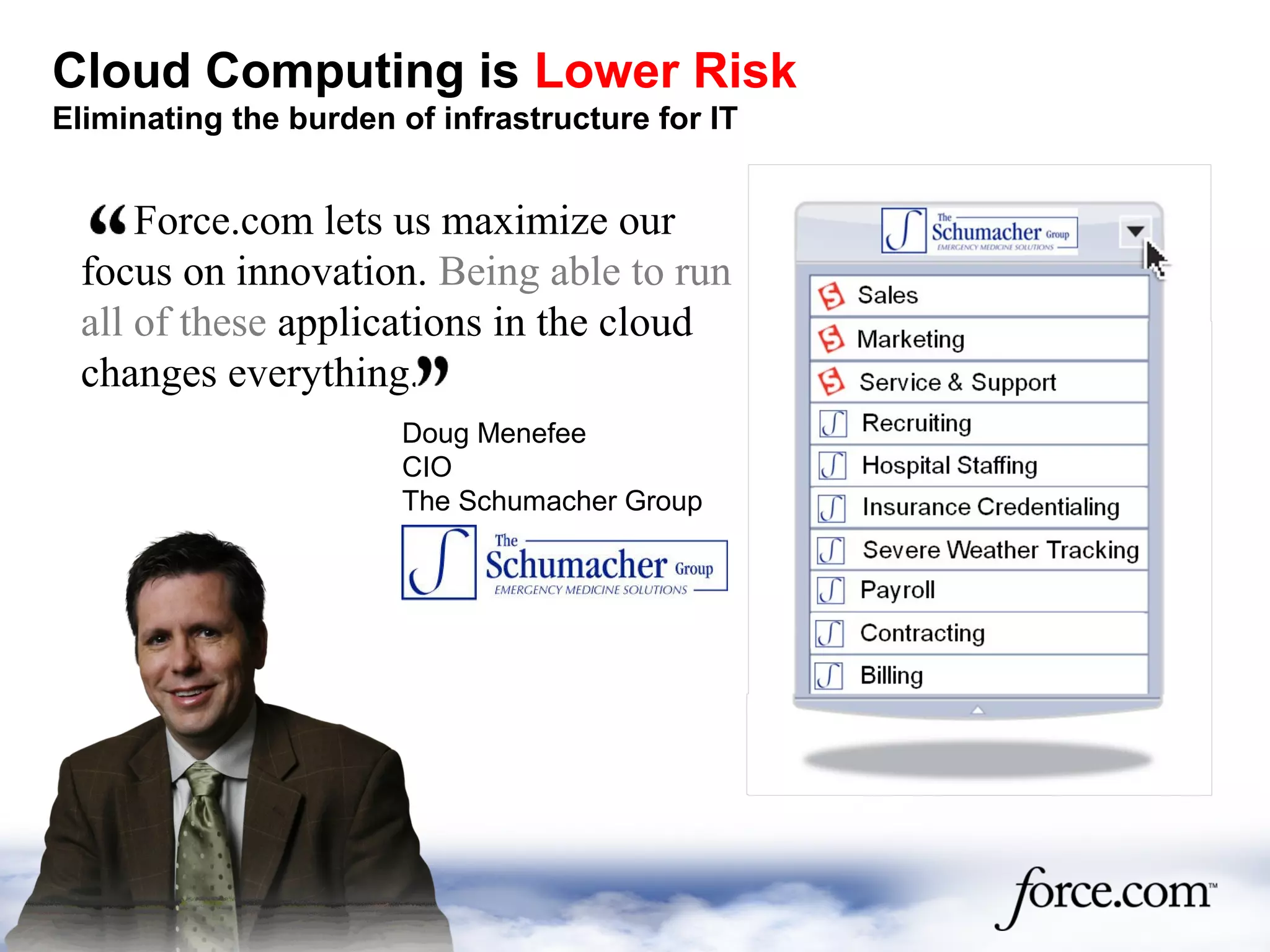
Force.com lets us maximize our
focus on innovation. Being able to run
all of these applications in the cloud
changes everything.
Doug Menefee
CIO
The Schumacher Group
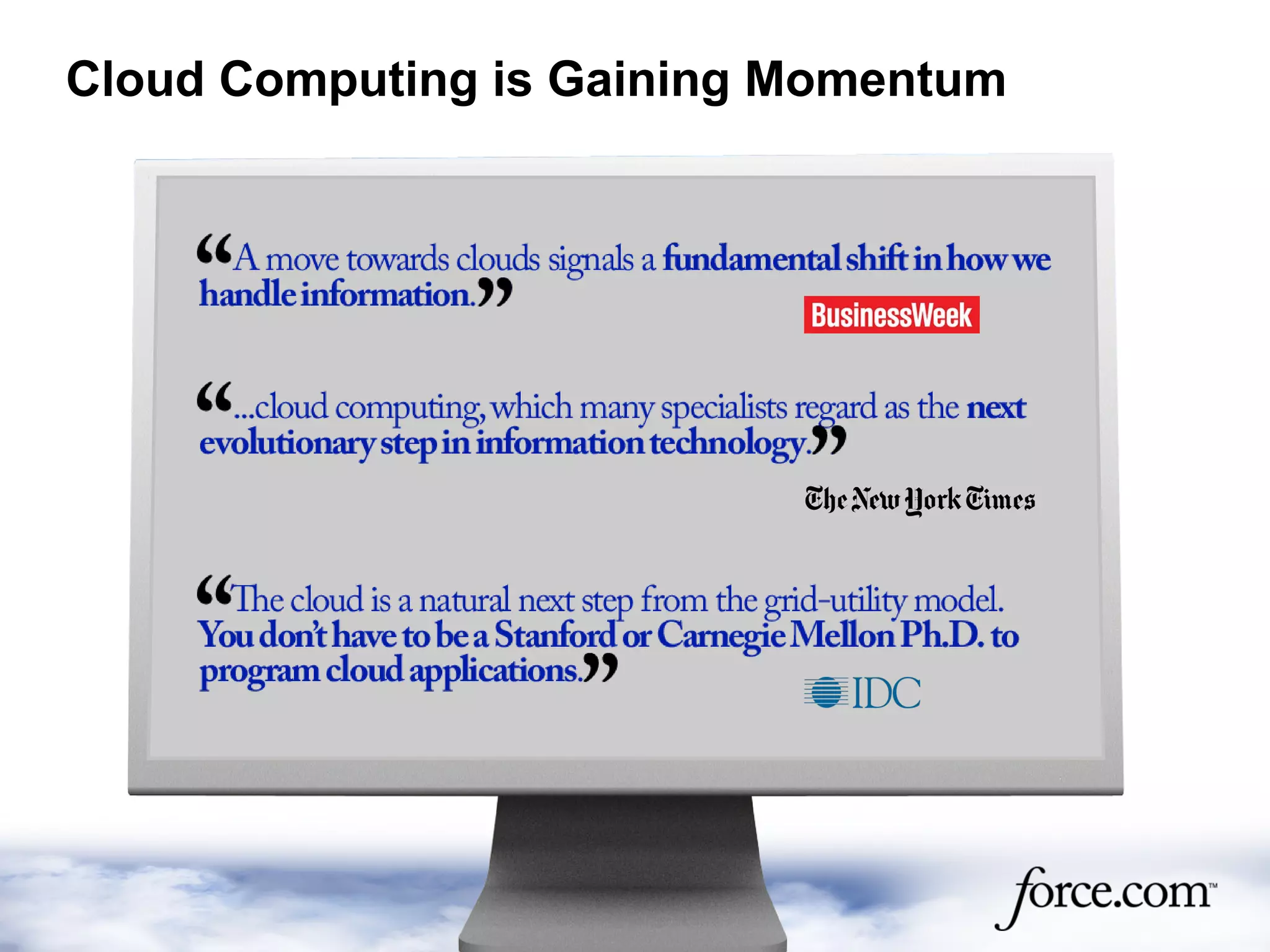
Cloud Computing is Gaining Momentum
It’s Time for Every Organisation to Ask:
“Which Path Will We Choose?”
rdaniels@salesforce.com

Running your business in the cloud

  • 1.
    Robin Daniels Sr. Manager,Product Marketing Running Your Business in the Cloud
  • 3.
    Software as a Service 21st CenturyPlatforms Client/Server Late 20th Century Platforms Mainframe Mid 20th Century Platforms An Industry Transformation is Underway
  • 4.
    Subscription Faster Vendor Innovation UnlimitedScalability Automatic Upgrades Multi-Tenancy The SaaS Secret: Multi-Tenancy, Subscriptions
  • 5.
    Why Multi-Tenant? Technology Continuesto Evolve to Shared Services Electricity Business Applications Water Onsite Generator Well Software
  • 6.
    Your Clicks Your Code UI& API Logic Database Customize or build any app Apps stored in database as metadata Platform infrastructure and upgrades separated from your apps Customizations and apps run on the latest release automatically Single Code Base and Shared Infrastructure Each Customer’s Metadata The benefits of Multi-Tenancy Customize and Build Without Upgrades
  • 7.
    The Enterprise EmbracesSaaS Number of Subscribers ~14,500~14,500~14,500~14,500~21,000~21,000~21,000~21,000 ~40,000~40,000~40,000~40,000 ~30,000~30,000~30,000~30,000 ~25,000~25,000~25,000~25,00065,00065,00065,00065,000 ~5,000~5,000~5,000~5,000 ~55,000~55,000~55,000~55,000 ~3,000~3,000~3,000~3,000 ~2,000~2,000~2,000~2,000~4,300~4,300~4,300~4,300 ~6,300~6,300~6,300~6,300 ~5,500~5,500~5,500~5,500 ~1,675~1,675~1,675~1,675 ~1,300~1,300~1,300~1,300
  • 8.
    … and theTrend is Accelerating 80% of IT execs surveyed believed that SaaS increases IT focus on innovation By 2011, 25% of new business software will be delivered as SaaS
  • 9.
    With EMEA RapidlyEmbracing SaaS
  • 11.
    The Next Phase: CloudComputing Platforms as a Service web 1.0 web 2.0 web 3.0 User Generated ContentKiller Internet Apps Platforms Everyone Can Publish Everyone Can InnovateEveryone Can Access App Engine S3 & EC2
  • 12.
    Cloud ComputingClient /Server & App Server Platforms Mainframe Platforms Platforms Are Now Moving to Platform as a Service (PaaS/Cloud Computing) Notes 21st Century Platforms Late 20th Century Platforms Mid 20th Century Platforms
  • 13.
    Cloud Computing PlatformsServe Different Types of Applications Social applications Web Applications Enterprise Applications CPU and Storage S3 & EC2 App Engine
  • 14.
    InnovationInfrastructure Services Network Storage Operating System Database App Server WebServer Data Center Disaster Recovery Application Services Security Sharing Integration Customization Web Services API Multi-Language Multi-Currency Workflow Analytics Multi-Device Messaging Search Operations Services Authentication Availability Monitoring Patch Mgmt Upgrades Backup NOC IT Why are IT departments using Cloud Computing Platforms for Application Development?
  • 15.
    “Wealth in thenew regime flows directly from innovation, not optimization” -- Kevin Kelly, Wired Magazine
  • 16.
  • 17.
    The Fastest, Easiestand Lowest Risk Path to Innovation and Success Client/Server & App Server Platforms Platform as a Service Source: 3rd party analyst surveys Source Salesforce.com Customer Relationship Survey conducted in Feb. 2008, by an independent third-party CustomerSat Inc.
  • 18.
    The Cloud Offersa Better Model for Application Development Development Time 100 Hours 4,000 Hours Time to Deploy Instant 4 Weeks No Hardware and Software No Maintenance Required No Extra Development Required IT Administration Console Analytics Internationalization Authentication & Security Model Mobile Device Deployment Compliance Audit Trail End User Usability Rating Comparison to Build Custom Brand Promotions Application Source: Fortune 500 Media Corporation Evaluation
  • 19.
    Cloud Computing Offersa Different Choice Low Cost: Subscription Model: Pay as You Go Simplicity: Focus on Innovation not Infrastructure Ease Of Use: Build and Deploy Apps Instantly Global Development, Global Deployment Leverage the Infrastructure of the Internet to Run Your Apps Force.com allowed us to create and deliver a total of 14 applications – all without the expense and hassles of traditional application development. “ ”
  • 20.
    Delegating the Powerof the Cloud To Developers Multi-Device Customization Sharing Data Center Multi-Language Multi-Currency Integration Reporting & Analytics You Don’t Have to Reinvent The Wheel Workflow Search
  • 21.
    Cloud Computing DeliversRapid Success ISV Success Enterprise Success
  • 22.
  • 23.
    Customise The Logicand Code Like You Wish
  • 24.
    Modify The InterfaceTo Your Needs
  • 25.
  • 26.
    CODA Developed ERPGeneral Ledger Financials on Force.com in 7 Months 2,600 Enterprise Customers 600 Employees across 14 offices Customers in 100+ Countries Multiple industries including Retail, Transport & Distribution, Business & Financial Services Customers include:
  • 27.
    Cloud Computing isLower Risk Eliminating the burden of infrastructure for IT Force.com lets us maximize our focus on innovation. Being able to run all of these applications in the cloud changes everything. Doug Menefee CIO The Schumacher Group
  • 28.
    Cloud Computing isGaining Momentum
  • 29.
    It’s Time forEvery Organisation to Ask: “Which Path Will We Choose?”
  • 30.

Editor's Notes

  • #17 Let Apex do the heavy lifting, so you can focus on the fun stuff – innovation, creating apps, etc.
  • #18 Force.com and platform as a sevice represent a fundamentally different model for how IT organizations can build and run enterprise apps. This model is more aligned with IT success because it shift the focus of IT responsibilities away from the high cost, high risk efforts of infrastructure management to the more strategic efforts of delivering innovation to the business. A recent independent survey of salesforce.com customers validates that platform as a service is simply a better value proposition for IT. For a wide variety of packaged and custom applications, the force.com platform allowed our customers to deploy in a fraction of the time of traditional platforms, achieve a far faster return investment and reduce the impact of these apps on scarce IT system administration resources.
  • #19 What’s the impact of force.com and platform as a service on IT success? One of our customers did a head to head evaluation of force.com vs. Microsoft .NET to find out. As a test they took a relatively straightforward app that tracked the licensing of brand assets including a worldwide workflow approval process and built this app on both platforms. What they found was that building apps on force.com platform a) was dramatically faster, b) allowed their developers to focus their time on higher value activities and c) delivered a more functional app that was judged to be much easier to use. The .NET application too 4,000 hours to develop while the force.com application took only 100 hours. The reason for this accelerated timeline was all of the hardware and software infrastructure that the force.com development team didn’t have to worry about. While the .Net team had to hand functionality like build an IT administration console, internationalization, authentication and audit history tracking, all of this came “for free” to the force.com developers. They simply had to configure these pre-built application services. Additionally, the force.com developers were able to add phase 2 application functionality like mobile device deployment and analytics which the .NET team did not have time to address. Plus, the force.com application was able to leverage the built-in consumer web usability of our platform to deliver an app that end users scored more than twice as high from a usability perspective.
  • #27 One of the most interesting force.com success stories is a company called CODA. CODA is the 2nd largest software company in Europe and has been offering ERP applications for the past 20 years. They began an initiative last year to migrate their client/server software suite to a software as a service model. Instead of spending the vast sums of money and time required to build up a new SaaS platform and infrastructure that would meet the requirements of their highly security conscious customer base, they decided to build their SaaS strategy on Force.com; leveraging our platform and all of our investments instead of building this on their on. This resulted in a tremendous go-to-market advantage as they were able to build a complete general ledger financials application natively on force.com in only 7 months. This is a testament both to the creativity of the engineers at CODA but also to the flexibility of the force.com platform to power any type of sophisticated business application
  • #28 The Schumacher Group is a 2,500 employee emergency medicine solutions company that staffs North American emergency rooms with needed doctors. Their services can mean the difference of life and death for the millions of patients who have to visit the emergency room every year. To ensure the highest levels of availability and performance across their business, the Schumacher group, standardized on the Force.com application development platform to build mission critical custom applications. In addition to deploying the full range of salesforce.com CRM applications and integrating them with their PeopleSoft ERP system, Schumacher built over 7 different custom applications including payroll, contracting, Billing, and insurance credentialing. Many of these applications shifted complex back office processes away from client server applications and made them available via the cloud. By using force.com to remove the pain and risk of infrastructure, Doug Menefee, The CIO of the Schumacher group has been able to shift the focus of his IT organization from managing infrastructure to delivering innovation.