1
Low Code
Lecturer: PGS.TS Phạm Trần Vũ
Students:
Hữu Phước
Quyền Lâm
Quang Thanh
2
Low Code – the Introduction
3
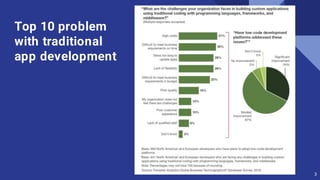
Top 10 problem
with traditional
app development
Low Code/ No Code Development
1. Visual drag-and-drop.
2. Allow Business User can create your owns apps
build in Website or Mobile Apps.
4
5
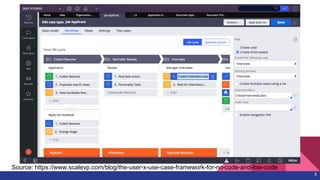
Source: https://www.scalevp.com/blog/the-user-x-use-case-framework-for-no-code-and-low-code
LCNC Platform History
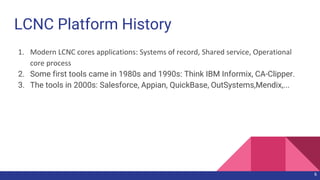
1. Modern LCNC cores applications: Systems of record, Shared service, Operational
core process
2. Some first tools came in 1980s and 1990s: Think IBM Informix, CA-Clipper.
3. The tools in 2000s: Salesforce, Appian, QuickBase, OutSystems,Mendix,...
6
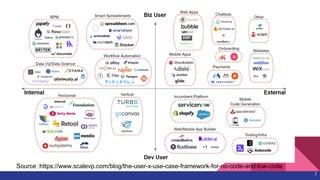
LCNC Platform History
7
Source :https://www.scalevp.com/blog/the-user-x-use-case-framework-for-no-code-and-low-code
LCNC platform components
1. Graphical User Interface (GUI) for programming
2. Integrations for I/O
3. An application manager
8
Differences
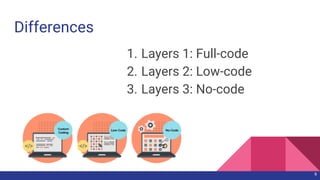
1. Layers 1: Full-code
2. Layers 2: Low-code
3. Layers 3: No-code
9
Use Cases
1. MVPs
2. Applications on new platforms
3. Smart process apps
4. Software modernization apps
10
Disadvantage
1. Limited customization options
2. Limited flexibility
3. Limited integration option
4. Security
11
12
Low Code with
Microsoft Power Platform
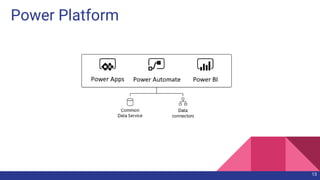
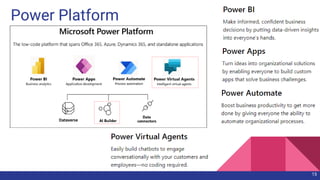
Power Platform
13
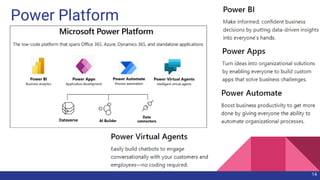
Power Platform
14
Power Platform
15
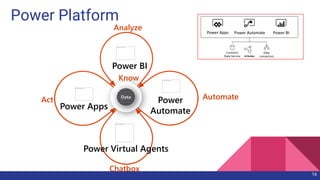
Power Platform
Act
Chatbox
Automate
Analyze
Know
16
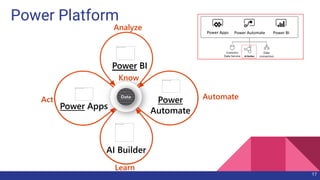
Power Platform
Act
Learn
Automate
Analyze
Know
17
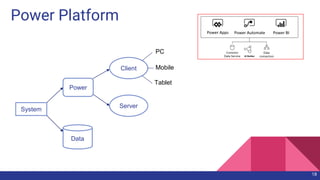
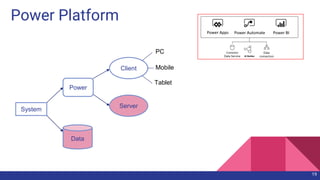
Power Platform
System
Power
Data
Server
Client
PC
Mobile
Tablet
18
Power Platform
System
Power
Data
Server
Client
PC
Mobile
Tablet
19
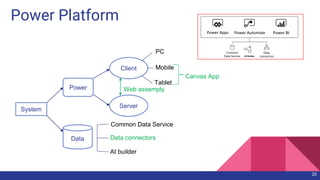
Power Platform
System
Power
Data
Server
Client
PC
Mobile
Canvas App
Web assemply
Common Data Service
Data connectors
Tablet
AI builder
20
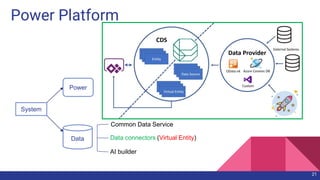
Power Platform
System
Power
Data
Common Data Service
Data connectors (Virtual Entity)
AI builder
21
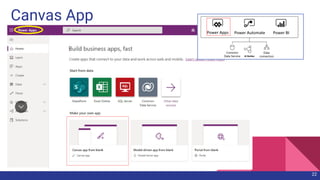
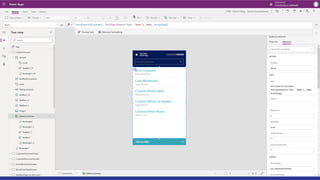
Canvas App
22
23
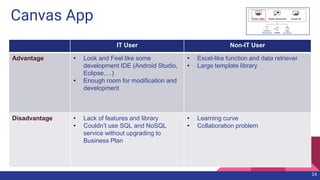
Canvas App
24
IT User Non-IT User
Advantage • Look and Feel like some
development IDE (Android Studio,
Eclipse,…)
• Enough room for modification and
development
• Excel-like function and data retriever
• Large template library
Disadvantage • Lack of features and library
• Couldn’t use SQL and NoSQL
service without upgrading to
Business Plan
• Learning curve
• Collaboration problem
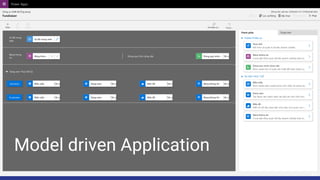
Model driven Application
25
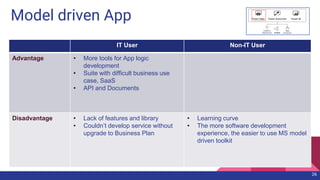
Model driven App
26
IT User Non-IT User
Advantage • More tools for App logic
development
• Suite with difficult business use
case, SaaS
• API and Documents
Disadvantage • Lack of features and library
• Couldn’t develop service without
upgrade to Business Plan
• Learning curve
• The more software development
experience, the easier to use MS model
driven toolkit
27
Microsoft Power App vs others
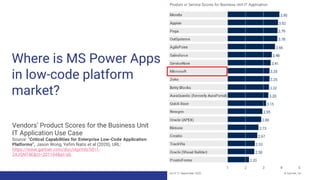
Where is MS Power Apps
in low-code platform
market?
Vendors’ Product Scores for the Business Unit
IT Application Use Case
Source: “Critical Capabilities for Enterprise Low-Code Application
Platforms”, Jason Wong, Yefim Natis et al (2020), URL:
https://www.gartner.com/doc/reprints?id=1-
24JGNT4E&ct=201104&st=sb
28
29
The Business Perspective of
Low Code
Why should (not) use low-code?
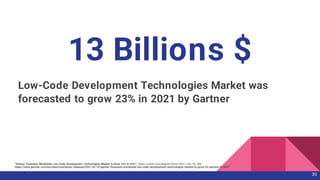
13 Billions $
Low-Code Development Technologies Market was
forecasted to grow 23% in 2021 by Gartner
30
“Gartner Forecasts Worldwide Low-Code Development Technologies Market to Grow 23% in 2021,” Katie Costello and Meghan Rimol (2021, Feb 16). URL:
https://www.gartner.com/en/newsroom/press-releases/2021-02-15-gartner-forecasts-worldwide-low-code-development-technologies-market-to-grow-23-percent-in-2021
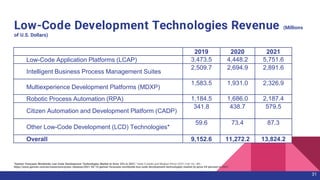
Low-Code Development Technologies Revenue (Millions
of U.S. Dollars)
31
2019 2020 2021
Low-Code Application Platforms (LCAP) 3,473.5 4,448.2 5,751.6
Intelligent Business Process Management Suites
2,509.7 2,694.9 2,891.6
Multiexperience Development Platforms (MDXP)
1,583.5 1,931.0 2,326.9
Robotic Process Automation (RPA) 1,184.5 1,686.0 2,187.4
Citizen Automation and Development Platform (CADP)
341.8 438.7 579.5
Other Low-Code Development (LCD) Technologies*
59.6 73.4 87.3
Overall 9,152.6 11,272.2 13,824.2
“Gartner Forecasts Worldwide Low-Code Development Technologies Market to Grow 23% in 2021,” Katie Costello and Meghan Rimol (2021, Feb 16). URL:
https://www.gartner.com/en/newsroom/press-releases/2021-02-15-gartner-forecasts-worldwide-low-code-development-technologies-market-to-grow-23-percent-in-2021
Why low-code?
● Low-code platform is the option for enterprise beside Inhouse development
and Outsourcing
● For the most business cases, the Digital Transformation Process is the driven
factor for choosing low-code platform
32
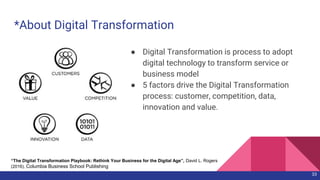
*About Digital Transformation
● Digital Transformation is process to adopt
digital technology to transform service or
business model
● 5 factors drive the Digital Transformation
process: customer, competition, data,
innovation and value.
33
“The Digital Transformation Playbook: Rethink Your Business for the Digital Age”, David L. Rogers
(2016), Columbia Business School Publishing
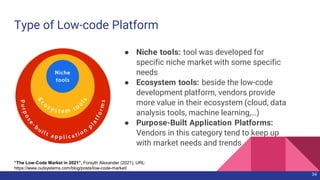
Type of Low-code Platform
● Niche tools: tool was developed for
specific niche market with some specific
needs
● Ecosystem tools: beside the low-code
development platform, vendors provide
more value in their ecosystem (cloud, data
analysis tools, machine learning,…)
● Purpose-Built Application Platforms:
Vendors in this category tend to keep up
with market needs and trends
34
“The Low-Code Market in 2021”, Forsyth Alexander (2021), URL:
https://www.outsystems.com/blog/posts/low-code-market/
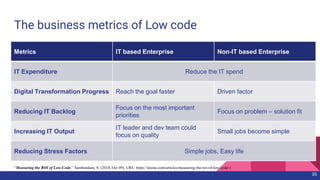
The business metrics of Low code
35
Metrics IT based Enterprise Non-IT based Enterprise
IT Expenditure Reduce the IT spend
Digital Transformation Progress Reach the goal faster Driven factor
Reducing IT Backlog
Focus on the most important
priorities
Focus on problem – solution fit
Increasing IT Output
IT leader and dev team could
focus on quality
Small jobs become simple
Reducing Stress Factors Simple jobs, Easy life
“Measuring the ROI of Low-Code.” Sambandam, S. (2018, Oct 09). URL: https://dzone.com/articles/measuring-the-roi-of-low-code-1
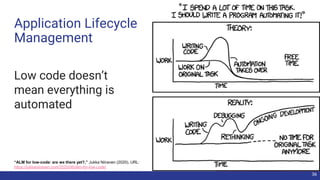
Low code doesn’t
mean everything is
automated
36
“ALM for low-code: are we there yet?,” Jukka Niiranen (2020), URL:
https://jukkaniiranen.com/2020/06/alm-for-low-code/
Application Lifecycle
Management
37
SUMMARY

Low-code Platform: Tìm hiểu về nền tảng ít lập trình

  • 1.
    1 Low Code Lecturer: PGS.TSPhạm Trần Vũ Students: Hữu Phước Quyền Lâm Quang Thanh
  • 2.
    2 Low Code –the Introduction
  • 3.
    3 Top 10 problem withtraditional app development
  • 4.
    Low Code/ NoCode Development 1. Visual drag-and-drop. 2. Allow Business User can create your owns apps build in Website or Mobile Apps. 4
  • 5.
  • 6.
    LCNC Platform History 1.Modern LCNC cores applications: Systems of record, Shared service, Operational core process 2. Some first tools came in 1980s and 1990s: Think IBM Informix, CA-Clipper. 3. The tools in 2000s: Salesforce, Appian, QuickBase, OutSystems,Mendix,... 6
  • 7.
    LCNC Platform History 7 Source:https://www.scalevp.com/blog/the-user-x-use-case-framework-for-no-code-and-low-code
  • 8.
    LCNC platform components 1.Graphical User Interface (GUI) for programming 2. Integrations for I/O 3. An application manager 8
  • 9.
    Differences 1. Layers 1:Full-code 2. Layers 2: Low-code 3. Layers 3: No-code 9
  • 10.
    Use Cases 1. MVPs 2.Applications on new platforms 3. Smart process apps 4. Software modernization apps 10
  • 11.
    Disadvantage 1. Limited customizationoptions 2. Limited flexibility 3. Limited integration option 4. Security 11
  • 12.
  • 13.
  • 14.
  • 15.
  • 16.
  • 17.
  • 18.
  • 19.
  • 20.
    Power Platform System Power Data Server Client PC Mobile Canvas App Webassemply Common Data Service Data connectors Tablet AI builder 20
  • 21.
    Power Platform System Power Data Common DataService Data connectors (Virtual Entity) AI builder 21
  • 22.
  • 23.
  • 24.
    Canvas App 24 IT UserNon-IT User Advantage • Look and Feel like some development IDE (Android Studio, Eclipse,…) • Enough room for modification and development • Excel-like function and data retriever • Large template library Disadvantage • Lack of features and library • Couldn’t use SQL and NoSQL service without upgrading to Business Plan • Learning curve • Collaboration problem
  • 25.
  • 26.
    Model driven App 26 ITUser Non-IT User Advantage • More tools for App logic development • Suite with difficult business use case, SaaS • API and Documents Disadvantage • Lack of features and library • Couldn’t develop service without upgrade to Business Plan • Learning curve • The more software development experience, the easier to use MS model driven toolkit
  • 27.
  • 28.
    Where is MSPower Apps in low-code platform market? Vendors’ Product Scores for the Business Unit IT Application Use Case Source: “Critical Capabilities for Enterprise Low-Code Application Platforms”, Jason Wong, Yefim Natis et al (2020), URL: https://www.gartner.com/doc/reprints?id=1- 24JGNT4E&ct=201104&st=sb 28
  • 29.
    29 The Business Perspectiveof Low Code Why should (not) use low-code?
  • 30.
    13 Billions $ Low-CodeDevelopment Technologies Market was forecasted to grow 23% in 2021 by Gartner 30 “Gartner Forecasts Worldwide Low-Code Development Technologies Market to Grow 23% in 2021,” Katie Costello and Meghan Rimol (2021, Feb 16). URL: https://www.gartner.com/en/newsroom/press-releases/2021-02-15-gartner-forecasts-worldwide-low-code-development-technologies-market-to-grow-23-percent-in-2021
  • 31.
    Low-Code Development TechnologiesRevenue (Millions of U.S. Dollars) 31 2019 2020 2021 Low-Code Application Platforms (LCAP) 3,473.5 4,448.2 5,751.6 Intelligent Business Process Management Suites 2,509.7 2,694.9 2,891.6 Multiexperience Development Platforms (MDXP) 1,583.5 1,931.0 2,326.9 Robotic Process Automation (RPA) 1,184.5 1,686.0 2,187.4 Citizen Automation and Development Platform (CADP) 341.8 438.7 579.5 Other Low-Code Development (LCD) Technologies* 59.6 73.4 87.3 Overall 9,152.6 11,272.2 13,824.2 “Gartner Forecasts Worldwide Low-Code Development Technologies Market to Grow 23% in 2021,” Katie Costello and Meghan Rimol (2021, Feb 16). URL: https://www.gartner.com/en/newsroom/press-releases/2021-02-15-gartner-forecasts-worldwide-low-code-development-technologies-market-to-grow-23-percent-in-2021
  • 32.
    Why low-code? ● Low-codeplatform is the option for enterprise beside Inhouse development and Outsourcing ● For the most business cases, the Digital Transformation Process is the driven factor for choosing low-code platform 32
  • 33.
    *About Digital Transformation ●Digital Transformation is process to adopt digital technology to transform service or business model ● 5 factors drive the Digital Transformation process: customer, competition, data, innovation and value. 33 “The Digital Transformation Playbook: Rethink Your Business for the Digital Age”, David L. Rogers (2016), Columbia Business School Publishing
  • 34.
    Type of Low-codePlatform ● Niche tools: tool was developed for specific niche market with some specific needs ● Ecosystem tools: beside the low-code development platform, vendors provide more value in their ecosystem (cloud, data analysis tools, machine learning,…) ● Purpose-Built Application Platforms: Vendors in this category tend to keep up with market needs and trends 34 “The Low-Code Market in 2021”, Forsyth Alexander (2021), URL: https://www.outsystems.com/blog/posts/low-code-market/

  • 35.
    The business metricsof Low code 35 Metrics IT based Enterprise Non-IT based Enterprise IT Expenditure Reduce the IT spend Digital Transformation Progress Reach the goal faster Driven factor Reducing IT Backlog Focus on the most important priorities Focus on problem – solution fit Increasing IT Output IT leader and dev team could focus on quality Small jobs become simple Reducing Stress Factors Simple jobs, Easy life “Measuring the ROI of Low-Code.” Sambandam, S. (2018, Oct 09). URL: https://dzone.com/articles/measuring-the-roi-of-low-code-1
  • 36.
    Low code doesn’t meaneverything is automated 36 “ALM for low-code: are we there yet?,” Jukka Niiranen (2020), URL: https://jukkaniiranen.com/2020/06/alm-for-low-code/ Application Lifecycle Management
  • 37.