Downloaded 344 times



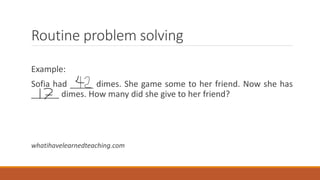
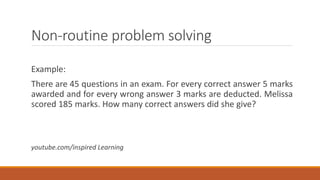


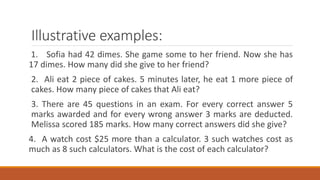


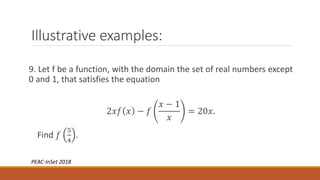
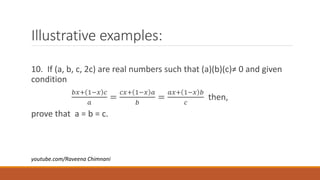


This document discusses and provides examples of routine and non-routine problem solving. Routine problems involve using arithmetic operations to solve practical problems and have clear, straightforward procedures. Non-routine problems require more creativity, originality, and higher-order thinking skills as they may have multiple solutions or approaches that are not immediately obvious. Ten examples are given that illustrate the differences between routine and non-routine problems of increasing complexity.


