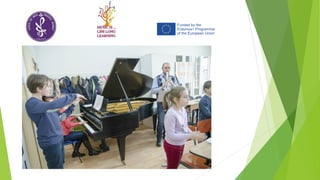
ROMANIAN LANGUAGE THROUGH MUSIC
Music is… Life Long Learning
Liceul de Arte “Regina Maria” Alba Iulia
SPAIN – 20th-25th March, 2017
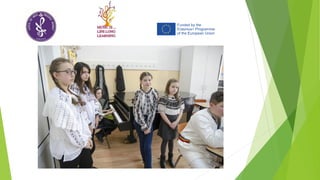
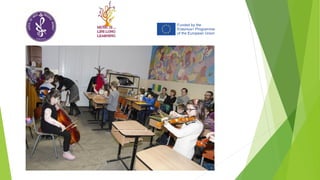
PRIMARY SCHOOL: 2nd grade
 PERIOD: 27 February – 10 March 2017
 Number of students: 30
 SUBJECT: Romanian language
 LEARNING UNIT: Spring is here!
 LESSONS: teaching, learning and consolidating linguistic
knowledge through music
Spring is here: flowers, bees, gardens
LINGUISTIC COMPETENCES
from the Romanian National Syllabus:
 Reception of oral messages in familiar communicative contexts
 Reception of written messages in familiar communicative
contexts
 Production of oral/written messages in various communicative
situations
OBJECTIVES / AIMS OF THE LESSONS
 identify words with similar meanings using the lyrics of the
song Spring is here
 discover the antonyms of various words in the songs The
Bee and the flowers and Gardens are blooming
 respect the rules of division of syllables
 spot/determine the message of a text
ORGANISATION
 Individual
 Pair work
 Whole class
interaction
RESOURCES
➢Handouts with the lyrics of songs: Spring is
here, The Bee and the flowers, The Gardens
are Blooming, Flower Lady
➢Musical Scores for all songs
➢Antonio Vivaldi: Spring
➢Pictures illustrating spring
➢Piano, flute, cello
➢Handouts with division of words into syllabes
METHODS
 Song interpretations (voice, piano, flute, cello, violin)
 Performing various songs according to the scores given
 Division of words into syllables using the lyrics of the songs with piano/violin accompaniment
 Solving tasks having in the background A. Vivaldi: Spring
 Singing rhyming songs accompanied by the piano, the flute and the violin and then solving
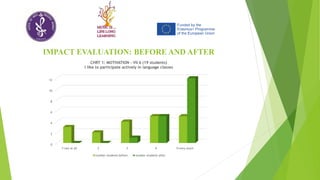
song-related tasks
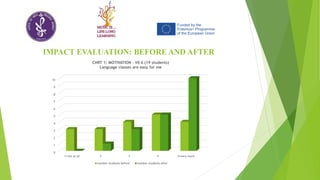
 Interpreting songs with piano and cello accompaniment
 Using rhythmic verses/ words by making hands percussion on desks and body
 Promotion of musical Romanian words/ expressions
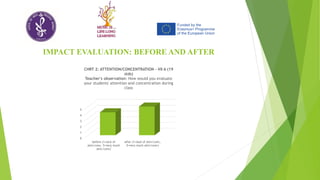
 Singing songs and writing specific words: for each musical instrument were chosen specific
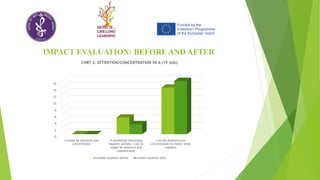
words and expressions to be consolidated
EVALUATION of Romanian language competences
 Systematic observation of students
 Song interpretation
 Associations of learnt words with specific musical instruments
 Word meaning identification through music performed by various instruments
(memory anchorage through sounds/music)
 Short tasks of division of words into syllables with piano accompaniment
 Dictation starting from the songs listened, while listening cello
 Identification of the message of short texts / lyrics, while listening flute
 Completion of evaluation worksheets while listening to Spring by Vivaldi
IMPACT EVALUATION: BEFORE AND AFTER
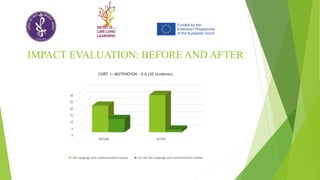
0
5
10
15
20
25
30
BEFORE AFTER
CHRT 1: MOTIVATION - II A (30 students)
I like language and communication classes I do not like language and communication classes
IMPACT EVALUATION: BEFORE AND AFTER
0
0,5
1
1,5
2
2,5
3
3,5
4
4,5
5
BEFORE AFTER
CHRT 2: ATTENTION/CONCENTRATION - II A (30 stds)
From a scale 1-5 (1=not at all, 5=totally), how would you evaluate
your students attention and concentration during language and
communication classes?
IMPACT EVALUATION: BEFORE AND AFTER
0
5
10
15
20
25
30
BEFORE AFTER
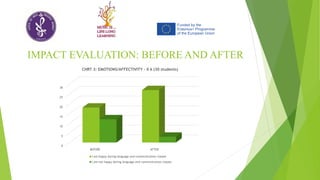
CHRT 3: EMOTIONS/AFFECTIVITY - II A (30 students)
I am happy during language and communication classes
I am not happy during language and communication classes
SECONDARY SCHOOL: 6th grade
 PERIOD: 27 February – 10 March 2017
 Number of students: 25
 SUBJECT: Romanian language and literature
 LEARNING UNIT: Lyric Poetry
 LESSONS: reception and understanding of lyrical texts,
identification of types of lyrical literary compositions
DOINA (traditional Romanian folkloric song)
LINGUISTIC COMPETENCES
 Participation in communicative interactions, in different
situations, through reception and production of oral texts
 Reception of written texts of various types and musical
pieces
 Production of oral messages and musical compositions
 Expressing the linguistic identity in (inter)national
context
OBJECTIVES / AIMS OF THE LESSONS
 Improving students’ attention and responsiveness
 Acknowledging the artistic value of the text and the melodic line
 Identification of the artistic value of combining text and music
 Increasing students motivation for learning the Romanian folklore
 Identification of the artistic message, the expressive value of the artistic language
 Noticing the musicality of the folkloric text through specific elements
 Defining folkloric ‘doina’ / other folkloric types of literary compositions
 Interpretation of ‘doina’ accompanied by musical instruments (clarinet, piano, violin,
cello)
ORGANISATION
 Individual
 Pair work
 Group work
 Whole class
interaction
RESOURCES
o Musical instruments: piano, cello, clarinet,
violin, triangle, tambourine
o Handouts with the text of lyric literary
compositions
o Books with folkloric literary texts
o Posters, paintings, collage on the topic of ‘doina’
o Handouts with text related tasks
o Exhibition of Romanian traditional folkloric
costumes
METHODS
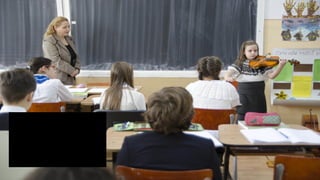
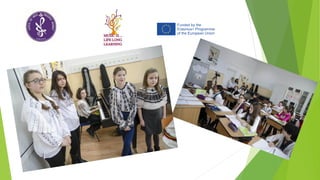
 Presentation of ‘doina’ using different instruments: cello, violin, clarinet and voice
 Interpretation of ‘doina’ using musical instruments
 Group performance of ‘doina’ accompanied by the piano
 Presentation of the text of ‘doina’ and identification of the theme, motifs, figures of
speech, versification
 Analysis of the connection between the musicality of the written text and the
versification
 Performance of ‘doina’ in groups/ with the whole class accompanied by musical
instruments
 Combining written notes with musical interpretations and oral presentations
EVALUATION of Romanian language competences:
 Systematic observation of students
 ‘Doina’ interpretations (voice, various
instruments)
 Associations of musicality of the text and the
versification
 Analysis of versification and message of the text
 Short tasks of definition and classification of
lyric poetry
 Handouts with tasks related to lyric poetry
 Completion of evaluation worksheets
0
2
4
6
8
10
12
14
16
18
1=not at all 2 3 4 5=very much
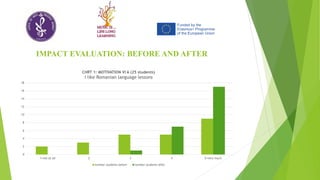
CHRT 1: MOTIVATION VI A (25 students)
I like Romanian language lessons
number students before number students after
IMPACT EVALUATION: BEFORE AND AFTER
0
1
2
3
4
5
6
7
8
9
10
1=not at all 2 3 4 5=very much
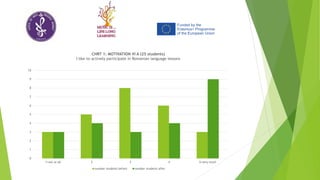
CHRT 1: MOTIVATION VI A (25 students)
I like to actively participate in Romanian language lessons
number students before number students after
0
1
2
3
4
5
6
7
8
9
1=not at all 2 3 4 5=very much
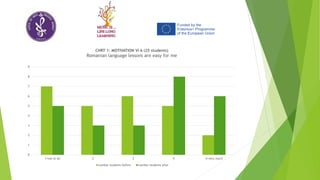
CHRT 1: MOTIVATION VI A (25 students)
Romanian language lessons are easy for me
number students before number students after
0
2
4
6
8
10
12
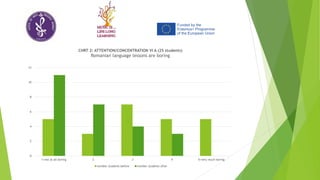
1=not at all boring 2 3 4 5=very much boring
CHRT 2: ATTENTION/CONCENTRATION VI A (25 students)
Romanian language lessons are boring
number students before number students after
0
2
4
6
8
10
12
14
16
18
20
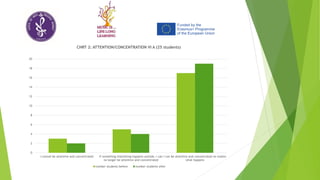
I cannot be attentive and concentrated If something interesting happens outside, I can
no longer be attentive and concentrated
I can be attentive and concentrated no matter
what happens
CHRT 2: ATTENTION/CONCENTRATION VI A (25 students)
number students before number students after
0
1
2
3
4
5
6
before (1=lack of attn/conc, 5=very much attn/conc) after (1=lack of attn/conc, 5=very much attn/conc)
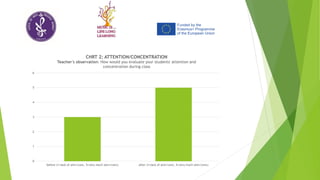
CHRT 2: ATTENTION/CONCENTRATION
Teacher's observation: How would you evaluate your students' attention and
concentration during class
0
2
4
6
8
10
12
1=not at all 2 3 4 5=very much
CHRT 3: EMOTIONS/AFFECTIVITY VI A (25 students)
I feel happy and content during Romanian language classes
number students before number students after
0
5
10
15
20
25
1=not at all 2 3 4 5=very much
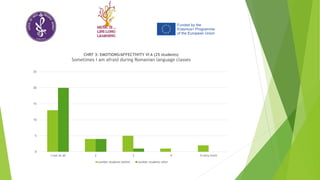
CHRT 3: EMOTIONS/AFFECTIVITY VI A (25 students)
Sometimes I am afraid during Romanian language classes
number students before number students after
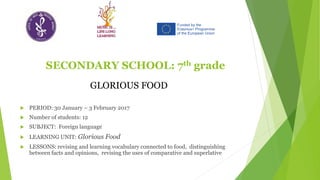
SECONDARY SCHOOL: 7th grade
 PERIOD: 30 January – 3 February 2017
 Number of students: 12
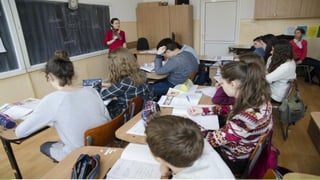
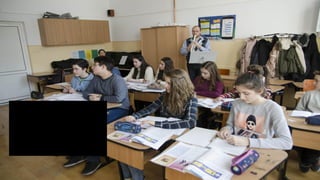
 SUBJECT: Foreign language
 LEARNING UNIT: Glorious Food
 LESSONS: revising and learning vocabulary connected to food, distinguishing
between facts and opinions, revising the uses of comparative and superlative
GLORIOUS FOOD
LINGUISTIC COMPETENCES
 Strengthening the vocabulary connected to
food issues through musical tunes
 Gaining phonological awareness of certain
linguistic words/expressions through
linguistic musicality
OBJECTIVES / AIMS OF THE LESSONS
 to restate and compare different snacks using pictures and rhythmic
formulas
 to recall the proper pronunciation of words through their repetition in
a musical tune
 to classify adjectives describing food according to the category they
belong to
 to distinguish between facts and opinions in the given contexts
 to revise the comparative and superlative of adjectives through
musical tunes
ORGANISATION
 Individual
 Pair work
 Group work
 Whole class
interaction
RESOURCES
o Musical instruments: piano, blockflute, maracas,
tambourine, percussion instruments
o Handouts with snacks arranged on a musical scale for
rhythmic pronunciation
o Musical scores for the tune composed by the music
teachers for the comparative/superlative
o Pictures with snacks; food advertisements
o Handouts with text related tasks
o Exhibition of Romanian traditional folkloric
costumes
METHODS
 Discussion, explanation
 Rhythmic pronunciation of the vocabulary using a tambourine and maracas
(Rumba shakers)
 Singing short tunes accompanied by the blockflute and the piano with
adjectives to complete in a diagram
 Singing Opinion/ Fact accompanied by the piano and bockflute so as to reflect
the meaning of the two words
 Singing comparatives and superlatives divided into three groups (unequal
comparative, equal comparative, superlative) having the same melody but
slightly altered so that it fits the words to be sung
EVALUATION of Language Competences:
 Systematic observation of students
 Associations of musicality of the words and their meaning
 Analysis of the adjectives used in the advertisements
 Distinguishing between facts and opinions through singing
 Creating new rhythmic structures for other words
 Completion of comparatives/superlatives by relating to the
given musical tunes
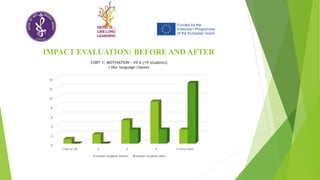
IMPACT EVALUATION: BEFORE AND AFTER
0
2
4
6
8
10
12
14
1=not at all 2 3 4 5=very much
CHRT 1: MOTIVATION - VII A (19 students)
I like language classes
number students before number students after
IMPACT EVALUATION: BEFORE AND AFTER
0
2
4
6
8
10
12
1=not at all 2 3 4 5=very much
CHRT 1: MOTIVATION - VII A (19 students)
I like to participate actively in language classes
number students before number students after
IMPACT EVALUATION: BEFORE AND AFTER
0
1
2
3
4
5
6
7
8
9
10
1=not at all 2 3 4 5=very much
CHRT 1: MOTIVATION - VII A (19 students)
Language classes are easy for me
number students before number students after
IMPACT EVALUATION: BEFORE AND AFTER
0
1
2
3
4
5
6
7
8
9
10
1=not at all 2 3 4 5=very much
CHRT 2: ATTENTION/CONCENTARTION - VII A (19 stds)
Language classes are boring
number students before number students after
IMPACT EVALUATION: BEFORE AND AFTER
0
1
2
3
4
5
before (1=lack of
attn/conc, 5=very much
attn/conc)
after (1=lack of attn/conc,
5=very much attn/conc)
CHRT 2: ATTENTION/CONCENTRATION - VII A (19
stds)
Teacher's observation: How would you evaluate
your students' attention and concentration during
class
IMPACT EVALUATION: BEFORE AND AFTER
0
2
4
6
8
10
12
14
16
I cannot be attentive and
concentrated
If something interesting
happens outside, I can no
longer be attentive and
concentrated
I can be attentive and
concentrated no matter what
happens
CHRT 2: ATTENTION/CONCENTRATION VII A (19 stds)
number students before number students after
IMPACT EVALUATION: BEFORE AND AFTER
0
2
4
6
8
10
12
14
1=not at all 2 3 4 5=very much
CHRT 3: EMOTIONS/AFFECTIVITY VII A (19 students)
I feel happy and content during language classes
number students before number students after
IMPACT EVALUATION: BEFORE AND AFTER
0
2
4
6
8
10
12
14
16
18
1=not at all 2 3 4 5=very much
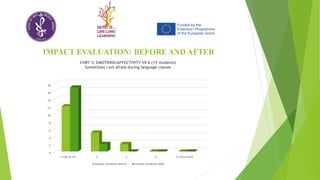
CHRT 3: EMOTIONS/AFFECTIVITY VII A (19 students)
Sometimes I am afraid during language classes
number students before number students after
PRIMARY SCHOOL: 2nd grade
 PERIOD: 25 January 2017
 Number of students: 16
 SUBJECT: Music
 WORKSHOP: learning and consolidating musical terms in
Romanian through musical games and employment of
musical characters, stories and image-sound connections
Wonderland of Musical Characters
LINGUISTIC/MUSICAL COMPETENCES
 Reception of oral messages in familiar communicative
contexts
 Reception of musical terms in musical settings
 Recognition and Production of musical language in play-
related contexts
OBJECTIVES / AIMS
 Setting basic piano knowledge
 Identify musical notes through several games
 Recognising musical durations and rests
 Consolidating the keyboard
 Imitating an orchestra
 Learning in the setting created by characters - musical
notes, their stories, visual representations of tunes
ORGANISATION
 Individual
 Pair work
 Team work
 Whole class
interaction
RESOURCES
➢Musical games: Listen carefully!, Guess the
key!, Darts, Hot-Cold, Little mouse steals the
cheese, Champion Squirrels, Small orchestra
➢Musical notes- character-dolls, houses G and F
➢Posters, pictures, stories written by pupils
➢Piano, violin, cello, guitar, viola
➢Cards for musical notes, for alterations
➢Dice, with durations, board games, polystyrene
cheese, little magnet squirrels
METHODS
 Games of discovery through audition with the pupils’ eyes covered
 Games of consolidating the keyboard, white and black
 Games for setting durations and rests: Darts, Little mouse steals the cheese
 Games for setting basic piano knowledge: Hot-Cold
 Games for setting the alterations: Champion Squirrels
 Small Orchestra: a game of imitating an orchestra while a pupil is performing
a musical piece and the other children are trying to achieve a rhythm or a
melodic line using another instrument and having a child – conductor in front
who tries to beat the measure.
EVALUATION of competences
 Systematic observation of pupils
 Musical Team competitions involving the games mentioned and a series of
musical instruments: piano, violin, cello, viola, guitar
 The ‘golden coins’ collected by pupils during the games as they reflect the numbe
rof correct answers they gave
 “Small Orchestra” – assesses pupils’ musical competences, their creativity and
imagination, their ability to adapt to the group, their interactive skills in the
musical field
 Pupils’ work: musical compositions, stories, dolls- musical notes, pictures,
houses G and F, image-word-sound associations
Romanian language music bun

Romanian language music bun

  • 1.
    ROMANIAN LANGUAGE THROUGHMUSIC Music is… Life Long Learning Liceul de Arte “Regina Maria” Alba Iulia SPAIN – 20th-25th March, 2017
  • 2.
    PRIMARY SCHOOL: 2ndgrade  PERIOD: 27 February – 10 March 2017  Number of students: 30  SUBJECT: Romanian language  LEARNING UNIT: Spring is here!  LESSONS: teaching, learning and consolidating linguistic knowledge through music Spring is here: flowers, bees, gardens
  • 4.
    LINGUISTIC COMPETENCES from theRomanian National Syllabus:  Reception of oral messages in familiar communicative contexts  Reception of written messages in familiar communicative contexts  Production of oral/written messages in various communicative situations
  • 5.
    OBJECTIVES / AIMSOF THE LESSONS  identify words with similar meanings using the lyrics of the song Spring is here  discover the antonyms of various words in the songs The Bee and the flowers and Gardens are blooming  respect the rules of division of syllables  spot/determine the message of a text
  • 7.
    ORGANISATION  Individual  Pairwork  Whole class interaction RESOURCES ➢Handouts with the lyrics of songs: Spring is here, The Bee and the flowers, The Gardens are Blooming, Flower Lady ➢Musical Scores for all songs ➢Antonio Vivaldi: Spring ➢Pictures illustrating spring ➢Piano, flute, cello ➢Handouts with division of words into syllabes
  • 9.
    METHODS  Song interpretations(voice, piano, flute, cello, violin)  Performing various songs according to the scores given  Division of words into syllables using the lyrics of the songs with piano/violin accompaniment  Solving tasks having in the background A. Vivaldi: Spring  Singing rhyming songs accompanied by the piano, the flute and the violin and then solving song-related tasks  Interpreting songs with piano and cello accompaniment  Using rhythmic verses/ words by making hands percussion on desks and body  Promotion of musical Romanian words/ expressions  Singing songs and writing specific words: for each musical instrument were chosen specific words and expressions to be consolidated
  • 11.
    EVALUATION of Romanianlanguage competences  Systematic observation of students  Song interpretation  Associations of learnt words with specific musical instruments  Word meaning identification through music performed by various instruments (memory anchorage through sounds/music)  Short tasks of division of words into syllables with piano accompaniment  Dictation starting from the songs listened, while listening cello  Identification of the message of short texts / lyrics, while listening flute  Completion of evaluation worksheets while listening to Spring by Vivaldi
  • 12.
    IMPACT EVALUATION: BEFOREAND AFTER 0 5 10 15 20 25 30 BEFORE AFTER CHRT 1: MOTIVATION - II A (30 students) I like language and communication classes I do not like language and communication classes
  • 13.
    IMPACT EVALUATION: BEFOREAND AFTER 0 0,5 1 1,5 2 2,5 3 3,5 4 4,5 5 BEFORE AFTER CHRT 2: ATTENTION/CONCENTRATION - II A (30 stds) From a scale 1-5 (1=not at all, 5=totally), how would you evaluate your students attention and concentration during language and communication classes?
  • 14.
    IMPACT EVALUATION: BEFOREAND AFTER 0 5 10 15 20 25 30 BEFORE AFTER CHRT 3: EMOTIONS/AFFECTIVITY - II A (30 students) I am happy during language and communication classes I am not happy during language and communication classes
  • 15.
    SECONDARY SCHOOL: 6thgrade  PERIOD: 27 February – 10 March 2017  Number of students: 25  SUBJECT: Romanian language and literature  LEARNING UNIT: Lyric Poetry  LESSONS: reception and understanding of lyrical texts, identification of types of lyrical literary compositions DOINA (traditional Romanian folkloric song)
  • 16.
    LINGUISTIC COMPETENCES  Participationin communicative interactions, in different situations, through reception and production of oral texts  Reception of written texts of various types and musical pieces  Production of oral messages and musical compositions  Expressing the linguistic identity in (inter)national context
  • 18.
    OBJECTIVES / AIMSOF THE LESSONS  Improving students’ attention and responsiveness  Acknowledging the artistic value of the text and the melodic line  Identification of the artistic value of combining text and music  Increasing students motivation for learning the Romanian folklore  Identification of the artistic message, the expressive value of the artistic language  Noticing the musicality of the folkloric text through specific elements  Defining folkloric ‘doina’ / other folkloric types of literary compositions  Interpretation of ‘doina’ accompanied by musical instruments (clarinet, piano, violin, cello)
  • 20.
    ORGANISATION  Individual  Pairwork  Group work  Whole class interaction RESOURCES o Musical instruments: piano, cello, clarinet, violin, triangle, tambourine o Handouts with the text of lyric literary compositions o Books with folkloric literary texts o Posters, paintings, collage on the topic of ‘doina’ o Handouts with text related tasks o Exhibition of Romanian traditional folkloric costumes
  • 23.
    METHODS  Presentation of‘doina’ using different instruments: cello, violin, clarinet and voice  Interpretation of ‘doina’ using musical instruments  Group performance of ‘doina’ accompanied by the piano  Presentation of the text of ‘doina’ and identification of the theme, motifs, figures of speech, versification  Analysis of the connection between the musicality of the written text and the versification  Performance of ‘doina’ in groups/ with the whole class accompanied by musical instruments  Combining written notes with musical interpretations and oral presentations
  • 26.
    EVALUATION of Romanianlanguage competences:  Systematic observation of students  ‘Doina’ interpretations (voice, various instruments)  Associations of musicality of the text and the versification  Analysis of versification and message of the text  Short tasks of definition and classification of lyric poetry  Handouts with tasks related to lyric poetry  Completion of evaluation worksheets
  • 28.
    0 2 4 6 8 10 12 14 16 18 1=not at all2 3 4 5=very much CHRT 1: MOTIVATION VI A (25 students) I like Romanian language lessons number students before number students after IMPACT EVALUATION: BEFORE AND AFTER
  • 29.
    0 1 2 3 4 5 6 7 8 9 10 1=not at all2 3 4 5=very much CHRT 1: MOTIVATION VI A (25 students) I like to actively participate in Romanian language lessons number students before number students after
  • 30.
    0 1 2 3 4 5 6 7 8 9 1=not at all2 3 4 5=very much CHRT 1: MOTIVATION VI A (25 students) Romanian language lessons are easy for me number students before number students after
  • 31.
    0 2 4 6 8 10 12 1=not at allboring 2 3 4 5=very much boring CHRT 2: ATTENTION/CONCENTRATION VI A (25 students) Romanian language lessons are boring number students before number students after
  • 32.
    0 2 4 6 8 10 12 14 16 18 20 I cannot beattentive and concentrated If something interesting happens outside, I can no longer be attentive and concentrated I can be attentive and concentrated no matter what happens CHRT 2: ATTENTION/CONCENTRATION VI A (25 students) number students before number students after
  • 33.
    0 1 2 3 4 5 6 before (1=lack ofattn/conc, 5=very much attn/conc) after (1=lack of attn/conc, 5=very much attn/conc) CHRT 2: ATTENTION/CONCENTRATION Teacher's observation: How would you evaluate your students' attention and concentration during class
  • 34.
    0 2 4 6 8 10 12 1=not at all2 3 4 5=very much CHRT 3: EMOTIONS/AFFECTIVITY VI A (25 students) I feel happy and content during Romanian language classes number students before number students after
  • 35.
    0 5 10 15 20 25 1=not at all2 3 4 5=very much CHRT 3: EMOTIONS/AFFECTIVITY VI A (25 students) Sometimes I am afraid during Romanian language classes number students before number students after
  • 36.
    SECONDARY SCHOOL: 7thgrade  PERIOD: 30 January – 3 February 2017  Number of students: 12  SUBJECT: Foreign language  LEARNING UNIT: Glorious Food  LESSONS: revising and learning vocabulary connected to food, distinguishing between facts and opinions, revising the uses of comparative and superlative GLORIOUS FOOD
  • 37.
    LINGUISTIC COMPETENCES  Strengtheningthe vocabulary connected to food issues through musical tunes  Gaining phonological awareness of certain linguistic words/expressions through linguistic musicality
  • 39.
    OBJECTIVES / AIMSOF THE LESSONS  to restate and compare different snacks using pictures and rhythmic formulas  to recall the proper pronunciation of words through their repetition in a musical tune  to classify adjectives describing food according to the category they belong to  to distinguish between facts and opinions in the given contexts  to revise the comparative and superlative of adjectives through musical tunes
  • 40.
    ORGANISATION  Individual  Pairwork  Group work  Whole class interaction RESOURCES o Musical instruments: piano, blockflute, maracas, tambourine, percussion instruments o Handouts with snacks arranged on a musical scale for rhythmic pronunciation o Musical scores for the tune composed by the music teachers for the comparative/superlative o Pictures with snacks; food advertisements o Handouts with text related tasks o Exhibition of Romanian traditional folkloric costumes
  • 42.
    METHODS  Discussion, explanation Rhythmic pronunciation of the vocabulary using a tambourine and maracas (Rumba shakers)  Singing short tunes accompanied by the blockflute and the piano with adjectives to complete in a diagram  Singing Opinion/ Fact accompanied by the piano and bockflute so as to reflect the meaning of the two words  Singing comparatives and superlatives divided into three groups (unequal comparative, equal comparative, superlative) having the same melody but slightly altered so that it fits the words to be sung
  • 44.
    EVALUATION of LanguageCompetences:  Systematic observation of students  Associations of musicality of the words and their meaning  Analysis of the adjectives used in the advertisements  Distinguishing between facts and opinions through singing  Creating new rhythmic structures for other words  Completion of comparatives/superlatives by relating to the given musical tunes
  • 46.
    IMPACT EVALUATION: BEFOREAND AFTER 0 2 4 6 8 10 12 14 1=not at all 2 3 4 5=very much CHRT 1: MOTIVATION - VII A (19 students) I like language classes number students before number students after
  • 47.
    IMPACT EVALUATION: BEFOREAND AFTER 0 2 4 6 8 10 12 1=not at all 2 3 4 5=very much CHRT 1: MOTIVATION - VII A (19 students) I like to participate actively in language classes number students before number students after
  • 48.
    IMPACT EVALUATION: BEFOREAND AFTER 0 1 2 3 4 5 6 7 8 9 10 1=not at all 2 3 4 5=very much CHRT 1: MOTIVATION - VII A (19 students) Language classes are easy for me number students before number students after
  • 49.
    IMPACT EVALUATION: BEFOREAND AFTER 0 1 2 3 4 5 6 7 8 9 10 1=not at all 2 3 4 5=very much CHRT 2: ATTENTION/CONCENTARTION - VII A (19 stds) Language classes are boring number students before number students after
  • 50.
    IMPACT EVALUATION: BEFOREAND AFTER 0 1 2 3 4 5 before (1=lack of attn/conc, 5=very much attn/conc) after (1=lack of attn/conc, 5=very much attn/conc) CHRT 2: ATTENTION/CONCENTRATION - VII A (19 stds) Teacher's observation: How would you evaluate your students' attention and concentration during class
  • 51.
    IMPACT EVALUATION: BEFOREAND AFTER 0 2 4 6 8 10 12 14 16 I cannot be attentive and concentrated If something interesting happens outside, I can no longer be attentive and concentrated I can be attentive and concentrated no matter what happens CHRT 2: ATTENTION/CONCENTRATION VII A (19 stds) number students before number students after
  • 52.
    IMPACT EVALUATION: BEFOREAND AFTER 0 2 4 6 8 10 12 14 1=not at all 2 3 4 5=very much CHRT 3: EMOTIONS/AFFECTIVITY VII A (19 students) I feel happy and content during language classes number students before number students after
  • 53.
    IMPACT EVALUATION: BEFOREAND AFTER 0 2 4 6 8 10 12 14 16 18 1=not at all 2 3 4 5=very much CHRT 3: EMOTIONS/AFFECTIVITY VII A (19 students) Sometimes I am afraid during language classes number students before number students after
  • 54.
    PRIMARY SCHOOL: 2ndgrade  PERIOD: 25 January 2017  Number of students: 16  SUBJECT: Music  WORKSHOP: learning and consolidating musical terms in Romanian through musical games and employment of musical characters, stories and image-sound connections Wonderland of Musical Characters
  • 56.
    LINGUISTIC/MUSICAL COMPETENCES  Receptionof oral messages in familiar communicative contexts  Reception of musical terms in musical settings  Recognition and Production of musical language in play- related contexts
  • 57.
    OBJECTIVES / AIMS Setting basic piano knowledge  Identify musical notes through several games  Recognising musical durations and rests  Consolidating the keyboard  Imitating an orchestra  Learning in the setting created by characters - musical notes, their stories, visual representations of tunes
  • 58.
    ORGANISATION  Individual  Pairwork  Team work  Whole class interaction RESOURCES ➢Musical games: Listen carefully!, Guess the key!, Darts, Hot-Cold, Little mouse steals the cheese, Champion Squirrels, Small orchestra ➢Musical notes- character-dolls, houses G and F ➢Posters, pictures, stories written by pupils ➢Piano, violin, cello, guitar, viola ➢Cards for musical notes, for alterations ➢Dice, with durations, board games, polystyrene cheese, little magnet squirrels
  • 60.
    METHODS  Games ofdiscovery through audition with the pupils’ eyes covered  Games of consolidating the keyboard, white and black  Games for setting durations and rests: Darts, Little mouse steals the cheese  Games for setting basic piano knowledge: Hot-Cold  Games for setting the alterations: Champion Squirrels  Small Orchestra: a game of imitating an orchestra while a pupil is performing a musical piece and the other children are trying to achieve a rhythm or a melodic line using another instrument and having a child – conductor in front who tries to beat the measure.
  • 61.
    EVALUATION of competences Systematic observation of pupils  Musical Team competitions involving the games mentioned and a series of musical instruments: piano, violin, cello, viola, guitar  The ‘golden coins’ collected by pupils during the games as they reflect the numbe rof correct answers they gave  “Small Orchestra” – assesses pupils’ musical competences, their creativity and imagination, their ability to adapt to the group, their interactive skills in the musical field  Pupils’ work: musical compositions, stories, dolls- musical notes, pictures, houses G and F, image-word-sound associations