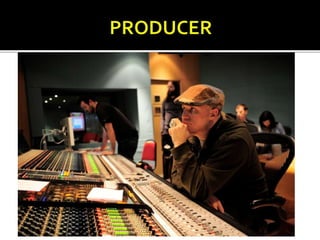
 The person who takes the play fro
mere concept to an actual
presentation.
 He or she choose all the team
members and assigns them their
functions, and oversees the
casting of the actors and actresses
for he different roles.
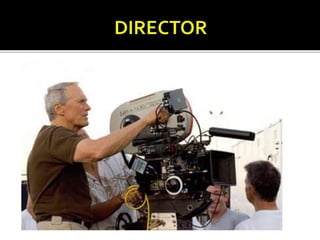
 Is the overall artistic coordinator of
the entire production.
 Like a conductor of an orchestra,
he or she has a vision of the
desired total effect and impact of
the performance
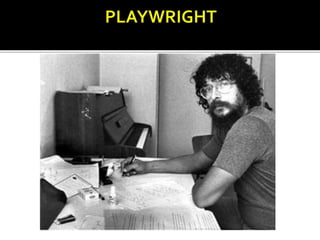
 For a script intended for stage
performance, the writer of the
script is more specifically called a
playwright.
 The initial concept or plot may be
original, and then developed into a
play script is more script.
 Or it may be based on an existing
story or another play which the
playwright will then adapt to
present in a new way.
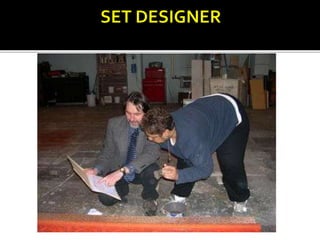
 The concept and creation of the
physical stage is the task of the set
designer. He or she builds the set (or
sets) that will simulate the world that
the play’s characters are supposed to
live in.
 Lighting is critical in designing the
mood of each scene in the play,
highlighting a dramatic moment,
signaling the entrance of a character,
focusing attention on a specific spot
on stage, or even providing the
blanket of darkness for set and prop
changes.
 Coordinating closely with the set
designer is the lighting designer.
 The actors and actresses must look
believable in their roles and much
of this is owed to the costume
designer.
 He/She studies the general setting
(time and place) that the play is
meant to take place in, as well as
each character in the script.
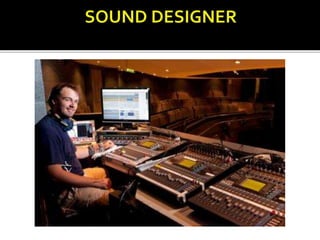
 Similar to the lighting designer,
the sound designer serves a vital
role in creating and enhancing the
atmosphere of the performance
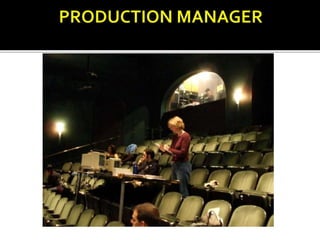
 Coordinating all the complex
behind-the-scenes details of
staging a play is the production
manager
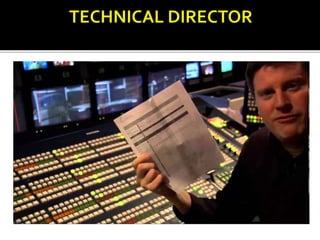
 Shadows the play’s director
throughout the entire production
process.
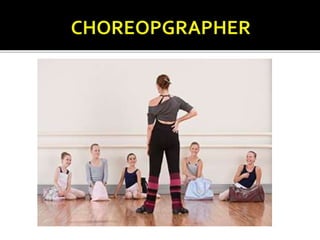
• is included in the production team
• he/she not only plans out all the
dance steps to suit the music, but
also rehearses the actor until they
are able to perform the dance
skillfully – while remaining “in
character” on stage.
 As the costume designer
deliberates on the characters’
main attire, the makeup designer
is brought in to plan the hairstyles
and makeup to complement the
costumes.

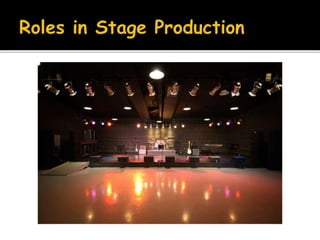
Roles in Stage Production

  • 5.
     The personwho takes the play fro mere concept to an actual presentation.  He or she choose all the team members and assigns them their functions, and oversees the casting of the actors and actresses for he different roles.
  • 7.
     Is theoverall artistic coordinator of the entire production.  Like a conductor of an orchestra, he or she has a vision of the desired total effect and impact of the performance
  • 9.
     For ascript intended for stage performance, the writer of the script is more specifically called a playwright.  The initial concept or plot may be original, and then developed into a play script is more script.
  • 10.
     Or itmay be based on an existing story or another play which the playwright will then adapt to present in a new way.
  • 12.
     The conceptand creation of the physical stage is the task of the set designer. He or she builds the set (or sets) that will simulate the world that the play’s characters are supposed to live in.
  • 14.
     Lighting iscritical in designing the mood of each scene in the play, highlighting a dramatic moment, signaling the entrance of a character, focusing attention on a specific spot on stage, or even providing the blanket of darkness for set and prop changes.
  • 15.
     Coordinating closelywith the set designer is the lighting designer.
  • 17.
     The actorsand actresses must look believable in their roles and much of this is owed to the costume designer.  He/She studies the general setting (time and place) that the play is meant to take place in, as well as each character in the script.
  • 19.
     Similar tothe lighting designer, the sound designer serves a vital role in creating and enhancing the atmosphere of the performance
  • 21.
     Coordinating allthe complex behind-the-scenes details of staging a play is the production manager
  • 23.
     Shadows theplay’s director throughout the entire production process.
  • 25.
    • is includedin the production team • he/she not only plans out all the dance steps to suit the music, but also rehearses the actor until they are able to perform the dance skillfully – while remaining “in character” on stage.
  • 27.
     As thecostume designer deliberates on the characters’ main attire, the makeup designer is brought in to plan the hairstyles and makeup to complement the costumes.