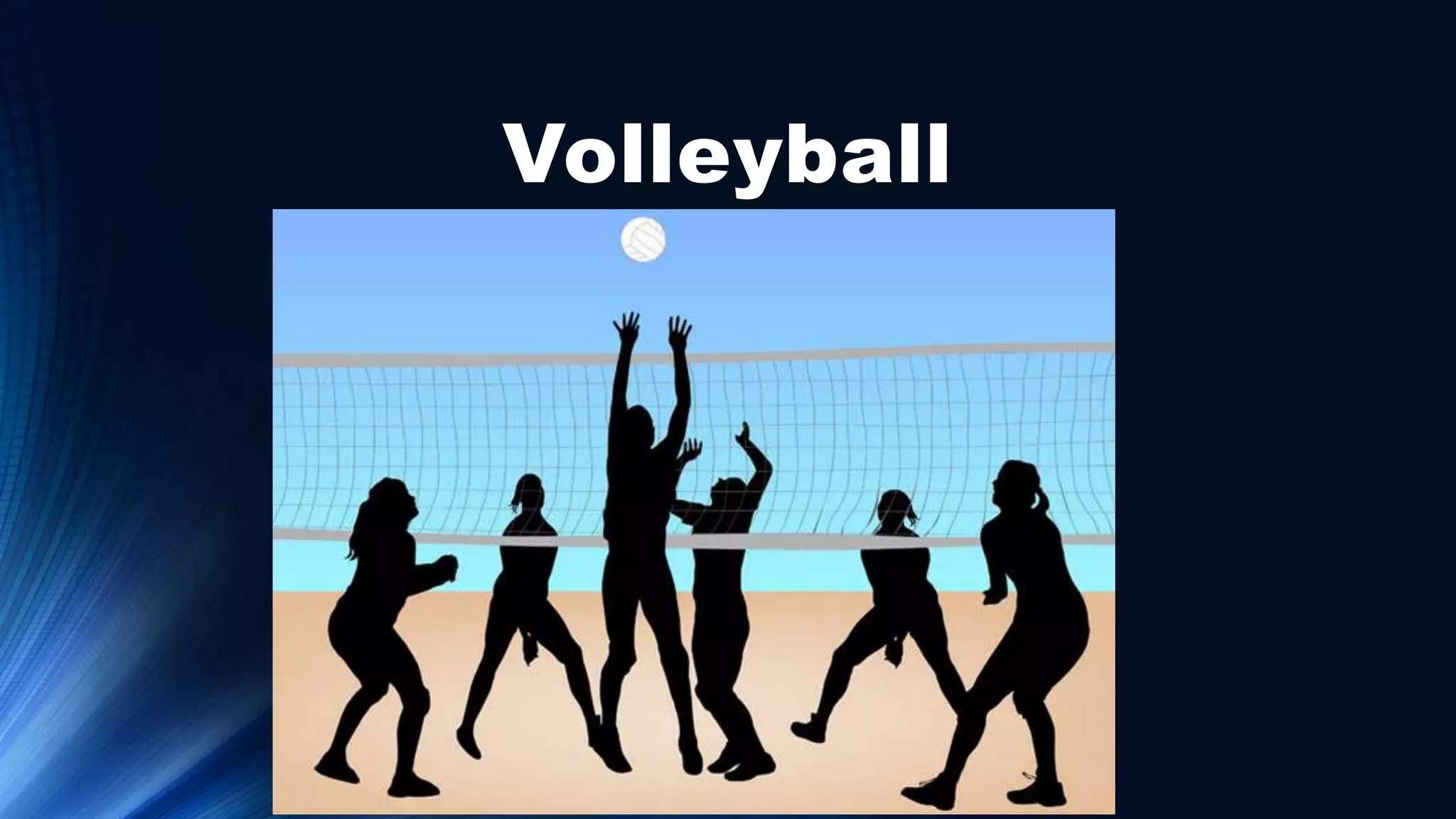
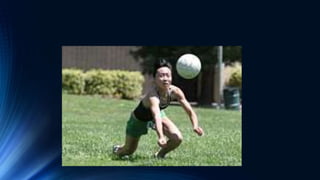
Volleyball
•is a team sport in which two
teams of six players are
separated by a net. Each team
tries to score points by
grounding a ball on the other
team's court under organized
rules.
Common Faults in
Volleyball
•causing the ball to touch the
ground or floor outside the
opponents' court or without first
passing over the net;
•catching and throwing the ball;
•double hit: two consecutive
contacts with the ball made by
the same player;
•four consecutive contacts with
the ball made by the same
team;
•net foul: touching the net
during play;
•foot fault: the foot crosses
over the boundary line when
serving.
•
History of Volleyball
•It was invented by William
Morgan
• Holyoke, Massachusetts (USA)
•It was first called Mintonette
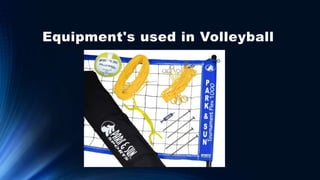
Equipment's used in Volleyball
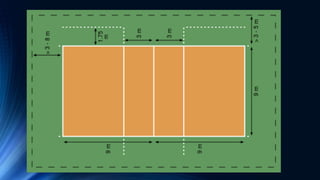
The Court
•A volleyball court is 18 m (59 ft)
long and 9 m (29.5 ft) wide, divided
into 9 m × 9 m halves by a one-
meter (40-inch) wide net. The top of
the net is 2.43 m (7 ft 11 5/8 in)
above the center of the court for
men's competition, and 2.24 m (7 ft
4 1/8 in) for women's competition,
varied for veterans and junior
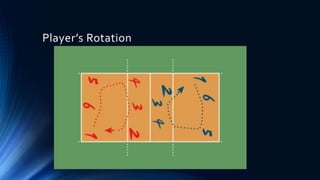
Player’s Rotation
The ball
•FIVB regulations state that the
ball must be spherical, made
of leather or synthetic leather,
have a circumference of 65–
67 cm, a weight of 260–280 g
and an inside pressure of 0.30–
0.325 kg/cm2
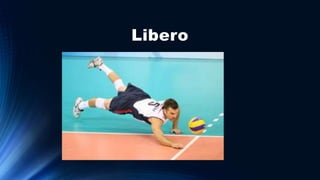
Libero
•In 1998 the libero player was
introduced internationally.
•is a player specialized in
defensive skills: the libero must
wear a contrasting jersey color
from his or her teammates and
cannot block or attack the ball
when it is entirely above net
height.
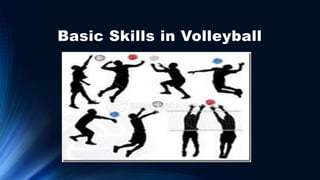
Basic Skills in Volleyball
Serve
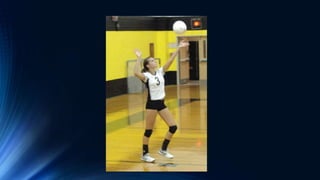
•A player stands behind the
inline and serves the ball, in an
attempt to drive it into the
opponent's court.
•His or her main objective is to
make it land inside the court; it
is also desirable to set the
ball's direction, speed and
acceleration so that it
becomes difficult for the
receiver to handle it properly.
•A serve is called an "ace"
when the ball lands directly
onto the court or travels
outside the court after being
touched by an opponent.
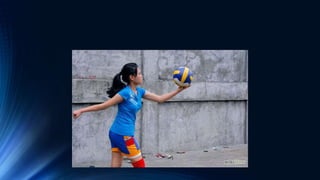
Underhand
• a serve in which the player
strikes the ball below the
waist instead of tossing it up
and striking it with an
overhand throwing motion.
Float
•an overhand serve where the
ball is hit with no spin so that
its path becomes
unpredictable,
Pass
•Also called reception, the pass
is the attempt by a team to
properly handle the opponent's
serve, or any form of attack.
Set
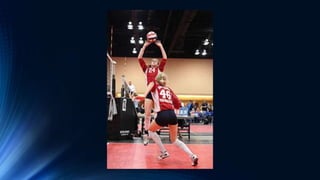
•The set is usually the second
contact that a team makes
with the ball. The main goal of
setting is to put the ball in the
air in such a way that it can be
driven by an attack into the
opponent's court
Attack
•the attack, also known as
the spike, is usually the third
contact a team makes with the
ball. The object of attacking is
to handle the ball so that it
lands on the opponent's court
and cannot be defended.
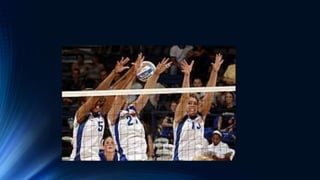
Block
•Blocking refers to the actions
taken by players standing at
the net to stop or alter an
opponent's attack.
Dig
•Digging is the ability to prevent
the ball from touching one's
court after a spike or attack,
particularly a ball that is
nearly touching the ground
Volleyball

Volleyball

  • 1.
  • 2.
    •is a teamsport in which two teams of six players are separated by a net. Each team tries to score points by grounding a ball on the other team's court under organized rules.
  • 3.
    Common Faults in Volleyball •causingthe ball to touch the ground or floor outside the opponents' court or without first passing over the net; •catching and throwing the ball; •double hit: two consecutive contacts with the ball made by the same player;
  • 4.
    •four consecutive contactswith the ball made by the same team; •net foul: touching the net during play; •foot fault: the foot crosses over the boundary line when serving. •
  • 5.
    History of Volleyball •Itwas invented by William Morgan • Holyoke, Massachusetts (USA) •It was first called Mintonette
  • 6.
  • 7.
    The Court •A volleyballcourt is 18 m (59 ft) long and 9 m (29.5 ft) wide, divided into 9 m × 9 m halves by a one- meter (40-inch) wide net. The top of the net is 2.43 m (7 ft 11 5/8 in) above the center of the court for men's competition, and 2.24 m (7 ft 4 1/8 in) for women's competition, varied for veterans and junior
  • 9.
  • 10.
    The ball •FIVB regulationsstate that the ball must be spherical, made of leather or synthetic leather, have a circumference of 65– 67 cm, a weight of 260–280 g and an inside pressure of 0.30– 0.325 kg/cm2
  • 12.
  • 13.
    •In 1998 thelibero player was introduced internationally. •is a player specialized in defensive skills: the libero must wear a contrasting jersey color from his or her teammates and cannot block or attack the ball when it is entirely above net height.
  • 14.
    Basic Skills inVolleyball
  • 15.
  • 16.
    •A player standsbehind the inline and serves the ball, in an attempt to drive it into the opponent's court. •His or her main objective is to make it land inside the court; it is also desirable to set the ball's direction, speed and acceleration so that it becomes difficult for the receiver to handle it properly.
  • 17.
    •A serve iscalled an "ace" when the ball lands directly onto the court or travels outside the court after being touched by an opponent.
  • 18.
    Underhand • a servein which the player strikes the ball below the waist instead of tossing it up and striking it with an overhand throwing motion.
  • 20.
    Float •an overhand servewhere the ball is hit with no spin so that its path becomes unpredictable,
  • 22.
    Pass •Also called reception,the pass is the attempt by a team to properly handle the opponent's serve, or any form of attack.
  • 24.
    Set •The set isusually the second contact that a team makes with the ball. The main goal of setting is to put the ball in the air in such a way that it can be driven by an attack into the opponent's court
  • 26.
    Attack •the attack, alsoknown as the spike, is usually the third contact a team makes with the ball. The object of attacking is to handle the ball so that it lands on the opponent's court and cannot be defended.
  • 27.
    Block •Blocking refers tothe actions taken by players standing at the net to stop or alter an opponent's attack.
  • 29.
    Dig •Digging is theability to prevent the ball from touching one's court after a spike or attack, particularly a ball that is nearly touching the ground