Pabitra Gurung, PhD Student
gurung@unbc.ca
Presentation for the course NRES-803
Natural Resources and Environmental Studies (NRES)
University of Northern British Columbia
Prince George, BC, CANADA
Role of Research
in Policy Making
(in terms of
policy research)
 Policy Formulation Process
 Experience-based Policy Making
 Evidence-based Policy Making
 Policy Research
 Problems: Linking Research to Policy
 Conclusions
 Discussion Questions
Outline
Policy Formulation Process
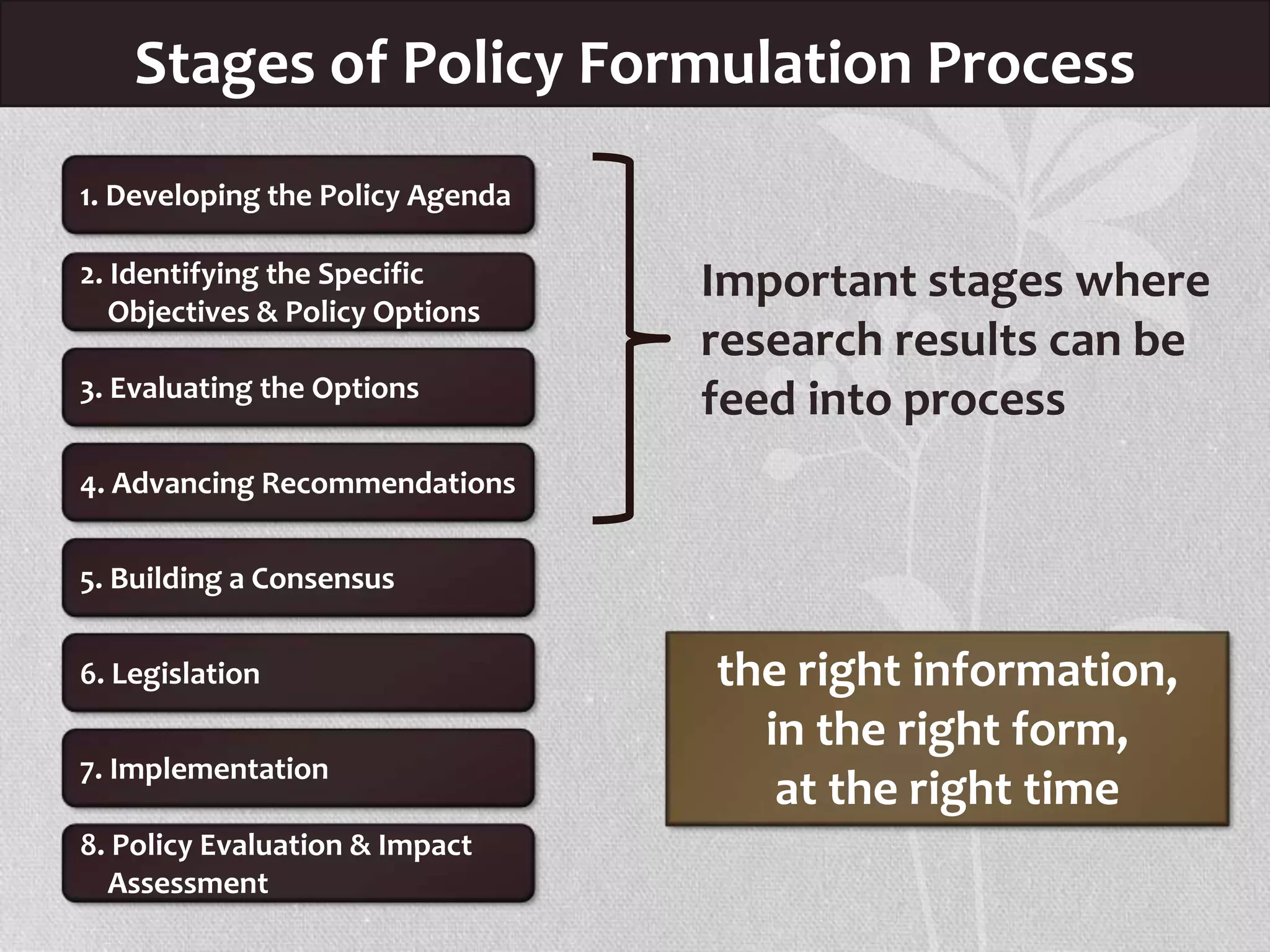
Stages of Policy Formulation Process
1. Developing the Policy Agenda
2. Identifying the Specific
Objectives & Policy Options
3. Evaluating the Options
4. Advancing Recommendations
5. Building a Consensus
6. Legislation
7. Implementation
8. Policy Evaluation & Impact
Assessment
Important stages where
research results can be
feed into process
the right information,
in the right form,
at the right time
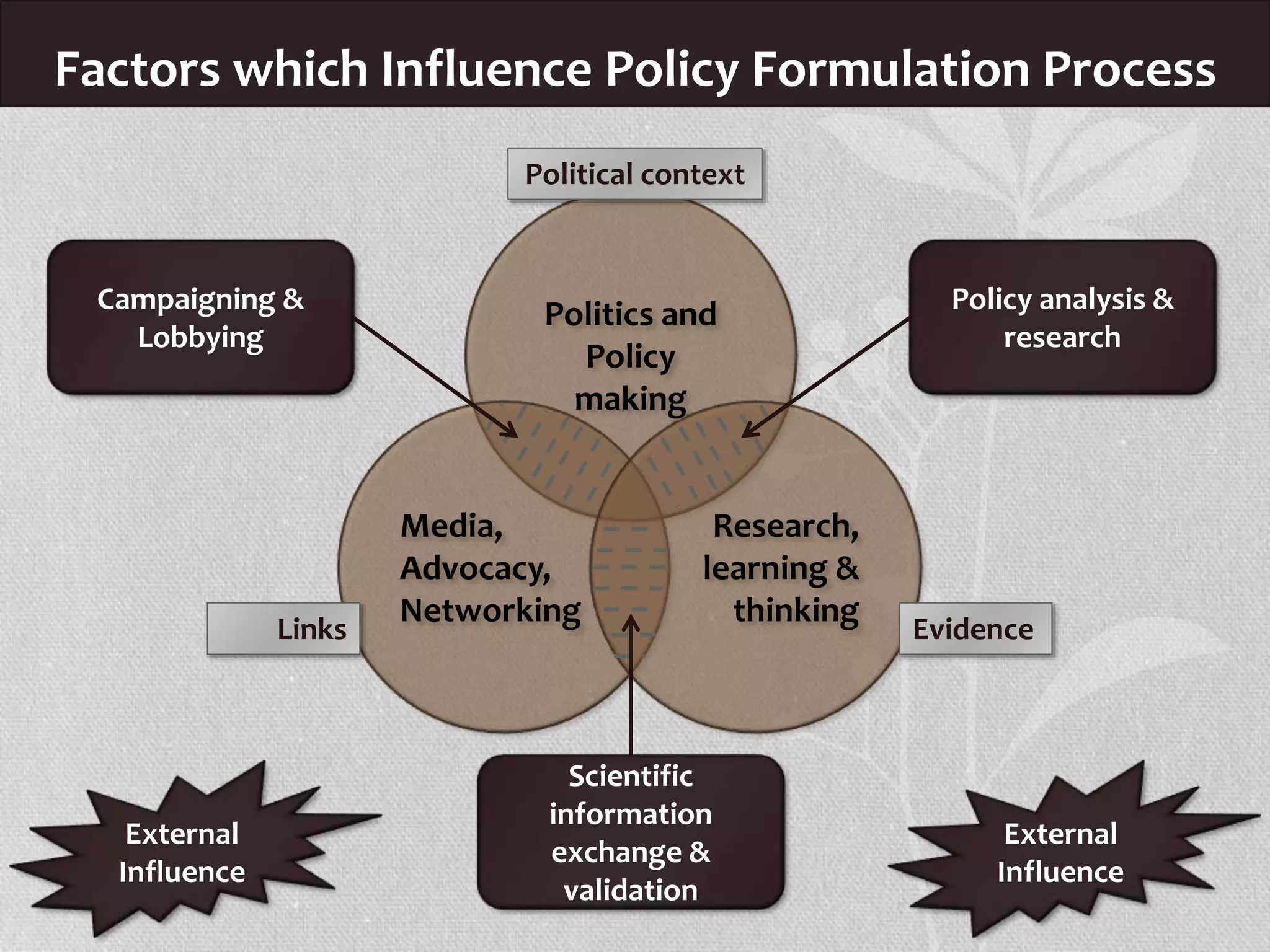
Politics and
Policy
making
Media,
Advocacy,
Networking
Research,
learning &
thinking
Factors which Influence Policy Formulation Process
Political context
Links Evidence
External
Influence
External
Influence
Campaigning &
Lobbying
Policy analysis &
research
Scientific
information
exchange &
validation
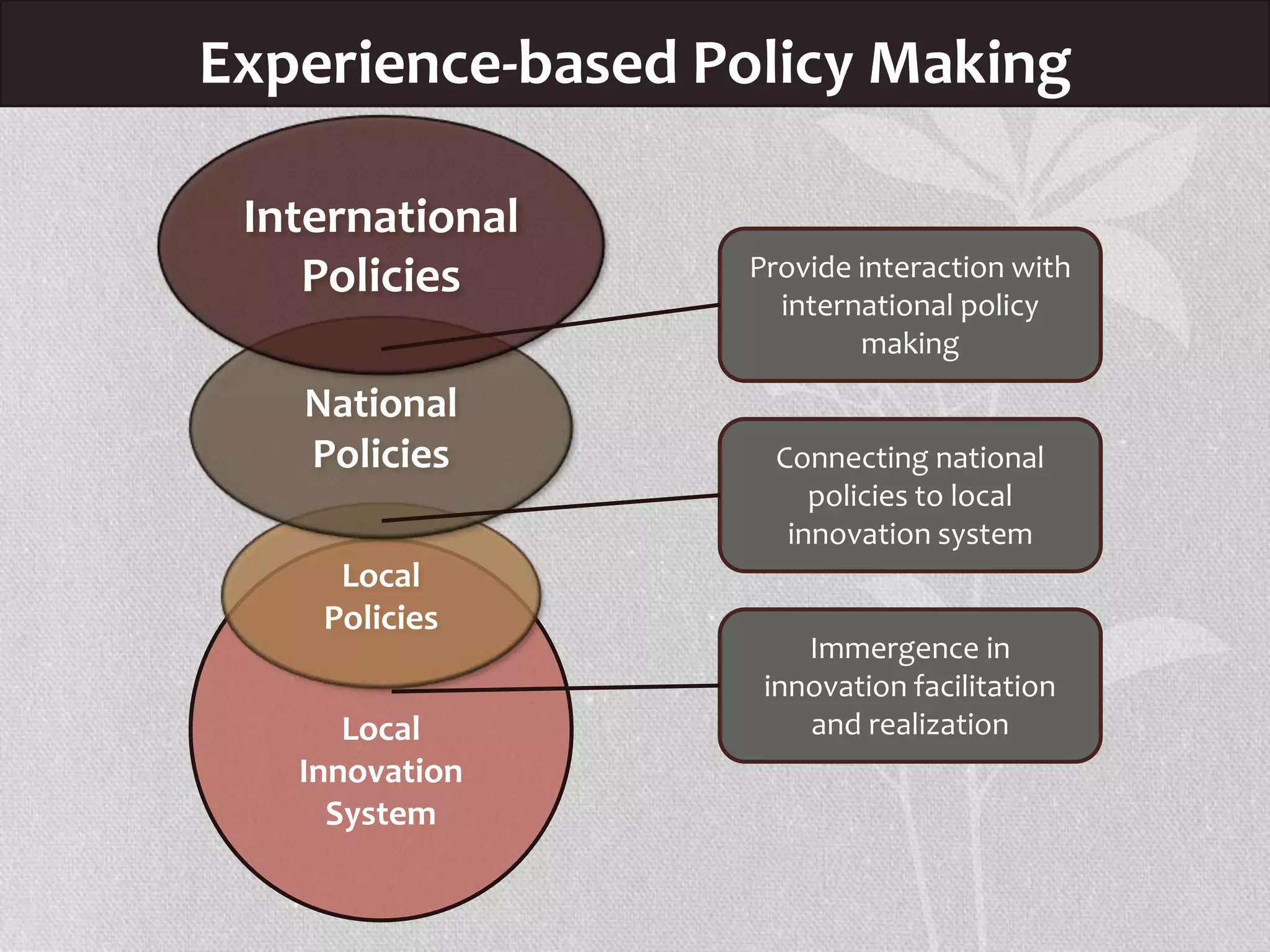
Local
Innovation
System
Immergence in
innovation facilitation
and realization
Experience-based Policy Making
Local
Policies
National
Policies
International
Policies Provide interaction with
international policy
making
Connecting national
policies to local
innovation system
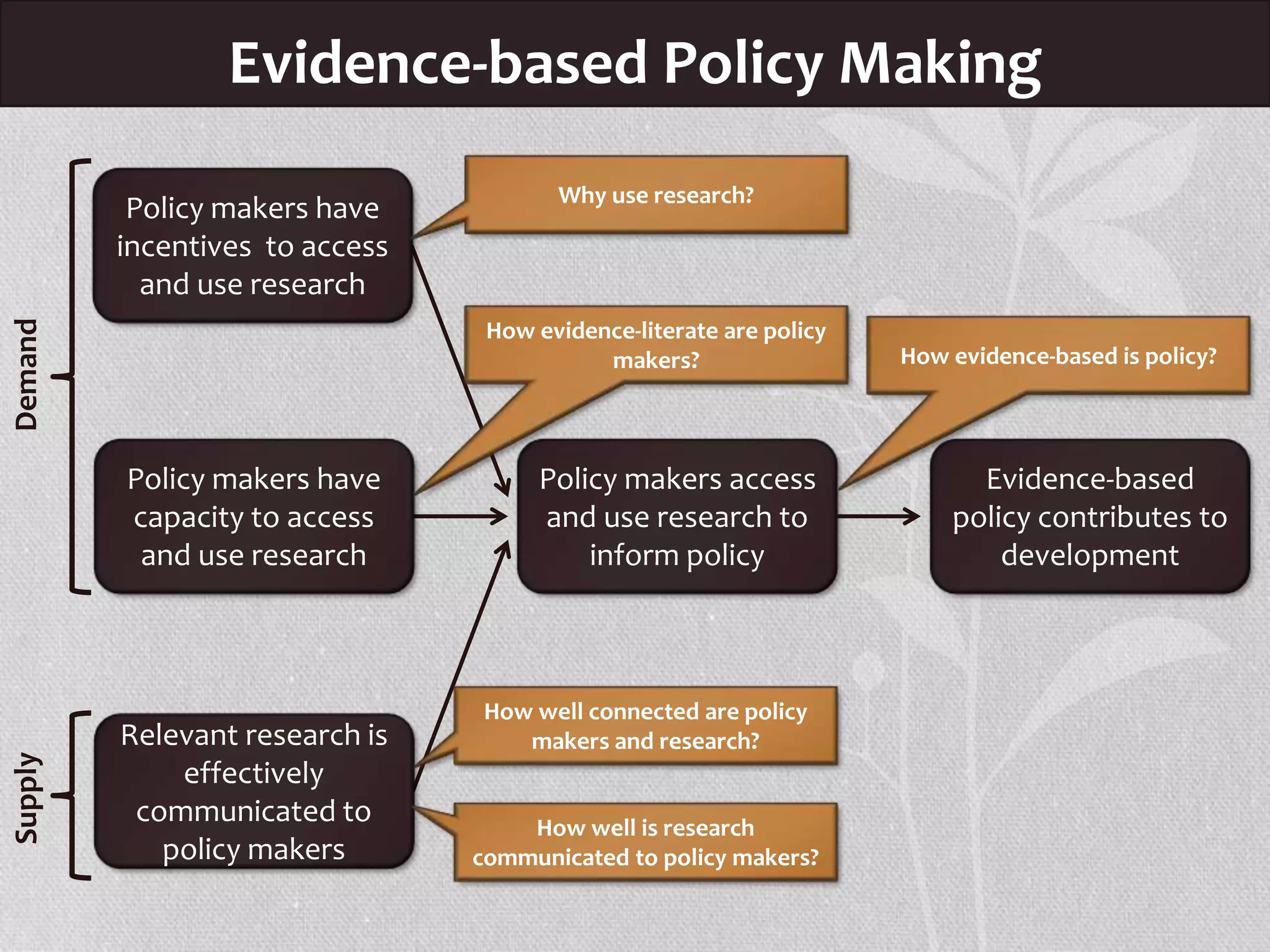
Policy makers access
and use research to
inform policy
How evidence-based is policy?
Evidence-based Policy Making
Evidence-based
policy contributes to
development
Demand
Policy makers have
incentives to access
and use research
Why use research?
Policy makers have
capacity to access
and use research
How evidence-literate are policy
makers?
Supply
Relevant research is
effectively
communicated to
policy makers
How well connected are policy
makers and research?
How well is research
communicated to policy makers?
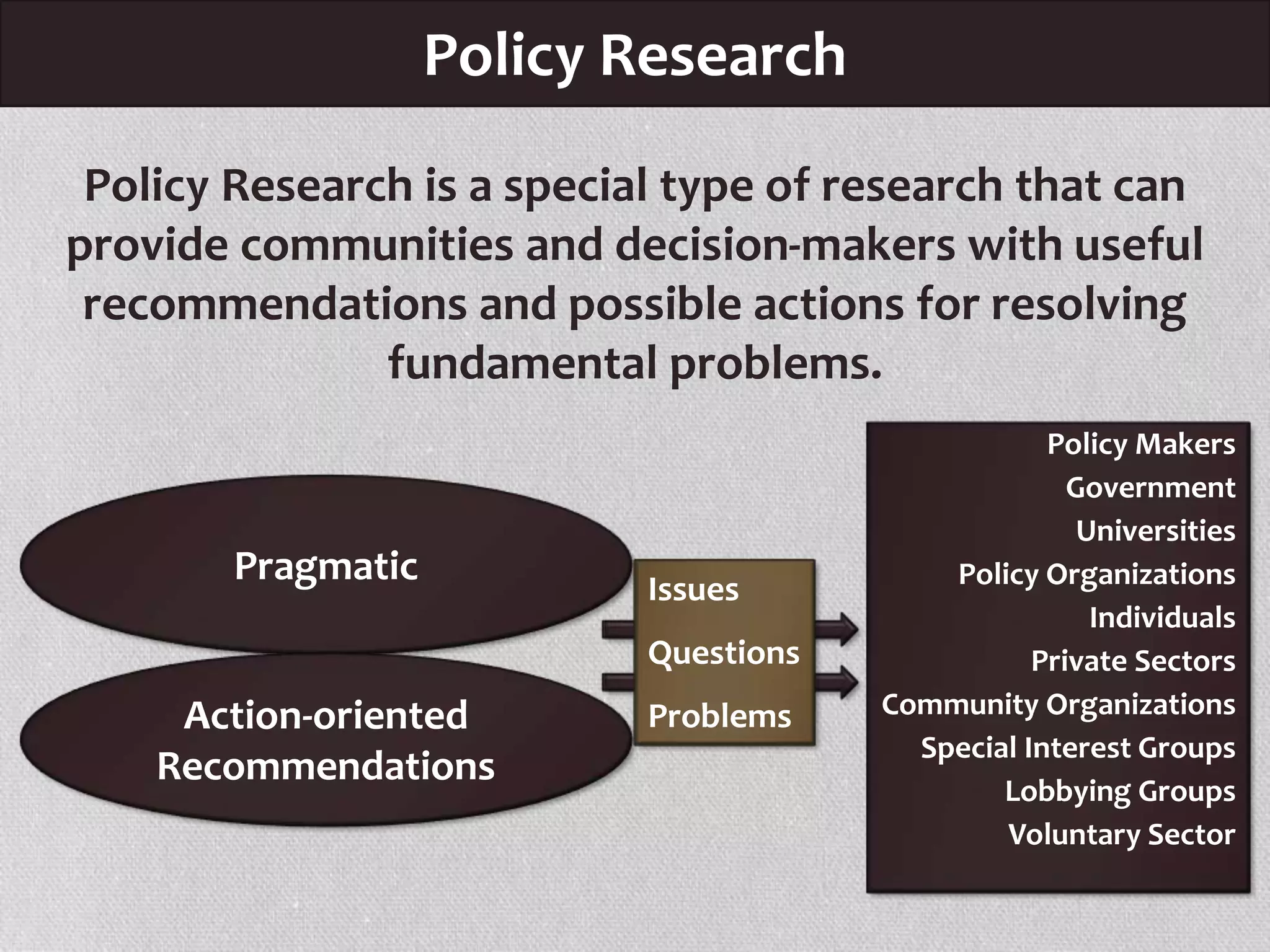
Policy Research
Policy Research is a special type of research that can
provide communities and decision-makers with useful
recommendations and possible actions for resolving
fundamental problems.
Policy Makers
Government
Universities
Policy Organizations
Individuals
Private Sectors
Community Organizations
Special Interest Groups
Lobbying Groups
Voluntary Sector
Pragmatic
Action-oriented
Recommendations
Issues
Questions
Problems
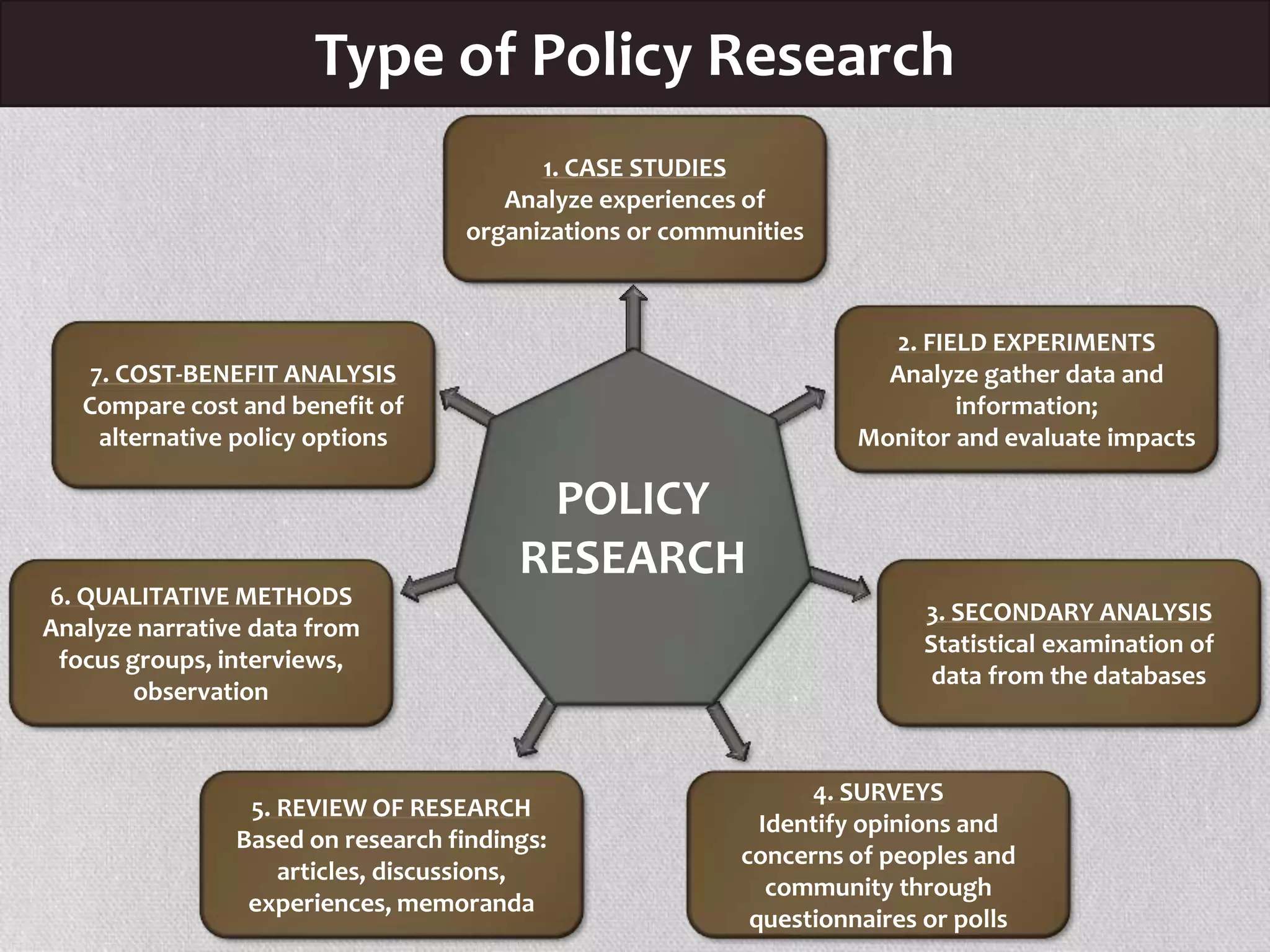
Type of Policy Research
1. CASE STUDIES
Analyze experiences of
organizations or communities
4. SURVEYS
Identify opinions and
concerns of peoples and
community through
questionnaires or polls
6. QUALITATIVE METHODS
Analyze narrative data from
focus groups, interviews,
observation
2. FIELD EXPERIMENTS
Analyze gather data and
information;
Monitor and evaluate impacts
7. COST-BENEFIT ANALYSIS
Compare cost and benefit of
alternative policy options
3. SECONDARY ANALYSIS
Statistical examination of
data from the databases
5. REVIEW OF RESEARCH
Based on research findings:
articles, discussions,
experiences, memoranda
POLICY
RESEARCH
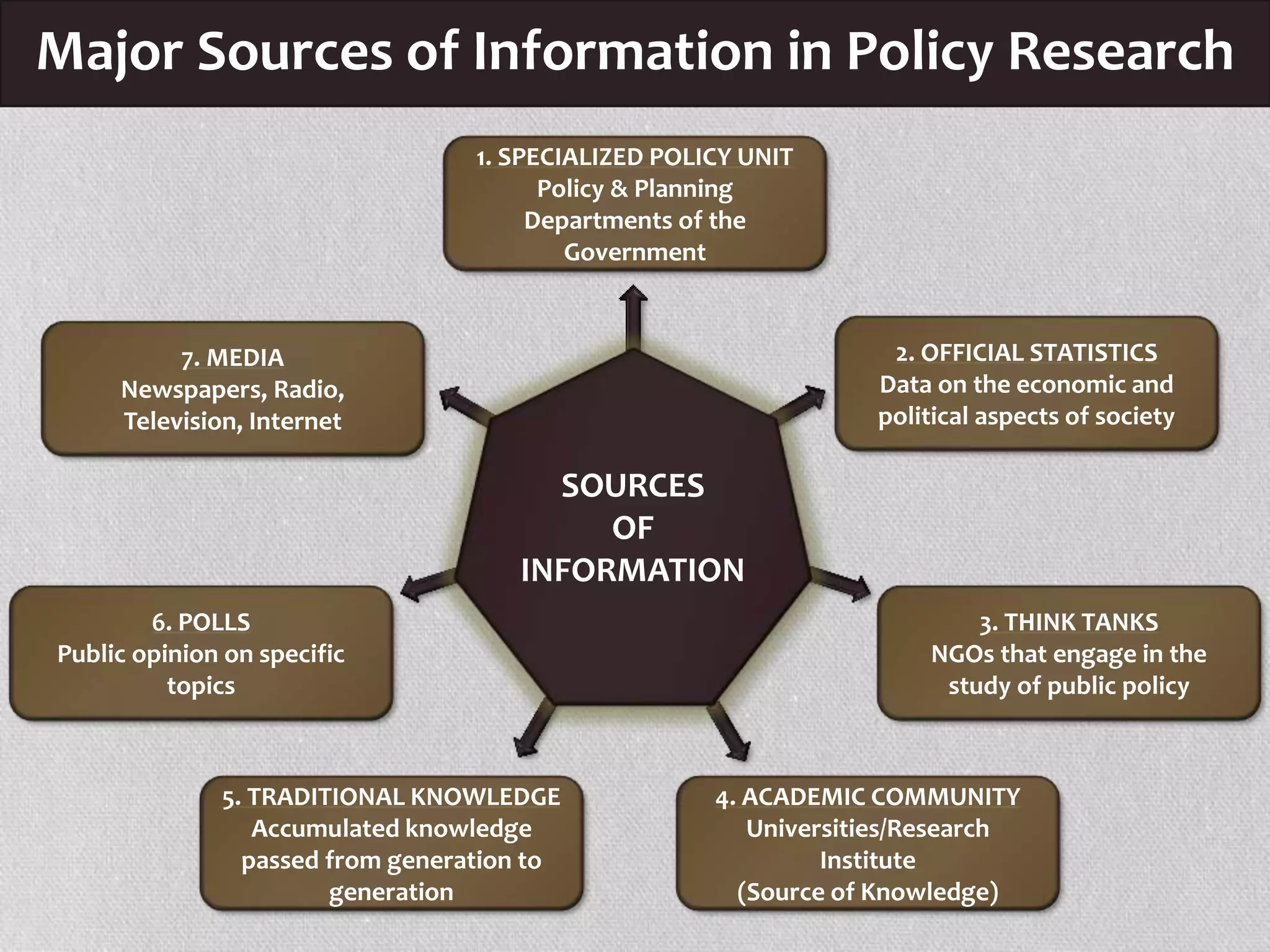
Major Sources of Information in Policy Research
1. SPECIALIZED POLICY UNIT
Policy & Planning
Departments of the
Government
4. ACADEMIC COMMUNITY
Universities/Research
Institute
(Source of Knowledge)
6. POLLS
Public opinion on specific
topics
2. OFFICIAL STATISTICS
Data on the economic and
political aspects of society
7. MEDIA
Newspapers, Radio,
Television, Internet
3. THINK TANKS
NGOs that engage in the
study of public policy
5. TRADITIONAL KNOWLEDGE
Accumulated knowledge
passed from generation to
generation
SOURCES
OF
INFORMATION
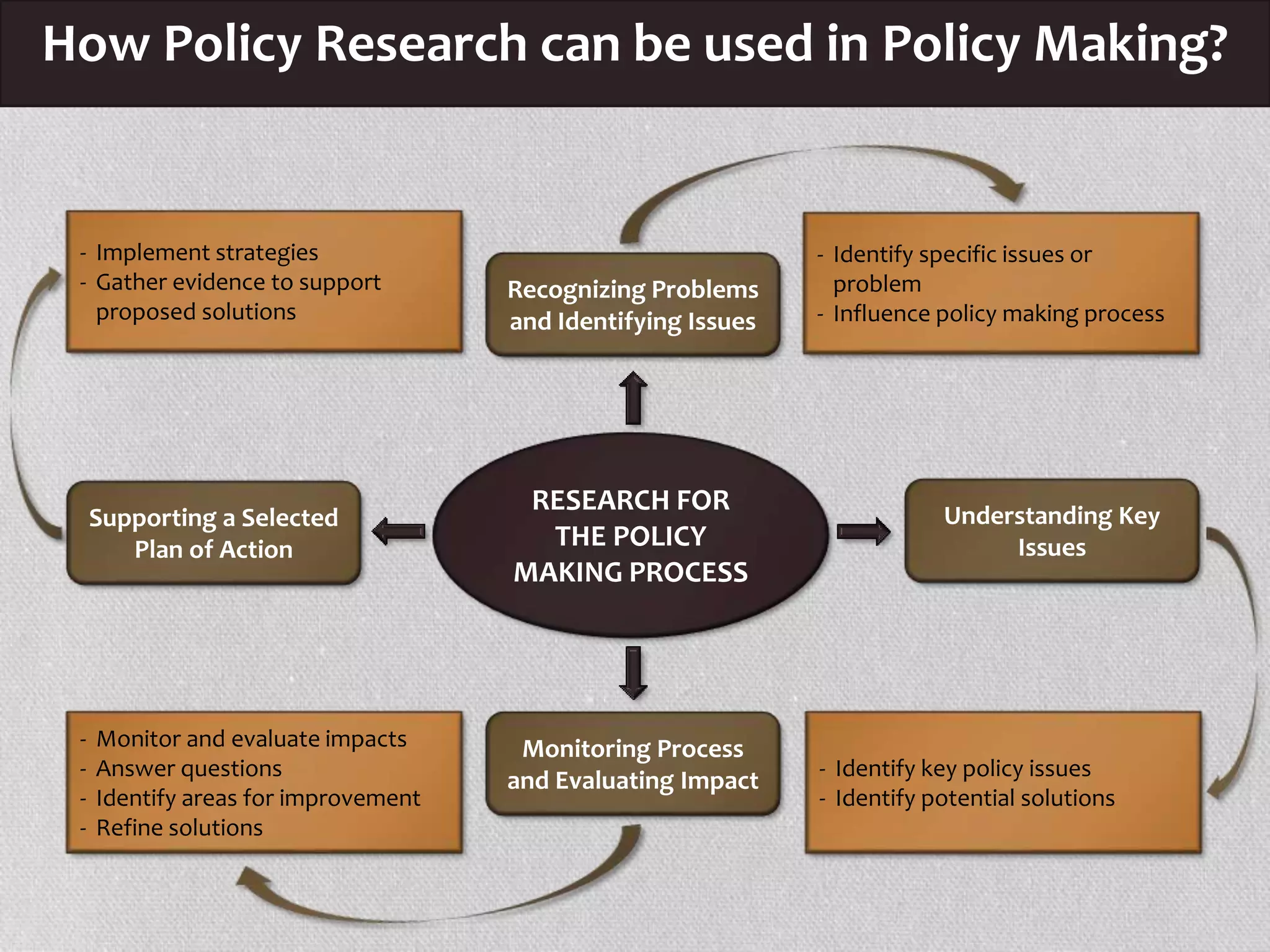
How Policy Research can be used in Policy Making?
- Identify specific issues or
problem
- Influence policy making process
Recognizing Problems
and Identifying Issues
- Monitor and evaluate impacts
- Answer questions
- Identify areas for improvement
- Refine solutions
Monitoring Process
and Evaluating Impact
- Implement strategies
- Gather evidence to support
proposed solutions
Supporting a Selected
Plan of Action
- Identify key policy issues
- Identify potential solutions
Understanding Key
Issues
RESEARCH FOR
THE POLICY
MAKING PROCESS
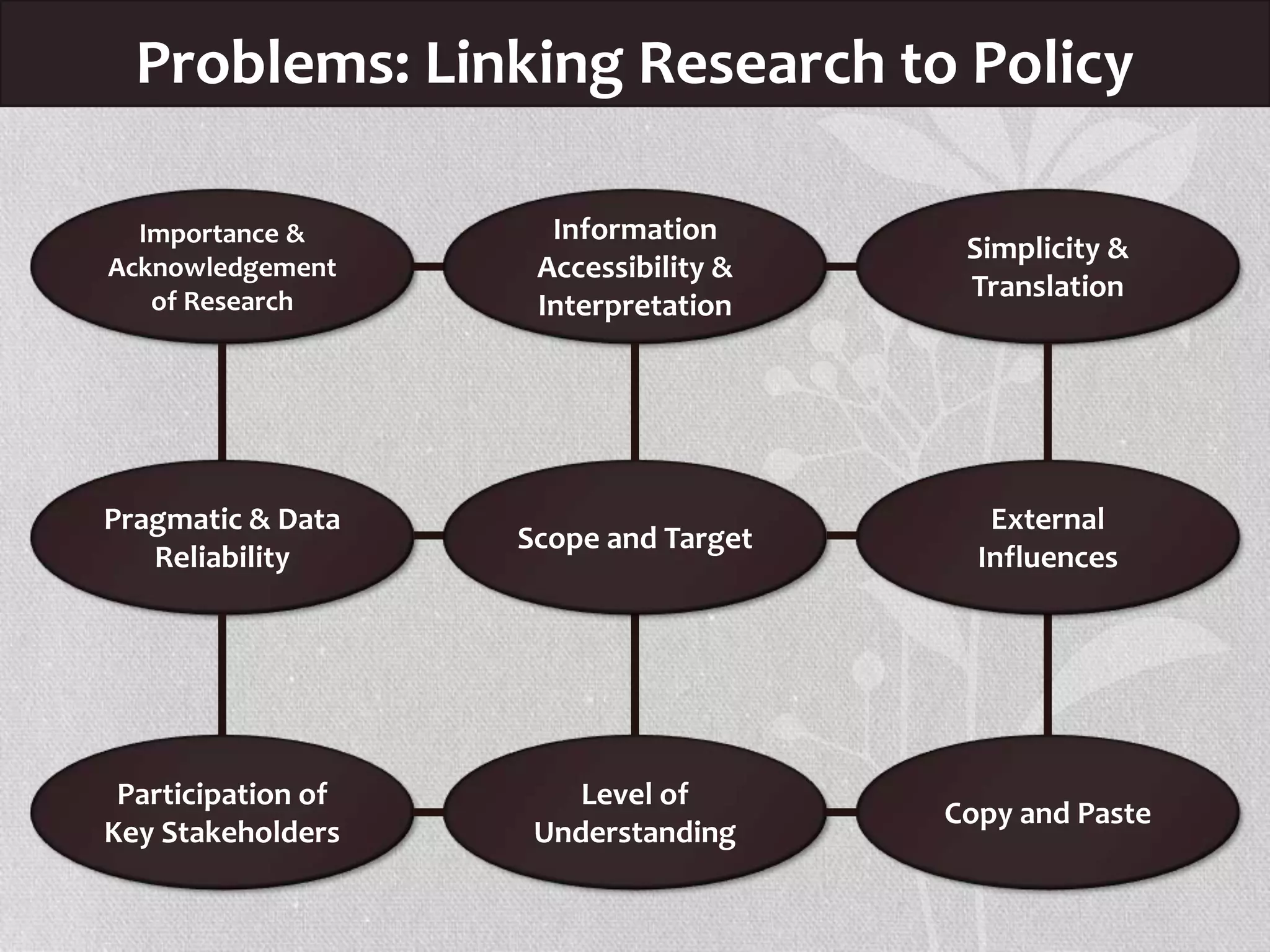
Problems: Linking Research to Policy
Importance &
Acknowledgement
of Research
Pragmatic & Data
Reliability
Participation of
Key Stakeholders
Information
Accessibility &
Interpretation
Simplicity &
Translation
Level of
Understanding
Copy and Paste
Scope and Target
External
Influences
Conclusions
 Research can play a major role in the policy making process, so that the focus
should be on policy research
 Policy research will be effective for the sustainable development national or local
level
 Participation of different stakeholders and community is required to address the
specific issues and problems
 The academic and policy makers should work together for evidence-based policy
making.
 Policy brief is essential for policy maker
 Concise and readable abstracts or summaries in simpler language
Therefore, researchers and policy-makers need to cooperate closely to understand
specific needs, ensure relevance of topics, and improve communication, dissemination
and implementation of the research recommendations.
Discussion Questions
 Why research to policy?
 What is the role of policy makers and researchers in
the process of policy making?
 How can the usefulness of research in policy making
be increased?
 How to make applied research policy-relevant?
 What is the evidence in evidence-based policy making?
References
Bach, T.; Niklasson, B.; Painter, M.; 2012. The role of agencies in policy-making. Policy and Society. 31: 183-193.
Dukeshire, S.; Thurlow, J.; 2002. Understanding the Link Between Research and Policy. Rural Communities Impacting
Policy Project. pp 18.
Editorial; 2010. Reconsidering evidence-based policy: Key issues and challenges. Policy and Society. 29. 77-94.
EUROPEAN COMMISSION; 2008. Scientific evidence for policy – making. Research Policy. Socio-Economic Sciences and
Humanities. pp 31.
Grebmer, K.V. Converting Policy Research into Policy Decisions: The Role of Communication and the Media. Unpublished
Articles. pp 4.
Henriques, L.; Laredo, P.; 2013. Policy-making in science policy: The ‘OECD model’ unveiled. Research Policy. 42: 801-816.
Jones, B.; 2011. Linking Research to Policy: The African Development Bank as Knowledge Broker. Working Paper No. 131.
African Development Bank. pp 36.
Keohlmoos, T.; Rashid, M.; Rahman, Z.; Cravioto, A.; Hanney, S.; 2009. Understanding the Role of Evidence in Policy
Making in Bangladesh. Report 1: An Analysis of Interviews with health Sector Decision Maker. ICDDR, B. pp 12.
Kingdon, T.; 1993. The relevance of research to policy formulation: an Australian perspective. Addiction. 88. 61S-65S.
Newman, K.; Capillo, A.; Famurewa, A.; Nath, C.; Siyanbola, W.; 2013. What is the evidence on evidence-informed policy
making?. Lesson from the International Conference on Evidence-Informed Policy Making. INASP. pp 18.
ODI; 2009. Helping researchers become policy entrepreneurs. Briefing paper 53. Overseas Development Institute. pp 4.
UNCTAD, 2006. Research-Based Policy Making: Bridging the gap between researchers and policy makers. UNCTAD
VIRTUAL INSTITUTE. pp 6.
UNESCO, 2011. Research – Policy Linkages of Science – Related Ministries and Their Research Organizations. Economic
T H A N K
Y O U

Role of Research in Policy Making (in terms of policy research)

  • 1.
    Pabitra Gurung, PhDStudent gurung@unbc.ca Presentation for the course NRES-803 Natural Resources and Environmental Studies (NRES) University of Northern British Columbia Prince George, BC, CANADA Role of Research in Policy Making (in terms of policy research)
  • 2.
     Policy FormulationProcess  Experience-based Policy Making  Evidence-based Policy Making  Policy Research  Problems: Linking Research to Policy  Conclusions  Discussion Questions Outline
  • 3.
  • 4.
    Stages of PolicyFormulation Process 1. Developing the Policy Agenda 2. Identifying the Specific Objectives & Policy Options 3. Evaluating the Options 4. Advancing Recommendations 5. Building a Consensus 6. Legislation 7. Implementation 8. Policy Evaluation & Impact Assessment Important stages where research results can be feed into process the right information, in the right form, at the right time
  • 5.
    Politics and Policy making Media, Advocacy, Networking Research, learning & thinking Factorswhich Influence Policy Formulation Process Political context Links Evidence External Influence External Influence Campaigning & Lobbying Policy analysis & research Scientific information exchange & validation
  • 6.
    Local Innovation System Immergence in innovation facilitation andrealization Experience-based Policy Making Local Policies National Policies International Policies Provide interaction with international policy making Connecting national policies to local innovation system
  • 7.
    Policy makers access anduse research to inform policy How evidence-based is policy? Evidence-based Policy Making Evidence-based policy contributes to development Demand Policy makers have incentives to access and use research Why use research? Policy makers have capacity to access and use research How evidence-literate are policy makers? Supply Relevant research is effectively communicated to policy makers How well connected are policy makers and research? How well is research communicated to policy makers?
  • 8.
    Policy Research Policy Researchis a special type of research that can provide communities and decision-makers with useful recommendations and possible actions for resolving fundamental problems. Policy Makers Government Universities Policy Organizations Individuals Private Sectors Community Organizations Special Interest Groups Lobbying Groups Voluntary Sector Pragmatic Action-oriented Recommendations Issues Questions Problems
  • 9.
    Type of PolicyResearch 1. CASE STUDIES Analyze experiences of organizations or communities 4. SURVEYS Identify opinions and concerns of peoples and community through questionnaires or polls 6. QUALITATIVE METHODS Analyze narrative data from focus groups, interviews, observation 2. FIELD EXPERIMENTS Analyze gather data and information; Monitor and evaluate impacts 7. COST-BENEFIT ANALYSIS Compare cost and benefit of alternative policy options 3. SECONDARY ANALYSIS Statistical examination of data from the databases 5. REVIEW OF RESEARCH Based on research findings: articles, discussions, experiences, memoranda POLICY RESEARCH
  • 10.
    Major Sources ofInformation in Policy Research 1. SPECIALIZED POLICY UNIT Policy & Planning Departments of the Government 4. ACADEMIC COMMUNITY Universities/Research Institute (Source of Knowledge) 6. POLLS Public opinion on specific topics 2. OFFICIAL STATISTICS Data on the economic and political aspects of society 7. MEDIA Newspapers, Radio, Television, Internet 3. THINK TANKS NGOs that engage in the study of public policy 5. TRADITIONAL KNOWLEDGE Accumulated knowledge passed from generation to generation SOURCES OF INFORMATION
  • 11.
    How Policy Researchcan be used in Policy Making? - Identify specific issues or problem - Influence policy making process Recognizing Problems and Identifying Issues - Monitor and evaluate impacts - Answer questions - Identify areas for improvement - Refine solutions Monitoring Process and Evaluating Impact - Implement strategies - Gather evidence to support proposed solutions Supporting a Selected Plan of Action - Identify key policy issues - Identify potential solutions Understanding Key Issues RESEARCH FOR THE POLICY MAKING PROCESS
  • 12.
    Problems: Linking Researchto Policy Importance & Acknowledgement of Research Pragmatic & Data Reliability Participation of Key Stakeholders Information Accessibility & Interpretation Simplicity & Translation Level of Understanding Copy and Paste Scope and Target External Influences
  • 13.
    Conclusions  Research canplay a major role in the policy making process, so that the focus should be on policy research  Policy research will be effective for the sustainable development national or local level  Participation of different stakeholders and community is required to address the specific issues and problems  The academic and policy makers should work together for evidence-based policy making.  Policy brief is essential for policy maker  Concise and readable abstracts or summaries in simpler language Therefore, researchers and policy-makers need to cooperate closely to understand specific needs, ensure relevance of topics, and improve communication, dissemination and implementation of the research recommendations.
  • 14.
    Discussion Questions  Whyresearch to policy?  What is the role of policy makers and researchers in the process of policy making?  How can the usefulness of research in policy making be increased?  How to make applied research policy-relevant?  What is the evidence in evidence-based policy making?
  • 15.
    References Bach, T.; Niklasson,B.; Painter, M.; 2012. The role of agencies in policy-making. Policy and Society. 31: 183-193. Dukeshire, S.; Thurlow, J.; 2002. Understanding the Link Between Research and Policy. Rural Communities Impacting Policy Project. pp 18. Editorial; 2010. Reconsidering evidence-based policy: Key issues and challenges. Policy and Society. 29. 77-94. EUROPEAN COMMISSION; 2008. Scientific evidence for policy – making. Research Policy. Socio-Economic Sciences and Humanities. pp 31. Grebmer, K.V. Converting Policy Research into Policy Decisions: The Role of Communication and the Media. Unpublished Articles. pp 4. Henriques, L.; Laredo, P.; 2013. Policy-making in science policy: The ‘OECD model’ unveiled. Research Policy. 42: 801-816. Jones, B.; 2011. Linking Research to Policy: The African Development Bank as Knowledge Broker. Working Paper No. 131. African Development Bank. pp 36. Keohlmoos, T.; Rashid, M.; Rahman, Z.; Cravioto, A.; Hanney, S.; 2009. Understanding the Role of Evidence in Policy Making in Bangladesh. Report 1: An Analysis of Interviews with health Sector Decision Maker. ICDDR, B. pp 12. Kingdon, T.; 1993. The relevance of research to policy formulation: an Australian perspective. Addiction. 88. 61S-65S. Newman, K.; Capillo, A.; Famurewa, A.; Nath, C.; Siyanbola, W.; 2013. What is the evidence on evidence-informed policy making?. Lesson from the International Conference on Evidence-Informed Policy Making. INASP. pp 18. ODI; 2009. Helping researchers become policy entrepreneurs. Briefing paper 53. Overseas Development Institute. pp 4. UNCTAD, 2006. Research-Based Policy Making: Bridging the gap between researchers and policy makers. UNCTAD VIRTUAL INSTITUTE. pp 6. UNESCO, 2011. Research – Policy Linkages of Science – Related Ministries and Their Research Organizations. Economic
  • 16.
    T H AN K Y O U