Michigan Energy Forum:
A Pragmatic Approach to Climate
Change

January 6, 2014
Ann Arbor Spark

Michigan Energy Forum

Henry Pollack
University of Michigan
6 February 2014
Four central questions:
•
•
•
•

Is the climate changing?
What is causing it?
What will be the consequences?
What should we be doing about it?
The 2013 IPCC Assessment
“Warming of the climate system is
unequivocal, and since the 1950s,
many of the observed changes are
unprecedented over decades to
millennia. The atmosphere and ocean
have warmed, the amounts of snow and
ice have diminished, sea level has
risen, and the concentrations of
greenhouse gases have increased.”
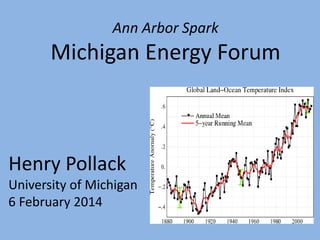
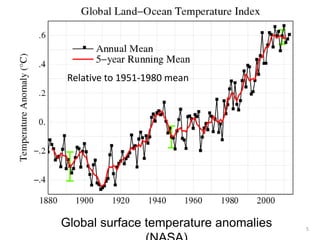
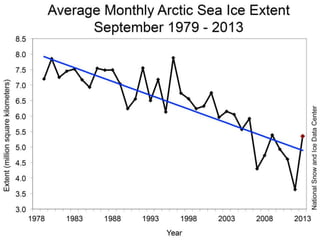
Relative to 1951-1980 mean

Global surface temperature anomalies

5
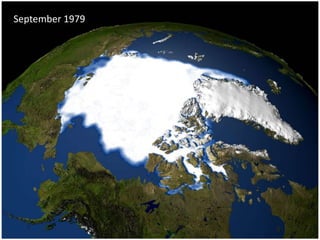
September 1979
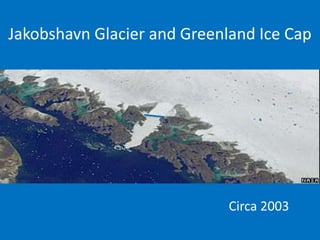
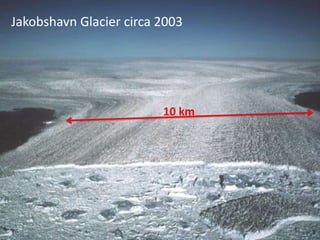
Jakobshavn Glacier and Greenland Ice Cap

Circa 2003
Jakobshavn Glacier circa 2003

10 km
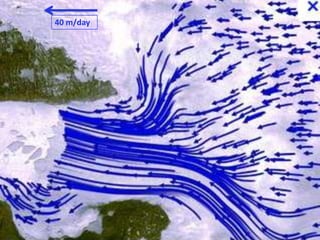
40 m/day
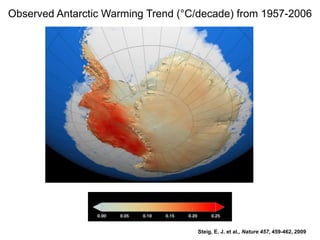
Observed Antarctic Warming Trend (°C/decade) from 1957-2006

Steig, E. J. et al., Nature 457, 459-462, 2009
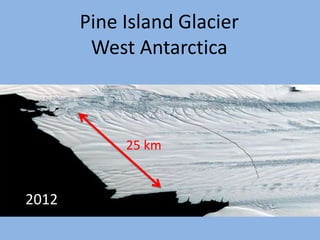
Pine Island Glacier
West Antarctica

25 km

2012
2012
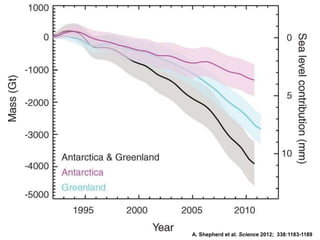
A. Shepherd et al. Science 2012; 338:1183-1189
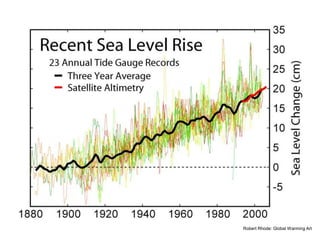
Robert Rhode: Global Warming Art
The 2013 IPCC Assessment
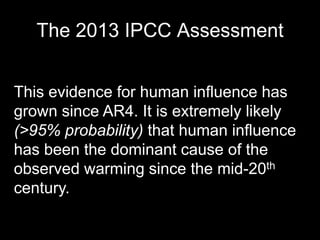
This evidence for human influence has
grown since AR4. It is extremely likely
(>95% probability) that human influence
has been the dominant cause of the
observed warming since the mid-20th
century. century.
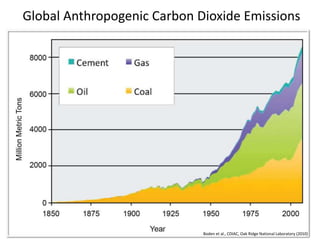
Global Anthropogenic Carbon Dioxide Emissions

Boden et al., CDIAC, Oak Ridge National Laboratory (2010)
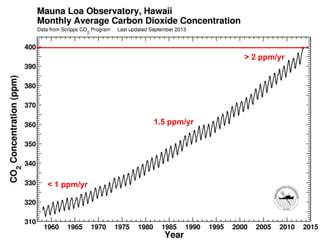
> 2 ppm/yr

1.5 ppm/yr

< 1 ppm/yr
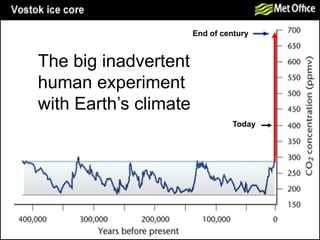
End of century

The big inadvertent
human experiment
with Earth’s climate
Today
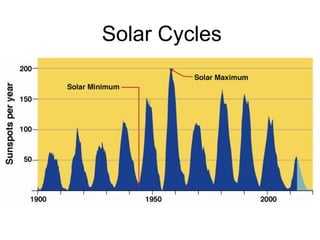
Solar Cycles
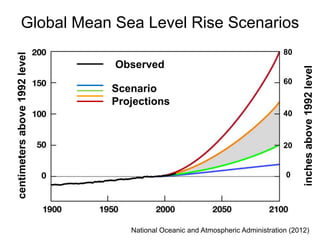
80

Observed
Observed
Scenario
Projections

60

40

20

0

inches above 1992 level

centimeters above 1992 level

Global Mean Sea Level Rise Scenarios

National Oceanic and Atmospheric Administration (2012)
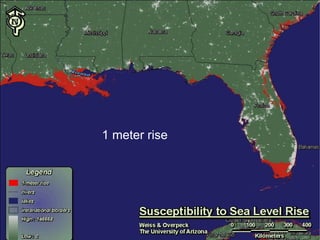
1 meter rise
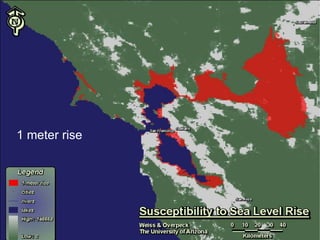
1 meter rise
If you do not change
direction,
you will likely end up where
you are heading.
Lao Tzu, Chinese philosopher, 6th century B.C.E.
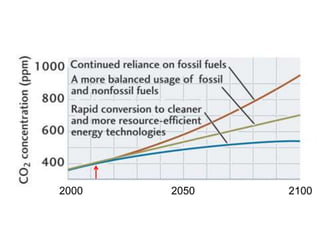
2000

2050

2100
A Pragmatic Approach to Climate Change
Skip Pruss, Principal, 5 Lakes Energy
pruss@5lakesenergy.com

www.5lakesenergy.com


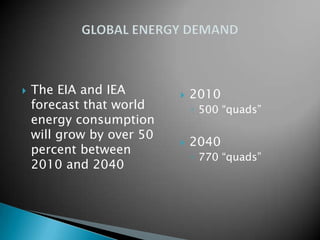
The EIA and IEA
forecast that world
energy consumption
will grow by over 50
percent between
2010 and 2040



2010
◦ 500 “quads”



2040
◦ 770 “quads”









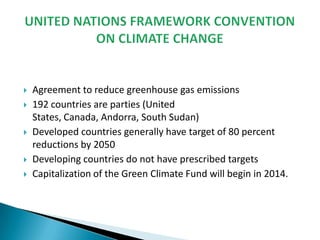
Agreement to reduce greenhouse gas emissions
192 countries are parties (United
States, Canada, Andorra, South Sudan)
Developed countries generally have target of 80 percent
reductions by 2050
Developing countries do not have prescribed targets
Capitalization of the Green Climate Fund will begin in 2014.
1.

2.

3.

4.

5.

6.

7.

8.

NREL, Renewable Energy Futures Study (4 Vols) 2012 - Renewable energy
sources, accessed with commercially available technologies, could adequately supply 80%
of total U.S. electricity generation in 2050. http://www.nrel.gov/docs/fy12osti/52409-1.pdf
Deng, et al, Transition to a Fully Sustainable Global Energy System, 2012 - Sourcing 95%
of global energy needs by 2050 from sustainable energy systems is technically feasible.
http://www.wrec2011.com/docs/Keynote_paper-Blok.pdf
RMI, Reinventing Fire 2012 - A $4.5-trillion investment would save $9.5 trillion, for a 2010net-present-valued saving of $5 trillion during 2010–2050.
http://www.rmi.org/ReinventingFire
United Nations IPCC, Special Report on Renewable Energy Sources and Climate Change
Mitigation 2011- Multiple options exist for lowering GHG emissions from the energy
systems while still satisfying the global demand for energy services. http://srren.ipccwg3.de/
International Energy Agency- Clean Energy Progress Report 2011 – A clean energy
revolution is achievable through a comprehensive policy approach.
http://www.iea.org/publications/freepublications/publication/name,3973,en.html
WWF ECOFYS The Energy Report: 100% Renewable Energy by 2050 2011 – Global
transition to clean energy sources technically feasible and economically advantageous; cost
saving equilibrium by 2040; $6.5 trillion in annual savings by 2050.
http://www.google.com/url?sa=t&rct=j&q=&
Google – The Impact of Clean Energy Innovation 2011 – Reductions of GHG emissions by
55 – 63% with positive effects on the economy and job growth.
http://www.google.org/energyinnovation/The_Impact_of_Clean_Energy_Innovation.pdf
Jacobson and DeLucchi, WWS (Wind, Water, Solar) Plan (2 Vol), 2010 - Produce all new
energy with WWS by 2030 and replacing the pre-existing energy by 2050. Barriers to the
plan are primarily social and political, not technological or economic.
http://www.sjsu.edu/people/dustin.mulvaney/courses/envs133/s2/JDEnPolicyPt1.pdf


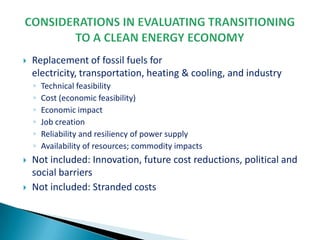
Replacement of fossil fuels for
electricity, transportation, heating & cooling, and industry
◦
◦
◦
◦
◦
◦





Technical feasibility
Cost (economic feasibility)
Economic impact
Job creation
Reliability and resiliency of power supply
Availability of resources; commodity impacts

Not included: Innovation, future cost reductions, political and
social barriers
Not included: Stranded costs






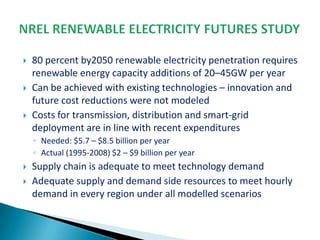
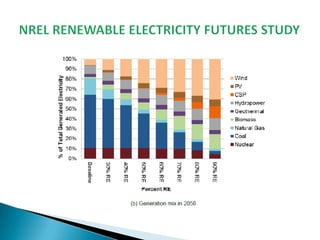
80 percent by2050 renewable electricity penetration requires
renewable energy capacity additions of 20–45GW per year
Can be achieved with existing technologies – innovation and
future cost reductions were not modeled
Costs for transmission, distribution and smart-grid
deployment are in line with recent expenditures
◦ Needed: $5.7 – $8.5 billion per year
◦ Actual (1995-2008) $2 – $9 billion per year




Supply chain is adequate to meet technology demand
Adequate supply and demand side resources to meet hourly
demand in every region under all modelled scenarios
•

•
•
•
•
•
•

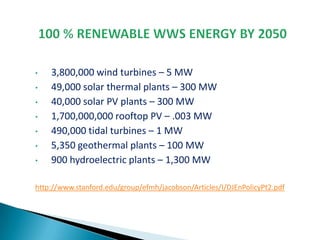
3,800,000 wind turbines – 5 MW
49,000 solar thermal plants – 300 MW
40,000 solar PV plants – 300 MW
1,700,000,000 rooftop PV – .003 MW
490,000 tidal turbines – 1 MW
5,350 geothermal plants – 100 MW
900 hydroelectric plants – 1,300 MW

http://www.stanford.edu/group/efmh/jacobson/Articles/I/DJEnPolicyPt2.pdf











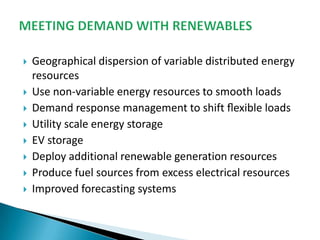
Geographical dispersion of variable distributed energy
resources
Use non-variable energy resources to smooth loads
Demand response management to shift flexible loads
Utility scale energy storage
EV storage
Deploy additional renewable generation resources
Produce fuel sources from excess electrical resources
Improved forecasting systems
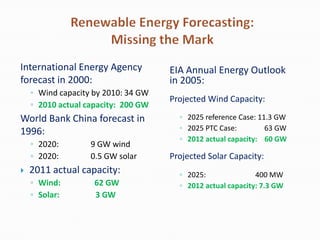
International Energy Agency
forecast in 2000:
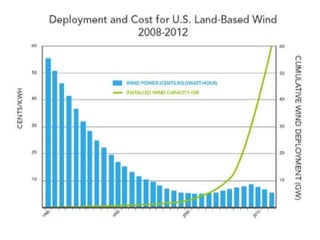
◦ Wind capacity by 2010: 34 GW
◦ 2010 actual capacity: 200 GW

World Bank China forecast in
1996:
◦ 2020:
◦ 2020:


9 GW wind
0.5 GW solar

2011 actual capacity:
◦ Wind:
◦ Solar:

62 GW
3 GW

EIA Annual Energy Outlook
in 2005:
Projected Wind Capacity:
◦ 2025 reference Case: 11.3 GW
◦ 2025 PTC Case:
63 GW
◦ 2012 actual capacity: 60 GW

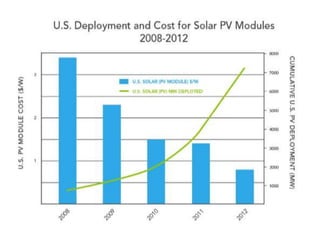
Projected Solar Capacity:
◦ 2025:
400 MW
◦ 2012 actual capacity: 7.3 GW








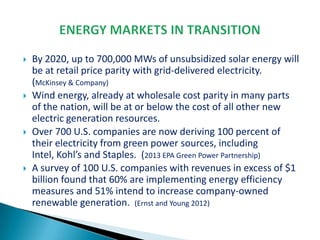
By 2020, up to 700,000 MWs of unsubsidized solar energy will
be at retail price parity with grid-delivered electricity.
(McKinsey & Company)
Wind energy, already at wholesale cost parity in many parts
of the nation, will be at or below the cost of all other new
electric generation resources.
Over 700 U.S. companies are now deriving 100 percent of
their electricity from green power sources, including
Intel, Kohl’s and Staples. (2013 EPA Green Power Partnership)
A survey of 100 U.S. companies with revenues in excess of $1
billion found that 60% are implementing energy efficiency
measures and 51% intend to increase company-owned
renewable generation. (Ernst and Young 2012)
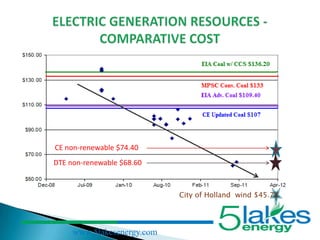
CE non-renewable $74.40
DTE non-renewable $68.60

City of Holland wind $45.72

www.5lakesenergy.com
1.
2.

3.
4.
5.
6.
7.

8.
9.
10.
11.
12.
13.

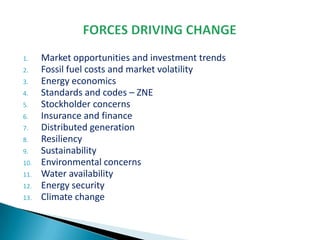
Market opportunities and investment trends
Fossil fuel costs and market volatility
Energy economics
Standards and codes – ZNE
Stockholder concerns
Insurance and finance
Distributed generation
Resiliency
Sustainability
Environmental concerns
Water availability
Energy security
Climate change









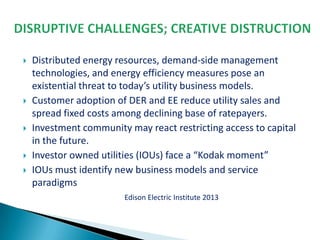
Distributed energy resources, demand-side management
technologies, and energy efficiency measures pose an
existential threat to today’s utility business models.
Customer adoption of DER and EE reduce utility sales and
spread fixed costs among declining base of ratepayers.
Investment community may react restricting access to capital
in the future.
Investor owned utilities (IOUs) face a “Kodak moment”
IOUs must identify new business models and service
paradigms
Edison Electric Institute 2013
•
•
•
•
•
•

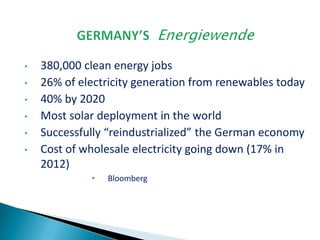
380,000 clean energy jobs
26% of electricity generation from renewables today
40% by 2020
Most solar deployment in the world
Successfully “reindustrialized” the German economy
Cost of wholesale electricity going down (17% in
2012)
•

Bloomberg
www.5lakesenergy.com
Next Michigan Energy Forum Program:
The Michigan Energy
Entrepreneurial Ecosystem
Moderator: Todd Nelson

Michigan Energy Forum - February 6, 2014 - A Pragmatic Approach to Climate Change

  • 1.
    Michigan Energy Forum: APragmatic Approach to Climate Change January 6, 2014
  • 2.
    Ann Arbor Spark MichiganEnergy Forum Henry Pollack University of Michigan 6 February 2014
  • 3.
    Four central questions: • • • • Isthe climate changing? What is causing it? What will be the consequences? What should we be doing about it?
  • 4.
    The 2013 IPCCAssessment “Warming of the climate system is unequivocal, and since the 1950s, many of the observed changes are unprecedented over decades to millennia. The atmosphere and ocean have warmed, the amounts of snow and ice have diminished, sea level has risen, and the concentrations of greenhouse gases have increased.”
  • 5.
    Relative to 1951-1980mean Global surface temperature anomalies 5
  • 6.
  • 9.
    Jakobshavn Glacier andGreenland Ice Cap Circa 2003
  • 10.
  • 11.
  • 13.
    Observed Antarctic WarmingTrend (°C/decade) from 1957-2006 Steig, E. J. et al., Nature 457, 459-462, 2009
  • 14.
    Pine Island Glacier WestAntarctica 25 km 2012 2012
  • 16.
    A. Shepherd etal. Science 2012; 338:1183-1189
  • 17.
  • 18.
    The 2013 IPCCAssessment This evidence for human influence has grown since AR4. It is extremely likely (>95% probability) that human influence has been the dominant cause of the observed warming since the mid-20th century. century.
  • 19.
    Global Anthropogenic CarbonDioxide Emissions Boden et al., CDIAC, Oak Ridge National Laboratory (2010)
  • 20.
    > 2 ppm/yr 1.5ppm/yr < 1 ppm/yr
  • 21.
    End of century Thebig inadvertent human experiment with Earth’s climate Today
  • 22.
  • 23.
    80 Observed Observed Scenario Projections 60 40 20 0 inches above 1992level centimeters above 1992 level Global Mean Sea Level Rise Scenarios National Oceanic and Atmospheric Administration (2012)
  • 24.
  • 25.
  • 26.
    If you donot change direction, you will likely end up where you are heading. Lao Tzu, Chinese philosopher, 6th century B.C.E.
  • 27.
  • 28.
    A Pragmatic Approachto Climate Change Skip Pruss, Principal, 5 Lakes Energy pruss@5lakesenergy.com www.5lakesenergy.com
  • 29.
     The EIA andIEA forecast that world energy consumption will grow by over 50 percent between 2010 and 2040  2010 ◦ 500 “quads”  2040 ◦ 770 “quads”
  • 30.
         Agreement to reducegreenhouse gas emissions 192 countries are parties (United States, Canada, Andorra, South Sudan) Developed countries generally have target of 80 percent reductions by 2050 Developing countries do not have prescribed targets Capitalization of the Green Climate Fund will begin in 2014.
  • 32.
    1. 2. 3. 4. 5. 6. 7. 8. NREL, Renewable EnergyFutures Study (4 Vols) 2012 - Renewable energy sources, accessed with commercially available technologies, could adequately supply 80% of total U.S. electricity generation in 2050. http://www.nrel.gov/docs/fy12osti/52409-1.pdf Deng, et al, Transition to a Fully Sustainable Global Energy System, 2012 - Sourcing 95% of global energy needs by 2050 from sustainable energy systems is technically feasible. http://www.wrec2011.com/docs/Keynote_paper-Blok.pdf RMI, Reinventing Fire 2012 - A $4.5-trillion investment would save $9.5 trillion, for a 2010net-present-valued saving of $5 trillion during 2010–2050. http://www.rmi.org/ReinventingFire United Nations IPCC, Special Report on Renewable Energy Sources and Climate Change Mitigation 2011- Multiple options exist for lowering GHG emissions from the energy systems while still satisfying the global demand for energy services. http://srren.ipccwg3.de/ International Energy Agency- Clean Energy Progress Report 2011 – A clean energy revolution is achievable through a comprehensive policy approach. http://www.iea.org/publications/freepublications/publication/name,3973,en.html WWF ECOFYS The Energy Report: 100% Renewable Energy by 2050 2011 – Global transition to clean energy sources technically feasible and economically advantageous; cost saving equilibrium by 2040; $6.5 trillion in annual savings by 2050. http://www.google.com/url?sa=t&rct=j&q=& Google – The Impact of Clean Energy Innovation 2011 – Reductions of GHG emissions by 55 – 63% with positive effects on the economy and job growth. http://www.google.org/energyinnovation/The_Impact_of_Clean_Energy_Innovation.pdf Jacobson and DeLucchi, WWS (Wind, Water, Solar) Plan (2 Vol), 2010 - Produce all new energy with WWS by 2030 and replacing the pre-existing energy by 2050. Barriers to the plan are primarily social and political, not technological or economic. http://www.sjsu.edu/people/dustin.mulvaney/courses/envs133/s2/JDEnPolicyPt1.pdf
  • 33.
     Replacement of fossilfuels for electricity, transportation, heating & cooling, and industry ◦ ◦ ◦ ◦ ◦ ◦   Technical feasibility Cost (economic feasibility) Economic impact Job creation Reliability and resiliency of power supply Availability of resources; commodity impacts Not included: Innovation, future cost reductions, political and social barriers Not included: Stranded costs
  • 34.
       80 percent by2050renewable electricity penetration requires renewable energy capacity additions of 20–45GW per year Can be achieved with existing technologies – innovation and future cost reductions were not modeled Costs for transmission, distribution and smart-grid deployment are in line with recent expenditures ◦ Needed: $5.7 – $8.5 billion per year ◦ Actual (1995-2008) $2 – $9 billion per year   Supply chain is adequate to meet technology demand Adequate supply and demand side resources to meet hourly demand in every region under all modelled scenarios
  • 36.
    • • • • • • • 3,800,000 wind turbines– 5 MW 49,000 solar thermal plants – 300 MW 40,000 solar PV plants – 300 MW 1,700,000,000 rooftop PV – .003 MW 490,000 tidal turbines – 1 MW 5,350 geothermal plants – 100 MW 900 hydroelectric plants – 1,300 MW http://www.stanford.edu/group/efmh/jacobson/Articles/I/DJEnPolicyPt2.pdf
  • 37.
            Geographical dispersion ofvariable distributed energy resources Use non-variable energy resources to smooth loads Demand response management to shift flexible loads Utility scale energy storage EV storage Deploy additional renewable generation resources Produce fuel sources from excess electrical resources Improved forecasting systems
  • 38.
    International Energy Agency forecastin 2000: ◦ Wind capacity by 2010: 34 GW ◦ 2010 actual capacity: 200 GW World Bank China forecast in 1996: ◦ 2020: ◦ 2020:  9 GW wind 0.5 GW solar 2011 actual capacity: ◦ Wind: ◦ Solar: 62 GW 3 GW EIA Annual Energy Outlook in 2005: Projected Wind Capacity: ◦ 2025 reference Case: 11.3 GW ◦ 2025 PTC Case: 63 GW ◦ 2012 actual capacity: 60 GW Projected Solar Capacity: ◦ 2025: 400 MW ◦ 2012 actual capacity: 7.3 GW
  • 40.
        By 2020, upto 700,000 MWs of unsubsidized solar energy will be at retail price parity with grid-delivered electricity. (McKinsey & Company) Wind energy, already at wholesale cost parity in many parts of the nation, will be at or below the cost of all other new electric generation resources. Over 700 U.S. companies are now deriving 100 percent of their electricity from green power sources, including Intel, Kohl’s and Staples. (2013 EPA Green Power Partnership) A survey of 100 U.S. companies with revenues in excess of $1 billion found that 60% are implementing energy efficiency measures and 51% intend to increase company-owned renewable generation. (Ernst and Young 2012)
  • 45.
    CE non-renewable $74.40 DTEnon-renewable $68.60 City of Holland wind $45.72 www.5lakesenergy.com
  • 46.
    1. 2. 3. 4. 5. 6. 7. 8. 9. 10. 11. 12. 13. Market opportunities andinvestment trends Fossil fuel costs and market volatility Energy economics Standards and codes – ZNE Stockholder concerns Insurance and finance Distributed generation Resiliency Sustainability Environmental concerns Water availability Energy security Climate change
  • 47.
         Distributed energy resources,demand-side management technologies, and energy efficiency measures pose an existential threat to today’s utility business models. Customer adoption of DER and EE reduce utility sales and spread fixed costs among declining base of ratepayers. Investment community may react restricting access to capital in the future. Investor owned utilities (IOUs) face a “Kodak moment” IOUs must identify new business models and service paradigms Edison Electric Institute 2013
  • 48.
    • • • • • • 380,000 clean energyjobs 26% of electricity generation from renewables today 40% by 2020 Most solar deployment in the world Successfully “reindustrialized” the German economy Cost of wholesale electricity going down (17% in 2012) • Bloomberg
  • 49.
  • 50.
    Next Michigan EnergyForum Program: The Michigan Energy Entrepreneurial Ecosystem Moderator: Todd Nelson

Editor's Notes

  • #17 Fig. 5 Cumulative changes in the mass of (left axis) the EAIS, WAIS, and APIS (top) and GrIS and AIS and the combined change of the AIS and GrIS (bottomAlso shown is the equivalent global sea-level contribution (right axis). 360 Gt of ice corresponds to 1 mm of sea-level rise.
  • #46 Renewable energy is rapidly becoming cheaper than conventional energy. Here we focus on electricity, which is moving faster than liquid fuels.Latest contract entered into by the City of Holland – starts at $45 per MWH (4.5 cents a kilowatt hour) and slowly rises to $60 per MWH by 2022. $45/MWH is far lower than what it costs Consumers and Detroit Edison to generate electricity with OLD conventional generation and purchased power - CMS $74.40/MWH and DTE $68.60/MWH. Expiration of the Production Tax Credit will add $7/MWH to the cost of wind power contracts – Holland would be $53/MWH.Some renewables, especially wind and biomass gasification, are now competitive with conventional electricity generation, and utility-scale solar is expected to be competitive in Michigan before the end of this decade. These resources are primarily rural and compatible with farming, so this is a significant business opportunity for farmers and rural communities.Generation by independent power producers reduces utility profits, so generally requires mandates or competition policy or will be choked off by utilities. Michigan currently mandates 10% renewables by 2015 of which half must be obtained from independent power producers. Proposal 3 would increase that mandate to 25% renewables by 2025. If it doesn’t pass, then this market opportunity will depend on either a legislative mandate or very aggressive competition policy.