7H               Summary Sheets
             Rock textures
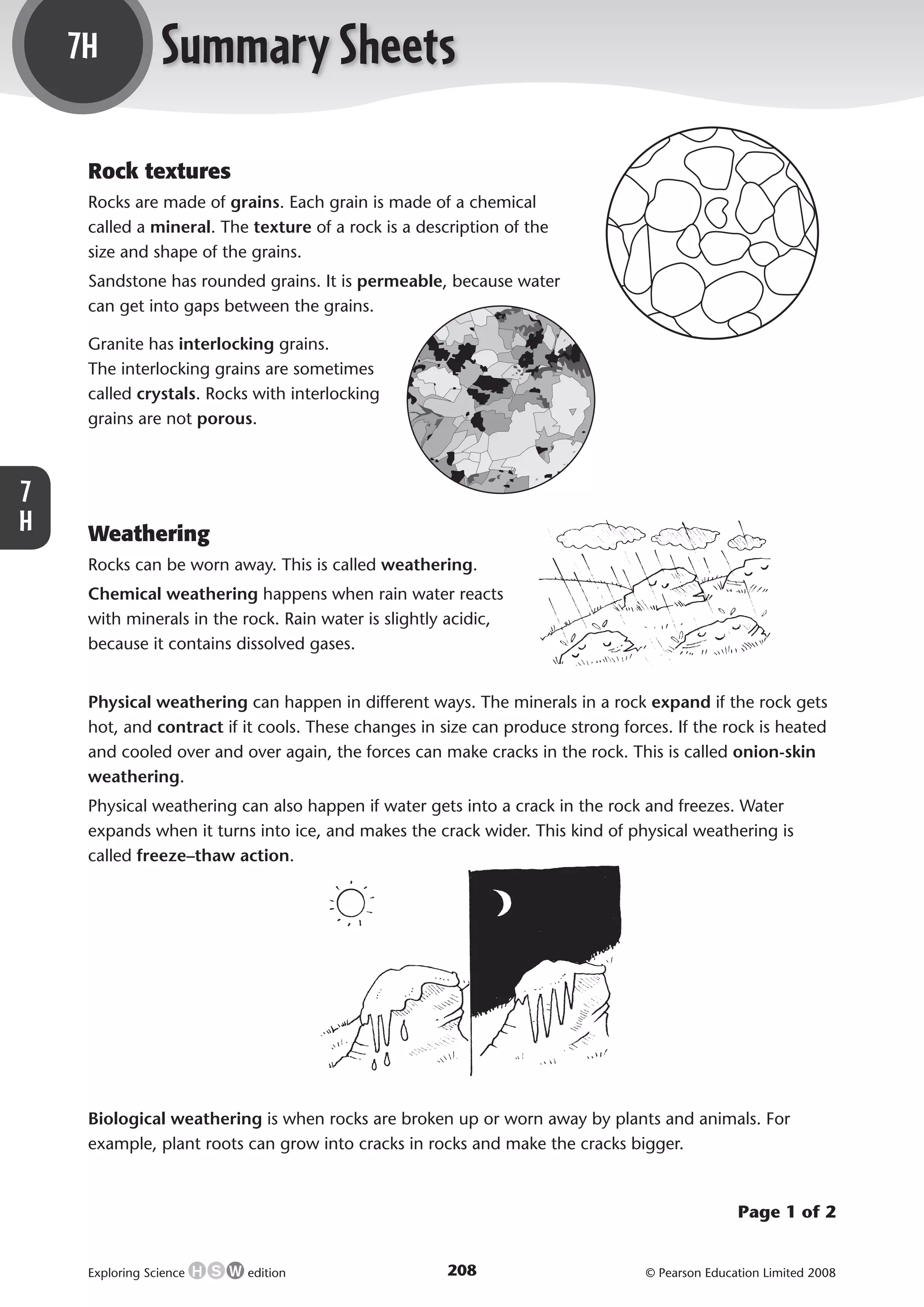
             Rocks are made of grains. Each grain is made of a chemical
             called a mineral. The texture of a rock is a description of the
             size and shape of the grains.
             Sandstone has rounded grains. It is permeable, because water
             can get into gaps between the grains.

             Granite has interlocking grains.
             The interlocking grains are sometimes
             called crystals. Rocks with interlocking
             grains are not porous.


7
H            Weathering
             Rocks can be worn away. This is called weathering.
             Chemical weathering happens when rain water reacts
             with minerals in the rock. Rain water is slightly acidic,
             because it contains dissolved gases.


             Physical weathering can happen in different ways. The minerals in a rock expand if the rock gets
             hot, and contract if it cools. These changes in size can produce strong forces. If the rock is heated
             and cooled over and over again, the forces can make cracks in the rock. This is called onion-skin
             weathering.
             Physical weathering can also happen if water gets into a crack in the rock and freezes. Water
             expands when it turns into ice, and makes the crack wider. This kind of physical weathering is
             called freeze–thaw action.


             Biological weathering is when rocks are broken up or worn away by plants and animals. For
             example, plant roots can grow into cracks in rocks and make the cracks bigger.


                                                                                                        Page 1 of 2


             Exploring Science    edition                     208                        © Pearson Education Limited 2008


M08_ES_AB_Y7_2445_U7H.indd 208                                                                                              4/3/08 12:34:53
7H               Summary Sheets (continued)

             Erosion and transport
             Weathered pieces of rock fall to the bottom of cliffs. This
             movement of bits of rock is called erosion. The bits of rock
             can be transported away by flowing water, wind and ice
             (glaciers). Pieces of rock bump into each other while they are
             being transported, and bits get knocked off them. This is called
             abrasion. The bits of rock carried by a river are called sediment.


             Forming sedimentary rocks
             Fast-moving water can move larger pieces of rock than slow-moving water. Rivers slow down
             when they flow into a lake or the sea. The slow-moving water cannot carry all of the sediment, so
             some of it is deposited on the bottom. Sediments often form layers. Layers of sediment can also
             form when sea water evaporates and leaves salts behind.                                                                   7
             Sometimes dead plants or animals fall to the bottom of the sea. If their remains get covered by                           H
             other sediments they may form fossils. When a dead organism forms a fossil, its form can still be
             seen because its hard parts have been turned into stone. Fossils can help geologists find out how
             rocks were formed.
             If a lot of plant material is buried at once, it may turn into coal. When tiny sea plants and animals
             get buried they sometimes turn into oil or natural gas. These are all fossil fuels.
             The higher layers squash the lower layers, squeezing out the water from the gaps between the
             grains of sediment (compaction). Dissolved minerals in the water can crystallise in the gaps as a
             ‘glue’ that sticks the grains together (cementation).


             Evidence in the rocks
             Geologists can explain how sedimentary rocks formed using evidence in the rocks.
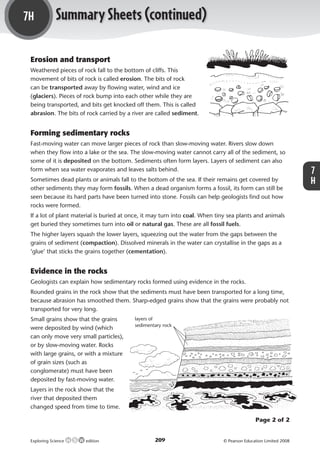
             Rounded grains in the rock show that the sediments must have been transported for a long time,
             because abrasion has smoothed them. Sharp-edged grains show that the grains were probably not
             transported for very long.
             Small grains show that the grains        layers of
                                                      sedimentary rock
             were deposited by wind (which
             can only move very small particles),
             or by slow-moving water. Rocks
             with large grains, or with a mixture
             of grain sizes (such as
             conglomerate) must have been
             deposited by fast-moving water.
             Layers in the rock show that the
             river that deposited them
             changed speed from time to time.

                                                                                                        Page 2 of 2


             Exploring Science    edition                     209                        © Pearson Education Limited 2008


M08_ES_AB_Y7_2445_U7H.indd 209                                                                                              4/3/08 12:34:54

Rocks and weathering

  • 1.
    7H Summary Sheets Rock textures Rocks are made of grains. Each grain is made of a chemical called a mineral. The texture of a rock is a description of the size and shape of the grains. Sandstone has rounded grains. It is permeable, because water can get into gaps between the grains. Granite has interlocking grains. The interlocking grains are sometimes called crystals. Rocks with interlocking grains are not porous. 7 H Weathering Rocks can be worn away. This is called weathering. Chemical weathering happens when rain water reacts with minerals in the rock. Rain water is slightly acidic, because it contains dissolved gases. Physical weathering can happen in different ways. The minerals in a rock expand if the rock gets hot, and contract if it cools. These changes in size can produce strong forces. If the rock is heated and cooled over and over again, the forces can make cracks in the rock. This is called onion-skin weathering. Physical weathering can also happen if water gets into a crack in the rock and freezes. Water expands when it turns into ice, and makes the crack wider. This kind of physical weathering is called freeze–thaw action. Biological weathering is when rocks are broken up or worn away by plants and animals. For example, plant roots can grow into cracks in rocks and make the cracks bigger. Page 1 of 2 Exploring Science edition 208 © Pearson Education Limited 2008 M08_ES_AB_Y7_2445_U7H.indd 208 4/3/08 12:34:53
  • 2.
    7H Summary Sheets (continued) Erosion and transport Weathered pieces of rock fall to the bottom of cliffs. This movement of bits of rock is called erosion. The bits of rock can be transported away by flowing water, wind and ice (glaciers). Pieces of rock bump into each other while they are being transported, and bits get knocked off them. This is called abrasion. The bits of rock carried by a river are called sediment. Forming sedimentary rocks Fast-moving water can move larger pieces of rock than slow-moving water. Rivers slow down when they flow into a lake or the sea. The slow-moving water cannot carry all of the sediment, so some of it is deposited on the bottom. Sediments often form layers. Layers of sediment can also form when sea water evaporates and leaves salts behind. 7 Sometimes dead plants or animals fall to the bottom of the sea. If their remains get covered by H other sediments they may form fossils. When a dead organism forms a fossil, its form can still be seen because its hard parts have been turned into stone. Fossils can help geologists find out how rocks were formed. If a lot of plant material is buried at once, it may turn into coal. When tiny sea plants and animals get buried they sometimes turn into oil or natural gas. These are all fossil fuels. The higher layers squash the lower layers, squeezing out the water from the gaps between the grains of sediment (compaction). Dissolved minerals in the water can crystallise in the gaps as a ‘glue’ that sticks the grains together (cementation). Evidence in the rocks Geologists can explain how sedimentary rocks formed using evidence in the rocks. Rounded grains in the rock show that the sediments must have been transported for a long time, because abrasion has smoothed them. Sharp-edged grains show that the grains were probably not transported for very long. Small grains show that the grains layers of sedimentary rock were deposited by wind (which can only move very small particles), or by slow-moving water. Rocks with large grains, or with a mixture of grain sizes (such as conglomerate) must have been deposited by fast-moving water. Layers in the rock show that the river that deposited them changed speed from time to time. Page 2 of 2 Exploring Science edition 209 © Pearson Education Limited 2008 M08_ES_AB_Y7_2445_U7H.indd 209 4/3/08 12:34:54