   Provide a Open Source modular platform for
    robotic development.
    ◦ Proven hardware, ready for rough terrain and can survive
      the harsh environments.
    ◦ Reduced development time and cost, compared to
      building from scratch.
    ◦ An 80% solution to test and prove functionality, helps
      get teams to a “minimal viable product” fast.
    ◦ Opportunities for code reuse in
      navigation, communication, user interface from one
      machine to the next.
    ◦ Tap a larger programming community by using
      Android/Java. Making it easier to find talent.
    ◦ Open source: allows teams to modify components to
      suite their needs, flexibility to make it in house to save
      money or buy to save schedule.
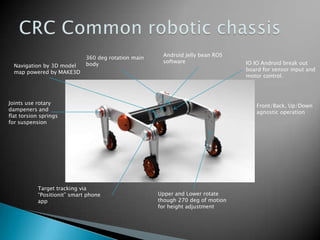
Android Jelly bean ROS
                             360 deg rotation main
                                                      software                  IO IO Android break out
  Navigation by 3D model     body
                                                                                board for sensor input and
  map powered by MAKE3D
                                                                                motor control.


Joints use rotary                                                                   Front/Back, Up/Down
dampeners and                                                                       agnostic operation
flat torsion springs
for suspension


           Target tracking via
           “Positionit” smart phone                  Upper and Lower rotate
           app                                       though 270 deg of motion
                                                     for height adjustment
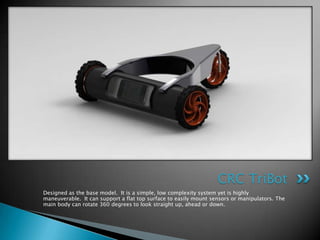
CRC TriBot
Designed as the base model. It is a simple, low complexity system yet is highly
maneuverable. It can support a flat top surface to easily mount sensors or manipulators. The
main body can rotate 360 degrees to look straight up, ahead or down.
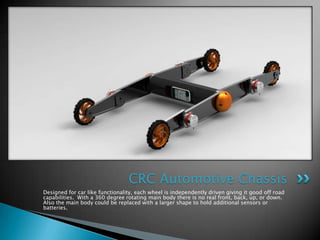
CRC Automotive Chassis
Designed for car like functionality, each wheel is independently driven giving it good off road
capabilities. With a 360 degree rotating main body there is no real front, back, up, or down.
Also the main body could be replaced with a larger shape to hold additional sensors or
batteries.
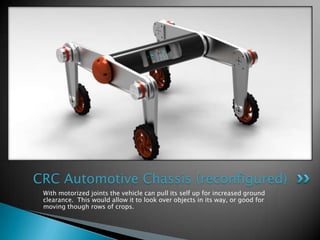
CRC Automotive Chassis (reconfigured)
 With motorized joints the vehicle can pull its self up for increased ground
 clearance. This would allow it to look over objects in its way, or good for
 moving though rows of crops.
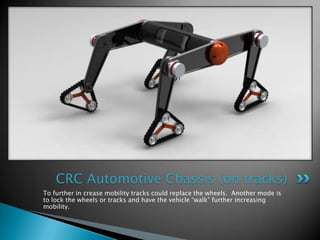
CRC Automotive Chassis (on tracks)
To further in crease mobility tracks could replace the wheels. Another mode is
to lock the wheels or tracks and have the vehicle “walk” further increasing
mobility.
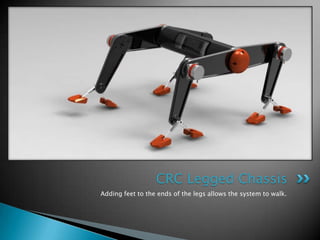
CRC Legged Chassis
Adding feet to the ends of the legs allows the system to walk.
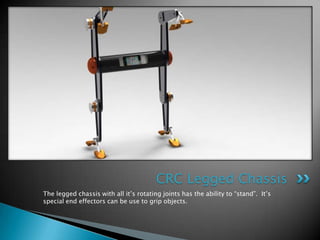
CRC Legged Chassis
The legged chassis with all it’s rotating joints has the ability to “stand”. It’s
special end effectors can be use to grip objects.
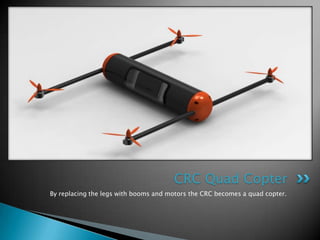
CRC Quad Copter
By replacing the legs with booms and motors the CRC becomes a quad copter.
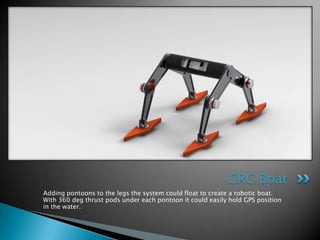
CRC Boat
Adding pontoons to the legs the system could float to create a robotic boat.
With 360 deg thrust pods under each pontoon it could easily hold GPS position
in the water.
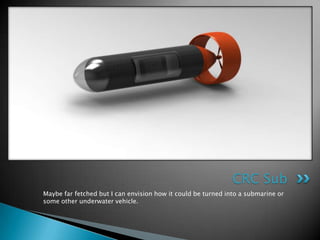
CRC Sub
Maybe far fetched but I can envision how it could be turned into a submarine or
some other underwater vehicle.

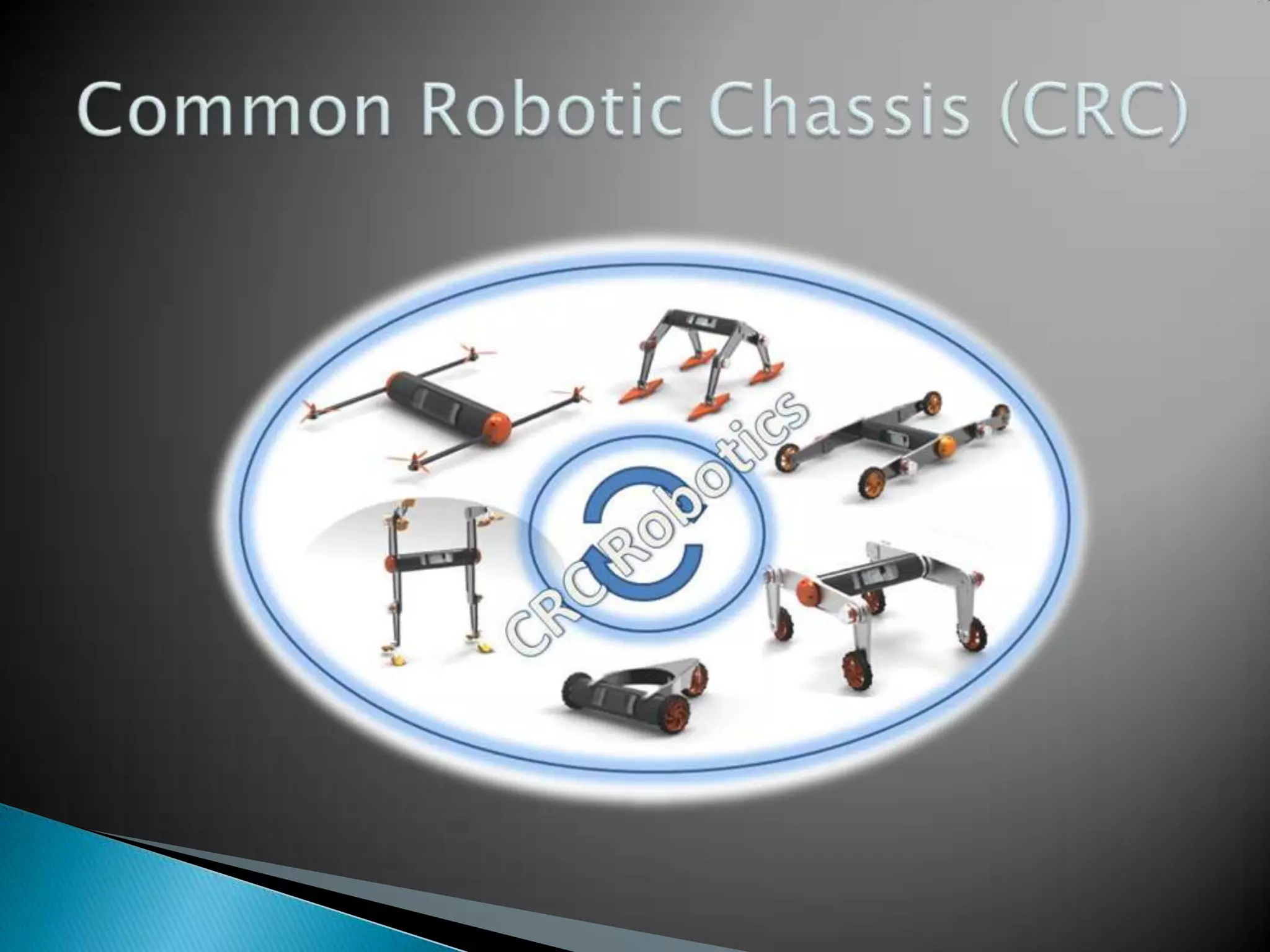
Open Source Robotic Platform

  • 2.
    Provide a Open Source modular platform for robotic development. ◦ Proven hardware, ready for rough terrain and can survive the harsh environments. ◦ Reduced development time and cost, compared to building from scratch. ◦ An 80% solution to test and prove functionality, helps get teams to a “minimal viable product” fast. ◦ Opportunities for code reuse in navigation, communication, user interface from one machine to the next. ◦ Tap a larger programming community by using Android/Java. Making it easier to find talent. ◦ Open source: allows teams to modify components to suite their needs, flexibility to make it in house to save money or buy to save schedule.
  • 3.
    Android Jelly beanROS 360 deg rotation main software IO IO Android break out Navigation by 3D model body board for sensor input and map powered by MAKE3D motor control. Joints use rotary Front/Back, Up/Down dampeners and agnostic operation flat torsion springs for suspension Target tracking via “Positionit” smart phone Upper and Lower rotate app though 270 deg of motion for height adjustment
  • 4.
    CRC TriBot Designed asthe base model. It is a simple, low complexity system yet is highly maneuverable. It can support a flat top surface to easily mount sensors or manipulators. The main body can rotate 360 degrees to look straight up, ahead or down.
  • 5.
    CRC Automotive Chassis Designedfor car like functionality, each wheel is independently driven giving it good off road capabilities. With a 360 degree rotating main body there is no real front, back, up, or down. Also the main body could be replaced with a larger shape to hold additional sensors or batteries.
  • 6.
    CRC Automotive Chassis(reconfigured) With motorized joints the vehicle can pull its self up for increased ground clearance. This would allow it to look over objects in its way, or good for moving though rows of crops.
  • 7.
    CRC Automotive Chassis(on tracks) To further in crease mobility tracks could replace the wheels. Another mode is to lock the wheels or tracks and have the vehicle “walk” further increasing mobility.
  • 8.
    CRC Legged Chassis Addingfeet to the ends of the legs allows the system to walk.
  • 9.
    CRC Legged Chassis Thelegged chassis with all it’s rotating joints has the ability to “stand”. It’s special end effectors can be use to grip objects.
  • 10.
    CRC Quad Copter Byreplacing the legs with booms and motors the CRC becomes a quad copter.
  • 11.
    CRC Boat Adding pontoonsto the legs the system could float to create a robotic boat. With 360 deg thrust pods under each pontoon it could easily hold GPS position in the water.
  • 12.
    CRC Sub Maybe farfetched but I can envision how it could be turned into a submarine or some other underwater vehicle.