Download to read offline
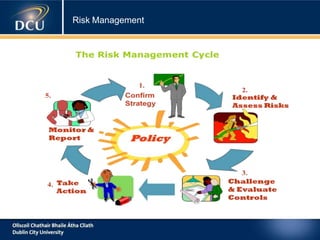
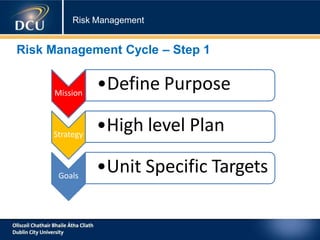
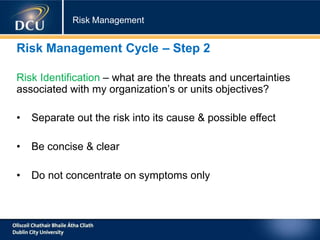
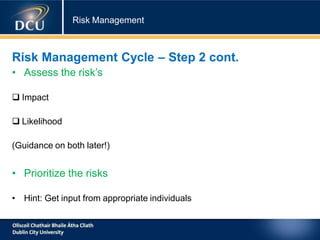
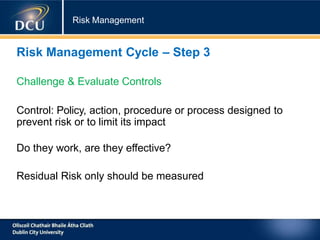
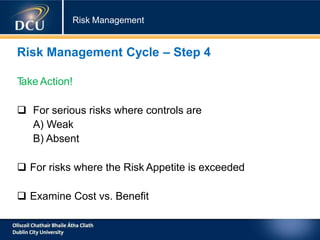
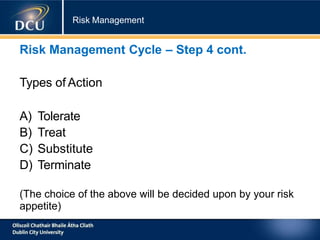
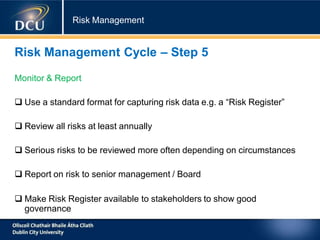
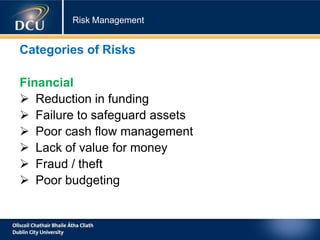
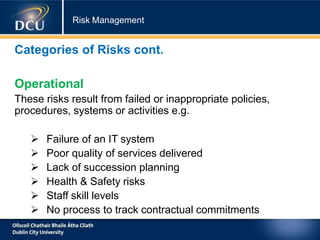

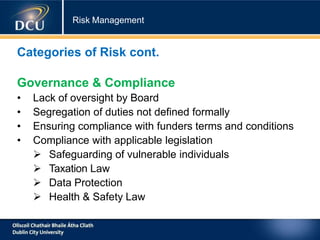
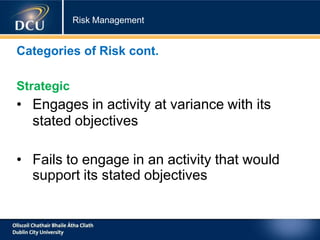

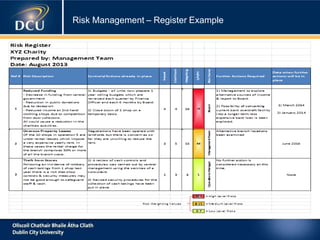
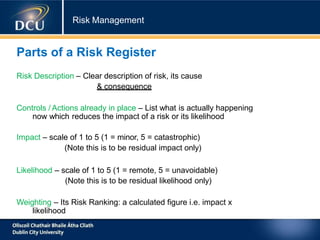
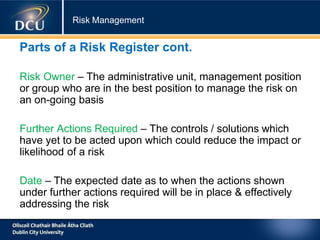
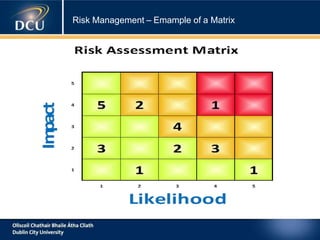
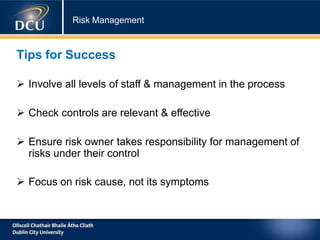
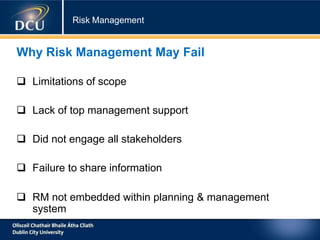
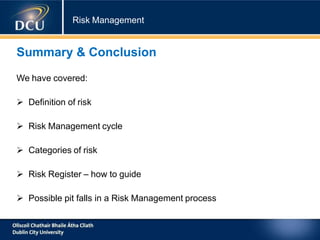
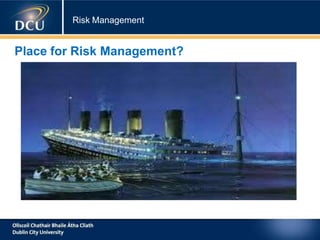

This document provides an introduction to risk management. It outlines the aims to explain why risk management is relevant and its components through the risk management cycle. The cycle includes identifying risks, assessing their impact and likelihood, evaluating existing controls, taking action if needed, and monitoring and reporting risks. Risks are categorized into financial, operational, reputational, governance, compliance, and strategic groupings. A risk register is used to record risk details like description, controls, impact, likelihood, further actions, and owners. Tips for success include involving staff, ensuring controls are effective, and designating risk owners. Reasons for risk management failure include limited scope and lack of management support.


