Presented by
Bernard Gisilanbe Vetbuje & Emmanuel Akpeokhai
ABSTRACT
Risk management is an activity which
integrates recognition of risk, risk
assessment and developing strategies to
manage it.
Objective of risk management is to reduce
different risks. It may refer threats caused by
environment, technology, human,
organizations and politics. This paper
describes the different steps in the risk
management process.
INTRODUCTION
Risk
Risk is unavoidable and present in every human
situation. It is present in daily lives, public
and private business organizations.
risk refers to the uncertainty that surrounds
future events and outcomes to influence the
achievement of an organization's objectives.
*Quantitative or Qualitative Analysis is required
for making decisions concerning major risks or
threats to the achievement of an organization's
objectives.
One well accepted description of risk
management
Risk management is a systematic approach to
setting the best course of action under uncertainty
by
identifying
accessing
understanding
acting on and
communicating risk issues.
Integrated Risk Management
integrated risk management is continuous process.
It is about making strategic decisions that contribute to
the achievement of an organization's overall corporate
objectives.
Integrated risk management requires an ongoing
assessment of potential risks.
Safety management
Some times risk management and safety
management are seen as the same type of
management, but in practice safety
management is a main and important part of
the risk management which also covers
financial risks.
RISK MANAGEMENT STEPS AND TOOLS
1. Establishing goals and context (i.e. the risk
environment),
2. Identifying risks,
3. Analyzing the identified risks,
4. Assessing or evaluating the risks,
5. Treating or managing the risks,
6. Monitoring and reviewing the risks and the risk
environment regularly, and
7. Continuously communicating, consulting with
stakeholders and reporting.
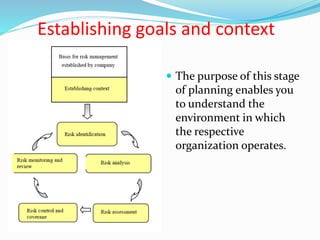
Establishing goals and context
 The purpose of this stage
of planning enables you
to understand the
environment in which
the respective
organization operates.
Identifying risks
Key questions that may assist your identification of risks
include:
− For us to achieve our goals, when, where, why, and how
are risks likely to occur?
− What are the risks associated with achieving each of
our priorities?
− What are the risks of not achieving these priorities?
− Who might be involved (for example, suppliers,
contractors, stakeholders)?
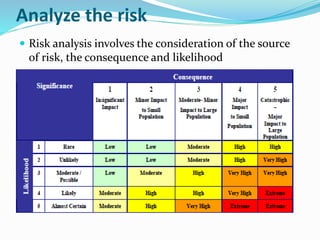
Analyze the risk
 Risk analysis involves the consideration of the source
of risk, the consequence and likelihood
Evaluate the risk
Once the risks have been analyzed they can be compared
against the previously documented and approved
tolerable risk criteria
Treat the risk
 The objective of this stage of the risk assessment
process is to develop cost effective options for treating
the risks
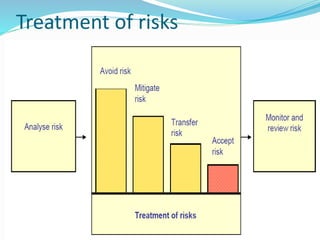
Treatment options
 Avoiding the risk,
 − Reducing (mitigating) the risk,
 − Transferring (sharing) the risk, and
 − Retaining (accepting) the risk.
Treatment of risks
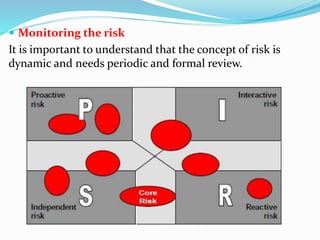
 Monitoring the risk
It is important to understand that the concept of risk is
dynamic and needs periodic and formal review.
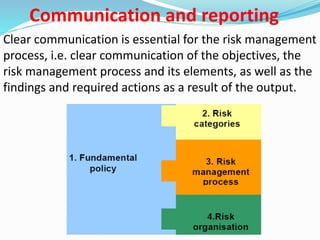
Communication and reporting
Clear communication is essential for the risk management
process, i.e. clear communication of the objectives, the
risk management process and its elements, as well as the
findings and required actions as a result of the output.
CONCLUDING REMARKS
Risk management is, at present, implemented
in many large as well as small and medium
sized industries. However, not only industries
but also governmental organizations,
research institutes and hospitals are now
introducing risk management to some extent.

Fiba 500 risk management

  • 1.
    Presented by Bernard GisilanbeVetbuje & Emmanuel Akpeokhai
  • 2.
    ABSTRACT Risk management isan activity which integrates recognition of risk, risk assessment and developing strategies to manage it. Objective of risk management is to reduce different risks. It may refer threats caused by environment, technology, human, organizations and politics. This paper describes the different steps in the risk management process.
  • 3.
    INTRODUCTION Risk Risk is unavoidableand present in every human situation. It is present in daily lives, public and private business organizations. risk refers to the uncertainty that surrounds future events and outcomes to influence the achievement of an organization's objectives. *Quantitative or Qualitative Analysis is required for making decisions concerning major risks or threats to the achievement of an organization's objectives.
  • 4.
    One well accepteddescription of risk management Risk management is a systematic approach to setting the best course of action under uncertainty by identifying accessing understanding acting on and communicating risk issues.
  • 5.
    Integrated Risk Management integratedrisk management is continuous process. It is about making strategic decisions that contribute to the achievement of an organization's overall corporate objectives. Integrated risk management requires an ongoing assessment of potential risks.
  • 6.
    Safety management Some timesrisk management and safety management are seen as the same type of management, but in practice safety management is a main and important part of the risk management which also covers financial risks.
  • 7.
    RISK MANAGEMENT STEPSAND TOOLS 1. Establishing goals and context (i.e. the risk environment), 2. Identifying risks, 3. Analyzing the identified risks, 4. Assessing or evaluating the risks, 5. Treating or managing the risks, 6. Monitoring and reviewing the risks and the risk environment regularly, and 7. Continuously communicating, consulting with stakeholders and reporting.
  • 8.
    Establishing goals andcontext  The purpose of this stage of planning enables you to understand the environment in which the respective organization operates.
  • 9.
    Identifying risks Key questionsthat may assist your identification of risks include: − For us to achieve our goals, when, where, why, and how are risks likely to occur? − What are the risks associated with achieving each of our priorities? − What are the risks of not achieving these priorities? − Who might be involved (for example, suppliers, contractors, stakeholders)?
  • 10.
    Analyze the risk Risk analysis involves the consideration of the source of risk, the consequence and likelihood
  • 11.
    Evaluate the risk Oncethe risks have been analyzed they can be compared against the previously documented and approved tolerable risk criteria Treat the risk  The objective of this stage of the risk assessment process is to develop cost effective options for treating the risks Treatment options  Avoiding the risk,  − Reducing (mitigating) the risk,  − Transferring (sharing) the risk, and  − Retaining (accepting) the risk.
  • 12.
  • 13.
     Monitoring therisk It is important to understand that the concept of risk is dynamic and needs periodic and formal review.
  • 14.
    Communication and reporting Clearcommunication is essential for the risk management process, i.e. clear communication of the objectives, the risk management process and its elements, as well as the findings and required actions as a result of the output.
  • 15.
    CONCLUDING REMARKS Risk managementis, at present, implemented in many large as well as small and medium sized industries. However, not only industries but also governmental organizations, research institutes and hospitals are now introducing risk management to some extent.