DEFINITION OF REVENUEMANAGEMENT
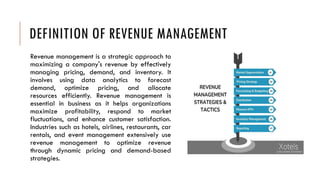
Revenue management is a strategic approach to
maximizing a company's revenue by effectively
managing pricing, demand, and inventory. It
involves using data analytics to forecast
demand, optimize pricing, and allocate
resources efficiently. Revenue management is
essential in business as it helps organizations
maximize profitability, respond to market
fluctuations, and enhance customer satisfaction.
Industries such as hotels, airlines, restaurants, car
rentals, and event management extensively use
revenue management to optimize revenue
through dynamic pricing and demand-based
strategies.
3.
REVENUE MANAGEMENT REVOLVESAROUND
SEVERAL CORE CONCEPTS:
Demand Forecasting: Predicting future customer
demand based on historical data and market
trends.
Pricing Strategies: Adjusting prices dynamically
to align with demand and competition.
Inventory Control: Managing available products
or services efficiently to maximize revenue.
Market Segmentation: Categorizing customers
into different groups based on their willingness to
pay and purchasing behavior.
4.
1. DEMAND FORECASTING
Demandforecasting involves predicting future customer demand
using various methodologies:
Historical Data Analysis: Studying past trends to identify
seasonal or cyclical patterns.
Market Trends Analysis: Assessing industry trends, competitor
strategies, and consumer behavior shifts.
AI and Machine Learning: Leveraging advanced technology to
improve accuracy in forecasting demand fluctuations. Accurate
demand forecasting is crucial for pricing optimization and
inventory management, ensuring businesses capitalize on high-
demand periods while minimizing losses during low-demand times.
5.
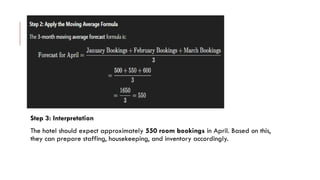
EXAMPLE
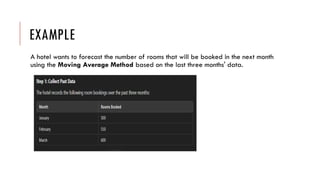
A hotel wantsto forecast the number of rooms that will be booked in the next month
using the Moving Average Method based on the last three months' data.
6.
Step 3: Interpretation
Thehotel should expect approximately 550 room bookings in April. Based on this,
they can prepare staffing, housekeeping, and inventory accordingly.
7.
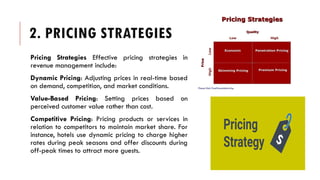
2. PRICING STRATEGIES
PricingStrategies Effective pricing strategies in
revenue management include:
Dynamic Pricing: Adjusting prices in real-time based
on demand, competition, and market conditions.
Value-Based Pricing: Setting prices based on
perceived customer value rather than cost.
Competitive Pricing: Pricing products or services in
relation to competitors to maintain market share. For
instance, hotels use dynamic pricing to charge higher
rates during peak seasons and offer discounts during
off-peak times to attract more guests.
8.
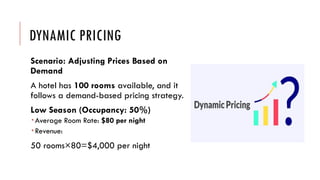
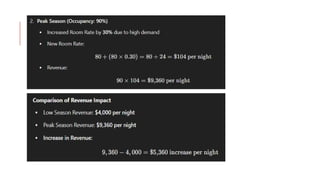
DYNAMIC PRICING
Scenario: AdjustingPrices Based on
Demand
A hotel has 100 rooms available, and it
follows a demand-based pricing strategy.
Low Season (Occupancy: 50%)
Average Room Rate: $80 per night
Revenue:
50 rooms×80=$4,000 per night
10.
OTHER PRICING STRATEGIESWITH COMPUTATIONS
Competitive Pricing Example
If a competing hotel offers rooms at $95 per night, our hotel may decide to set a
price just below, say $92 per night, to attract more customers.
Value-Based Pricing Example
A luxury suite offers exclusive amenities and personalized services. Based on
customer surveys, guests are willing to pay a premium price of $200 per night
instead of the standard $150 per night, leading to a $50 per room revenue
increase.
11.
3. INVENTORY CONTROL
InventoryControl Inventory control ensures businesses maximize revenue by efficiently managing
supply and demand. Key practices include:
Overbooking Strategies: Accepting more reservations than available inventory to compensate for
cancellations and no-shows.
Example: Airline Industry
Airlines frequently overbook flights, anticipating that some passengers will cancel or not show up.
For instance, if a plane has 150 seats, an airline might sell 160 tickets based on historical data
showing that an average of 10 passengers cancel last-minute. This strategy maximizes seat
utilization and revenue. However, if more passengers show up than expected, the airline
compensates them with incentives like travel vouchers or rebooking options.
Example: Hotels
Hotels also overbook rooms to account for last-minute cancellations or no-shows. A hotel with 100
rooms might accept 105 reservations if past trends indicate a 5% cancellation rate. If all guests
arrive, the hotel may upgrade some to partner hotels or offer perks like free meals to manage the
situation while maintaining guest satisfaction.
12.
INVENTORY CONTROL
2. BalancingSupply and Demand: Adjusting inventory allocation across different
market segments to optimize profitability. Proper inventory management prevents
revenue loss due to unsold inventory while minimizing customer dissatisfaction caused
by unfulfilled reservations.
Example: Restaurants Using Table Management Systems
Restaurants balance supply (available tables) with demand by using reservation and
queue management systems. Popular dining spots may use time-limited seating
policies (e.g., 90-minute dining slots) to optimize table turnover and accommodate
more guests.
Example: Theme Parks Using Virtual Queues
Disney parks use the Genie+ and Lightning Lane systems to manage ride demand
efficiently. Guests reserve ride slots in advance, reducing long lines and allowing
better visitor flow across attractions.
13.
3. Dynamic Pricingand Demand Forecasting
Example: Hotel Revenue Management
Hotels adjust room rates based on demand predictions. A beachfront resort might increase
rates during peak season (e.g., summer holidays) and offer discounts during low seasons to
attract guests. Platforms like Expedia and Booking.com help hotels dynamically adjust prices
based on occupancy levels and competitor pricing.
Example: Ride-Sharing Apps (Uber & Lyft)
Uber uses "surge pricing" when demand exceeds driver availability. For instance, during rush
hours or after events, fares automatically increase to encourage more drivers to be
available, ensuring a balance between supply (drivers) and demand (passengers).
4. Inventory Allocation Across Market Segments
Example: Airline Fare Classes
Airlines divide inventory into fare classes (economy, business, first-class) with different price
points and booking restrictions. They allocate a certain number of seats to each class to
optimize revenue. For instance, during peak travel seasons, more seats may be assigned to
premium fares, while off-peak periods might see discounted economy seats to fill flights.
14.
Example: E-commerce FlashSales
Retailers like Amazon allocate limited inventory for flash sales, offering discounts on
selected products for a short time. This strategy creates urgency, drives demand, and
helps clear excess stock efficiently.
15.
4. MARKET SEGMENTATION
MarketSegmentation Market segmentation divides customers into groups based on
characteristics such as demographics, purchasing behavior, and price sensitivity. Businesses use
segmentation to:
A. Demographic Segmentation (Age, Gender, Income, Occupation)
Example: Hotel Pricing for Different Age Groups
Hotels often offer discounted rates for seniors (ages 60+) and special packages for families with children. A resort
may provide free stays for kids under 12, attracting more family travelers.
B. Behavioral Segmentation (Loyalty, Purchase Habits)
Example: Hotel Loyalty Programs
Marriott Bonvoy and Hilton Honors reward frequent guests with exclusive perks like free nights, room upgrades, and
early check-in. These programs encourage repeat bookings and brand loyalty.
C. Psychographic Segmentation (Lifestyle, Interests, Values)
Example: Wellness & Luxury Travelers
High-end resorts like Six Senses target wellness travelers by offering spa retreats, organic cuisine, and yoga sessions,
appealing to health-conscious guests willing to pay a premium.
D. Geographic Segmentation (Location-Based Preferences)
Example: Local vs. International Tourists
A beachfront hotel may offer discounts to domestic travelers during off-peak seasons while keeping higher rates for
international tourists, who may have more flexible budgets.
16.
MARKET SEGMENTATION
Customize Pricingand Promotions: Tailor offers to specific customer groups to
maximize revenue.
Example: Airlines Offering Tiered Fares – Budget travelers might choose basic economy fares, while
business travelers prefer flexible tickets with priority boarding.
Example: Restaurants with Happy Hour Specials – Bars and restaurants attract after-work crowds by
offering discounted drinks and appetizers during specific hours.
Improve Customer Experience: Offer personalized services to enhance customer
satisfaction and loyalty. A case study example is a hotel offering different room rates
for business travelers, tourists, and loyalty program members.
Example: Personalized Room Preferences – Luxury hotels like The Ritz-Carlton track guest
preferences (e.g., pillow type, favorite drink) and ensure personalized service upon return visits.
Example: Exclusive Perks for Business Travelers – Business hotels offer fast Wi-Fi, airport transfers,
and 24-hour concierge services to cater to professionals on work trips.
17.
STRATEGIES FOR EFFECTIVEREVENUE
MANAGEMENT
Strategies for Effective Revenue Management To implement successful revenue
management, businesses adopt strategies such as:
1. Yield Management: Maximizing revenue by adjusting prices based on demand
fluctuations.
Example: Hotels Using Seasonal Pricing
A beachfront resort increases room rates during peak travel seasons (summer, holidays) and lowers
them during the off-season to attract guests.
A business hotel near a convention center raises prices during major conferences when demand spikes.
Example: Airlines Using Fare Buckets
Airlines sell tickets in different fare classes (economy, business, first-class) and adjust availability. When
demand is high, lower-priced seats sell out quickly, leaving only premium-priced tickets.
18.
2. Overbooking Strategies:Balancing confirmed bookings and expected
cancellations to optimize occupancy.
Example: Airlines Managing No-Shows
A flight with 200 seats might accept 210 bookings based on historical data showing a
5% no-show rate. If all passengers arrive, the airline offers compensation (vouchers,
upgrades) to volunteers willing to take a later flight.
Example: Hotels Handling Overbookings
A hotel with 100 rooms might accept 105 reservations, expecting last-minute
cancellations. If all guests arrive, the hotel upgrades some to suites or partners with
nearby hotels to relocate guests while maintaining brand loyalty.
19.
3. Distribution ChannelOptimization: Using direct booking channels and third-party
platforms effectively to maximize reach and profitability.
Example: Hotels Using a Multi-Channel Strategy
Direct Bookings (Website, Loyalty Programs): Marriott encourages guests to book directly by
offering exclusive discounts and loyalty points, reducing reliance on OTAs (Online Travel Agencies).
OTAs (Expedia, Booking.com, Airbnb): Hotels list rooms on these platforms to increase visibility but
manage availability carefully to avoid high commission fees.
Metasearch Engines (Google Hotels, Trivago): These platforms aggregate hotel rates from multiple
sites, allowing travelers to compare prices. Hotels participate in these listings to attract price-sensitive
customers.
Example: Restaurants Managing Online Reservations
Restaurants use platforms like OpenTable or Resy while also promoting direct reservations through
their website or social media, reducing third-party fees.
20.
REVENUE MANAGEMENT INTHE
HOSPITALITY INDUSTRY
Revenue Management in the Hospitality Industry Revenue management plays a critical
role in the hospitality sector through:
1. Room Rate Optimization: Adjusting hotel room rates based on demand, competition,
and events.
Example: Dynamic Pricing in Hotels
A hotel near a sports stadium increases room rates when a major event is scheduled, knowing demand will
be high.
A city-center hotel lowers rates during mid-week to attract business travelers while charging higher rates for
weekend leisure guests.
Example: Competitor-Based Pricing
Hotels monitor competitor rates using AI-driven tools (e.g., Duetto, IDeaS) and adjust pricing accordingly. If
a competitor lowers rates due to low occupancy, other hotels may adjust their pricing to stay competitive.
21.
2. Seasonal Pricing:Offering different rates during peak and off-peak
seasons.
Example: Resort Hotels & Peak Season Rates
A tropical beach resort charges premium rates during summer and holiday
seasons when demand is highest.
During the off-season, the same resort offers discounts and promotional
packages (e.g., "Stay 3 Nights, Get 1 Free") to attract visitors.
Example: Ski Resorts & Off-Peak Discounts
A ski resort charges high rates in winter when demand is high and offers
summer discounts with hiking and wellness packages to attract guests.
22.
3. Group andCorporate Pricing: Providing special rates and packages for corporate
clients and group bookings.
Example: Corporate Hotel Packages
Business hotels offer discounted rates for companies that book frequently, along with
perks such as free breakfast, meeting rooms, and express check-in.
Example: Marriott and Hilton have corporate loyalty programs that provide business
travelers with exclusive discounts and benefits.
Example: Wedding & Event Group Bookings
A hotel providing wedding packages might offer discounted room blocks for guests if
the reception is held on the property.
Conference centers and event hotels provide tiered discounts based on the number of
rooms booked for a corporate event.
23.
4. Role ofAI and Big Data: Utilizing data analytics and AI-driven pricing models to
enhance decision-making and revenue generation.
Example: AI-Powered Forecasting
AI tools analyze booking trends, weather patterns, and social media mentions to
predict demand spikes. Example: A hotel in a tropical location raises rates if forecasts
predict good weather for an upcoming weekend.
Example: Personalized Pricing & Offers
Booking platforms use AI to offer personalized discounts based on a user's browsing
history. Example: Expedia might show different rates to a repeat visitor compared to
a first-time user.
Example: Chatbots & Virtual Assistants
AI-driven chatbots on hotel websites assist with bookings, suggest upsells (e.g., room
upgrades, spa packages), and enhance guest experience.
24.
CHALLENGES IN REVENUEMANAGEMENT
Challenges in Revenue Management Despite its benefits, revenue management faces several
challenges:
1. Competition: Businesses must continuously innovate to stay ahead of competitors using similar
strategies.
Example:
A mid-range hotel struggles to compete with both luxury hotels (offering premium experiences)
and budget accommodations (offering lower prices).
Airlines offering similar dynamic pricing models find it difficult to maintain customer loyalty.
Solutions:
✔ Service Differentiation: Hotels can offer unique experiences (e.g., personalized amenities,
sustainability initiatives) rather than competing solely on price.
✔ Loyalty Programs: Encouraging direct bookings through rewards, exclusive discounts, and
personalized perks.
✔ Data-Driven Competitive Pricing: AI-driven pricing tools (e.g., STR, Duetto) help businesses
monitor competitors’ rates and adjust pricing strategically.
25.
2. Changing ConsumerBehavior: Customers' expectations and purchasing habits
evolve, requiring businesses to adapt their pricing models.
Example:
Traditional hotels face declining demand as younger travelers opt for eco-friendly
boutique hotels or home-sharing platforms like Airbnb.
Airlines must offer customized pricing tiers (e.g., basic economy vs. premium
economy) to cater to different traveler preferences.
Solutions:
✔ Personalization: AI-powered recommendations based on customer preferences
and past booking behavior.
✔ Flexible Pricing Models: Subscription-based or "pay-as-you-use" pricing for long-
term stays.
✔ Enhanced Digital Engagement: Leveraging influencers, virtual tours, and user-
generated content to attract tech-savvy travelers.
26.
3. Market Uncertainties:Economic fluctuations, global crises, and unexpected events
can disrupt demand patterns and impact revenue forecasts.
Example:
The COVID-19 pandemic led to mass cancellations, forcing hotels and airlines to
introduce flexible refund policies and alternative revenue sources.
A resort relying on international tourists faces low demand due to visa restrictions and
fluctuating exchange rates.
Solutions:
✔ Revenue Diversification: Hotels can introduce co-working spaces, wellness
retreats, or long-stay packages to attract different customer segments.
✔ Crisis Management Strategies: AI-based forecasting tools help predict downturns
and allow businesses to adjust pricing accordingly.
✔ Agile Business Models: Implementing flexible policies (e.g., refundable rates, last-
minute deals) to boost bookings during uncertain periods.
27.
FUTURE TRENDS INREVENUE
MANAGEMENT
Future Trends in Revenue Management The future of revenue management is driven
by technological advancements and evolving consumer demands:
AI-Driven Pricing: Leveraging artificial intelligence to predict demand and optimize
pricing in real time.
Personalized Revenue Strategies: Using customer data to tailor offers and pricing
based on individual preferences.
Sustainable Pricing Models: Implementing eco-conscious pricing strategies that align
with corporate social responsibility initiatives.
28.
CONCLUSION
Conclusion Revenue managementis a vital practice for businesses aiming to optimize
profitability. Key takeaways include:
Understanding demand forecasting, pricing strategies, inventory control, and market
segmentation.
The impact of effective revenue management in industries such as hospitality, airlines,
and retail.
The importance of embracing future trends like AI-driven pricing and sustainable
strategies to maintain competitive advantage. As businesses continue to evolve,
revenue management will remain an essential tool for maximizing revenue and
ensuring long-term success.


![Hotel revenue management [autosaved]](https://cdn.slidesharecdn.com/ss_thumbnails/hotelrevenuemanagementautosaved-200506063906-thumbnail.jpg?width=640&height=640&fit=bounds)

![Hotel Revenue Management [Autosaved].pptx](https://cdn.slidesharecdn.com/ss_thumbnails/hotelrevenuemanagementautosaved-241214111419-e0aa1a43-thumbnail.jpg?width=640&height=640&fit=bounds)


