


PBL
GROUP-4
-Anita, Ashma, Garima,
Neha,Prawin,Ranjana, Shabnam, Smita,
Suvin Chaudhary
Resource Faculty- Dr. Ashok Ayer
Presented By: Prawin Kushwaha
BDS-2014,CODS
RESPONSE OF PULPODENTIN
COMPLEX TO STIMULI
1.Introduction to
pulpodentin complex
2.Stimuli present on
pulpodentin complex
4.Conclusions
3.Different responses of
pulpodentin organ to
external stimuli
CONTENTS :
INTRODUCTION TO PULPODENTIN
COMPLEX
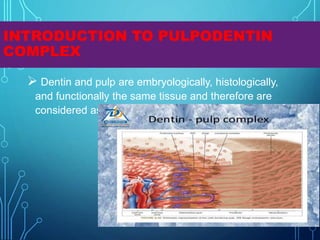
 Dentin and pulp are embryologically, histologically,
and functionally the same tissue and therefore are
considered as a complex.
Structure and response of dentin to the injury are largely functions
of the odontoblasts and the other cells in the pulp,but these cells
are dependent on the dentin for their protection and state of
differentiation.
Normal form and function of one cannot be maintained without
other
The embryonic dental papillae is responsible for the formation of
this coupled tissue
CONTINUED…
CONTINUED
Hence it is obvious that the response of the pulp to
any restorative material will be influenced by its
surrounding dentin also
Dentinal fluid in the tubules, which is continuous with
the extracellular fluid of pulp serves as a medium for
relaying injurious agents to the pulp to induce an
inflammatory response
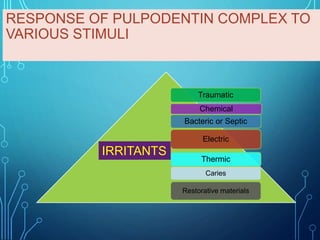
RESPONSE OF PULPODENTIN COMPLEX TO
VARIOUS STIMULI
Traumatic
Chemical
Bacteric or Septic
Electric
Thermic
Caries
Restorative materials
IRRITANTS
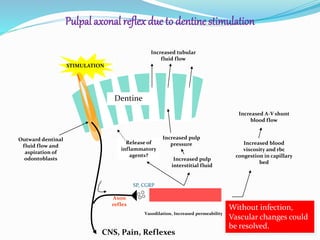
Pulp venules
STIMULATION
Increased pulp
interstitial fluid
Increased pulp
pressure
Increased tubular
fluid flow
Release of
inflammatory
agents?
Increased blood
viscosity and rbc
congestion in capillary
bed
Increased A-V shunt
blood flow
Outward dentinal
fluid flow and
aspiration of
odontoblasts
CNS, Pain, Reflexes
Vasodilation, Increased permeability
Pulpal axonal reflex due to dentine stimulation
Without infection,
Vascular changes could
be resolved.
Axon
reflex
SP, CGRP
Dentine
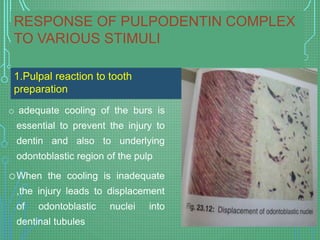
o adequate cooling of the burs is
essential to prevent the injury to
dentin and also to underlying
odontoblastic region of the pulp
oWhen the cooling is inadequate
,the injury leads to displacement
of odontoblastic nuclei into
dentinal tubules
RESPONSE OF PULPODENTIN COMPLEX
TO VARIOUS STIMULI
1.Pulpal reaction to tooth
preparation
if the cooling is missing or excessive pressure is utilized constantly –
the burning of dentin becomes evident
The most common feature in the reaction is outward movement of
the contents of dentinal tubules
It is established that such flow of fluid ,later is helpful in formation of
peritubular dentin
The disturbance and redistribution of the cellular constituents if
continued leads to degeneration of odontoblastic process
Formation of dead tracts and subsequently formation of tertiary
CONTINUED…
in case of cavities are prepared deep and without coolant,
vasoconstriction is noted
peripheral flow of fluid following cavity preparation allows
plasma proteins to enter the tubules
clotting of tubules ,fibrinogen cause obstruction of these
tubules
CONTINUED…
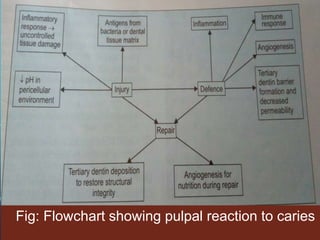
oThe dentinal caries may be in any form or at any site, affects
the underlying pulp
oThe acidic environment of carious lesions cause both tissue
dissolution and in aggressive lesions ,cellular injury as well
oThe initiation of pulpal inflamation also stimulate
the repair process
oA balance usually occurs between repair and deviation
from the balance leads to change in dentin pulp complex
2.Pulpal reaction to caries
Fig: Flowchart showing pulpal reaction to caries
In case of rampant caries ,the breakdown of affected enamel
and dentin will occur within months
Leads to destruction of odontoblasts and lack of tertiary dentin
formation
The progress of caries , if halted ,leads to formation of
reparative dentin with differentiation of new secondary
odontoblast like cells
If the lesion is allowed to progress pulp necrosis
may flow
CONTINUED…
 Trauma in the form of – accident, wear, erosion,
orthodontic movements and other occlusal traumas
 Trauma may lead to fracture of enamel , dentin and
exposure to pulp
3.Pulpal reaction to trauma
Extensive trauma: the pulp supply to the pulp is severed off
Either the pulp is necrosed with time or characterised by formation
of hard tissue in the pulp chamber
Hard tissue in the form of osteodentin
CONTINUED…
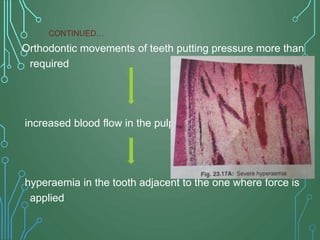
Orthodontic movements of teeth putting pressure more than
required
increased blood flow in the pulp
hyperaemia in the tooth adjacent to the one where force is
applied
CONTINUED…
Teeth suggested to heavy forces (orthodontic
treatment)
Vacuolization of odontoblastic impaired
predentin
layer and the pulpal tissue formation
suggestive of degeneration of pulp
CONTINUED…
oVital tooth bleaching incorporates 10 percent carbamide
solution
oInitial reaction of the pulp less distinction of cell free
zone
oLater scattered leucocytes are observed along with
irregularities in the pseudostratified odontoblastic layer
4.Pulpal reaction of vital bleaching
PULPAL REACTION TO LOCAL
ANESTHETICS
VASOCONTRICTORS
-such as lidocaine and epinephrine
-benefits:enhance the duration of anesthesia
Side Effects: reduce the blood flow of the pulp
1.The supplemental anesthetic techniques
cause severe reduction or evn transient cessation of
pulpal blood flow
2. The effect of intrapulpal anesthesia on the pulp is
not considered,since it is used during root canal
therapy when other anesthetic administrations are
NOTE
:
SUMMARY….
REFERENCES :
•
response of pulpodentin complex to stimuli

response of pulpodentin complex to stimuli

  • 1.
    PBL GROUP-4 -Anita, Ashma, Garima, Neha,Prawin,Ranjana,Shabnam, Smita, Suvin Chaudhary Resource Faculty- Dr. Ashok Ayer Presented By: Prawin Kushwaha BDS-2014,CODS
  • 2.
  • 3.
    1.Introduction to pulpodentin complex 2.Stimulipresent on pulpodentin complex 4.Conclusions 3.Different responses of pulpodentin organ to external stimuli CONTENTS :
  • 4.
    INTRODUCTION TO PULPODENTIN COMPLEX Dentin and pulp are embryologically, histologically, and functionally the same tissue and therefore are considered as a complex.
  • 5.
    Structure and responseof dentin to the injury are largely functions of the odontoblasts and the other cells in the pulp,but these cells are dependent on the dentin for their protection and state of differentiation. Normal form and function of one cannot be maintained without other The embryonic dental papillae is responsible for the formation of this coupled tissue CONTINUED…
  • 6.
    CONTINUED Hence it isobvious that the response of the pulp to any restorative material will be influenced by its surrounding dentin also Dentinal fluid in the tubules, which is continuous with the extracellular fluid of pulp serves as a medium for relaying injurious agents to the pulp to induce an inflammatory response
  • 7.
    RESPONSE OF PULPODENTINCOMPLEX TO VARIOUS STIMULI Traumatic Chemical Bacteric or Septic Electric Thermic Caries Restorative materials IRRITANTS
  • 8.
    Pulp venules STIMULATION Increased pulp interstitialfluid Increased pulp pressure Increased tubular fluid flow Release of inflammatory agents? Increased blood viscosity and rbc congestion in capillary bed Increased A-V shunt blood flow Outward dentinal fluid flow and aspiration of odontoblasts CNS, Pain, Reflexes Vasodilation, Increased permeability Pulpal axonal reflex due to dentine stimulation Without infection, Vascular changes could be resolved. Axon reflex SP, CGRP Dentine
  • 9.
    o adequate coolingof the burs is essential to prevent the injury to dentin and also to underlying odontoblastic region of the pulp oWhen the cooling is inadequate ,the injury leads to displacement of odontoblastic nuclei into dentinal tubules RESPONSE OF PULPODENTIN COMPLEX TO VARIOUS STIMULI 1.Pulpal reaction to tooth preparation
  • 10.
    if the coolingis missing or excessive pressure is utilized constantly – the burning of dentin becomes evident The most common feature in the reaction is outward movement of the contents of dentinal tubules It is established that such flow of fluid ,later is helpful in formation of peritubular dentin The disturbance and redistribution of the cellular constituents if continued leads to degeneration of odontoblastic process Formation of dead tracts and subsequently formation of tertiary CONTINUED…
  • 11.
    in case ofcavities are prepared deep and without coolant, vasoconstriction is noted peripheral flow of fluid following cavity preparation allows plasma proteins to enter the tubules clotting of tubules ,fibrinogen cause obstruction of these tubules CONTINUED…
  • 12.
    oThe dentinal cariesmay be in any form or at any site, affects the underlying pulp oThe acidic environment of carious lesions cause both tissue dissolution and in aggressive lesions ,cellular injury as well oThe initiation of pulpal inflamation also stimulate the repair process oA balance usually occurs between repair and deviation from the balance leads to change in dentin pulp complex 2.Pulpal reaction to caries
  • 13.
    Fig: Flowchart showingpulpal reaction to caries
  • 14.
    In case oframpant caries ,the breakdown of affected enamel and dentin will occur within months Leads to destruction of odontoblasts and lack of tertiary dentin formation The progress of caries , if halted ,leads to formation of reparative dentin with differentiation of new secondary odontoblast like cells If the lesion is allowed to progress pulp necrosis may flow CONTINUED…
  • 15.
     Trauma inthe form of – accident, wear, erosion, orthodontic movements and other occlusal traumas  Trauma may lead to fracture of enamel , dentin and exposure to pulp 3.Pulpal reaction to trauma
  • 16.
    Extensive trauma: thepulp supply to the pulp is severed off Either the pulp is necrosed with time or characterised by formation of hard tissue in the pulp chamber Hard tissue in the form of osteodentin CONTINUED…
  • 17.
    Orthodontic movements ofteeth putting pressure more than required increased blood flow in the pulp hyperaemia in the tooth adjacent to the one where force is applied CONTINUED…
  • 18.
    Teeth suggested toheavy forces (orthodontic treatment) Vacuolization of odontoblastic impaired predentin layer and the pulpal tissue formation suggestive of degeneration of pulp CONTINUED…
  • 19.
    oVital tooth bleachingincorporates 10 percent carbamide solution oInitial reaction of the pulp less distinction of cell free zone oLater scattered leucocytes are observed along with irregularities in the pseudostratified odontoblastic layer 4.Pulpal reaction of vital bleaching
  • 20.
    PULPAL REACTION TOLOCAL ANESTHETICS VASOCONTRICTORS -such as lidocaine and epinephrine -benefits:enhance the duration of anesthesia Side Effects: reduce the blood flow of the pulp 1.The supplemental anesthetic techniques cause severe reduction or evn transient cessation of pulpal blood flow 2. The effect of intrapulpal anesthesia on the pulp is not considered,since it is used during root canal therapy when other anesthetic administrations are NOTE :
  • 21.
  • 22.