Managing Curing Type 1 Diabetes
Jeremy Warshauer, PGY-2
Internal Medicine
UT Southwestern
Objectives
• Overview of type 1 diabetes
• Bionic Pancreas
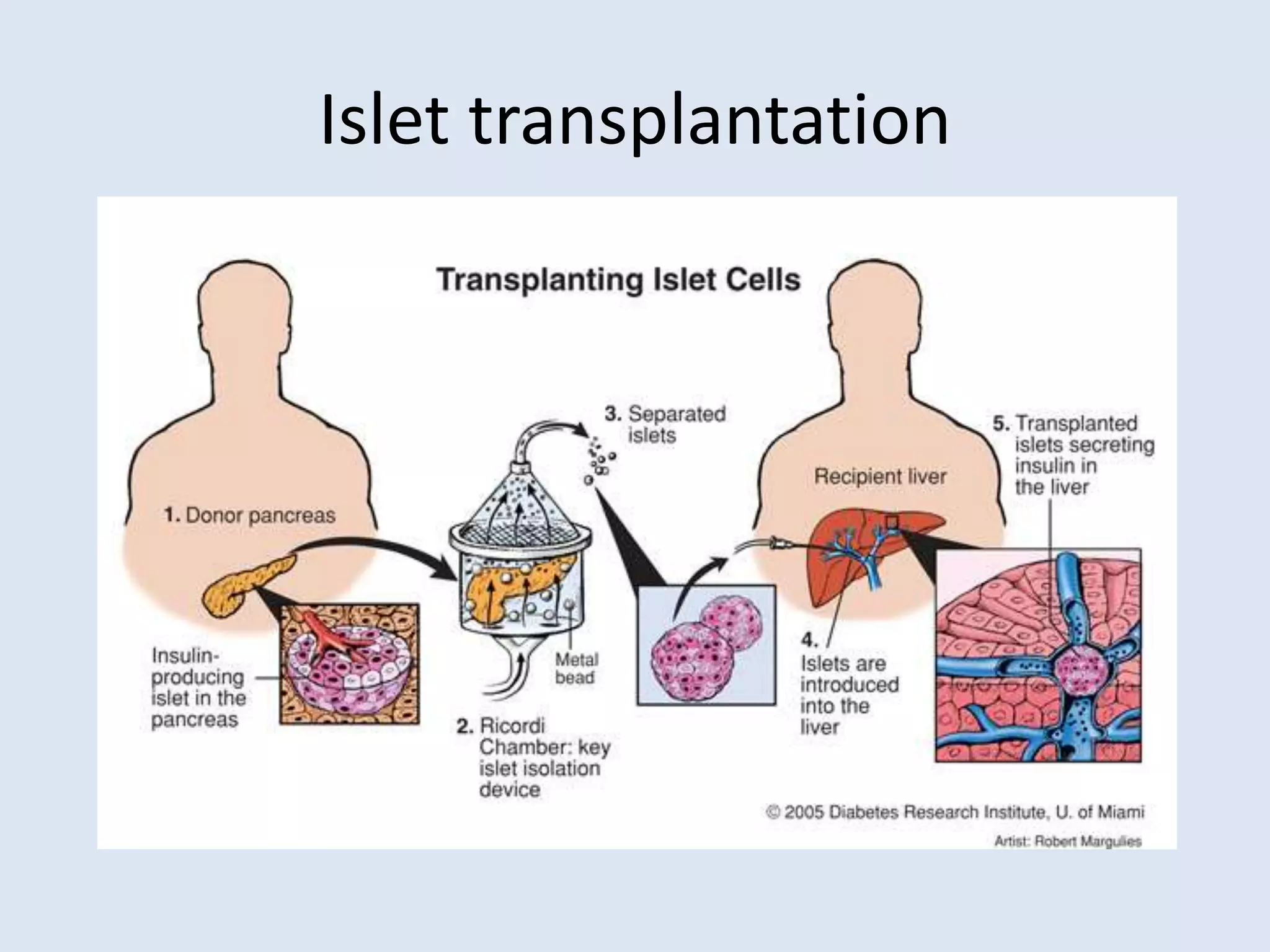
• Islet Transplantation
• Stem Cell Therapy
Prevalence
• In 2012, 29.1 million Americans, or 9.3% of
the population, had diabetes
– 1.25 million American children and adults have
type 1 diabetes
• $245 billion in 2012 impact on economy
Normal Islet Cells
http://www.britannica.com/EBchecked/topic/329670/islets-of-Langerhans
T1DM
α-cell dysfunction
autoimmune β-cell destruction  insulin deficiency
T1DM
α-cell dysfunction
autoimmune β-cell destruction  insulin deficiency
• Beta cell regeneration
and transplantation
• Immune research
T1DM
α-cell dysfunction
autoimmune β-cell destruction  insulin deficiency
Artificial or bionic pancreas
“Insulin is not a cure for
diabetes; it is a treatment. It
enables the diabetic to burn
sufficient carbohydrates, so
that proteins and fats may be
added to the diet in sufficient
quantities to provide energy
for the economic burdens of
life.”
– Sir Frederick Grant Banting
during his Nobel lecture on
September 15, 1925.
From JDRF
Bionic Pancreas
• Addresses dysfunctional alpha cells and insulin
deficiency
• Embraces technology: CGMS, insulin and
glucagon pumps
α-cell dysfunction
Diabetes Care Volume 37, May 2014
4-10x
Old way
Bionic Pancreas
288x
Bionic Pancreas: Setup
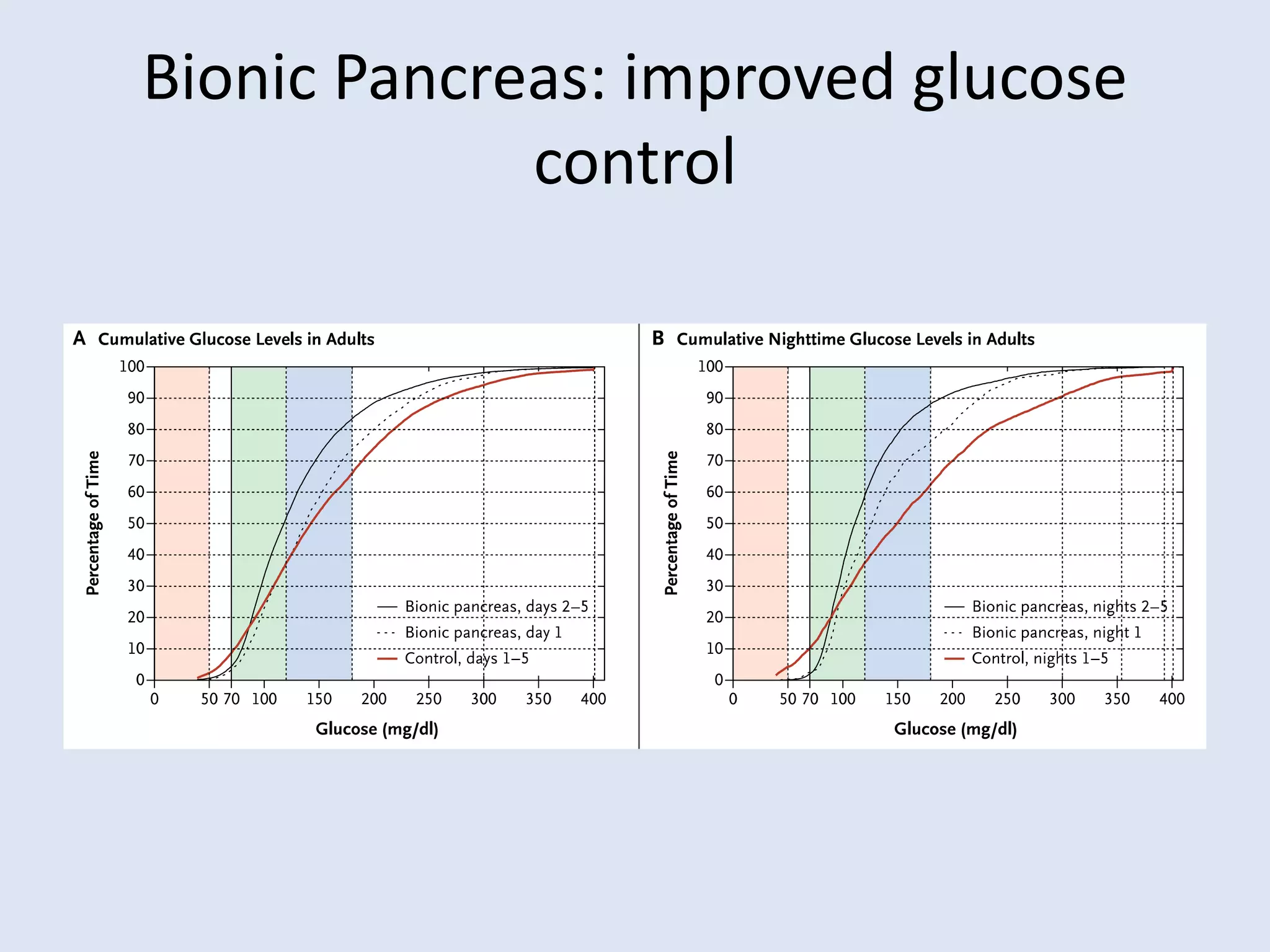
Bionic Pancreas: improved glucose
control
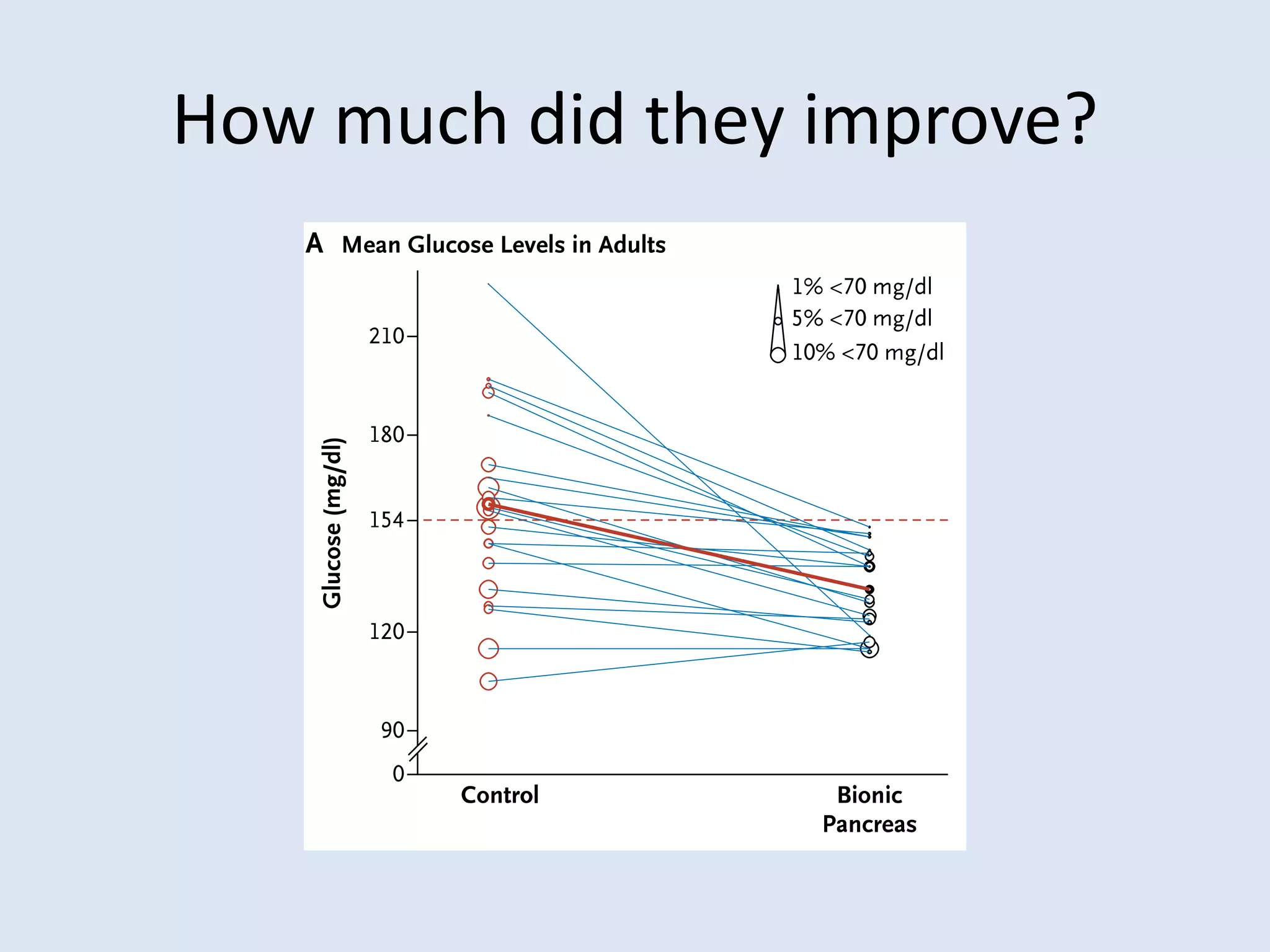
How much did the bionic pancreas
help?
• Average blood glucose reduced
– 159 mg/dL to 133 mg/dL (A1C = 6.2)
• Hypoglycemia reduced
– 3.7% to 1.5% of the time with a blood glucose
<60mg/dL
How much did they improve?
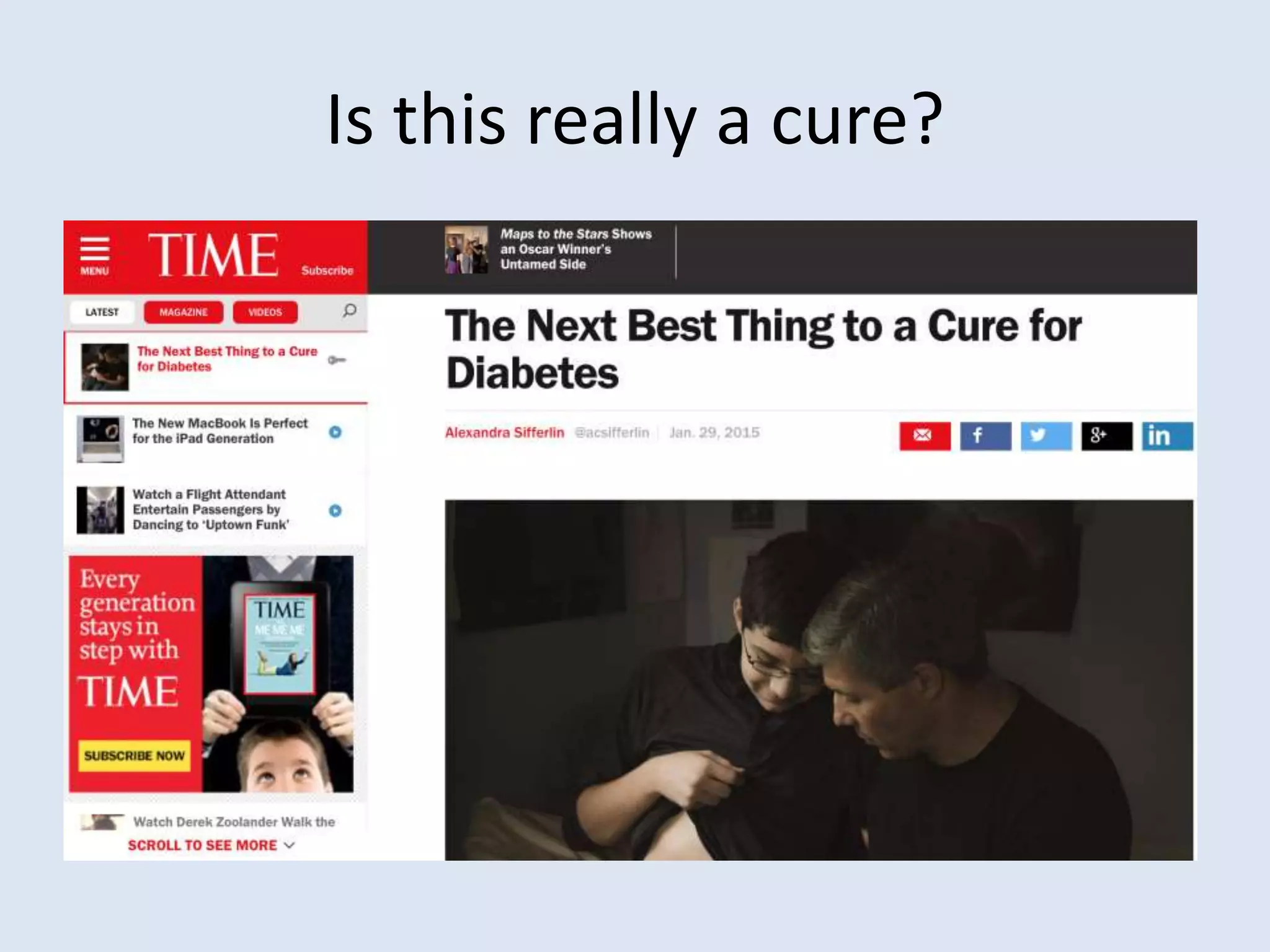
Is this really a cure?
Problems with Bionic Pancreas
• Invasive
• Possibility of technology malfunction
• No stable preparation of glucagon
• Insulin time of onset
• Not physiologic
α-cell dysfunction
Underlying problem with insulin
injections
Islet transplantation
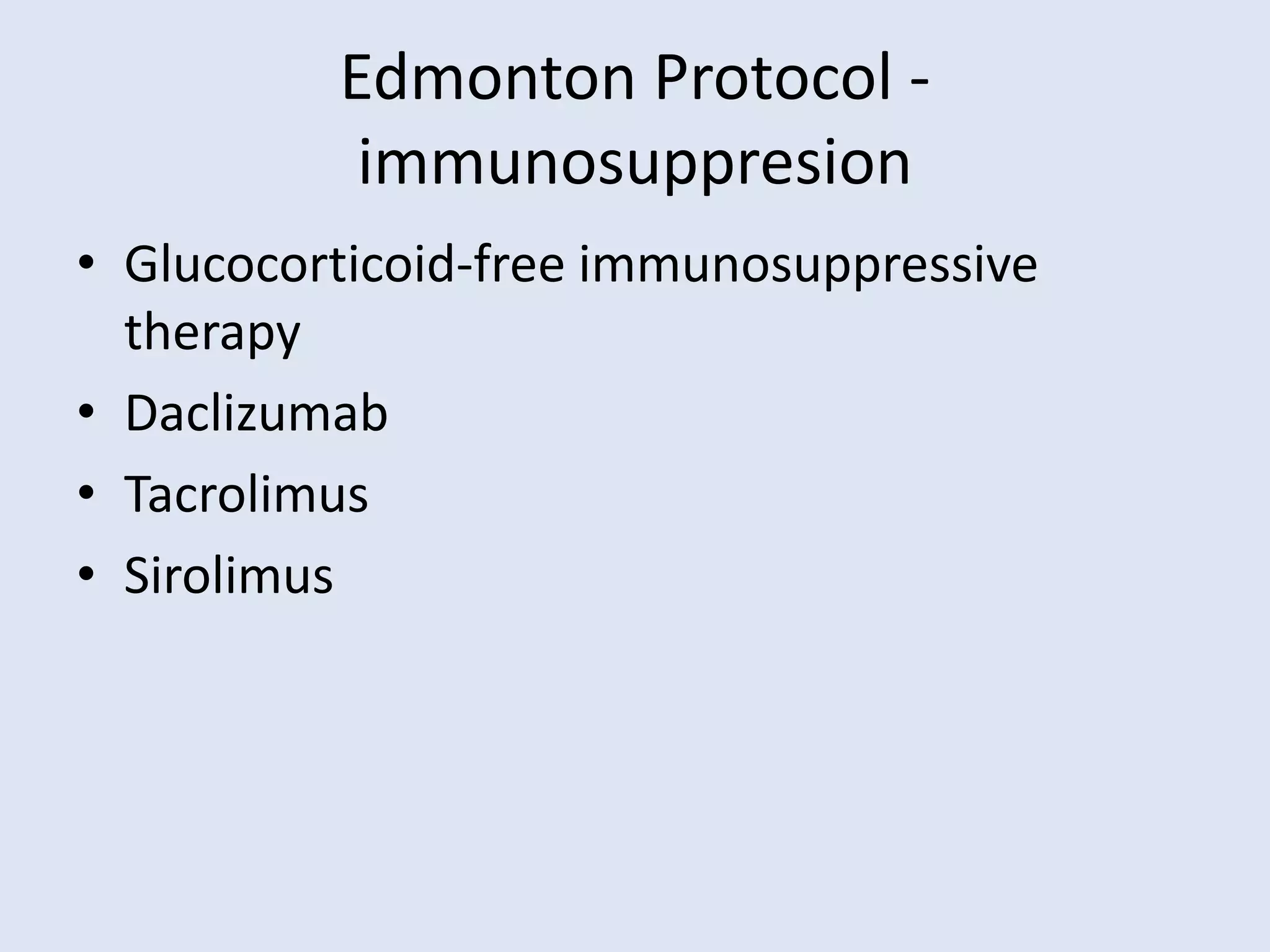
Edmonton Protocol -
immunosuppresion
• Glucocorticoid-free immunosuppressive
therapy
• Daclizumab
• Tacrolimus
• Sirolimus
􏰡􏰡􏰡􏰡􏰡􏰡􏰡􏰡􏰡􏰡􏰡􏰡􏰡􏰡􏰡􏰡􏰡􏰡􏰡􏰡􏰡􏰡􏰡􏰡􏰡􏰡􏰡􏰡􏰡􏰡􏰡􏰡􏰡􏰡􏰡􏰡􏰡􏰡􏰡􏰡
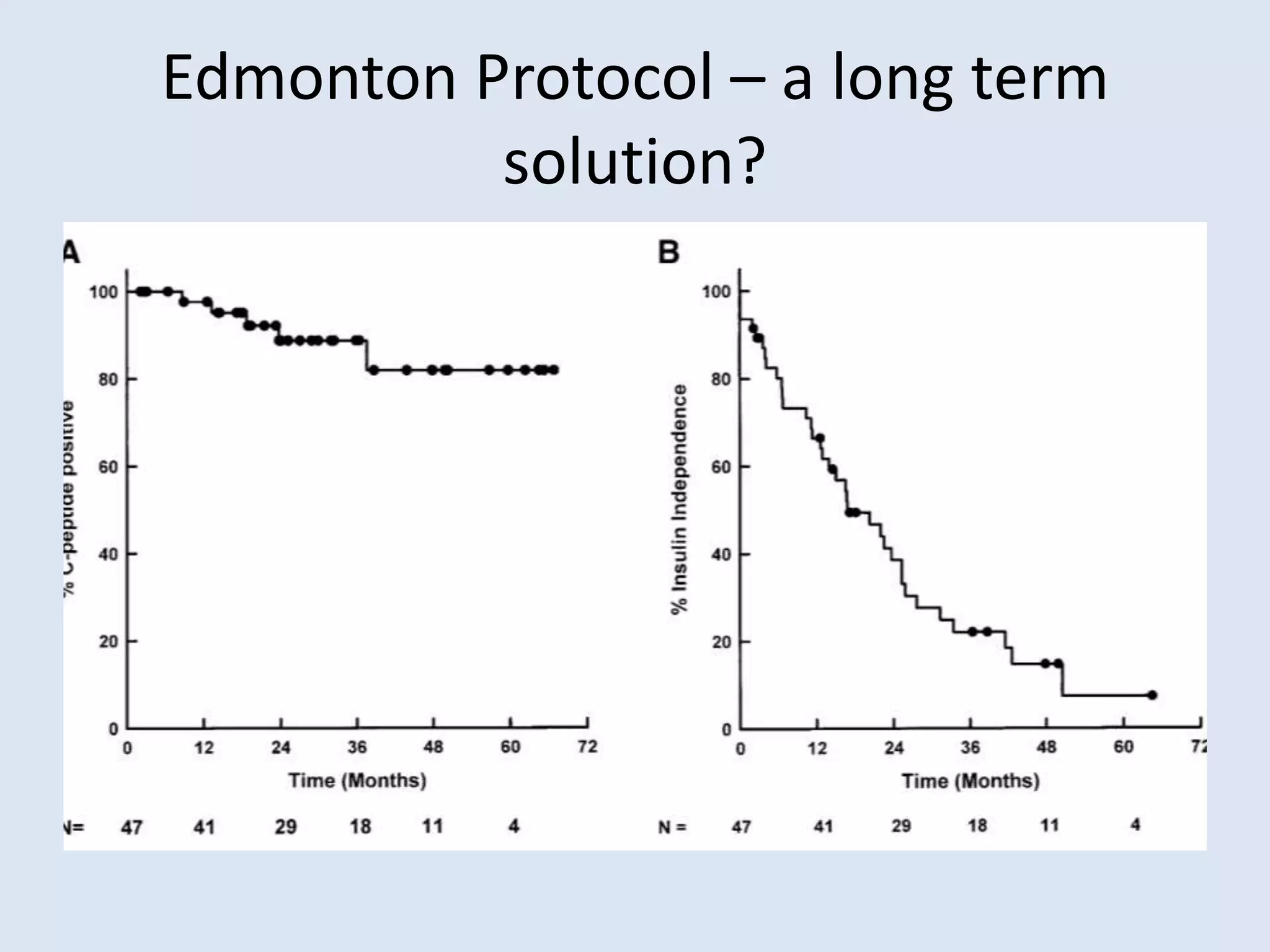
Edmonton Protocol – a long term
solution?
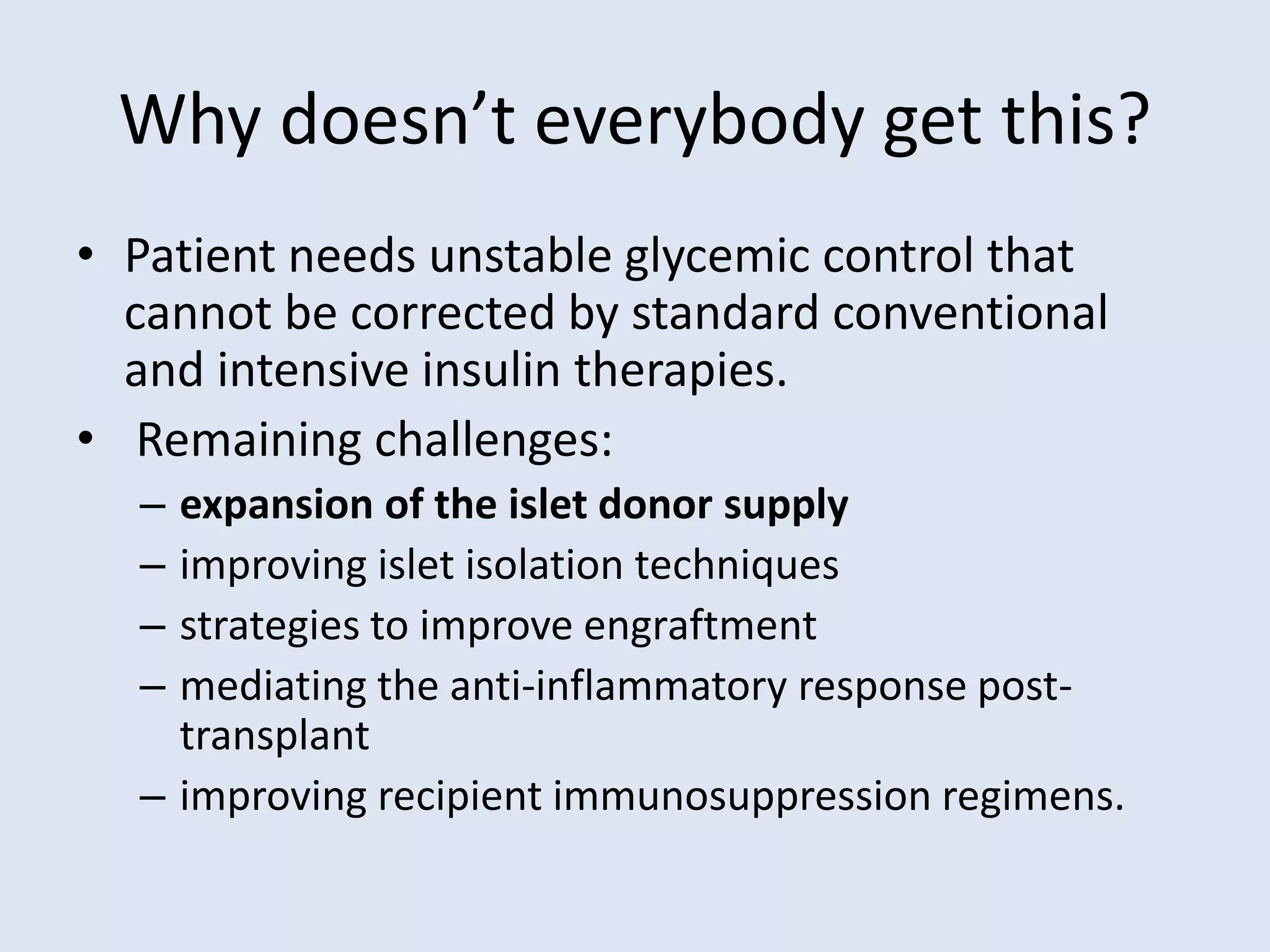
Why doesn’t everybody get this?
• Patient needs unstable glycemic control that
cannot be corrected by standard conventional
and intensive insulin therapies.
• Remaining challenges:
– expansion of the islet donor supply
– improving islet isolation techniques
– strategies to improve engraftment
– mediating the anti-inflammatory response post-
transplant
– improving recipient immunosuppression regimens.
Prevelancess Islet transplantation for typ
80
60
Edmonton
North America
International
40
20
Year
Islet transplant recipients per
year registered with CITR
Numberofislettransplantrecipients
0
1999
2000
2001
2002
2003
2004
2005
2006
2007
2008
2009
2010
2011
2012
2013
umber of islet transplant recipientsfrom 1999–2013 in Edmonton, North Americaand International Islet Transplant Centers.
From the Clinical Islet Transplantation (CIT) Consortium
Stem cell Therapy
• 2 Key features:
– Ability to renew themselves through cell division
while remaining undifferentiated.
– When given the appropriate signals, stem cells can
differentiate into many specialized cell types.
Encapsulation
• Protect against immune rejection – Encaptra
device by Viacyte.
http://viacyte.com/products/vc-01-diabetes-therapy/
Conclusions
• A cure is in site, but there are several
obstacles that still must be overcome
– Immune modulation
– Not enough supply
References
• Bruni, A., et al. (2014). "Islet cell transplantation for the treatment of type 1 diabetes: recent
advances and future challenges." Diabetes Metab Syndr Obes 7: 211-223.
• Derr, R., et al. (2003). "Is HbA(1c) affected by glycemic instability?" Diabetes Care 26(10): 2728-
2733.
• Kudva, Y. C., et al. (2014). "Closed-loop artificial pancreas systems: physiological input to enhance
next-generation devices." Diabetes Care 37(5): 1184-1190.
• Peyser, T., et al. (2014). "The artificial pancreas: current status and future prospects in the
management of diabetes." Ann N Y Acad Sci 1311: 102-123.
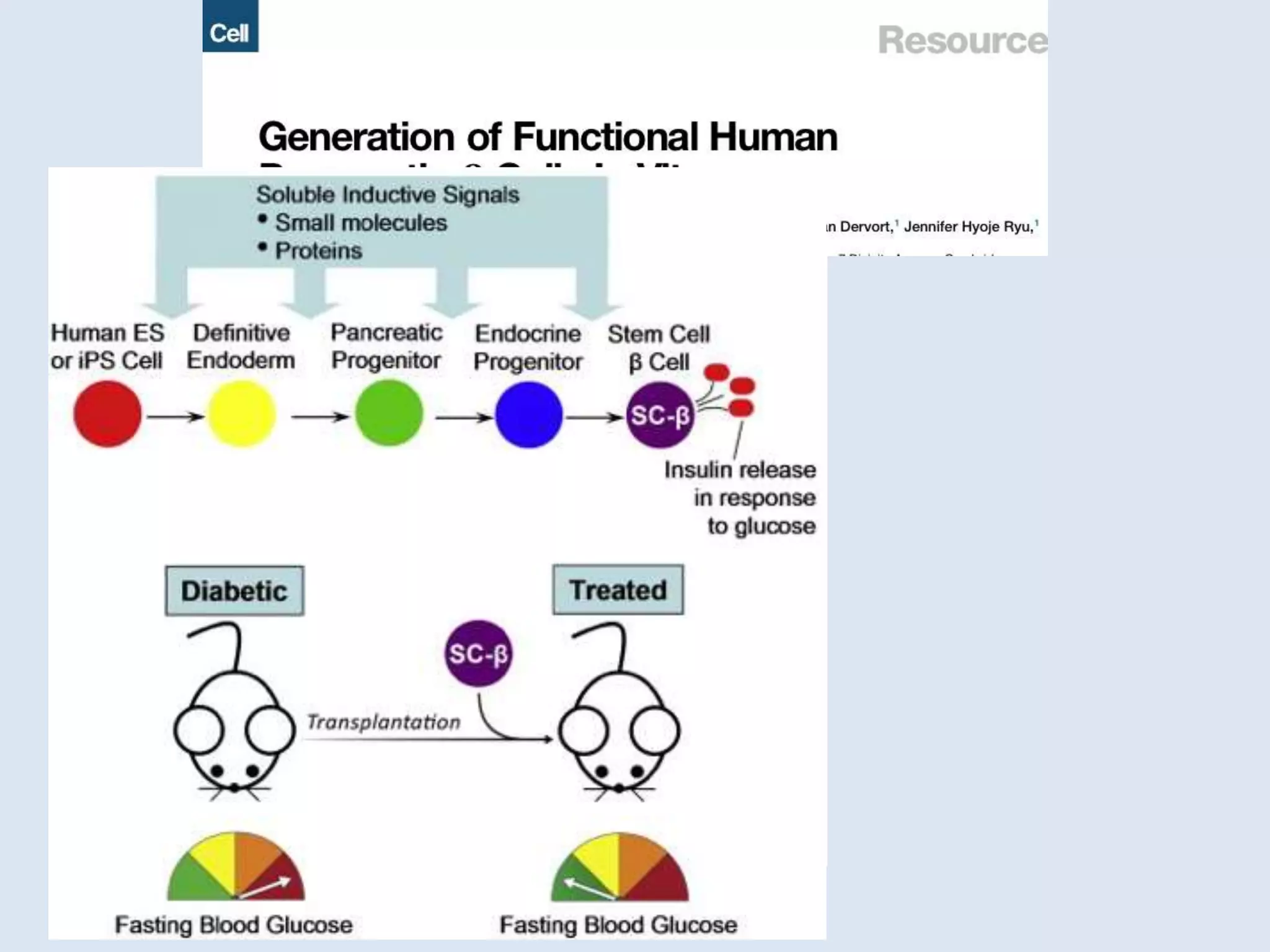
• Pagliuca, F. W., et al. (2014). "Generation of functional human pancreatic beta cells in vitro." Cell
159(2): 428-439.
• Russell, S. J., et al. (2014). "Outpatient glycemic control with a bionic pancreas in type 1 diabetes."
N Engl J Med 371(4): 313-325.
• Shapiro, A. M., et al. (2006). "International trial of the Edmonton protocol for islet transplantation."
N Engl J Med 355(13): 1318-1330.
• Unger, R. H. and L. Orci (2010). "Paracrinology of islets and the paracrinopathy of diabetes." Proc
Natl Acad Sci U S A 107(37): 16009-16012.
• Unger, R. H. and A. D. Cherrington (2012). "Glucagonocentric restructuring of diabetes: a
pathophysiologic and therapeutic makeover." J Clin Invest 122(1): 4-12.

Resident update talk jtw online

  • 1.
    Managing Curing Type1 Diabetes Jeremy Warshauer, PGY-2 Internal Medicine UT Southwestern
  • 2.
    Objectives • Overview oftype 1 diabetes • Bionic Pancreas • Islet Transplantation • Stem Cell Therapy
  • 3.
    Prevalence • In 2012,29.1 million Americans, or 9.3% of the population, had diabetes – 1.25 million American children and adults have type 1 diabetes • $245 billion in 2012 impact on economy
  • 4.
  • 5.
    T1DM α-cell dysfunction autoimmune β-celldestruction  insulin deficiency
  • 6.
    T1DM α-cell dysfunction autoimmune β-celldestruction  insulin deficiency • Beta cell regeneration and transplantation • Immune research
  • 7.
    T1DM α-cell dysfunction autoimmune β-celldestruction  insulin deficiency Artificial or bionic pancreas
  • 8.
    “Insulin is nota cure for diabetes; it is a treatment. It enables the diabetic to burn sufficient carbohydrates, so that proteins and fats may be added to the diet in sufficient quantities to provide energy for the economic burdens of life.” – Sir Frederick Grant Banting during his Nobel lecture on September 15, 1925.
  • 9.
  • 11.
    Bionic Pancreas • Addressesdysfunctional alpha cells and insulin deficiency • Embraces technology: CGMS, insulin and glucagon pumps
  • 12.
  • 13.
  • 14.
  • 15.
  • 17.
  • 18.
    How much didthe bionic pancreas help? • Average blood glucose reduced – 159 mg/dL to 133 mg/dL (A1C = 6.2) • Hypoglycemia reduced – 3.7% to 1.5% of the time with a blood glucose <60mg/dL
  • 19.
    How much didthey improve?
  • 20.
  • 21.
    Problems with BionicPancreas • Invasive • Possibility of technology malfunction • No stable preparation of glucagon • Insulin time of onset • Not physiologic
  • 22.
  • 23.
    Underlying problem withinsulin injections
  • 25.
  • 26.
    Edmonton Protocol - immunosuppresion •Glucocorticoid-free immunosuppressive therapy • Daclizumab • Tacrolimus • Sirolimus
  • 27.
  • 28.
    Edmonton Protocol –a long term solution?
  • 29.
    Why doesn’t everybodyget this? • Patient needs unstable glycemic control that cannot be corrected by standard conventional and intensive insulin therapies. • Remaining challenges: – expansion of the islet donor supply – improving islet isolation techniques – strategies to improve engraftment – mediating the anti-inflammatory response post- transplant – improving recipient immunosuppression regimens.
  • 30.
    Prevelancess Islet transplantationfor typ 80 60 Edmonton North America International 40 20 Year Islet transplant recipients per year registered with CITR Numberofislettransplantrecipients 0 1999 2000 2001 2002 2003 2004 2005 2006 2007 2008 2009 2010 2011 2012 2013 umber of islet transplant recipientsfrom 1999–2013 in Edmonton, North Americaand International Islet Transplant Centers. From the Clinical Islet Transplantation (CIT) Consortium
  • 31.
    Stem cell Therapy •2 Key features: – Ability to renew themselves through cell division while remaining undifferentiated. – When given the appropriate signals, stem cells can differentiate into many specialized cell types.
  • 38.
    Encapsulation • Protect againstimmune rejection – Encaptra device by Viacyte. http://viacyte.com/products/vc-01-diabetes-therapy/
  • 39.
    Conclusions • A cureis in site, but there are several obstacles that still must be overcome – Immune modulation – Not enough supply
  • 40.
    References • Bruni, A.,et al. (2014). "Islet cell transplantation for the treatment of type 1 diabetes: recent advances and future challenges." Diabetes Metab Syndr Obes 7: 211-223. • Derr, R., et al. (2003). "Is HbA(1c) affected by glycemic instability?" Diabetes Care 26(10): 2728- 2733. • Kudva, Y. C., et al. (2014). "Closed-loop artificial pancreas systems: physiological input to enhance next-generation devices." Diabetes Care 37(5): 1184-1190. • Peyser, T., et al. (2014). "The artificial pancreas: current status and future prospects in the management of diabetes." Ann N Y Acad Sci 1311: 102-123. • Pagliuca, F. W., et al. (2014). "Generation of functional human pancreatic beta cells in vitro." Cell 159(2): 428-439. • Russell, S. J., et al. (2014). "Outpatient glycemic control with a bionic pancreas in type 1 diabetes." N Engl J Med 371(4): 313-325. • Shapiro, A. M., et al. (2006). "International trial of the Edmonton protocol for islet transplantation." N Engl J Med 355(13): 1318-1330. • Unger, R. H. and L. Orci (2010). "Paracrinology of islets and the paracrinopathy of diabetes." Proc Natl Acad Sci U S A 107(37): 16009-16012. • Unger, R. H. and A. D. Cherrington (2012). "Glucagonocentric restructuring of diabetes: a pathophysiologic and therapeutic makeover." J Clin Invest 122(1): 4-12.

Editor's Notes

  • #16 Endo
  • #21 patients are able to live without restrictions
  • #28 􏰡􏰢􏰍􏰣􏰗􏰔􏰤􏰥􏰚􏰍􏰚􏰦􏰚􏰧􏰘􏰞􏰓􏰠􏰥􏰚􏰓􏰏􏰚􏰘􏰒􏰨􏰚􏰗􏰖􏰏􏰓􏰎􏰖􏰘􏰏􏰐􏰙􏰖􏰘􏰒􏰚􏰏􏰎􏰐􏰘􏰒􏰚􏰙􏰕􏰚􏰏􏰛􏰓􏰚􏰜􏰝􏰞􏰙􏰖􏰏􏰙􏰖􏰚􏰟􏰎􏰙􏰏􏰙􏰑􏰙􏰒􏰚􏰕􏰙􏰎􏰚􏰐􏰠􏰒􏰓􏰏 􏰏􏰎􏰘􏰖􏰠􏰟􏰒􏰘􏰖􏰏􏰘􏰏􏰐􏰙􏰖􏰨􏰚􏰴􏰓􏰮􏰚􏰜􏰖􏰪􏰒􏰘􏰖􏰝􏰚􏰧􏰙􏰬􏰎􏰖􏰘􏰒􏰚􏰙􏰕􏰚􏰦􏰓􏰝􏰐􏰑􏰐􏰖􏰓􏰥􏰚􏰵􏰶􏰶􏰷􏰥􏰚􏰩􏰙􏰒􏰨􏰚􏰸􏰹􏰹􏰥􏰚􏰖􏰙􏰨􏰚􏰯􏰸􏰥􏰚􏰟􏰨􏰚􏰯􏰸􏰯􏰺􏰻􏰸􏰶 Shapiro et al. N Engl J Med 2006;355:1318-30.
  • #35 Melton Lab from Harvard created a scalable differentiation protocol that can generate hundreds of millions of glucose-responsive beta cells from hPSC in vitro that act essentially identical to human beta cells. Molecular biography of a beta cell on top. PH means polyhormonal cells – in-vitro-differentiated human pluripotent stem cells. Transcriptional analysis showed these cells resemble human fetal and not adult beta cells – show no insulin secretion, essentially are placebo. SC-beta cells are stem-cell-derived beta cells And primary beta represent primary human beta cells that were transplanted into the mice. 1. ES = embryonic stem cell – pluripotent cells derived from the inner cell mass of a 4-5 day old embryo (blastocyst) and have the potential to form derivatives from all 3 germ layers 2. Adult (or somatic) stem cells: can be reprogrammed to induced pluripotent stem cells (iPSCs) to express ES characteristics. Transplanted the stem cells under the kidney capsule of immunocompromoised mice.
  • #36 PH means polyhormonal cells – in-vitro-differentiated human pluripotent stem cells. Transcriptional analysis showed these cells resemble human fetal and not adult beta cells – show no insulin secretion, essentially are placebo. SC-beta cells are stem-cell-derived beta cells And primary beta represent primary human beta cells that were transplanted into the mice.
  • #41 Shapiro, A. M., et al. (2006). "International trial of the Edmonton protocol for islet transplantation." N Engl J Med 355(13): 1318-1330.