RESERCH PROJECT
COURSE 2016-2017
4th
ESO
Teachers: ALBERT CASTRO
ASSUM PÉREZ
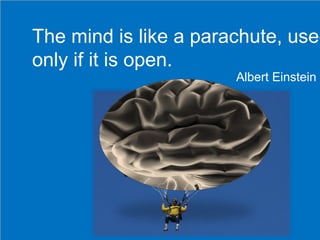
The mind is like a parachute, used
only if it is open.
Albert Einstein
WHAT IS THE RESEARCH PROJECT?
• 4th ESO is a matter that is considered elective.
• Students must carry out a research project
team.
• The project has to be constituted by a set of
activities and discover research on a chosen
topic.
• Students must demonstrate independence,
initiative, cooperation and collaboration
capabilities.
WHEN? WHERE? WITH WHO?
• When? The second semester of the year
(February-June). On Thursday afternoon.
• Where? In the classroom, the library, the
computer room, laboratory, at home, on
the street ...
• With who? With two teachers (one
scientific and the other humanities) who
will support and track your work.
SCIENTIFIC METHOD
• OBSERVATION
• IDENTIFYING THE PROBLEM
• CREATING THE HYPOTHESIS
• TESTING THE HYPOTHESIS
– EXPERIMENT
– CREATE DIAGRAMS
• CONCLUSIONS
Stages of the project
1.PLANNING
2. RESEARCH
3. ANALYSIS-RESEARCH RESULTS
4. EVALUATION
2.1. DOCUMENTARY 2.2. EXPERIMENTAL
3.1. WORKING DOCUMENT 3.2. ORAL PRESENTATION
1. PLANNING
• Choose your style
• Interim title and subtitle
• hypothesis
• objectives
• provisional index
2.1. RESEARCH DOCUMENTARY
• Internet
• libraries
• Newspapers
• media libraries
• other
• Information organization
2.2. EXPERIMENTAL RESEARCH
• Time organization
• Observations and experiments
• Interviews
• surveys
• Visits to schools
• other
• Data Collection
• conclusions
3.1. WORKING DOCUMENT
• Home
• Index
• Introduction
• Body of work
• conclusions
• Bibliography
• Appendix / Appendices
3.2. Oral presentation
• preparation
• resources
• Presentation
• Theoretical framework
• practical framework
• conclusions
4. EVALUATION
• 40% written report
• 40% Oral presentation and computer
support
• Attitude 20% (valued at each session:
index cards documentation and
experimental research ...)
• Each team member can have a different rating.
• The qualification criteria are as follows:
• Projects that meet the evaluation criteria have a rating of
6, 7 or 8.
• Projects that do not follow the evaluation criteria will be
mostly a rating of one to five.
• The projects, in addition to the criteria mentioned in this
document or the tutor incorporate other elements
suggested but not required, will have a rating of 9 or 10.
4. EVALUATION
SCHEDULE
• FEBRUARY 18 AND 25: Introduction and
knowledge
• MARCH 3, 10, 24: Choose the subject index and
scheme of work. document research
• March 31 and April 7 and 21: Experimental
Research
• April 28 and May 5 and 12: Editorial written
report and oral presentation preparation
• WEDNESDAY MAY 18: report presentation
• May 18 and 26 and June 2 and 9: Oral

Research project 16 17

  • 1.
  • 2.
    The mind islike a parachute, used only if it is open. Albert Einstein
  • 3.
    WHAT IS THERESEARCH PROJECT? • 4th ESO is a matter that is considered elective. • Students must carry out a research project team. • The project has to be constituted by a set of activities and discover research on a chosen topic. • Students must demonstrate independence, initiative, cooperation and collaboration capabilities.
  • 4.
    WHEN? WHERE? WITHWHO? • When? The second semester of the year (February-June). On Thursday afternoon. • Where? In the classroom, the library, the computer room, laboratory, at home, on the street ... • With who? With two teachers (one scientific and the other humanities) who will support and track your work.
  • 5.
    SCIENTIFIC METHOD • OBSERVATION •IDENTIFYING THE PROBLEM • CREATING THE HYPOTHESIS • TESTING THE HYPOTHESIS – EXPERIMENT – CREATE DIAGRAMS • CONCLUSIONS
  • 6.
    Stages of theproject 1.PLANNING 2. RESEARCH 3. ANALYSIS-RESEARCH RESULTS 4. EVALUATION 2.1. DOCUMENTARY 2.2. EXPERIMENTAL 3.1. WORKING DOCUMENT 3.2. ORAL PRESENTATION
  • 7.
    1. PLANNING • Chooseyour style • Interim title and subtitle • hypothesis • objectives • provisional index
  • 8.
    2.1. RESEARCH DOCUMENTARY •Internet • libraries • Newspapers • media libraries • other • Information organization
  • 9.
    2.2. EXPERIMENTAL RESEARCH •Time organization • Observations and experiments • Interviews • surveys • Visits to schools • other • Data Collection • conclusions
  • 10.
    3.1. WORKING DOCUMENT •Home • Index • Introduction • Body of work • conclusions • Bibliography • Appendix / Appendices
  • 11.
    3.2. Oral presentation •preparation • resources • Presentation • Theoretical framework • practical framework • conclusions
  • 12.
    4. EVALUATION • 40%written report • 40% Oral presentation and computer support • Attitude 20% (valued at each session: index cards documentation and experimental research ...)
  • 13.
    • Each teammember can have a different rating. • The qualification criteria are as follows: • Projects that meet the evaluation criteria have a rating of 6, 7 or 8. • Projects that do not follow the evaluation criteria will be mostly a rating of one to five. • The projects, in addition to the criteria mentioned in this document or the tutor incorporate other elements suggested but not required, will have a rating of 9 or 10. 4. EVALUATION
  • 14.
    SCHEDULE • FEBRUARY 18AND 25: Introduction and knowledge • MARCH 3, 10, 24: Choose the subject index and scheme of work. document research • March 31 and April 7 and 21: Experimental Research • April 28 and May 5 and 12: Editorial written report and oral presentation preparation • WEDNESDAY MAY 18: report presentation • May 18 and 26 and June 2 and 9: Oral