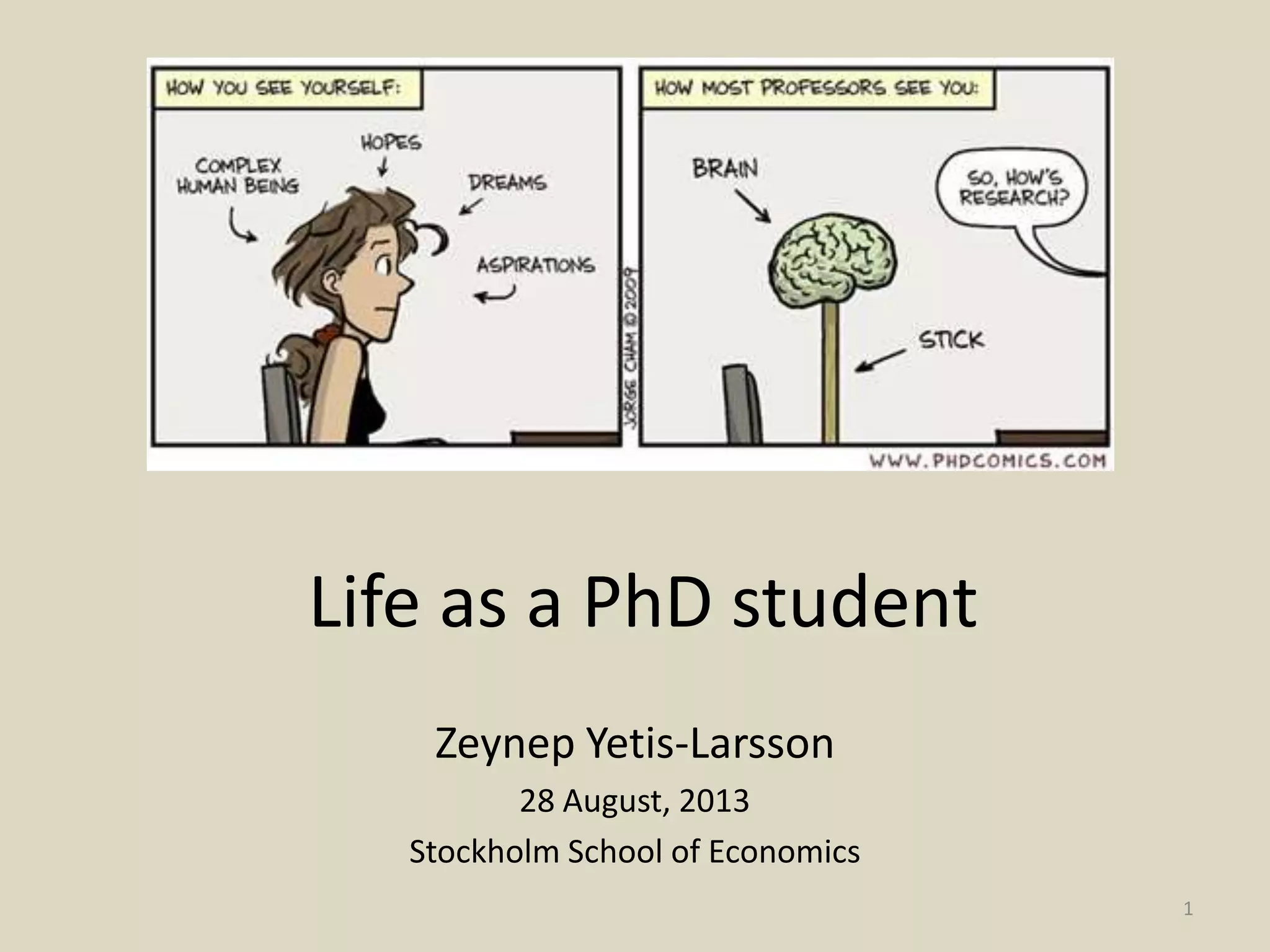


Life as a PhD student
Zeynep Yetis-Larsson
28 August, 2013
Stockholm School of Economics
1
Who am I?
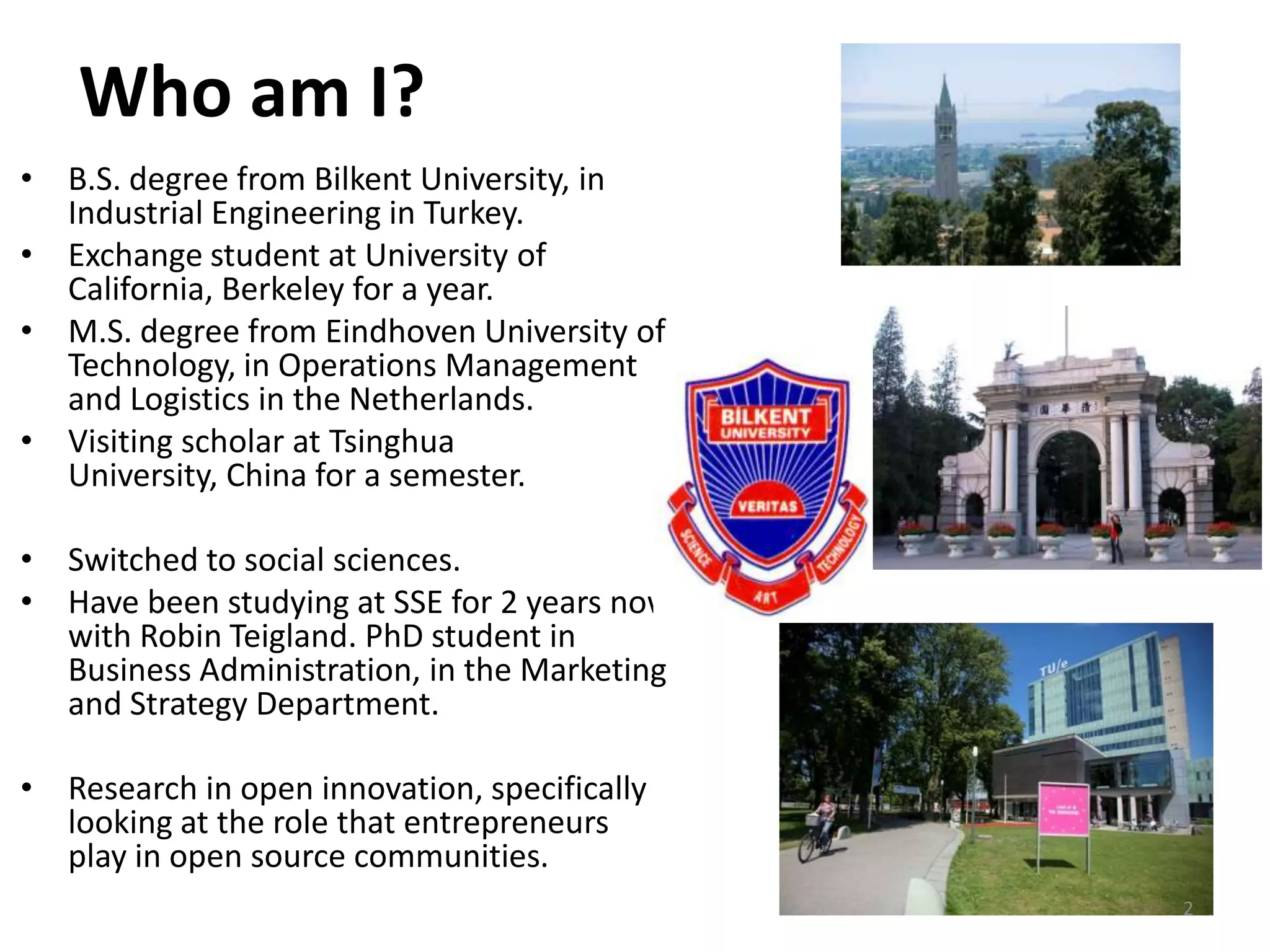
• B.S. degree from Bilkent University, in
Industrial Engineering in Turkey.
• Exchange student at University of
California, Berkeley for a year.
• M.S. degree from Eindhoven University of
Technology, in Operations Management
and Logistics in the Netherlands.
• Visiting scholar at Tsinghua
University, China for a semester.
• Switched to social sciences.
• Have been studying at SSE for 2 years now
with Robin Teigland. PhD student in
Business Administration, in the Marketing
and Strategy Department.
• Research in open innovation, specifically
looking at the role that entrepreneurs
play in open source communities.
2
In the beginning
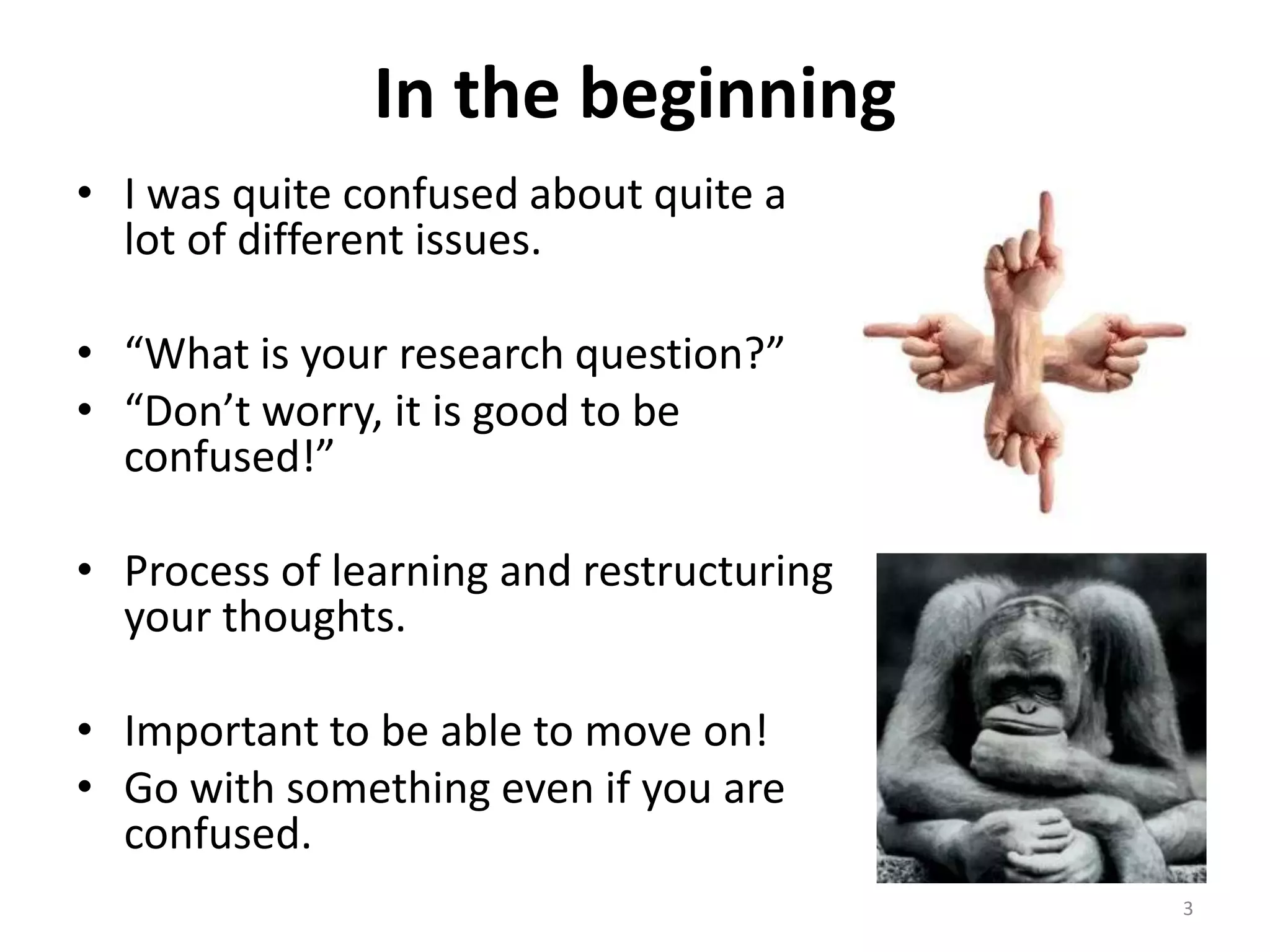
• I was quite confused about quite a
lot of different issues.
• “What is your research question?”
• “Don’t worry, it is good to be
confused!”
• Process of learning and restructuring
your thoughts.
• Important to be able to move on!
• Go with something even if you are
confused.
3
Purpose of your research
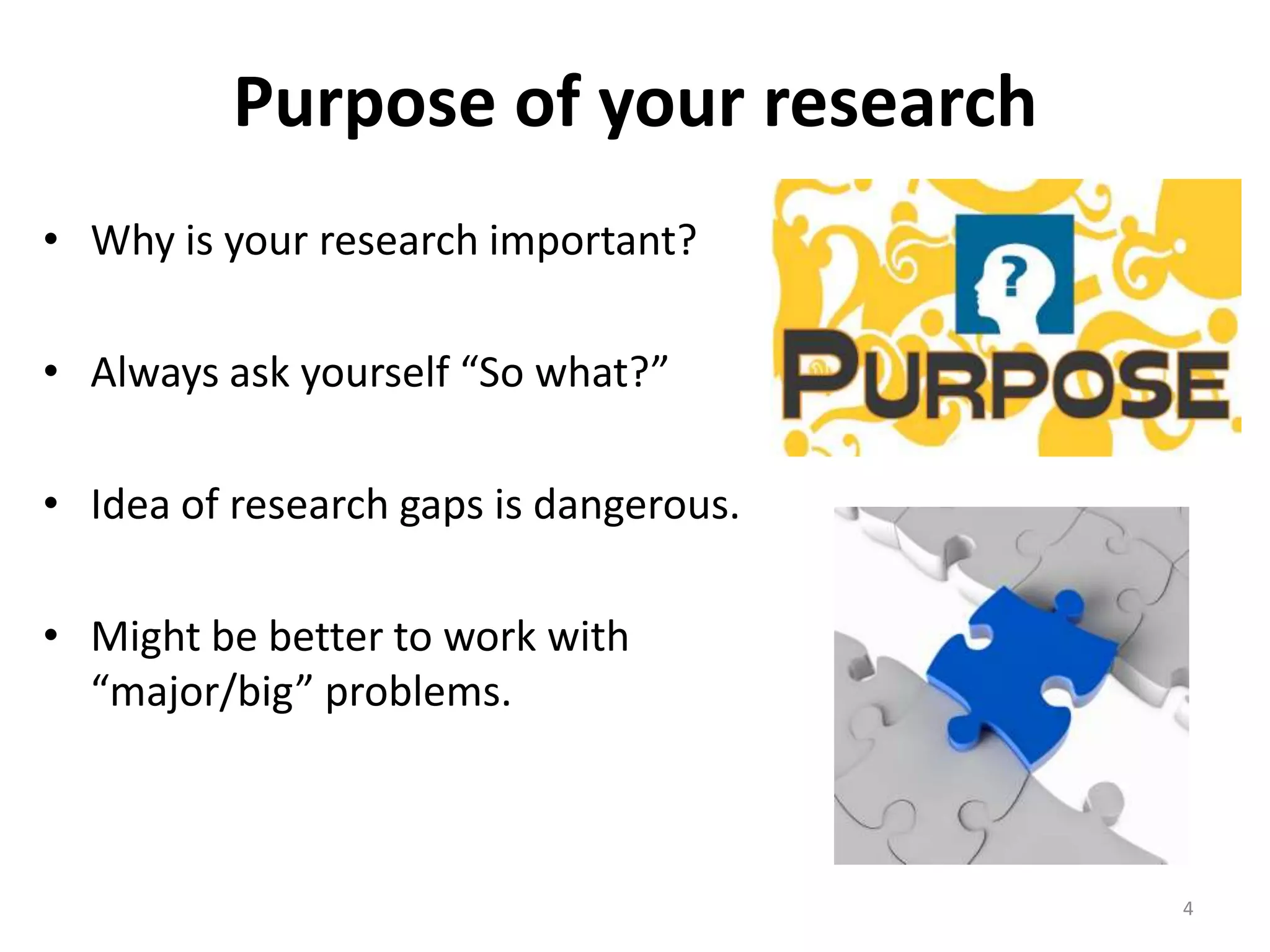
• Why is your research important?
• Always ask yourself “So what?”
• Idea of research gaps is dangerous.
• Might be better to work with
“major/big” problems.
4
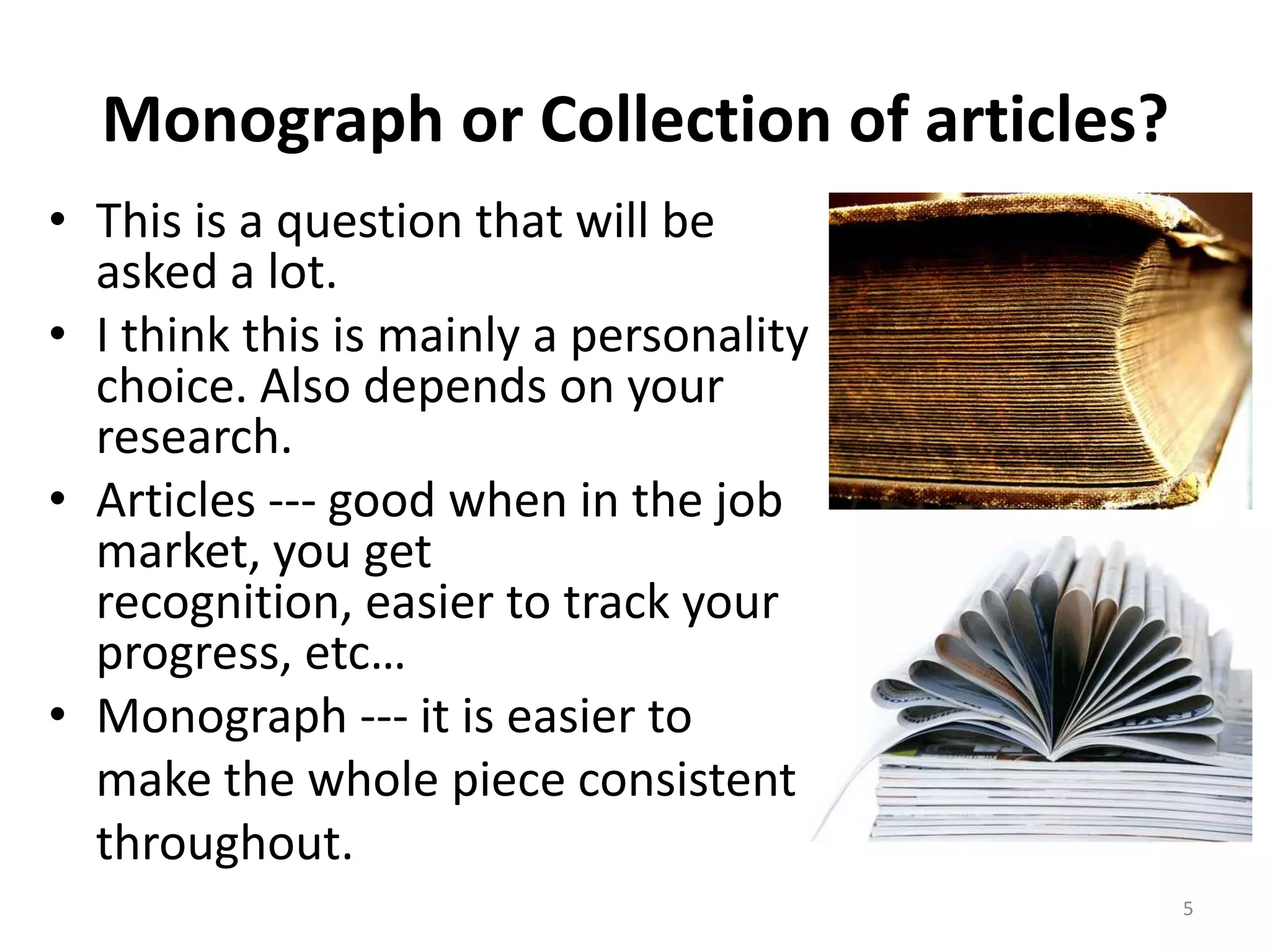
Monograph or Collection of articles?
• This is a question that will be
asked a lot.
• I think this is mainly a personality
choice. Also depends on your
research.
• Articles --- good when in the job
market, you get
recognition, easier to track your
progress, etc…
• Monograph --- it is easier to
make the whole piece consistent
throughout.
5
Research since Day 1
• I have been a lucky PhD student.
• I have not seen a lot of other PhD students do
this.
• It is important to read and build up a good
theory base, but it is still possible to write early
on.
• Don’t let anyone
discourage you!
• Takes a lot of time
to publish!
6
Courses
• Courses are introductions.
• They introduce some of the major
theories in the field.
• Same with methods. You get a
basic understanding of what the
method is about and what you can
do with it.
• If you want to get a deeper
understanding of a theory or a
method, better to do an extended
course.
• You make good friends in Uppsala
and in other places
7
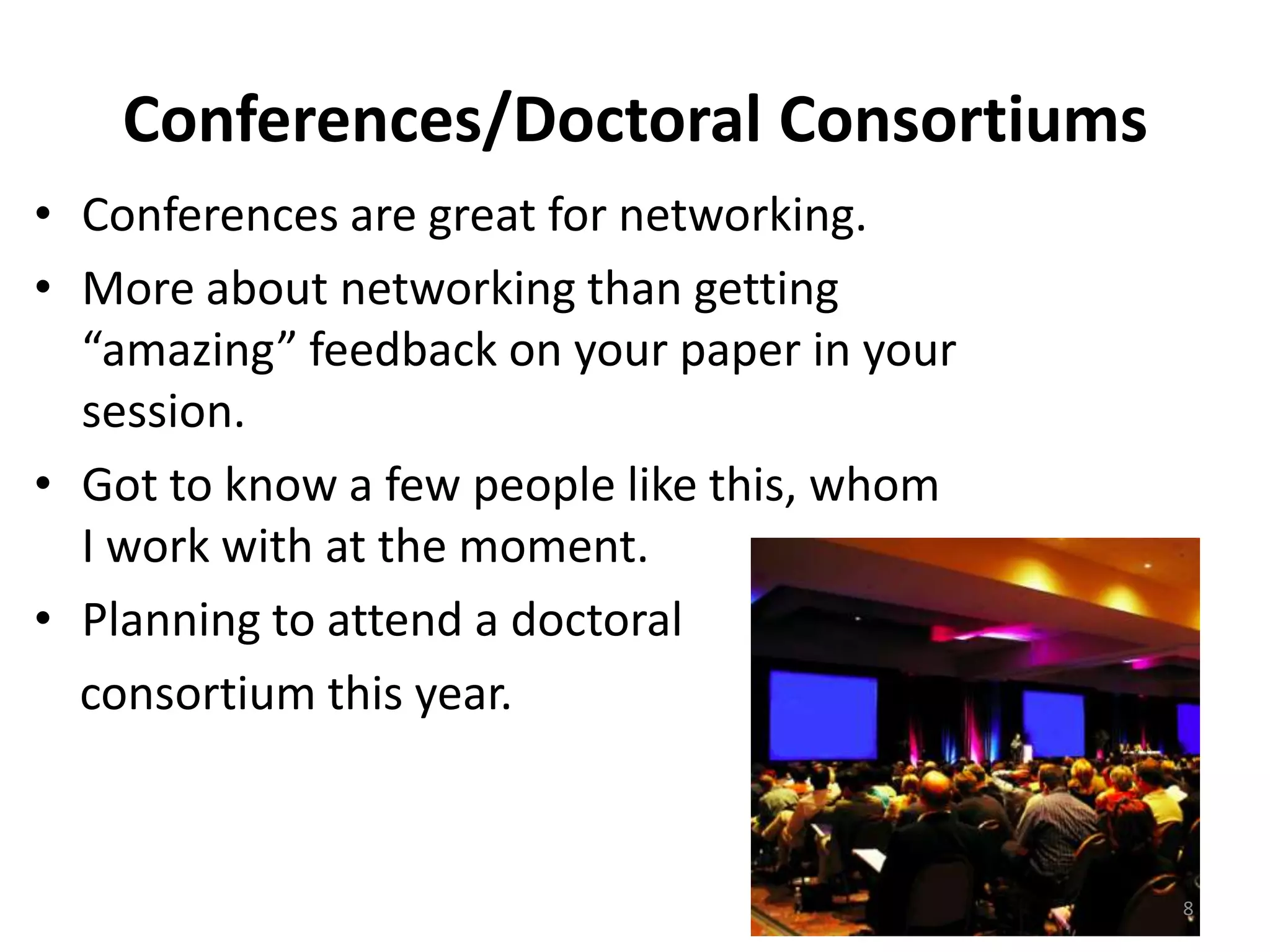
Conferences/Doctoral Consortiums
• Conferences are great for networking.
• More about networking than getting
“amazing” feedback on your paper in your
session.
• Got to know a few people like this, whom
I work with at the moment.
• Planning to attend a doctoral
consortium this year.
8
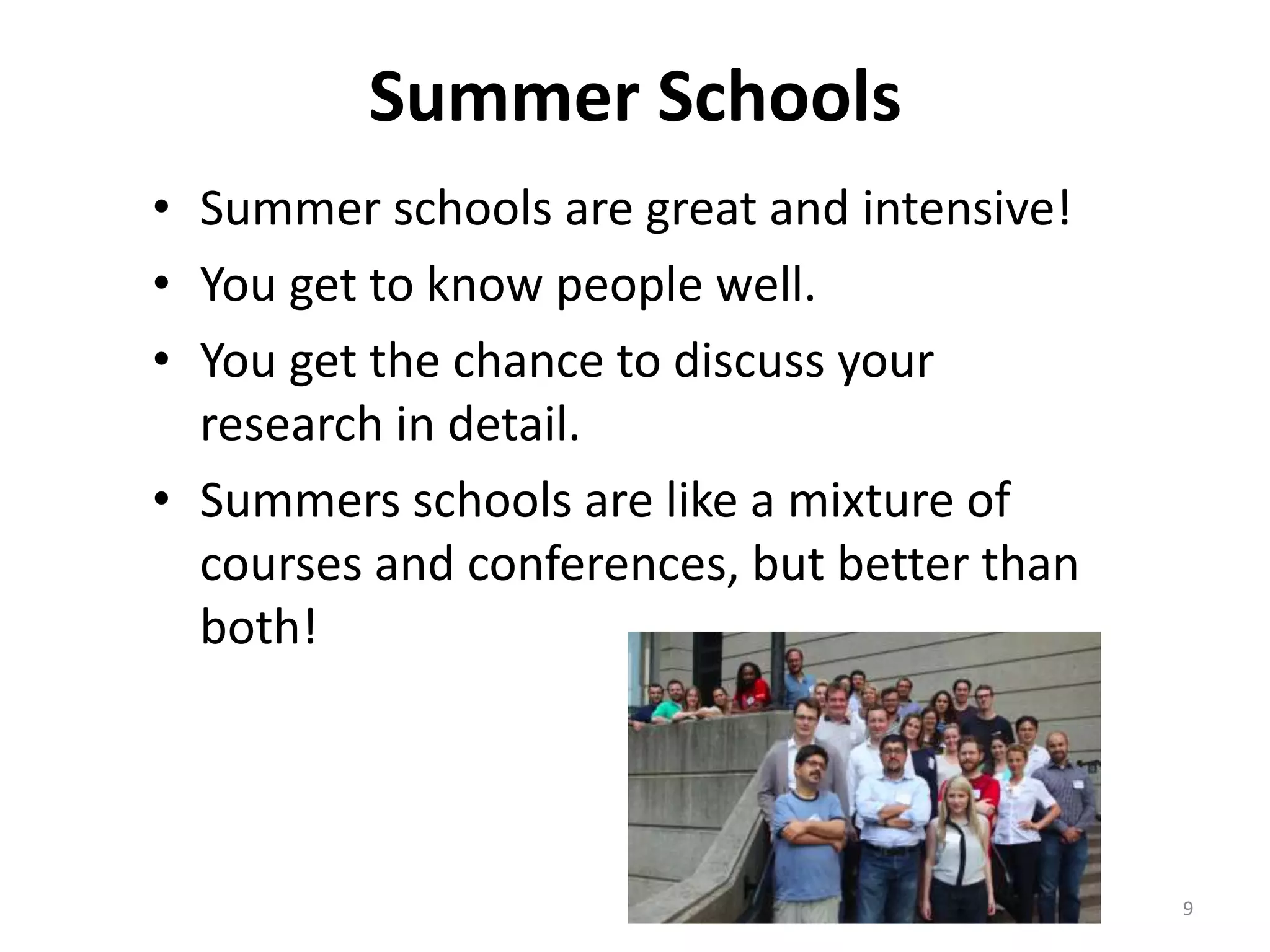
Summer Schools
• Summer schools are great and intensive!
• You get to know people well.
• You get the chance to discuss your
research in detail.
• Summers schools are like a mixture of
courses and conferences, but better than
both!
9
Year Abroad
• Exchange & visiting semester/year I did have been the
most memorable part of my studies and of my life.
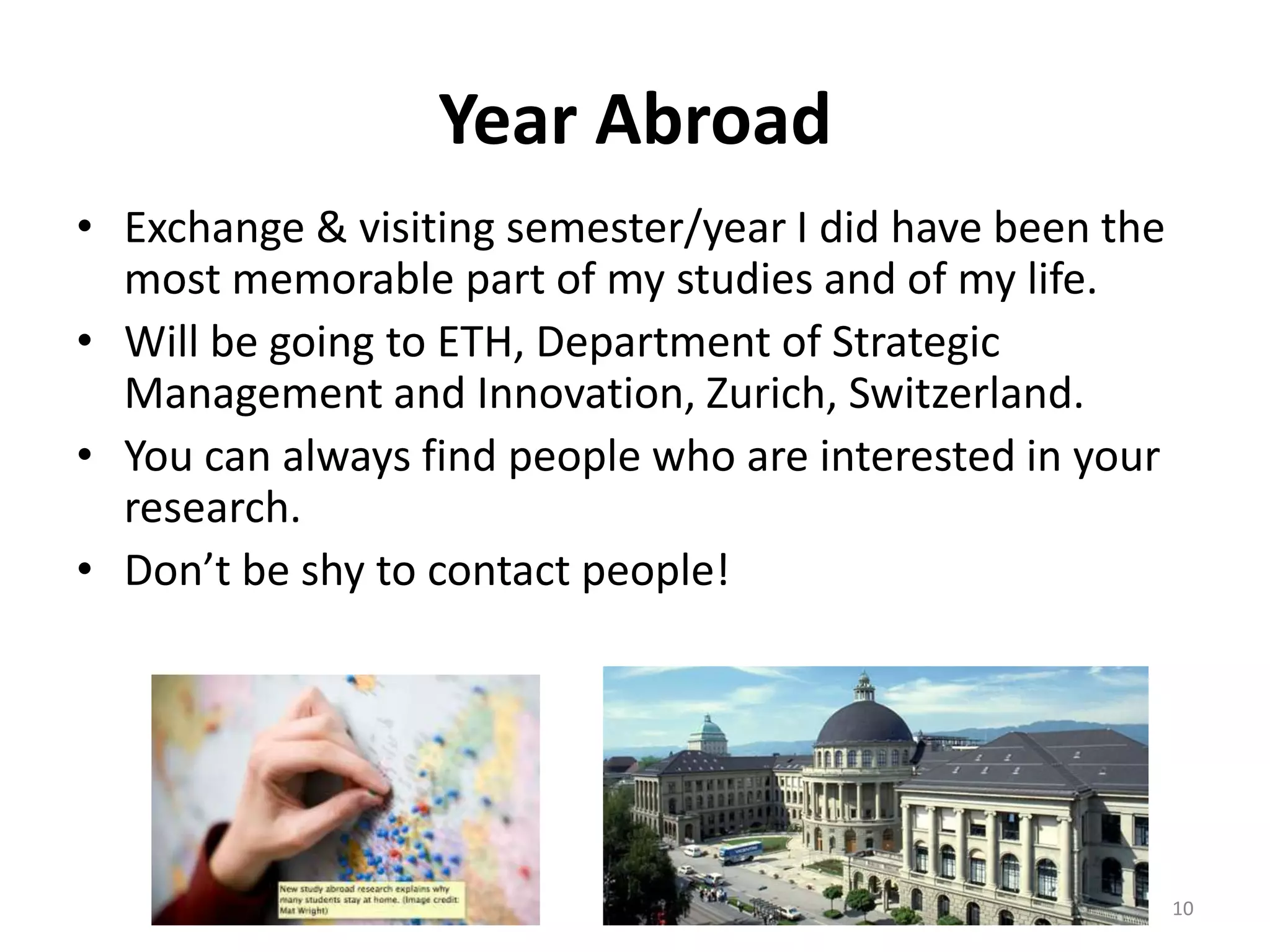
• Will be going to ETH, Department of Strategic
Management and Innovation, Zurich, Switzerland.
• You can always find people who are interested in your
research.
• Don’t be shy to contact people!
10
Funding/Grants
• Used up all my academic travel funding through SSE
the first year.
• Important to find other sources of funding for
academic travelling!
• Funding from Handelsbanken, Hedeliusstipendium and
Sweden-America Foundation (Swedish citizenship
required for the latter one).
• Scholarships through SSE for long research stays.
• There are many foundations that give out scholarships.
11
Power of Networking
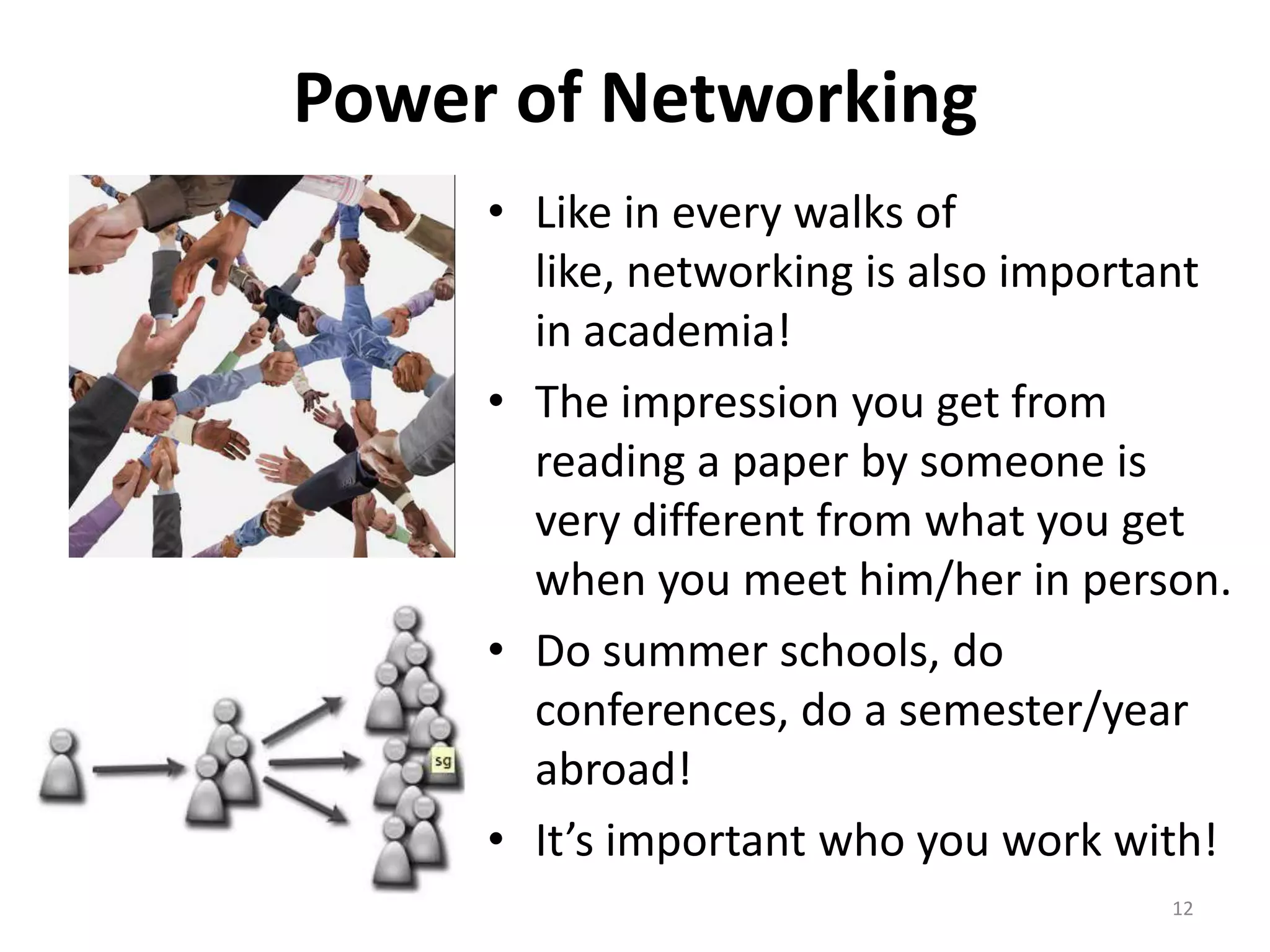
• Like in every walks of
like, networking is also important
in academia!
• The impression you get from
reading a paper by someone is
very different from what you get
when you meet him/her in person.
• Do summer schools, do
conferences, do a semester/year
abroad!
• It’s important who you work with!
12
13
14
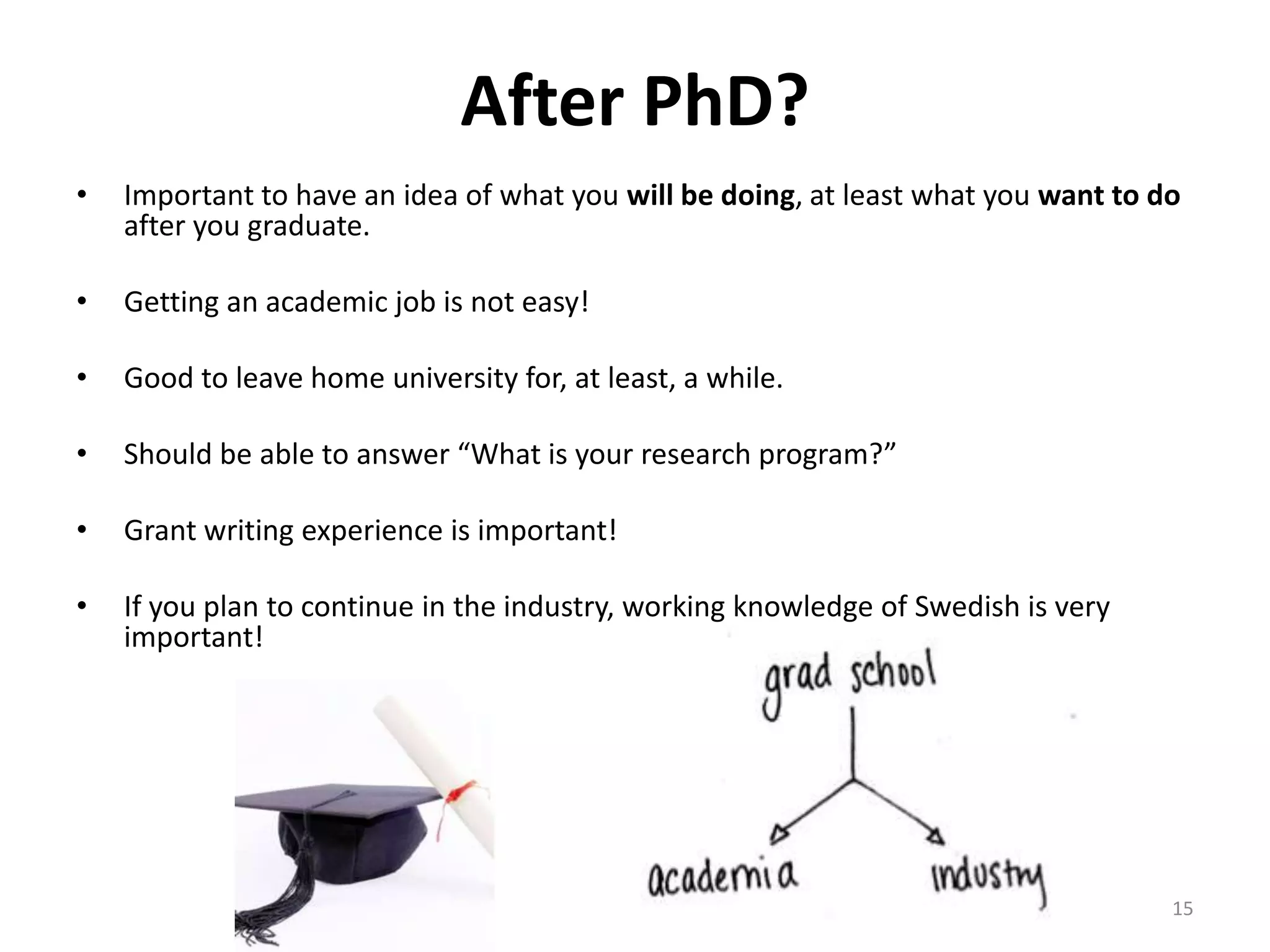
After PhD?
• Important to have an idea of what you will be doing, at least what you want to do
after you graduate.
• Getting an academic job is not easy!
• Good to leave home university for, at least, a while.
• Should be able to answer “What is your research program?”
• Grant writing experience is important!
• If you plan to continue in the industry, working knowledge of Swedish is very
important!
15
Questions?
16
Please fell free to contact me for
questions & comments!
Zeynep Yetis-Larsson
Zeynep.Yetis@hhs.se
https://twitter.com/zyetis
http://se.linkedin.com/in/zeynepyetislarsson
http://www.slideshare.net/ZeynepYetis/
17

Life as a PhD student

  • 1.
    Life as aPhD student Zeynep Yetis-Larsson 28 August, 2013 Stockholm School of Economics 1
  • 2.
    Who am I? •B.S. degree from Bilkent University, in Industrial Engineering in Turkey. • Exchange student at University of California, Berkeley for a year. • M.S. degree from Eindhoven University of Technology, in Operations Management and Logistics in the Netherlands. • Visiting scholar at Tsinghua University, China for a semester. • Switched to social sciences. • Have been studying at SSE for 2 years now with Robin Teigland. PhD student in Business Administration, in the Marketing and Strategy Department. • Research in open innovation, specifically looking at the role that entrepreneurs play in open source communities. 2
  • 3.
    In the beginning •I was quite confused about quite a lot of different issues. • “What is your research question?” • “Don’t worry, it is good to be confused!” • Process of learning and restructuring your thoughts. • Important to be able to move on! • Go with something even if you are confused. 3
  • 4.
    Purpose of yourresearch • Why is your research important? • Always ask yourself “So what?” • Idea of research gaps is dangerous. • Might be better to work with “major/big” problems. 4
  • 5.
    Monograph or Collectionof articles? • This is a question that will be asked a lot. • I think this is mainly a personality choice. Also depends on your research. • Articles --- good when in the job market, you get recognition, easier to track your progress, etc… • Monograph --- it is easier to make the whole piece consistent throughout. 5
  • 6.
    Research since Day1 • I have been a lucky PhD student. • I have not seen a lot of other PhD students do this. • It is important to read and build up a good theory base, but it is still possible to write early on. • Don’t let anyone discourage you! • Takes a lot of time to publish! 6
  • 7.
    Courses • Courses areintroductions. • They introduce some of the major theories in the field. • Same with methods. You get a basic understanding of what the method is about and what you can do with it. • If you want to get a deeper understanding of a theory or a method, better to do an extended course. • You make good friends in Uppsala and in other places 7
  • 8.
    Conferences/Doctoral Consortiums • Conferencesare great for networking. • More about networking than getting “amazing” feedback on your paper in your session. • Got to know a few people like this, whom I work with at the moment. • Planning to attend a doctoral consortium this year. 8
  • 9.
    Summer Schools • Summerschools are great and intensive! • You get to know people well. • You get the chance to discuss your research in detail. • Summers schools are like a mixture of courses and conferences, but better than both! 9
  • 10.
    Year Abroad • Exchange& visiting semester/year I did have been the most memorable part of my studies and of my life. • Will be going to ETH, Department of Strategic Management and Innovation, Zurich, Switzerland. • You can always find people who are interested in your research. • Don’t be shy to contact people! 10
  • 11.
    Funding/Grants • Used upall my academic travel funding through SSE the first year. • Important to find other sources of funding for academic travelling! • Funding from Handelsbanken, Hedeliusstipendium and Sweden-America Foundation (Swedish citizenship required for the latter one). • Scholarships through SSE for long research stays. • There are many foundations that give out scholarships. 11
  • 12.
    Power of Networking •Like in every walks of like, networking is also important in academia! • The impression you get from reading a paper by someone is very different from what you get when you meet him/her in person. • Do summer schools, do conferences, do a semester/year abroad! • It’s important who you work with! 12
  • 13.
  • 14.
  • 15.
    After PhD? • Importantto have an idea of what you will be doing, at least what you want to do after you graduate. • Getting an academic job is not easy! • Good to leave home university for, at least, a while. • Should be able to answer “What is your research program?” • Grant writing experience is important! • If you plan to continue in the industry, working knowledge of Swedish is very important! 15
  • 16.
  • 17.
    Please fell freeto contact me for questions & comments! Zeynep Yetis-Larsson Zeynep.Yetis@hhs.se https://twitter.com/zyetis http://se.linkedin.com/in/zeynepyetislarsson http://www.slideshare.net/ZeynepYetis/ 17

Editor's Notes

  • #12 http://www.handelsbanken.se/shb/inet/IStartSv.nsf/FrameSet?OpenView&id=Forskningsstiftelsernahttp://www.sweamfo.sehttp://www.vr.se/inenglish/shortcuts/humanitiesandsocialsciences.4.12fff4451215cbd83e4800021439.html