Research Methodology
Prepared by:
Hawa Ahmad Ghabag
Fawzia Abduassalam
O U T L I N E :
Introduction
General kinds of research
Research paradigms
Selecting a research area
 Stating your study problem
 Narrow your topic
stating a research question
Formulating a hypothesis
References
Introduction
 Methodology and methods
 Educational research
General kinds of research
1. Basic research
2. Applied research
3. Evaluation research
4. Action research
5. Orientational research
Research paradigms
 Qualitative research
 Quantitative research
 Mixed research
Selecting a research topic :
an idea or a problem ?
One of the most important aspects of a research paper is the TOPIC.
Sometimes success depends on right selection because the writing is
so much more fun when you know what you are writing about.
How to decide :
 Pick up a subject that interests you and relevant to your study
 Select a field you know about
 Choose an argumentative topics
 Look in front of you
 Brainstorm
 Use a topic once again
Sources of research ideas:
 Real-world experience
 Practical issues
 Past research
 Theory
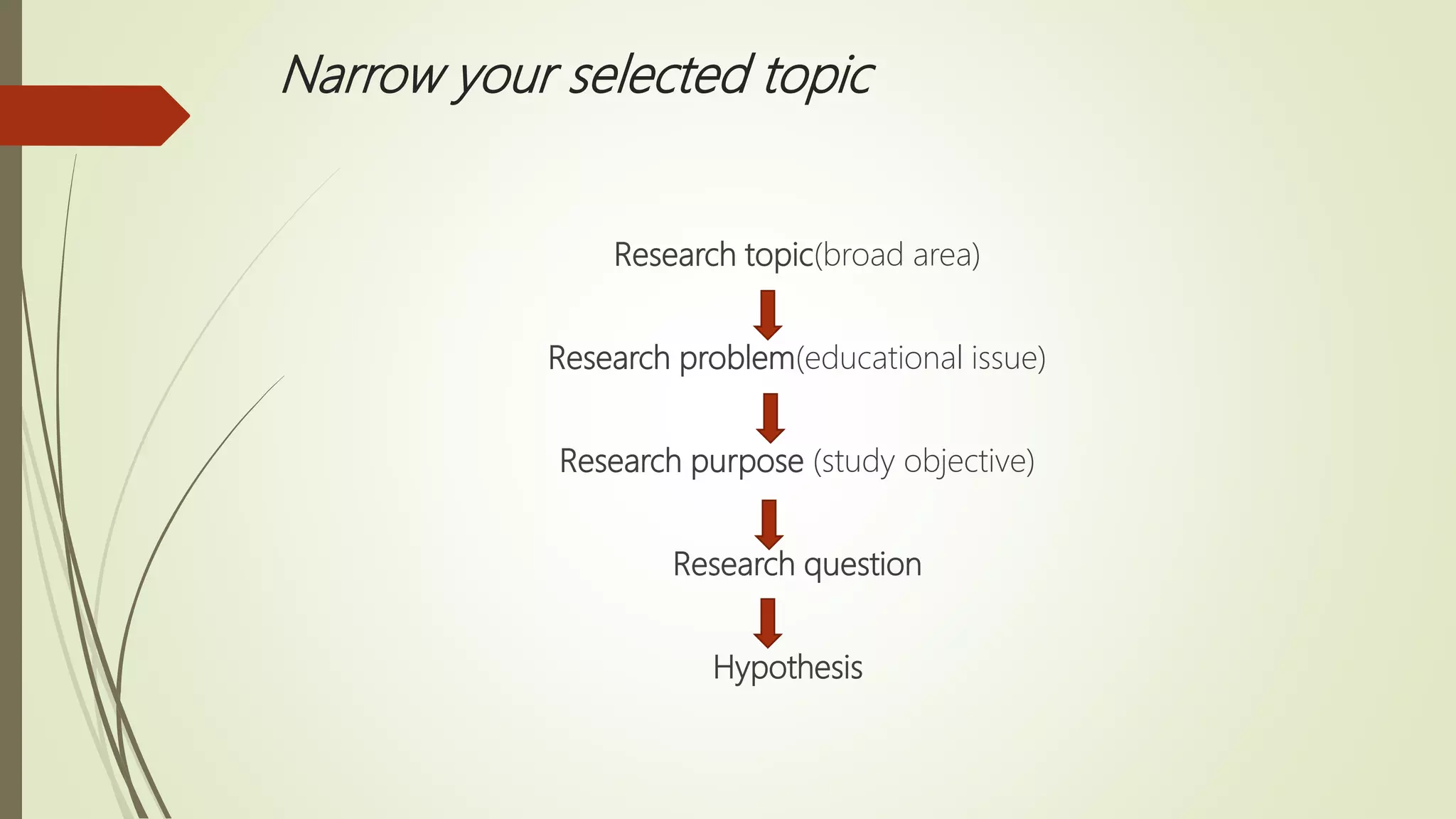
Narrow your selected topic
Research topic(broad area)
Research problem(educational issue)
Research purpose (study objective)
Research question
Hypothesis
Research question :
A research question is a statement of the specific question(s) to which the
researcher seeks an answer .
It is therefore, an extension of a statement of the purpose of the study in that it
specifies exactly the questions that the researcher will attempt to answer .
 Quantitative research questions :
They state the relationship being investigated between the target variables .
 Qualitative research questions:
They are not specific. Instead, they are more likely to a general question about a
process, or about exploring a particular phenomenon.
Types of quantitative questions
 Descriptive questions
 Predictive questions
 Causal questions
Formulating a hypothesis
It is the formal statement of the researcher’s prediction of the relationship
that exists among the variables under investigation .
It logically follows the statement of the research question.
Sources of hypothesis :
 Literature review
 Theory
It must be capable of being refuted or confirmed.
Q. Why are hypotheses typically not formulated in
qualitative research?
References :
 Johnson, B., & Christensen, L. (2008). Educational research: Quantitative,
qualitative, and mixed approaches. Sage.
 Hatch, E. M., & Lazaraton, A. (1991). The research manual: Design and
statistics for applied linguistics. New York, NY: Newbury House Publishers.
 Mackey, A., & Gass, S. M. (2013). Second language research:
Methodology and design. Routledge.

Research methodology

  • 1.
    Research Methodology Prepared by: HawaAhmad Ghabag Fawzia Abduassalam
  • 2.
    O U TL I N E : Introduction General kinds of research Research paradigms Selecting a research area  Stating your study problem  Narrow your topic stating a research question Formulating a hypothesis References
  • 3.
    Introduction  Methodology andmethods  Educational research
  • 4.
    General kinds ofresearch 1. Basic research 2. Applied research 3. Evaluation research 4. Action research 5. Orientational research
  • 6.
    Research paradigms  Qualitativeresearch  Quantitative research  Mixed research
  • 7.
    Selecting a researchtopic : an idea or a problem ? One of the most important aspects of a research paper is the TOPIC. Sometimes success depends on right selection because the writing is so much more fun when you know what you are writing about.
  • 8.
    How to decide:  Pick up a subject that interests you and relevant to your study  Select a field you know about  Choose an argumentative topics  Look in front of you  Brainstorm  Use a topic once again
  • 9.
    Sources of researchideas:  Real-world experience  Practical issues  Past research  Theory
  • 10.
    Narrow your selectedtopic Research topic(broad area) Research problem(educational issue) Research purpose (study objective) Research question Hypothesis
  • 11.
    Research question : Aresearch question is a statement of the specific question(s) to which the researcher seeks an answer . It is therefore, an extension of a statement of the purpose of the study in that it specifies exactly the questions that the researcher will attempt to answer .
  • 12.
     Quantitative researchquestions : They state the relationship being investigated between the target variables .  Qualitative research questions: They are not specific. Instead, they are more likely to a general question about a process, or about exploring a particular phenomenon.
  • 13.
    Types of quantitativequestions  Descriptive questions  Predictive questions  Causal questions
  • 14.
    Formulating a hypothesis Itis the formal statement of the researcher’s prediction of the relationship that exists among the variables under investigation . It logically follows the statement of the research question. Sources of hypothesis :  Literature review  Theory It must be capable of being refuted or confirmed.
  • 17.
    Q. Why arehypotheses typically not formulated in qualitative research?
  • 18.
    References :  Johnson,B., & Christensen, L. (2008). Educational research: Quantitative, qualitative, and mixed approaches. Sage.  Hatch, E. M., & Lazaraton, A. (1991). The research manual: Design and statistics for applied linguistics. New York, NY: Newbury House Publishers.  Mackey, A., & Gass, S. M. (2013). Second language research: Methodology and design. Routledge.