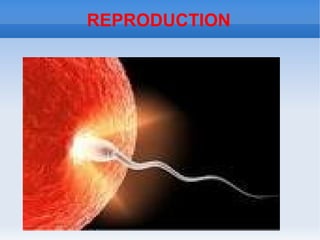
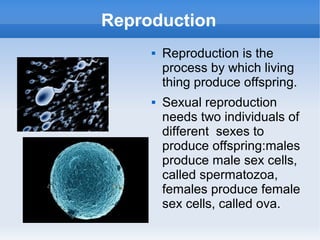
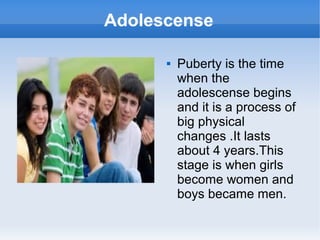
Reproduction occurs through sexual reproduction between males and females or asexual reproduction. In sexual reproduction, males produce sperm cells and females produce egg cells, which fuse during fertilization to create offspring. The main differences between human males and females are their reproductive organs, called primary sex characteristics, as well as secondary sex characteristics like muscle mass, voice, and facial hair. The male reproductive system includes the testes and penis to produce and deposit sperm. The female reproductive system includes ovaries, fallopian tubes, uterus, vagina, and vulva to create eggs and support embryo development. Humans experience different stages of development from childhood to old age, each with distinct physical and psychological characteristics.