THE REPRODUCTIVE FUNCTION IN HUMAN BEGINSTHE REPRODUCTIVE FUNCTION IN HUMAN BEGINS
Human reproduction is sexual and, therefore, needs the formation of
different specialised cells known as gametes.
The male gamestes is called the spermatozoid and the female gamete
is called the ovum. These two cells are fomed in specialised organs
which are called the testicles and the ovaries, respectively.
Men and women require different sexual characteristics and these are classified
as:
-Primary sexual characteristics.These are the characteristics present at birth.
-The existence of female genitalia in the female.
-The existence of male genitalia in ythje male.
-Secondary sexual characteristics. These are the characteristics which
apperar with maturity.
-In the female: The development of pubic hair and hair under arms, the
distribution of body fats and the development of mammary glands.
-In the male: The development of pubic hair, the beard and hair over a
large part of the body, an increase in the bones and muscles, change of voice, etc.,
These change occur at a very specific age which is known as puberty and are the
result of the action of sexual hormones.
REPODUCTIVE ORGANS AND CELLSREPODUCTIVE ORGANS AND CELLS
1. THE FEMALE REPRODUCTIVE APPARATUS
-The ovaries: Two organs the size of an almond. Inside them, each
month, and ovum matures and then is released. The substances known as
female sexual hormones are produce here.
-The Fallopian tubes: These are two channels which join the ovaries to
the uterus. This is where fertilisation takes place,
-The uterus or wong: This is a cavity which is prepared for a fertilised
ovum and for housing the embryo so that it can develop during the nine mouth of
pregnancy.
-The vagina: Flexible channel which comunicates the uterus with the
exterior.
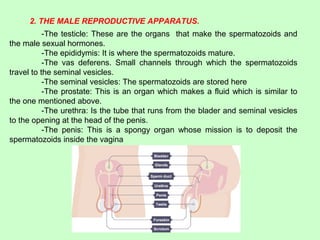
2. THE MALE REPRODUCTIVE APPARATUS.
-The testicle: These are the organs that make the spermatozoids and
the male sexual hormones.
-The epididymis: It is where the spermatozoids mature.
-The vas deferens. Small channels through which the spermatozoids
travel to the seminal vesicles.
-The seminal vesicles: The spermatozoids are stored here
-The prostate: This is an organ which makes a fluid which is similar to
the one mentioned above.
-The urethra: Is the tube that runs from the blader and seminal vesicles
to the opening at the head of the penis.
-The penis: This is a spongy organ whose mission is to deposit the
spermatozoids inside the vagina
The reproductive cellsThe reproductive cells
-The ovum
The ovum is the female gamete.
It is a very large cell and move great difficulty
Once an ovum leaves the ovary, it goes to the Fallopian tubes where it stays
for a short period of time during which it may be fertilised or it will die.
-The spermatozoids.
Are the male gametes.
They are much smaller and much more mobile than the ovum and in their
mature state they are formed by a large part known as the head and smaller
part known as the tail.
These can live for about three days in the insie of the female ganital
apparatus.
Once puberty has passed, both the male and the female are sexually mature
people and, therefore, capable of reproduction.
In women, a cyclical activity in the ovaries is produces whith the maturing of an
ovum every 28 days aproximately and with the appearance of menstruation if the
ovum is not fertilised.
These cycles occour in women until the age of approximately 50, when
menstruation becomes very irregular and finally disappears. This perod is known
as the menopause or climatery.
Sexual maturitySexual maturity
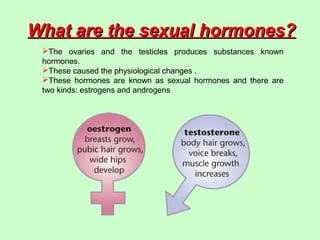
The ovaries and the testicles produces substances known
hormones.
These caused the physiological changes .
These hormones are known as sexual hormones and there are
two kinds: estrogens and androgens
What are the sexual hormones?What are the sexual hormones?
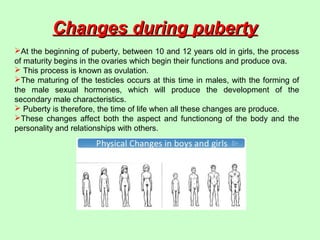
At the beginning of puberty, between 10 and 12 years old in girls, the process
of maturity begins in the ovaries which begin their functions and produce ova.
 This process is known as ovulation.
The maturing of the testicles occurs at this time in males, with the forming of
the male sexual hormones, which will produce the development of the
secondary male characteristics.
 Puberty is therefore, the time of life when all these changes are produce.
These changes affect both the aspect and functionong of the body and the
personality and relationships with others.
Changes during pubertyChanges during puberty

The reproductive function in human begins

  • 2.
    THE REPRODUCTIVE FUNCTIONIN HUMAN BEGINSTHE REPRODUCTIVE FUNCTION IN HUMAN BEGINS Human reproduction is sexual and, therefore, needs the formation of different specialised cells known as gametes. The male gamestes is called the spermatozoid and the female gamete is called the ovum. These two cells are fomed in specialised organs which are called the testicles and the ovaries, respectively.
  • 3.
    Men and womenrequire different sexual characteristics and these are classified as: -Primary sexual characteristics.These are the characteristics present at birth. -The existence of female genitalia in the female. -The existence of male genitalia in ythje male. -Secondary sexual characteristics. These are the characteristics which apperar with maturity. -In the female: The development of pubic hair and hair under arms, the distribution of body fats and the development of mammary glands. -In the male: The development of pubic hair, the beard and hair over a large part of the body, an increase in the bones and muscles, change of voice, etc., These change occur at a very specific age which is known as puberty and are the result of the action of sexual hormones.
  • 4.
    REPODUCTIVE ORGANS ANDCELLSREPODUCTIVE ORGANS AND CELLS 1. THE FEMALE REPRODUCTIVE APPARATUS -The ovaries: Two organs the size of an almond. Inside them, each month, and ovum matures and then is released. The substances known as female sexual hormones are produce here. -The Fallopian tubes: These are two channels which join the ovaries to the uterus. This is where fertilisation takes place, -The uterus or wong: This is a cavity which is prepared for a fertilised ovum and for housing the embryo so that it can develop during the nine mouth of pregnancy. -The vagina: Flexible channel which comunicates the uterus with the exterior.
  • 5.
    2. THE MALEREPRODUCTIVE APPARATUS. -The testicle: These are the organs that make the spermatozoids and the male sexual hormones. -The epididymis: It is where the spermatozoids mature. -The vas deferens. Small channels through which the spermatozoids travel to the seminal vesicles. -The seminal vesicles: The spermatozoids are stored here -The prostate: This is an organ which makes a fluid which is similar to the one mentioned above. -The urethra: Is the tube that runs from the blader and seminal vesicles to the opening at the head of the penis. -The penis: This is a spongy organ whose mission is to deposit the spermatozoids inside the vagina
  • 6.
    The reproductive cellsThereproductive cells -The ovum The ovum is the female gamete. It is a very large cell and move great difficulty Once an ovum leaves the ovary, it goes to the Fallopian tubes where it stays for a short period of time during which it may be fertilised or it will die.
  • 7.
    -The spermatozoids. Are themale gametes. They are much smaller and much more mobile than the ovum and in their mature state they are formed by a large part known as the head and smaller part known as the tail. These can live for about three days in the insie of the female ganital apparatus.
  • 8.
    Once puberty haspassed, both the male and the female are sexually mature people and, therefore, capable of reproduction. In women, a cyclical activity in the ovaries is produces whith the maturing of an ovum every 28 days aproximately and with the appearance of menstruation if the ovum is not fertilised. These cycles occour in women until the age of approximately 50, when menstruation becomes very irregular and finally disappears. This perod is known as the menopause or climatery. Sexual maturitySexual maturity
  • 9.
    The ovaries andthe testicles produces substances known hormones. These caused the physiological changes . These hormones are known as sexual hormones and there are two kinds: estrogens and androgens What are the sexual hormones?What are the sexual hormones?
  • 10.
    At the beginningof puberty, between 10 and 12 years old in girls, the process of maturity begins in the ovaries which begin their functions and produce ova.  This process is known as ovulation. The maturing of the testicles occurs at this time in males, with the forming of the male sexual hormones, which will produce the development of the secondary male characteristics.  Puberty is therefore, the time of life when all these changes are produce. These changes affect both the aspect and functionong of the body and the personality and relationships with others. Changes during pubertyChanges during puberty