SYEDA FAREEHA IMAM
SHAISTA MARVEE
MALIHA QAMAR
WAJIHA SATTAR
 It is used as a form of appreciation,
historical preservation and self expression.
 It is the combination of different shapes.
 Shape is an element of art.
 It is combined with other elements to give
any sculpture or painting it’s flavour.
 These shapes don’t have perfect or
uniform measurement.
 They lack clearly defined edges.
 Generally these shapes are found in
nature.
 For eg: clouds, plants etc.
 They are with a natural look and flowing
and curving appearance.
 These forms are typically irregular and
asymmetrical.
 These are associated with things from the
natural world.
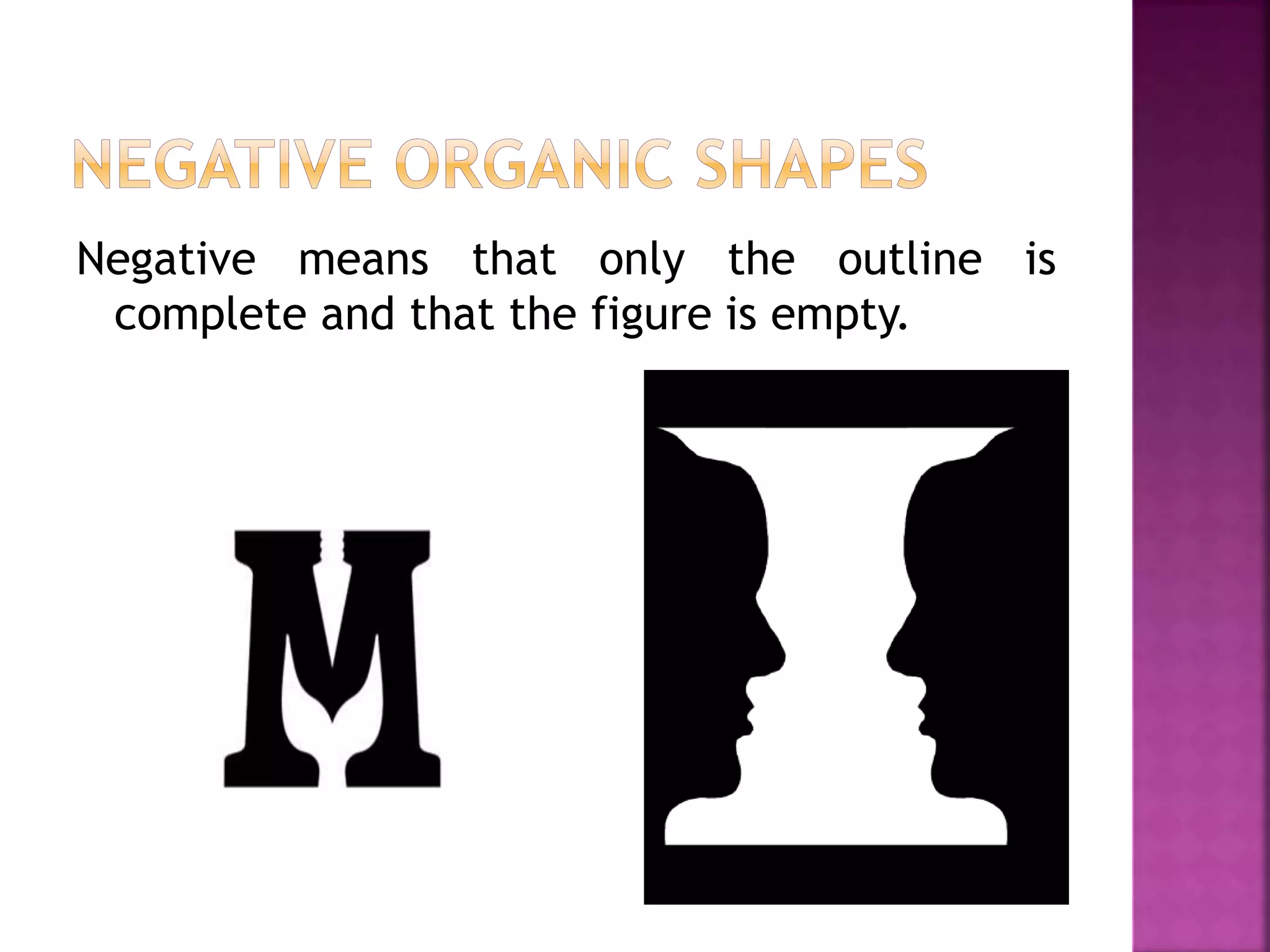
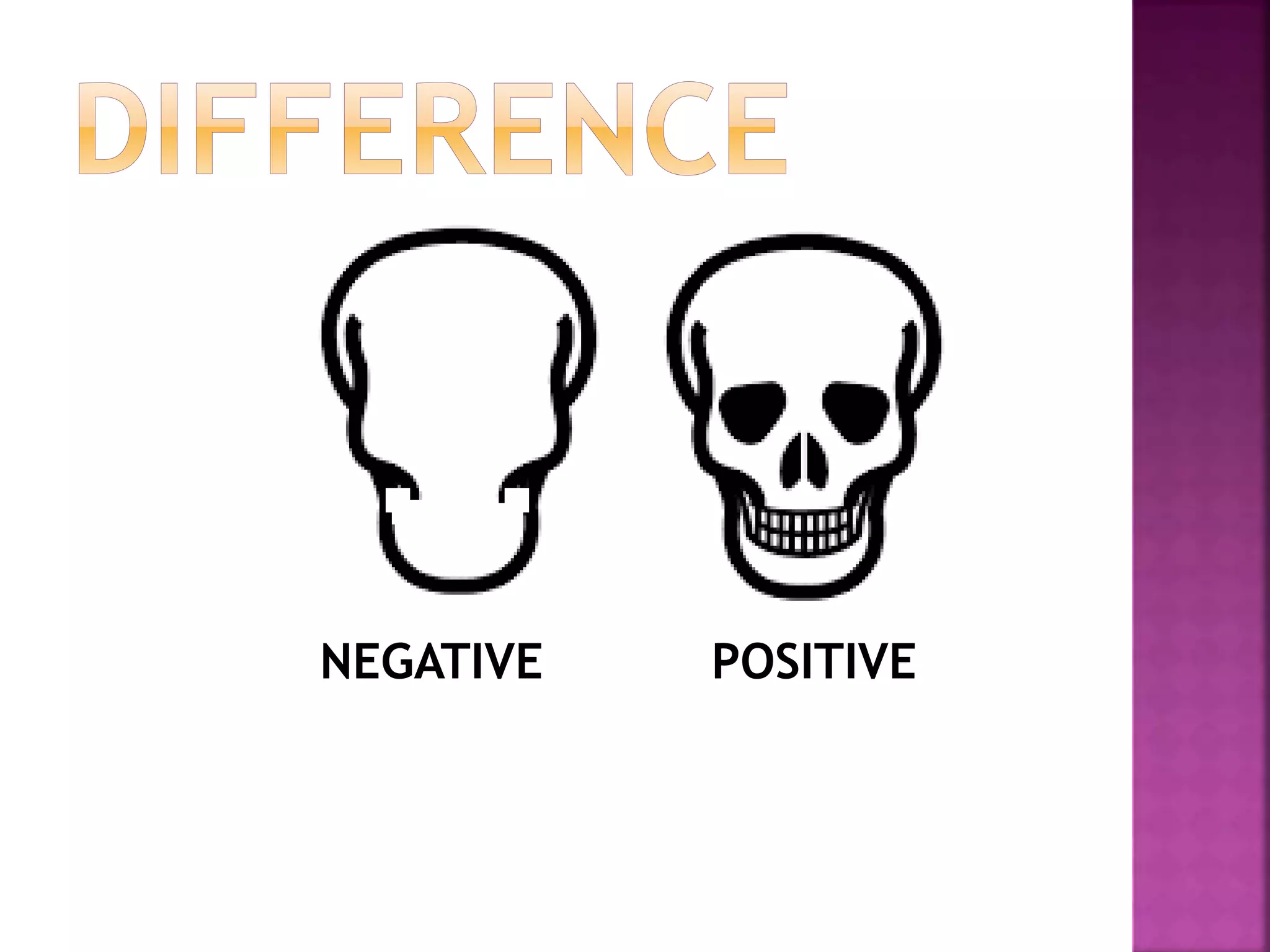
Negative means that only the outline is
complete and that the figure is empty.
Positive means that the shape has something
inside of it.
NEGATIVE POSITIVE
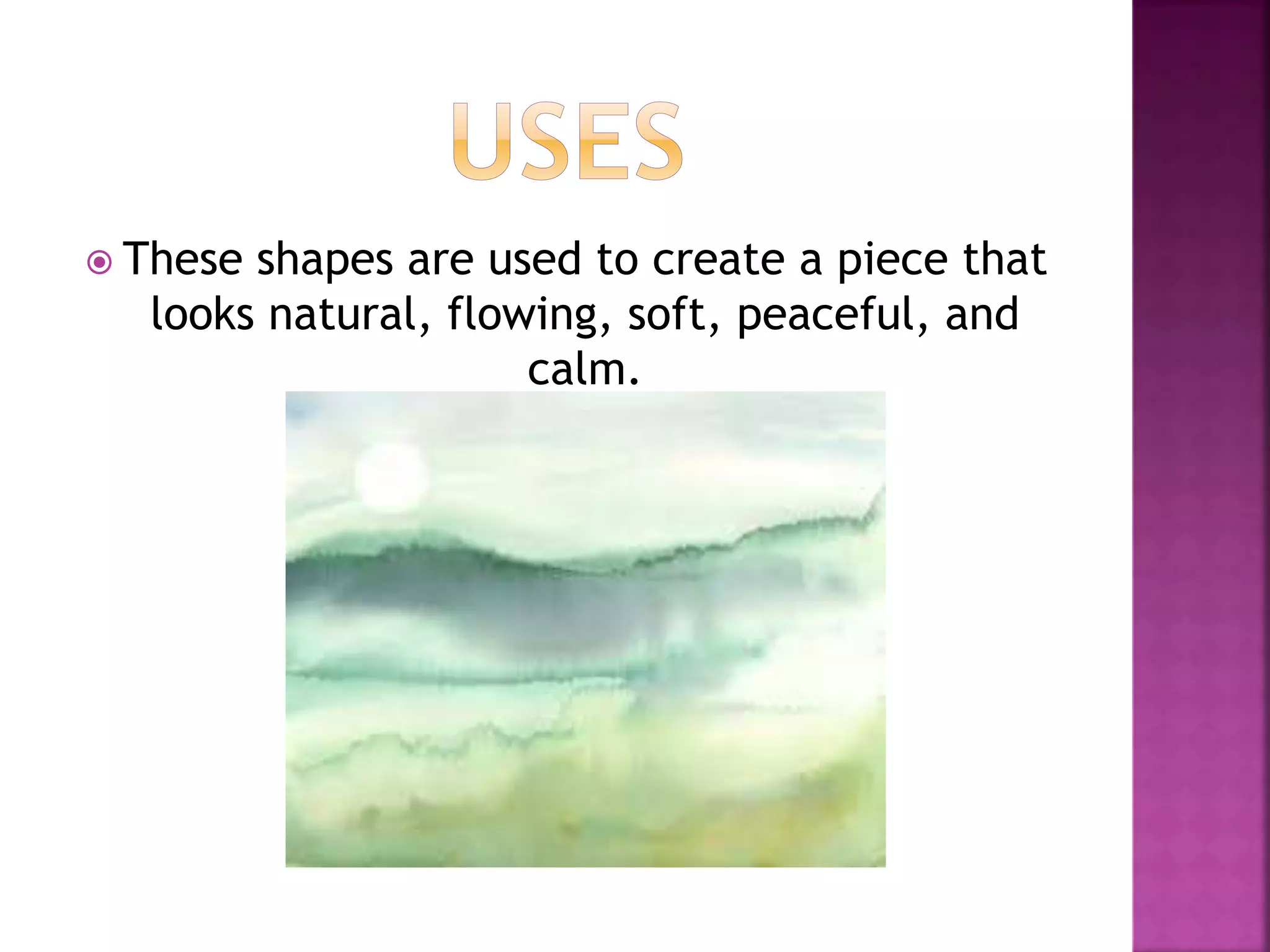
 These shapes are used to create a piece that
looks natural, flowing, soft, peaceful, and
calm.
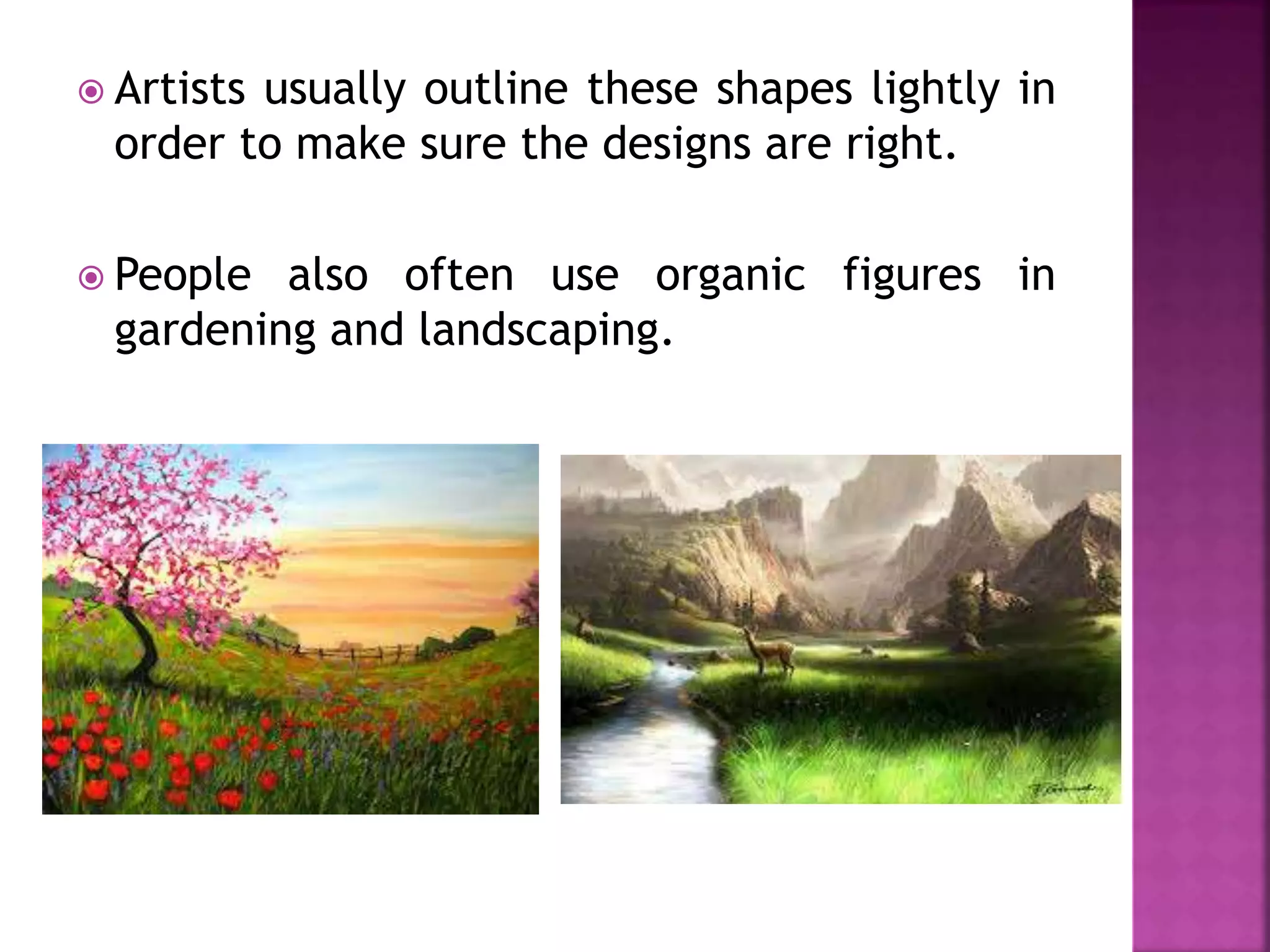
 Artists usually outline these shapes lightly in
order to make sure the designs are right.
 People also often use organic figures in
gardening and landscaping.
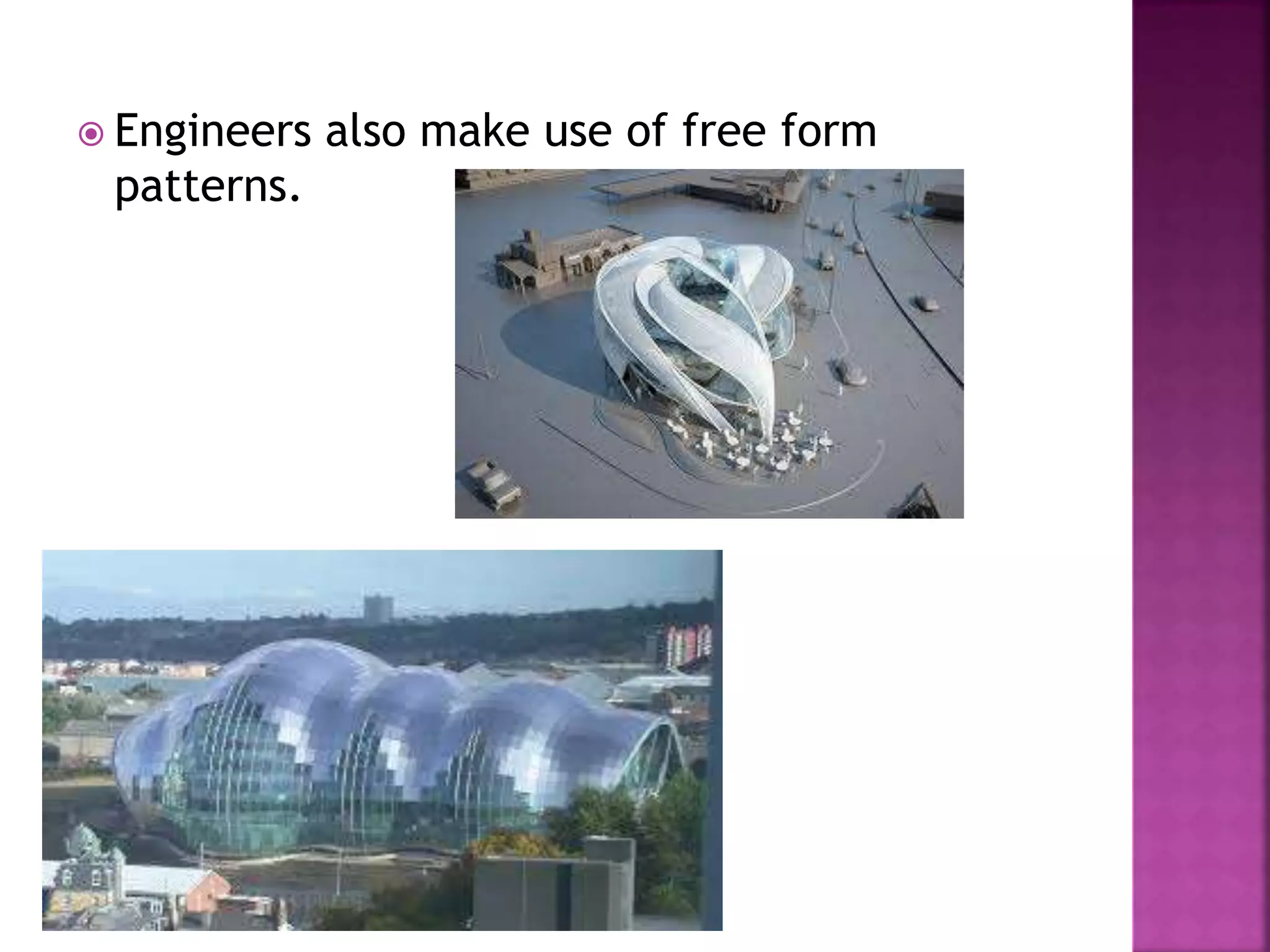
 Engineers also make use of free form
patterns.
Organic shapes, whether used in art or in
landscaping, can be difficult to create.
 A curving or flowing line that curves too far
can look man-made and detract from the
natural look.
 It makes it challenging to describe or
precisely recreate an organic pattern.
 Descriptions tend to rely more on
comparisons or the impressions someone gets
from looking at the shape.
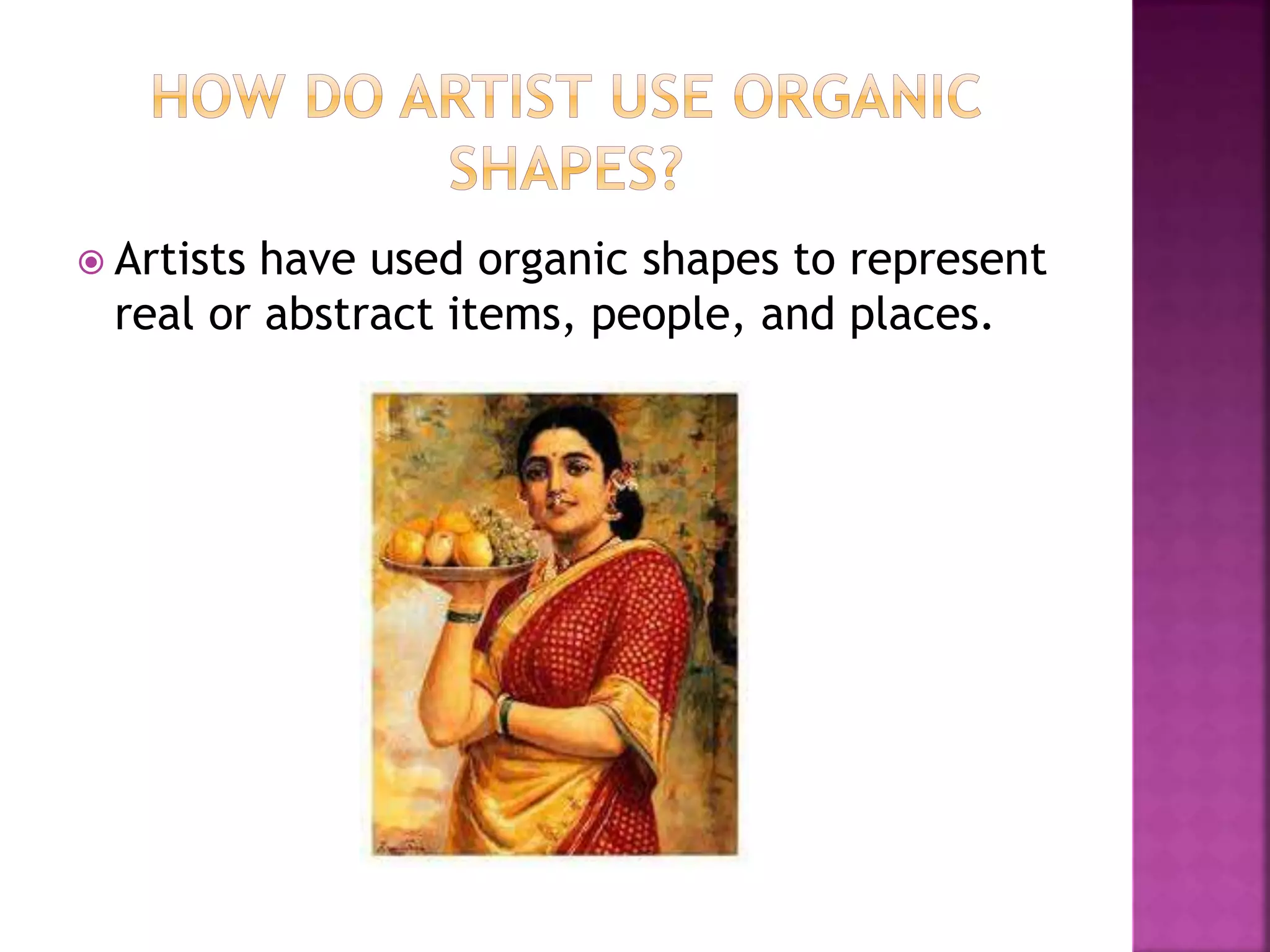
 Artists have used organic shapes to represent
real or abstract items, people, and places.
 Early people, used them in cave paintings.
 For example: Realism.
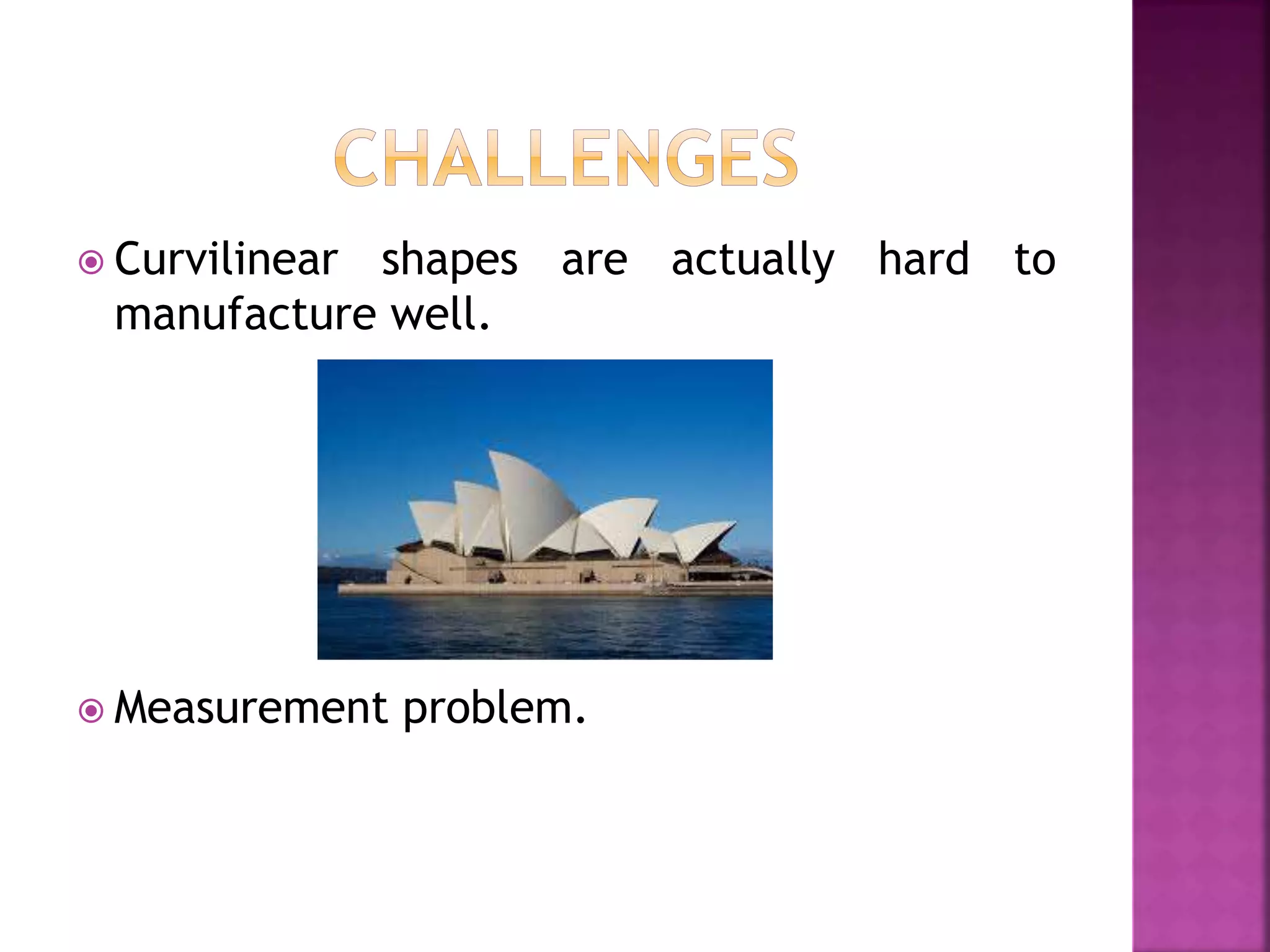
 Curvilinear shapes are actually hard to
manufacture well.
 Measurement problem.
 Lack of defined values.
 Qualities such as warmth or freedom are
challenging to create
 Technology is addressing some of the issues
with making natural-looking organic shapes.
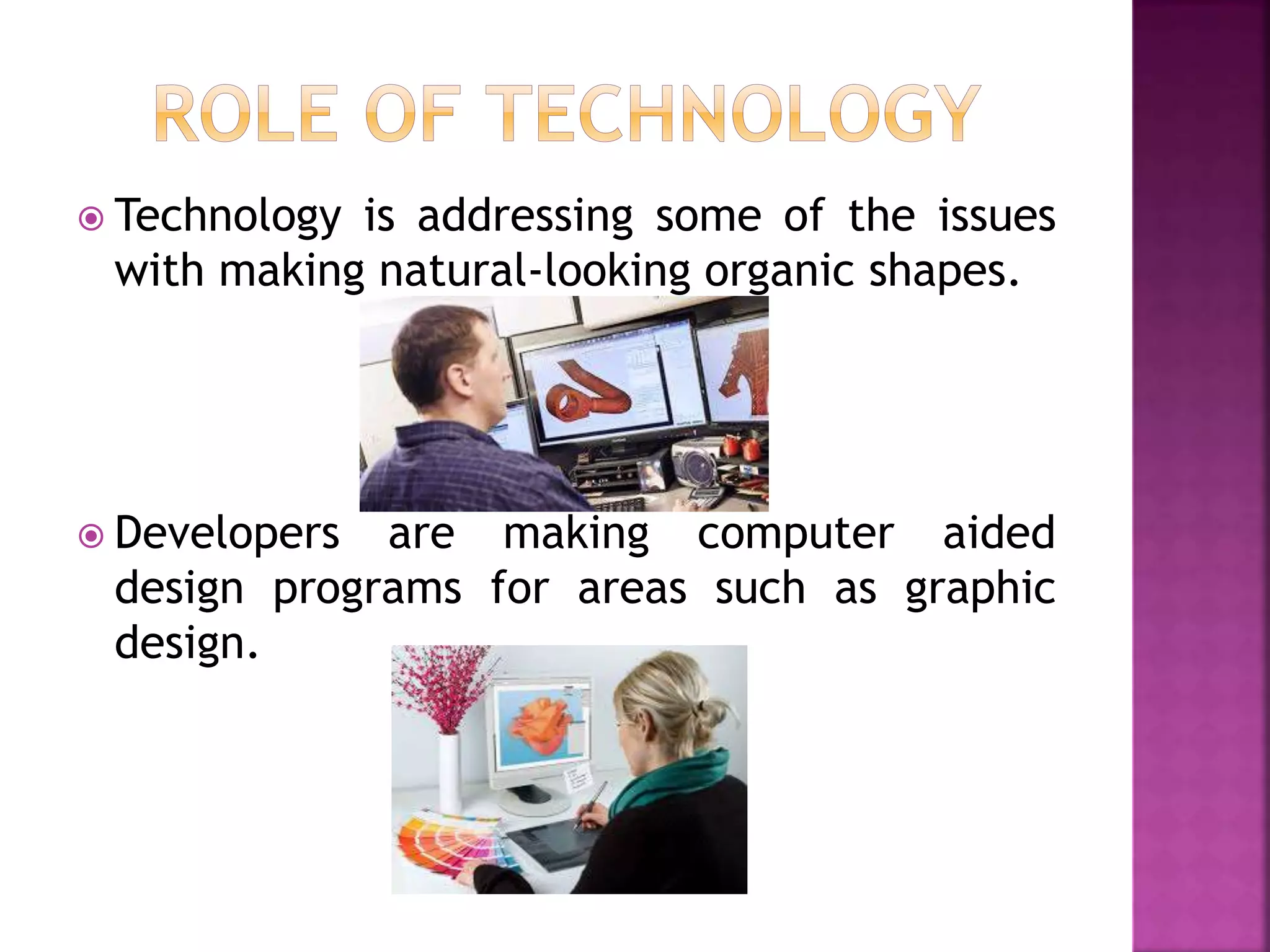
 Developers are making computer aided
design programs for areas such as graphic
design.
 It uses complex codes and algorithms to
generate images that look free form. These
programs are very useful.
 They can calculate how stable the organic
structure would be if physically built.

organic shapes in art. ppt

  • 2.
    SYEDA FAREEHA IMAM SHAISTAMARVEE MALIHA QAMAR WAJIHA SATTAR
  • 3.
     It isused as a form of appreciation, historical preservation and self expression.  It is the combination of different shapes.  Shape is an element of art.  It is combined with other elements to give any sculpture or painting it’s flavour.
  • 4.
     These shapesdon’t have perfect or uniform measurement.  They lack clearly defined edges.  Generally these shapes are found in nature.  For eg: clouds, plants etc.
  • 5.
     They arewith a natural look and flowing and curving appearance.  These forms are typically irregular and asymmetrical.  These are associated with things from the natural world.
  • 7.
    Negative means thatonly the outline is complete and that the figure is empty.
  • 8.
    Positive means thatthe shape has something inside of it.
  • 9.
  • 10.
     These shapesare used to create a piece that looks natural, flowing, soft, peaceful, and calm.
  • 11.
     Artists usuallyoutline these shapes lightly in order to make sure the designs are right.  People also often use organic figures in gardening and landscaping.
  • 12.
     Engineers alsomake use of free form patterns.
  • 13.
    Organic shapes, whetherused in art or in landscaping, can be difficult to create.  A curving or flowing line that curves too far can look man-made and detract from the natural look.
  • 14.
     It makesit challenging to describe or precisely recreate an organic pattern.  Descriptions tend to rely more on comparisons or the impressions someone gets from looking at the shape.
  • 15.
     Artists haveused organic shapes to represent real or abstract items, people, and places.
  • 16.
     Early people,used them in cave paintings.  For example: Realism.
  • 17.
     Curvilinear shapesare actually hard to manufacture well.  Measurement problem.
  • 18.
     Lack ofdefined values.  Qualities such as warmth or freedom are challenging to create
  • 19.
     Technology isaddressing some of the issues with making natural-looking organic shapes.  Developers are making computer aided design programs for areas such as graphic design.
  • 20.
     It usescomplex codes and algorithms to generate images that look free form. These programs are very useful.
  • 21.
     They cancalculate how stable the organic structure would be if physically built.