
   By:
          Group 1
1.   Nur Azizah
2.   Intan Mauliana Dewi
3.   Fatimah Az-zahra
4.   Choirunnisa
5.   Octa Berlian
6.   Ika Rostika
REPORTED SPEECH
Reported  speech
is a sentence that
report something
as dry run of
someone
statement
   Reported


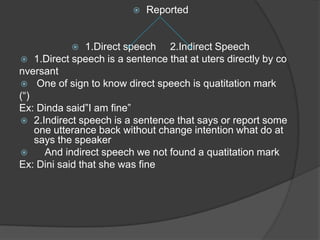
               1.Direct speech 2.Indirect Speech
 1.Direct speech is a sentence that at uters directly by co
nversant
 One of sign to know direct speech is quatitation mark
(“)
Ex: Dinda said”I am fine”
 2.Indirect speech is a sentence that says or report some
    one utterance back without change intention what do at
    says the speaker
     And indirect speech we not found a quatitation mark
Ex: Dini said that she was fine
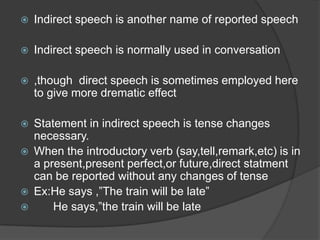
   Indirect speech is another name of reported speech

   Indirect speech is normally used in conversation

   ,though direct speech is sometimes employed here
    to give more drematic effect

   Statement in indirect speech is tense changes
    necessary.
   When the introductory verb (say,tell,remark,etc) is in
    a present,present perfect,or future,direct statment
    can be reported without any changes of tense
   Ex:He says ,”The train will be late”
       He says,”the train will be late
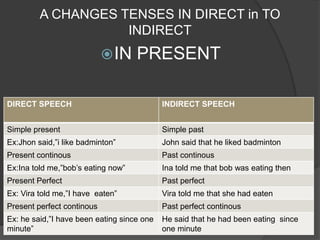
A CHANGES TENSES IN DIRECT in TO
                    INDIRECT
                             IN    PRESENT

DIRECT SPEECH                               INDIRECT SPEECH


Simple present                              Simple past
Ex:Jhon said,”i like badminton”             John said that he liked badminton
Present continous                           Past continous
Ex:Ina told me,”bob’s eating now”           Ina told me that bob was eating then
Present Perfect                             Past perfect
Ex: Vira told me,”I have eaten”             Vira told me that she had eaten
Present perfect continous                   Past perfect continous
Ex: he said,”I have been eating since one   He said that he had been eating since
minute”                                     one minute
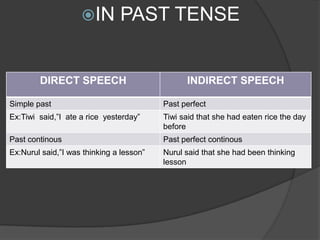
IN        PAST TENSE


        DIRECT SPEECH                           INDIRECT SPEECH

Simple past                               Past perfect
Ex:Tiwi said,”I ate a rice yesterday”     Tiwi said that she had eaten rice the day
                                          before
Past continous                            Past perfect continous
Ex:Nurul said,”I was thinking a lesson”   Nurul said that she had been thinking
                                          lesson
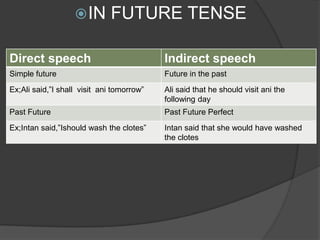
 IN       FUTURE TENSE

Direct speech                              Indirect speech
Simple future                              Future in the past
Ex;Ali said,”I shall visit ani tomorrow”   Ali said that he should visit ani the
                                           following day
Past Future                                Past Future Perfect
Ex;Intan said,”Ishould wash the clotes”    Intan said that she would have washed
                                           the clotes
   Improbable conditional sentences (sebuah
       keinginanhayalan)remain entirely un
       change(not change)

DIRECT SPEECH                             INDIRECT SPEECH

Ex;He said,”If my childern were older i   He said that if his childern were older he
would emigrate “                          would emigrate
   THE ANYTHING MUST OF YOU TO ATTENTION!


           THIS        THAT
           HERE        THERE
           NOW         THEN
           A GO        BEFORE
           YESTERDAY   THE DAY BEFORE
           TOMORROW    THE FOLLOWING DAY
           NEXT WEEK   THE FOLLOWING WEEK
THANK’S
      FOR
YOUR ATTENTION!

Reported speech

  • 1.
    By:  Group 1 1. Nur Azizah 2. Intan Mauliana Dewi 3. Fatimah Az-zahra 4. Choirunnisa 5. Octa Berlian 6. Ika Rostika
  • 2.
  • 3.
    Reported speech isa sentence that report something as dry run of someone statement
  • 4.
    Reported  1.Direct speech 2.Indirect Speech  1.Direct speech is a sentence that at uters directly by co nversant  One of sign to know direct speech is quatitation mark (“) Ex: Dinda said”I am fine”  2.Indirect speech is a sentence that says or report some one utterance back without change intention what do at says the speaker  And indirect speech we not found a quatitation mark Ex: Dini said that she was fine
  • 5.
    Indirect speech is another name of reported speech  Indirect speech is normally used in conversation  ,though direct speech is sometimes employed here to give more drematic effect  Statement in indirect speech is tense changes necessary.  When the introductory verb (say,tell,remark,etc) is in a present,present perfect,or future,direct statment can be reported without any changes of tense  Ex:He says ,”The train will be late”  He says,”the train will be late
  • 6.
    A CHANGES TENSESIN DIRECT in TO INDIRECT  IN PRESENT DIRECT SPEECH INDIRECT SPEECH Simple present Simple past Ex:Jhon said,”i like badminton” John said that he liked badminton Present continous Past continous Ex:Ina told me,”bob’s eating now” Ina told me that bob was eating then Present Perfect Past perfect Ex: Vira told me,”I have eaten” Vira told me that she had eaten Present perfect continous Past perfect continous Ex: he said,”I have been eating since one He said that he had been eating since minute” one minute
  • 7.
    IN PAST TENSE DIRECT SPEECH INDIRECT SPEECH Simple past Past perfect Ex:Tiwi said,”I ate a rice yesterday” Tiwi said that she had eaten rice the day before Past continous Past perfect continous Ex:Nurul said,”I was thinking a lesson” Nurul said that she had been thinking lesson
  • 8.
     IN FUTURE TENSE Direct speech Indirect speech Simple future Future in the past Ex;Ali said,”I shall visit ani tomorrow” Ali said that he should visit ani the following day Past Future Past Future Perfect Ex;Intan said,”Ishould wash the clotes” Intan said that she would have washed the clotes
  • 9.
    Improbable conditional sentences (sebuah keinginanhayalan)remain entirely un change(not change) DIRECT SPEECH INDIRECT SPEECH Ex;He said,”If my childern were older i He said that if his childern were older he would emigrate “ would emigrate
  • 10.
    THE ANYTHING MUST OF YOU TO ATTENTION! THIS THAT HERE THERE NOW THEN A GO BEFORE YESTERDAY THE DAY BEFORE TOMORROW THE FOLLOWING DAY NEXT WEEK THE FOLLOWING WEEK
  • 14.
    THANK’S FOR YOUR ATTENTION!