Repo vs Bank rate
PMI(purchasing Manager’s Index)
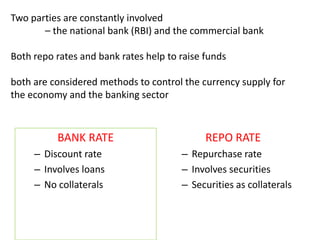
Two parties are constantly involved
– the national bank (RBI) and the commercial bank
Both repo rates and bank rates help to raise funds
both are considered methods to control the currency supply for
the economy and the banking sector
BANK RATE
– Discount rate
– Involves loans
– No collaterals
REPO RATE
– Repurchase rate
– Involves securities
– Securities as collaterals
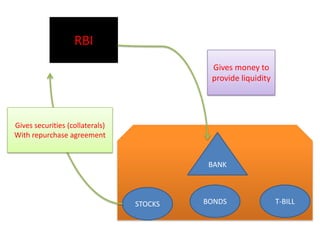
RBI
BANK
STOCKS T-BILLBONDS
Gives money to
provide liquidity
Gives securities (collaterals)
With repurchase agreement
PMI
• An indicator of the economic health of the manufacturing
and services sector.
• Market & HSBC based monthly data
• PMI above 50 is always good for the economy.
• The PMI index is based on five major indicators:
– new orders,
– inventory levels,
– production,
– supplier deliveries and
– the employment environment

Repo vs bank rate

  • 1.
    Repo vs Bankrate PMI(purchasing Manager’s Index)
  • 2.
    Two parties areconstantly involved – the national bank (RBI) and the commercial bank Both repo rates and bank rates help to raise funds both are considered methods to control the currency supply for the economy and the banking sector BANK RATE – Discount rate – Involves loans – No collaterals REPO RATE – Repurchase rate – Involves securities – Securities as collaterals
  • 3.
    RBI BANK STOCKS T-BILLBONDS Gives moneyto provide liquidity Gives securities (collaterals) With repurchase agreement
  • 4.
    PMI • An indicatorof the economic health of the manufacturing and services sector. • Market & HSBC based monthly data • PMI above 50 is always good for the economy. • The PMI index is based on five major indicators: – new orders, – inventory levels, – production, – supplier deliveries and – the employment environment