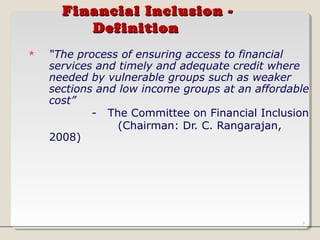
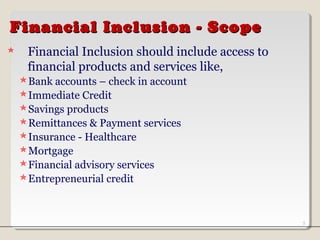
The document discusses financial inclusion in India, which refers to ensuring access to financial services like bank accounts, credit, insurance, and payments at affordable costs for vulnerable groups. It outlines the scope of financial inclusion and who it aims to serve. While steps were initially taken through cooperatives and nationalizing banks, financial inclusion efforts failed due to lack of technology, reach, and a viable business model. Now, with a focus on inclusive growth and new banking technology, financial inclusion has become a priority. The Reserve Bank of India has contributed through no-frills accounts, business correspondent models, and financial literacy programs. Achievements include the opening of millions of accounts and issuing of loans and cards, though challenges remain around scaling up and appropriate