RENZO PIANO
HIGH-TECH ARCHITECTURE
Nitha K J
HIGH-TECH ARCHITECTURE
• Renzo Piano is often called a "High-Tech" architect because his designs
showcase technological shapes and materials.
High-tech buildings are often called machine-like. Steel, aluminium, and glass
combine with brightly colored braces, girders, and beams. Many of the building
parts are prefabricated in a factory and assembled later. The support beams,
duct work, and other functional elements are placed on the exterior of the
building, where they become the focus of attention. The interior spaces are
open and adaptable for many uses.
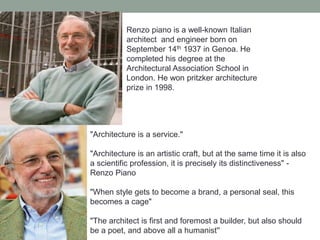
Renzo piano is a well-known Italian
architect and engineer born on
September 14th 1937 in Genoa. He
completed his degree at the
Architectural Association School in
London. He won pritzker architecture
prize in 1998.
"Architecture is a service."
"Architecture is an artistic craft, but at the same time it is also
a scientific profession, it is precisely its distinctiveness" -
Renzo Piano
"When style gets to become a brand, a personal seal, this
becomes a cage"
"The architect is first and foremost a builder, but also should
be a poet, and above all a humanist''
• Renzo performs in its early designs that break traditional paradigms in
architecture such as authorship, the durability or the same spatial rigidity,
projects what he called "adaptable spaces“
• Recognized as an Architect, "adaptive", creator and visionary
• Renzo Piano designed a building capable of integrating with nature, in tribute
to one of the most prolific and profound artists of modern times.
• He is also known as “ ecological innovator”- the protection of the
environment, far from being a limitation, it has become a "source of
inspiration" for the development of major projects being undertaken in many
countries
ZENTRUM PAUL KLEE
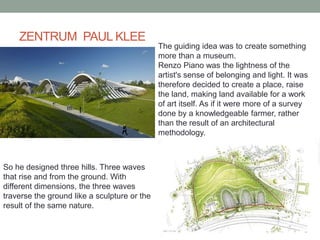
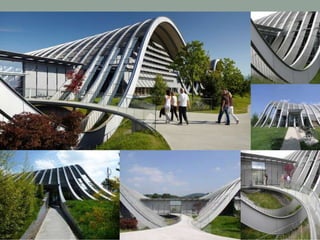
The guiding idea was to create something
more than a museum.
Renzo Piano was the lightness of the
artist's sense of belonging and light. It was
therefore decided to create a place, raise
the land, making land available for a work
of art itself. As if it were more of a survey
done by a knowledgeable farmer, rather
than the result of an architectural
methodology.
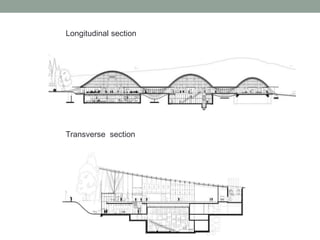
So he designed three hills. Three waves
that rise and from the ground. With
different dimensions, the three waves
traverse the ground like a sculpture or the
result of the same nature.
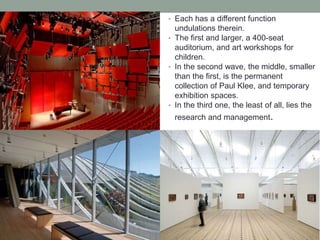
• Each has a different function
undulations therein.
• The first and larger, a 400-seat
auditorium, and art workshops for
children.
• In the second wave, the middle, smaller
than the first, is the permanent
collection of Paul Klee, and temporary
exhibition spaces.
• In the third one, the least of all, lies the
research and management.
Longitudinal section
Transverse section
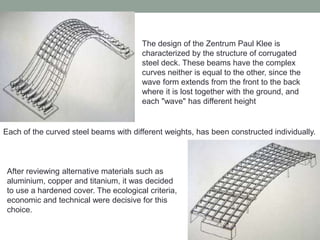
The design of the Zentrum Paul Klee is
characterized by the structure of corrugated
steel deck. These beams have the complex
curves neither is equal to the other, since the
wave form extends from the front to the back
where it is lost together with the ground, and
each "wave" has different height
Each of the curved steel beams with different weights, has been constructed individually.
After reviewing alternative materials such as
aluminium, copper and titanium, it was decided
to use a hardened cover. The ecological criteria,
economic and technical were decisive for this
choice.
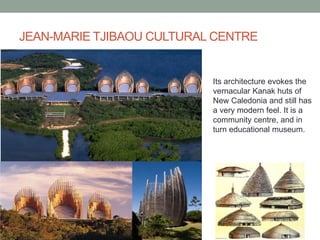
JEAN-MARIE TJIBAOU CULTURAL CENTRE
Its architecture evokes the
vernacular Kanak huts of
New Caledonia and still has
a very modern feel. It is a
community centre, and in
turn educational museum.
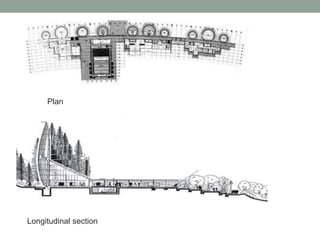
Plan
Longitudinal section
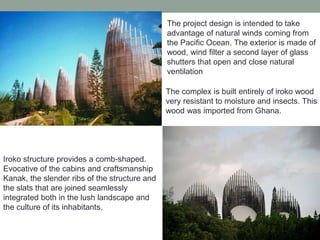
The project design is intended to take
advantage of natural winds coming from
the Pacific Ocean. The exterior is made of
wood, wind filter a second layer of glass
shutters that open and close natural
ventilation
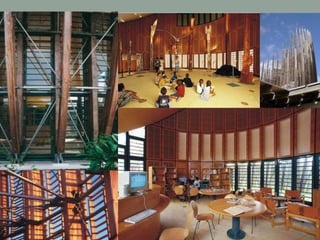
The complex is built entirely of iroko wood
very resistant to moisture and insects. This
wood was imported from Ghana.
Iroko structure provides a comb-shaped.
Evocative of the cabins and craftsmanship
Kanak, the slender ribs of the structure and
the slats that are joined seamlessly
integrated both in the lush landscape and
the culture of its inhabitants.
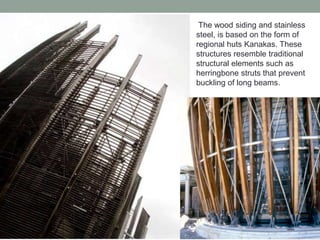
The wood siding and stainless
steel, is based on the form of
regional huts Kanakas. These
structures resemble traditional
structural elements such as
herringbone struts that prevent
buckling of long beams.
Renzo piano

Renzo piano

  • 1.
  • 2.
    HIGH-TECH ARCHITECTURE • RenzoPiano is often called a "High-Tech" architect because his designs showcase technological shapes and materials. High-tech buildings are often called machine-like. Steel, aluminium, and glass combine with brightly colored braces, girders, and beams. Many of the building parts are prefabricated in a factory and assembled later. The support beams, duct work, and other functional elements are placed on the exterior of the building, where they become the focus of attention. The interior spaces are open and adaptable for many uses.
  • 3.
    Renzo piano isa well-known Italian architect and engineer born on September 14th 1937 in Genoa. He completed his degree at the Architectural Association School in London. He won pritzker architecture prize in 1998. "Architecture is a service." "Architecture is an artistic craft, but at the same time it is also a scientific profession, it is precisely its distinctiveness" - Renzo Piano "When style gets to become a brand, a personal seal, this becomes a cage" "The architect is first and foremost a builder, but also should be a poet, and above all a humanist''
  • 4.
    • Renzo performsin its early designs that break traditional paradigms in architecture such as authorship, the durability or the same spatial rigidity, projects what he called "adaptable spaces“ • Recognized as an Architect, "adaptive", creator and visionary • Renzo Piano designed a building capable of integrating with nature, in tribute to one of the most prolific and profound artists of modern times. • He is also known as “ ecological innovator”- the protection of the environment, far from being a limitation, it has become a "source of inspiration" for the development of major projects being undertaken in many countries
  • 5.
    ZENTRUM PAUL KLEE Theguiding idea was to create something more than a museum. Renzo Piano was the lightness of the artist's sense of belonging and light. It was therefore decided to create a place, raise the land, making land available for a work of art itself. As if it were more of a survey done by a knowledgeable farmer, rather than the result of an architectural methodology. So he designed three hills. Three waves that rise and from the ground. With different dimensions, the three waves traverse the ground like a sculpture or the result of the same nature.
  • 6.
    • Each hasa different function undulations therein. • The first and larger, a 400-seat auditorium, and art workshops for children. • In the second wave, the middle, smaller than the first, is the permanent collection of Paul Klee, and temporary exhibition spaces. • In the third one, the least of all, lies the research and management.
  • 7.
  • 8.
    The design ofthe Zentrum Paul Klee is characterized by the structure of corrugated steel deck. These beams have the complex curves neither is equal to the other, since the wave form extends from the front to the back where it is lost together with the ground, and each "wave" has different height Each of the curved steel beams with different weights, has been constructed individually. After reviewing alternative materials such as aluminium, copper and titanium, it was decided to use a hardened cover. The ecological criteria, economic and technical were decisive for this choice.
  • 10.
    JEAN-MARIE TJIBAOU CULTURALCENTRE Its architecture evokes the vernacular Kanak huts of New Caledonia and still has a very modern feel. It is a community centre, and in turn educational museum.
  • 11.
  • 12.
    The project designis intended to take advantage of natural winds coming from the Pacific Ocean. The exterior is made of wood, wind filter a second layer of glass shutters that open and close natural ventilation The complex is built entirely of iroko wood very resistant to moisture and insects. This wood was imported from Ghana. Iroko structure provides a comb-shaped. Evocative of the cabins and craftsmanship Kanak, the slender ribs of the structure and the slats that are joined seamlessly integrated both in the lush landscape and the culture of its inhabitants.
  • 13.
    The wood sidingand stainless steel, is based on the form of regional huts Kanakas. These structures resemble traditional structural elements such as herringbone struts that prevent buckling of long beams.