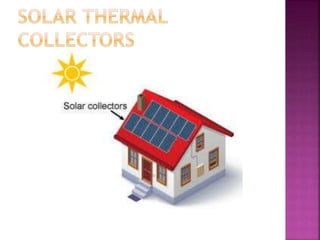


WHAT IS SOLAR THERMAL COLLECTORS?
A SOLAR THERMAL COLLECTOR IS A
COMPONENT OF SOLAR THERMAL
INSTALLATION.
 A SOLAR COLLECTOR IS A TYPE OF SOLAR
PANEL RESPONSIBLE FOR CAPTURING SOLAR
ENERGY AND TRANSFOMING IT INTO HEAT .
 A SOLAR THERMAL COLLECTOR COLLECTS
HEAT BY ABSORBING SUNLIGHT .
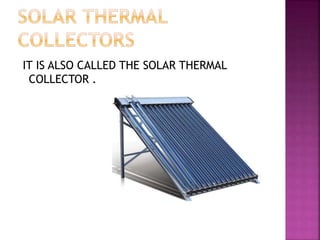
IT IS ALSO CALLED THE SOLAR THERMAL
COLLECTOR .
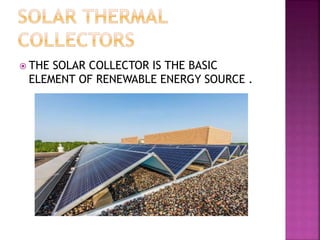
 THE SOLAR COLLECTOR IS THE BASIC
ELEMENT OF RENEWABLE ENERGY SOURCE .
RENEWABLE ENERGY RESOURCES
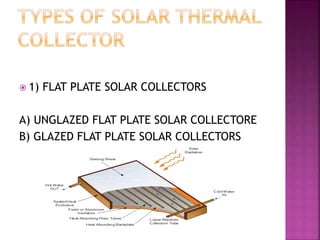
 1) FLAT PLATE SOLAR COLLECTORS
A) UNGLAZED FLAT PLATE SOLAR COLLECTORE
B) GLAZED FLAT PLATE SOLAR COLLECTORS
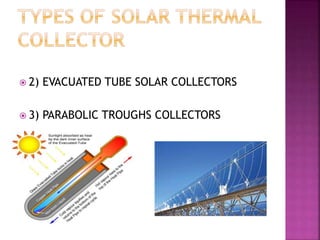
 2) EVACUATED TUBE SOLAR COLLECTORS
 3) PARABOLIC TROUGHS COLLECTORS
 WHAT IS FLAT PLATE SOLAR COLLECTOR ?
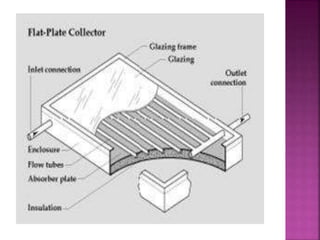
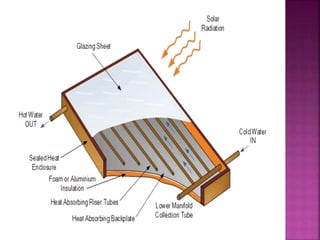
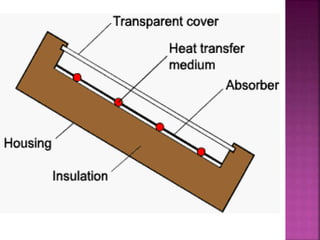
 A typical flat-plate collector is a metal box
with a glass or plastic cover (called glazing)
on top and a dark-colored absorber plate on
the bottom. The sides and bottom of
the collector are usually insulated to
minimize heat loss.
 In FLAT PLATE COLLECTORS Sunlight passes
through the glazing and strikes the
absorber plate, which heats up,
changing solar energy into heat energy.
 Absorber plates are commonly painted with
"selective coatings," which absorb and retain
heat better than ordinary black paint.
 1) ABSORBER PLATE
 An absorber plate, treated with a selective
surface coating to increase the fraction of
incoming radiation absorbed.
 2) GLAZING
 A transparent cover, or glazing, which limits
the radiation and convection heat losses.
 3) INSULATION
 A layer of insulation, which reduces
conduction losses .
 4) ENCLOSURE
 An enclosure to contain the different
elements.
 5) TUBES
 Flow tubes through which the heat transfer
fluid circulates .
 Easy to manufacture .
 Low cost .
 light weight .
 mechanically simple .
 2) WHAT IS EVACUATED TUBE SOLAR
COLLECTORS ?
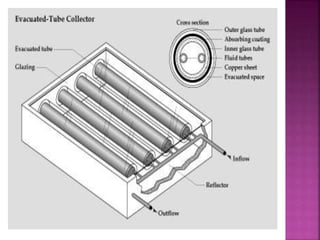
 evacuated tube solar collectors convert
energy from the sun into usable heat in
a solar water heating system. This energy
can be used for domestic and commercial hot
water heating, pool heating, space heating
or even air conditioning.
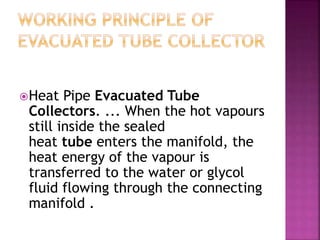
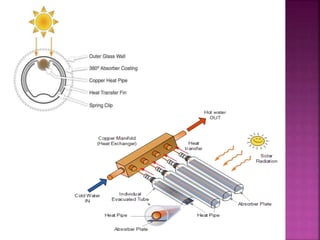
Heat Pipe Evacuated Tube
Collectors. ... When the hot vapours
still inside the sealed
heat tube enters the manifold, the
heat energy of the vapour is
transferred to the water or glycol
fluid flowing through the connecting
manifold .
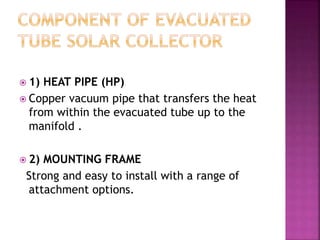
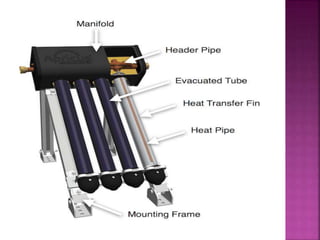
 1) HEAT PIPE (HP)
 Copper vacuum pipe that transfers the heat
from within the evacuated tube up to the
manifold .
 2) MOUNTING FRAME
Strong and easy to install with a range of
attachment options.
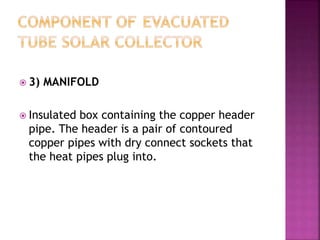
 3) MANIFOLD
 Insulated box containing the copper header
pipe. The header is a pair of contoured
copper pipes with dry connect sockets that
the heat pipes plug into.
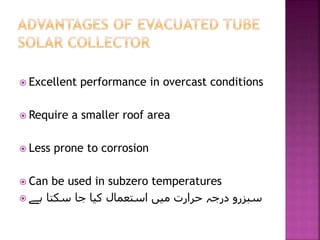
 Excellent performance in overcast conditions
 Require a smaller roof area
 Less prone to corrosion
 Can be used in subzero temperatures
 ‫ہے‬ ‫سکتا‬ ‫جا‬ ‫کیا‬ ‫استعمال‬ ‫میں‬ ‫حرارت‬ ‫درجہ‬ ‫سبزرو‬
 3) WHAT IS PARABOLIC TROUGHS
COLLECTORS ?
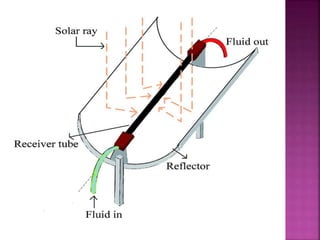
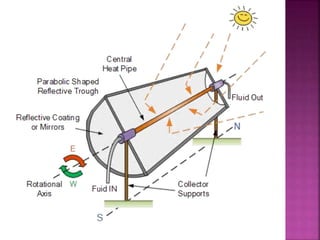
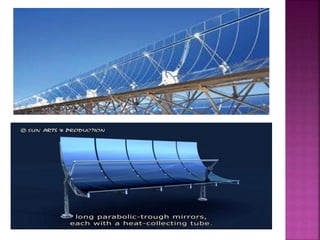
 A parabolic trough is a type of solar
thermal collector that is straight in one
dimension and curved as a parabola in the
other two, lined with a polished metal .
 In a parabolic trough plant, a set
of parabolic-shaped mirrors is set on a
structure so they can track the movement of
the sun and concentrate solar radiation onto
a receiving tube. Inside the tube, a heat-
absorbing fluid flows and reaches high
temperatures.
 A parabolic trough is shaped as a parabola in
the x-y plane, but is linear in the z direction.
 ADVANTAGES
 The solar parabolic trough system is
suitable for use in an Integrated Solar
Combined Cycle System (ISCCS) with
potential to reduce the cost and increase
the overall solar to electric efficiency.
 Since solar parabolic trough systems
produce steam to generate electricity
with a conventional Rankine steam cycle,
these systems can be readily hybridized,
that is, they can be set up to use a fossil
fuel (typically natural gas) as a
supplementary fuel, so that electricity
can be generated when the sun isn’t
shining.
 DiSADVANTAGES
 The solar parabolic trough system doesn’t
produce fluid temperature as high as
some of the other concentrating solar
power technologies, which makes its
efficiency for electricity production
lower.
 ABDUL REHMAN
(2016-UET.GCT.RSL.BSC.TECH.26)
G.C.T RASUL (M.B.DIN)
AFFIALIATION WITH UET LAHORE

solar collector

  • 3.
    WHAT IS SOLARTHERMAL COLLECTORS? A SOLAR THERMAL COLLECTOR IS A COMPONENT OF SOLAR THERMAL INSTALLATION.
  • 4.
     A SOLARCOLLECTOR IS A TYPE OF SOLAR PANEL RESPONSIBLE FOR CAPTURING SOLAR ENERGY AND TRANSFOMING IT INTO HEAT .  A SOLAR THERMAL COLLECTOR COLLECTS HEAT BY ABSORBING SUNLIGHT .
  • 5.
    IT IS ALSOCALLED THE SOLAR THERMAL COLLECTOR .
  • 6.
     THE SOLARCOLLECTOR IS THE BASIC ELEMENT OF RENEWABLE ENERGY SOURCE .
  • 7.
  • 8.
     1) FLATPLATE SOLAR COLLECTORS A) UNGLAZED FLAT PLATE SOLAR COLLECTORE B) GLAZED FLAT PLATE SOLAR COLLECTORS
  • 9.
     2) EVACUATEDTUBE SOLAR COLLECTORS  3) PARABOLIC TROUGHS COLLECTORS
  • 10.
     WHAT ISFLAT PLATE SOLAR COLLECTOR ?  A typical flat-plate collector is a metal box with a glass or plastic cover (called glazing) on top and a dark-colored absorber plate on the bottom. The sides and bottom of the collector are usually insulated to minimize heat loss.
  • 11.
     In FLATPLATE COLLECTORS Sunlight passes through the glazing and strikes the absorber plate, which heats up, changing solar energy into heat energy.  Absorber plates are commonly painted with "selective coatings," which absorb and retain heat better than ordinary black paint.
  • 12.
     1) ABSORBERPLATE  An absorber plate, treated with a selective surface coating to increase the fraction of incoming radiation absorbed.  2) GLAZING  A transparent cover, or glazing, which limits the radiation and convection heat losses.
  • 13.
     3) INSULATION A layer of insulation, which reduces conduction losses .  4) ENCLOSURE  An enclosure to contain the different elements.  5) TUBES  Flow tubes through which the heat transfer fluid circulates .
  • 17.
     Easy tomanufacture .  Low cost .  light weight .  mechanically simple .
  • 18.
     2) WHATIS EVACUATED TUBE SOLAR COLLECTORS ?  evacuated tube solar collectors convert energy from the sun into usable heat in a solar water heating system. This energy can be used for domestic and commercial hot water heating, pool heating, space heating or even air conditioning.
  • 19.
    Heat Pipe EvacuatedTube Collectors. ... When the hot vapours still inside the sealed heat tube enters the manifold, the heat energy of the vapour is transferred to the water or glycol fluid flowing through the connecting manifold .
  • 20.
     1) HEATPIPE (HP)  Copper vacuum pipe that transfers the heat from within the evacuated tube up to the manifold .  2) MOUNTING FRAME Strong and easy to install with a range of attachment options.
  • 21.
     3) MANIFOLD Insulated box containing the copper header pipe. The header is a pair of contoured copper pipes with dry connect sockets that the heat pipes plug into.
  • 25.
     Excellent performancein overcast conditions  Require a smaller roof area  Less prone to corrosion  Can be used in subzero temperatures  ‫ہے‬ ‫سکتا‬ ‫جا‬ ‫کیا‬ ‫استعمال‬ ‫میں‬ ‫حرارت‬ ‫درجہ‬ ‫سبزرو‬
  • 26.
     3) WHATIS PARABOLIC TROUGHS COLLECTORS ?  A parabolic trough is a type of solar thermal collector that is straight in one dimension and curved as a parabola in the other two, lined with a polished metal .
  • 27.
     In aparabolic trough plant, a set of parabolic-shaped mirrors is set on a structure so they can track the movement of the sun and concentrate solar radiation onto a receiving tube. Inside the tube, a heat- absorbing fluid flows and reaches high temperatures.
  • 28.
     A parabolictrough is shaped as a parabola in the x-y plane, but is linear in the z direction.
  • 30.
     ADVANTAGES  Thesolar parabolic trough system is suitable for use in an Integrated Solar Combined Cycle System (ISCCS) with potential to reduce the cost and increase the overall solar to electric efficiency.
  • 31.
     Since solarparabolic trough systems produce steam to generate electricity with a conventional Rankine steam cycle, these systems can be readily hybridized, that is, they can be set up to use a fossil fuel (typically natural gas) as a supplementary fuel, so that electricity can be generated when the sun isn’t shining.
  • 32.
     DiSADVANTAGES  Thesolar parabolic trough system doesn’t produce fluid temperature as high as some of the other concentrating solar power technologies, which makes its efficiency for electricity production lower.
  • 35.
     ABDUL REHMAN (2016-UET.GCT.RSL.BSC.TECH.26) G.C.TRASUL (M.B.DIN) AFFIALIATION WITH UET LAHORE